Quick Answer
Shipping from China becomes difficult when buyers choose freight before they understand the shipment. A low quote can still hide customs, handling, delivery, or consolidation costs.[1] I help importers reduce this uncertainty by planning product readiness, supplier handoffs, inspection, packaging, and transport as one connected process. **Shipping from China depends on more than choosing air, sea, or express delivery.
Importers should compare the shipment profile, total landed cost, delivery risk, product readiness, customs responsibilities, and destination requirements. Multi-supplier buyers should also plan inspection, warehousing, consolidation, documentation, and final-mile delivery before production is completed.**
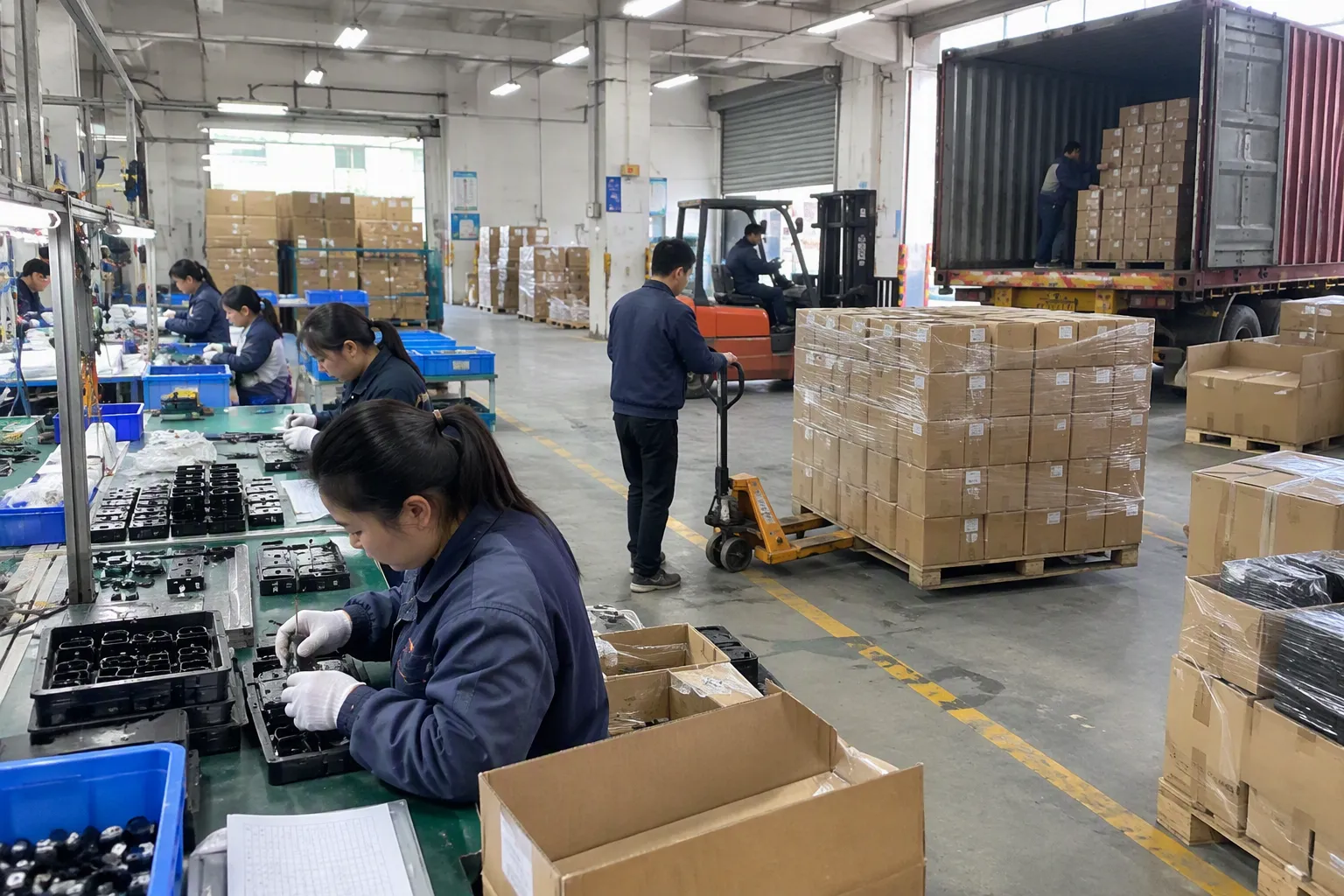
A successful shipment starts before a forwarder provides a freight quote. I first look at what the buyer is shipping, where the goods are located, when the goods will be ready, and what must happen before dispatch. The sections below explain how I evaluate those decisions and where importers commonly face avoidable costs.
How should I plan shipping from China before production?
Many buyers wait until products are finished before they discuss logistics. That approach can create rushed packing, incomplete documents, mismatched supplier handoffs, and expensive changes. I reduce this risk by creating a shipment profile during supplier selection and confirming responsibilities before the purchase order is released.
What should a shipment profile include?
A shipment profile should include product type, quantity, cartons, dimensions, gross weight, product value, ready date, destination, delivery address, number of suppliers, packaging requirements, and the preferred delivery window. It should also identify whether the shipment contains batteries, liquids, magnets, branded goods, or other products that may require special handling or destination-specific verification.
Dive deeper
I treat the shipment profile as a purchasing document, not just a freight document. It helps me compare quotes properly and identify problems while suppliers still have time to correct them.
A useful profile can contain the following information:
| Information | Why it matters |
|---|---|
| Product description | Carriers and customs representatives need clear cargo details |
| Quantity and SKU count | Multiple SKUs affect checking, packing, and counting time |
| Carton dimensions | Cubic volume can affect sea, air, and express pricing[2] |
| Gross and net weight | Chargeable weight may differ from actual weight |
| Product value | Insurance, customs valuation, and commercial documents may depend on it |
| Ready date | The date affects booking, warehouse planning, and delivery estimates |
| Supplier locations | Factories in different cities may require transfers or consolidation |
| Destination | Port, airport, customs, taxes, and final delivery depend on the country and address |
| Special characteristics | Batteries, liquids, magnets, and fragile goods may affect transport options |
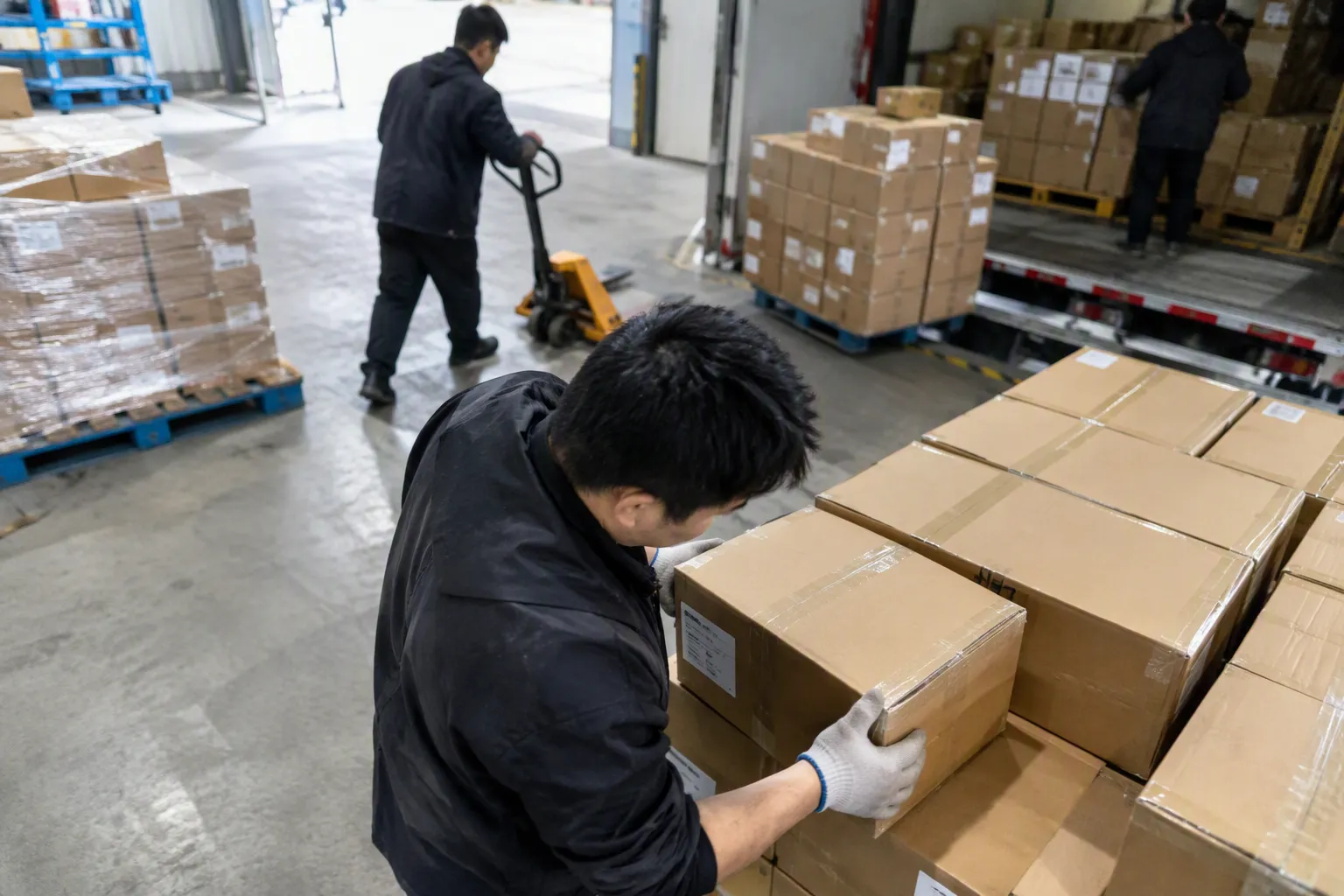
I also ask whether the order is complete. A supplier may say that goods are “ready” even though labels, manuals, accessories, retail packaging, or replacement units are not finished. If I arrange collection too early, the shipment may contain incomplete cartons or require a second pickup.
Order structure affects logistics
A single factory order is usually easier to coordinate than a multi-supplier order. However, a single shipment from several suppliers may reduce the buyer’s overall delivery complexity. The trade-off is that the buyer must plan:
- Factory pickup or supplier delivery to a warehouse
- Quantity verification by supplier and SKU
- Product inspection before consolidation
- Carton relabeling or repacking
- Storage time while waiting for late suppliers
- Consolidated packing lists
- One or more transport bookings
- Responsibility for missing, damaged, or late goods
I often see buyers focus on the freight price from China to the destination while ignoring the movement between suppliers and the consolidation warehouse. Those domestic transfers, handling fees, storage charges, inspection services, and repacking work can change the final cost.
Production and shipping should be linked
I recommend adding logistics checkpoints to the purchase schedule:
- Before production: confirm product details, packing method, carton limits, and shipping responsibilities.
- During production: monitor the expected completion date and identify late or incomplete SKUs.
- Before inspection: confirm the inspection standard and the sample or quantity to be checked.
- After inspection: release only acceptable goods for packing and dispatch.
- Before booking: confirm final carton count, measurements, weight, documents, and delivery terms.
- Before departure: verify the shipping instructions and responsibility for customs and destination charges.
This process does not guarantee that a shipment will clear customs or arrive without delay. It does give the buyer better information before committing to a transport booking.
Which shipping from China method fits my shipment?
No transport method is always the cheapest or best. I compare air freight, sea freight, express delivery, rail where available, and other options against volume, chargeable weight, urgency, cargo value, destination, and delivery risk. I also check whether the product is eligible for the proposed method.
How do I compare transport methods?
Sea freight often suits larger, less urgent shipments, while air freight can suit smaller or time-sensitive cargo.[5] Express delivery can simplify small parcels, but its pricing may be less attractive for heavier commercial shipments. The correct choice depends on the complete shipment profile and the services included in the quote.
Dive deeper
The first comparison I make is not “Which mode has the lowest rate?” I ask, “Which mode gives this shipment an acceptable balance of cost, timing, control, and risk?”
| Transport option | Often suitable for | Points I verify |
|---|---|---|
| Express courier | Samples, documents, and small urgent parcels | Weight limits, remote-area fees, customs handling, and product restrictions |
| Air freight | Time-sensitive commercial cargo with moderate volume | Chargeable weight, airport handling, clearance, and final delivery |
| Sea freight | Larger shipments where timing is more flexible | Container or consolidation terms, port charges, handling, and delivery arrangements |
| Rail or multimodal | Some lanes where the route and product are suitable | Availability, transfer points, documentation, and destination service |
| Supplier-arranged delivery | Buyers seeking a simple quotation | Exact Incoterms, included services, customs responsibility, and exclusions |
A transport quote can use actual weight or volumetric weight.[3] Volumetric weight reflects the space a shipment occupies. The calculation varies by carrier and service, so I ask the logistics provider to show the chargeable weight and rate basis rather than relying on the carton weight alone.
Urgency should be measured realistically
A buyer may need goods for a product launch, promotion, or seasonal sales period. In that case, I work backward from the required arrival date. I allow time for:
- Production completion
- Inspection and corrective action
- Supplier delivery to a consolidation warehouse
- Repacking and document preparation
- Booking and pickup
- Origin handling
- Transit
- Import clearance
- Destination delivery
- Possible exceptions or inspections
A quoted transit time is not the same as a guaranteed arrival date.[4] Weather, capacity, port conditions, customs review, incomplete documents, and destination delivery problems can affect the schedule. I advise buyers to use a realistic buffer, especially for seasonal products.
Product characteristics can change the decision
Some products require additional checks before booking. Examples include:
- Products containing lithium batteries
- Liquids, powders, aerosols, or chemicals
- Magnetic products
- Oversized or fragile goods
- Branded products and licensed designs
- Food, cosmetics, medical products, or children’s products
- Goods with wooden packaging or special labeling requirements
I do not treat a supplier’s statement that a product is “shippable” as a complete compliance conclusion. The importer should verify applicable rules with a qualified customs professional, carrier, or relevant authority for the destination country.
A practical decision framework
I use a simple scoring approach when a buyer is unsure:
- Calculate the shipment size. Record actual and volumetric weight where applicable.
- Set the commercial deadline. Separate the required arrival date from the preferred arrival date.
- Assess product restrictions. Confirm whether the cargo needs special documentation or handling.
- Compare at least two modes. Compare equivalent services, not a port-only quote against a door-delivery quote.
- Review risk tolerance. Consider the cost of late stock, damaged goods, or a missed sales period.
- Confirm destination responsibilities. Identify who handles clearance, duties, taxes, and final delivery.
- Choose after inspection planning. Do not book based on an estimated quantity if the goods may still change.
A buyer who ships ten cartons of samples has a different decision from a wholesaler shipping several cubic meters across multiple SKUs. The same carrier or Incoterm may not suit both shipments.
How can I control total cost when shipping from China?
The headline freight rate does not show the complete cost of importing. I compare landed cost by adding origin services, freight, customs-related charges, duties, taxes, destination handling, delivery, and other documented fees. This approach prevents a low initial quote from becoming an expensive invoice later.
What is included in landed cost?
Landed cost normally includes the product purchase price plus the costs required to receive the goods at the buyer’s agreed destination.[6] The exact components vary by product, route, service, and contract, so I ask for a written breakdown rather than assuming that a delivery term covers everything.

Dive deeper
I ask buyers to compare shipping from China using a table like this:
| Cost area | Questions to ask |
|---|---|
| Supplier pickup | Is collection included, or must the buyer pay domestic transport? |
| Warehouse receiving | Are receiving, unloading, counting, or pallet fees included? |
| Inspection | Is quality inspection separate from logistics? |
| Repacking | Who pays for carton changes, labels, pallets, or protective materials? |
| Origin handling | Are export documentation and origin terminal charges included? |
| Main freight | Is the rate based on actual weight, volume, container space, or another measure? |
| Surcharges | Can fuel, security, peak-season, remote-area, or congestion charges be added? |
| Customs clearance | Who prepares documents and submits the entry? |
| Duties and taxes | Are these included, estimated, or excluded? |
| Destination handling | Are terminal, broker, storage, demurrage, or examination costs excluded? |
| Final delivery | Does “door” mean the actual address, a depot, or curbside delivery? |
| Insurance | Is cargo insurance included, optional, or excluded? |
I also distinguish between a freight estimate and a landed-cost estimate. A freight estimate may cover only movement between two transport points. A landed-cost estimate should explain the assumptions behind customs, duties, taxes, handling, and delivery.
Why consolidation changes total cost
Consolidation can reduce the buyer’s administrative burden and combine goods from several factories into one outbound shipment.[7] It can also create additional work. The warehouse must receive goods, identify each SKU, check quantities, store products, and prepare the consolidated shipment.
I consider consolidation valuable when it improves control or avoids several separate international shipments. However, I calculate the full result:
- Domestic transport from each supplier
- Warehouse receiving and storage
- Inspection or counting
- Consolidation labor
- Extra packaging and palletization
- Additional handling risk
- Time spent waiting for late suppliers
- Final freight and destination costs
For example, a buyer may have five suppliers in different Chinese manufacturing areas. Direct shipping from each supplier may create five sets of documents, five clearance events, and five delivery arrangements. Consolidation may create one main shipment, but the buyer must allow time for all suppliers to deliver to the warehouse. The better option depends on the order size, deadline, and destination requirements.
DDP and door-to-door require careful checking
“DDP,” “tax included,” and “door-to-door” can sound simple. They are not proof that every cost or responsibility is covered. I ask the provider to state:
- Which legal entity acts as importer of record, where relevant
- Who provides customs documents
- Who pays duties and taxes
- Whether the quoted amount includes destination handling
- What happens if customs requests additional information
- Who pays storage, inspection, redelivery, or demurrage charges
- Whether the delivery address is fully covered
- What happens if the goods are damaged or refused
- Whether product compliance documents are the buyer’s responsibility
The interpretation of Incoterms and the practical process can depend on the transaction, country, product, and parties involved.[8] I recommend destination-specific verification with a qualified customs or trade professional. I do not present a DDP quotation as a substitute for that evaluation.
Keep the quotation comparable
I ask every provider to quote the same information:
- Same cargo description
- Same carton count and dimensions
- Same pickup and delivery addresses
- Same transport mode
- Same service level
- Same currency
- Same validity period
- Same customs and tax assumptions
- Same insurance assumptions
- Same list of exclusions
Then I compare three figures:
- Product cost
- Shipping and import cost
- Estimated total landed cost
I also record whether each figure is confirmed, estimated, or subject to change. This small distinction helps buyers avoid treating uncertain duties or destination charges as fixed prices.
What should I verify before releasing a shipment from China?
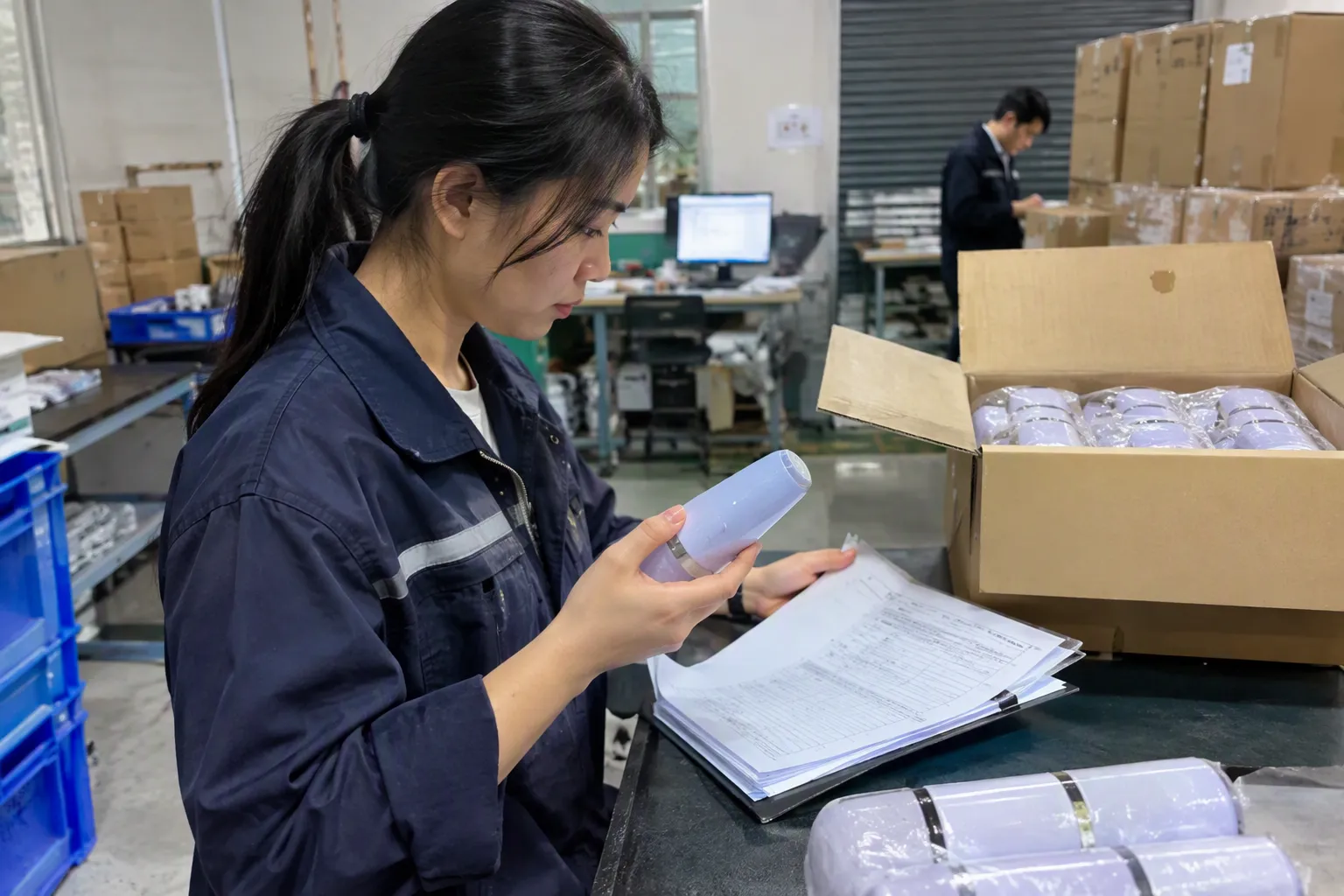
A shipment should not be released simply because the supplier says production is complete. I verify product condition, quantity, packaging, documents, destination information, and responsibility boundaries first. A short pre-shipment checklist can prevent expensive corrections after departure.
Which pre-shipment documents and checks matter?
Before release, I normally check the commercial invoice, packing list, purchase order, shipping instructions, carton details, product description, and any product-specific documents requested by the destination or logistics provider. I also confirm the inspection result and the final condition of the goods.

Dive deeper
A pre-shipment release process connects quality control with logistics. If the buyer inspects only after booking, the shipment may need to be delayed. If the buyer skips inspection, defects may travel across borders before anyone finds them.
I use the following checklist as a starting point:
Product and quantity
- Does the final quantity match the purchase order?
- Are all SKUs, colors, sizes, and accessories present?
- Are the products packed according to the approved sample?
- Are labels, manuals, barcodes, and warning marks correct?
- Has the buyer approved any production variation?
Packaging and cargo condition
- Are cartons strong enough for the selected transport method?
- Are fragile products protected against movement and compression?
- Are carton markings clear and consistent with the packing list?
- Are pallets, moisture protection, or additional materials required?
- Does the packed shipment match the declared dimensions and weight?
Quality inspection
I recommend that buyers define acceptance criteria before production. The criteria may cover appearance, function, measurements, materials, accessories, packaging, and labeling. A qualified inspection provider can help design an application-specific inspection process. A visual check alone may not address electrical safety, performance, durability, or regulatory requirements.
When a buyer uses 1-by-1 checking, I treat that as a specific control method rather than a universal quality guarantee. The checking scope should be documented, and the buyer should understand what the inspection can and cannot detect.
Documents and responsibility
I confirm:
- Commercial invoice
- Packing list
- Purchase order or sales contract
- Shipping instructions
- Product descriptions and HS-code assumptions
- Certificate or test documents requested by the destination
- Battery or dangerous-goods information where relevant
- Country-of-origin information where relevant
- Consignee and notify-party details
- Customs broker or forwarder contact details
Importers should verify tariff classification, duties, taxes, labeling, product certifications, and market-entry rules for their destination. Supplier-provided certificates are documents to review, not automatic proof that the goods comply with every applicable requirement.
Supplier handoffs create risk
A supplier may deliver goods to a warehouse with a different carton count from the commercial invoice. Another supplier may send unmarked cartons. A third supplier may ship products without the final accessories. These problems are easier to correct before consolidation.
I use handoff records that identify:
- Supplier name
- Delivery date
- Carton count
- SKU count
- Visible damage
- Pallet or carton numbers
- Photos at receipt
- Missing or excess goods
- Person responsible for the handoff
This record creates a clearer basis for follow-up. It does not eliminate disputes, but it helps separate a factory packing problem from a warehouse handling problem or a carrier damage issue.
Insurance and damage claims
I ask what insurance is included and what evidence is required for a claim. Buyers should understand that carrier liability may have limits and may not equal full cargo insurance. The buyer should also document carton condition, loading, seals, pallet condition, and visible damage before departure.
For fragile, high-value, or customized products, I consider packaging validation particularly important. A good product can still arrive damaged if the inner packaging does not suit repeated handling, stacking, vibration, or humidity. Qualified logistics and packaging professionals can evaluate those risks more effectively than a simple freight comparison.
Frequently Asked Questions
What is the cheapest way to ship from China?
There is no universal cheapest method. Sea freight may suit large, non-urgent shipments, while express or air freight may be more economical for small shipments when speed and simplicity matter. I compare total landed cost, including domestic transfers, handling, customs, taxes, and final delivery.
How long does shipping from China take?
The total time depends on production readiness, inspection, warehouse handling, booking, transport, customs clearance, and final delivery. A carrier’s transit estimate does not guarantee the complete door-to-door schedule. I recommend working backward from the required arrival date and adding a reasonable buffer.
Should I use DDP when importing from China?
DDP may simplify payment and coordination, but I do not accept the label without checking the written scope. I verify who handles customs, duties, taxes, documents, compliance issues, storage, delivery exceptions, and unexpected charges. I also recommend destination-specific professional advice.
Can I consolidate products from several Chinese suppliers?
Yes, buyers can often consolidate goods through a suitable warehouse or logistics partner. The buyer should plan supplier delivery, receiving, inspection, storage, repacking, carton identification, and final documentation. Consolidation can improve control, but it may add handling costs and time.
Do I need to inspect goods before shipping from China?
Inspection is not required for every purchase in the same way, but it can reduce quality and quantity risk. I recommend defining acceptance criteria and checking products before release, especially for customized, private-label, fragile, high-value, or multi-SKU orders.
Conclusion
Shipping from China works best when I treat it as a complete procurement decision rather than a last-minute freight purchase. I start with the shipment profile, connect production with inspection and packaging, compare transport methods, calculate total landed cost, and verify every responsibility in the quotation. Consolidation can simplify multi-supplier orders, but it requires warehouse control and accurate records. If you need help sourcing, inspecting, consolidating, and coordinating delivery from China, contact KingSourcing to discuss your shipment requirements.
Sources
- Know Your Incoterms", Trade and logistics guidance commonly distinguishes the quoted transport rate from additional origin, destination, customs, and handling charges that may arise during an international shipment
- [PDF] Other transportation-related fees and shipping information1 - NY.gov", Freight-pricing guidance explains that carriers may assess chargeable weight using actual mass, dimensional weight, or volume, so carton dimensions can affect the payable transport charge
- Chargeable & Volumetric Weight Calculator", Industry cargo guidance defines chargeable weight as the basis used for billing and recognizes that it may be determined from actual mass or the shipment's dimensional volume
- [PDF] Customs as Doorkeepers: What Are Their Effects on International ...", International transport guidance distinguishes a scheduled or estimated transit time from a guaranteed delivery commitment because handling, capacity, customs, and other operational events can extend the overall schedule
- [PDF] The Development of International Air Freight", Comparative freight studies generally associate maritime transport with high-capacity, lower-cost movement and air transport with shorter transit times for relatively smaller or time-sensitive consignments
- [PDF] Adapting Baumol's inventory theoretic to landed cost decisions", Supply-chain and accounting literature defines landed cost as the total cost of acquiring and bringing goods to a specified destination, commonly including purchase, transport, insurance, duties, taxes, and related charges
- [PDF] FREIGHT TRANSPORTATION Improvements and the Economy", Logistics research describes consolidation as the combination of shipments from multiple origins into a larger movement, which can reduce duplicated transport or administrative activities under suitable conditions
- Know Your Incoterms", International trade guidance explains that Incoterms rules allocate specified delivery tasks, costs, and risks between the parties but do not replace the sales contract, customs law, or other applicable regulations