Quick Answer
Accessories and bundle sets from China can look simple until separate components, packaging, quality checks, and delivery dates start moving in different directions. A low per-set quote may hide missing-item risk, costly rework, and delayed launches.[1] I recommend treating every bundle as a controlled procurement project, not a single product search. **The best way to source accessories and bundle sets from China is to define a complete bill of materials, compare quotations on the same scope, assign responsibility for every quality and packing step, and manage all supplier deliveries against one fi
This approach helps buyers evaluate total landed cost, sellable-set quality, and shipment readiness rather than choosing a supplier only by the lowest quoted unit price.**
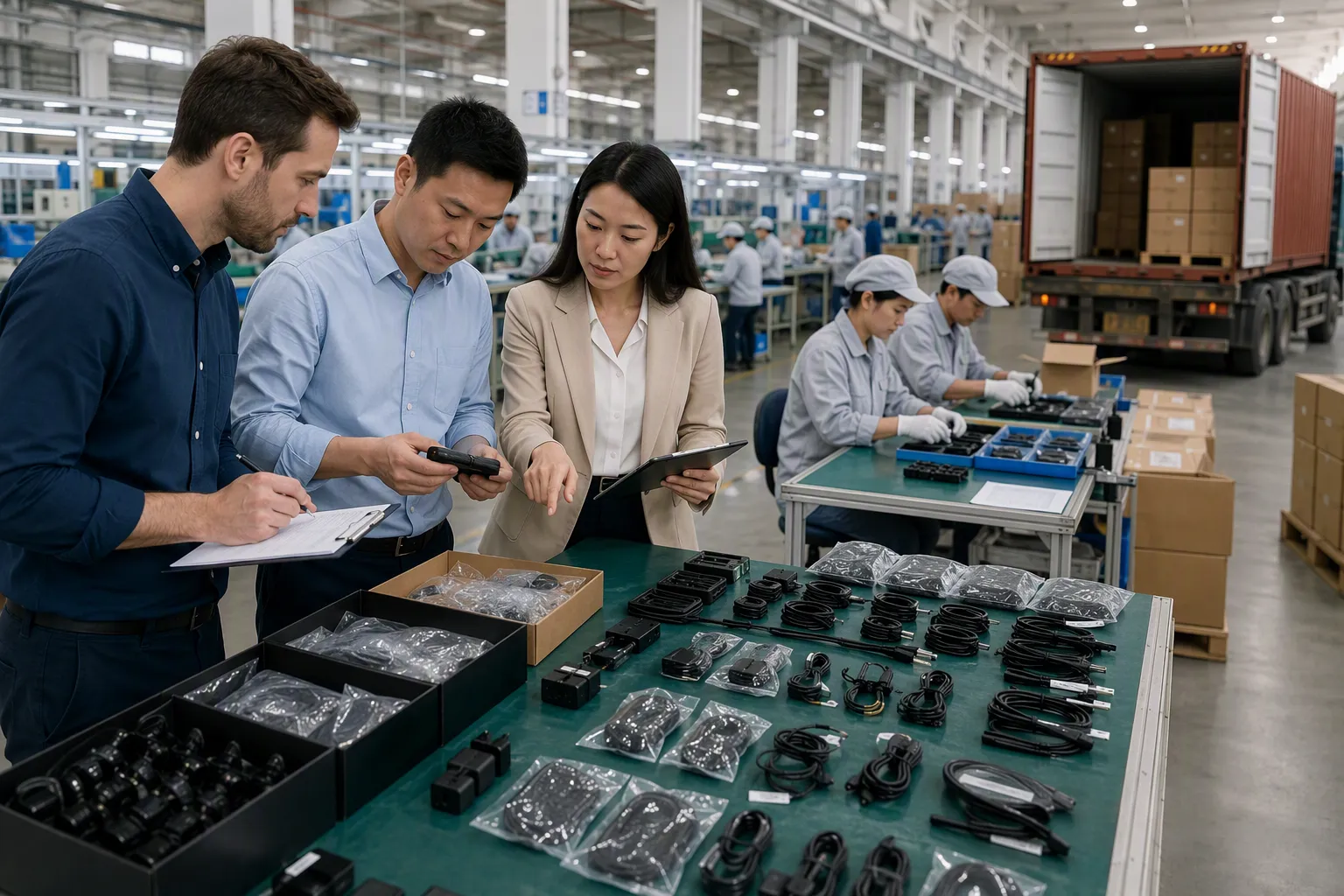
When I coordinate multi-supplier orders for overseas buyers, the difficult part is rarely finding a factory that can make one accessory. The real work is making sure every approved item arrives in the correct version, quantity, and packaging condition so the finished set is ready to sell.
Sourcing accessories and bundle sets from China is not a search for the lowest per-set quote
A low quote can attract attention, especially for Amazon sellers, e-commerce brands, and wholesalers working with tight margins. However, a bundle price can become misleading when the quote excludes items that are essential to the finished set. I often see buyers compare prices before they compare scope.
A bundle quotation is useful only when it covers the same approved components, quantities, packaging, kitting process, quality standard, and delivery terms as every other quotation. Buyers should compare the total cost of a sellable set[2], including component sourcing, assembly, inspection, packaging, consolidation, and shipping preparation—not only the factory’s stated per-set price.

Why a “per-set” price can mean different things
A supplier may quote a finished bundle, but another supplier may quote only the main product with basic packaging. Both quotes may use the same product name. They are not necessarily comparable.
For example, a travel accessory set may include a pouch, cable organizer, luggage tag, product card, barcode label, outer polybag, and carton insert. One supplier may include all seven items. Another may include only the pouch and organizer. A third may include the items but use a different material, print method, or packing sequence.
In multi-supplier bundle orders, buyers often need to clarify the following before they can judge pricing:
- Which components are included in the quote
- The quantity of each component per sellable set
- Material, size, color, finish, and version requirements
- Whether customization is included
- Whether packaging is basic, retail-ready, or marketplace-ready
- Whether kitting labor is included
- Whether individual-item inspection or final-set inspection is included
- Whether labels, inserts, and barcode application are included
- The agreed Incoterm and delivery point[3]
- Whether the price includes export cartons or only inner packaging
Compare the cost of a sellable set
I encourage buyers to use a total-cost view. This does not mean every cost will be known at the first quotation stage. It means the buyer identifies the likely cost categories early, instead of discovering them after purchase orders have been issued.
| Cost area | Questions to clarify | Common risk if omitted |
|---|---|---|
| Main accessory | What material, dimensions, color, and finish are approved? | Product variation between batches |
| Secondary components | Are all items included in the set count? | Missing or mismatched accessories |
| Custom packaging | Does the price include box, bag, insert, labels, and artwork handling? | Packaging cost added later |
| Kitting labor | Who places each component into the final package? | Unplanned assembly charges |
| Quality control | Is inspection based on components, final sets, or both? | Defects found after shipment |
| Consolidation | Where will items be received and counted? | Delivery mismatch across factories |
| Shipping preparation | Who applies carton marks, pallet rules, or marketplace labels? | Warehouse delays or relabeling |
A lower factory price can still be commercially reasonable if the scope is clear and the buyer has planned the additional work elsewhere. The problem starts when the buyer assumes that an incomplete quote represents the delivered cost of a ready-to-sell bundle.
Use quotation comparison as a control document
At KingSourcing, we can coordinate supplier sourcing and quotation comparison, but the comparison works best when we receive a usable product brief. I would normally ask for product images, reference samples where available, target quantities, destination market, packaging expectations, and any required labeling details.
A practical comparison sheet should show more than price. It should show where each supplier differs.
A quotation should answer: “What exactly will arrive?” If it cannot answer that question, it is not yet a final decision document.
Buyers should also avoid treating an early estimate as a fixed production commitment. Sample confirmation, artwork approval, material changes, and revised packing instructions can all change the final scope. Clear revision control helps prevent the common situation where a factory produces to an older image or earlier message thread.
How do we define accessories and bundle sets from China before requesting quotations?
Accessories can appear interchangeable in photographs, but small specification differences can change appearance, usability, packaging fit, and buyer perception. Without a written bundle specification, suppliers may make reasonable but different assumptions. Those assumptions can create an inconsistent finished set.
Buyers should define accessories and bundle sets from China through a bundle bill of materials (BOM)[4]. The BOM should list every component, its approved specification, quantity per set, packaging role, labeling requirement, acceptable substitution rule, and responsible supplier. This gives each factory and inspection team the same operational reference.

Build a bundle BOM before placing orders
A BOM is not only for complex engineered products. It is useful for simple retail bundles too. It converts an idea such as “a premium desk accessory kit” into a list that suppliers can quote, produce, inspect, and pack consistently.
A basic bundle BOM can include:
| Item | Specification to define | Quantity per set | Packaging role |
|---|---|---|---|
| Main product | Material, size, color, logo position, approved version | 1 | Primary retail item |
| Add-on accessory | Model, connector type, finish, compatibility requirement | 1 | Placed beside main product |
| Storage pouch | Fabric, dimensions, drawstring or zipper type, print artwork | 1 | Protects components |
| Instruction card | Language, dimensions, paper stock, revision number | 1 | Retail insert |
| Barcode label | Barcode data, size, placement, scan requirement | 1 | Applied to unit package |
| Outer package | Box or polybag type, artwork, sealing method | 1 | Final sellable unit |
For customized accessories, I recommend adding images and measurable details whenever possible. A short phrase such as “matte black” can produce different interpretations. A Pantone reference, approved sample photo, or finish comparison image is more useful.[5]
Define substitutions before a shortage happens
Accessory bundles often face small supply changes. A zipper pull, cord color, foam insert, cable length, pouch lining, or printed card may become unavailable or delayed. Buyers should decide in advance whether substitutions are allowed and who can approve them.
A substitution policy can be simple:
- No substitutions without written buyer approval for visible retail components.
- Conditional substitutions for non-visible packing materials, within stated limits.
- No material or functional changes without an updated sample or photo confirmation.
- All approved changes recorded in the final BOM revision.
This process matters because different factories may use their own “equivalent” materials. Equivalent from a factory perspective may not be equivalent for a brand, marketplace listing, or customer experience.
Separate the product specification from the packing specification
Many buyers define the product but leave packaging instructions too general. That is risky for bundles because packaging determines whether all parts fit, whether small items are protected, and whether the customer receives a complete set.
The packing specification should clarify:
- The order in which components go into the package
- Whether items need separate bags or protective sleeves
- Whether loose items need tape, ties, trays, or dividers
- Insert placement and orientation
- Barcode and warning-label placement
- Sealing method
- Master carton quantity and carton markings
- Whether spare units or replacement components should be packed separately
For product categories involving electrical accessories, child-related products, food-contact materials, or regulated destination markets, I recommend that buyers seek qualified compliance and product professionals for application-specific requirements. A sourcing coordinator can help collect supplier documents, but buyers should verify which standards, testing, markings, or documents apply to their own market and product[6].
How do we coordinate accessories and bundle sets from China across different factories?
Separate purchase orders do not automatically become one finished bundle. Each factory may have a different production time, MOQ, packaging method, and communication style. A single late component can hold up the whole shipment[7], even when every other supplier has completed production.
To coordinate accessories and bundle sets from China across suppliers, buyers need one master delivery schedule, clear ownership for each component, agreed receiving and inspection procedures, and a final kitting plan. The goal is to manage the bundle as one sellable inventory unit while keeping individual factory responsibilities visible.

Create one master bundle schedule
I find that the most useful planning document is a bundle tracker that covers every component from sample stage to shipment. It should not be limited to purchase order dates. It should show the dependencies between suppliers.
A practical tracker may include:
- Supplier name and contact owner
- Component name and BOM revision
- Ordered quantity and planned overage
- Sample approval status
- Production start and completion target
- Packaging completion date
- Inspection window
- Delivery address and receiving date
- Quantity received
- Quantity accepted, rejected, or pending review
- Kitting date
- Final set count
- Shipment release status
This structure helps reveal timing problems early. If a custom box requires 25 days but the main accessory requires 15 days, the box is likely to control the bundle schedule. If the buyer only follows the main factory, the order may appear on track until the final week.
Assign responsibility, not assumptions
A bundle workflow needs named responsibility for each stage. This is especially important when one supplier produces the primary item, another prints packaging, and a third produces add-on accessories.
| Workflow step | Responsibility to assign |
|---|---|
| Approving final BOM and artwork | Buyer or authorized brand representative |
| Producing each component | Named component supplier |
| Confirming production timing | Supplier and procurement coordinator |
| Receiving goods for consolidation | Warehouse or consolidation team |
| Checking quantities and visible condition | Agreed inspection party |
| Performing kitting | Supplier, warehouse, or third-party team |
| Confirming final set count | Assigned quality or warehouse owner |
| Approving shipment release | Buyer or authorized representative |
The right answer is not always that one party must do everything. Some factories can perform kitting efficiently when they control most components. In other cases, an independent consolidation location is more practical because the components come from several factories. The buyer should choose the model based on order complexity, timing, packaging requirements, and inspection needs.
Plan for delivery mismatch and quantity variance
Factories may deliver earlier or later than planned. They may also deliver quantities that differ from the ordered amount due to production tolerance, rejected goods, or packing differences. A bundle cannot be completed if one component is short.
Buyers often need to decide:
- Whether to order a small overage for low-cost components
- Whether overage can be used for replacement stock
- Whether all components need to arrive before kitting starts
- Whether partial kitting is allowed
- How long the warehouse can hold completed components
- Who approves action when a supplier delivers short
- Whether the shipment can proceed with a revised final set count
At KingSourcing, we can coordinate receiving, consolidation, warehousing, and supplier follow-up for suitable orders. However, consolidation is not automatic. Buyers should agree on delivery windows, labels, carton marks, inspection scope, kitting instructions, and storage expectations in advance.
How do we inspect and ship accessories and bundle sets from China as sellable units?
A supplier can produce acceptable individual components while the final bundle still fails commercially. A missing card, wrong pouch color, damaged box, incorrect barcode, or incomplete set can create fulfillment problems after arrival. Final-set control matters because the customer buys the bundle, not the separate factory parts.
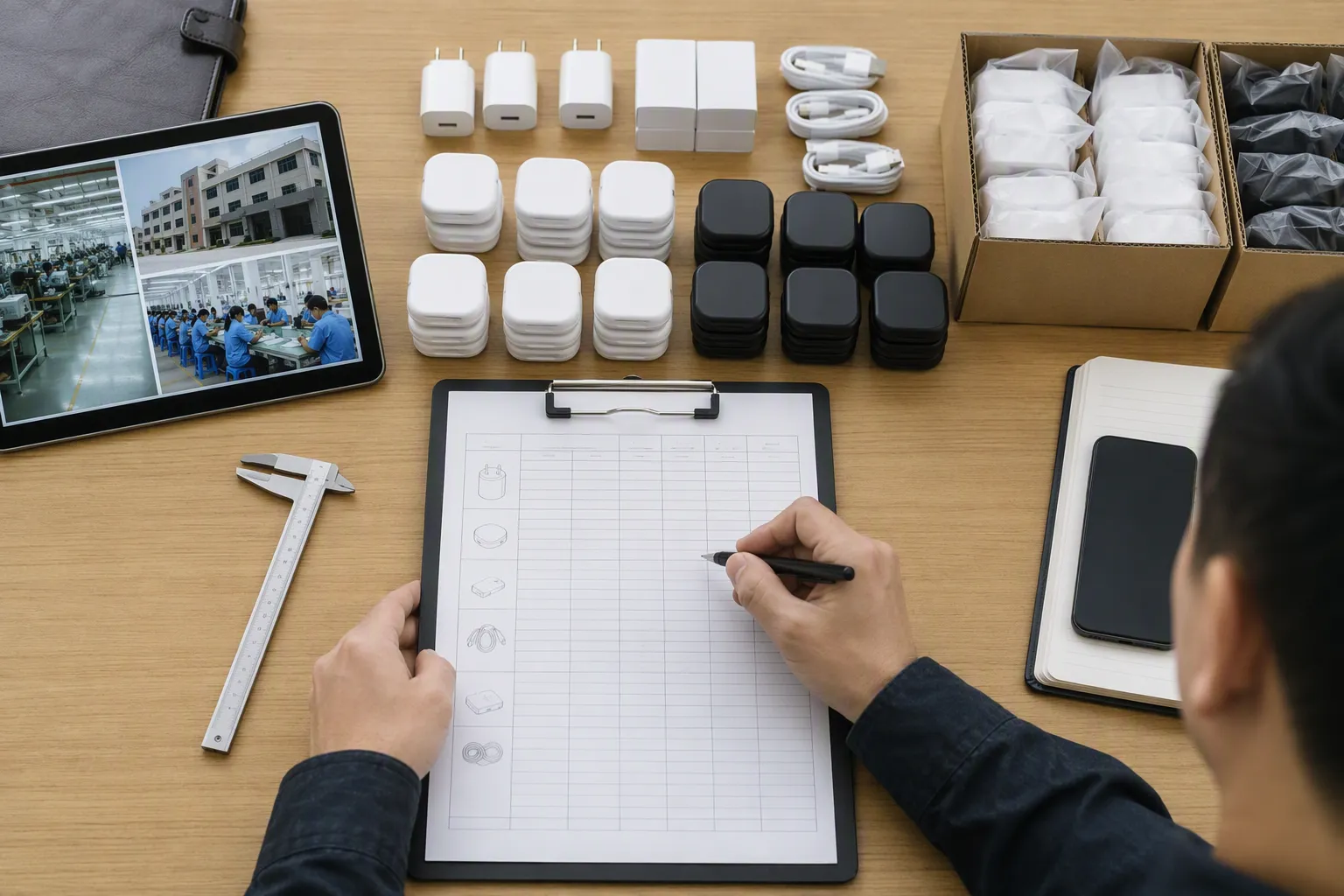
Buyers should inspect accessories and bundle sets from China at both the component and final-set levels. Component checks help identify supplier-specific defects, while final-set checks confirm correct quantities, packing sequence, labels, appearance, and carton readiness.[8] The inspection scope should be agreed before production and linked to the approved BOM and packaging instructions.
Use layered quality checkpoints
The correct inspection level depends on the product, order value, supplier history, and consequences of errors. I do not recommend assuming that one quick carton check is sufficient for every bundle.
A layered approach can include:
-
Pre-production confirmation
Confirm the approved sample, materials, color references, artwork, and BOM revision before full production. -
Component-level inspection
Check important individual parts before or when they arrive for consolidation. This can help isolate which supplier is responsible if a component differs from the approved reference. -
Receiving and quantity verification
Count received cartons and, where agreed, verify inner quantities, labels, visible package condition, and component identity. -
Kitting and final-set inspection
Check that each set contains the correct number of items and that the package is assembled according to instructions. -
Pre-shipment carton review
Confirm carton count, carton markings, weights, dimensions, and shipment labels where applicable.
Define the final-set inspection checklist
A final bundle inspection checklist should be specific enough that different inspectors reach the same conclusion. “Check packaging” is too vague. A better instruction describes exactly what should be checked and what result is acceptable.
For example:
- One main product is present in every set.
- One accessory item is present in every set.
- The approved color combination is used.
- The instruction card is the correct language and revision.
- The barcode label is present in the specified position.
- The outer packaging is sealed in the agreed method.
- No visible dirt, scratches, moisture damage, or crushed packaging is accepted.
- The final set fits within the approved package without forced compression.
- The master carton contains the correct number of sellable units.
For higher-risk products, sensitive components, or categories with technical requirements, buyers should define application-specific inspection and testing requirements with qualified professionals. A general sourcing inspection is not a substitute for laboratory testing, regulatory assessment, or engineering validation.
Protect shipment readiness
Shipping preparation should start before the goods are finished. If a buyer sells through Amazon, a retailer, distributor, or direct fulfillment program, the shipment may require specific labels, carton configurations, appointment rules, or pallet requirements. Those instructions can affect packaging cost and lead time.
Before shipment release, I recommend confirming:
- Final accepted set quantity
- Spare or replacement inventory quantity
- Carton count and gross weight
- Carton dimensions
- Shipping marks and destination labels
- Commercial invoice and packing list details
- Whether goods are mixed with other supplier orders
- Whether product packaging can withstand the selected shipping method
- Who approves the final shipment release
KingSourcing can coordinate international shipping and multi-supplier consolidation, including preparation of goods for the agreed shipment plan. The buyer should still confirm destination-country import requirements, product-specific documentation, and marketplace rules before goods leave China.
Frequently Asked Questions About Accessories and Bundle Sets from China
Should I buy the whole bundle from one factory?
One factory can simplify communication when it can reliably produce or source all components to the approved standard. However, a single factory is not always the best option for cost, quality, customization, or product range. I recommend comparing its complete scope with a coordinated multi-supplier plan.
What is the most important document for a bundle order?
The bundle BOM is usually the most important operational document. It lists every component, specification, quantity, packaging role, and approved revision. Buyers should use it together with packaging instructions, artwork files, and an agreed inspection checklist.
How much extra quantity should I order for bundle components?
The answer depends on component cost, supplier reliability, defect risk, and replacement needs. Buyers often consider a controlled overage for inexpensive or easily damaged accessories, but they should agree on the quantity, ownership, storage, and use of surplus stock before ordering.
Can a consolidation warehouse assemble retail-ready bundle sets?
A consolidation warehouse may be able to perform kitting, labeling, and repacking when the scope is agreed in advance. Buyers should provide detailed instructions, confirm labor and storage charges, define inspection requirements, and schedule supplier deliveries so all required components arrive on time.
How can I prevent missing accessories in a final set?
I recommend using a clear BOM, a packing sequence, component counts, and final-set inspection. Buyers should also assign responsibility for confirming the completed set count. Missing-item control becomes more important when products come from multiple suppliers or include small loose parts.
Conclusion
Sourcing accessories and bundle sets from China works best when buyers manage the complete set rather than chasing the lowest individual quote. I recommend starting with a clear BOM, comparing quotations by scope, coordinating supplier timelines, and checking final sellable units before shipment. KingSourcing can support supplier sourcing, quote comparison, sample follow-up, inspection coordination, packaging, consolidation, and shipping planning for multi-SKU bundle orders. Contact our team to discuss a controlled sourcing workflow for your next bundle program.
Sources
- Air Traffic Control: FAA's Acquisition Management Has Improved, but ...", Procurement and project-management research identifies incomplete requirements and poorly coordinated interfaces as recurring sources of rework, cost growth, and schedule delay
- Part 31 - Contract Cost Principles and Procedures | Acquisition.GOV", Total-cost-of-ownership approaches evaluate purchasing decisions beyond initial unit price by considering associated acquisition, handling, quality, and logistics costs
- Know Your Incoterms", Incoterms® rules define specified seller and buyer responsibilities for delivery, transport-related costs, and transfer of risk at the agreed place or point
- Bills of Material (BOM) - Using BOMs for DMSMS | www.waru.edu", A bill of materials is a structured record of the components, materials, and quantities required to manufacture or assemble a finished product
- 46 CFR § 164.019-13 - Production quality control requirements.", Color-science standards describe the use of defined color specifications and reference samples to improve the repeatability of color communication and evaluation
- Comply with U.S. and Foreign Regulations", Official trade and product-safety guidance indicates that conformity, labeling, testing, and documentation obligations vary according to the product type and the market in which it is placed
- Six ways to improve global supply chains - Brookings Institution", Research on assembly and supply-chain systems shows that the availability of required components constrains finished-product completion, so a shortage or delayed part can delay final output
- [PDF] Design, Manufacturing, and Inspection Data for a Three-Component ...", Quality-management practice distinguishes verification of incoming materials or components from final-product inspection, allowing organizations to detect supplier-related nonconformities and verify finished-item conformity