Quick Answer
A China warehouse can solve many problems for buyers managing products from several factories, but only when it is part of a clear order plan. Without supplier schedules, SKU records, and shipping instructions, goods can arrive without being ready to move—creating delays, confusion, and avoidable pre-shipping risk. **A China warehouse is most useful as a control point between factory production and international shipping.[1] Buyers can use it to receive supplier deliveries, identify cartons and SKUs, perform agreed checks, consolidate compatible orders, improve packaging, and c
However, warehouse receiving is not a substitute for quality inspection[2], and consolidation requires clear approval, timing, and shipping instructions.**

The key is to think beyond storage. When I coordinate multi-factory orders, I see that the warehouse becomes valuable when it helps turn fragmented deliveries into a controlled shipping decision. That process starts before the first carton leaves a supplier’s factory.
Why a China Warehouse Should Not Be Treated as a Place to Temporarily Store Goods?
Many buyers send products to a China warehouse because they want to wait until every supplier finishes production. That sounds simple, but it can create problems when cartons arrive without identification, late suppliers hold up urgent stock, or nobody has confirmed what should happen next.
A China warehouse should be treated as an operating checkpoint, not passive storage. It should help buyers receive and identify incoming goods, compare arrivals against the order plan, coordinate agreed checks, prepare products for consolidation or repacking, and release shipments only after the buyer confirms that the order is complete and ready.
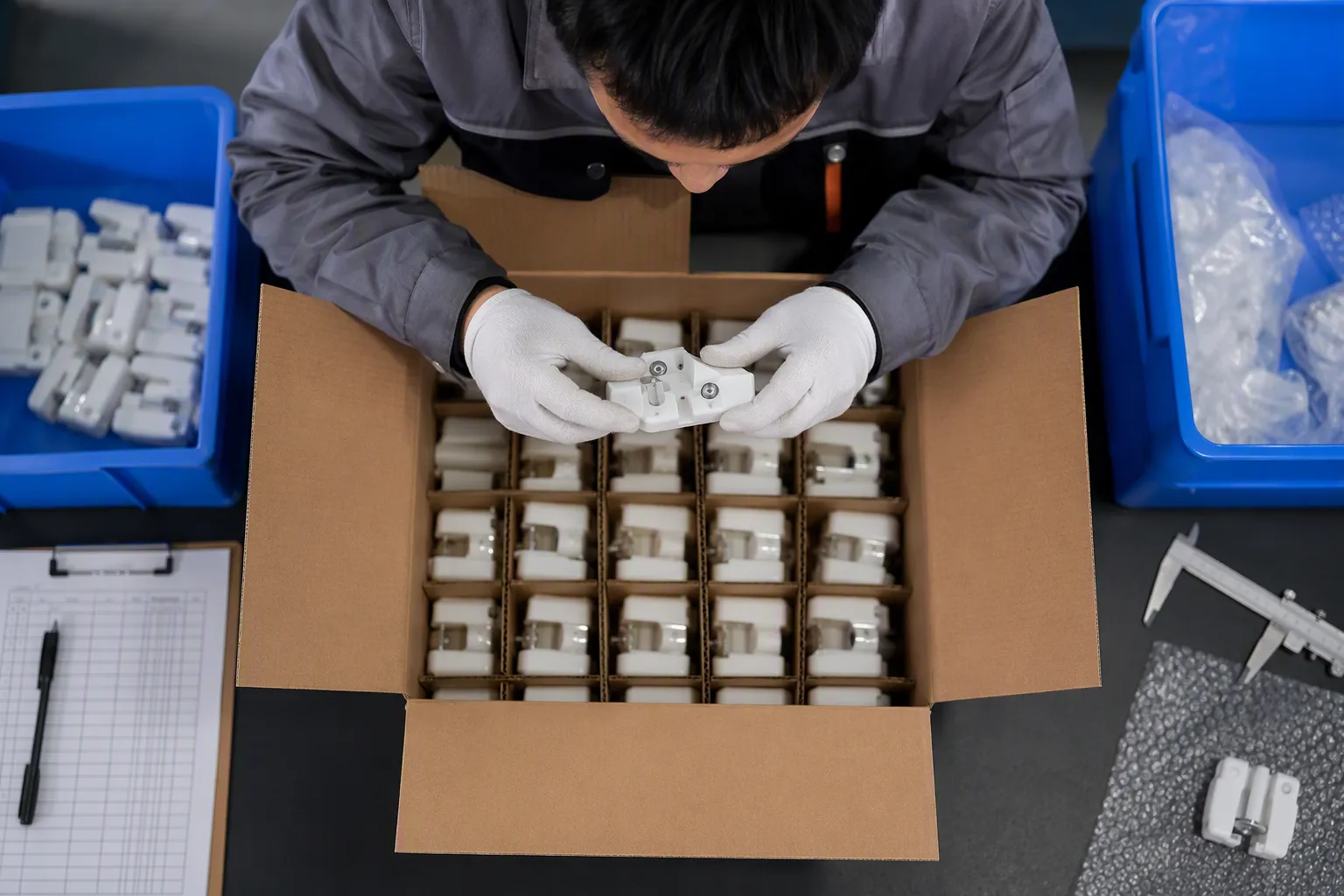
A warehouse does not automatically know whether a carton belongs to the right purchase order[3], whether the quantity is complete, or whether a product is suitable for shipment. Those decisions need a plan.
Start With the Order Plan, Not the Warehouse
Before suppliers send goods to a China warehouse, I recommend building a simple inbound order plan. This does not need to be complicated. A spreadsheet or shared order tracker is often enough, provided it gives everyone the same reference point.
The plan should include:
- Supplier name and contact person
- Purchase order or internal reference number
- Product name, SKU, color, size, or variant
- Expected quantity and carton count
- Estimated completion date
- Expected warehouse delivery date
- Required labels, inserts, accessories, or packaging
- Inspection or checking scope
- Target shipping date and destination
- Whether the goods can ship separately if another supplier is late
For overseas e-commerce sellers, the SKU detail matters. A supplier may describe a product as “black charger” or “large storage bag,” but that may not be enough for warehouse identification. If a buyer has three black charger variants or several packaging versions, the receiving team needs a clear label, SKU code, or carton mark.
A warehouse can receive cartons efficiently, but it cannot correct an unclear purchase order after the goods arrive.
Based on common coordination issues we see, the biggest problem is not always a late factory. It is often a missing instruction. One supplier sends 30 cartons with no purchase order reference. Another sends mixed SKUs in one carton. A third supplier ships accessories separately because they were completed later. These deliveries may all physically arrive, yet the buyer still has no reliable confirmation that the shipment is ready.
Use a Practical Receiving Workflow
A well-managed China warehouse process usually follows a sequence. Each step creates a record that helps the buyer make the next decision.[4]
| Workflow stage | Main purpose | Buyer decision needed |
|---|---|---|
| Supplier delivery | Move goods from factory to warehouse | Confirm delivery address and booking process |
| Receiving and identification | Match cartons to supplier and order reference | Provide PO, SKU, carton mark, and expected quantity |
| Agreed receiving checks | Confirm basic arrival information | Define what the warehouse should count or photograph |
| Consolidation or repacking | Combine compatible goods or adjust outer packing | Approve packing method and shipment grouping |
| Shipping instruction confirmation | Confirm readiness and freight arrangement | Approve destination, shipment method, and release |
| International dispatch | Hand goods to the nominated shipping channel | Confirm final shipping documents and tracking process |
This workflow may look basic, but it gives buyers control over what can otherwise become a confusing collection of cartons.
For example, a brand may buy custom packaging from one factory, electronic accessories from a second supplier, and printed inserts from a third. If the accessory supplier delivers first, the warehouse can receive and identify the goods. It should not assume that the accessories are ready for dispatch before the packaging and inserts arrive.
The buyer may decide to wait for all components. Alternatively, the buyer may choose to send a partial shipment to meet a sales deadline. Both options can be reasonable. The important point is that the decision belongs to the buyer, based on current order status and shipping requirements.
Receiving Checks Are Not Full Quality Inspection
Buyers should also separate warehouse receiving checks from a formal quality inspection process.
Basic receiving checks can be useful for confirming practical information[5], such as:
- Whether the expected number of cartons arrived
- Whether cartons appear visibly damaged on arrival
- Whether carton marks match the provided references
- Whether the stated SKU or product label appears correct
- Whether obvious accessories, inserts, or packaging components are present
- Whether photo records are needed before consolidation
These checks help identify obvious discrepancies before shipping. However, they do not replace a separately defined product inspection. A warehouse receiving team may not open every carton, test product functions, measure dimensions, verify materials, or assess workmanship unless those services and acceptance criteria have been agreed in advance.
This distinction matters especially for private-label and OEM orders. A buyer might require inspection of logo placement, product color, retail packaging, barcode readability, battery performance, or accessory compatibility. Those are product-specific requirements. They need a defined inspection scope, sampling level, checklist, and reporting method.[6]
At KingSourcing, we encourage buyers to define the level of receiving, quality control, 1-by-1 checking, or packaging verification they need before goods reach the warehouse. That makes responsibilities clearer. It also reduces the risk of assuming that someone else has checked a critical detail.
“All Goods Arrived” Does Not Mean “Ready to Ship”[7]
This is one of the most important distinctions for multi-supplier buyers.
A China warehouse may confirm that every supplier delivery has arrived. However, the shipment may still be incomplete or unsuitable for international dispatch. The buyer should verify shipment readiness against the full order plan.
Before release, I would normally ask the buyer to consider the following questions:
-
Are all required SKUs present?
A shipment can contain every carton expected from a supplier while still missing one product variant or replenishment item. -
Do the quantities match the approved order?
A short quantity may be acceptable in some cases, but it should be identified before the goods leave China. -
Are the correct variants included?
Color, size, plug type, language version, logo version, and packaging format can matter as much as total quantity. -
Are accessories and bundled components complete?
Chargers, cables, manuals, inserts, labels, gift boxes, and replacement parts may come from separate suppliers. -
Is the packaging ready for the sales channel?
Marketplace products may need barcodes, warning labels, carton marks, or other buyer-specified packaging requirements. -
Has the agreed inspection or checking process been completed?
If a buyer ordered quality inspection, the shipment should not be treated as ready until the inspection result has been reviewed. -
Does the shipment match the shipping plan?
The buyer should confirm whether cartons, palletization, repacking, or product grouping suits the chosen freight method.
In recurring multi-factory orders, I often see that the final missing item is not the main product. It may be a printed instruction card, spare cable, branded box, or carton label. These components can seem minor until the goods reach a fulfillment center or customer. Then they become expensive to fix.
Consolidation Is a Trade-Off, Not an Automatic Saving[8]
Consolidation means combining goods from multiple suppliers into one planned shipment or a smaller number of shipments. It can simplify handling, reduce duplicated collection activity, and make it easier for the buyer to manage one shipment release. But it is not automatically cheaper or faster.
The best decision depends on the buyer’s timeline, volume, freight method, supplier reliability, and destination requirements.
| Consolidation may be useful when | Separate shipments may be better when |
|---|---|
| Several suppliers will finish within a similar period | One supplier is significantly late |
| The buyer wants one coordinated inbound shipment | Urgent stock must leave before the full order is ready |
| Products need to be combined with inserts or packaging | Products have different shipping restrictions or handling needs |
| The buyer wants one pre-shipping review point | The cost of waiting exceeds the benefit of consolidation |
| Cartons need repacking or clearer shipment labeling | One supplier’s goods are already ready for a direct shipment |
For example, an online seller may have four suppliers scheduled to deliver within one week. Consolidating those goods may make operational sense because the buyer can confirm all SKUs, apply agreed labels, and arrange one international dispatch.
However, if one supplier misses its delivery date by two weeks, waiting may affect inventory availability. The buyer may decide to ship the ready products first and send the delayed items later. That may involve additional handling or freight activity, but it can be the better commercial decision.
There is no universal rule. Buyers should compare the cost and risk of waiting against the cost and complexity of splitting shipments. Freight providers or qualified logistics professionals should confirm application-specific shipping options, restrictions, and destination requirements.
Create Clear Supplier Delivery Instructions

Supplier cooperation is essential. A China warehouse cannot manage arrivals well if each factory ships cartons in its own way with incomplete information.
Before production is completed, suppliers should receive a delivery instruction that explains:
- The warehouse name, address, and contact details
- The delivery hours or booking process, where applicable
- The buyer’s order reference number
- Required carton marks
- SKU and quantity information
- Carton count and gross weight, if requested
- Whether mixed SKUs are allowed in the same carton
- Whether the supplier must send a packing list before delivery
- Whether the supplier should notify the buyer or warehouse before dispatch
A carton mark can be simple, but it should be consistent. For example:
Buyer reference: KS-PO-1045
Supplier: Supplier A
SKU: USB-CABLE-BLK-1M
Carton: 1 of 12
This type of information makes receiving faster and reduces the chance that goods are set aside as unidentified stock.
Suppliers should also send the buyer or warehouse a delivery notice before dispatch. The notice can include the courier tracking number, local truck details, carton count, estimated arrival date, and packing list. This gives the receiving team an expectation of what is coming.
Decide the Warehouse Scope Before Goods Arrive
Warehousing services vary. Buyers should not assume that every warehouse will provide the same receiving, storage, repacking, inspection, labeling, or shipping support.
Before sending inventory, clarify the agreed scope in writing. Useful questions include:
- What information must suppliers provide before delivery?
- Will the warehouse count cartons, units, or both?
- Will the warehouse photograph outer cartons or product packaging?
- Can the warehouse open cartons for agreed verification?
- Is 1-by-1 product checking available if needed?
- Can the warehouse apply labels, inserts, stickers, or polybags?
- Can it combine products from different suppliers into retail sets?
- How are damaged or unmatched cartons handled?
- What storage period is included, if any?
- What happens if goods remain in storage longer than planned?
- Who can authorize repacking, consolidation, or shipment release?
At KingSourcing, our warehouse coordination is connected to the broader procurement workflow. That means we can help buyers align supplier deliveries, quotations, sample approvals, inspection plans, packaging requirements, consolidation, and shipping instructions. Still, each order needs its own agreed process. A complex private-label order needs more control points than a simple wholesale replenishment order.
Use the Warehouse to Improve Decision-Making
The most effective warehouse setup gives the buyer visibility before international shipping. Instead of asking, “Have all goods arrived?” buyers can ask more useful questions:
- What has arrived, and what is still outstanding?
- Which cartons match the purchase order?
- Are any products awaiting inspection or approval?
- Do the quantities and variants match the order tracker?
- Is the shipment ready for consolidation?
- Should we wait, split the shipment, or send partial stock?
- Are final packaging and shipping instructions confirmed?
That visibility is particularly useful for overseas buyers who do not have their own purchasing team in China. A local control point can make supplier communication more manageable, especially when different factories use different schedules and deliver through different local carriers.
The goal is not to keep goods in storage for as long as possible. The goal is to use the China warehouse to create an accurate, documented handover from suppliers to international shipping.
China Warehouse FAQs
How long can goods stay in a China warehouse?
Storage periods depend on the warehouse provider and service agreement. Buyers should confirm included storage time, possible storage charges, and release conditions before suppliers deliver goods. A warehouse works best when it supports a planned shipping window rather than becoming indefinite inventory storage.
Can a China warehouse consolidate goods from different suppliers?

Yes, a China warehouse can consolidate goods from different suppliers when deliveries are correctly identified and the buyer approves the shipment plan. Buyers should first confirm quantities, SKUs, packaging, inspection status, and any shipping restrictions. Consolidation should not happen automatically simply because all cartons are present.
Does warehouse receiving include quality inspection?
Not necessarily. Basic receiving may confirm carton counts, labels, visible condition, or agreed arrival records. A quality inspection can involve broader checks such as workmanship, functions, product specifications, packaging, and sampling. Buyers should define inspection scope separately before goods are released for shipment.
What should suppliers put on cartons sent to a China warehouse?

Suppliers should use clear carton marks with the buyer’s purchase order reference, supplier name, SKU or product description, carton number, and total carton count. Buyers may also request color, size, model, destination, or packaging information where relevant to the order.
Should I wait for every supplier before shipping from China?
Not always. Waiting can simplify consolidation, but a late supplier may affect your inventory deadline. Buyers should compare the value of shipping ready goods sooner against the added handling and freight complexity of splitting shipments. The right option depends on the order, timing, and destination requirements.
Conclusion: Using a China Warehouse With More Control
A China warehouse is most valuable when buyers use it as a planned control point before international shipping. It can help receive fragmented supplier deliveries, identify goods, coordinate agreed checks, prepare consolidation, and confirm that every order component is ready. It cannot replace clear purchase orders, defined quality inspection, or buyer approval. If you are sourcing from multiple Chinese factories, KingSourcing can help you coordinate supplier deliveries, warehouse handling, quality control, consolidation, and shipping preparation with a clearer procurement workflow.
Sources
- Improving Your Manufacturing Operations Using Warehouse ...", Supply-chain literature describes warehouses as facilities that receive goods, hold inventory, consolidate orders, and support outbound distribution between production and final transportation
- [PDF] Use of quality assurance systems in the fastener industry", Quality-management guidance distinguishes verification of incoming goods from broader product inspection, which requires defined acceptance criteria, inspection methods, and records
- [PDF] Purchase Order User Guide", Standard receiving controls compare delivered goods and accompanying documents with purchase-order information so that items can be identified, counted, and recorded accurately
- Guidance on the requirements for Documented Information ...", Quality-management principles use documented records and traceability to verify process status, investigate discrepancies, and support controlled release decisions
- 14 FAH-1 H-310 RECEIPT AND STORAGE PROCEDURES ...", Incoming-goods procedures commonly include checking quantities, packaging condition, item identification, and accompanying shipment documentation before goods are accepted into inventory
- 6.2.1. What is Acceptance Sampling?", Inspection and acceptance-sampling methods require a defined inspection scope, sampling plan, acceptance criteria, and recorded results to support consistent conformity decisions
- Special Documents - International Trade Administration", Export-preparation guidance treats physical availability as only one release condition; documentation, packaging, marking, and applicable transport or destination requirements must also be verified
- [PDF] ANNUAL PERFORMANCE PLAN - Department of Transportation", Logistics research characterizes freight consolidation as a cost-service trade-off: combining loads may improve transport utilization, but it can also add waiting time, coordination requirements, and inventory-delay costs