Quick Answer
A China factory audit checklist helps us avoid one of the most expensive sourcing mistakes: trusting supplier claims before we understand what sits behind them. A polished website, quick quotation, or attractive certificate can create confidence too early. We use an audit to compare the supplier’s story with its actual factory, processes, controls, and accountability.
A China factory audit checklist should verify whether a supplier’s legal identity, claimed manufacturing capability, production ownership, quality controls, capacity, and subcontracting arrangements fit the specific order we plan to place. It is not a guarantee of future quality or delivery[1], but it gives us practical evidence before we approve samples, pay a deposit, or sign a purchasing agreement.
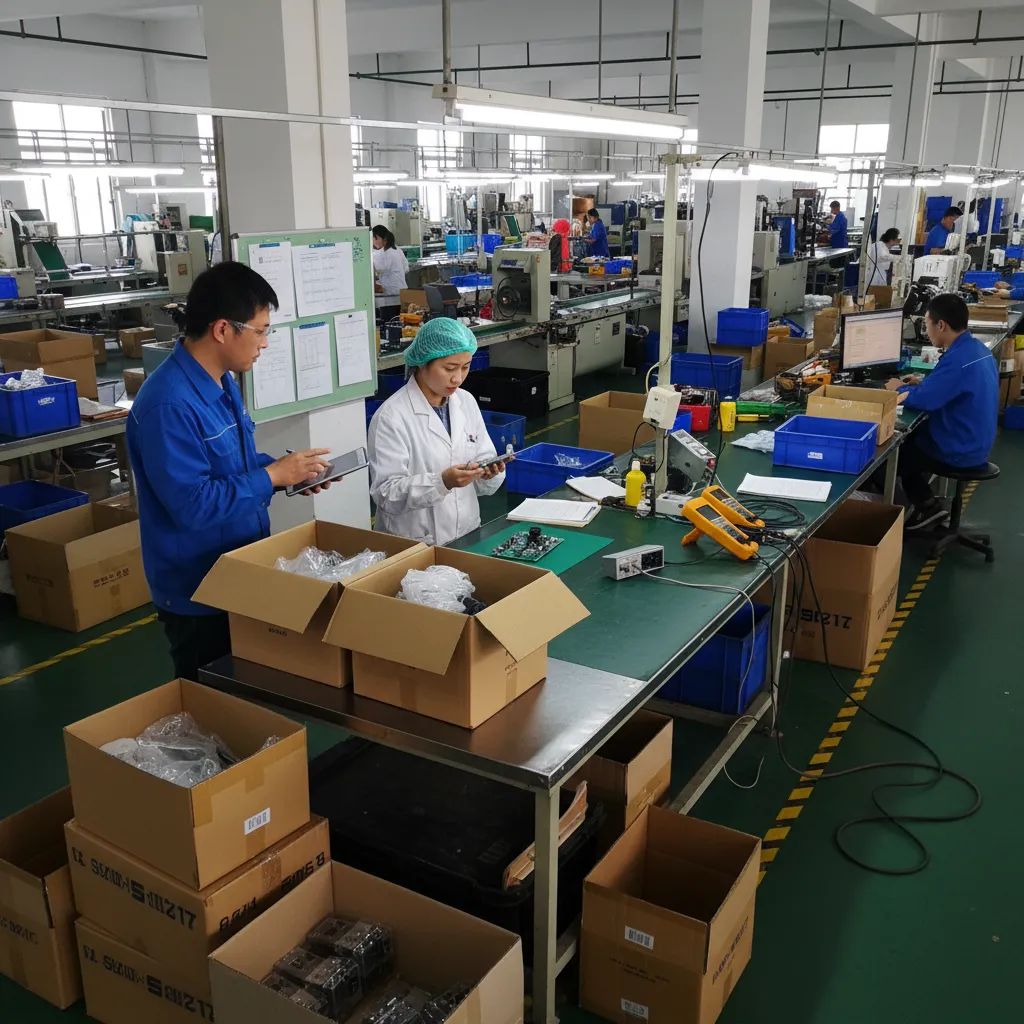
Before we move forward, we need to answer a simple question: does this supplier actually have the people, equipment, process control, and accountability needed for our product? The answer rarely comes from one document. It comes from connecting documents with what we can see, ask, and verify on site.
China Factory Audit Is Not a Document-Checking Exercise
A China factory audit can become misleading when we treat it as a paperwork collection task. A supplier may provide a business license, certificates, product photos, and a factory address, yet important questions can remain unanswered. We need to look beyond the documents and test whether the operational reality supports the order risk.
A China factory audit is a pre-contract supplier-selection tool, not simply a document review.[2] We use it to assess whether the supplier’s identity, factory ownership, equipment, production flow, quality system, workforce, and stated capacity match the product we want to buy. Any inconsistency is a point to verify before we commit funds.
Start With the Purchase, Not the Supplier’s Presentation
In our work at KingSourcing, we do not start an audit by asking whether a supplier looks impressive. We start with the actual purchase requirement.
A supplier can be capable of making one type of product and still be a poor fit for another. For example, a factory that assembles basic USB cables may not have the process controls, testing tools, or engineering support needed for a customized electronic accessory. Likewise, a promotional-products supplier may be strong at standard logo printing but weak at managing color matching, retail packaging, or multi-component assembly.
Before we review the factory, we define the order risks that matter most:
- What product are we buying?
- Which features are customized?
- Which production steps affect quality most?
- Does the product require assembly, testing, printing, molding, coating, or packaging?
- What is the expected order quantity and delivery window?
- Will the supplier need to manage components from other factories?
- What quality standard will we use for sample approval and inspection?
This step changes the audit from a generic visit into a purchasing decision. We are not trying to decide whether a factory is “good” in a broad sense. We are trying to determine whether it is suitable for this product, this quantity, this quality expectation, and this commercial arrangement.
We often find that the most useful audit question is not “Do you have a factory?” It is “Which parts of this order do you truly control?”
What Does the Business License Actually Prove?
A business license is a useful starting point in a China factory audit checklist.[3] It can help us compare the supplier’s registered name, legal representative, registered address, business scope, and operating status with the information provided during quotation. However, a license is not proof that the company owns a factory, produces the quoted product, or can manage a large overseas order.[4]
We use the document to build a verification path, not to close the case.
For example, we compare the registered company name with:
- The name on the quotation and proforma invoice
- The bank account beneficiary
- The name used on certificates or test reports
- The company name displayed at the factory
- The entity that will sign the purchase agreement
- The company that claims responsibility for quality and delivery
A mismatch does not always mean that a supplier is unsuitable. A trading company may legitimately work with a separate manufacturing partner. A group company may use different entities for export and production. Still, we need a clear explanation before we move forward.
| Item to compare | What it may help us understand | Point to verify |
|---|---|---|
| Registered company name | Legal entity identity | Does it match the contract and payment entity? |
| Registered address | Official registration information | Is it an office, a factory, or another location? |
| Business scope | Stated business activities | Does it reasonably relate to the quoted product? |
| Factory address | Production location | Can the supplier show who operates the site? |
| Bank beneficiary | Payment destination | Is there a clear commercial relationship to the seller? |
We should also be careful with supplier websites and online storefronts. A professional website can show that a supplier invests in marketing. It does not prove production ownership, product-specific expertise, or consistent quality management.[5] We treat it as background information, not operational evidence.
Does This Supplier Actually Make the Product?
This is usually the central question in a China factory audit checklist. Many suppliers can source products, coordinate factories, or present themselves as manufacturers. None of those business models is automatically wrong. The risk appears when the supplier is unclear about which party makes the product and who will be accountable if quality, timing, or specifications change.
We ask direct questions:
- Which production processes happen at this location?
- Which processes are outsourced?
- Which components come from outside suppliers?
- Who owns the tooling, molds, designs, or product files?
- Who approves incoming materials?
- Who conducts final assembly and final inspection?
- Who manages corrective action if defects are found?
- Who will communicate with us if production is delayed?
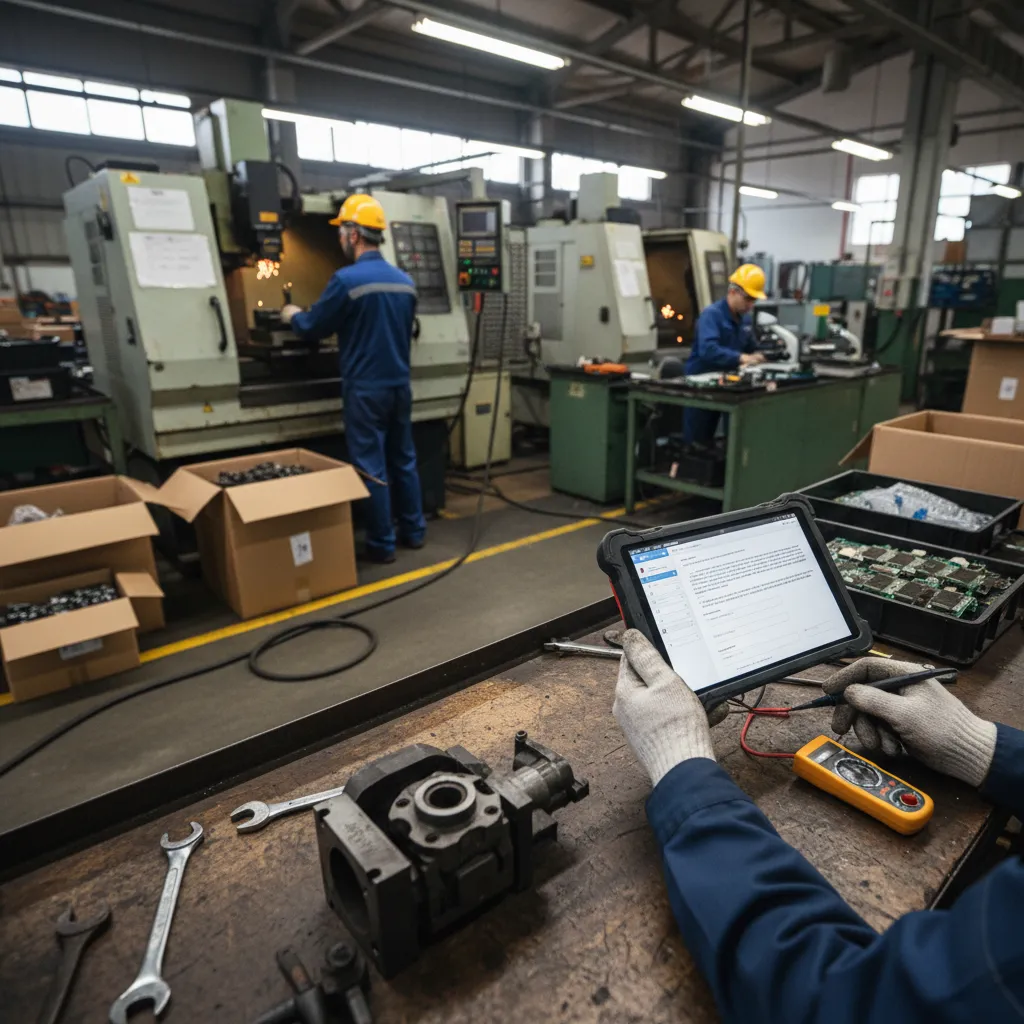
We then compare the answers with what we observe. If a supplier claims to manufacture a product, we would expect to see a credible relationship between the product and the facility. That may include relevant machinery, materials, workstations, operators, production records, samples, quality checkpoints, and packaging activity.
The exact evidence depends on the category. For electronics and 3C accessories, we may look for assembly areas, functional testing arrangements, incoming component checks, soldering or assembly controls, and traceability practices where relevant. For customized consumer products, we may focus on molding, printing, sewing, coating, assembly, packaging, and color-control methods.
A factory does not need to perform every step in-house to be a workable supplier. In China, specialized subcontracting is common.[6] The important issue is whether the supplier is transparent and capable of managing the outsourced process.
Verify Factory Ownership, Trading Status, and Subcontracting
We do not assume that every supplier owns the facility we visit. Some suppliers are factory owners. Some are export trading companies with stable factory relationships. Some manage a combination of owned production and outsourced processes. Each model can work, but the buyer needs to understand the chain of responsibility.
A supplier becomes harder to evaluate when it avoids straightforward questions about where production happens or who controls the production schedule.
Questions We Use to Clarify Accountability
We ask the supplier to explain the supply chain in practical terms:
- Who receives our purchase order?
- Who purchases the raw materials or components?
- Who controls the production plan?
- Who supervises workers and equipment?
- Who performs in-process quality checks?
- Who holds the final production records?
- Who accepts responsibility for rework or replacement?
- Who communicates with us during production?
- Who is responsible if a subcontractor misses the schedule?
If a trading company is involved, we do not automatically reject it. A capable trading company can provide useful product development support, English communication, multi-factory coordination, packaging management, and export handling.[7] However, we need visibility into the actual manufacturing source and a clear agreement on quality accountability.
In our experience, unclear subcontracting is a common risk signal. We become more cautious when a supplier cannot identify the production location, says all processes are in-house but cannot show them, or gives changing explanations about who makes the product.
That does not mean we should make an immediate accusation. It means we should pause, ask for clarification, and expand verification before approving a deposit.
Inspect Equipment, Production Flow, and Process Fit
A factory floor can look active and still tell us very little unless we know what to inspect. We focus on whether the equipment and workflow match the product being quoted.
For a basic plastic item, we may need to understand mold ownership, molding capacity, trimming, assembly, printing, and packing. For a private-label electronic product, we may need to understand component sourcing, assembly, functional testing, labeling, firmware handling if applicable, and final packaging. For a multi-SKU wholesale program, we may need to assess the supplier’s ability to sort, label, count, and prepare mixed cartons accurately.
We look for a logical production flow:
- Incoming material or component receipt
- Material identification and storage
- Preparation or pre-production setup
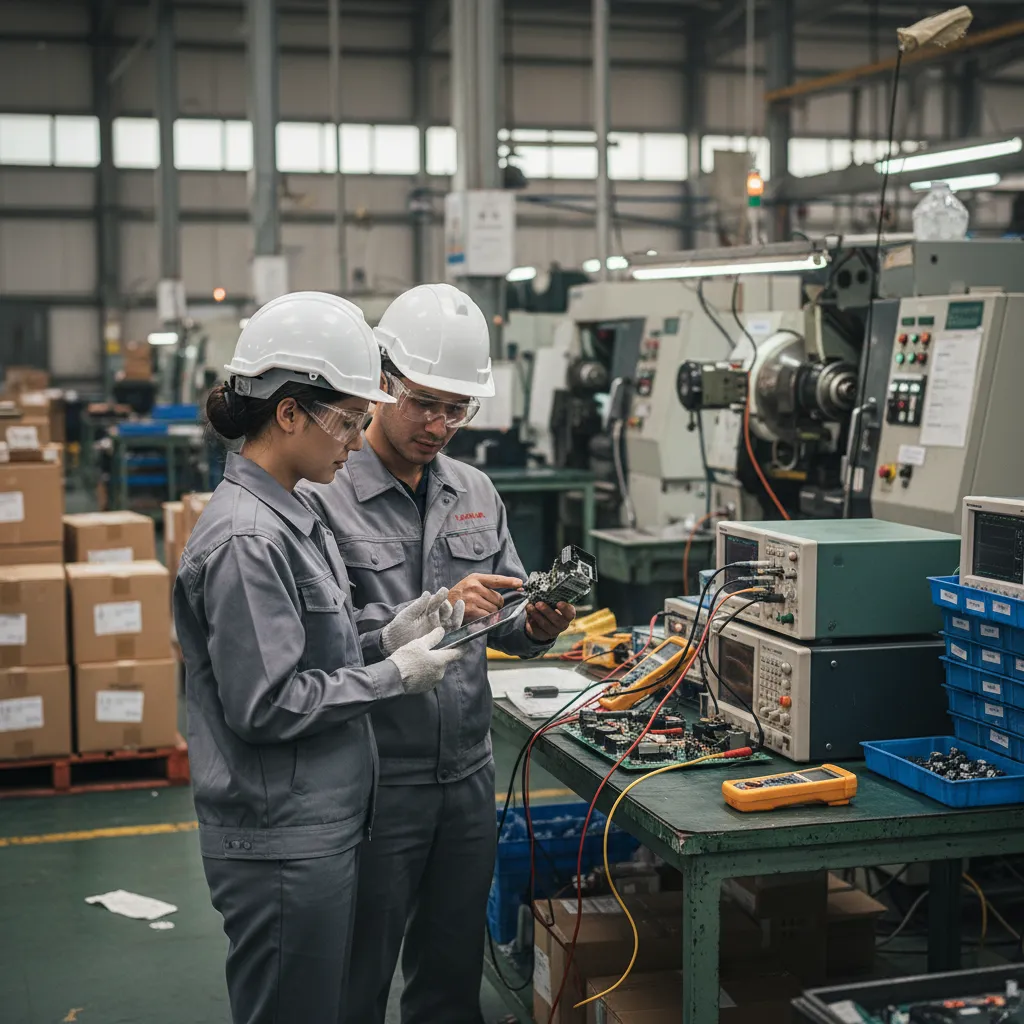
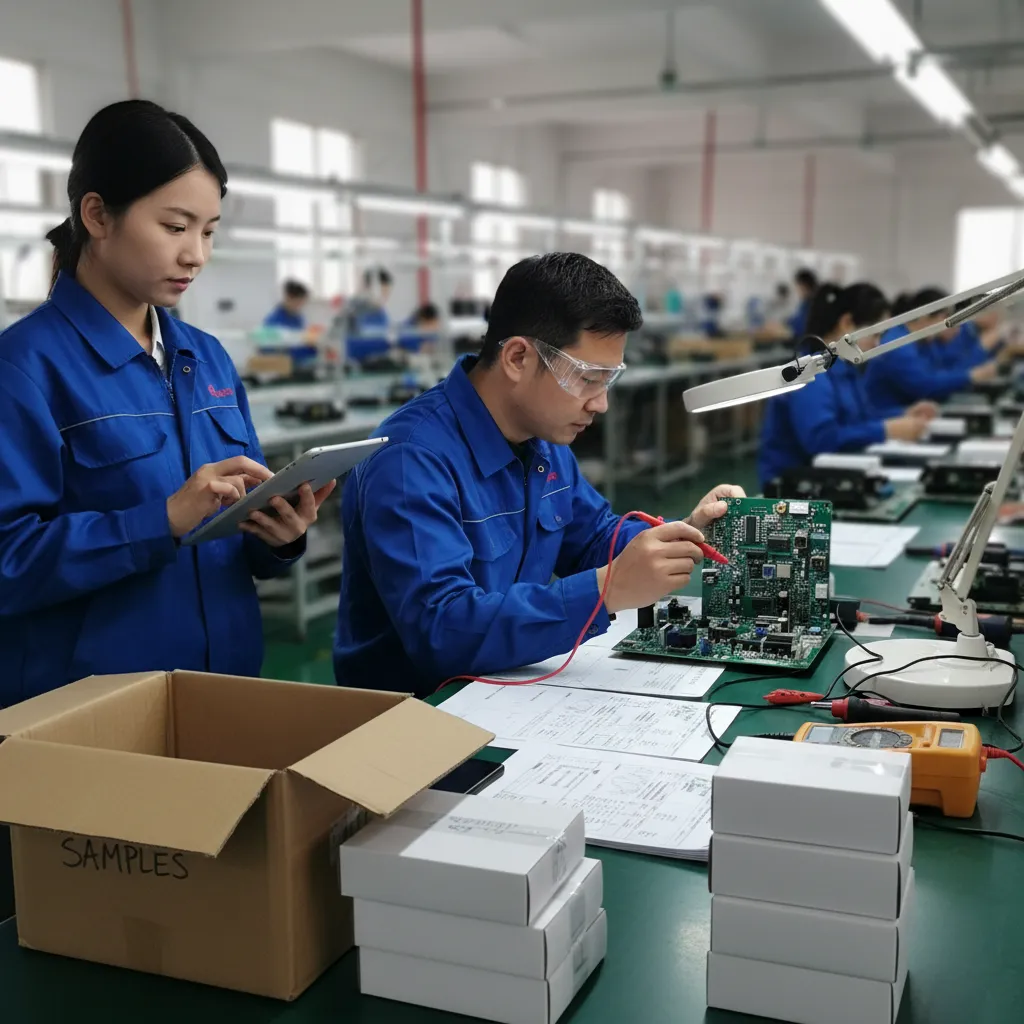
- Core manufacturing or assembly
- In-process quality checks
- Testing or functional verification where relevant
- Final inspection
- Packing, labeling, and carton control
- Finished-goods storage and shipment preparation
The absence of a perfect-looking production line is not always a reason to walk away. Smaller factories may have simpler systems. However, we need to see that the process is controlled enough for the buyer’s expectations.
For example, if the order requires exact logo placement, retail barcode labels, or mixed product bundles, we should see how the supplier prevents mix-ups. If the product has functional requirements, we should ask what testing occurs, who performs it, and how results are recorded. If the supplier cannot explain the process in a clear and repeatable way, we may need more evidence before proceeding.
Review Quality Control as a Working Process
Many suppliers say they have “strict QC.” We do not treat that phrase as evidence. We ask how their quality control works on the product we are buying.
A useful quality discussion should cover the actual points where defects can occur. These may include material selection, dimensions, appearance, color, printing, assembly, functionality, accessories, packaging, labeling, carton marks, and shipment quantities.
We want to understand:
- Who checks incoming materials?
- What happens when incoming materials fail?
- Are production samples or golden samples used?
- What checkpoints exist during production?
- Who has authority to stop or correct a problem?
- How are defects recorded and separated?
- Is rework controlled and rechecked?
- What is checked before packing?
- How are final inspection results communicated?
A supplier may not use the same documentation format that a large multinational buyer expects. Still, the supplier should be able to explain its control process in a way that makes sense. We prefer evidence that is connected to the current product category rather than generic quality posters on a wall.
| Quality control area | Practical audit question | Why it matters |
|---|---|---|
| Incoming materials | How do you identify and approve key components? | Poor components can create defects before assembly begins.[8] |
| Production checks | At which stages do you inspect the product? | Early checks can reduce repeated defects. |
| Functional testing | What does each unit or sample undergo? | Buyers need to understand test coverage and limits. |
| Defect handling | What happens to rejected units? | Mixing rejected and approved goods creates avoidable risk. |
| Final packing | How do you confirm labels, quantities, and cartons? | Packaging errors can disrupt retail or marketplace fulfillment. |
We also keep the limits of an audit clear. Seeing a quality process does not guarantee that every unit in a future order will meet specification. That is why we normally recommend approved samples, written specifications, production follow-up, and pre-shipment inspection for orders where the risk justifies it.
Check Capacity Without Relying on a Sales Promise
Capacity is easy to overstate during supplier discussions. A supplier may tell us it can produce a large quantity quickly, but the useful question is whether it can do so while maintaining the required process, labor, materials, and quality control.
We ask about the current production schedule, not only theoretical monthly output. A factory may have enough machines on paper but limited available time because of existing orders. It may rely on seasonal labor. It may also face long lead times for certain components, packaging materials, or custom tooling.
A practical capacity review can include:
- Number and type of relevant machines
- Number of active lines or workstations
- Approximate workforce assigned to the process
- Current production workload
- Shift arrangements, if any
- Lead time for materials and components
- Storage space for raw materials and finished goods
- Ability to handle peak-season demand
- Backup plans for equipment failure or material delays
We do not need to demand confidential details from every supplier. However, we should expect enough information to judge whether the quoted lead time is realistic.
When a supplier gives a very fast delivery promise, we compare that promise against the actual workflow. If custom packaging needs approval, materials need ordering, production needs scheduling, and goods need inspection, then the timeline should account for each step. A vague “no problem” answer is not a production plan.
Treat Inconsistencies as Decision Signals
The value of a China factory audit checklist often comes from what does not line up. A document may show one address while the supplier takes us to another location. A sales representative may claim in-house production, while the factory staff describes outsourced work. A certificate may be presented without a clear connection to the quoted product or legal entity.
We do not assume that every inconsistency indicates dishonesty. Chinese supply chains can involve multiple entities, rented facilities, subcontractors, export companies, and specialized process partners. Still, each inconsistency deserves a clear explanation.
These are common points that make us slow down:
- The supplier will not disclose the actual production location.
- The company name changes across quotation, payment request, and factory documents.
- The factory cannot show relevant equipment or work in progress.
- Staff give conflicting explanations about production ownership.
- Quality records are generic, incomplete, or unrelated to the product.
- The supplier cannot explain how defects are handled.
- The quoted lead time does not fit the observed capacity.
- The supplier resists sample approval or independent inspection.
- Certificates are presented without explaining their scope, issuer, date, or relevance.
When we find a gap, we ask for more evidence. This may include an additional factory visit, a video walkthrough, product-specific samples, process photos, clarification from the legal entity, or an inspection plan before shipment. For higher-risk products or markets, we also recommend that buyers obtain qualified professional advice on application-specific testing, compliance, or technical requirements.
China Factory Audit Checklist FAQs
What should be included in a China factory audit checklist?
We include supplier identity, factory location, manufacturing ownership, product-specific equipment, production flow, subcontracting, quality controls, capacity, workforce, packaging capability, and commercial accountability. We also compare the supplier’s documents and claims with the practical evidence available at the production site.
Is a business license enough to verify a Chinese supplier?
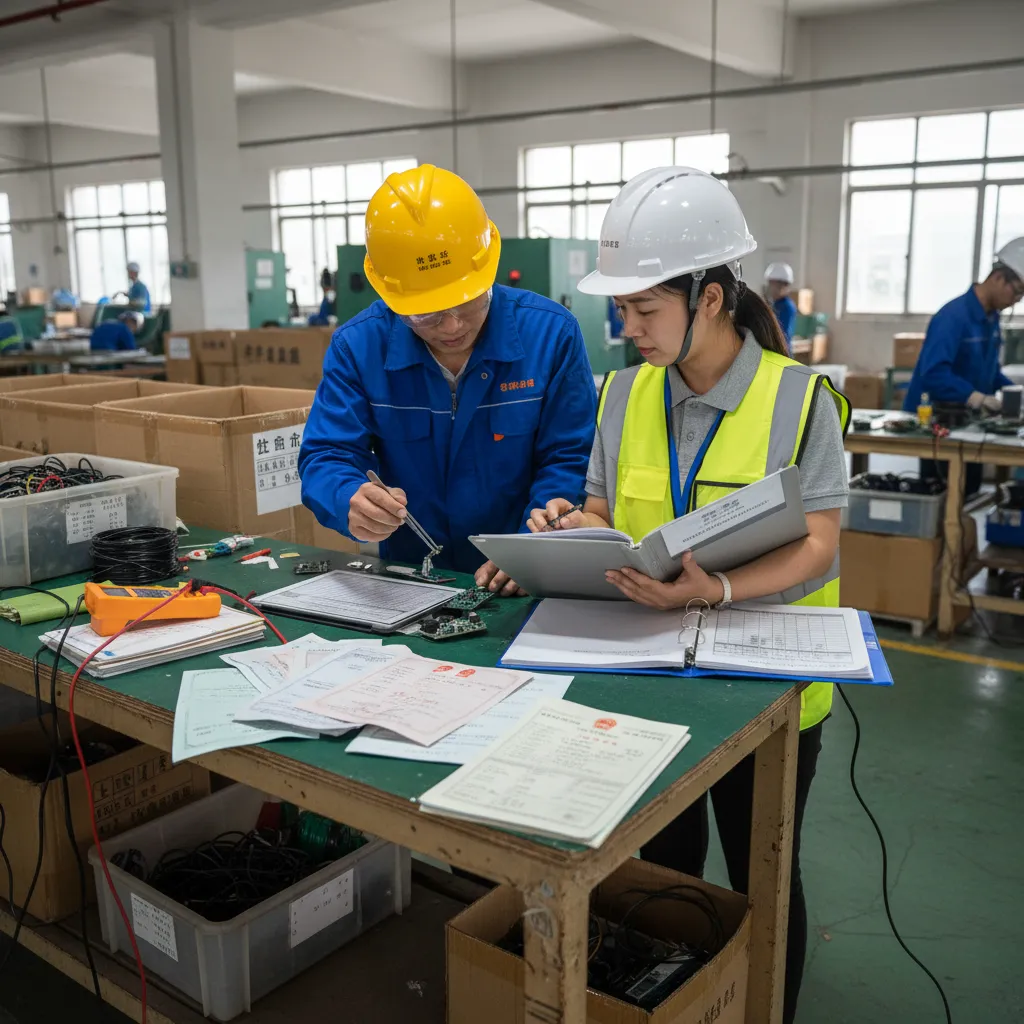
No. A business license can help us identify the registered company and compare key details, but it does not independently prove manufacturing capability, product quality, factory ownership, or delivery reliability. We use it as one verification document within a broader China factory audit process.
Should I avoid trading companies in China?
Not necessarily. A trading company can be useful when it provides strong supplier coordination, product development, packaging support, consolidation, and export management. We recommend verifying the actual factory, subcontracting structure, and quality responsibility so that the buyer knows who controls each part of the order.
Can a factory audit guarantee product quality?
No. A factory audit reduces early supplier-selection risk, but it cannot guarantee future quality, delivery performance, or compliance. We still recommend sample approval, clear product specifications, production follow-up, and product inspection before shipment when the order risk warrants those controls.
When should I conduct a factory audit?
We usually suggest an audit before a buyer pays a significant deposit, confirms a long-term supplier, starts custom tooling, or places a larger first order. For small test orders, the depth of verification can be scaled to the product value, complexity, and consequences of failure.
Conclusion
A China factory audit checklist gives us a more practical basis for supplier selection than certificates, websites, or sales promises alone. We use it to check whether the supplier’s legal identity, manufacturing role, equipment, process flow, quality controls, capacity, and accountability fit the order we intend to place. The audit is not a guarantee, but it helps us identify questions before they become costly problems. If you need local support, we at KingSourcing can help verify suppliers, assess factories, manage samples, inspect production, and coordinate your China purchasing process from sourcing to shipment.
Sources
- Expectations of manufacturing companies regarding future ...", ISO auditing guidance characterizes an audit as a systematic assessment of objective evidence against audit criteria, supporting the view that an audit informs a decision but does not guarantee subsequent supplier performance
- Selecting a Supplier or Independent Contractor - Fingate", Supply-chain research describes supplier evaluation as a pre-award process that assesses prospective suppliers' capabilities, quality systems, and operational risks before selection
- China - Licensing Requirements for Professional Services", China's enterprise-registration framework records basic legal-entity details such as the registered name, domicile, legal representative, and business scope, making registration information a useful starting point for identity checks
- China Supplier Due Diligence Guide: Verify Before You Disclose", Supplier-due-diligence guidance distinguishes verification of a company's legal identity from assessment of its operational capacity, production controls, and ability to meet contractual requirements
- Buying products from whom you know: personal connections ...", Procurement research on supplier information asymmetry explains why supplier-provided promotional information should be corroborated with independent evidence when evaluating operational capability
- Horizontal Subcontracting and the Global Factory", Research on Chinese manufacturing clusters documents extensive specialization among firms and the use of inter-firm subcontracting for particular production stages and inputs
- Exporting Through Intermediaries: Impact on Export Dynamics ...", International-trade research describes intermediaries as entities that can coordinate transactions, manage export-related activities, and connect buyers with multiple producers
- Incoming Material Inspection — Receiving Quality Check", Manufacturing-quality research identifies incoming material and component variation as an upstream source of downstream process variation and finished-product defects