 Skip to content

Quick Answer
Documents needed for shipping from China can become a serious problem when a buyer treats paperwork as an afterthought. Missing information may delay dispatch, create customs questions, or produce unexpected costs. I help coordinate sourcing and shipping, and I have seen how a simple mismatch between a supplier’s packing details and a logistics document can require correction before goods leave China.
The documents needed for shipping from China depend on three factors: the product, the destination country, and the transport method.[2] Most commercial shipments require a commercial invoice, packing list, and bill of lading or airway bill[1], but some products and destinations require additional licenses, certificates, permits, or compliance records. Buyers should verify the complete document set and check that all shipment details match before dispatch.

A universal checklist sounds convenient, but it can create false confidence. A shipment of general consumer goods may follow a different process from electronics, cosmetics, food-contact products, batteries, or regulated equipment. I usually begin with a simple decision framework: identify the goods, confirm the destination, select the transport method, and then verify the documents with the relevant logistics and import professionals.
“What documents are needed to ship from China?” Is It Not a Fixed Checklist
Many first-time importers want one standard list that applies to every order. That approach can fail because customs, carriers, and destination authorities may need different information for different goods. I reduce this risk by treating shipping paperwork as a shipment-specific verification task rather than a folder of standard files.
The documents needed for shipping from China usually include a commercial invoice, packing list, and transport document. However, the product category, destination rules, shipment value, trade terms, and shipping method may trigger additional documents. I recommend confirming the required set with the freight forwarder, customs broker, destination customs authority, or another qualified adviser before shipment.
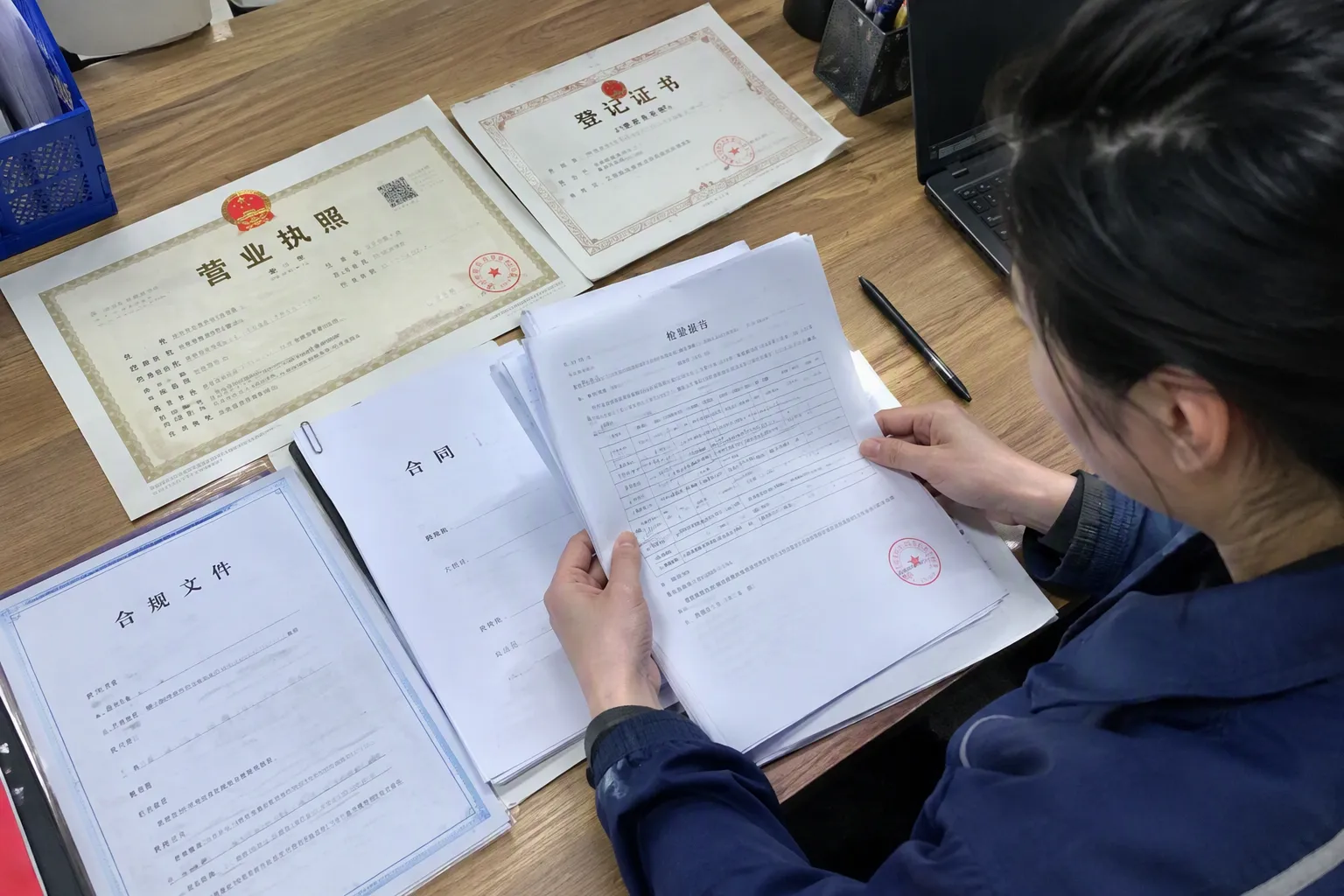
The three variables that change the paperwork
I start with three questions:
- What are the goods?
- Where are the goods going?
- How will the goods travel?
These questions sound basic, but they prevent many common mistakes.
1. What are the goods?
A product description affects the documents that may be required. “Plastic item” or “electronic product” may be too general for a commercial invoice, customs entry, or product review. The buyer, supplier, and logistics provider may need a clearer description that explains what the item is, how it is used, and how it is packaged.[7]
Product details can also affect:
- The customs classification used by the importer or broker
- Whether the goods contain batteries, liquids, magnets, chemicals, or other controlled components[8]
- Whether the goods require special transport handling
- Whether destination labeling or product-safety rules apply
- Whether an import license, permit, test report, or declaration may be relevant
- Whether the carrier accepts the cargo under its normal service
I do not decide legal classifications or compliance requirements on behalf of customs authorities. I help organize the commercial facts so the responsible professional can make an informed determination.
2. Where are the goods going?
The destination country and sometimes the final region or state can change the paperwork. Importers should not assume that a document accepted for one market will satisfy another market.
The destination can affect:
- Required consignee and importer information
- Customs declaration procedures
- Product labeling or language requirements
- Import permits and restricted-goods controls
- Tax or duty documentation
- Certificates or declarations requested by local authorities
- The information needed by a customs broker
I encourage new importers to identify the actual importer of record before the order is finalized. The importer of record may need to provide information that a supplier in China does not have.[3]
3. How will the goods travel?
Sea freight, air freight, courier service, rail, and multimodal transport can use different transport documents and procedures.[4] A full-container sea shipment does not always follow the same document flow as a small parcel or an air-cargo shipment.
The transport method can affect:
- The bill of lading or airway bill
- Cargo booking and cut-off information
- Dangerous-goods declarations
- Packaging and marking requirements
- Weight and volume reporting
- The timing for submitting final documents
- Whether the buyer receives original, electronic, or carrier-issued documents
I usually ask the logistics partner to confirm the document deadline before production finishes. This step gives the supplier time to correct carton counts, weights, dimensions, or consignee details.
Common documents and their practical purpose
The following documents appear frequently in international shipments. I describe their practical role, but I do not treat this list as a universal legal requirement.
| Document | Main purpose | Information I check |
|---|---|---|
| Commercial invoice | Shows the commercial transaction and declared value | Seller, buyer, product description, quantity, unit price, currency, total value, terms |
| Packing list | Explains how the goods are packed | Carton count, carton numbers, contents, quantities, net weight, gross weight, dimensions |
| Bill of lading | Transport document commonly used for sea freight | Shipper, consignee, notify party, vessel or voyage details, port information, cargo description |
| Airway bill | Transport document commonly used for air freight | Shipper, consignee, airport details, pieces, weight, routing, cargo description |
| Purchase order or sales contract | Supports the commercial relationship | SKU, agreed price, quantity, specifications, delivery terms, parties |
| Certificate of origin | May identify the origin of the goods when requested | Product description, manufacturing origin, exporter information, issuing details |
| Product-specific records | May support regulatory or carrier requirements | Product composition, test records, permits, declarations, safety or transport information |
The commercial invoice and packing list deserve particular attention because they are often prepared from different sources.[5] The invoice may come from the supplier’s sales team, while the packing list may be prepared after production by the warehouse or factory. If the teams do not compare the files, inconsistency can appear.
Why document presence is not enough
A buyer can collect every expected file and still face a problem if the information does not agree. I focus on document consistency, not only document availability.
For example, I check whether:
- The product names describe the same goods across documents
- The quantities match the purchase order and final packing list
- The carton count matches the booking and shipping instructions
- The gross and net weights appear reasonable and consistent
- The declared value reflects the commercial transaction
- The consignee name and address are written consistently
- The shipment references and order numbers are correct
- The transport mode matches the carrier document
- The packaging description matches the actual shipment
- The supplier’s final information matches the logistics provider’s records
A small difference may be a harmless formatting issue. A major difference may create a customs question or delay document release.[6] The responsible customs or logistics professional should determine the significance.
A practical document-review workflow
I use a simple sequence when I coordinate a shipment for a buyer.
Step 1: Create a shipment fact sheet
I record the basic facts in one place:
- Buyer and seller legal names
- Product names and SKU references
- Quantities and carton quantities
- Unit prices and total commercial value
- Country of origin
- Final destination
- Incoterms or agreed delivery responsibilities
- Planned transport method
- Consignee and notify-party details
- Special product characteristics
This fact sheet does not replace a commercial invoice or customs entry. It gives each party one reference point.
Step 2: Request draft documents early
I ask the supplier or logistics partner for draft paperwork before the final shipping deadline. I do not wait until the container or air cargo is already moving if the information can be reviewed earlier.
Early review is useful because I can still ask questions such as:
- Why does the packing list show a different quantity from the purchase order?
- Why does the invoice use a product description that the buyer does not recognize?
- Why is the consignee address missing a unit or postal code?
- Why does the carton count differ from the warehouse report?
- Why does the gross weight differ from the booking information?
Step 3: Compare documents against the physical packing result
The final packing list should reflect what the supplier actually packed. I compare the document with the warehouse or factory packing information where available.
I pay attention to:
- Actual carton numbers
- Number of units per carton
- Outer-carton dimensions
- Net and gross weights
- Mixed-SKU cartons
- Pallets or wooden packaging
- Labels and marks requested by the buyer
I have found that many document corrections come from late packing changes rather than intentional errors. A factory may repack goods to improve protection or combine cartons, but the original packing list may remain unchanged.
Step 4: Send the information to the appropriate logistics professional
I provide the freight forwarder or customs broker with the latest confirmed information. I ask that person to confirm whether the documents are sufficient for the planned route and destination.
I do not assume that a supplier, forwarder, or sourcing agent automatically accepts all compliance responsibility. Each party has a different role. The importer remains responsible for confirming its destination-market obligations, while the carrier and broker handle the procedures within their professional scope.
Step 5: Approve the final version
I keep a record of the approved documents and the date of approval. If the supplier changes the quantity, packaging, value, or consignee information afterward, I ask for a new review.
This practice helps prevent different versions from circulating between the buyer, supplier, warehouse, and logistics company.
Product-specific documents require extra care
Some goods may need more than routine commercial and transport paperwork. I do not present any particular certificate or license as universally required because the answer depends on the product and destination.
Examples of categories that may require additional review include:
- Consumer electronics and electrical products
- Products containing lithium batteries
- Cosmetics and personal-care items
- Food, supplements, and food-contact products
- Medical or healthcare-related products
- Children’s products and toys
- Chemicals, liquids, powders, and fragrances
- Wireless or radio-enabled devices
- Products using wood packaging
- Branded goods and intellectual-property-sensitive products
- Plant, animal, agricultural, or natural-material products
The buyer may need to verify product-specific records, testing, labeling, declarations, permits, or transport documents. A supplier may have a document from a previous order, but that does not automatically prove that the document applies to the current product, model, destination, or shipment.
I ask buyers to verify:
- Who issued the document?
- Which product model or SKU does it cover?
- Does it match the actual manufacturer?
- Is the destination market covered?
- Is it current and unaltered?
- Does the relevant authority or broker accept it?
- Does the product remain unchanged from the tested or declared version?
A document review should support a qualified compliance decision. It should not be treated as a substitute for one.
How trade terms affect document responsibilities
The agreed trade term can influence who arranges transport, who provides information, and who pays particular costs. It does not remove the need for the importer to understand its own obligations.
For example, a buyer may assume that a delivered service means every customs or product requirement is automatically handled. That assumption can create confusion if the service provider only coordinates transportation to a named location or excludes certain import procedures.
Before production, I ask the buyer and supplier to confirm:
- Which party books the main transport
- Which party prepares export-side documents
- Which party provides the consignee information
- Which party works with the destination customs broker
- Which party handles import clearance
- Which costs are included and excluded
- Who receives original or electronic documents
- What happens if customs requests clarification
The commercial agreement should explain these responsibilities clearly. The logistics provider can also clarify what information it needs and when it needs it.
A document consistency checklist for first-time importers
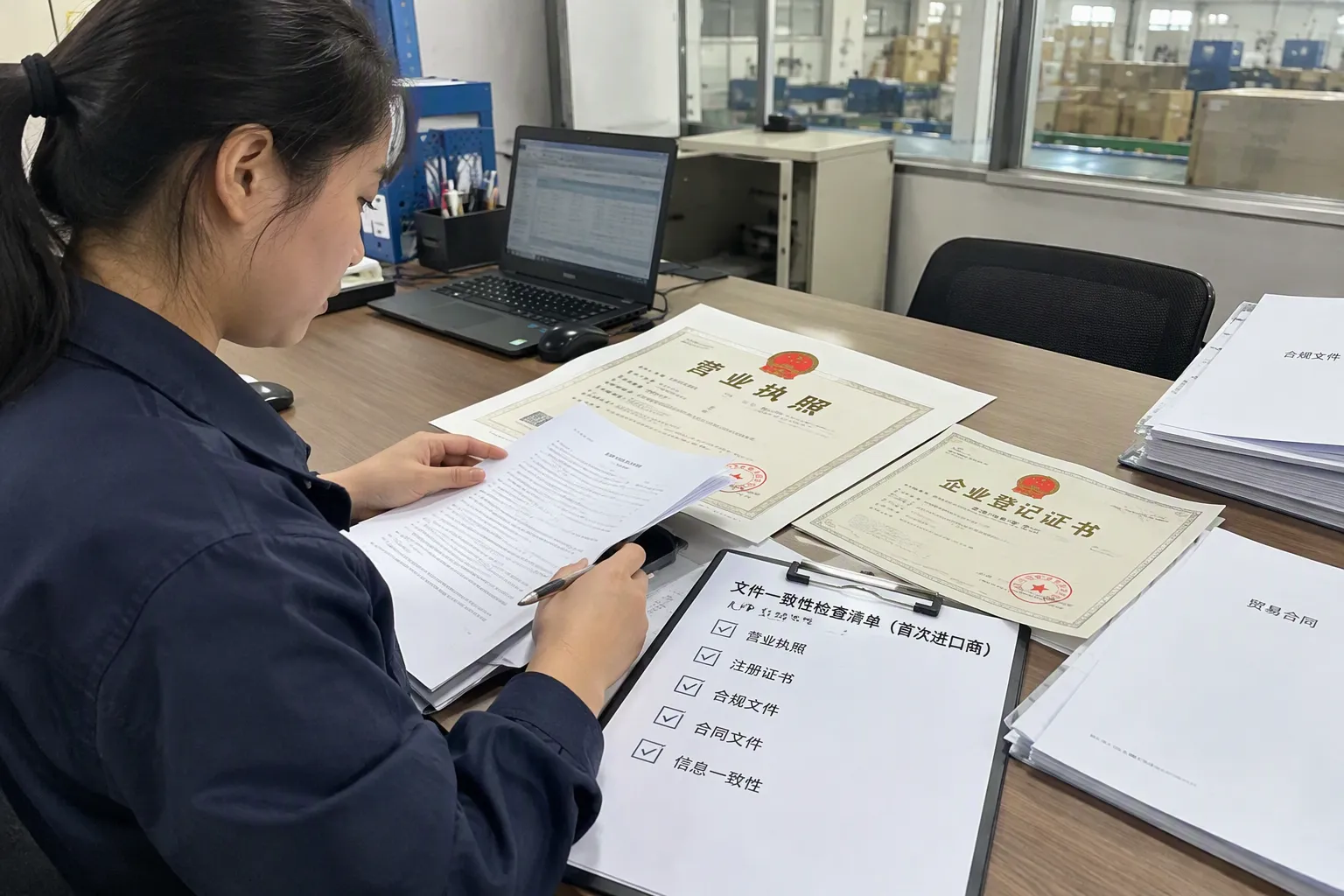
I recommend that first-time buyers use a short review table before dispatch.
| Checkpoint | Buyer’s question |
|---|---|
| Parties | Do the seller, buyer, consignee, and notify party names match the agreed records? |
| Goods | Does each description identify the actual product clearly enough for review? |
| Quantity | Do the purchase order, invoice, packing list, and physical count agree? |
| Value | Does the invoice show the agreed transaction value and currency? |
| Packing | Do carton count, carton marks, dimensions, and weights match the final packing result? |
| Route | Do the transport document and booking reflect the correct origin and destination? |
| Product controls | Has a qualified person checked whether the product needs extra documents? |
| Destination | Has the importer verified local customs, labeling, licensing, and clearance requirements? |
| Timing | Has the buyer submitted final information before the carrier’s cut-off? |
| Version control | Has everyone received the same approved document version? |
I find this approach more reliable than downloading a generic “China import documents” checklist. The checklist should guide questions, not replace shipment-specific verification.
Common mistakes that create delays
I see several recurring document problems in China purchasing projects.
Vague product descriptions
Descriptions such as “accessories,” “samples,” or “parts” may not communicate enough information. The buyer should work with the broker or customs professional to determine what description is appropriate.
Incorrect quantities
A supplier may prepare the invoice from the order quantity while the packing list reflects a partial shipment, replacement units, or extra samples. The documents should explain the actual shipment.
Inconsistent weights
The warehouse may provide gross weights, while another document uses estimated weights. I ask the logistics provider which figures it needs and whether the final packed weight must be updated.
Wrong consignee details
A missing apartment, warehouse code, tax identifier, phone number, or postal code can make delivery and customs communication more difficult. The buyer should provide the exact details requested by the carrier and broker.
Last-minute changes
A supplier may change cartons, split an order, or ship from another facility after the draft documents are issued. I ask for a new comparison whenever the physical shipment changes.
Assuming certificates transfer between products
A test report or declaration for one model may not cover another model. Buyers should verify scope with the relevant authority, laboratory, broker, or qualified product-compliance adviser.
How I help coordinate document checks
My role is practical and administrative rather than regulatory. I help buyers organize the information that moves between suppliers, warehouses, and logistics partners.
When KingSourcing coordinates a shipment, I can help with activities such as:
- Confirming supplier and buyer information
- Collecting draft invoices and packing lists
- Comparing documents with purchase orders
- Checking carton counts and packing information
- Following up with factories about missing details
- Coordinating shipment information with freight partners
- Checking whether the agreed shipping plan has changed
- Organizing documents for the buyer’s internal records
- Supporting multi-supplier consolidation
- Escalating product-specific questions to the appropriate professional
For a multi-supplier order, document control becomes more important. Several factories may use different product descriptions, carton formats, or invoice templates. I try to standardize the commercial references while preserving the information needed for each supplier and shipment.
I remember reviewing an order where the product quantities were correct, but the carton count in the warehouse information did not match the draft transport details. The issue was not complicated, but it required checking which cartons had been consolidated and asking the supplier to revise the packing information. This kind of correction is easier before dispatch than after the cargo has entered the transport network.
What should I verify before goods leave China?
I use the following final gate before dispatch:
- I confirm the final products and quantities.
- I confirm the final packaging and carton count.
- I compare the commercial invoice with the purchase order.
- I compare the packing list with the physical packing result.
- I confirm the consignee and notify-party details.
- I confirm the planned transport method and route.
- I ask the forwarder or broker about additional destination or product documents.
- I check whether any permit, declaration, certification, or special handling record may apply.
- I make sure the supplier, buyer, and logistics provider use the same approved information.
- I save the final document set and record who approved it.
This process does not guarantee that customs will accept every shipment without questions. It does reduce avoidable errors and gives the responsible professionals better information to work with.
Frequently Asked Questions About Documents Needed for Shipping from China
What are the basic documents needed for shipping from China?
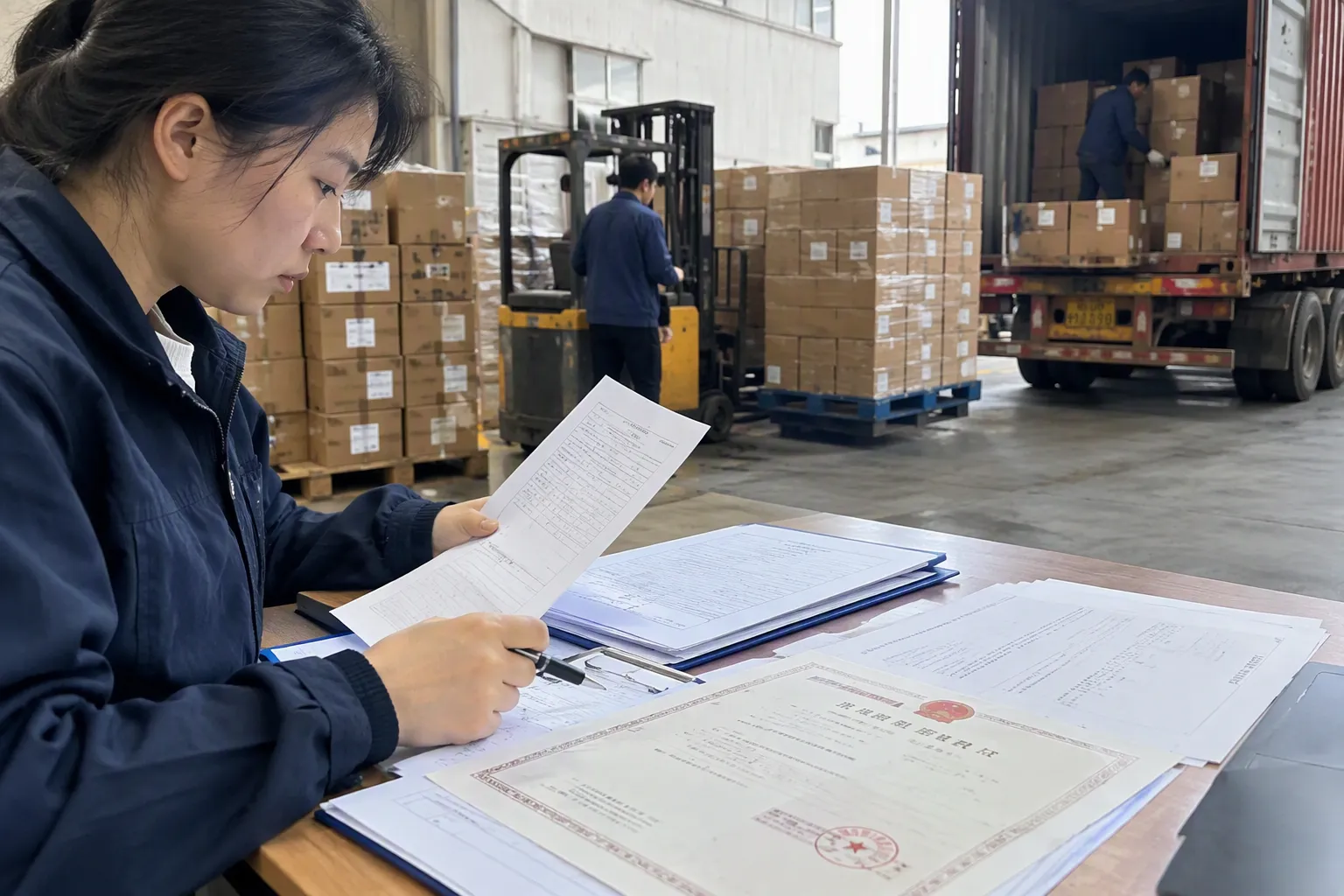
Most commercial shipments commonly involve a commercial invoice, packing list, and a sea bill of lading or air waybill. The exact requirements depend on the goods, destination, carrier, and import procedure. Product-specific documents, permits, certificates, or declarations may also be required, so I recommend confirmation before dispatch.
Does every shipment from China need a certificate of origin?
Not every shipment uses the same certificate-of-origin process. The requirement can depend on the destination, product, customs procedure, or buyer’s request. I advise importers to ask their customs broker or destination authority whether a certificate is needed and what format or issuing process applies.
Who prepares the shipping documents?
The supplier often provides commercial and packing information, while the freight forwarder issues or arranges the transport document. The importer usually provides consignee and destination information. Responsibilities vary by agreement, so I recommend confirming them in writing instead of assuming that one party handles every compliance requirement.
Can a freight forwarder check all import documents for me?
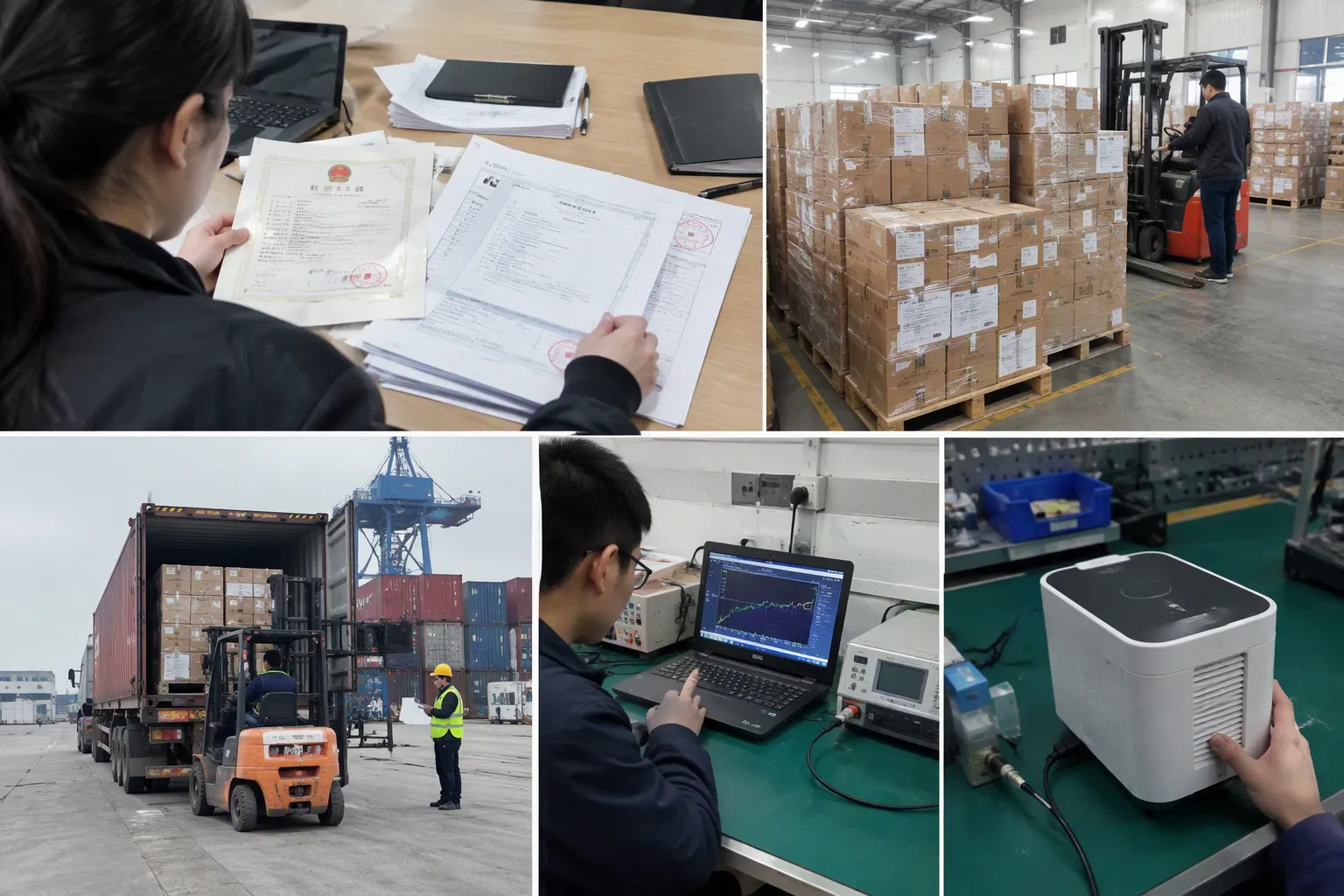
A freight forwarder can explain the information it needs for transportation and may coordinate with a customs broker. However, a forwarder does not automatically assume the importer’s product-compliance or legal responsibilities. I ask buyers to verify destination requirements with the broker, customs authority, or qualified local adviser.
What happens if the documents contain different quantities or weights?
The discrepancy may lead to clarification requests, document amendments, extra charges, or clearance delays. The buyer should identify which information reflects the actual shipment and ask the supplier and logistics provider to correct the relevant documents before dispatch whenever possible.
Conclusion
The documents needed for shipping from China depend on the goods, destination, and transport method. I treat the commercial invoice, packing list, and transport document as a starting point, not a complete checklist. I also compare product descriptions, quantities, values, weights, carton details, consignee information, and shipment references across every document. Buyers should confirm product-specific and destination-specific requirements with qualified professionals before dispatch. If you need help verifying suppliers, coordinating packing information, checking documents, consolidating orders, or arranging shipping from China, contact KingSourcing to discuss your purchasing workflow.
Sources
- Common Export Documents - International Trade Administration", International trade and customs guidance commonly identifies the commercial invoice, packing list, and bill of lading or air waybill as standard documentation used to describe, value, and transport commercial cargo
- Know Your Incoterms - International Trade Administration", Customs and transport authorities generally frame import documentation as dependent on the goods being imported, the rules of the destination jurisdiction, and the selected mode of transport
- Tips for New Importers and Exporters", Customs authorities generally assign the importer of record responsibility for providing or ensuring the accuracy of import-entry information and for meeting applicable destination-country requirements
- [PDF] contracts for the carriage of goods by sea and multimodal transport", Transport-law and industry standards distinguish maritime bills of lading, air waybills, and multimodal transport documents according to the mode and contractual structure of carriage
- Common Export Documents - International Trade Administration", Trade-documentation guidance recognizes that commercial invoices and packing lists may be generated from separate transaction and packing records, making cross-document reconciliation a relevant control
- What value should be on the commercial invoice submitted to U.S. ...", Customs procedures commonly permit authorities to request clarification or correction when import documents contain material inconsistencies, which can postpone processing or release
- Harmonized System (HS) Codes - International Trade Administration", Customs guidance generally requires commercial descriptions that identify the imported merchandise with enough specificity to support classification and other entry checks
- State Variations - Dangerous Goods - ICAO", International dangerous-goods regulations classify certain batteries, liquids, chemicals, and other articles as regulated cargo and attach transport-specific packaging, marking, and documentation controls


