Quick Answer
A China factory audit report can make a supplier look safe on paper, but many buyers still face quality, communication, or delivery problems after placing an order. The risk grows when a report is treated as final approval instead of one part of supplier verification. We use audit findings to decide what buyers should check next.
A China factory audit report is useful for confirming basic supplier information, site conditions, documents, and visible management systems.[1] However, it should not be treated as proof that a factory can reliably produce your exact product, meet your quality standard, handle your order volume, or ship on time.[2] Buyers should connect audit evidence to samples, capability checks, production follow-up, and inspection.
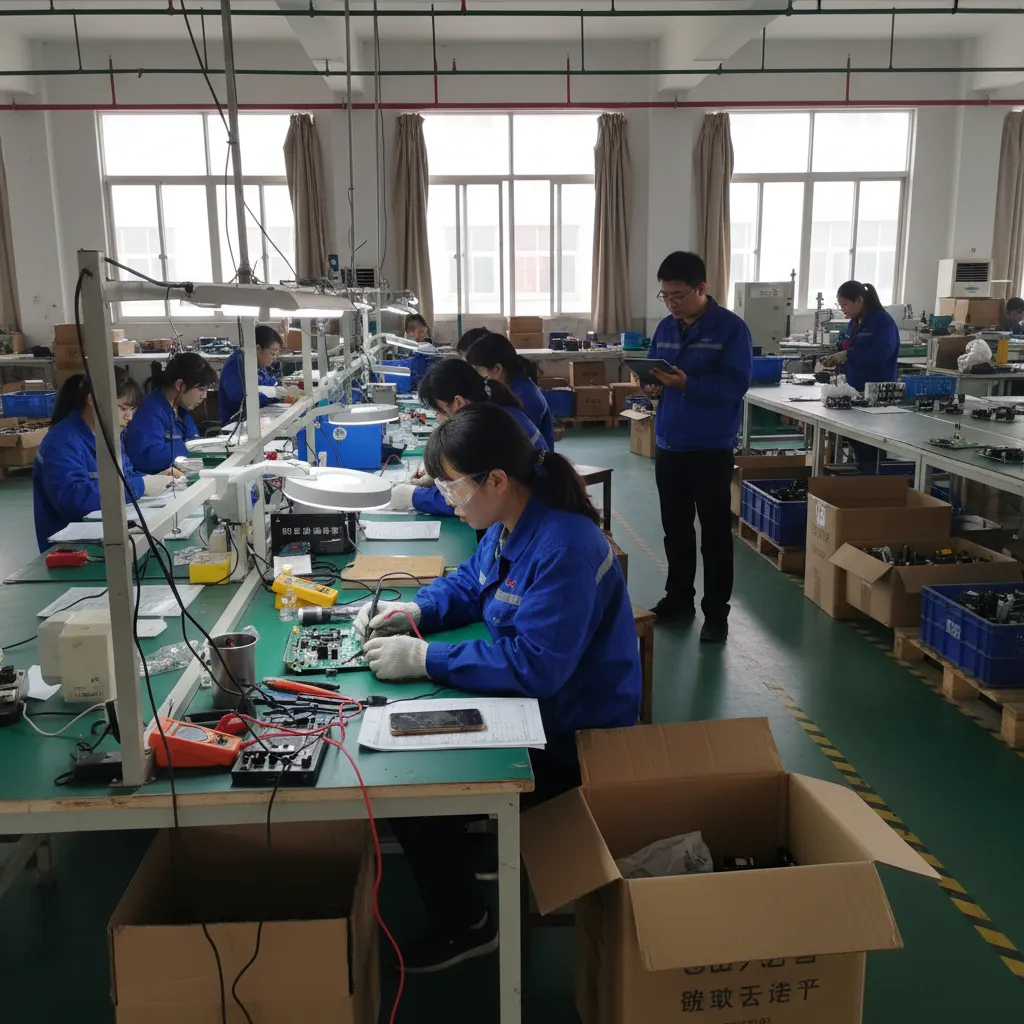
A good audit can reduce uncertainty, especially for buyers who cannot visit China themselves. Still, the most important question is not simply whether the supplier passed. The real question is whether the evidence in the report matches the commercial and production risk of the order you are about to place.
Why Should a China Factory Audit Report Not Be Treated as a Pass/Fail Certificate?
A passed audit can create false confidence. Buyers may see factory photos, business licenses, organized records, and a positive score, then assume the supplier is ready for any order. That assumption can become expensive when the product needs special materials, tight tolerances, custom tooling, or reliable production scheduling.
A China factory audit report is a point-in-time review of defined conditions, not a universal guarantee.[3] It may confirm that a business operates from a real location and has certain visible systems, but it does not automatically prove product-specific capability, stable quality, future capacity, or delivery performance. Its value depends on the audit scope and supporting evidence.
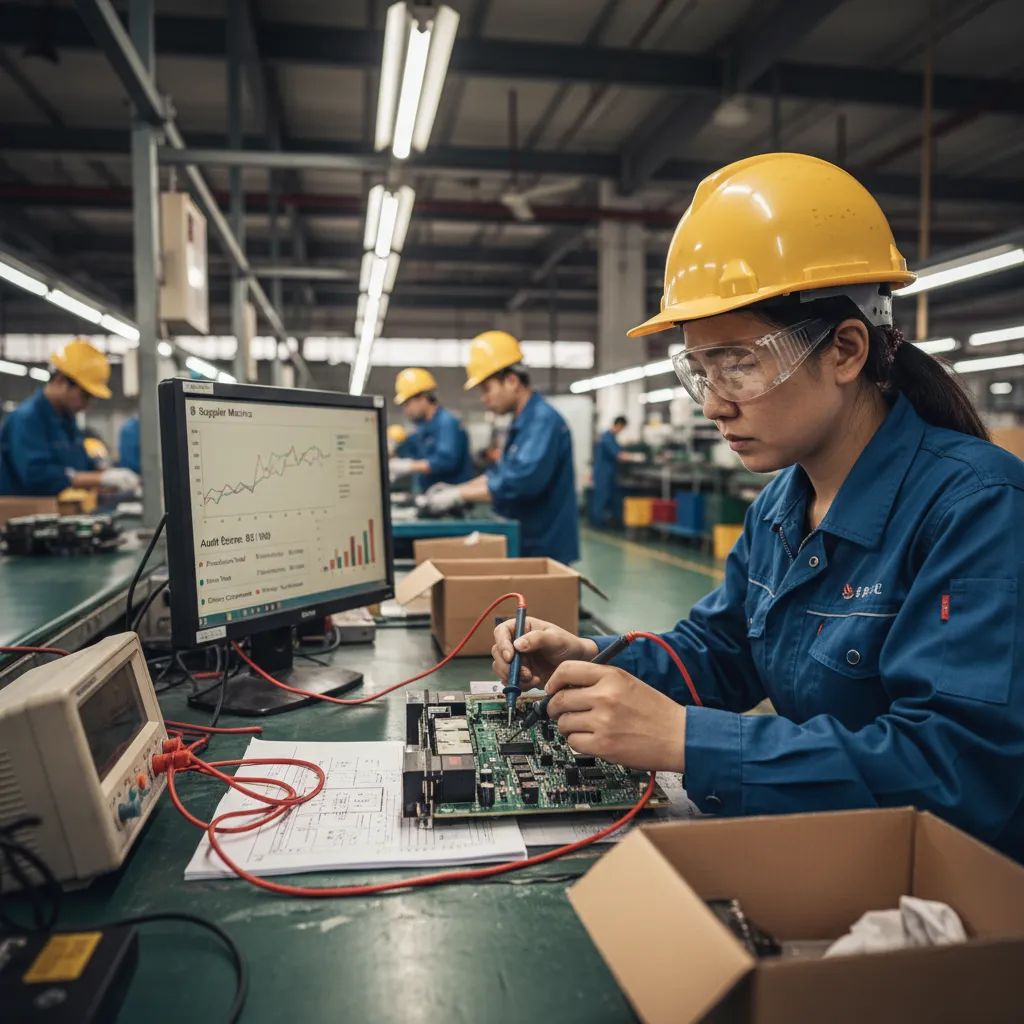
In our sourcing work, we have reviewed many supplier documents and factory audit findings for overseas buyers. We have seen reports that look professional and complete but answer only the most basic question: “Does this supplier appear to exist and operate?” That is still useful information. It is simply not enough for every purchasing decision.
The gap often appears when buyers move from supplier approval to actual production. A factory may have a clean workshop, valid registration documents, and a capable sales team. Yet it may outsource a key process, lack experience with a required material, use a different production line for export orders, or struggle with the volume and delivery schedule requested.
That does not automatically mean the supplier is dishonest. It means the buyer needs to understand what the China factory audit report actually verifies—and what it does not.
An Audit Scope Can Be Too Broad for Your Product
Many audit reports are designed to assess general supplier conditions. They may cover:
- Legal registration and business details
- Factory address and operating location
- Basic production equipment
- Headcount and organizational structure
- Quality-management documents
- Warehouse conditions
- Visible safety and housekeeping conditions
- Selected customer or export records
- Basic environmental or social compliance documents
These points can help us identify whether a supplier deserves further evaluation. However, they may not address the details that determine whether the supplier can make your product correctly.
For example, a buyer sourcing a simple promotional item may mainly need to verify supplier legitimacy, product consistency, packaging accuracy, and delivery coordination. A buyer sourcing a customized consumer-electronics accessory may need deeper confirmation of component sourcing, assembly procedures, functional testing, labeling, packaging, and defect handling.
A general China factory audit report may mention that the factory has “quality control procedures.” Buyers should then ask what those procedures mean for the item they want to purchase.
A quality-control system is only useful when it controls the failure points that matter for your product.
We recommend connecting every important product requirement to an observable verification method. If a requirement cannot be tied to evidence, it should not be assumed.
| Buyer requirement | What a general audit may show | What the buyer may still need to verify |
|---|---|---|
| Custom color | Factory has production capacity | Color sample, approved reference, batch consistency process |
| Logo printing | Printing equipment is visible | Artwork approval, print adhesion, placement tolerance |
| Electronic function | Assembly area and workers are present | Functional test process, defect criteria, component traceability |
| Retail packaging | Packaging area exists | Barcode accuracy, insert content, drop-test needs, carton marks |
| Large order volume | Headcount and machinery are listed | Current production schedule, line capacity, subcontracting plan |
| Material requirement | Supplier provides a document | Material sample, specification review, document cross-checking |
This is why we do not treat a “pass” result as the end of supplier evaluation. We treat it as a starting point for more specific questions.
A Positive Result Is a Snapshot, Not a Future Guarantee
A China factory audit report reflects what an auditor observed on a particular date, within a particular scope. Production conditions can change after the visit. Staff may change. A busy season may affect capacity. A supplier may receive several large orders at once. Critical materials may be delayed. A factory may also move some processes to another site.
These normal business changes matter because buyers often place orders weeks or months after an audit. A report from last year may still provide background information, but it should not be treated as current proof of active capability.
We have seen situations where a supplier’s audit documents were legitimate, yet the buyer’s order still needed more verification because the order involved new packaging, a different material, or a higher quantity than the supplier had previously produced. The audit did not necessarily fail. It simply did not answer the new risk.
Buyers should consider the following timing questions:
-
When was the audit completed?
A recent report may better reflect current operations, but recency alone does not make it product-specific. -
Was the audited site the actual production site?
Some suppliers operate as trading companies, sales offices, or group companies. Buyers should clarify where each major production process will occur. -
Has the product specification changed since the audit?
New dimensions, materials, colors, components, packaging, or testing requirements can create new risks. -
Has the order size changed?
A factory that can make 2,000 units may not be able to make 50,000 units on the same schedule without added capacity or subcontracting.[4] -
Does the report identify outsourced processes?
Outsourcing is common and can be acceptable. Buyers should know which process is outsourced, who controls it, and how quality will be checked.
A buyer does not need to reject a supplier because a report is older or broad in scope. The buyer should use that information to choose the right next step.
Documents Can Be Real but Still Be Irrelevant
One common mistake is assuming that licenses, certificates, product photos, and neatly filed records prove suitability for a specific order. These documents may be authentic and still have limited relevance to the buyer’s actual purchase.
For example, a business license may support the supplier’s legal identity. It does not confirm that the supplier has the right tooling for your product. Factory photos may show a clean facility. They do not demonstrate that workers follow your approved assembly sequence. A certificate may relate to one management system, product category, customer program, or location. It may not apply to your exact item or production site.[5]
When we review a China factory audit report, we look for the connection between the document and the order. Buyers should ask:
- Does this document apply to the legal entity I will pay?
- Does it apply to the factory that will make my goods?
- Does it apply to the product category I am buying?
- Is it current, complete, and internally consistent?
- Does it address a buyer requirement, or is it only general background material?
- Can the supplier explain how this document affects actual production control?
A supplier should be able to answer straightforward questions without becoming defensive. Clear answers do not prove every claim, but unclear answers are a reason to verify further.
Factory Photos Can Hide Important Gaps
Photos are useful because they help buyers see whether the site appears organized, active, and suitable for the represented product category. Still, photos are selective by nature.[6] They show what was photographed, not necessarily every process, every production line, or every condition during peak production.
A report may include photos of:
- Production lines
- Equipment and machinery
- Warehouses
- Inspection stations
- Offices
- Raw-material storage
- Finished-goods cartons
- Safety notices
- Employee areas
These images can support the audit narrative. However, buyers should avoid drawing conclusions that the report does not support.
For example, a photo of an inspection table does not prove that every unit will be checked. A photo of a warehouse does not prove inventory accuracy. A photo of machinery does not prove the equipment is suitable for your required process, regularly maintained, or available during your production window.
For private-label and e-commerce buyers, the packaging area deserves special attention. Packaging errors can create expensive marketplace problems even when the product itself is acceptable.[7] We often recommend confirming packaging details separately, including:
- Product label placement
- Barcode format and readability
- Warning labels and country-of-origin marks
- Color box artwork
- Instruction inserts
- Master-carton labels
- Carton quantity and dimensions
- Mixed-SKU packing instructions
These details may sit outside the scope of a standard China factory audit report, but they are central to a successful import order.
Capability Must Be Tested Through Evidence
A supplier may say, “We can make it.” An audit may show that the supplier has general equipment. Neither point is enough when the product has meaningful customization or performance requirements.
We encourage buyers to look for evidence in layers.
Layer 1: Supplier identity and operational baseline
This is where a China factory audit report is most helpful. It can support questions about:
- Who the supplier is
- Where the supplier operates
- Whether the facility appears active
- What equipment and departments are visible
- Whether the supplier has basic management records
- Whether major inconsistencies appear in the supplied information
This layer helps buyers avoid spending time on clearly unsuitable suppliers.
Layer 2: Product-specific capability
This layer asks whether the supplier can make your product. Evidence may include:
- Similar product samples
- Product drawings or approved specifications
- Existing tooling or a tooling-development plan
- Material details
- Process flow explanations
- Quality checkpoints tied to known defect risks
- Functional or fit testing where relevant
- Packaging prototypes
- A clear response to your product requirements
We do not recommend accepting vague statements such as “same quality” or “no problem.” Buyers should request a practical explanation of how the supplier will meet the standard.
Layer 3: Order execution controls
This layer concerns whether the supplier can deliver the agreed order consistently. It may involve:
- Production planning
- Raw-material readiness
- Lead-time confirmation
- In-process quality checks
- Change-control procedures
- Communication responsibilities
- Pre-shipment inspection planning
- Defect handling and rework arrangements
A supplier can pass an audit and still need stronger order controls. This is especially true for first orders, new suppliers, high-value goods, multi-SKU programs, or products with customized packaging.
Audit Scores Can Oversimplify Procurement Risk
Some audit providers use ratings, grades, or pass/fail scores. These can be useful for comparing broad supplier conditions. However, buyers should read the findings behind the score.
A high score may still contain observations that matter for your order. A lower score may identify manageable issues that do not affect your product, provided the supplier takes corrective action and the buyer verifies the result.
We recommend separating findings into three practical categories:
| Finding type | Example | Buyer response |
|---|---|---|
| Critical to the order | No evidence of required testing or process control | Pause approval until capability is verified |
| Important but manageable | Incomplete documentation or weak warehouse labeling | Request clarification and corrective evidence |
| Background information | Minor housekeeping issue unrelated to product risk | Note it, but keep focus on relevant controls |
The most useful China factory audit report is not necessarily the one with the highest score. It is the one that gives enough detail for a buyer to make an informed sourcing decision.
Red Flags Worth Investigating Further
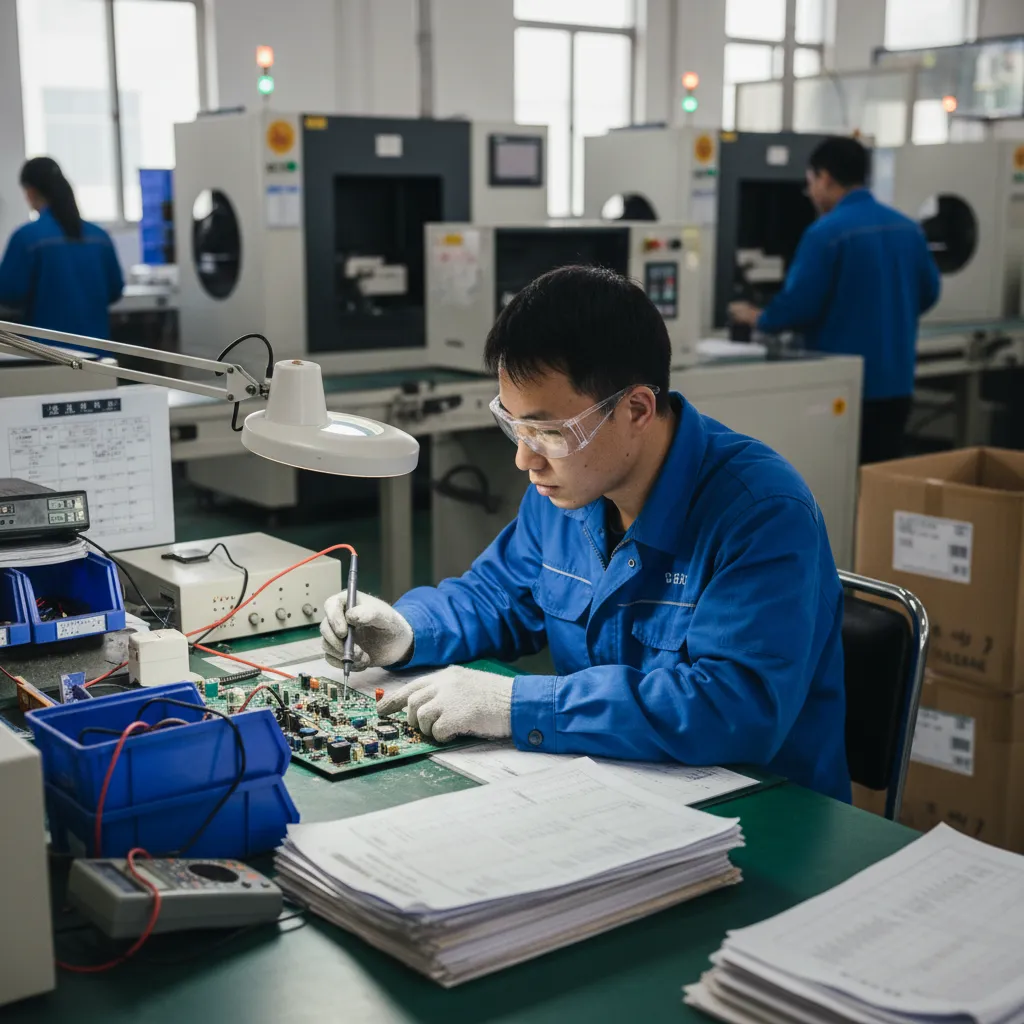
A red flag does not always mean fraud or automatic rejection. It means the buyer should slow down, ask better questions, and collect stronger evidence.
Here are patterns we consider worth investigating:
- The report does not clearly identify the audited legal entity or factory address.
- The production site in the report differs from the site named in quotations or contracts.
- The report shows general equipment but does not explain the process for the buyer’s product.
- The audit is old, while the order involves a new product or major customization.
- Photos appear generic and are not linked to specific production processes.
- The supplier avoids confirming whether key processes are outsourced.
- The report lists capacity without explaining current workload or production planning.
- Quality documents exist, but no product-specific inspection criteria are shown.
- The supplier cannot provide a workable sample-development plan.
- The factory has no clear answer on packaging, labeling, or final inspection responsibility.
- The report contains inconsistencies in company name, address, employee count, or product category.
- The buyer receives a “passed” report but no evidence of similar production experience.
We have learned that small inconsistencies deserve calm investigation. A mismatch may be an administrative issue, a group-company structure, a translation problem, or a genuine concern. Buyers should verify the facts before making assumptions.
Use the Report to Choose the Next Verification Step
The right response to a positive China factory audit report is not always “place the order.” The right response is often “what should we verify next?”
For a low-risk repeat product, a basic audit plus approved samples and pre-shipment inspection may be proportionate. For a new private-label product, buyers may need sample development, material confirmation, packaging review, and production follow-up. For a larger purchasing program, buyers may need regular factory communication, timeline tracking, in-process checks, and multi-stage quality control.
At KingSourcing, we use supplier verification as a layered process rather than a single event. The mix depends on product complexity, order value, supplier history, customization level, and delivery risk.
A practical sequence may look like this:
-
Review supplier identity and basic operating conditions.
Use a China factory audit report, registration information, and direct supplier communication. -
Confirm product capability.
Review similar products, samples, specifications, materials, and manufacturing processes. -
Approve the sample and packaging details.
Record the approved version so production has a clear reference. -
Follow production where the risk justifies it.
Confirm schedules, key materials, major process steps, and changes. -
Inspect finished goods before shipment.
Use agreed inspection criteria, approved samples, packaging requirements, and reasonable sampling or checking methods. -
Consolidate and ship with accurate documentation.
Verify carton marks, SKU counts, labels, and shipment arrangements before goods leave China.
This approach does not eliminate every risk. No sourcing process can do that. It gives buyers more control and reduces the chance that one broad report becomes the only basis for a major purchasing decision.
Frequently Asked Questions About a China Factory Audit Report
Is a passed China factory audit report enough to approve a supplier?
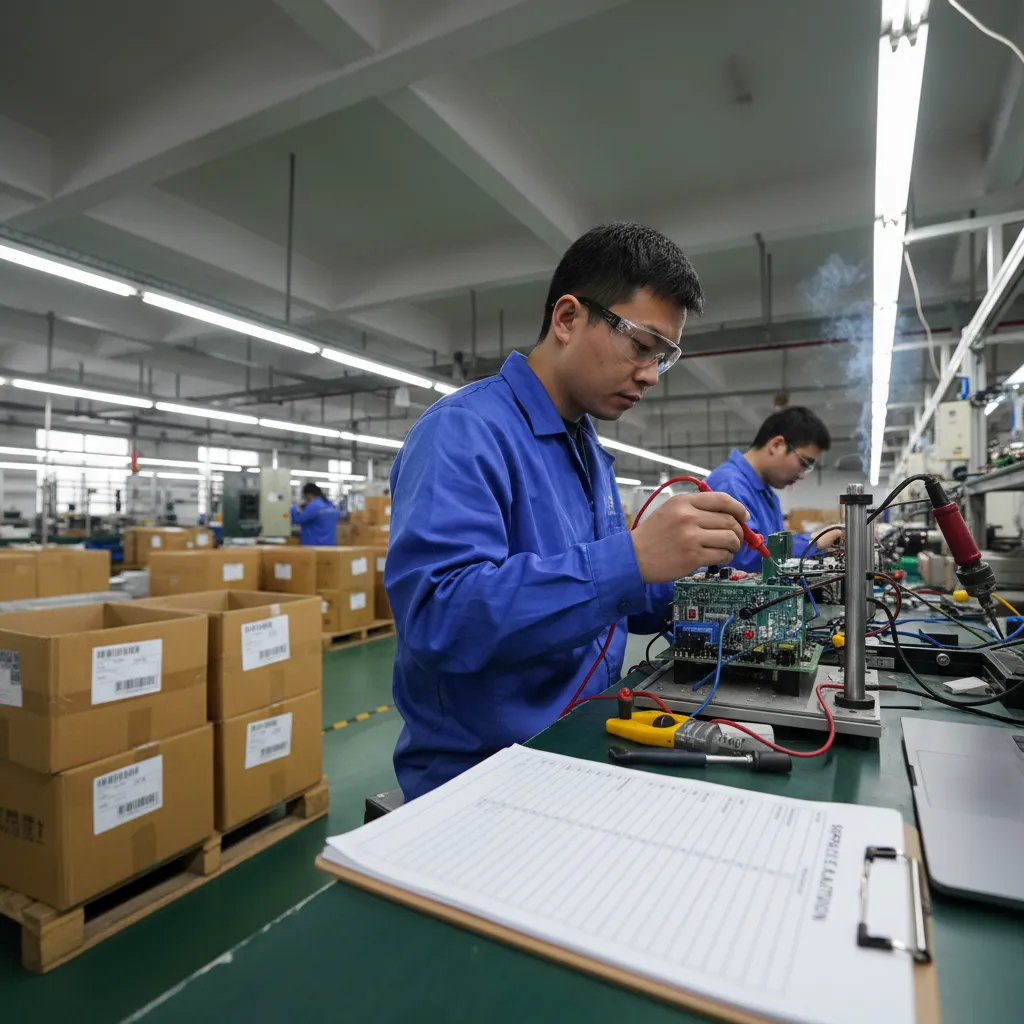
No. A passed China factory audit report can support supplier approval, but it should not be the only decision factor. Buyers should also verify product-specific capability, sample quality, customization requirements, production capacity, packaging details, and final quality-control arrangements.
How recent should a China factory audit report be?
A recent report is generally more useful because factory conditions, staffing, equipment availability, and production schedules can change. However, relevance matters as much as timing. An older report may still provide background, but buyers should update verification for a new product, larger order, or different factory site.
Does a factory audit prove that product quality will be good?
No. An audit may show that a supplier has visible quality systems or inspection areas, but it does not prove that every future batch will meet your specification. Product quality still depends on materials, approved samples, process control, worker execution, inspection criteria, and production management.
What should I do if the audit report shows outsourced production?
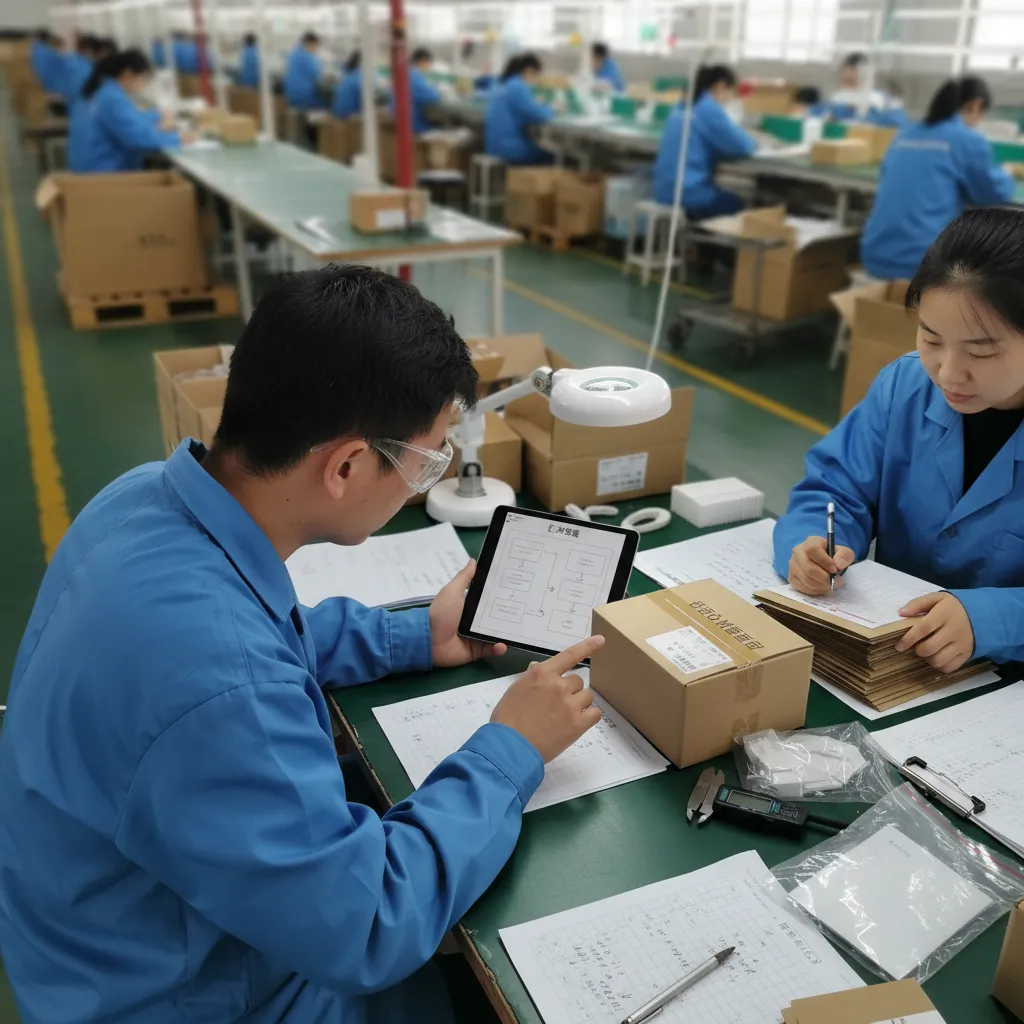
Outsourcing is not automatically a problem. Buyers should identify which process is outsourced, where it takes place, who manages quality, and whether the supplier can provide evidence of control. The buyer should also consider whether the outsourced process affects product performance, lead time, or compliance needs.
Can a sourcing company help interpret a China factory audit report?
Yes. A sourcing team can help buyers compare audit findings against the actual product brief, order quantity, customization needs, and delivery plan. We can also help identify the next practical step, such as sample review, supplier clarification, factory follow-up, inspection, or document cross-checking.
Conclusion: How Should Buyers Use a China Factory Audit Report
A China factory audit report is a valuable risk-control tool, but it is not a pass/fail certificate for every product and every order. Buyers should use it to confirm baseline facts, identify gaps, and decide what to verify next. The strongest sourcing decisions combine audit findings with approved samples, product-specific capability checks, production follow-up, and pre-shipment inspection. If you need help reviewing a supplier or building a practical China sourcing verification process, we at KingSourcing can support the process from factory review through final delivery.
Sources
- ISO 19011:2018(en), Guidelines for auditing management ...", ISO auditing guidance describes an audit as a systematic, independent and documented process for obtaining and evaluating objective evidence, including records and observations, against specified audit criteria
- Cybersecurity Supply Chain Risk Management Practices ...", ISO 9001 guidance explains that a quality-management system establishes organizational processes for consistent delivery, while conformity of particular products and services remains dependent on the applicable requirements and operational controls
- Yellow Book: Government Auditing Standards | U.S. GAO", ISO 19011 frames audit findings and conclusions as evaluations of objective evidence obtained during an audit against defined audit criteria and scope
- Capacity Planning for Production", Manufacturing capacity-planning literature treats feasible output as dependent on available resources, process constraints, demand, and the production time horizon rather than on prior output alone
- Scoping ISO 9001 Certification: Products, Services, Sites, ...", International Accreditation Forum certification rules require the scope of a management-system certificate to identify the activities and, where applicable, the sites covered by certification
- Media choice and audience perceptions: Evidence from visual ...", Visual-methods research characterizes photographs as selective, framed records that document what was included at a particular moment rather than a complete account of surrounding conditions
- FDA 101: Product Recalls", Regulatory guidance on consumer products and food identifies inaccurate labeling and packaging information as potential grounds for misbranding, noncompliance, recalls, or other corrective actions
- Process Validation: General Principles and Practices", ISO 9001 requires organizations to evaluate and select external providers based on their ability to provide processes, products, and services that meet requirements, with controls determined by their effect on conformity