Quick Answer
A Chinese factory’s business license and certifications can look reassuring, especially when you are sourcing from overseas and cannot visit the supplier yourself. However, paperwork can create false confidence when names, product models, and market requirements do not match. I recommend treating documents as evidence to cross-check, not as a shortcut to trust.
A Chinese factory’s business license and certifications should be read as documents that verify specific claims, not as blanket proof that a supplier is reliable or that a product is compliant. Buyers should compare the legal entity, product model, factory address, certification holder, applicable standard, and order documents before moving from supplier screening to sampling or production.
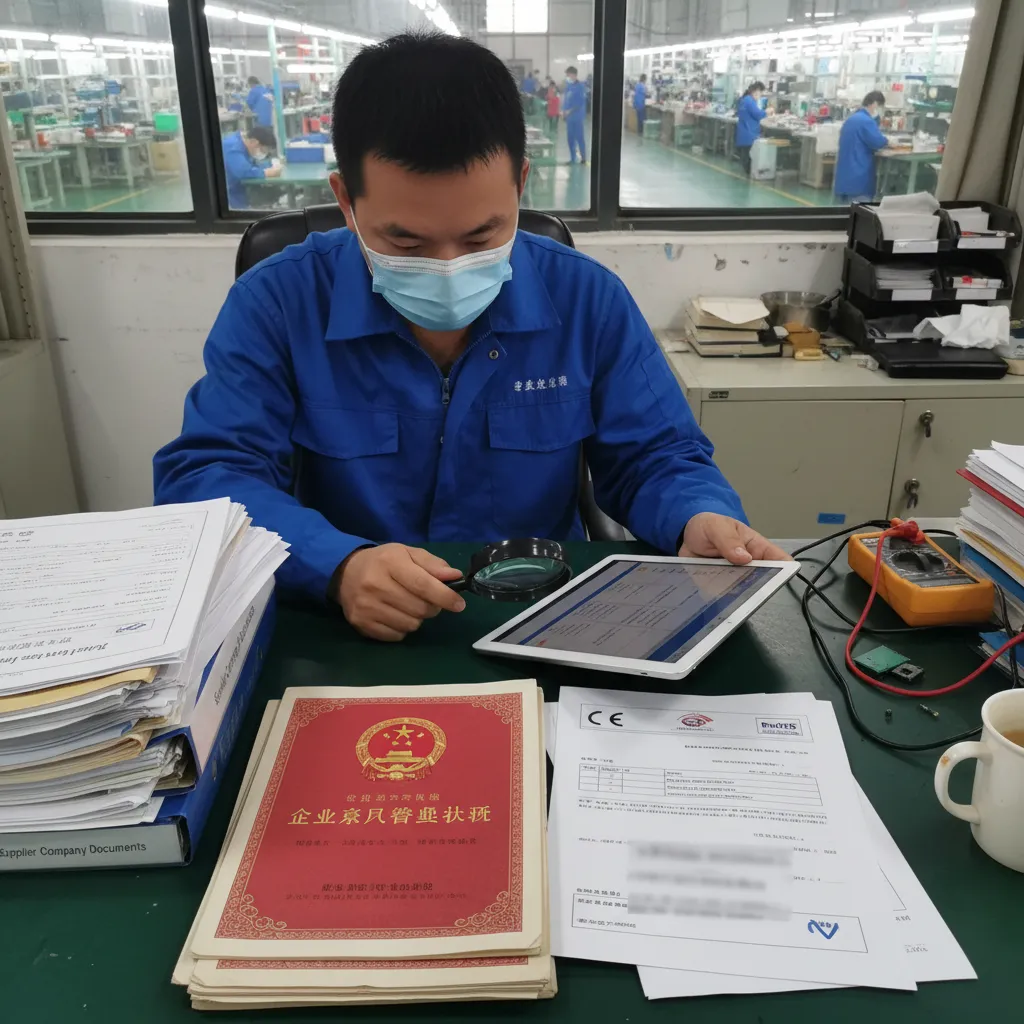
When our team at KingSourcing reviews a new supplier, we do not ask only, “Does this supplier have documents?” We ask what each document actually proves, whether it applies to the product being purchased, and whether the same company appears consistently across the quotation, contract, payment details, and production information.
Reading a Chinese factory’s business license and certifications is not about deciding whether a supplier is “legitimate”—so what is it about
Buyers often face a simple problem: a supplier sends a business license, several certificates, and a polished product catalogue, but the documents are difficult to interpret. This can lead to two opposite mistakes. Some buyers trust every document immediately, while others reject suppliers simply because they are trading companies. Neither approach is reliable.
The purpose of reading a Chinese factory’s business license and certifications is to check whether the supplier’s legal identity, stated role, product capability, and compliance documents match the specific order. A document review can help you decide whether to shortlist, sample from, inspect, or investigate a supplier further, but it does not replace a factory audit, laboratory testing, or legal compliance review.
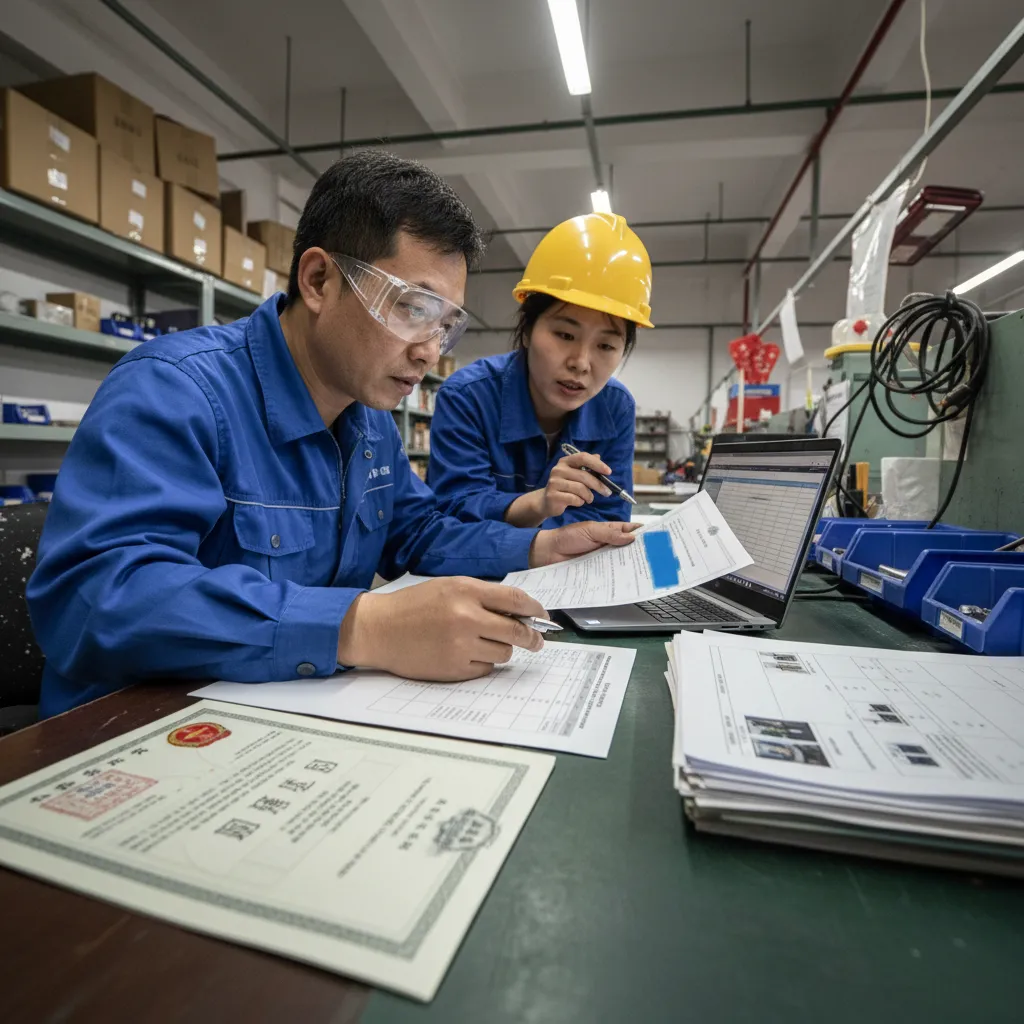
Start with the legal entity, not the supplier’s sales name
The first cross-check is simple: who is the legal company behind the quotation?
Many suppliers use an English brand name, an Alibaba storefront name, or a sales representative’s business card name. These may be useful for communication, but they are not necessarily the name of the legal entity that will receive payment, sign the contract, issue the invoice, or manufacture the goods.
A Chinese business license normally includes several core details:
| License field | What buyers should check | Why it matters |
|---|---|---|
| Company name | Compare the Chinese legal name with the contract, invoice, and bank beneficiary | Different entities may be involved in sales, manufacturing, or payment |
| Unified Social Credit Code | Record the 18-digit registration number | This is the company’s key registration identifier[1] |
| Registered address | Compare it with the claimed factory or office address | A registered address is not automatically a production-site address[2] |
| Legal representative | Note the named individual | This can help with entity-level verification |
| Establishment date | Check how long the entity has been registered | A recent registration is not proof of a problem, but it may justify more questions |
| Business scope | Review the listed activities | This may indicate trading, manufacturing, service, or product-related activities |
| Registration status | Confirm that the entity appears active on the document | Status information is only one screening point |
I recommend recording these details in a supplier comparison sheet rather than reviewing them once and moving on. Small inconsistencies become much easier to spot when information is placed side by side.
For example, a supplier may quote under “Shenzhen ABC Technology Co., Ltd.” but ask you to pay “Hong Kong XYZ International Limited.” That arrangement is not automatically improper. A China-based supplier may use a different export entity, group company, or overseas payment company. However, the supplier should clearly explain the relationship and provide order documentation that reflects it.
The concern is not that every name must be identical. The concern is whether the supplier can document the relationship between the entities.
A name mismatch is not a verdict. It is a question that needs a clear, document-supported answer.
Understand what a Chinese business license does—and does not—show
A business license is primarily an identity and registration document. It can help you confirm that a named company exists as a registered legal entity. It may also provide a basic view of its registered address, establishment date, and business scope.
However, it does not prove that the company[3]:
- Owns or operates the factory shown in photos or videos.
- Has the production line, machinery, staff, or quality system needed for your product.
- Can meet your required specifications or delivery schedule.
- Has a strong financial position.
- Has export experience in your target market.
- Will produce the goods itself rather than use another factory.
- Has valid product compliance for every item in its catalogue.
- Will perform consistently after receiving your deposit.
This distinction matters for early-stage buyers. I have seen overseas buyers treat a license as if it were a complete supplier audit. It is not. A license can be a sensible first document to request, but it is only the first layer of verification.
A manufacturer and a trading company can both hold valid business licenses. A trading company is not inherently deceptive or unsuitable[4]. In many product categories, a capable trading company can be useful because it coordinates several factories, handles export procedures, supports lower-volume mixed orders, or manages customized packaging.
The key question is disclosure and fit:
- Does the supplier accurately describe its role?
- Does it identify the actual production facility when that matters to your order?
- Can it manage the product quality, customization, and delivery requirements you need?
- Does its documentation match the commercial arrangement being offered?
For a simple stock-product order, a transparent trading company may be entirely suitable. For a highly customized electronic product, a buyer may need more direct visibility into the actual manufacturer, engineering process, quality controls, and test capability.
Cross-check every order document against the licensed entity
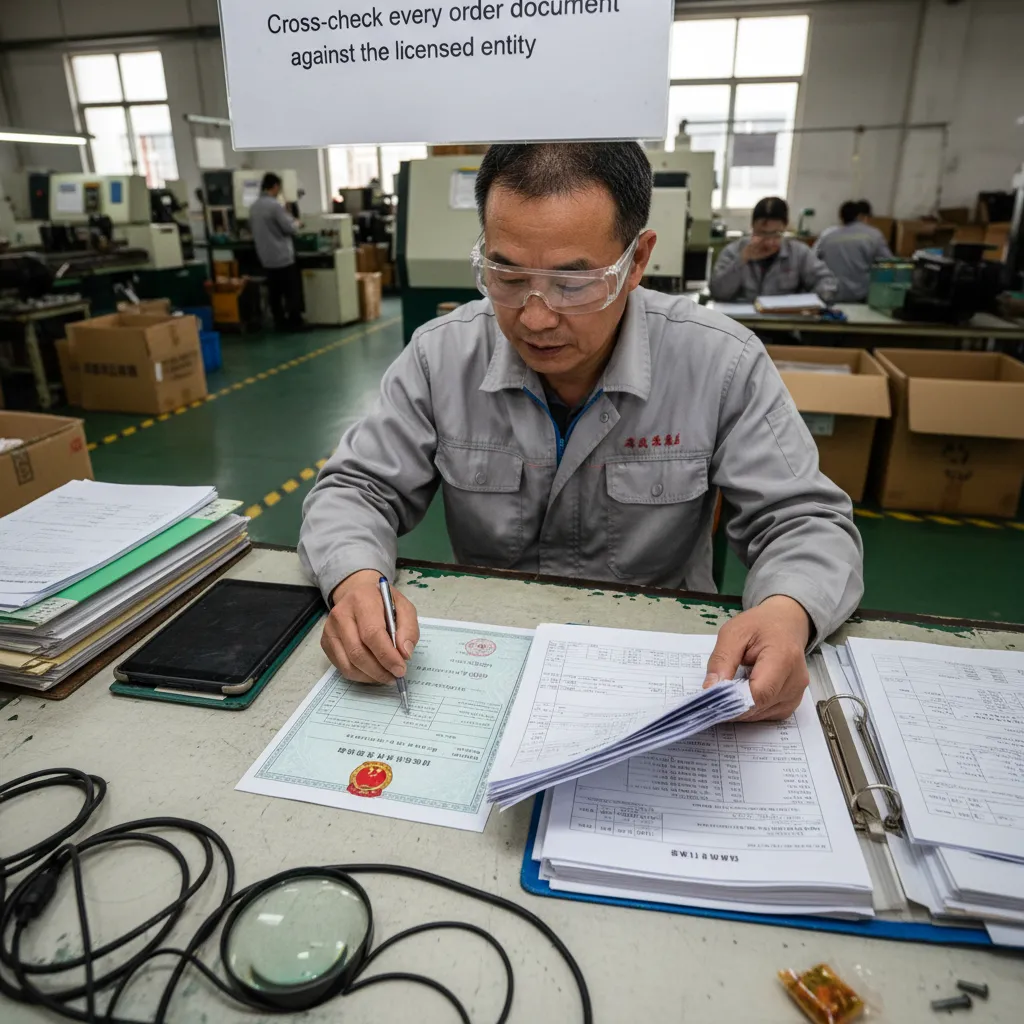
The strongest document review does not focus on one license in isolation. I recommend building a chain of matching information around the planned order.
At KingSourcing, our supplier screening process often involves collecting supplier documents and comparing them with quotation and product information. This approach does not conclusively detect fraud or replace formal audit work, but it helps identify questions before a buyer sends money or approves production.
Use this cross-checking sequence:
- Business license: What is the full legal company name and unified social credit code?
- Quotation or proforma invoice: Which company issued the pricing document?
- Bank account details: Who is the account beneficiary?
- Sales contract: Which legal entity is named as the seller?
- Commercial invoice: Which company will invoice the shipment?
- Factory address: Is it the registered address, a branch, a leased facility, or a subcontractor’s site?
- Certificates and test reports: Which company is listed as the applicant, manufacturer, importer, or certificate holder?
- Product information: Does the product model match the exact item you plan to buy?
The following table shows common scenarios and the practical response I would suggest.
| Situation | What it may mean | Recommended next step |
|---|---|---|
| License, quotation, contract, and bank account show the same entity | The paperwork is internally consistent | Continue with product, sample, and capability checks |
| Bank account name differs from the quotation entity | Export entity, group company, or unrelated third party may be involved | Request a written explanation and supporting relationship documents |
| Certificate holder differs from supplier | Supplier may be reselling, using a related company, or relying on another manufacturer’s paperwork | Ask who owns the certificate and whether it applies to the exact product |
| Registered address differs from claimed factory address | The company may have an office, branch, or separate production site | Request the production address and consider video or third-party verification |
| Product model is absent from the report | The report may apply to a different configuration | Request a model-specific report or accredited-lab confirmation |
| Supplier claims to be a factory but avoids sharing production details | The supplier may be a trader or may use subcontractors | Ask directly about its role and decide whether disclosure meets your needs |
Read certifications by product model, configuration, and market
Certifications are where many buyers make expensive assumptions. A supplier may send CE, FCC, RoHS, ISO, UKCA, UL-related, REACH, battery, or material test documents. The file may look official. The logo may be recognizable. Yet the key question remains:
Does this document apply to the exact product configuration and target market in this order?[5]
A certificate, declaration, or test report can be relevant only within its stated scope. That scope may include a particular model number, product family, material composition, voltage range, battery type, charger, wireless function, or test standard.
For example, a supplier may provide a report for a USB cable with one connector type and then quote you a cable with a different connector, chip, wire gauge, packaging claim, or charging specification. The report may still be useful background information, but it may not support the exact product you are buying.
Similarly, a report for a non-wireless version of an electronic product may not necessarily apply to a version with Bluetooth, Wi-Fi, a battery, or a different power adapter. Product changes can affect which requirements apply and what testing is relevant[6].
When reviewing a product document, I recommend checking these points:
- Product model number: Is the quoted model clearly named?
- Product description: Does the report describe the actual product type?
- Photos in the report: Do visible features match the sample or supplier photos?
- Configuration: Does it cover the same battery, adapter, radio module, material, or component version?
- Applicable standard: Is the named standard relevant to the target market and product category?
- Date and validity: Is the document current enough for your buyer, marketplace, or regulatory need?
- Applicant and manufacturer: Who is named, and does that entity match the supply chain?
- Laboratory identity: Is the issuing laboratory identifiable and suitable for the buyer’s requirement?
- Scope and exclusions: Does the report contain limitations that affect your order?
I would not advise treating CE, FCC, RoHS, or similar paperwork as automatic proof that every product from a supplier is compliant in every market. Requirements vary by product, market, importer role, sales channel, technical features, and current regulations. Buyers should obtain application-specific guidance from qualified compliance professionals or accredited laboratories when the product is regulated or the commercial risk is high.
Separate management-system certificates from product evidence
A common source of confusion is the difference between a management-system certificate and a product-specific test report.
For example, a supplier may provide a quality management certificate, often associated with a standard such as ISO 9001. This may indicate that a company has been assessed against a management-system standard within a stated scope. It does not prove that a particular product model meets safety, chemical, performance, or market-access requirements[7].
Likewise, a product test report may show that a submitted sample was tested against specified methods or standards[8]. It does not automatically prove that every future production batch will match that sample.
These documents answer different questions:
| Document type | Main question it may help answer | What it cannot confirm on its own |
|---|---|---|
| Business license | Is this a registered legal entity? | Factory capacity, product quality, or order compliance |
| Management-system certificate | Has a management system been assessed within a stated scope? | Compliance of your exact product model |
| Product test report | Was a sample tested to stated methods or standards? | Consistency of all future production |
| Product certificate | Has a product or product family been certified within a stated scope? | Applicability to every configuration or market |
| Factory audit report | What did an auditor observe at a facility on a given date? | Future performance or all subcontracted production |
| Inspection report | Did sampled goods meet listed criteria at inspection time? | Quality of uninspected units or future orders |
This is why I encourage buyers to avoid the phrase “the supplier is certified” unless they define exactly what that means. A supplier may have one management certificate, while the product you need requires separate model-specific evidence. Another supplier may have a relevant report but no visible factory-management documentation. Neither situation can be evaluated through a single yes-or-no label.
Use mismatch signals to decide how deeply to verify
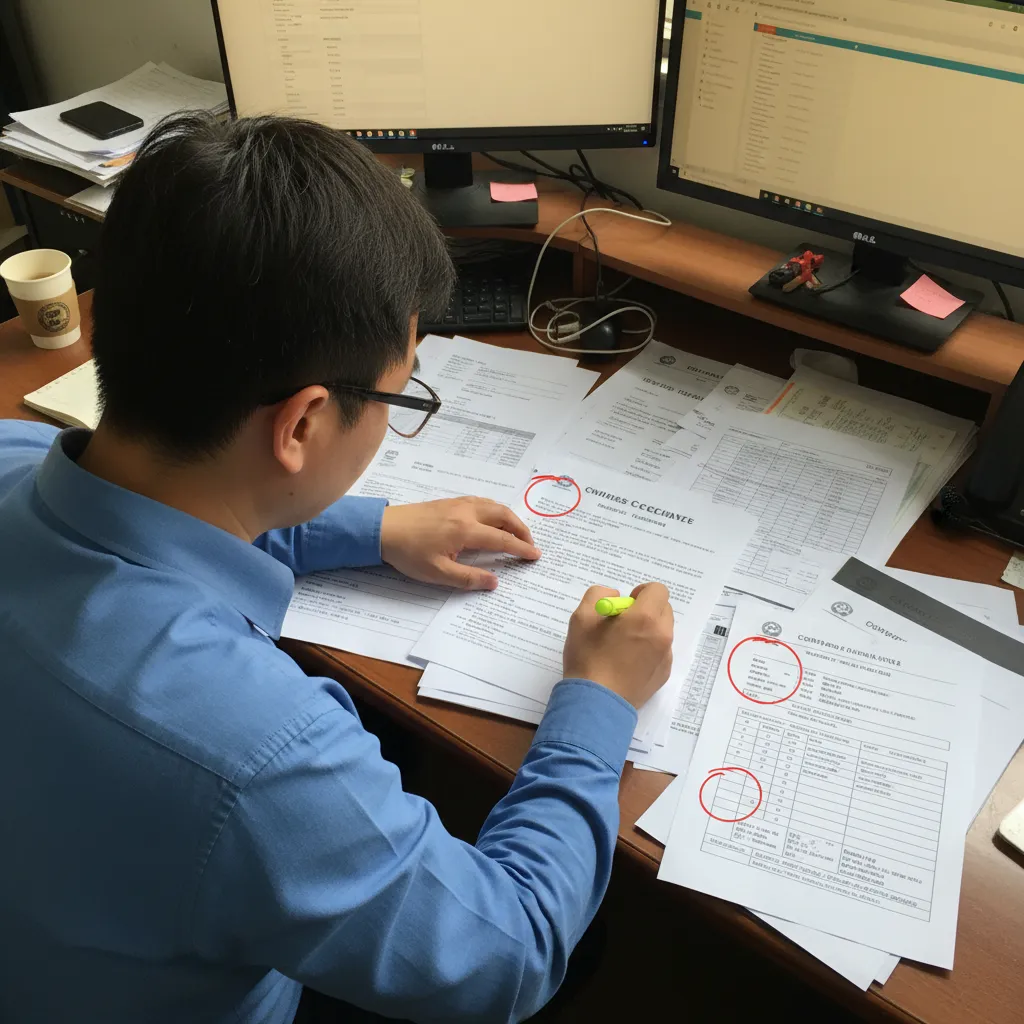
Document review is most useful when it guides the next action. Not every supplier requires the same level of investigation. The right level depends on the order value, product risk, customization, regulatory exposure, and consequences of failure.
I suggest escalating verification when you see one or more mismatch signals:
- The supplier changes the company name during the quotation or payment process.
- The bank beneficiary has no explained relationship to the seller.
- The certificate holder and seller are different, with no supporting explanation.
- The test report does not show the product model you plan to purchase.
- Product photos, specifications, or configuration do not match the document.
- The supplier cannot clearly state whether it is a manufacturer, trading company, or project coordinator.
- The claimed factory address differs from available production information.
- The order involves batteries, electrical products, children’s items, food-contact products, medical-related items, safety products, or other higher-risk categories.
- The supplier is developing a new OEM or ODM version rather than supplying an unchanged existing model.
- Your marketplace, retailer, insurer, customs broker, or customer requires specific documentation.
The escalation method should fit the risk. For a low-value sample order, you may simply request clearer documents and evaluate the physical sample. For a large private-label order, you may need several layers of verification.
A proportionate process could include:
- Document review for legal entity, product model, and claim consistency.
- Sample evaluation against written specifications and approved artwork.
- Factory or video verification to clarify the actual production site and capability.
- Third-party inspection during or after production.
- Product testing through a suitable accredited laboratory where required.
- Specialist compliance review for application-specific market requirements.
- Contract and payment review for higher-value or complex purchasing programs.
At KingSourcing, we can assist with supplier verification, factory coordination, sample follow-up, production monitoring, quality inspection, and document collection as part of a broader China procurement workflow. However, buyers should still use qualified legal, regulatory, and technical professionals when a decision depends on formal compliance conclusions.
Ask suppliers questions that produce usable evidence
Vague questions usually produce vague answers. Instead of asking, “Are you certified?” I recommend asking questions that connect the document to the order.
You can ask:
- “Please provide the business license for the legal entity issuing this quotation.”
- “Will the company named on the quotation also sign the sales contract and receive payment?”
- “If the payment entity is different, please explain its relationship to the quoted company.”
- “Is your company the manufacturer, trading company, or export agent for this product?”
- “Please confirm the address where this model will be produced.”
- “Please provide documentation that identifies the exact model and configuration quoted.”
- “Does this report cover the battery, adapter, wireless feature, and packaging version in our specification?”
- “Which market requirement does this document support, and what is outside its scope?”
- “Can you provide the certificate holder’s authorization if your company is not listed?”
- “Can you provide a recent sample for our independent review?”
The quality of a supplier’s response can be informative. A capable supplier does not need to claim perfection. However, it should be able to explain its role, identify its product version, and provide documents in a consistent way.
Clear answers also make later production management easier. When the approved sample, specification sheet, product model, packaging artwork, and inspection criteria all use consistent information, there is less room for misunderstanding after the deposit is paid.
Frequently Asked Questions
Does a Chinese business license prove that a supplier is a real factory?
No. A Chinese business license can help identify a registered legal entity, but it does not prove that the company owns a factory, has the required production capacity, or will manufacture your order. Buyers should separately verify the production site, supplier role, samples, and quality-control process.
Can I trust a CE, FCC, or RoHS document sent by a Chinese supplier?
You should treat it as a document to review, not an automatic guarantee. Check the product model, configuration, standard, certificate holder, laboratory details, and target-market relevance. For regulated or higher-risk products, I recommend confirmation from an accredited laboratory or qualified compliance specialist.
Is it risky to buy from a Chinese trading company?
Not necessarily. A trading company can be a suitable supplier when it is transparent about its role and can manage the product, quality, export, and communication requirements of your order. The issue is not whether a supplier trades; it is whether its disclosure and capabilities match your needs.
Why does the bank account name differ from the company on the quotation?
The supplier may use an export company, Hong Kong entity, related group company, or other payment arrangement. This is not automatically a problem. However, you should request a clear written explanation and verify how the payment entity relates to the company named in the quotation and contract.
What should I do if a test report does not list my purchased product model?
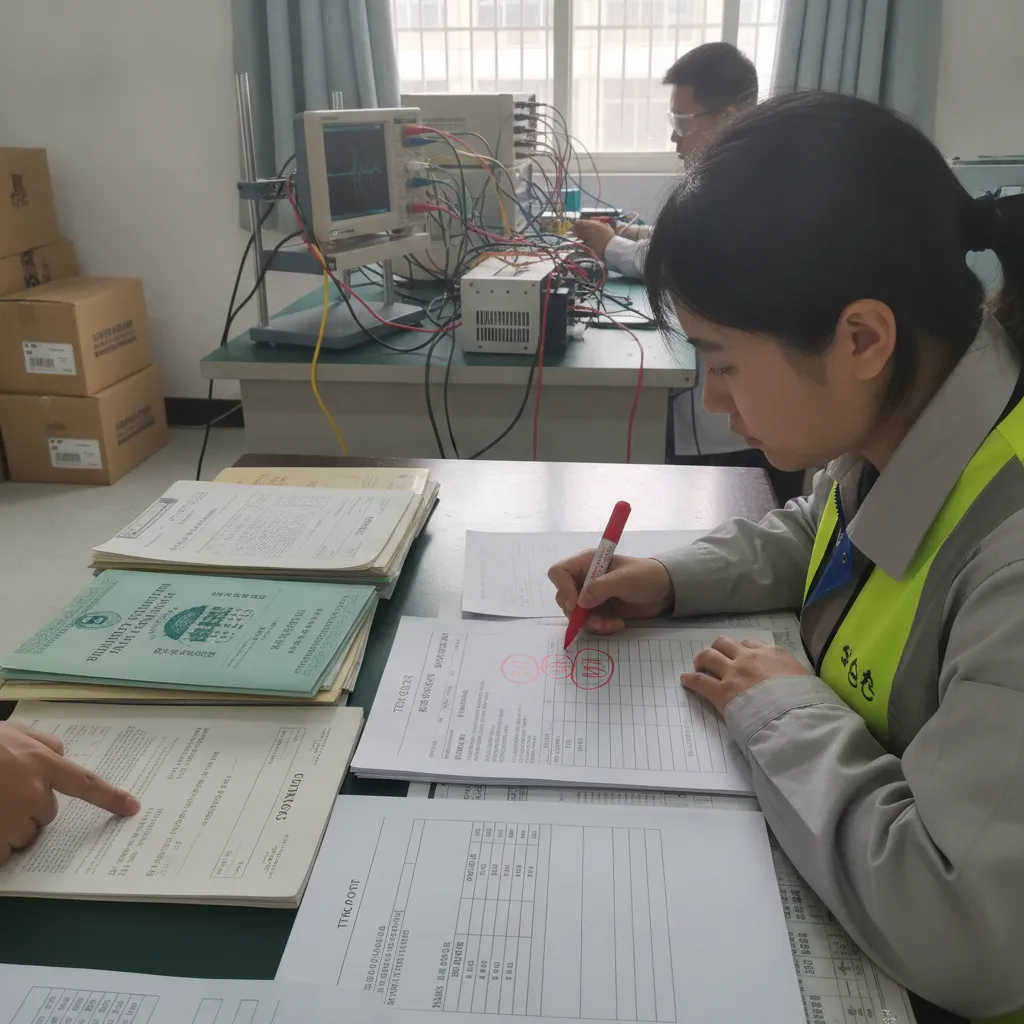
Ask the supplier for a report, certificate, or laboratory confirmation that covers the exact model and configuration you plan to buy. If the product is customized or regulated, do not assume that a similar model’s report applies without qualified confirmation.
Conclusion
Reading a Chinese factory’s business license and certifications is most valuable when you use the documents to connect four points: the legal entity, the actual product model, the target-market requirement, and the order paperwork. A license is not proof of capacity, and a certificate is not blanket compliance evidence. I recommend using document review as the first screening layer, then escalating to samples, supplier verification, inspections, and specialist review when the order risk justifies it. If you need help cross-checking China supplier documents and managing the wider procurement process, KingSourcing can support your next sourcing project.
Sources
- FAQs about Shenzhen Integrated Service and Management ...", Official Chinese government guidance describes the Unified Social Credit Code as an 18-character identifier used to identify registered legal entities across administrative systems
- Moving Shop: Changing the Registered Address of a ...", Company-registration guidance treats the registered domicile as a registration record; it should not by itself be taken as evidence that manufacturing occurs at that address
- General Use Products: Certification and Testing", Supplier due-diligence frameworks distinguish confirmation of an entity's legal identity from assessment of its operational capability, production conditions, and product-specific compliance
- Digital trade - OECD", Research on international trade documents that intermediaries can connect producers to foreign buyers and perform export-related functions, so intermediary status alone does not establish supplier misconduct
- [PDF] GOOD PRACTICE FOR MARKET SURVEILLANCE - European Union", European Commission guidance states that conformity requirements must be assessed under the legislation applicable to the particular product before it is placed on the relevant market
- Radio Equipment Directive (RED)", Product-regulation guidance recognizes that features such as radio equipment and electrical power characteristics can determine which legal requirements and conformity assessments apply
- ISO 9001 explained", ISO explains that ISO 9001 specifies requirements for a quality management system and does not certify individual products
- News from EA – EN ISO/IEC 17025 for fire testing laboratories", Laboratory testing guidance treats a test report as a record of results obtained for identified test items using stated methods and conditions