Quick Answer
T/T vs L/C is one of the first payment decisions that concerns new importers buying from China. A large upfront payment can feel risky, while a bank-backed process can sound automatically secure. The practical solution is to match your payment method and payment milestones to the supplier, the product, the order value, and your ability to inspect the goods.
T/T vs L/C is not a simple choice between a risky method and a safe method. A letter of credit can control payment against compliant documents, but it does not independently prove product quality or supplier performance. A T/T payment can be manageable when buyers verify suppliers, approve samples, use staged terms, monitor production, and inspect goods before the balance payment.
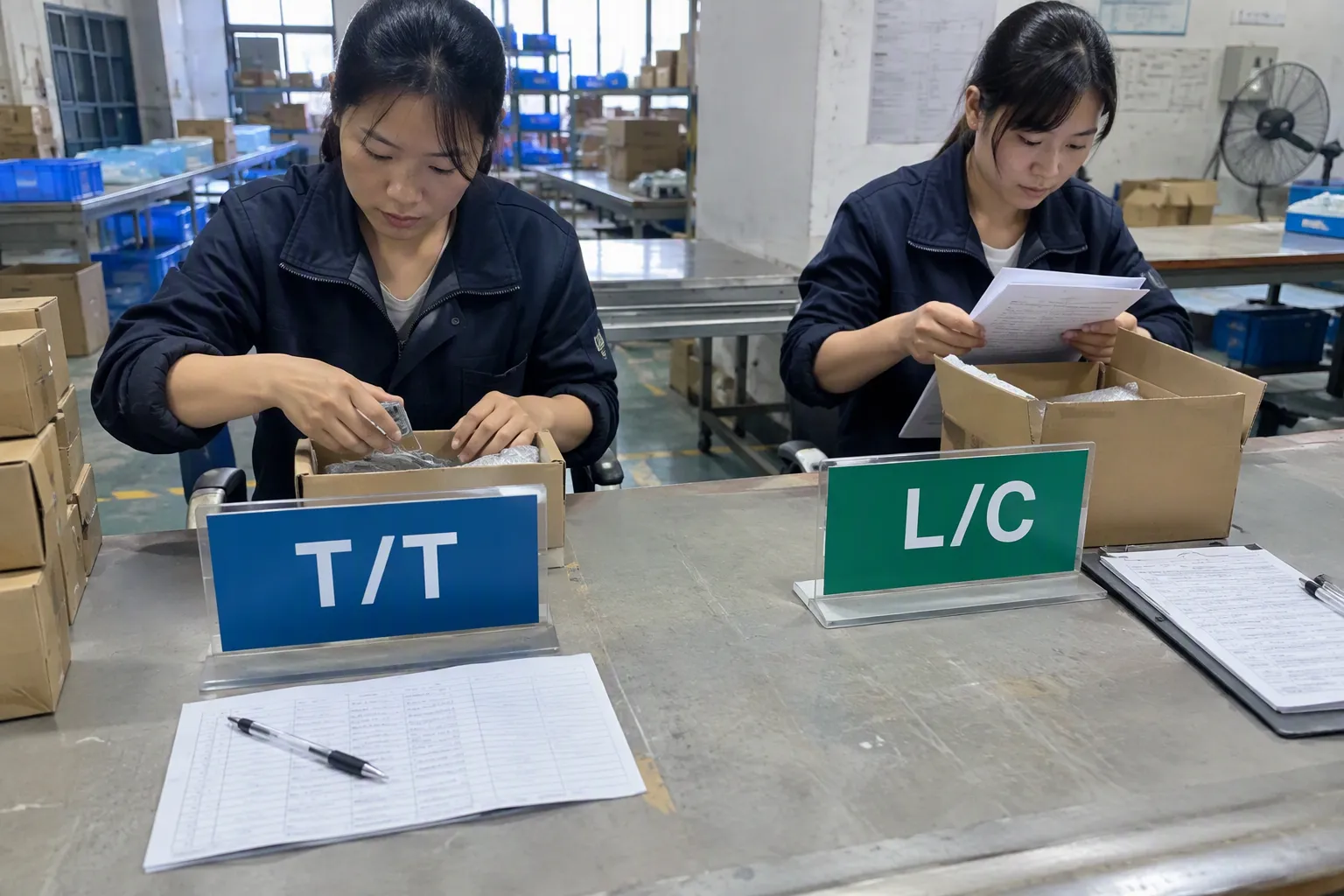
When we support overseas buyers with China sourcing coordination, we see that payment risk rarely comes from the transfer method alone. Risk usually grows when buyers pay before they understand the supplier, product requirements, production status, or shipping documents. The right structure should give both parties reasonable protection without creating unnecessary delays.
T/T vs L/C Is Not a Choice Between an Inherently Unsafe and Inherently Safe Method
Many first-time buyers view T/T as “unsafe” and L/C as “safe.” This belief can lead to the wrong procurement decision. A buyer may accept expensive banking complexity without improving product control, or demand terms that a capable factory cannot reasonably support.
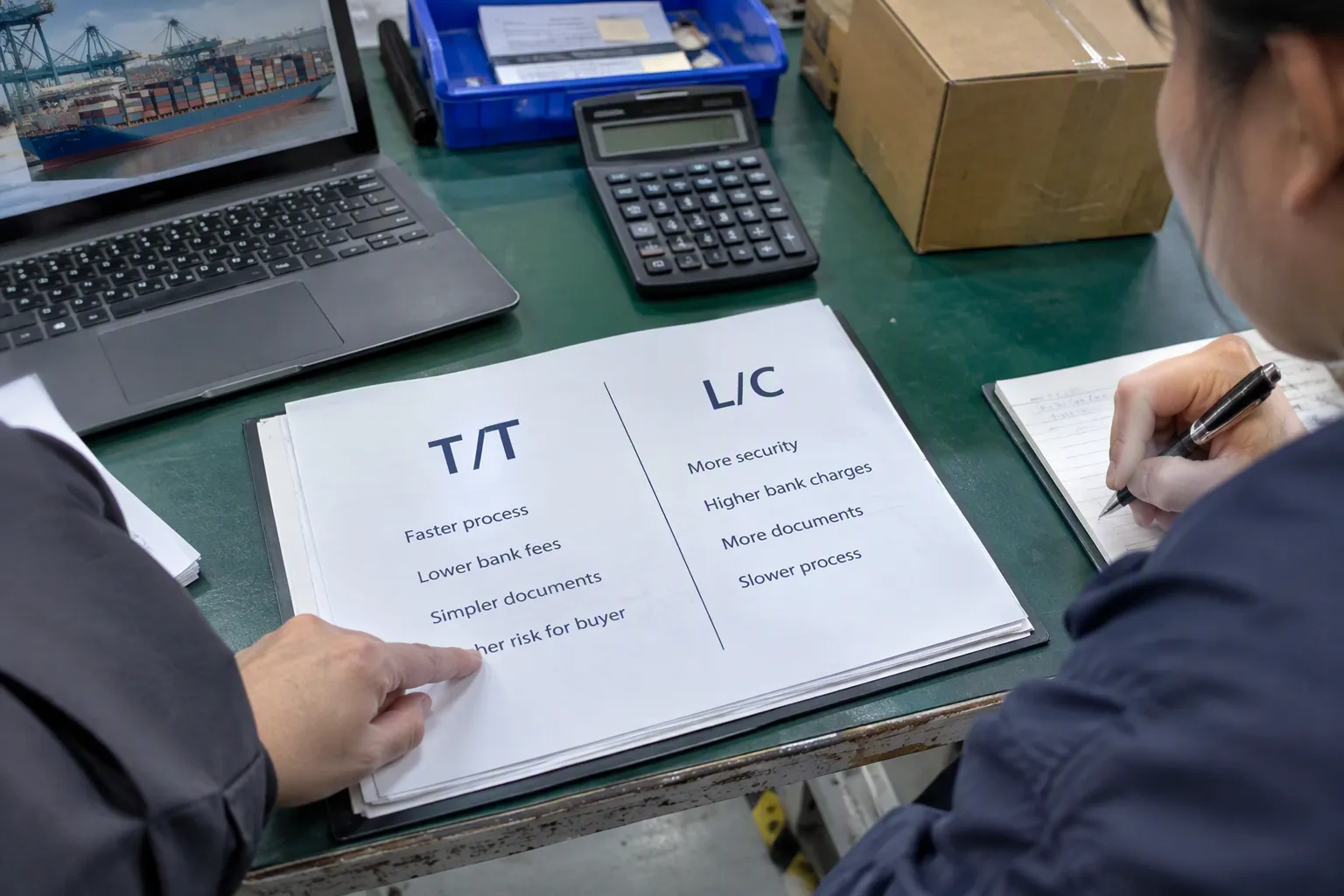
T/T vs L/C should be evaluated as different tools for managing different risks. T/T is often practical for verified suppliers, smaller orders, samples, and staged production payments. L/C may be appropriate for larger or higher-exposure orders when both parties can manage strict documentary requirements.[5] Neither method replaces supplier verification, written specifications, quality inspection, or clear acceptance criteria.
What T/T means in an import transaction
T/T usually refers to a telegraphic transfer, commonly called a wire transfer. In China sourcing, it often follows a structure such as:
- 30% deposit before production[1]
- 70% balance before shipment or against agreed shipping documents
- A separate payment for samples, tooling, molds, or product development[2]
- A smaller remaining balance after inspection, where a supplier agrees to that structure
The exact percentages vary. Some suppliers may request 50% upfront for highly customized work, especially when they need to purchase special materials. Others may accept lower deposits for repeat customers or standard products.
T/T is widely used because it is simple, fast, and familiar to factories. However, a simple payment process does not mean that buyers should skip due diligence.
In our sourcing coordination experience, the safety of a T/T arrangement depends heavily on what happens before the deposit is sent. We normally encourage buyers to establish a basic control system around the transaction:
- Verify the supplier identity and operating location.
- Confirm the product specification in writing.
- Approve a sample or production-ready reference where possible.
- Agree on payment milestones before production begins.
- Monitor production for orders with meaningful exposure.
- Arrange a pre-shipment inspection before the final payment when practical.
- Check shipping documents and consignee details carefully.
A T/T payment is more exposed when a buyer sends a large amount to an unknown company based only on a marketplace listing, a casual chat history, or a quotation that lacks technical detail. The payment method is not the only problem in that situation. The buyer may also lack supplier verification, product control, and evidence that the factory can produce the required item.
What an L/C means—and what it does not mean
An L/C, or letter of credit, is a bank-facilitated payment arrangement. In a typical documentary L/C transaction, the buyer’s bank agrees to pay the seller when the seller presents documents that comply with the terms of the credit.
These documents may include:
- Commercial invoice
- Packing list
- Bill of lading or other transport document
- Certificate of origin, if required
- Insurance document, if required
- Inspection certificate, if specifically required
- Other documents listed in the L/C terms
The important distinction is that banks generally examine documents, not physical goods. An L/C can help create payment discipline around documentation, but it does not automatically inspect the cartons, test the product, count every unit, or confirm that the goods match your brand requirements.
For example, a shipment can have a compliant bill of lading, invoice, and packing list while the buyer still has concerns about workmanship, color consistency, packaging, functionality, or product performance. If quality requirements matter, those requirements need to be addressed through specifications, approved samples, inspection procedures, and clearly defined acceptance standards.
Buyers should also understand that L/C transactions can become demanding for suppliers. A small documentation discrepancy can delay payment[4] or create extra communication between banks, the buyer, and the supplier. Common issues may include inconsistent descriptions, date errors, late presentation, incorrect document wording, or mismatched shipping details.
That does not make L/C a bad option. It means that buyers should use it when the additional structure is justified and when both sides can execute it correctly.
A practical T/T vs L/C comparison for import buyers
| Evaluation point | T/T payment | L/C payment |
|---|---|---|
| Typical use case | Samples, small-to-medium orders, repeat sourcing, standard factory terms | Larger transactions, higher exposure, established trade relationships |
| Payment control | Depends on agreed milestones and buyer controls | Depends on compliant documentary presentation |
| Product quality protection | Requires samples, inspections, and clear specifications | Still requires samples, inspections, and clear specifications |
| Speed | Usually faster and simpler | Often slower due to bank setup and documentation |
| Bank costs | Usually lower | May include issuance, advising, amendment, confirmation, and discrepancy-related charges |
| Supplier acceptance | Commonly accepted by China suppliers | Depends on supplier experience, export capability, and banking access |
| Administrative workload | Moderate | Higher |
| Discrepancy risk | Lower documentary complexity | Higher if documents do not match exact L/C terms |
| Best risk controls | Supplier verification, deposits, inspection, production follow-up | Well-drafted documents plus supplier verification and inspection |
The key lesson from this T/T vs L/C comparison is that neither method operates in isolation. A buyer still needs a procurement process.
When T/T can be a reasonable choice
T/T is often a reasonable choice when the buyer has reduced the supplier and product risks before making the payment. This may apply to first orders as well as repeat orders, but the level of control should change with the exposure.
We generally see T/T work more comfortably when several of the following conditions are present:
- The supplier has been verified through business checks, factory review, video verification, or an on-site audit.
- The buyer has received and approved a sample.
- The buyer has a detailed purchase order or product specification sheet.
- The product is relatively easy to inspect against clear requirements.
- The buyer has agreed on packaging, labels, carton marks, and shipping terms.
- The deposit is proportionate to the supplier’s production needs.
- The buyer can arrange production follow-up or pre-shipment inspection.
- The final balance is not released until agreed inspection and shipping conditions are met.
For many e-commerce sellers, a staged T/T structure is more practical than an L/C for an early order. A buyer importing a modest quantity of standard accessories, promotional products, or private-label goods may gain more risk reduction from supplier verification and inspection than from a complex bank instrument.
That said, buyers should not assume that a 30/70 payment split is universally safe. The appropriate structure depends on the product and supplier. A custom electronics item with new tooling, firmware changes, special packaging, and a long production lead time creates different exposure from a standard wholesale item already in stock.
When an L/C may be justified
An L/C may be worth considering when the order value is high enough that the buyer wants stronger documentary payment control and the supplier has the capability to handle the process correctly.
Situations that may justify exploring an L/C include:
- A large purchase order that exceeds the buyer’s comfortable loss tolerance
- A new supplier relationship involving significant financial exposure
- A transaction with formal documentary requirements from the buyer, lender, customer, or internal procurement policy
- A supplier that regularly handles L/C orders and can demonstrate competent document execution
- A shipment where transport documents and timing requirements need close control
- A buyer with an experienced finance, trade operations, or banking team
However, the buyer should assess whether the supplier can perform under the L/C terms before choosing this route. Some factories are very capable manufacturers but have limited experience managing detailed bank documentation. Others may accept an L/C only if the buyer covers additional costs or agrees to terms that are less flexible.
We recommend that buyers ask practical questions early:
- Has the supplier handled documentary L/C transactions before?
- Which bank does the supplier use?
- Can the supplier share its preferred L/C wording or documentary requirements?
- What documents can the supplier reliably provide?
- What shipment window can the supplier commit to?
- Who bears bank charges, amendment fees, and discrepancy charges?
- Can inspection requirements be written clearly enough to be useful?
Buyers should confirm transaction-specific rules with their bank, freight provider, and qualified trade counsel where needed. Banking terms and documentary requirements can vary by country, bank, contract, and shipping arrangement.
Product inspectability matters more than many buyers expect
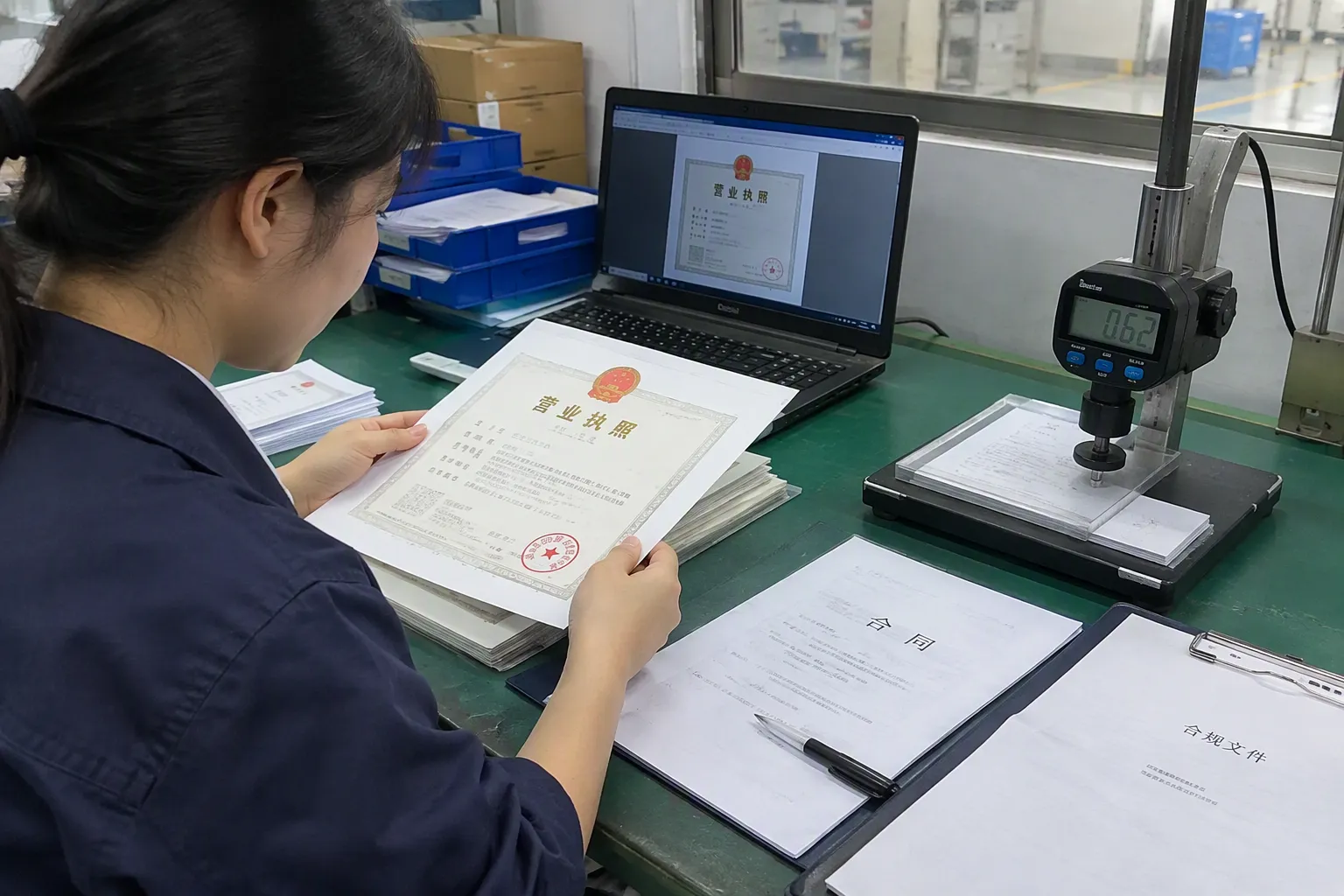
In a T/T vs L/C decision, buyers often focus on the amount of money but overlook how easy the product is to evaluate.
A standard item with visible, measurable requirements can be easier to control. For example, a buyer may be able to verify color, dimensions, logo position, carton quantity, packaging text, and basic functionality through an approved sample and inspection checklist.
A complex product may be harder to control. This can include products with:
- Custom electronics or firmware
- Safety-related performance requirements
- Sensitive material specifications
- Multiple components from different suppliers
- Strict compatibility needs
- Regulated market requirements
- Detailed private-label packaging programs
For these products, payment security should not be treated as a substitute for technical validation. A buyer may need pre-production samples, golden samples, product testing through qualified providers, in-process checks, and pre-shipment inspection. When certifications, test reports, or compliance documents are relevant, buyers should verify the documents with the issuing body or a qualified professional rather than relying only on supplier-provided copies.[6]
This point matters because an L/C can create a false sense of security. If the contract asks for a certificate, the supplier may be able to provide a document. Yet the buyer still needs to confirm whether that document applies to the exact product, model, factory, market, and production batch.
Build payment milestones around real production risk
The most useful payment structure usually follows the point at which risk is created during production.
For a simple order, the structure may be straightforward:
| Order stage | Buyer control | Possible payment consideration |
|---|---|---|
| Before deposit | Supplier verification, quotation review, sample approval | Limited deposit after terms are confirmed |
| During production | Production follow-up, material confirmation, packaging approval | Additional milestone only if justified |
| Before final payment | Pre-shipment inspection, quantity check, document review | Balance payment after agreed conditions |
| After shipment | Tracking, document handover, receiving inspection | Maintain records for future supplier evaluation |
For more customized orders, the buyer may need additional milestones. Tooling, molds, custom printing plates, special components, and custom packaging can create legitimate supplier costs before mass production starts. In these cases, the buyer should ask for clarity rather than simply pushing for the lowest deposit.
A useful purchase order should cover more than price and quantity. We encourage buyers to document:
- Product model and version
- Materials and colors
- Dimensions and tolerances where relevant
- Approved sample reference
- Logo artwork and placement
- Packaging requirements
- Labeling and barcode requirements
- Carton specifications
- Inspection standard and acceptable defect level
- Production lead time
- Shipping terms
- Payment schedule
- Required shipping documents
Clear written requirements can improve both T/T and L/C transactions. They reduce the room for different interpretations later.
Supplier credibility should shape the payment decision

The first question is not always “Should I use T/T or L/C?” The first question may be “What evidence do I have that this supplier is suitable for this order?”
In our work with overseas buyers, we look at supplier assessment as a layered process. A company registration record, a website, or a trade platform profile can be useful starting points. They are not the full answer.[7]
A more complete review may include:
- Business identity and bank account consistency
- Factory location and operational evidence
- Product category experience
- Production capability and machinery, where relevant
- Quality control process
- Export experience for the destination market
- Sample responsiveness and sample consistency
- Quotation clarity
- Communication quality and speed
- Willingness to confirm specifications in writing
- Ability to explain production lead times and materials
- References or transaction history where independently available
A supplier that avoids basic questions, changes bank details without a clear explanation, refuses to provide product details, or pressures a buyer to make immediate payment deserves additional scrutiny. Those signals matter regardless of whether the buyer plans T/T vs L/C.
At the same time, a legitimate supplier may reasonably require a deposit before beginning customized production. Buyers should distinguish between a normal commercial request and a request that lacks transparency.
Do not confuse documents with acceptance standards
A strong import process has two separate tracks:
- Document control
- Product acceptance control
Document control includes invoices, packing lists, bills of lading, certificates, labeling details, and payment instructions. This is where an L/C can play a meaningful role.
Product acceptance control includes approved samples, technical specifications, workmanship standards, quantity checks, functional testing, packaging requirements, and inspection reports. This is where buyer-side quality management matters.
For some orders, third-party inspection can help confirm whether goods appear to meet an agreed checklist before shipment.[8] However, inspection is not a guarantee of future product performance, regulatory compliance, or every hidden defect. Buyers should define inspection scope carefully and use qualified experts for specialized products or application-specific testing.
A buyer who uses T/T with good supplier verification and inspection may have stronger practical control than a buyer who uses an L/C without clear product standards. The reverse can also be true: a well-managed L/C may be appropriate for a large transaction where documentary discipline and payment assurance are important.
The safer choice depends on the full commercial setup.
Frequently Asked Questions
Is T/T safe for paying Chinese suppliers?
T/T can be a workable payment method when buyers use supplier verification, approved samples, clear purchase terms, staged payments, production follow-up, and pre-shipment inspection. T/T becomes more exposed when a buyer sends a large upfront payment to an unverified supplier without product specifications or inspection controls.
Is an L/C safer than T/T for imports?
An L/C can provide stronger control over payment against compliant documents, especially for larger orders. However, an L/C does not automatically verify the actual quality, quantity, or condition of goods. Buyers still need supplier checks, product specifications, sample approval, and inspection planning.
What is a common T/T payment term for China imports?
A common structure is 30% deposit before production and 70% balance before shipment. However, terms vary based on product customization, supplier policy, order value, tooling needs, and relationship history. Buyers should negotiate terms that reflect the real production risk and their ability to verify progress.
Should a first-time importer use T/T or L/C?
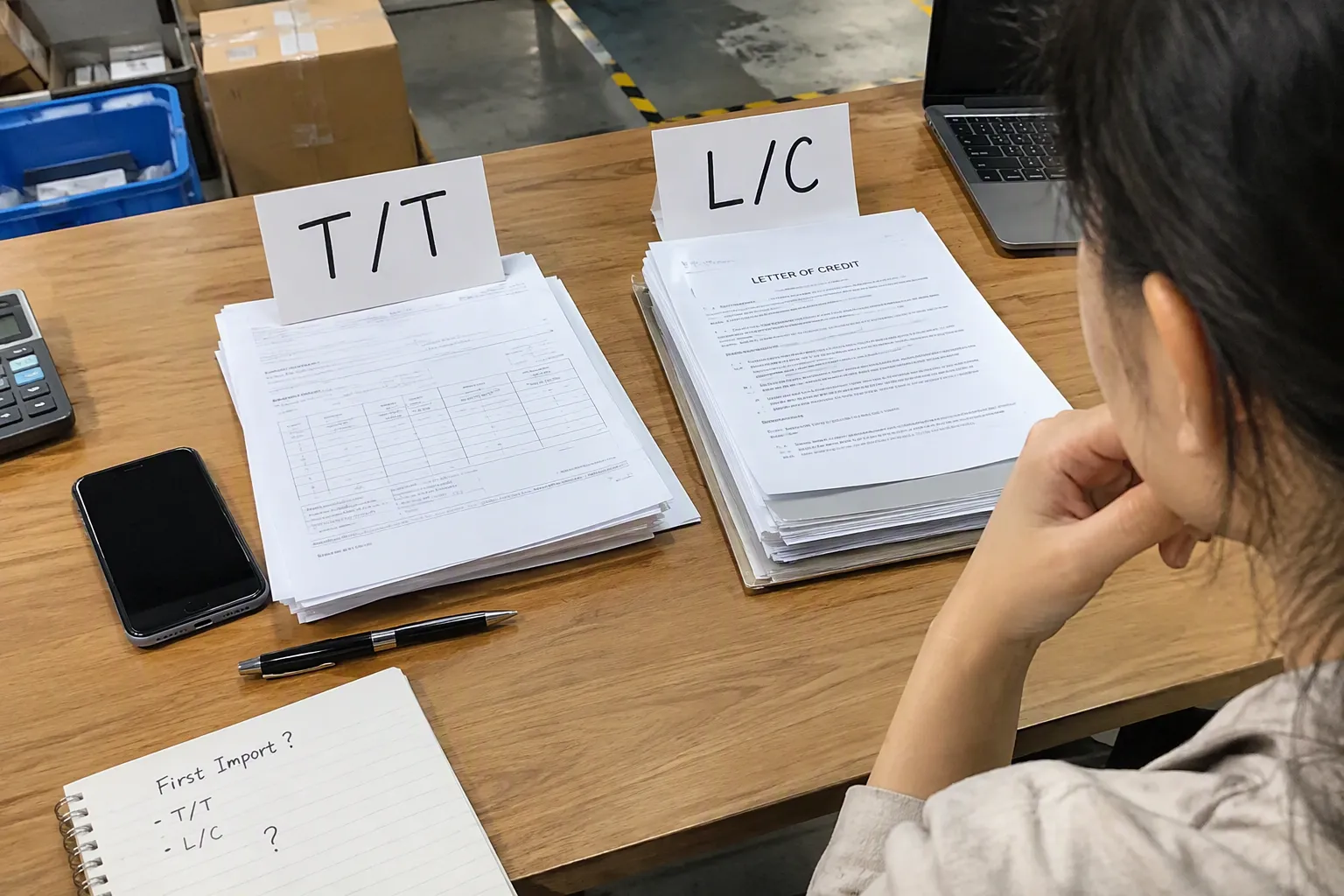
A first-time importer should assess the order value, supplier credibility, product complexity, and available quality controls before deciding. For a smaller order, a controlled T/T structure may be more practical. For a large or high-exposure transaction, an L/C may be worth exploring with bank and trade-professional guidance.
Can an inspection report protect a buyer before final payment?
An inspection report can provide useful evidence about checked units, packaging, quantity, and agreed quality points at the time of inspection. It is not an absolute guarantee. Buyers should agree on the inspection scope, acceptable standards, sample reference, and corrective actions before production begins.
Conclusion
T/T vs L/C should not be treated as a simple safe-versus-unsafe decision. T/T can be a practical option when buyers verify suppliers, control specifications, approve samples, stage payments, and inspect goods before release of the balance. An L/C can add useful documentary payment control for larger or higher-exposure orders, but it does not replace quality management. At KingSourcing, we help buyers build practical supplier verification, production follow-up, inspection, consolidation, and shipping processes around the payment structure that fits their China sourcing needs.
Sources
- Untitled", Trade guidance documents describe deposit-and-balance payment arrangements, often expressed as a deposit before production and a balance before shipment, as a commercial practice; exact percentages remain subject to negotiation and product-specific conditions
- [PDF] Contracts as a Risk Management Tool", Manufacturing and supply agreements may allocate non-recurring engineering, tooling, mold, sampling, and development costs separately from the unit price of production goods
- [PDF] Uniform Customs and Practice for Documentary Credits 1971 Revision", A documentary letter of credit provides a payment undertaking against conforming documents; because banks examine documents rather than the underlying goods, it does not independently establish that goods satisfy the buyer’s quality expectations
- Letter of Credit - International Trade Administration", When documents presented under a documentary credit do not comply with the credit terms, the nominated or issuing bank may refuse or seek a waiver for the presentation, which can delay settlement
- Letter of Credit - International Trade Administration", Trade-finance guidance identifies letters of credit as instruments that can reduce payment risk in international transactions but require precise documentary compliance and bank administration, making their value dependent on transaction circumstances
- General Use Products: Certification and Testing | CPSC.gov", Conformity-assessment documentation should be checked for authenticity and applicability, including the issuing body, product scope, and relevant test basis, because copies supplied in commercial channels may not by themselves establish valid compliance
- Perform Due Diligence - International Trade Administration", Supplier due-diligence guidance recommends corroborating business identity and capability through multiple independent sources, since registration data and online profiles alone do not establish a supplier’s reliability or capacity to perform
- Trade Guide: WTO PSI - International Trade Administration", Pre-shipment inspection can provide an independent assessment of sampled goods and associated packaging or quantity against defined contractual or inspection criteria before dispatch