Quick Answer
CPSIA compliance for children’s products from China can feel simple until a supplier sends a reassuring test report that does not clearly match the item you plan to sell. That gap can create expensive delays, rejected inventory, and avoidable risk. I recommend treating compliance as a controlled sourcing process, not a document request.
CPSIA compliance for children’s products from China depends on whether the exact product configuration being imported can be connected to appropriate evidence, including identified samples, materials, components, specifications, and production controls.[1] A supplier’s promise or an existing report may be useful, but buyers should verify that it relates to the current product before placing an order.
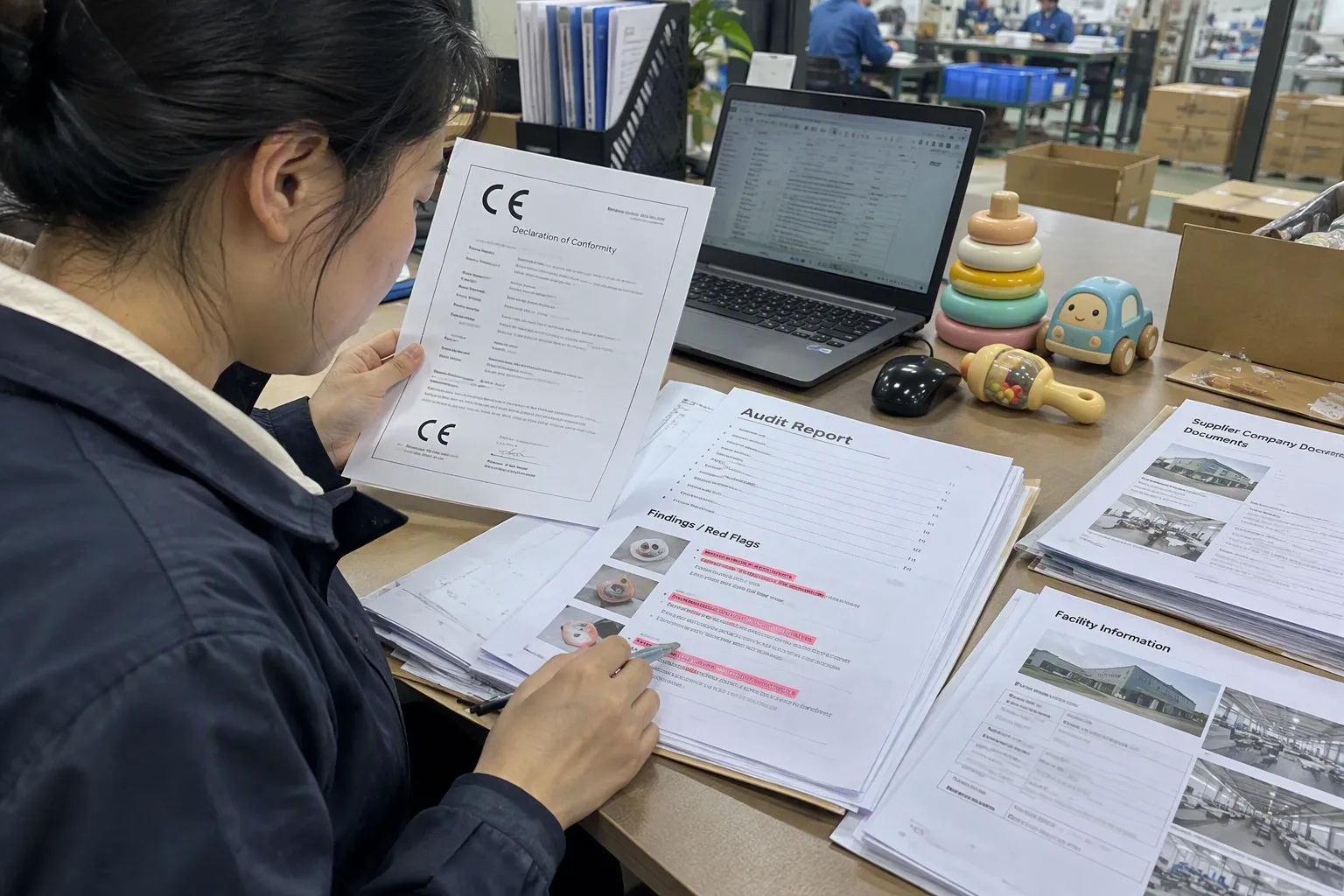
For first-time importers, Amazon sellers, and private-label brands, the real question is rarely “Does this factory know CPSIA?” The more useful question is whether the factory, product sample, documents, and final production inputs can be traced together. That is where pre-order sourcing discipline matters.
Why Is CPSIA Compliance for Children’s Products Sourced From China Not a Supplier Promise or One-Time Test Report Purchase?
A supplier may say that a product is “CPSIA compliant,” but that statement alone does not show what was tested, which version was tested, or whether the same inputs will be used in your production order.[2] I have seen that buyers often discover these missing links only after they have paid a deposit.
CPSIA compliance for children’s products sourced from China should be assessed product by product.[3] Buyers should compare the current product specification with the tested sample and supporting documents, then control material, color, coating, component, and formulation changes before and during production. Product-specific requirements should be confirmed with qualified compliance professionals and appropriate testing resources.
Start With the Product You Will Actually Sell
I encourage buyers to move away from a broad supplier-level question:
“Is your company CPSIA compliant?”
That question may start a useful conversation, but it is not enough for procurement approval. A factory can have experience producing children’s items for U.S. customers while your proposed product still contains different materials, accessories, coatings, packaging, or age-grade assumptions.[4]
A better purchasing question is:
“Can we document that the exact product configuration we will sell matches the compliance evidence we plan to rely on?”
This framing changes the sourcing conversation. It asks the supplier to identify the product rather than make a general promise.
For example, a supplier may provide a report for a blue plastic toy. Your private-label version may use:
- A different color masterbatch
- A soft-touch coating
- A different printed graphic
- A new strap, clip, zipper, or metal fastener
- A revised battery compartment
- Different packaging or printed inserts
- A different production factory or subcontracted component source
Some of these changes may be commercially minor. However, buyers should not assume that a commercial revision has no effect on the evidence they need. The impact depends on the product, applicable requirements, materials involved, and the nature of the change.
At KingSourcing, we help buyers turn their product brief into a clearer procurement file. We do not provide legal conclusions or replace an accredited laboratory, regulatory adviser, or qualified compliance professional. However, we can help coordinate the operational inputs that often determine whether later verification is practical.
Build a Pre-Order Compliance Control File
The most effective time to manage CPSIA compliance for children’s products from China is before issuing a purchase order. Once tooling, materials, and production schedules are underway, changing a component can be slow and costly.[5]
I recommend creating a simple product-specific control file. It does not need to be complicated, but it should be detailed enough for the buyer, supplier, inspection team, and testing coordinator to identify the same product.
| Control item | What buyers should record | Why it matters |
|---|---|---|
| Product name and SKU | Internal SKU, supplier model number, product description | Prevents confusion between similar models |
| Product photos | Clear photos of all sides, components, labels, and packaging | Creates a visual reference point |
| Age-grade assumption | Intended age range and use case | May affect the compliance review scope |
| Bill of materials | Main materials, coatings, inks, plastics, textiles, metals, fillings, and accessories | Helps identify what must remain controlled |
| Component list | Small parts, fasteners, batteries, magnets, straps, labels, and attachments | Small components can create major sourcing differences |
| Color and artwork references | Pantone references, artwork files, print locations, finish details | Colorants and printing methods may differ[6] |
| Sample identification | Dated sample photos, sample code, supplier confirmation | Connects a tested or reviewed sample to production |
| Document list | Reports, declarations, material confirmations, prior records | Shows what evidence exists and what is missing |
| Change-control responsibility | Who must approve substitutions or revisions | Reduces unauthorized changes |
This file should be shared with the supplier before the buyer relies on any report. I find that factories usually respond more accurately when questions are specific. A vague request for “all CPSIA documents” can produce a folder of PDFs that are difficult to evaluate. A product-matched request is more likely to reveal whether the supplier understands the exact configuration.
Compare the Test Sample With the Current Configuration
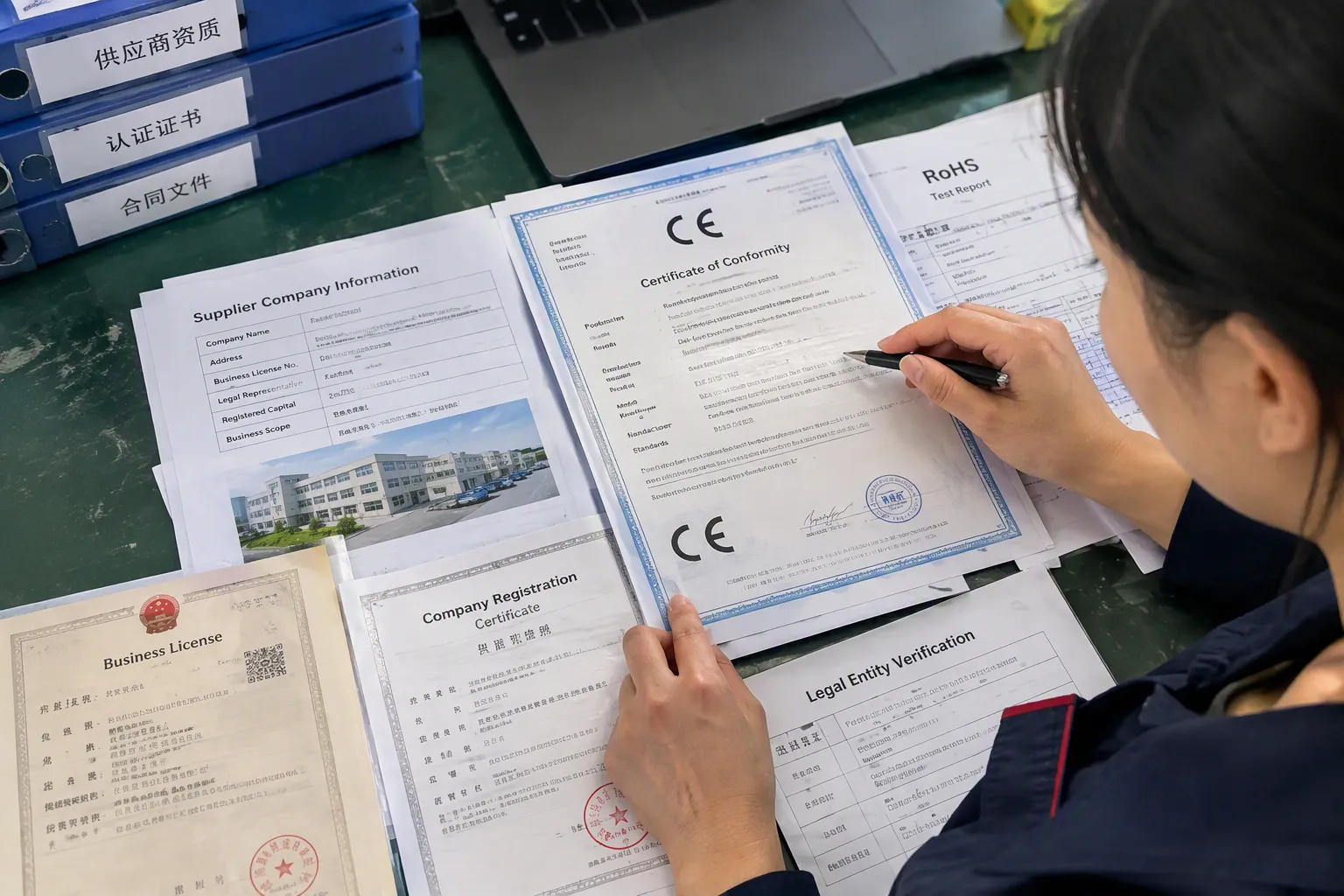
An older report is not automatically useless simply because of its date. It may still provide useful background or support a broader review. The key issue is whether the tested sample materially matches the product you intend to order.[7]
Buyers should ask for enough information to make a practical comparison. Depending on the available document, that may include:
- Product name, model, and photographs in the report
- Sample description and sample receipt information
- Stated materials or component descriptions
- Colors, coatings, prints, and finishes represented
- Test method references and scope described in the document
- Applicant, manufacturer, or factory information
- Report date and laboratory details
- Any exclusions, limitations, or product notes
A report that says “plastic children’s item” may not offer enough detail to support a confident purchasing decision for a heavily customized private-label product. In contrast, a report with clear photos, identified materials, matching model information, and relevant product details may be more useful—provided the supplier can confirm that the current version uses the same controlled inputs.
I recommend comparing the report against a simple matrix rather than relying on memory.
| Product element | Tested sample | Proposed order | Match status | Action needed |
|---|---|---|---|---|
| Main body plastic | Supplier confirmation required | ABS, red | Pending | Obtain resin/material confirmation |
| Surface finish | Gloss finish shown | Soft-touch coating | Different | Seek product-specific review |
| Printed artwork | No artwork shown | Multi-color logo print | Different | Confirm ink and print process |
| Strap | Not shown | Polyester wrist strap | Different | Add to component review |
| Packaging | Basic polybag | Retail box with inserts | Different | Confirm applicable documentation needs |
This is not a legal compliance determination. It is a procurement tool. It helps buyers identify where the tested item and the planned production item may not be the same.
Treat Supplier Changes as Compliance-Relevant Changes
In China sourcing, substitutions can happen for ordinary commercial reasons. A material may be unavailable. A color supplier may change. A factory may use a similar clip because the original one has a long lead time. A packaging vendor may switch to another ink system.
These changes are not always improper. In many product categories, factories make substitutions to keep production moving.[8] The problem begins when the buyer is not informed and when the revised input is not assessed against the evidence used to support the order.
I recommend adding a written change-control rule to the purchase order, product specification, or supplier agreement. The language should require the supplier to obtain written buyer approval before changing any controlled item.
Controlled items may include:
- Main material or resin grade
- Colorant, coating, paint, or finish
- Printed ink, artwork process, or decoration method
- Metal hardware, magnets, batteries, or electronic components
- Textile composition, filling, foam, or adhesive
- Small accessories, straps, clips, buckles, or fasteners
- Product dimensions that affect use or safety features
- Factory location or subcontracted production arrangement
- Packaging components, labels, warnings, and inserts
The supplier should understand that “same appearance” is not necessarily the same as “same approved input.” A black strap from a different vendor may look identical. A new coating may have the same feel. A substitute plastic may have a similar color. Yet each change can affect what documents or product-specific verification may be appropriate.
Ask Suppliers Better Questions Before You Order
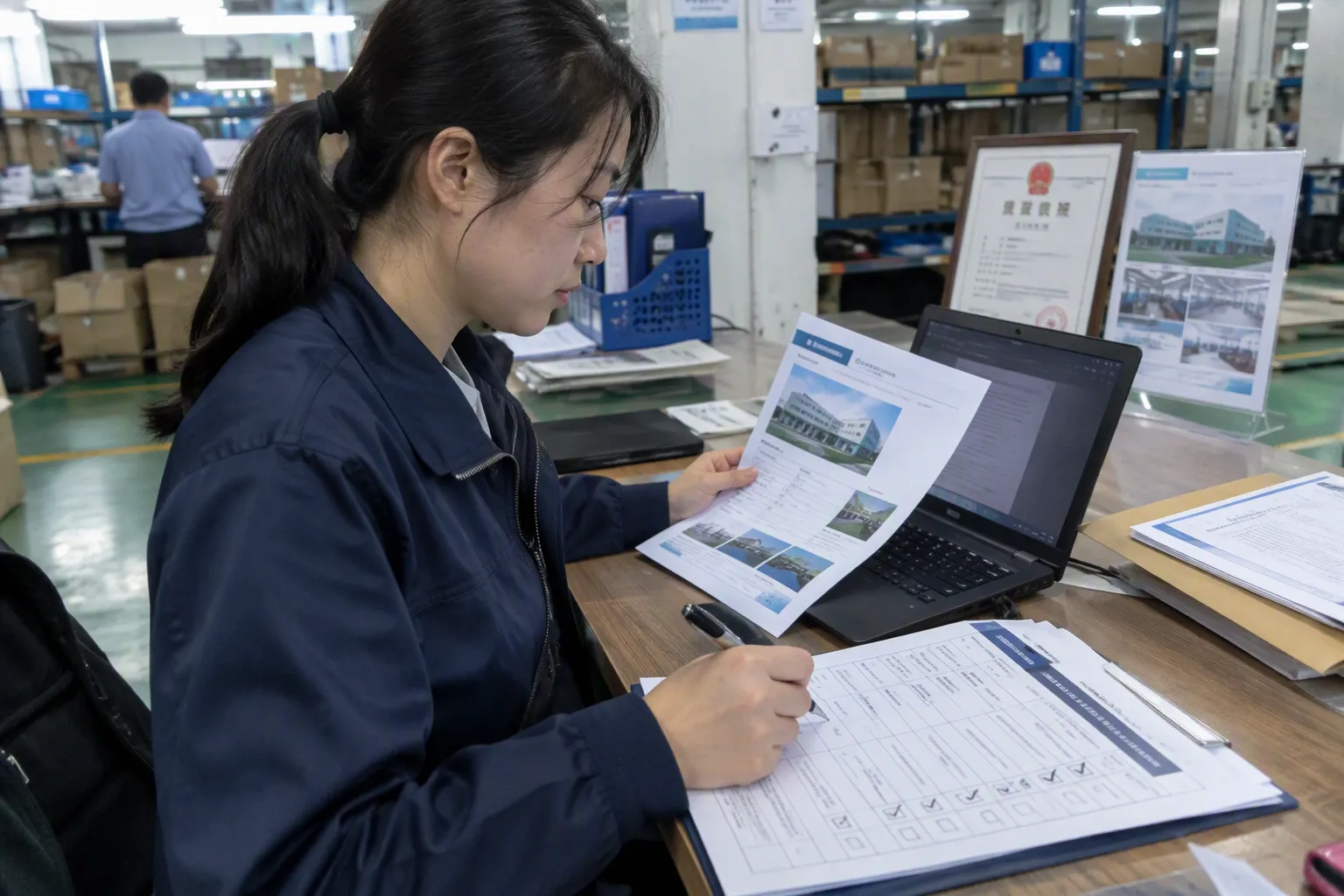
In our sourcing work, we help buyers organize requests so factories can answer them. Clear questions reduce the chance that a supplier replies with a generic “yes, no problem.”
Here are practical pre-order questions buyers can use:
- Can you identify the factory that will manufacture this exact SKU?
- Can you confirm whether the production sample will use the same materials and components as the reference sample?
- Can you provide a material and component list for the quoted configuration?
- Does the report you shared show the same model, material, color, coating, and component setup?
- Which parts of the product are different from the sample or report?
- Will any component be purchased from a subcontractor?
- Can you notify us in writing before substituting any material, color, coating, accessory, or packaging input?
- Can you retain a sealed or clearly identified reference sample for production comparison?
- Can you provide production photos showing the agreed materials, colors, labels, and packaging?
- Who at the factory is responsible for confirming changes before production?
A good supplier may not answer every question perfectly at the beginning. However, the quality of the response is informative. A factory that can identify materials, provide photos, and discuss controlled changes is generally easier to manage than one that only repeats broad assurances.
Use Samples as Traceability Tools, Not Just Sales Samples
Many buyers use samples to judge appearance, feel, pricing, and customer appeal. Those are important purposes. For children’s products, I also recommend treating the sample as a traceability tool.
The sample should be clearly identified. The buyer should record the supplier name, sample date, model number, revision, colors, components, packaging version, and any known differences from the planned production item.
If a buyer sends a sample for product-specific testing or compliance review, the chain of identification becomes even more important. The buyer should be able to answer basic questions later:
- Which sample was sent?
- Who supplied it?
- What was its product code?
- What material and component configuration did it represent?
- Was it pre-production, production, or a showroom sample?
- Did the production order match it?
- If not, what changed and who approved the change?
I have found that simple sample labeling prevents a surprising amount of confusion. Similar products often accumulate quickly during sourcing. A buyer may have three versions of the same silicone item, each with different colors, packaging, or accessories. Without a sample code and photo record, teams can easily refer to the wrong version when discussing a report.
Follow the Details Into Production
CPSIA compliance for children’s products from China is not only a pre-order paperwork exercise. The production stage matters because this is when material substitutions, unapproved revisions, and communication gaps can occur.
At KingSourcing, we help buyers coordinate production follow-up and quality-control communication with suppliers. For a product with identified compliance-sensitive inputs, this may include asking factories for:
- Material or component confirmations before mass production
- Photos of incoming materials or approved color references
- Pre-production sample confirmation
- Production-line photos for major components
- Packaging and label checks against approved artwork
- Notice of any proposed substitution or delivery-related change
- Retained reference samples where appropriate
An inspection can also compare observable characteristics against the approved specification. Inspectors can verify items such as color, logo placement, component presence, packaging version, labeling, dimensions, workmanship, and quantity. However, visual inspection alone cannot prove every material or chemical property. Buyers should understand that a product can look correct while still requiring product-specific verification beyond a routine inspection.
That boundary matters. We can help buyers verify procurement inputs, coordinate supplier communication, and compare production against approved references. We do not certify a product, issue legal advice, or replace qualified laboratory evaluation.
Avoid the Most Expensive Upstream Failures
The costliest problems are often created before the first unit is made. A buyer may approve a quotation based on one sample, receive an old report for a similar item, and then place an order without documenting the actual production configuration.
The factory may then make reasonable-looking changes to meet price or lead-time targets. The buyer may only learn about those changes when an Amazon listing is delayed, a retailer requests documents, a shipment is ready to depart, or a later review identifies a mismatch.
I recommend watching for these common warning signs:
| Warning sign | Why it deserves attention |
|---|---|
| Supplier sends a report without product photos or model details | It may be difficult to connect the report to your SKU |
| Factory says “all products are compliant” | The statement is too broad for product-specific procurement |
| Quote changes after the sample is approved | Cost pressure may lead to material or component changes |
| Supplier cannot name the material or component source | Traceability may be weak |
| Product has multiple colors, coatings, or accessories | Each variation should be considered in the matching review |
| Factory resists written change approval | The buyer may have limited control over substitutions |
| Sample and production are made at different sites | The production factory and inputs should be confirmed |
| Documents use a different product name or manufacturer | More clarification may be needed before relying on them |
A buyer does not need to assume bad intent whenever one of these issues appears. Instead, the buyer should pause, ask for clarification, and decide whether the evidence and controls are sufficient for the order.
Create a Practical Approval Gate Before Deposit Payment
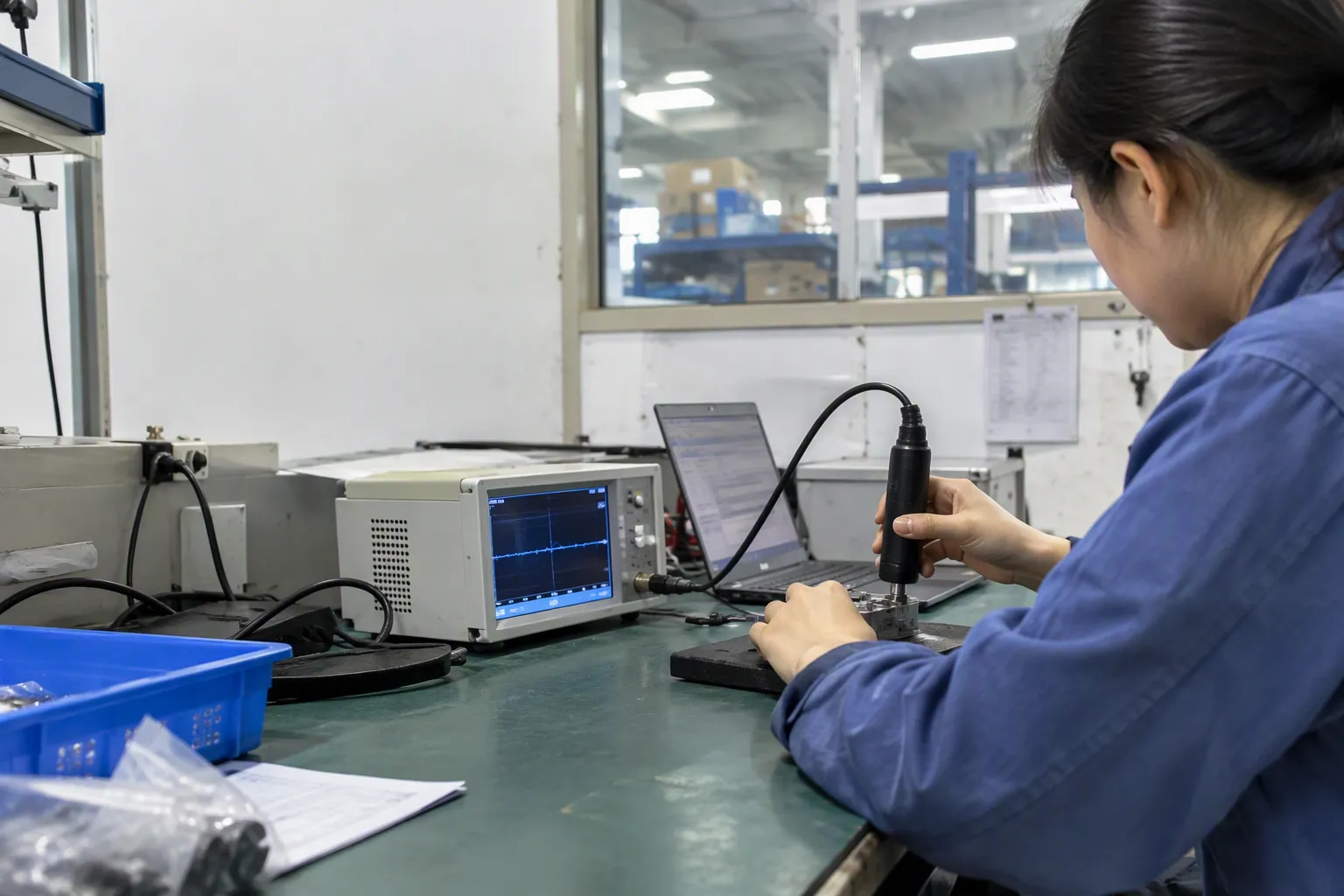
I recommend setting a simple internal approval gate. This helps founders and purchasing managers avoid placing orders based on incomplete information.
Before paying a deposit, confirm that the following items are available or clearly assigned:
- The product specification is complete enough for the supplier to quote accurately.
- The intended age grade and market are identified for qualified review.
- The sample version is identified with photos and a code.
- The supplier has confirmed the main materials and components.
- Existing documents have been compared with the proposed product configuration.
- Differences between the report sample and order version are listed.
- The buyer knows what additional product-specific review or testing may be needed.
- The supplier has accepted written approval requirements for substitutions.
- Production and inspection checkpoints are planned.
- Packaging, labeling, and documentation responsibilities are assigned.
This process does not guarantee legal compliance. It does something equally important from a sourcing perspective: it makes unknowns visible before money is committed.
For small brands, this can be the difference between a manageable first order and a difficult inventory problem. For larger importers, it provides a repeatable system that purchasing teams can use across many SKUs and suppliers.
CPSIA Compliance for Children’s Products From China: Frequently Asked Questions
Is a supplier’s CPSIA test report enough to place an order?
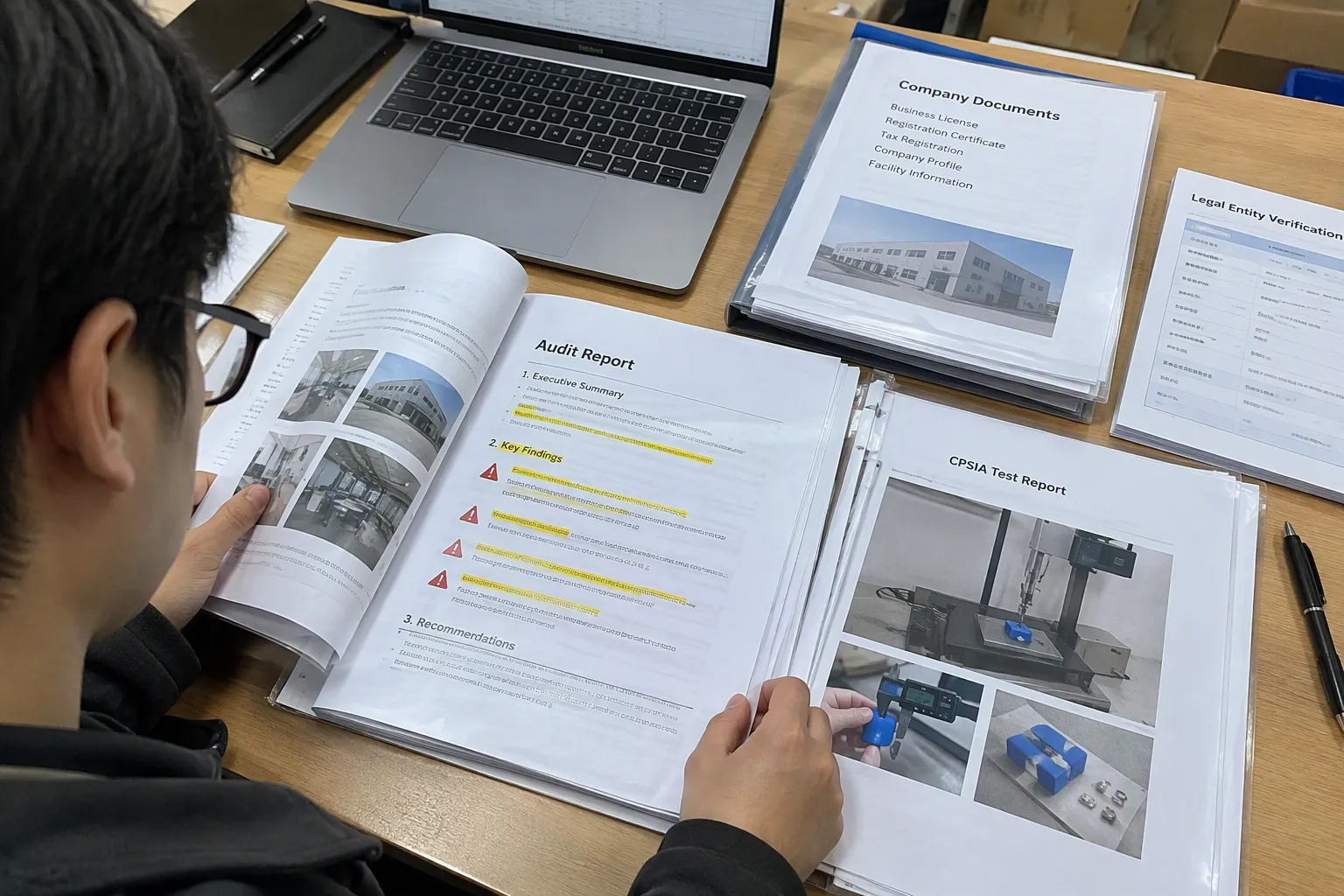
A supplier report may be useful evidence, but buyers should not rely on it without comparing it to the exact product configuration being ordered. Check the sample identity, product model, materials, colors, coatings, components, and factory information. Product-specific requirements should be verified with qualified professionals.
Does an old CPSIA report automatically become invalid?
No. A report is not automatically unusable because it is old. The important question is whether the tested sample materially matches the current product and production inputs. If materials, components, coatings, colors, or manufacturing arrangements have changed, the buyer should seek qualified product-specific guidance.
Can a sourcing agent certify CPSIA compliance for children’s products from China?
A sourcing agent should not be treated as a certification body, laboratory, or legal adviser. We help buyers coordinate supplier confirmations, samples, production details, documentation requests, and inspections. Qualified laboratories and compliance professionals should assess product-specific regulatory and testing questions.
What should I ask a Chinese supplier before ordering children’s products?
Ask the supplier to identify the exact product model, materials, components, colors, coatings, factory location, sample version, and any known changes from prior reports or samples. You should also require written approval before material or component substitutions during production.
Can a pre-shipment inspection prove CPSIA compliance?
A pre-shipment inspection can check visible and measurable aspects of the product against approved specifications, such as appearance, components, labels, packaging, workmanship, and quantity. It cannot independently prove every material or chemical characteristic. Buyers may need additional product-specific verification depending on the item.
Conclusion
CPSIA compliance for children’s products from China should begin with product traceability, not a generic supplier promise. I recommend connecting the exact product you will sell to its sample, materials, components, supporting documents, and production controls before you place an order. A clear specification, documented change-control process, and disciplined supplier communication can reduce costly uncertainty. If you need help coordinating Chinese suppliers, samples, production follow-up, inspections, consolidation, or shipment preparation, we at KingSourcing can help you build a more controlled sourcing workflow.
Sources
- Component Part Testing | CPSC.gov", U.S. Consumer Product Safety Commission rules require manufacturers and importers to support children's product certifications through applicable testing and recordkeeping, including controls relevant to the products placed into commerce
- Children's Product Certificate | CPSC.gov", Under 16 CFR Part 1110, a Children's Product Certificate identifies the certified product, the applicable consumer-product safety rules, manufacturing information, and the testing basis; a general supplier assertion is not equivalent to this required certification information
- Children's Product Certificate | CPSC.gov", CPSC certification guidance states that manufacturers and importers of children's products must certify compliance with applicable children's product safety rules, making the relevant assessment dependent on the product and rules at issue rather than on a supplier-wide assurance
- [PDF] CPSC staff will begin using the 2020 Age Determination Guidelines ...", CPSC age-determination guidance considers a product's intended users, marketing, characteristics, and use patterns; applicable safety requirements may also turn on accessible materials and components
- a case study in an automotive OEM - Clemson OPEN", Engineering-change research reports that late changes can propagate across materials, suppliers, tooling, documentation, and production planning, increasing coordination burden and potential cost
- Lead in Paint | CPSC.gov", Federal regulations prohibit consumer products and furniture articles bearing lead-containing paint or similar surface coatings above the specified limit, supporting attention to changes in relevant coatings and decoration processes
- [PDF] Federal Register / Vol. 77, No. 234 / Wednesday, December 5, 2012 ...", CPSC's children's product testing rule requires testing of representative samples and treats a material change that could affect compliance as a trigger for additional testing, supporting the need to relate test evidence to the current production configuration
- Supply chain disruptions and resilience: a major review ... - PMC", Supply-chain research documents that firms may use alternative sourcing and substitute inputs to maintain production when supply, cost, or lead-time conditions change