Quick Answer
When I help buyers compare factory quotations from China, the biggest problem is rarely the number on the last line. The real risk is accepting a low price before checking what that price actually covers. I solve this by aligning specifications, commercial terms, and supplier assumptions before any factory is ranked.
To compare factory quotations from China accurately, buyers should first confirm that every supplier is pricing the same product specification, quantity, packaging, quality standard, and delivery scope. A lower unit price can be valid, but it may also reflect different materials, excluded accessories, a different Incoterm, or assumptions that were never written down. Use a line-by-line comparison sheet, clarify differences with each factory, and only then assess the total commercial value.
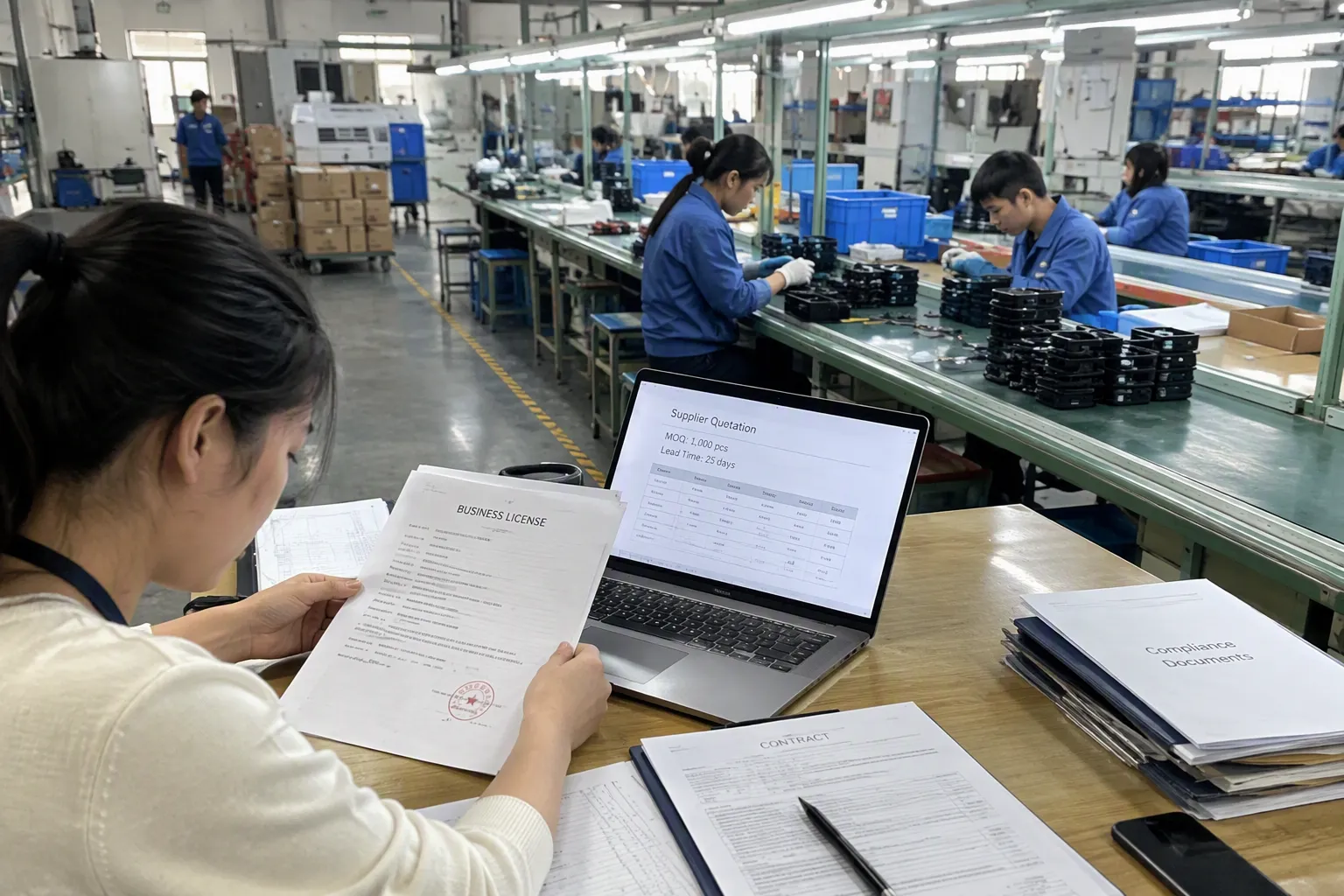
A quotation is not simply a price list. It is a supplier’s interpretation of a product brief and a commercial request.[1] When I review quotations for overseas buyers, I treat every unexplained difference as a question to resolve, not as proof that one factory is better or worse.
Comparing Factory Quotations From China Is Not About Choosing the Lowest Unit Price
Many buyers receive three or five supplier quotations and assume the decision is straightforward: select the factory with the lowest unit price. That approach can create problems later if the lower-priced supplier has quoted a different material, a simpler package, fewer accessories, or a different shipping responsibility.
Comparing factory quotations from China is about making each quotation commercially comparable before selecting a supplier. Buyers should align the product baseline, confirm what is included or excluded, normalize trade terms such as EXW and FOB, and ask factories to clarify unclear assumptions. The lowest unit price becomes useful only after the scope behind that price is visible.
Start With One Product Baseline
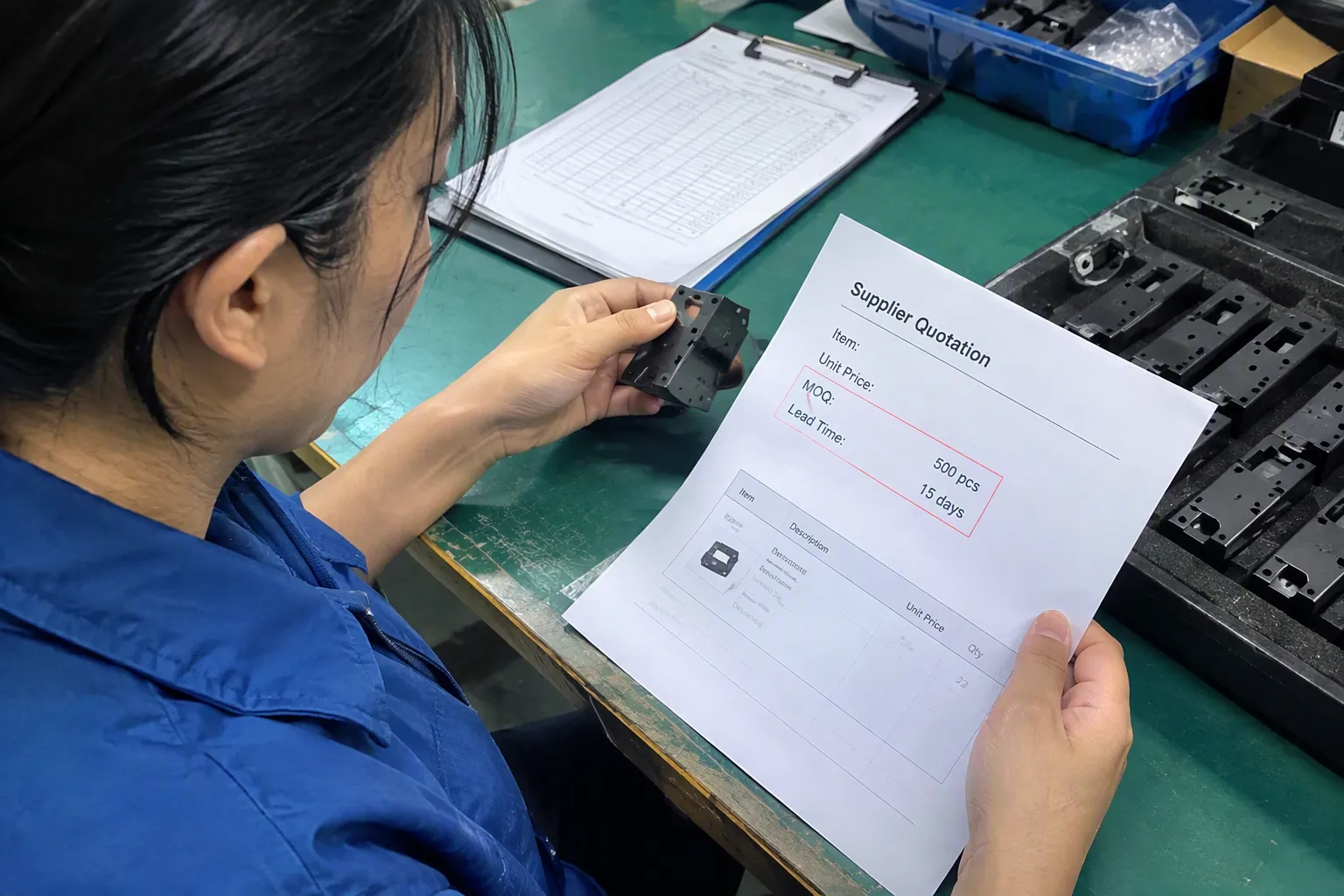
I recommend creating one written product baseline before comparing any numbers. This does not need to be a complex engineering document for every product. However, it should be clear enough that each factory understands what it is expected to quote.
For many consumer products, 3C accessories, promotional items, private-label goods, and multi-SKU orders, the product baseline should cover the details that can change cost or buyer expectations.
| Comparison area | What buyers should confirm | Why it affects the quotation |
|---|---|---|
| Product material | Material type, grade, thickness, finish, color | Material changes can affect appearance, durability, weight, and cost[2] |
| Dimensions | Length, width, height, tolerance where relevant | Small size changes may affect tooling, material use, and packing[3] |
| Functions | Required features, compatibility, operating requirements | Factories may quote different versions of a similar product |
| Included items | Cables, adapters, manuals, batteries, inserts, spare parts | A lower price may exclude items included by another supplier |
| Workmanship | Surface treatment, assembly expectations, logo method | Different finishing processes can create different price levels |
| Packaging | Polybag, retail box, barcode label, carton requirements | Packaging often has a separate cost and MOQ impact[4] |
| Quantity | Order quantity by color, model, or SKU | Price breaks may depend on total volume or per-variant volume |
| Commercial terms | EXW, FOB, destination requirements, tax/export scope | The responsibility and included costs can differ substantially |
I often see a buyer send a product image and ask several factories for a “best price.” That is a useful first market check, but it is not yet a final supplier comparison. A photo can show general appearance, but it may not show the exact plastic grade, cable length, logo position, carton strength, or included accessories.[5]
A supplier may respond quickly with a low number because it has quoted its nearest existing model. Another supplier may quote more because it has included a custom color, better packaging, or an accessory that the buyer expected but did not specifically mention.
Neither response is automatically wrong. The issue is that the buyer cannot yet compare factory quotations from China on a like-for-like basis.
Treat a Low Price as a Clarification Trigger
I do not treat a low quotation as an automatic warning sign. A factory may have a stronger supply chain for that product category, existing tooling, a more efficient production setup, or better access to a component.[6] It may also be quoting a different scope.
The right response is not, “This supplier must be unreliable.” The right response is, “What exactly is different in this quotation?”
When one quotation is noticeably lower than the others, I suggest asking focused follow-up questions:
- Which materials and component specifications are included in your price?
- Are all requested accessories included? Please list them.
- Does the quoted price include custom logo work, printing, labels, or packaging?
- Which product dimensions, colors, and variants are included?
- What is the carton packing quantity and carton specification?
- Is the quoted price based on EXW, FOB, or another Incoterm?
- Does the price include export packaging, export documentation, or China-side charges where applicable?
- What assumptions did you make because the product brief was incomplete?
These questions are not intended to pressure suppliers. They are procurement controls. A clear supplier will usually be able to explain its assumptions, even if it needs time to confirm details with its production or sales team.
A quotation that is clearly explained is usually more useful for buyer decision-making than a low price that depends on hidden assumptions.
I also recommend giving every supplier the same updated clarification sheet. If one factory receives a detailed brief while another receives only a product photo, the resulting quotations will not be equally meaningful.
Compare the Scope, Not Just the Unit Price
The unit price is important, but it is only one line in the commercial picture. Buyers should compare the full scope of responsibility associated with that number.
For example, two factories may quote the same product at different prices:
- Factory A quotes USD 3.20 per unit.
- Factory B quotes USD 3.45 per unit.
At first glance, Factory A appears cheaper. However, Factory A may quote a plain bulk package, while Factory B includes a printed retail box, instruction leaflet, barcode label, and upgraded outer carton. Factory A may also quote an EXW price, while Factory B may quote FOB Shenzhen.
The buyer should not decide that Factory A is cheaper until the differences are converted into a consistent scope. In some cases, Factory A may still offer better value after adjustments. In other cases, Factory B may become the more practical option. The correct conclusion depends on the product, order quantity, destination, shipment plan, and the buyer’s own operational needs.
A useful comparison sheet can make these differences visible.
| Item | Factory A | Factory B | Factory C | Buyer action |
|---|---|---|---|---|
| Unit price | USD 3.20 | USD 3.45 | USD 3.38 | Confirm same product version |
| Trade term | EXW | FOB Shenzhen | EXW | Normalize to one trade basis |
| Logo | One-color print included | One-color print included | Setup fee applies | Confirm artwork and print method |
| Retail packaging | Plain box | Printed box included | Plain box | Request packaging cost breakdown |
| Accessories | Cable included | Cable and manual included | Cable included | Confirm cable length and manual language |
| MOQ | 1,000 units | 500 units | 1,000 units | Check MOQ by color and SKU |
| Lead time | 25 days | 30 days | 20 days | Confirm timing starts after approval and deposit |
| Payment terms | Stated | Stated | Not stated | Request written confirmation |
This table does not make the decision for the buyer. It helps the buyer see which questions still need answers.
At KingSourcing, I use this kind of line-by-line approach because it prevents a common sourcing mistake: comparing one supplier’s complete commercial offer with another supplier’s partial product price.
Normalize EXW, FOB, and Other Trade Terms Before Ranking Suppliers
Trade terms are one of the most common reasons quotation comparisons become misleading. I never compare an EXW price and an FOB price as if they are the same number.
Under an EXW quotation, the factory generally makes the goods available at its agreed location. The buyer or buyer’s appointed logistics partner may need to manage pickup and several downstream export-related steps. Under an FOB quotation, the supplier’s stated responsibility is generally broader up to loading at the named port, but the exact scope should still be confirmed in writing.
The commercial difference depends on the product, factory location, shipment method, port, export arrangement, order value, and other transaction-specific details. I do not assume that EXW is always better or that FOB is always better. I normalize both quotations to the same basis before I compare them.
For example, if a buyer receives:
- Factory A: USD 4.00 EXW Dongguan
- Factory B: USD 4.18 FOB Shenzhen
The buyer should ask what costs, responsibilities, and documentation are included between the factory gate and the named port. The buyer should also check whether both suppliers are quoting the same product, packaging, and quantity.
The same discipline applies to other trade terms. A quotation may mention CIF, DDP, DAP, or another arrangement, but the buyer should not assume that every supplier is including the same freight, insurance, duties, clearance, delivery location, or destination charges.[7]
Questions I Use to Clarify Commercial Scope
When I help a buyer compare factory quotations from China, I want each supplier’s commercial scope to be explicit. I ask factories to confirm the following points in writing:
- The Incoterm and named place or port.
- The quoted currency.
- Whether the price includes China VAT or export-related treatment, where relevant to the transaction.
- Whether the price includes export carton packing.
- Whether local delivery to a warehouse, port, or forwarder is included.
- Whether the quotation includes tooling, mold fees, setup charges, or artwork fees.
- Whether sample costs can be credited against a future bulk order.
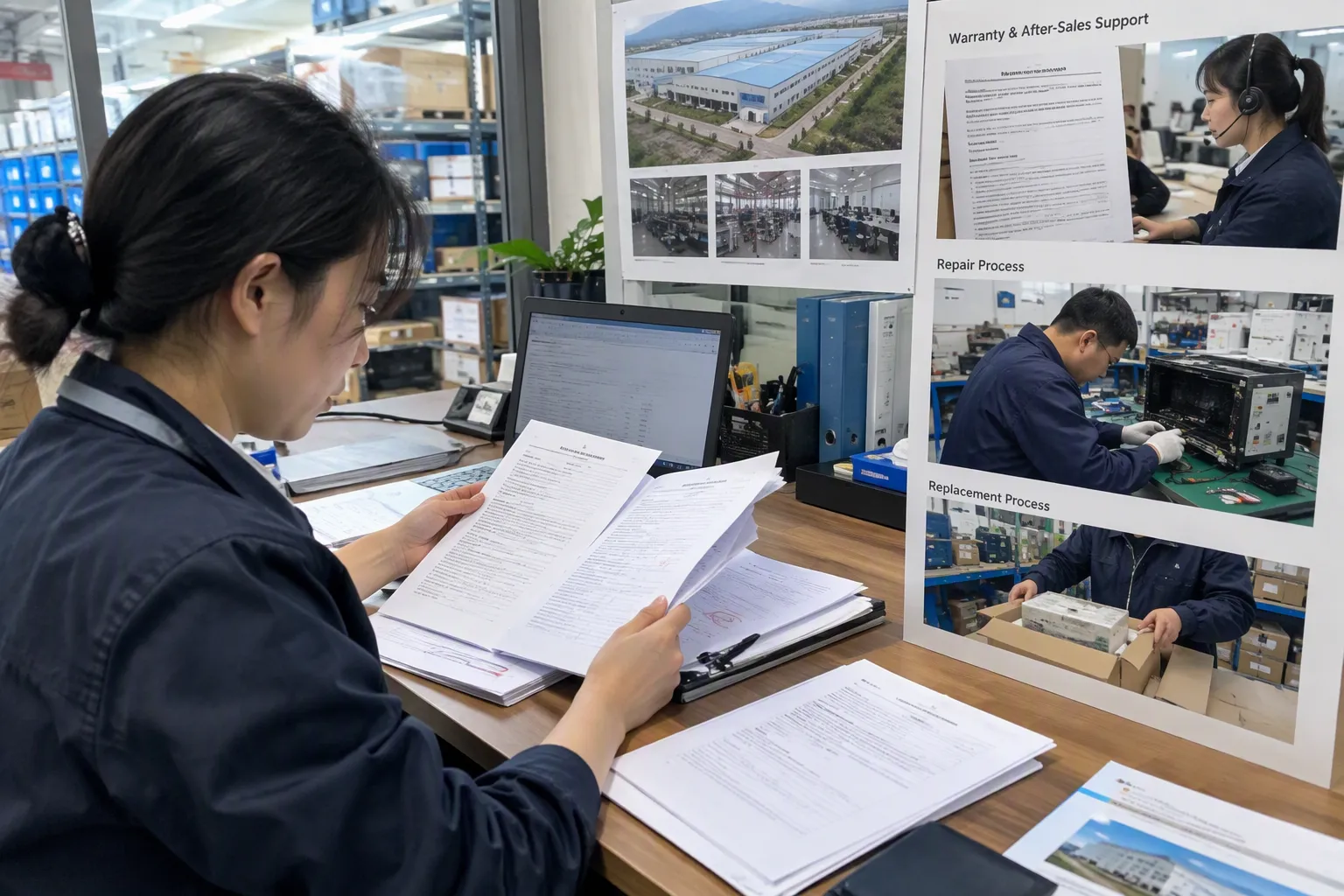
- Whether inspection support, rework, replacement parts, or other service items are included or excluded.
- The payment schedule and whether bank charges are addressed.
- The period during which the quotation remains valid.
I do not expect a first quotation to answer every point perfectly. Suppliers are often responding to an early-stage inquiry with limited information. However, before a buyer places a purchase order, these assumptions should be visible and agreed.
Look Beyond Price at Decision Risk
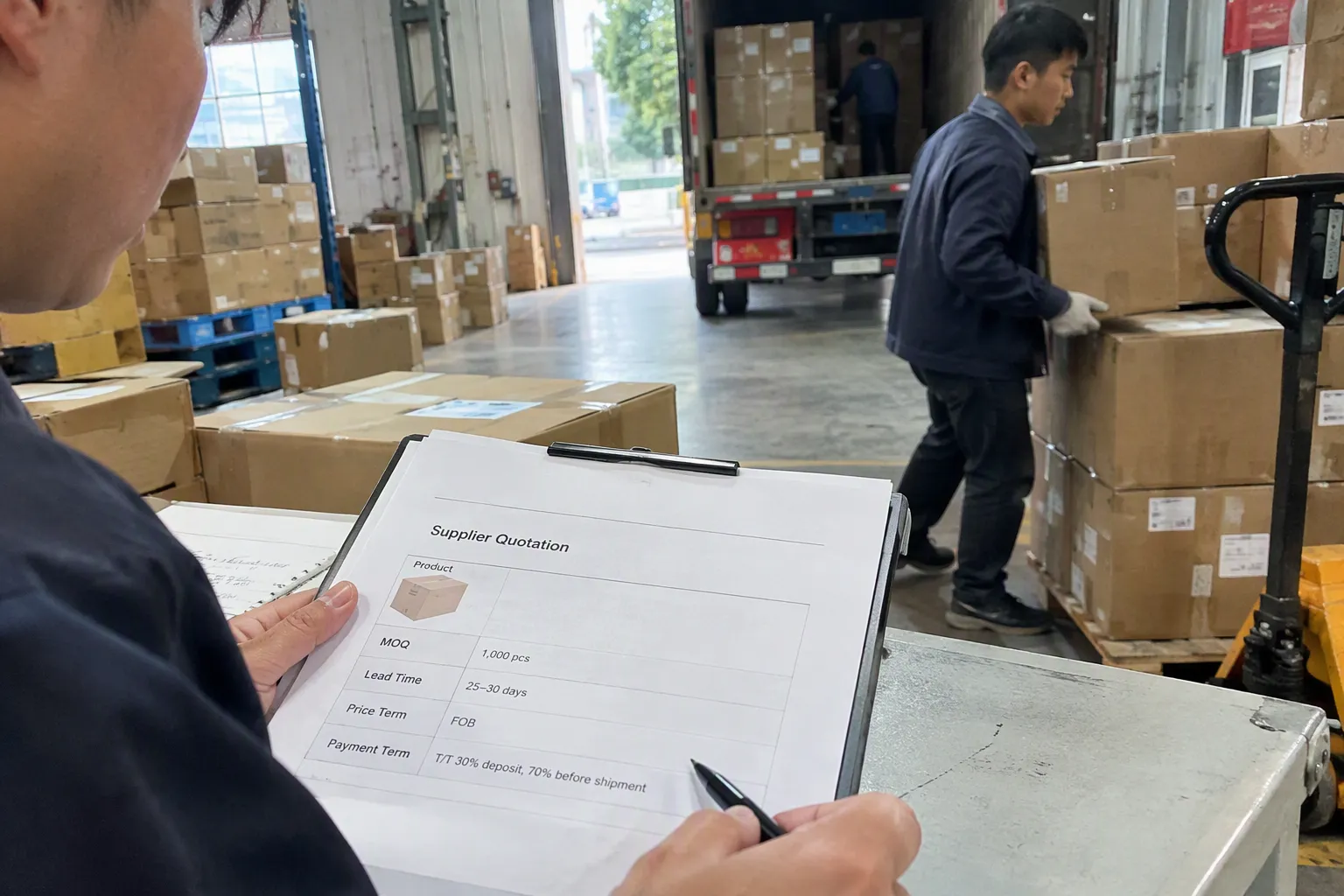
A procurement decision should balance price with the risk of receiving something different from what was expected. This is especially important for customized products, private-label orders, electronics accessories, and orders involving several factories.
A supplier’s quotation can be attractive for reasons beyond the lowest price:
- The supplier may communicate clearly and identify missing details early.
- The supplier may provide a detailed component or packaging breakdown.
- The supplier may have a practical MOQ for a test order.
- The supplier may be able to coordinate the requested customization.
- The supplier may accept a realistic sample and approval process.
- The supplier may provide consistent answers when specifications are revised.
- The supplier may fit the buyer’s consolidation and delivery plan.
These are not guarantees of manufacturing performance. They are decision signals that buyers can evaluate during the sourcing process.
I recommend separating price risk from execution risk. A low price may reduce the initial purchase cost, but unclear specifications can increase the chance of later disputes, rework, delays, or unsuitable goods.[8] A slightly higher price may be easier to manage if the supplier’s quote is detailed, its assumptions are confirmed, and its commercial responsibilities are clear.
Use Samples and Pre-Production Confirmation Properly
A quotation comparison should lead to the next procurement step, not replace it. Once a buyer narrows the supplier list, samples and written pre-production confirmation can help verify whether the quoted interpretation matches the buyer’s expectations.
For a customized product, I recommend that the buyer confirm:
- The approved product version or sample reference.
- The final color, dimensions, materials, and accessory list.
- The logo artwork, placement, and printing method.
- The packaging artwork and labeling requirements.
- The carton marks and shipping marks.
- The bulk-order quantity by SKU, color, or model.
- The agreed trade term and delivery point.
- The final quotation version and any agreed revisions.
This step matters because supplier quotations can change as a project becomes more specific. A factory may initially quote based on a standard product but later need to adjust the price after receiving final packaging artwork or a revised component request. That does not automatically mean the factory has acted improperly. It may simply mean the original scope was incomplete.
The buyer’s job is to keep revisions controlled. I recommend using version numbers or dates for quotations, specification sheets, packaging files, and purchase-order attachments. This creates a clear record of what was agreed.
Avoid These Common Comparison Mistakes
I regularly see buyers make a few understandable but avoidable mistakes when they compare factory quotations from China.
Comparing Different Quantities
One supplier may quote 500 units, while another supplier quotes 1,000 units. The lower unit price may simply reflect the larger quantity. Buyers should compare the same total quantity and the same quantity split by color, model, or SKU.
Ignoring Packaging Until the End
Packaging can affect product protection, presentation, dimensions, carton quantity, and shipping volume. A buyer should not assume that “standard packaging” means the same thing at every factory.
Accepting “Same as Picture” as a Full Specification
A product image is useful, but it is rarely a complete specification. I recommend adding notes about materials, dimensions, functions, accessories, logo details, and packaging requirements.
Mixing Sample Pricing With Bulk Pricing
Sample costs, courier charges, development charges, and bulk-unit pricing often follow different commercial logic. Buyers should compare them separately and ask whether any charges can be credited later.
Assuming a Factory Has Included Every Requirement
If the buyer does not see a requirement written in the quotation, the buyer should ask. Silence is not confirmation. This applies to labels, manuals, plugs, batteries, certificates requested by the market, testing needs, carton marks, and delivery requirements.
For application-specific technical, regulatory, or safety decisions, I recommend that buyers consult qualified professionals and verify relevant documents independently. A quotation review is a procurement exercise, not a substitute for technical validation, testing, or compliance assessment.
Frequently Asked Questions
What should I ask before accepting a factory quotation from China?
I recommend asking the factory to confirm the product specification, materials, dimensions, functions, included accessories, packaging, MOQ, lead time, payment terms, quotation validity, and Incoterm. You should also ask what is excluded or assumed. These answers make the quotation more useful for supplier selection.
Why is one China factory quotation much lower than the others?
A lower quotation may reflect a different product version, lower quantity assumptions, different materials, excluded packaging, fewer accessories, or a different trade term. It may also reflect a supplier’s cost advantage. Ask the factory for a detailed scope confirmation before drawing conclusions.
Can I compare EXW and FOB prices directly?
No. EXW and FOB quotations allocate responsibilities differently. I recommend converting quotations to the same commercial basis and confirming the named location or port, local charges, export scope, packaging, and logistics responsibilities before comparing the numbers.
Should I choose the factory with the most detailed quotation?
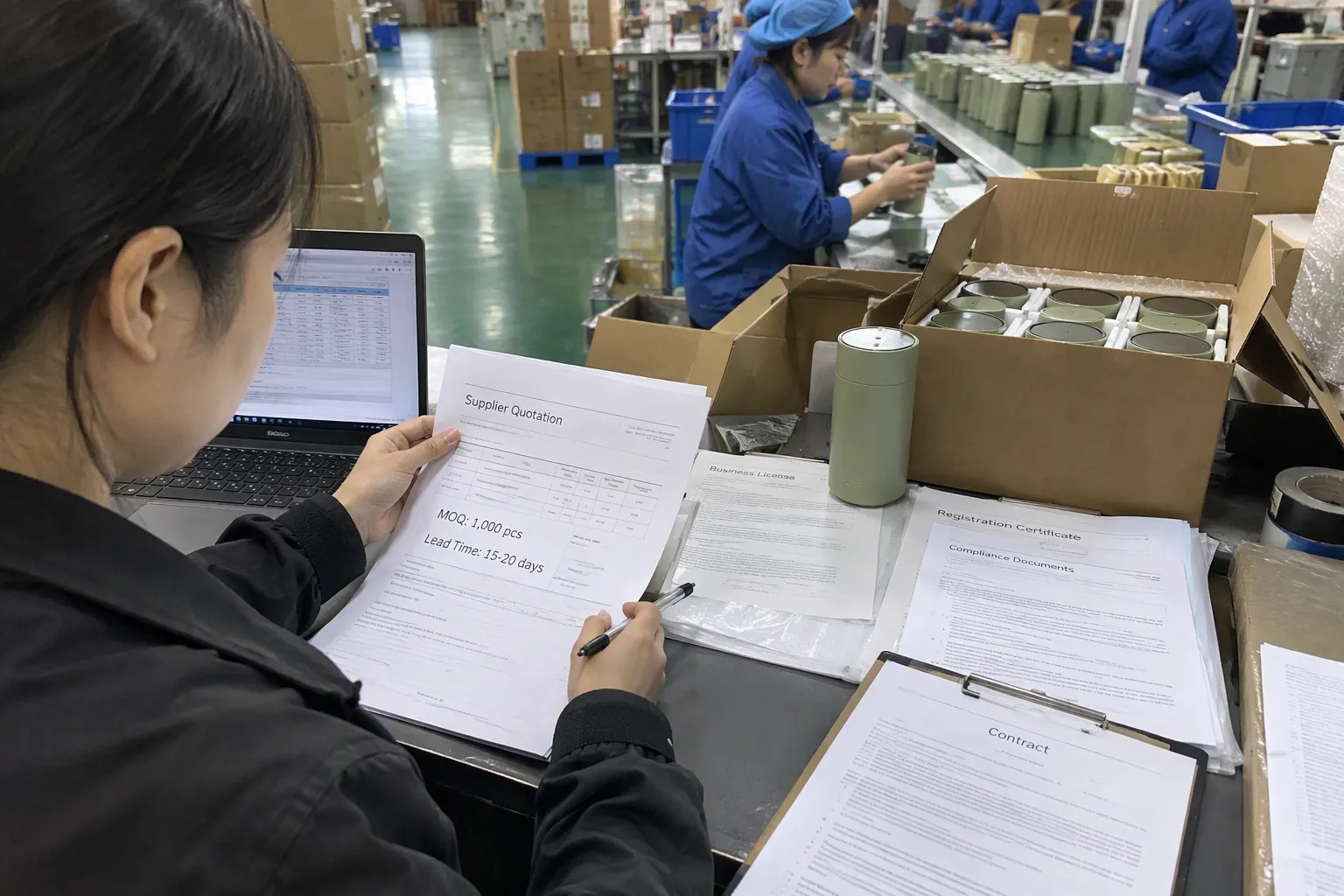
A detailed quotation is usually easier to evaluate because it shows assumptions and reduces ambiguity. However, detail alone does not determine supplier suitability. Buyers should still review product fit, communication, sample handling, commercial terms, quality-control planning, and the supplier’s ability to support the order.
How can KingSourcing help compare factory quotations from China?
At KingSourcing, we can collect supplier quotations, organize them into a consistent comparison format, identify missing assumptions, request clarifications, and help buyers compare commercial scope. We can also support supplier verification, sample coordination, production follow-up, inspection, consolidation, and shipping coordination based on the buyer’s needs.
Conclusion
To compare factory quotations from China properly, I recommend looking beyond the lowest unit price. Buyers should first align the product specification, confirm included accessories and packaging, normalize trade terms, and make every commercial assumption visible. A low quotation may be a strong opportunity, but it deserves clarification before it becomes a purchasing decision. If you need support collecting, reconciling, and managing supplier quotations in China, KingSourcing can help you build a clearer and more controllable procurement process.
Sources
- Glossary of Procurement Terms | The George Washington University", Public procurement guidance describes quotations as supplier responses to stated specifications, quantities, and contractual terms, rather than price figures detached from scope
- CES Information Guide - Materials Science Engineering", Materials-selection frameworks show that material choice affects physical properties such as mass and durability, aesthetic characteristics, and manufacturing economics
- Converting and its effects on barrier properties of coated packaging ...", Manufacturing-design and packaging research indicates that dimensional specifications can affect tooling requirements, material utilization, and pack-out configuration
- The Ultimate Guide to Low Minimum Custom Tissue Paper How ...", Packaging-production literature notes that customized packaging can involve separate setup and run costs and that economical production is often quantity-dependent
- Technical Data Package (TDP) | www.waru.edu", Procurement-specification guidance generally requires measurable descriptions of materials, dimensions, performance, and delivery requirements; visual references alone do not establish all such requirements
- The Drivers of Change in Supply Chain - STEEP", Operations-management research identifies production efficiency, sourcing conditions, scale, and tooling-related costs as factors that can produce legitimate cost differences among suppliers
- Know Your Incoterms", Incoterms® rules allocate transport, insurance, export and import formalities, delivery, and risk differently across terms such as CIF, DAP, and DDP; quotations using different terms therefore require scope comparison
- (PDF) Review study for rework causes in construction industry", Requirements-management research associates incomplete or ambiguous specifications with increased rework, nonconformance, coordination problems, and schedule risk