Quick Answer
A China sourcing partner can help when product research turns into a confusing mix of low quotes, unclear specifications, and supplier promises that are hard to assess from overseas. The cheapest option may look attractive at first, but a poor fit can create expensive problems later.[1] A structured sourcing process makes the trade-offs clearer before you commit. **A China sourcing partner helps you find better products by defining what “better” means for your business, then comparing suitable suppliers and product options against those requirements.
This may include your target customer, sales channel, budget, required features, packaging, quality expectations, MOQ, and production risks. The goal is not to promise the lowest price or a perfect product, but to support a more informed purchasing decision.**
For overseas sellers, a product is rarely judged only by how it looks in a supplier catalog. It must also be suitable for the customer who will buy it, the platform where it will be sold, and the operational process behind it.[2] This is where local sourcing support can bring practical value.
Why Does a China Sourcing Partner Need to Define “Better” Before Comparing Factories?
A China sourcing partner cannot make a useful supplier comparison if the request is only “find this product cheaper” or “find the best factory.” Those instructions leave too much open to interpretation. The buyer may receive many quotations, yet still have no clear basis for deciding which option is suitable.
A better product is usually the product that fits your intended customer, selling price, product positioning, and non-negotiable requirements. A China sourcing partner can help turn a broad idea into decision criteria, then use those criteria to compare suppliers, samples, quotations, and production capabilities in a more meaningful way.
“Better” Is a Commercial Decision, Not an Absolute Label
In our work coordinating purchasing workflows in China, we see that different buyers can look at the same product and reach very different conclusions.
A low-cost product may be a reasonable choice for:
- A price-sensitive promotional campaign
- A short-term event giveaway
- A basic wholesale range
- A market test with limited initial quantities
That same product may be unsuitable for:
- A premium DTC brand
- A retailer with strict packaging requirements
- An e-commerce listing that depends on detailed product features
- A repeat-purchase business where consistency matters
- A product category with high return risk
This is why the phrase “better quality” needs more detail. A buyer may mean stronger material, cleaner finishing, more stable performance, more reliable packaging, a more refined appearance, or fewer variations between production batches. Those are different evaluation points.
A China sourcing partner can help make these differences visible before suppliers are asked to quote. We do not treat every request as a simple factory search. We first need to understand what outcome the buyer is trying to achieve.
The best sourcing decision is not always the lowest unit price. It is often the option that creates the clearest match between product expectations, budget, supplier capability, and downstream operating needs.
Questions That Shape a Useful Product Search
Before comparing factories, we would normally encourage buyers to clarify several practical points. These questions do not need to become a complex technical specification at the beginning. However, even a basic written brief can improve the quality of supplier communication.
| Decision area | Questions to clarify | Why it affects supplier comparison |
|---|---|---|
| Target customer | Who will buy the product, and what do they expect? | The expected quality level and product presentation may differ by market. |
| Sales channel | Will you sell through Amazon, your own site, retail, wholesale, or promotions? | Each channel may have different packaging, labeling, fulfillment, and return considerations. |
| Target price | What retail price and landed-cost range are realistic? | This helps identify whether requested features fit the commercial model. |
| Product use case | How will the end user use the item? | Use conditions can affect material, size, finish, accessories, and packaging choices. |
| Required features | Which functions or details are essential? | Suppliers need to know what cannot be removed to reach a lower price. |
| Deal-breakers | What issues would make the product unacceptable? | Clear deal-breakers prevent time being wasted on unsuitable options. |
| Initial order plan | Is this a small test order or a repeat purchasing program? | MOQ, tooling, material purchasing, and supplier willingness can vary. |
| Customization needs | Do you need logo printing, color changes, inserts, labels, or custom packaging? | Custom work may add lead time, cost, and quality-control points. |
A China sourcing partner can use these criteria to avoid collecting quotations that are not truly comparable. For example, one supplier may quote a lower price because it uses a thinner material, includes simpler packaging, excludes an accessory, or prices a different order quantity. A quote is only useful when the underlying assumptions are visible.[3]
Product Requirements Reduce Avoidable Uncertainty
A vague request often produces vague answers.[4] If a buyer sends a photo and asks for “the same product,” suppliers may interpret the request differently. One factory may offer an existing model that only looks similar. Another may propose a higher-grade version. A third may quote a basic version to win attention on price.
None of those responses is automatically wrong. The problem is that the buyer may believe the quotations are for the same product when they are not.
We believe a China sourcing process should make differences easier to identify. That may involve asking suppliers about:
-
Available product versions
Suppliers may have entry-level, standard, and upgraded versions of a similar item. -
Materials and visible construction details
Product materials, dimensions, surface treatment, included components, and assembly details can affect both cost and market fit. -
Packaging assumptions
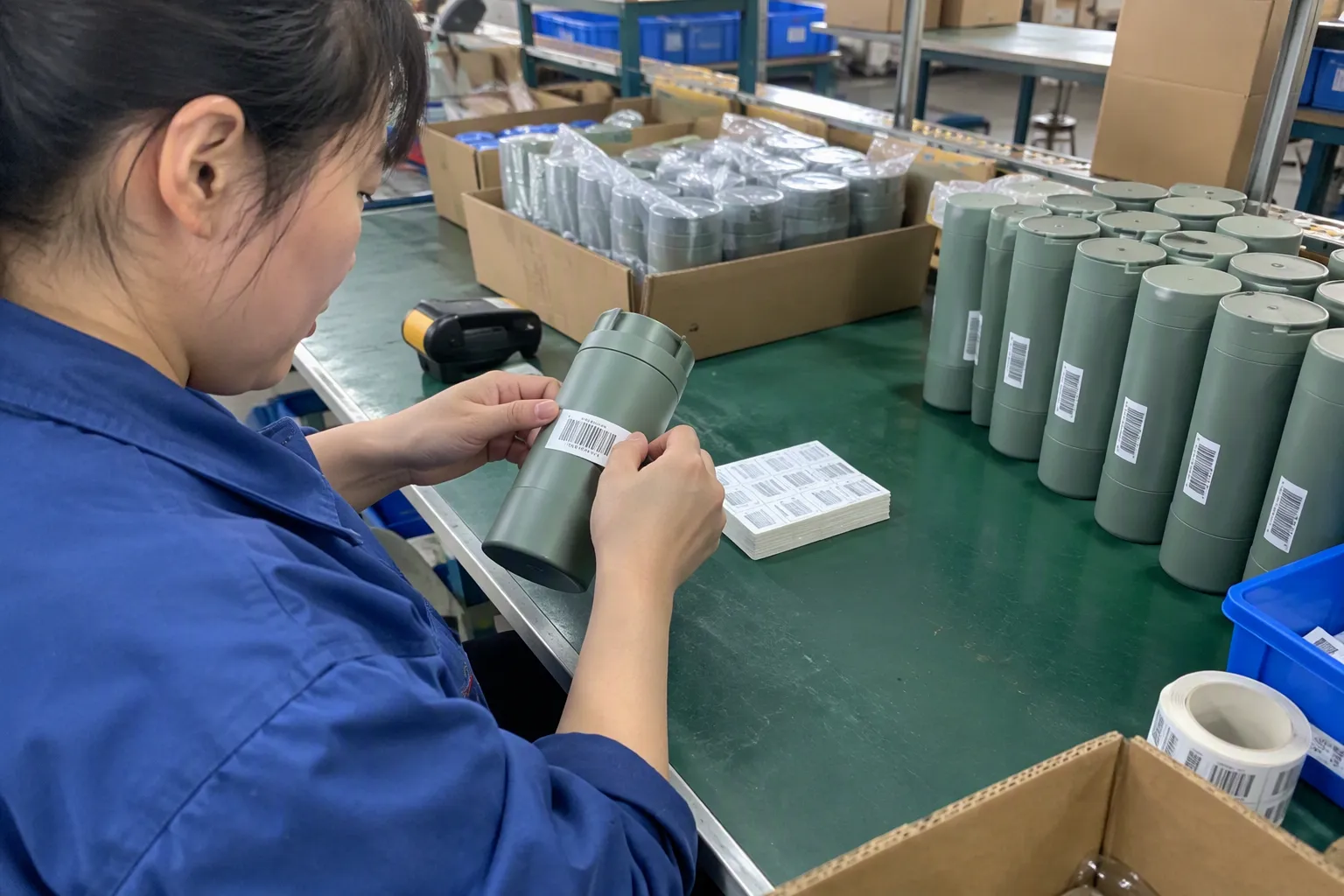
A plain polybag, a branded color box, an insert card, and a barcode label can create different costs and handling requirements. -
Customization limitations
Some factories can support small changes using existing production methods. Others may require higher MOQs, tooling, or longer development time. -
Sample availability
A sample can help a buyer assess whether a product appears suitable before a larger production decision is made.
This does not guarantee that every issue will be found early. It can, however, reduce avoidable uncertainty by making the buyer’s expectations more concrete.
More Quotations Do Not Automatically Mean Better Sourcing[5]
Some buyers begin by requesting quotations from as many suppliers as possible. This can feel productive because it creates a large spreadsheet quickly. Yet more quotes can also create more confusion.
If ten suppliers quote ten slightly different products, the comparison may not help the buyer make a decision. The lowest quote may simply reflect a different specification, a different packaging level, or an incomplete understanding of the request.[6]
A China sourcing partner can add value by narrowing the comparison to options that are reasonably relevant. The purpose is not to build the longest supplier list. The purpose is to create a decision-ready view of practical alternatives.
A structured comparison may include:
- Product specification fit
- Unit price at stated order quantities
- MOQ and flexibility for test orders
- Customization options
- Sample process and sample cost
- Packaging options
- Production lead-time indications
- Communication clarity
- Factory or supplier verification information
- Quality-control checkpoints that may be appropriate for the product
- Shipping, consolidation, or labeling implications
This approach helps buyers understand what they are choosing between. It also makes it easier to ask follow-up questions before placing an order.
Cheapest Can Be Expensive When the Specification Is Unclear
The lowest quotation is not necessarily a bad quotation. It may be the right option if the product genuinely meets the buyer’s requirements. The risk appears when a buyer treats price as the only decision criterion.
A lower quote can result from many legitimate differences, including:
- Lower-grade or alternative materials
- Simplified construction
- Fewer included accessories
- Less protective packaging
- Higher MOQ assumptions
- Different branding or printing methods
- Excluded inspection, labeling, or delivery-related costs
- A product version that is not fully aligned with the requested use case
The buyer should not assume that a higher quote is automatically better either. A higher price may reflect meaningful improvements, but it may also include unnecessary features, different commercial assumptions, or a supplier’s own margin structure.
This is why we encourage buyers to compare the total offer, not only the unit price. A suitable sourcing decision considers what the customer receives, how the product will be packed and delivered, what needs to happen before sale, and what uncertainties remain.
A Practical Comparison Framework for Overseas Buyers
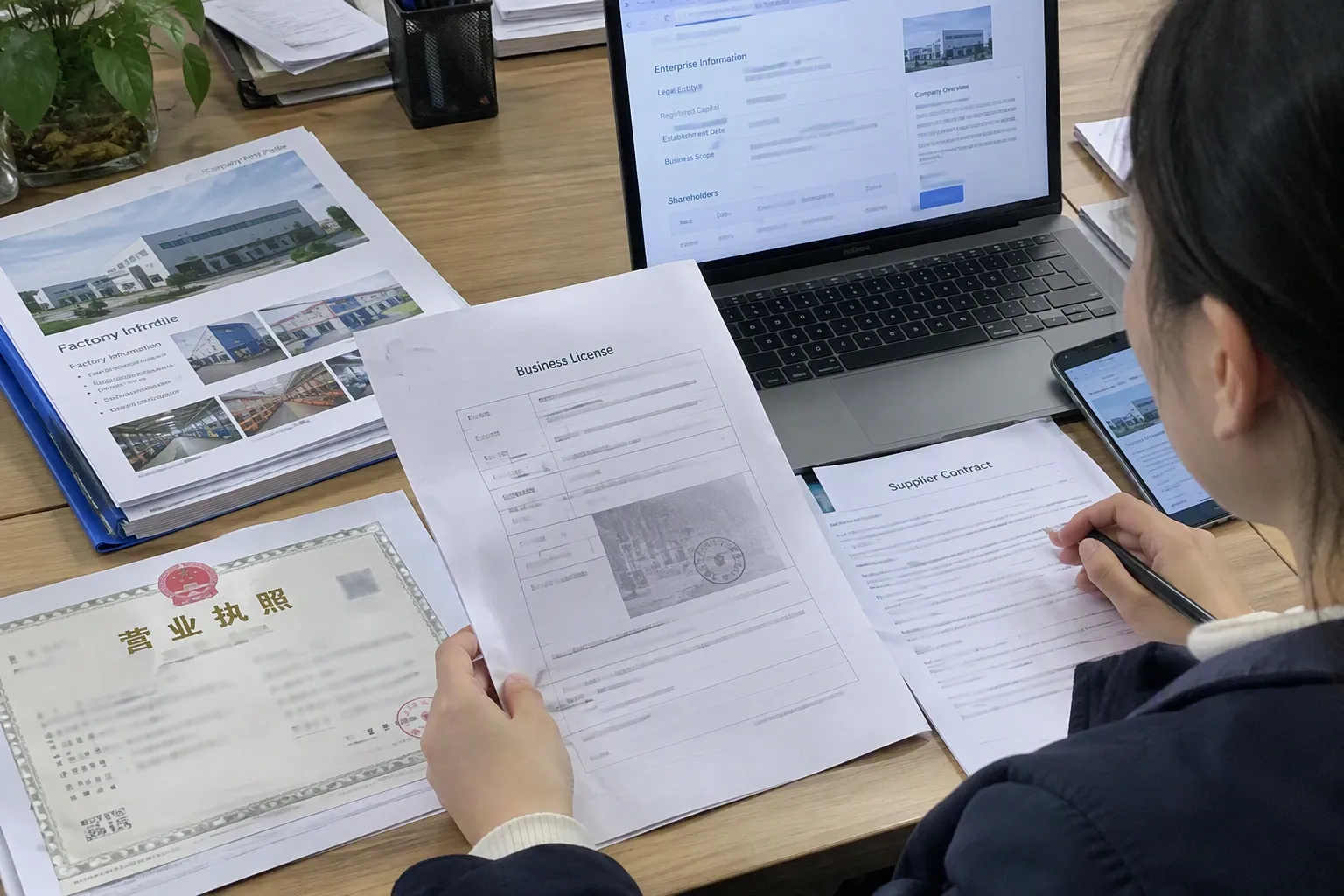
When a buyer does not have an in-house team in China, supplier communication can become fragmented. Product details may be spread across email threads, chat messages, images, spreadsheets, and separate quotation files. A China sourcing partner can help organize that information into a clearer format.
Here is a simple comparison framework we consider useful:
| Comparison factor | What to review | Buyer decision supported |
|---|---|---|
| Product match | Does the supplier’s offer meet the required features and appearance? | Whether the product is suitable to sample or shortlist |
| Commercial fit | Does the price work with the intended selling price and order plan? | Whether the opportunity is commercially realistic |
| MOQ | Is the minimum order manageable for a test or launch? | Whether inventory exposure is acceptable |
| Customization | Can the supplier support branding, packaging, or product changes? | Whether the offer supports your brand plan |
| Communication | Are answers clear, specific, and consistent? | Whether remote coordination may be manageable |
| Production scope | Does the supplier appear able to handle the requested product and order type? | Whether to proceed with more due diligence |
| Sample outcome | Does the sample meet the buyer’s expectations? | Whether changes are needed before production |
| Quality process | Are inspection criteria and checkpoints defined? | Whether expectations can be communicated during production |
| Logistics fit | Can goods be labeled, packed, consolidated, and shipped as needed? | Whether the product can move through your supply chain efficiently |
This kind of framework does not replace product engineering, compliance testing, legal review, or application-specific professional advice.[7] Buyers should arrange qualified evaluation where their product category, market, or intended use requires it. However, it can make a commercial sourcing decision more disciplined.
Samples Are Decision Tools, Not Just Formalities
[5] (from](https://kingsourcingroup.com/wp-content/uploads/2026/09/slot3-44.webp)
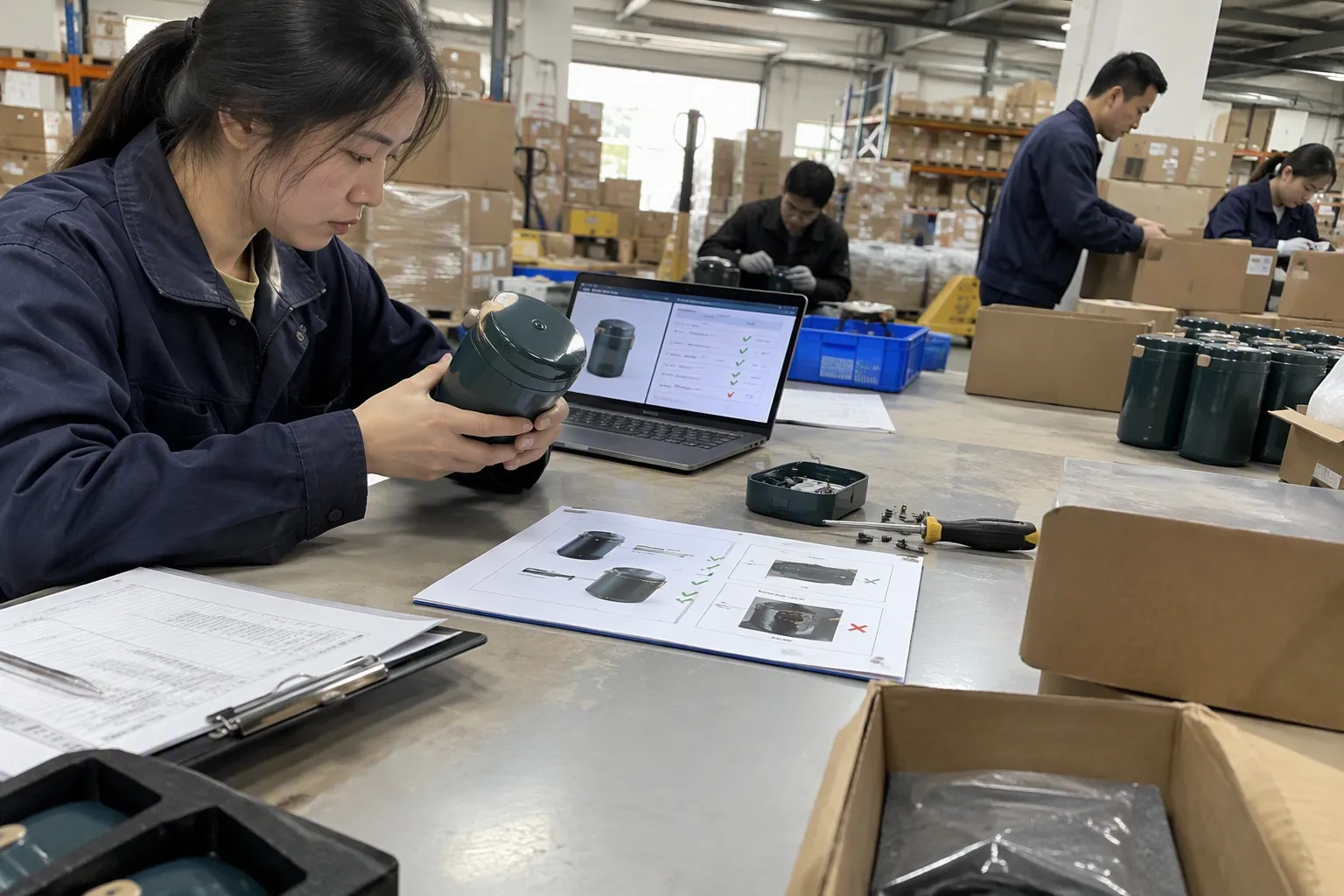
A sample is often the first physical checkpoint between a product idea and a purchase order.[8] Buyers should not treat it as a box to tick. A sample is a chance to assess whether the product fits the standard they intend to sell.
When reviewing samples, we suggest buyers consider the complete customer experience:
- Does the product look and feel consistent with the brand position?
- Do the size, color, finish, and included parts match the brief?
- Does the packaging protect the product appropriately?
- Are labels, instructions, inserts, or barcodes needed?
- Does the product appear suitable for photographs and listing content?
- Are there visible details that could lead to customer complaints?
- Is the sample version the same version that the supplier intends to produce?
For customized products, a buyer may need more than one sample stage. An initial sample can confirm the base product. A pre-production sample may then be useful for checking approved colors, printing, packaging, or revised components before bulk production begins.
A China sourcing partner can help coordinate sample development, communicate feedback, and document approved points. Still, the buyer should make the final commercial and brand decision. The buyer knows the end customer, product promise, and sales strategy better than anyone else.
Supplier Selection Is Also About Execution
A product can look promising on paper but still be difficult to manage. This is especially relevant for overseas buyers sourcing remotely.
Supplier selection should include questions beyond “Can this factory make the product?” A buyer may also need to ask:
- Can the supplier understand the requested specifications?
- Can the supplier communicate changes clearly?
- Can the supplier support the required order quantity?
- Can the supplier provide practical packaging options?
- Can the supplier maintain records of approved details?
- Can the supplier coordinate with inspection, labeling, or consolidation needs?
- Can the supplier work within the planned production and shipping timeline?
In our Shenzhen-based procurement work, we often see that execution details become more important as a buyer adds more SKUs, more suppliers, or more customization. A product may be acceptable on its own, but the order can become harder to manage when it must arrive with compatible labels, cartons, inserts, and shipping instructions.
This is where a China sourcing partner can help connect supplier selection to the wider procurement workflow. Supplier verification, quotation comparison, production follow-up, quality inspection, packaging coordination, warehousing, and consolidation should not be treated as isolated services. Each step should support the buyer’s decision to sell, scale, and manage the product with greater visibility.
What a Sourcing Partner Cannot Decide for You
A China sourcing partner can make trade-offs clearer, but it cannot define your brand strategy for you. It also cannot guarantee that a product will sell, that every factory outcome will be perfect, or that no supply-chain issue will occur.
The buyer still needs to decide:
- What customer problem the product solves
- What quality level fits the brand
- What retail price and margin model are acceptable
- Which product features are essential
- What level of inventory risk is manageable
- Whether the sample is good enough to approve
- What compliance, testing, insurance, or legal requirements apply in the target market
Clear ownership matters. The sourcing side can gather information, coordinate communication, and help assess options. The commercial owner should remain responsible for the final product and supplier decision.
Frequently Asked Questions
What does a China sourcing partner do when comparing products?
A China sourcing partner can collect and organize supplier information around a buyer’s requirements. This may include product specifications, price assumptions, MOQs, customization options, sample availability, packaging, supplier communication, and production considerations. The goal is to help the buyer compare relevant alternatives rather than simply collect many quotes.
Is the cheapest Chinese supplier always the best choice?
No. The cheapest supplier may be suitable if the product specification, packaging, MOQ, and execution capability match your needs. However, a lower quote may reflect different materials, simplified features, or excluded services. Buyers should compare the full offer and confirm what is included before making a decision.
How many supplier quotations should I compare?
There is no ideal number for every product. A smaller group of relevant, clearly comparable quotations is often more useful than a large list of loosely matched offers. The key is to define your requirements first, then compare suppliers against the same meaningful criteria.
Can a sourcing partner guarantee product quality?
No sourcing partner can guarantee that a product will be perfect or risk-free. A sourcing partner can help coordinate samples, clarify requirements, arrange appropriate inspections, and make quality expectations more visible. Buyers should still approve samples and use qualified testing or professional evaluation where their product and market require it.
Should I order a sample before placing a bulk order?
In many cases, yes. A sample gives you an opportunity to review product appearance, features, packaging, and overall suitability before bulk production. For customized or higher-risk products, you may also consider a pre-production sample that reflects the approved branding, packaging, and production details.
Conclusion
A China sourcing partner helps you find better products by making the decision process more structured, not by automatically finding the lowest-priced factory. The right product is one that fits your customer, sales channel, budget, quality expectations, and operational plan. At KingSourcing, we help overseas buyers clarify product requirements, compare relevant supplier options, coordinate samples, and manage the procurement steps that follow. If you are sourcing from China without a local purchasing team, contact us to discuss your product brief and purchasing requirements.
Sources
- Life-cycle costing as a tool in mainstreaming green public ...", Public procurement guidance recognizes that the lowest initial bid may not be the most economically advantageous offer when lifecycle costs, quality, delivery, and risk factors are considered
- Product Definitions for Smart Manufacturing", Product-design frameworks treat customer needs and operational constraints as core inputs when translating a product concept into measurable requirements
- Comparative Evaluation", Procurement evaluation guidance emphasizes comparing offers against the same stated specifications and commercial conditions rather than treating nominal prices as directly equivalent
- Reducing Requirements Ambiguity via Gamification - PMC - NIH", Requirements-engineering research finds that ambiguous requirements can be interpreted differently by stakeholders, increasing the risk of mismatched expectations and rework
- How Does Information Overload Affect Consumers' Online ...", Decision research indicates that an increasing number of alternatives can raise comparison complexity and information overload, especially where options differ on multiple attributes
- MCC Procurement Guidance Note: Price-Reasonableness ...", Procurement guidance cautions that quoted prices must be assessed with their technical scope and included conditions, because offers with different specifications or services are not directly comparable
- Testing & Certification | CPSC.gov", Product-safety authorities explain that market access for regulated goods can require conformity assessment, testing, technical documentation, and legal compliance responsibilities beyond commercial supplier evaluation
- Towards the Design of Effective Formative Test Reports", Product-development and quality-planning practices use prototypes or pre-production samples to evaluate conformance to intended requirements before larger-scale production decisions