Quick Answer
Compliance documents can reduce purchasing risk, but they do not transfer compliance responsibility away from the buyer. I expect the supplier to provide accurate, product-matched reports, declarations, and technical evidence. I also verify the model, configuration, manufacturer, standards, dates, and target market before approving an order. When evidence is incomplete, I pause and escalate the issue.
When I source electronics or 3C accessories from China, I often receive a supplier’s CE declaration, FCC report, RoHS statement, or REACH document within a few messages. The difficult question is not whether the supplier sent a file. The difficult question is whether that file actually supports the product I am buying and the market where I plan to sell it.
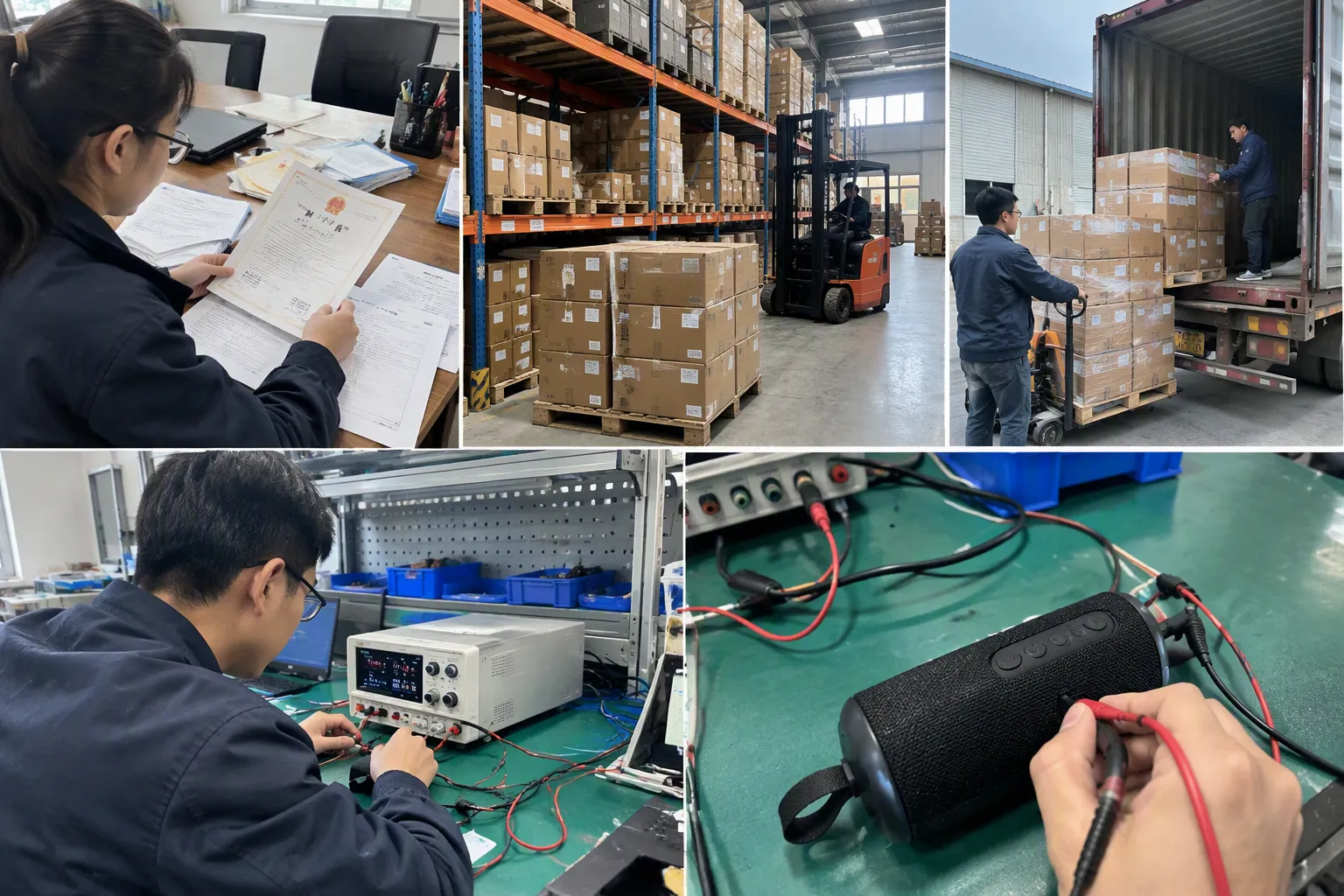
A document can look official and still be poorly matched to the product. A familiar model name may hide a different circuit board, charger, radio module, brand, or factory. In this article, I explain how I separate supplier ownership from buyer responsibility and how I screen compliance evidence before production or shipment.
FCC, RoHS and REACH Compliance Documents: Who Should Verify Your Compliance
Many first-time importers assume that the supplier owns every compliance obligation because the factory made the product. That assumption creates risk. The supplier should prepare and provide truthful supporting evidence, but I treat product compliance as a shared control process. The buyer must confirm that the evidence matches the purchased product, configuration, and intended market.
The supplier should provide original or traceable product evidence, while the buyer should verify whether the evidence matches the exact item and intended market. I check the model number, manufacturer, product configuration, test standards, document dates, and scope. If the information is incomplete or inconsistent, I request clarification or qualified professional review before approving the order.
Why Does Document Ownership Matter?
The supplier normally has better access to technical files, component lists, test samples, factory records, and laboratory communication. That makes the supplier responsible for supplying credible evidence. However, the importer, brand owner, or distributor may still have obligations connected with placing the product into a particular market[1].
I do not describe a supplier’s document as a guarantee that covers every country or every future production batch. I describe it as supporting evidence that requires product matching and review.
In practice, I separate the process into three questions:
-
Who should provide the evidence?
The supplier or manufacturer should provide relevant reports, declarations, specifications, and supporting files. -
Who should check whether the evidence is usable?
The buyer should review the documents against the actual purchasing specification and target market. -
Who should make a final technical or legal determination?
A qualified compliance specialist, laboratory, or legal adviser should handle issues that exceed a normal procurement review.
This distinction is important for small businesses. A purchasing team may not need to become a testing laboratory, but it should not approve an order based only on a file name or supplier promise.
What Should I Check in a Compliance Document?
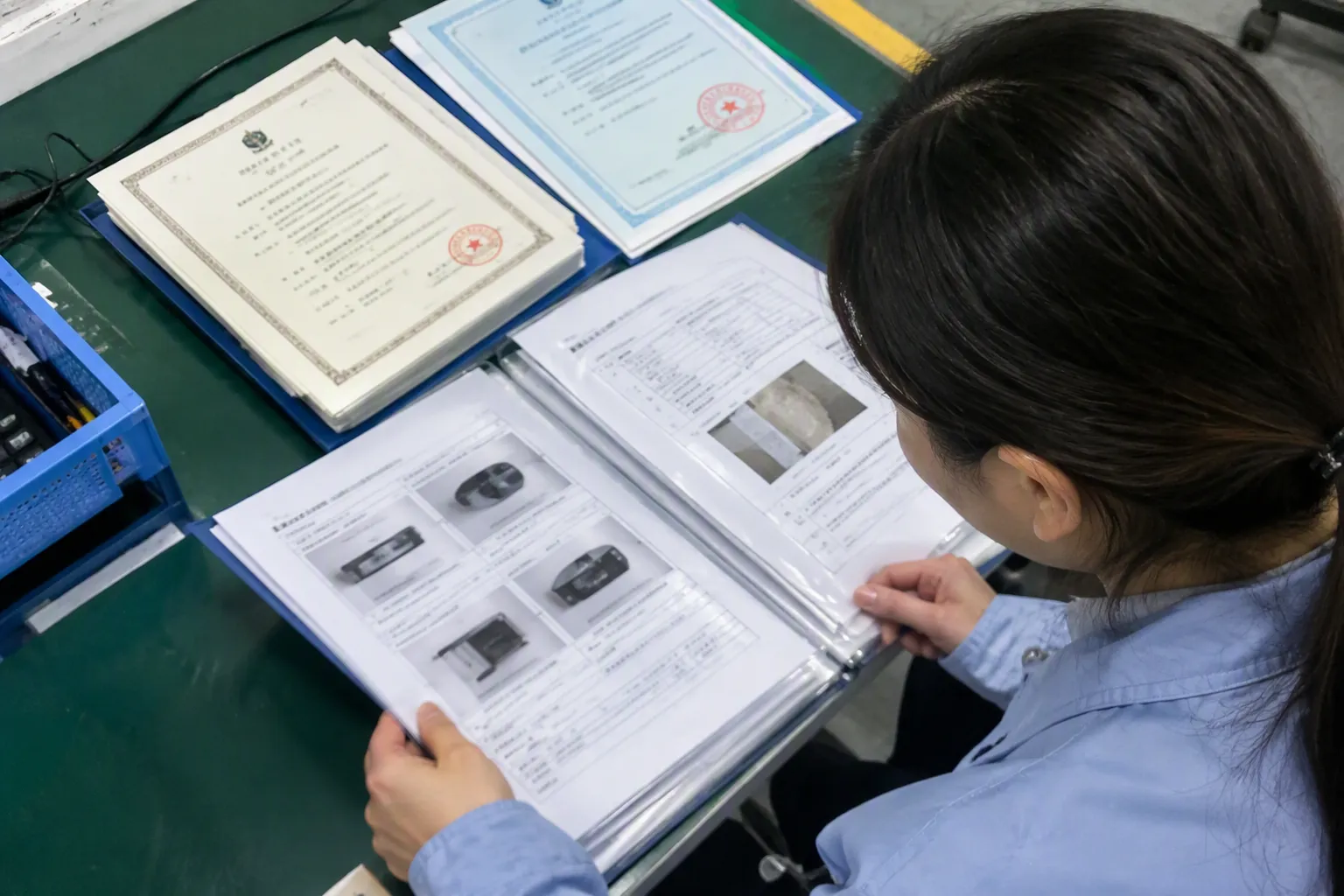
I start with product identity. I compare the document with the quotation, approved sample, product specification, packaging, and purchase order. If the product is sold under my customer’s brand, I also check whether the document identifies the original manufacturer, brand owner, or applicant correctly.
My basic product-to-document comparison includes:
| Review point | What I compare | Why it matters |
|---|---|---|
| Product name | Report description and actual product | Similar names can refer to different versions |
| Model number | Exact model, suffix, and revision | A small suffix may indicate a different configuration |
| Manufacturer | Factory or legal entity named in the document | A report for another producer may not support the purchased item |
| Brand | Listed brand versus selling brand | Private-label products may require additional documentation |
| Electrical input | Voltage, current, adapter, and frequency | A changed power supply can affect test scope[3] |
| Wireless function | Module, frequency, antenna, and firmware | Radio-related changes may alter the evidence needed |
| Components | Battery, charger, cable, and control board | Accessories can form part of the tested configuration |
| Test standard | Standard named in the report | A document should address the relevant product and test scope |
| Date and revision | Issue date and document version | Old or superseded documents require explanation |
| Laboratory or issuer | Name, address, accreditation, and traceability | I need to understand who produced the evidence |
I do not require every document to use identical wording. I do require a reasonable and explainable connection between the document and the product.
Is a Certificate Automatically Valid for Every Product Variation?
No. A certificate, report, declaration, or technical file is not automatically transferable to every variation[2]. I pay particular attention to products with several options, such as different battery capacities, chargers, wireless modules, colors with different materials, or versions sold under different brands.
For example, a supplier may show me a report for a wireless accessory with one radio module. The quotation may later include a cheaper module from another source. The housing may look identical, but the internal configuration is no longer the same. I treat that change as a document-matching issue rather than assuming the original report remains sufficient.
I also watch for “family” documents. A family report can sometimes cover several related models, but I need to see how the scope is defined. The document may list model variants, acceptable differences, or representative samples. If it does not explain the relationship, I ask the supplier for clarification.
Important variation points include:
- Different input voltage or plug type
- A new power adapter or charging cable
- A different battery supplier or battery capacity
- A changed Bluetooth, Wi-Fi, or other wireless module
- New firmware that affects product operation
- Different antenna design
- A revised printed circuit board
- A new enclosure material or coating
- A change from factory brand to private label
- A production site change
- A different packaging configuration
- A new accessory included in the sales package
When I find one of these changes, I record it in the sourcing file. I then ask whether the existing evidence still covers the revised product or whether an updated report is needed.
How Do CE, FCC, RoHS and REACH Evidence Differ?
I avoid treating CE, FCC, RoHS, and REACH as one identical certification process. They relate to different compliance questions and may involve different forms of evidence, responsibilities, and market considerations.
At a procurement level, I usually understand them as follows:
- CE-related documentation: Often involves a manufacturer’s conformity process for applicable European market requirements. The evidence may include a declaration, technical documentation, test reports, and other supporting records, depending on the product.
- FCC-related documentation: Relates to applicable United States communications or radio requirements for relevant equipment. The exact process and evidence depend on the equipment category and functions.
- RoHS evidence: Addresses restricted substances in relevant electrical or electronic products. Suppliers may provide declarations, material information, test reports, or component-level evidence.
- REACH evidence: Concerns chemical substance obligations and information related to products and articles in the relevant supply chain. A supplier statement may need supporting material information.
I use these labels as starting points, not as final conclusions. The correct evidence depends on the product, configuration, market, and current requirements. A CE declaration does not replace every other document. An FCC report does not prove compliance with RoHS or REACH. A RoHS statement does not establish that a product meets every requirement for sale in a particular country.
I also ask what the document actually is. Suppliers sometimes use “certificate” as a general word for a test report, a declaration, a registration record, or a laboratory statement. Those documents do not necessarily have the same purpose.
What Questions Should I Ask the Supplier?
When a file is unclear, I prefer specific questions instead of asking, “Is this product certified?” A broad question often produces a broad answer. A product-matching question creates a clearer record.
I may ask:
- Is this document for the exact model in the quotation?
- Does the model number include a suffix or revision that is missing from the report?
- Which factory manufactured the tested sample?
- Is the tested sample the same hardware and firmware as the production item?
- Does the report cover the included charger, battery, cable, and adapter?
- Has the wireless module, antenna, or power supply changed?
- Is this document for the supplier’s brand or for another customer’s private label?
- Which market and product version does the document support?
- Can the supplier provide the complete report rather than only a cover page?
- Can the supplier explain any differences between the report and the approved sample?
- Is the document current, and has the supplier issued a revised version?
- Can the supplier provide a declaration or material statement from relevant component vendors?
I ask the supplier to mark differences directly on a specification sheet when possible. This is more useful than relying on a message such as “same product.”
What Warning Signs Do I Record?
A warning sign is not automatic proof of non-compliance. I treat it as an unresolved verification risk. The purpose of screening is to decide whether I need more evidence before proceeding.
Common concerns include:
- The document shows a different model number.
- The manufacturer name does not match the factory being quoted.
- The product photo does not match the approved sample.
- The report refers to a different adapter or battery.
- The document covers a brand that the supplier cannot explain.
- The document contains inconsistent dates or product descriptions.
- The supplier provides only a logo or certificate cover page.
- The laboratory details are incomplete or difficult to trace.
- The supplier refuses to answer basic product-matching questions.
- The production version has changed after testing.
- The report is several years old, but no review of changes is available.
- The supplier says that one document covers “all products” without defining scope.
I do not tell a buyer that a non-cooperative supplier is definitely selling a non-compliant product. The supplier may have poor document management, language limitations, or a legitimate confidentiality concern. However, the missing explanation still affects procurement approval.
How Can I Build a Practical Verification Workflow?
I use a staged workflow so that document review does not become a last-minute shipping problem.
1. Define the product before requesting documents
I write down the product model, dimensions, materials, electrical input, included accessories, battery details, wireless functions, branding, packaging, and target market. A clear product brief gives the supplier something specific to match.
2. Request documents before placing a large order
I ask for relevant evidence during supplier comparison or sample development. I do not wait until finished goods are packed. Early review gives me time to identify configuration changes or testing gaps.
3. Compare the evidence with the sample
I compare visible features and, where appropriate, technical specifications. I ask the supplier to confirm whether the sample, tested unit, and production unit will be identical.
4. Record open questions
I maintain a simple compliance register with the document name, model, issuer, date, product scope, missing information, supplier response, and approval status.
5. Add document requirements to the purchase order
The purchase order can identify the approved model, components, accessories, and required document package. It can also state that changes require written approval.
6. Verify production against the approved version
A document review at the quotation stage is not enough if the factory changes parts later. Production follow-up and inspection can help confirm that the delivered product matches the approved sample and specification.
7. Escalate technical questions
If the product involves complex radio functions, batteries, medical claims, safety-sensitive use, children’s products, or multiple regulated markets, I recommend qualified professional evaluation. Procurement screening can identify questions, but it should not replace specialist advice.
Should Buyers Keep Their Own Compliance Records?
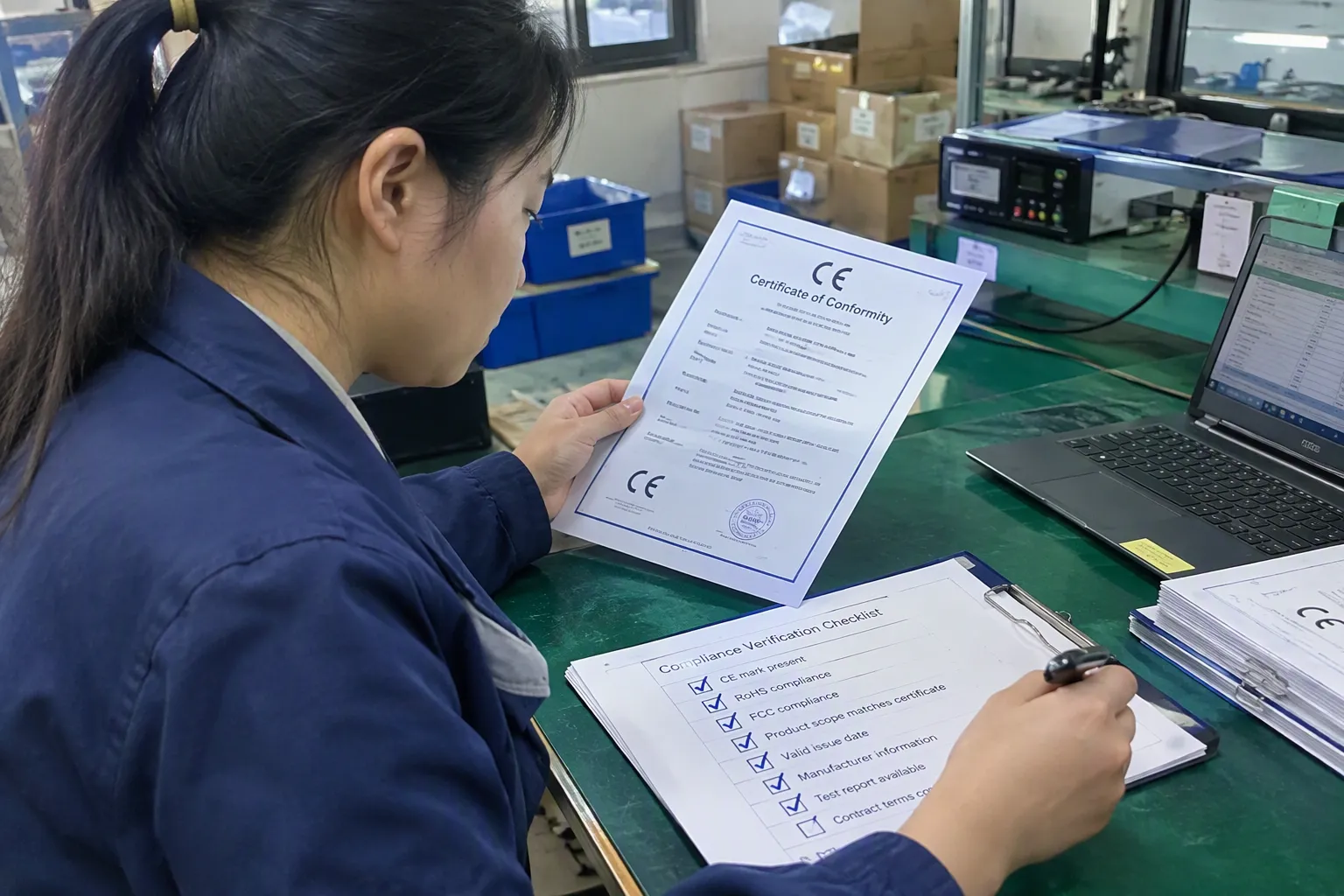
Yes. I recommend that buyers retain their own organized record even when the supplier owns the original technical file. I keep the supplier’s documents together with the approved product specification, sample photos, purchase order, change history, inspection records, and supplier correspondence.
This record helps me answer practical questions later:
- Which version did I approve?
- Which factory produced it?
- Which adapter and battery were included?
- Which documents supported the original purchase?
- Did the supplier make any changes?
- Did the inspection team check the relevant features?
- Which market was the product intended for?
- Which questions remain open?
Document retention also supports communication between procurement, quality control, logistics, and customer service[4]. A file stored only in a salesperson’s email account is difficult to manage when that person changes roles.
I use clear file names, such as:
Brand_Product_Model_DocumentType_Issuer_Date
I also keep a revision log. If the supplier sends an updated report, I do not simply overwrite the old file. I record what changed and why the new version replaced the previous one.
What Role Can a Sourcing Partner Play?
A sourcing partner can help buyers obtain and organize evidence, but the partner should not present itself as a laboratory or legal authority unless it has the appropriate qualifications. My role in supplier and document screening is practical: I request files, compare product information, identify inconsistencies, ask follow-up questions, and coordinate additional inspection or testing when needed.
For overseas buyers, this support can be useful because document verification often depends on supplier communication. A local sourcing team can:
- Request documents in the supplier’s working language
- Confirm which factory and production line are involved
- Compare quotations and product configurations
- Check whether the sample matches the proposed production version
- Follow up when a supplier gives incomplete answers
- Coordinate independent testing where appropriate
- Include document requirements in production instructions
- Inspect labels, packaging, models, and accessories
- Consolidate evidence from several factories
At KingSourcing, I would treat this as part of a wider procurement-control process. Supplier sourcing, sample approval, factory communication, production follow-up, quality inspection, packaging, consolidation, and shipping all affect the reliability of the final order.
I still make the boundary clear: supplier-document screening is not the same as issuing a conformity decision. When a buyer needs a final interpretation of market-specific obligations, I recommend consultation with a qualified testing, compliance, or legal professional.
What Should I Do When Documents Are Missing?
I use an escalation rule based on the importance of the missing information.
| Situation | My usual procurement action |
|---|---|
| Minor formatting issue with clear product matching | Ask the supplier to correct or clarify it |
| Missing model suffix | Hold approval until the exact version is confirmed |
| Different charger, battery, or wireless module | Request updated evidence or technical review |
| Unclear manufacturer or laboratory | Request traceable details before proceeding |
| Supplier provides only a logo or cover page | Ask for the complete relevant document |
| Product is intended for several markets | Seek market-specific professional guidance |
| Supplier changes the product after approval | Reopen document and sample review |
| Critical evidence remains unresolved | Delay production or reconsider the supplier |
I do not automatically reject a supplier because one file is incomplete. I first ask whether the supplier can resolve the issue with accurate evidence. However, I avoid approving a large order when the product identity and supporting documents cannot be connected clearly.
For a small test order, I may still proceed only after considering the product risk, intended use, sales channel, and professional advice. A small quantity does not automatically remove the buyer’s obligations[6] or the possibility of commercial loss.
How Does Inspection Support Document Verification?
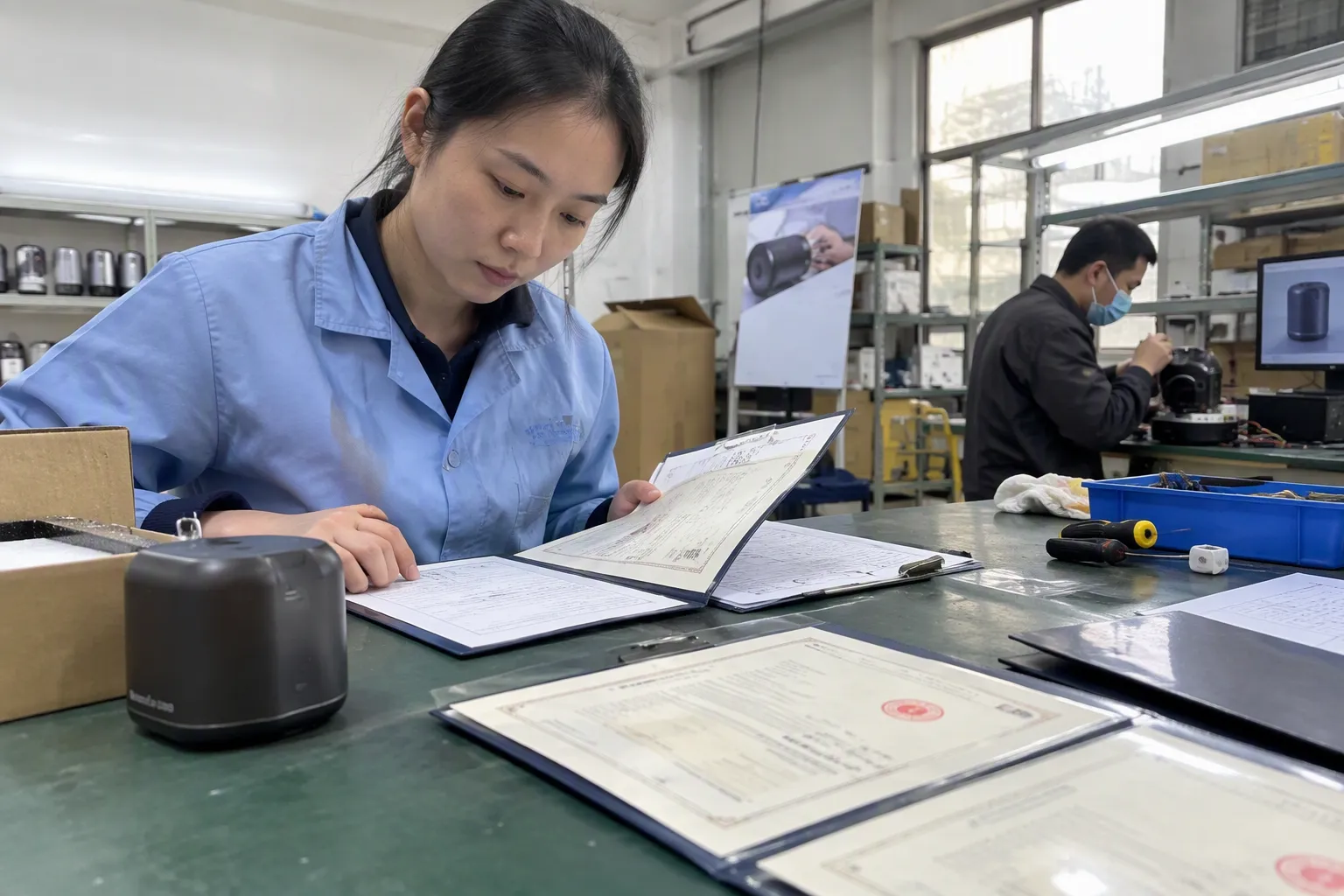
Inspection cannot prove every compliance claim[5], but it can support product-to-document matching. During a pre-production or pre-shipment inspection, I may ask the inspection team to verify:
- Product model and revision
- Brand and label information
- Input rating
- Included adapter and cable
- Battery markings
- Wireless module markings where visible
- Packaging and user manual
- Quantity and SKU separation
- Visible differences from the approved sample
I also use photographs to create a record of the inspected configuration. If the report refers to a specific adapter, I want the inspection record to show whether that adapter was included in the shipment.
For technical questions, visual inspection has limits. An inspector cannot confirm chemical composition or reproduce every laboratory test through ordinary checking. I use inspection as one layer of control, not as a replacement for testing or professional assessment.
Frequently Asked Questions
Who should provide CE, FCC, RoHS and REACH documents?
The supplier or manufacturer should provide accurate supporting documents for the exact product and configuration. The buyer should review those documents against the purchase specification and intended market. A buyer may need qualified professional advice for a final technical or legal conclusion.
Does a supplier certificate prove that I can sell the product everywhere?
No. A document may relate to a particular product version, manufacturer, test scope, or market. It does not automatically prove that the product meets every requirement in every country. I verify the target market separately and request professional guidance where the requirements are complex.
Can one report cover several product models?
Sometimes a report may define a product family or include several model variants. I check the scope carefully. The document should explain which models, components, and differences are covered. A similar appearance or shared marketing name is not enough by itself.
What should I do if the supplier will not provide complete documents?
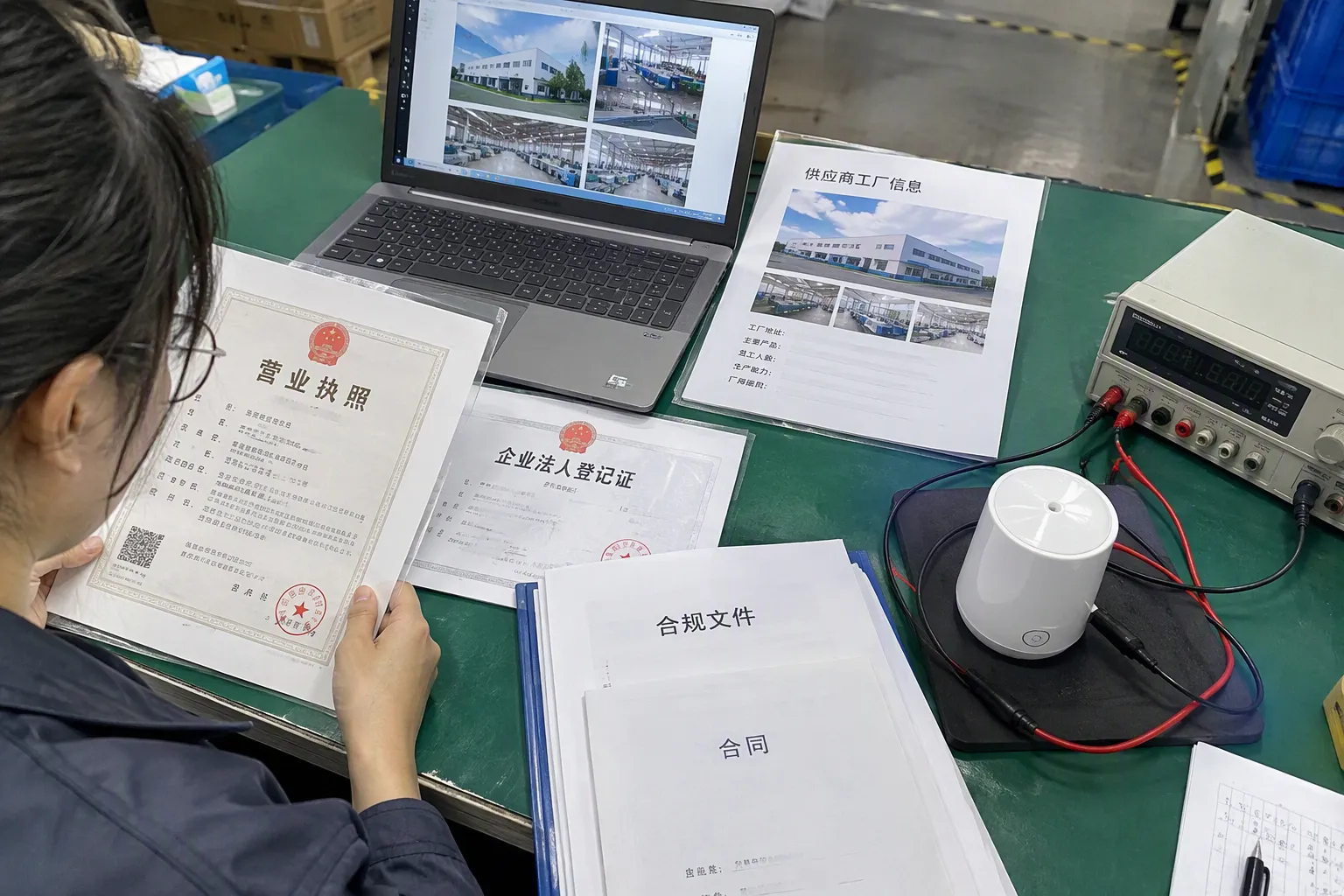
I record the missing information and ask specific product-matching questions. If the supplier still cannot provide a reasonable explanation, I treat the issue as unresolved verification risk. I may request independent testing, use another supplier, delay approval, or consult a qualified compliance professional.
Should compliance documents be reviewed again for repeat orders?
Yes. I compare repeat orders with the previously approved version. Suppliers can change components, factories, firmware, adapters, or packaging. I ask the supplier to confirm whether any relevant changes occurred and update the record when the configuration changes.
Conclusion
Compliance documents are useful procurement evidence, but they are not automatic guarantees. I expect suppliers to provide accurate, product-matched reports and declarations. I also verify the exact model, manufacturer, configuration, accessories, standards, dates, and target market before approving an order. When the information does not match, I request clarification or qualified review rather than relying on a certificate label. If you need help screening Chinese suppliers, coordinating samples, checking production, or organizing product documentation, contact KingSourcing to discuss your sourcing project.
Sources
- Importers and distributors - Internal Market, Industry ...", Regulatory guidance for the European Economic Area assigns defined conformity and traceability responsibilities to manufacturers, importers, and distributors; the precise duties depend on the product legislation and market concerned
- Conformity assessment – ensure your products comply with EU ...", Conformity-assessment guidance treats technical evidence as applicable within the product and design scope that it describes; changes to relevant components or characteristics may require a reassessment of that scope
- Electromagnetic Compatibility and Smart Grid ...", Electromagnetic-compatibility and electrical-safety assessments commonly treat the power supply and associated operating configuration as relevant test conditions because substitutions can change conducted emissions, operating modes, or safety characteristics
- Learning from Role Models: Category 4: Measurement, Analysis ...", Quality-management guidance treats controlled documented information as a means of preserving traceability, communicating requirements, and supporting consistent operation across organizational functions
- [PDF] MEASUREMENT CONCERNS AND OPPORTUNITIES FOR ...", In conformity assessment, inspection involves examination against specified criteria, whereas testing determines characteristics through defined technical procedures; inspection alone therefore cannot establish properties that require laboratory measurement
- Handelsregime und allgemeine Produktsicherheit | Access2Markets", Product-compliance frameworks generally define economic-operator duties by the product and the operator's market activity rather than by a universal low-quantity exemption