Quick Answer
China sourcing for Amazon sellers can look like a simple search for the lowest unit price. I have seen first-time buyers become exposed to hidden packaging costs, unclear specifications, high MOQs, and unsuitable production assumptions. A controlled comparison process helps me separate genuinely competitive suppliers from quotations that only appear cheaper.
China sourcing for Amazon sellers works best when the buyer compares equivalent products, quantities, packaging, customization, tooling, and delivery assumptions. The lowest unit price is not automatically the best choice.[1] I recommend using a standardized product brief, checking supplier capability, calculating the complete landed cost, and starting with an order that matches the product-testing stage.

A first order should answer more than one question. It should show whether the product can be made to the required specification, whether the supplier communicates clearly, and whether the total purchasing cost fits the seller’s launch plan. I use the process below to make those decisions more visible before money is committed.
How Should Amazon Sellers Approach China Sourcing?
Many new Amazon sellers begin with a product idea and several supplier links. The problem starts when each supplier interprets the idea differently. One quotation may cover a standard product, while another includes custom packaging or a different material. A quick price comparison then creates false confidence.
The best approach is to define the product first, request comparable quotations, investigate the supplier, and select a first order that limits avoidable risk. I treat the first order as a controlled test of both the product and the procurement process.
Start with a clear product brief
I recommend writing a product brief before contacting suppliers. The brief does not need to be complicated, but it should remove the assumptions that usually distort a quotation.
A useful brief can include:
- Product name and intended use
- Target dimensions and materials
- Colors, finishes, and functional requirements
- Reference images or drawings
- Expected order quantity
- Packaging requirements
- Logo, labeling, or customization needs
- Destination country and delivery location
- Required sample type
- Quality expectations and inspection points
- Amazon-related packaging or barcode requirements
- Target launch timing
A seller may not know every technical detail at the beginning. That is normal. However, I still ask the seller to separate confirmed requirements from open questions. For example, “recycled plastic required” is different from “plastic type to be confirmed.” Suppliers need to know which points are fixed and which points they should quote as alternatives.
I also ask buyers to identify the product’s critical-to-function characteristics[2]. These are the details that affect whether customers can use the product as intended. They may include size tolerance, load capacity, battery behavior, connector type, surface finish, closure strength, or compatibility with another item. A factory quotation cannot replace a properly defined product requirement.
Compare equivalent quotation scopes
A supplier quotation becomes useful only when its scope is clear. I usually create a comparison sheet with one row for each cost and one column for each supplier.
| Cost or assumption | Supplier A | Supplier B | Supplier C |
|---|---|---|---|
| Product specification | Confirmed / unclear | Confirmed / unclear | Confirmed / unclear |
| Unit price | |||
| Quoted quantity | |||
| MOQ | |||
| Tooling or mold charge | |||
| Sample charge | |||
| Custom packaging | |||
| Logo or labeling | |||
| Carton details | |||
| Inspection arrangement | |||
| Shipping basis | |||
| Excluded costs | |||
| Lead time |
This format makes the important question visible: Are the suppliers actually quoting the same purchase?
A low unit price may exclude a custom insert, printed box, barcode label, or shipping cost.[3] Another supplier may include those items. The second supplier may appear more expensive even though the two offers are closer after adjustment.
An anonymized quotation example
In quotation comparisons I handle for Amazon sellers, I have seen offers that looked different before the scope was checked. In one anonymized case, one supplier quoted a lower price for a standard product with basic packaging. Another supplier quoted a higher price for a version that included the requested customization and more complete packaging assumptions.
The initial comparison favored the first supplier. After I asked both suppliers to confirm the same product details, the comparison changed. The questions included:
- Did both prices cover the same material and dimensions?
- Did both suppliers include the requested logo?
- Did both prices include the same retail packaging?
- Was the quoted quantity the same?
- Did either supplier exclude mold, printing, or setup charges?
- Were shipping and export-related charges included or excluded?
- Could both suppliers meet the requested first-order quantity?
The decision did not change because I discovered a dramatic hidden saving. It changed because the original comparison was not valid. The buyer needed to choose between clearly defined options rather than between two headline prices.
I do not treat this kind of quotation review as proof that a factory can deliver acceptable quality. It only creates a better basis for the next stage: sample evaluation, supplier verification, and production controls.
Calculate the practical procurement cost
Amazon sellers need to look beyond the factory unit price. I use a simple cost model:
The exact calculation depends on the delivery arrangement, destination, product category, and tax treatment. I do not assume that a supplier’s shipping term includes every charge a buyer will eventually pay. I ask for the quoted basis in writing and confirm which costs remain outside the quotation.
The main cost categories often include:
- Product unit price
- Sample development and shipping
- Mold, tooling, or setup charges
- Logo application
- Retail packaging
- Inserts, manuals, and barcode labels
- Inner cartons and master cartons
- Pre-shipment inspection
- Domestic transport in China
- Export documentation
- International freight
- Destination handling and delivery
- Import duties, taxes, or brokerage
- Warehousing and consolidation
- Rework or replacement allowance, if agreed
The buyer should also consider the cash cost of the first test order. A supplier with a lower unit price may require a quantity that is too large for a first launch. The inventory risk can matter more than a small unit-price difference.[5]
Match the order to the testing stage
I ask sellers to describe the stage of their product before they negotiate a final order. A product can be at one of several stages:
- Idea stage: The seller is still checking demand and product feasibility.
- Sample stage: The seller needs to evaluate appearance, function, packaging, and customer fit.
- Pilot stage: The seller has chosen a direction and wants a limited first production run.
- Repeat-order stage: The seller has evidence that the product and supplier process are working.
Each stage calls for a different purchasing decision. A large MOQ may make sense for a proven product but create unnecessary exposure during early testing.[6] A supplier that only offers standard packaging may be suitable for a basic market test but unsuitable for a private-label launch.
I do not recommend forcing every supplier into the same commercial model. Instead, I recommend finding out whether the supplier’s model fits the buyer’s current objective. Important questions include:
- What is the minimum order quantity for the standard product?
- Does customization change the MOQ?
- Can the supplier provide a paid sample before production?
- Will the sample use the same material and process as mass production?
- Can the supplier separate standard stock from customized production?
- What deposit and balance terms apply?
- What happens if the buyer changes the specification after sampling?
- How long will production take after approval?
A practical first order may not be the cheapest possible order. It should be large enough to obtain meaningful feedback but small enough to keep inventory and specification risk manageable.
Evaluate suppliers beyond online listings
An online marketplace profile is a starting point, not a complete supplier evaluation. I look for information that helps explain whether the supplier is relevant to the buyer’s product and order size.
I usually review:
- Product specialization
- Manufacturing or trading-company status
- Factory location and production category
- Experience with similar products
- Response quality and technical understanding
- Sample process
- MOQ flexibility
- Customization capability
- Quality-control process
- Production capacity for the expected order
- Packaging and labeling experience
- Export experience to the destination market
- Willingness to document specifications
A trading company is not automatically unsuitable. A factory is not automatically reliable.[7] The more useful question is whether the supplier can clearly manage the required product, quality expectations, communication, and order process.
For higher-risk products, I recommend a more detailed factory audit or qualified inspection. An audit may review facilities, equipment, production flow, quality procedures, and documentation. It still does not guarantee that every production batch will meet requirements.[8] I treat supplier verification and product inspection as separate controls.
Use samples as a decision tool
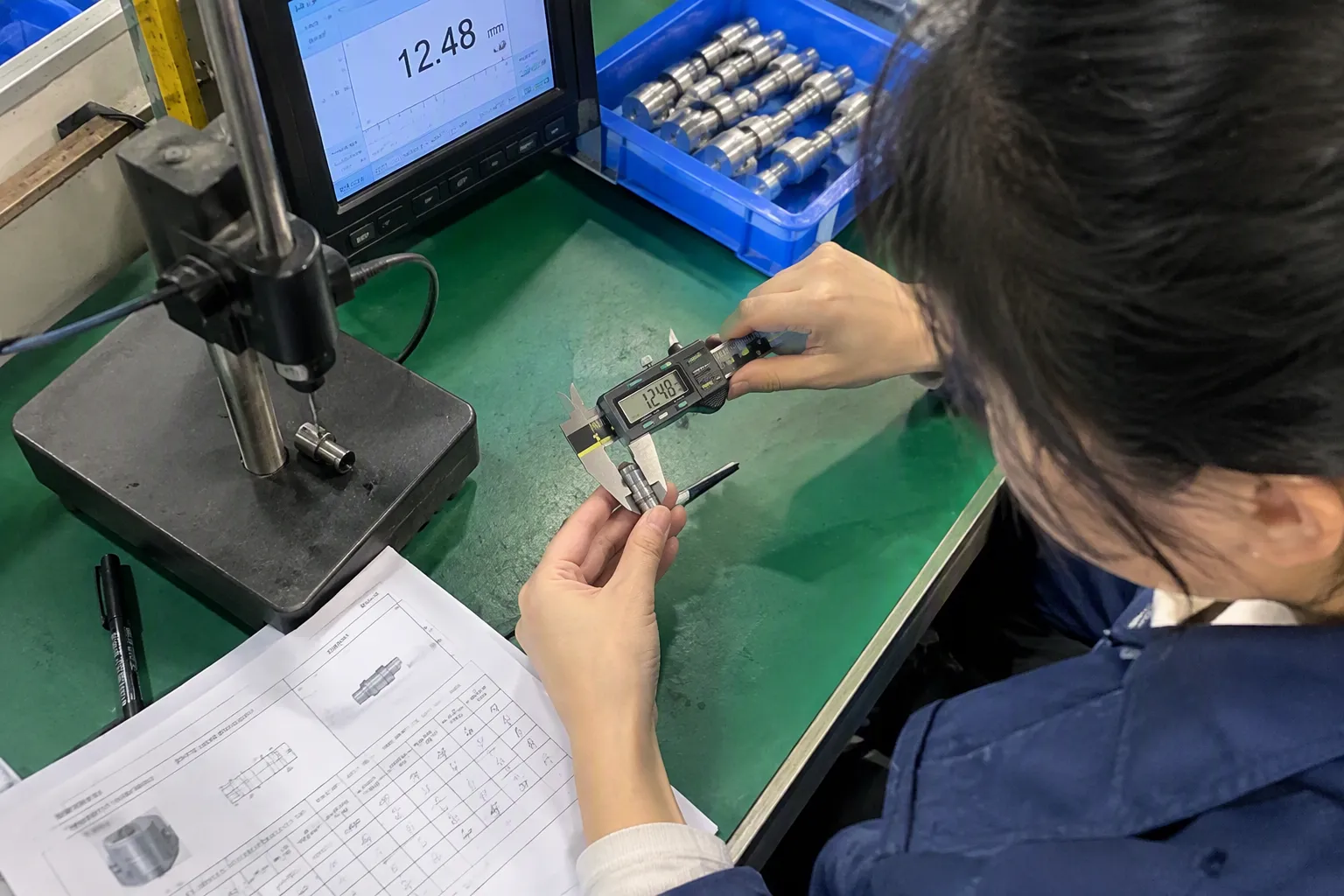
A sample is more valuable when the buyer defines what it must prove. I recommend creating a sample review checklist before the sample arrives.
The checklist may cover:
- Dimensions and weight
- Materials and color
- Functional performance
- Surface quality
- Assembly and fit
- Logo placement
- Packaging dimensions
- Label accuracy
- User instructions
- Accessories and included components
- Compatibility with the intended sales channel
I also record the difference between the approved sample and the final production specification. If the supplier proposes a change, I ask for written confirmation and a new approval where necessary.
I have found that vague sample approval creates problems later. A buyer may approve a sample because it “looks good,” while the factory is still unclear about the precise material, packaging, or logo standard. I prefer a short written approval that identifies the version being approved and lists any remaining changes.
For products with safety, electrical, chemical, children’s, medical, or other regulated characteristics, I recommend qualified professional review and destination-market testing. A sample review by a sourcing provider does not establish legal or regulatory compliance. Buyers should verify applicable requirements and supporting documents independently.
Control the first production order
Once a supplier is selected, I recommend using a written purchase order or specification sheet. The document should connect the quotation to the actual order.
The order file can state:
- Product description and version
- Materials and dimensions
- Quantity and acceptable quantity variation
- Colors and finishes
- Logo and artwork references
- Packaging construction and printing
- Labels, barcodes, and inserts
- Carton requirements
- Delivery location and shipping basis
- Production lead time
- Payment milestones
- Inspection timing
- Defect handling or rework expectations
- Approval process for changes
I do not rely on chat messages alone for important product details. Messaging applications are useful for discussion, but the final requirements should be organized in a document that both sides can review.
A pre-shipment inspection can check quantity, workmanship, dimensions, packaging, labeling, and selected functional points. The inspection scope should match the product. A visual check alone may not be enough for a product where performance is the main concern.
I also recommend avoiding a final balance payment before the buyer understands the inspection result and the agreed resolution process. The exact payment arrangement depends on the supplier and transaction terms, but the buyer should plan the control point before production begins.
Coordinate packaging, labeling, and shipping
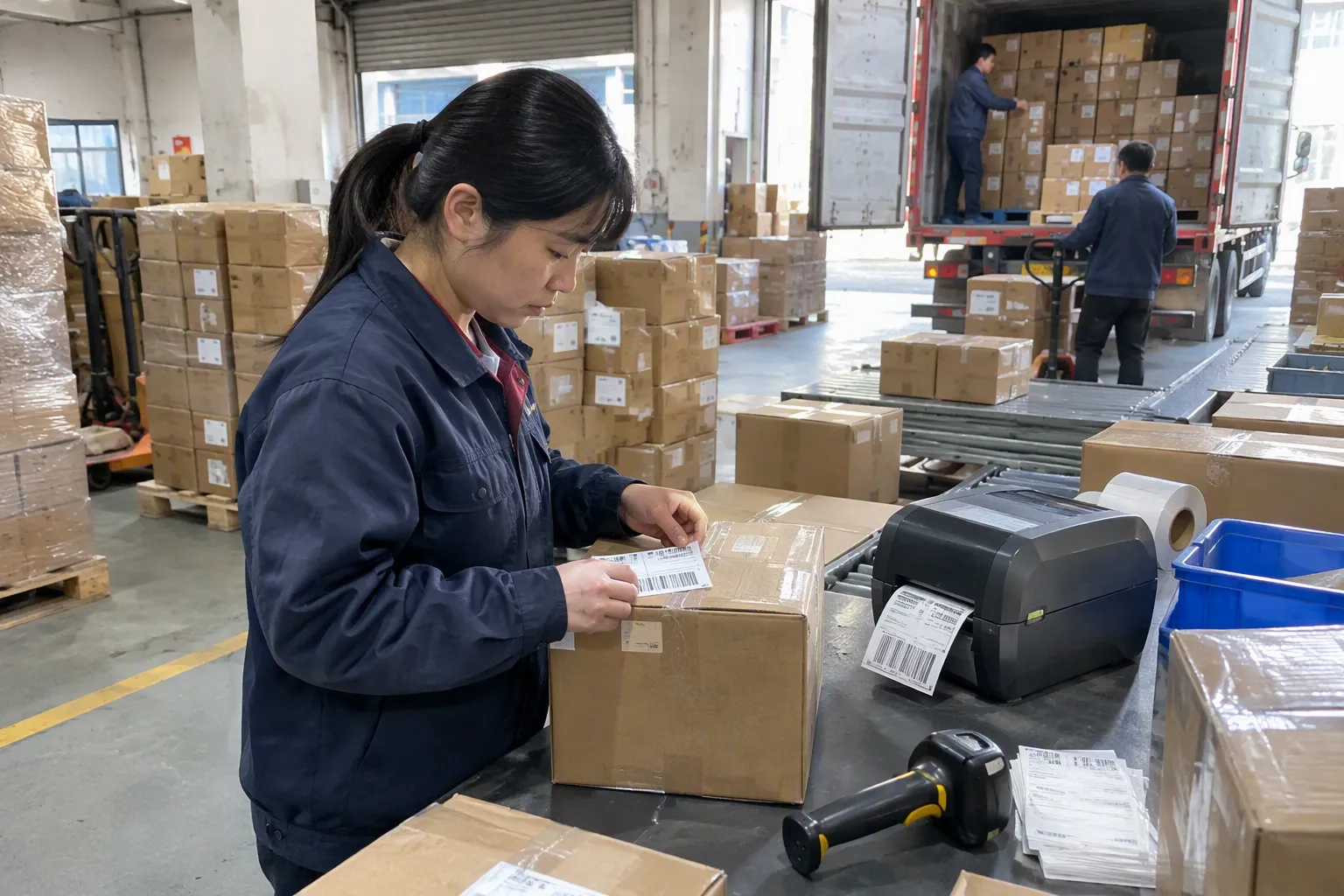
Amazon sellers often focus on the product and leave logistics until the end. That approach can create avoidable delays. Packaging affects product protection, storage volume, labeling, and shipping cost.
I ask sellers to confirm:
- Retail packaging dimensions
- Units per inner carton
- Carton size and gross weight
- Master-carton markings
- Product labels and barcodes
- Country-of-origin marking where applicable
- Shipping marks
- Pallet or carton requirements
- Delivery address and receiving requirements
- Whether multiple suppliers will be consolidated
If an order includes several suppliers, consolidation may reduce duplicated freight arrangements, but it adds coordination work. Each supplier must complete production, packaging, labeling, and documentation on a compatible schedule. I usually create a shipment plan that records which cartons belong to which SKU and supplier.
Shipping quotations also need careful reading. I confirm the route, service level, chargeable weight basis, destination responsibilities, and excluded charges. I do not present a freight estimate as a guaranteed final cost when the shipment details remain incomplete.
Watch for common first-order mistakes

The same mistakes appear repeatedly in early China sourcing projects. I encourage buyers to identify them before requesting quotations.
Mistake 1: Sending only a product photograph.
A photograph cannot define material, tolerances, packaging, performance, or customization. I use images as references, then add written requirements.
Mistake 2: Asking for the lowest price immediately.
This can encourage suppliers to quote a reduced specification or omit cost items. I ask for a complete quotation first and negotiate after the scope is comparable.
Mistake 3: Ignoring the quoted quantity.
A unit price at 5,000 pieces may not apply to a 300-piece test order. I request pricing at the quantities I may realistically purchase.
Mistake 4: Treating the sample as the final quality standard.
The production order needs its own documented requirements and inspection plan.
Mistake 5: Assuming factory status proves capability.
A supplier may manufacture one product category well and lack experience with another. I verify relevance rather than relying on labels.
Mistake 6: Leaving packaging until production is underway.
Packaging can require artwork approval, printing setup, and different MOQs. I include it in the initial quotation request.
Mistake 7: Assuming a certificate solves compliance.
Buyers should verify the document, its scope, the product model, the issuing body, and its relevance to the destination market. A sourcing provider should not replace qualified compliance advice.
Mistake 8: Selecting a supplier without a communication test.
A supplier that answers quickly but avoids specific questions may create problems during production. I look for clear answers, documented assumptions, and sensible follow-up questions.
A practical supplier scorecard
A scorecard can reduce the influence of one attractive number. I suggest scoring each supplier against the buyer’s priorities rather than using a universal formula.
| Evaluation area | Questions to ask |
|---|---|
| Product fit | Does the supplier understand the required specification? |
| Comparable price | Does the quotation cover the same scope as other offers? |
| MOQ suitability | Does the supplier support the planned test order? |
| Sample quality | Does the sample meet the agreed requirements? |
| Customization | Can the supplier handle logo, packaging, and labeling needs? |
| Communication | Are answers specific, timely, and documented? |
| Quality control | Can the supplier explain its checks and accept an inspection plan? |
| Lead time | Is the schedule realistic for sampling and production? |
| Commercial terms | Are payment, tooling, and change terms clear? |
| Verification status | Has the supplier or factory been checked to an appropriate level? |
I do not assign a high score to “price” unless the scope has already been normalized. A low price with unclear exclusions is not a strong commercial result.
A controlled first-order workflow
For a first-time Amazon seller, I use the following sequence:
-
Define the product brief.
I record specifications, open questions, quantity ranges, packaging, and destination. -
Identify several relevant suppliers.
I look for suppliers with suitable product experience rather than collecting a large list of unrelated offers. -
Request structured quotations.
I send the same brief and ask suppliers to list inclusions, exclusions, MOQs, lead times, and payment terms. -
Normalize the offers.
I place the information into a comparison table and ask follow-up questions where the scopes differ. -
Shortlist based on fit and risk.
I consider product understanding, sample process, communication, MOQ, and total cost. -
Order and review samples.
I use a checklist and document approval or required changes. -
Verify the supplier and production plan.
I select an appropriate level of factory review, supplier verification, and quality control. -
Confirm the purchase order.
I attach the approved specification, packaging artwork, quantity, and delivery assumptions. -
Monitor production.
I check progress and manage changes before they become expensive. -
Inspect, consolidate, and ship.
I confirm quantity and quality, coordinate cartons, and review shipping information before dispatch.
This process does not eliminate every risk. It improves the buyer’s visibility and creates decision points where problems can still be corrected.
When should an Amazon seller use a sourcing partner?
Some sellers can manage a small standard-product order directly. Others need local support because they are handling several suppliers, customized products, language barriers, inspections, or complex logistics.
I see the strongest case for external sourcing support when the buyer needs help with:
- Finding and screening China suppliers
- Comparing quotations on an equivalent basis
- Developing samples
- Coordinating OEM or ODM requirements
- Conducting supplier or factory checks
- Following production
- Arranging independent quality inspection
- Checking products one by one where appropriate
- Managing packaging and labeling
- Consolidating multiple supplier orders
- Warehousing and shipping coordination
A sourcing partner should not make the buyer’s decisions less transparent. I recommend asking how quotations are presented, what documents are available, who performs inspections, and which services are included in the fee.
At KingSourcing, I work with buyers who need local coordination in manufacturing clusters such as Shenzhen, Dongguan, Guangzhou, Foshan, Yiwu, and Ningbo. The appropriate support depends on the product, order size, supplier situation, and buyer’s internal capability. I still expect the buyer to approve the product requirements and understand the commercial assumptions before placing an order.
Frequently Asked Questions
Is China sourcing suitable for a first-time Amazon seller?
China sourcing can suit a first-time Amazon seller when the seller starts with a clear product brief, a manageable test quantity, and a realistic cost model. I recommend evaluating samples, confirming packaging and labeling requirements, and using suitable supplier and production controls before committing to a larger order.
How many China suppliers should an Amazon seller compare?
There is no universal number. I prefer comparing several relevant suppliers rather than collecting many generic quotations. The important point is that every supplier receives the same requirements and states the same commercial assumptions. A smaller group of well-matched suppliers usually produces more useful information.
How can I tell whether a supplier quotation is genuinely comparable?
I check the product specification, quantity, material, customization, packaging, tooling, labeling, shipping basis, lead time, and excluded charges. If one supplier leaves several items unclear, I do not treat its headline unit price as directly comparable until those points are confirmed.
Should I choose the supplier with the lowest MOQ?
A low MOQ can reduce initial inventory exposure, but it is not automatically the best option. I also assess sample quality, product capability, communication, customization, total cost, and production controls. A supplier with a slightly higher MOQ may be more suitable if the order requirements and quality process are stronger.
Does supplier verification guarantee product quality?
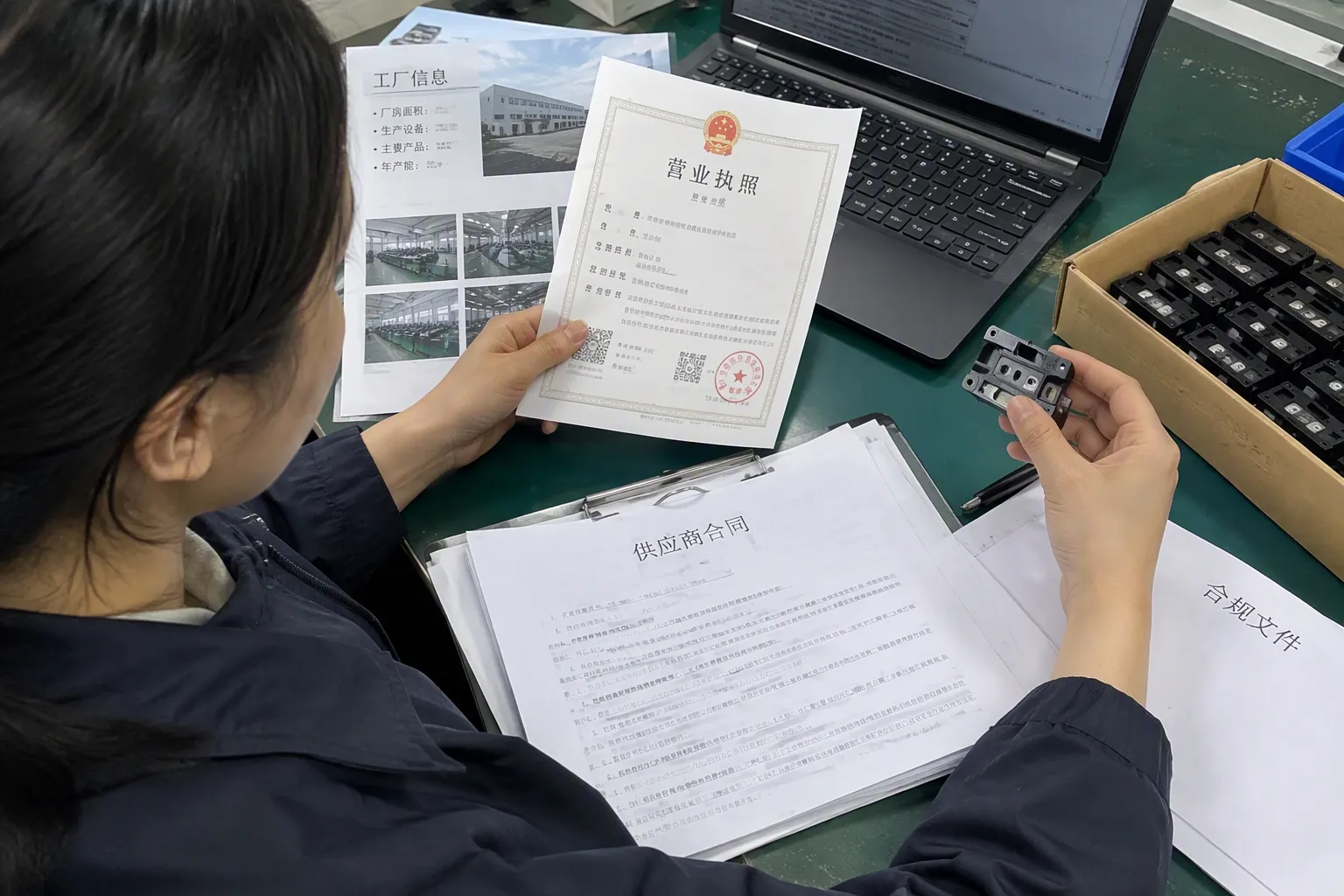
No. Supplier verification can provide information about the business, facilities, experience, and processes, but it does not guarantee that every production batch will meet the buyer’s requirements. I use supplier checks together with approved samples, written specifications, production follow-up, and an appropriate inspection plan.
Conclusion
China sourcing for Amazon sellers should begin with a comparable, risk-aware procurement decision rather than a search for the cheapest unit price. I recommend standardizing the product brief, checking quotation scope, calculating practical landed cost, matching MOQ to the testing stage, and documenting the approved requirements. Supplier verification and quality inspection add useful controls, but they do not replace professional product or compliance evaluation where needed. If you need help comparing China suppliers, managing samples, checking production, consolidating orders, or coordinating shipping, contact KingSourcing to discuss your first order.
Sources
- [PDF] EFFECTIVE METHODOLOGIES FOR SUPPLIER SELECTION AND ...", A total-cost procurement framework evaluates acquisition together with related operating, transaction, and risk costs, supporting comparison beyond the quoted unit price
- Importance of Critical to Quality (CTQ) in Business", Quality-management literature describes critical characteristics as measurable product or process attributes whose variation can affect intended performance or safety
- Pricing Strategy - International Trade Administration", Procurement guidance commonly requires buyers to identify inclusions, exclusions, delivery terms, and ancillary charges because headline prices may not represent the complete transaction cost
- Determine Total Export Price - International Trade Administration", Import-cost guidance treats landed cost as a destination-based measure that combines the purchase price with applicable transport, customs, duty, tax, and handling charges
- DEALING WITH UNCERTAINTY IN INVENTORY OPTIMIZATION", Inventory research shows that ordering under uncertain demand creates a trade-off between unit-cost economies and the risk of excess stock, obsolescence, or capital being tied up
- Inventory Management for Supply Chains with Uncertainty", Operations research identifies minimum-order constraints as a source of inventory exposure when demand is uncertain, because buyers may be required to acquire more units than near-term demand warrants
- [PDF] Ensuring Quality to Gain Access to Global Markets - Public Documents", Supplier-evaluation research treats organizational type as only one contextual attribute and emphasizes verified capability, process performance, quality systems, and past performance in supplier selection
- Factory Audit Checklist 2026: What Quality Audits Cover", Quality-audit standards distinguish assessment of management systems and processes from direct verification that individual products or batches conform to specified requirements