Quick Answer
When I source USB-C cables from China, I do not begin by asking which factory offers the lowest price. A vague request can produce cables with different power, data, construction, and packaging specifications. That difference creates quality and compatibility risks.
I reduce those risks by defining the product clearly, comparing equivalent quotations, and testing samples before production.
To source USB-C cables from China successfully, I first define the intended devices, charging requirements, data-transfer expectations, cable construction, length, packaging, and compliance documents. I then compare quotations against the same written specification, verify the supplier, test samples for the intended use case, and inspect production before shipment.
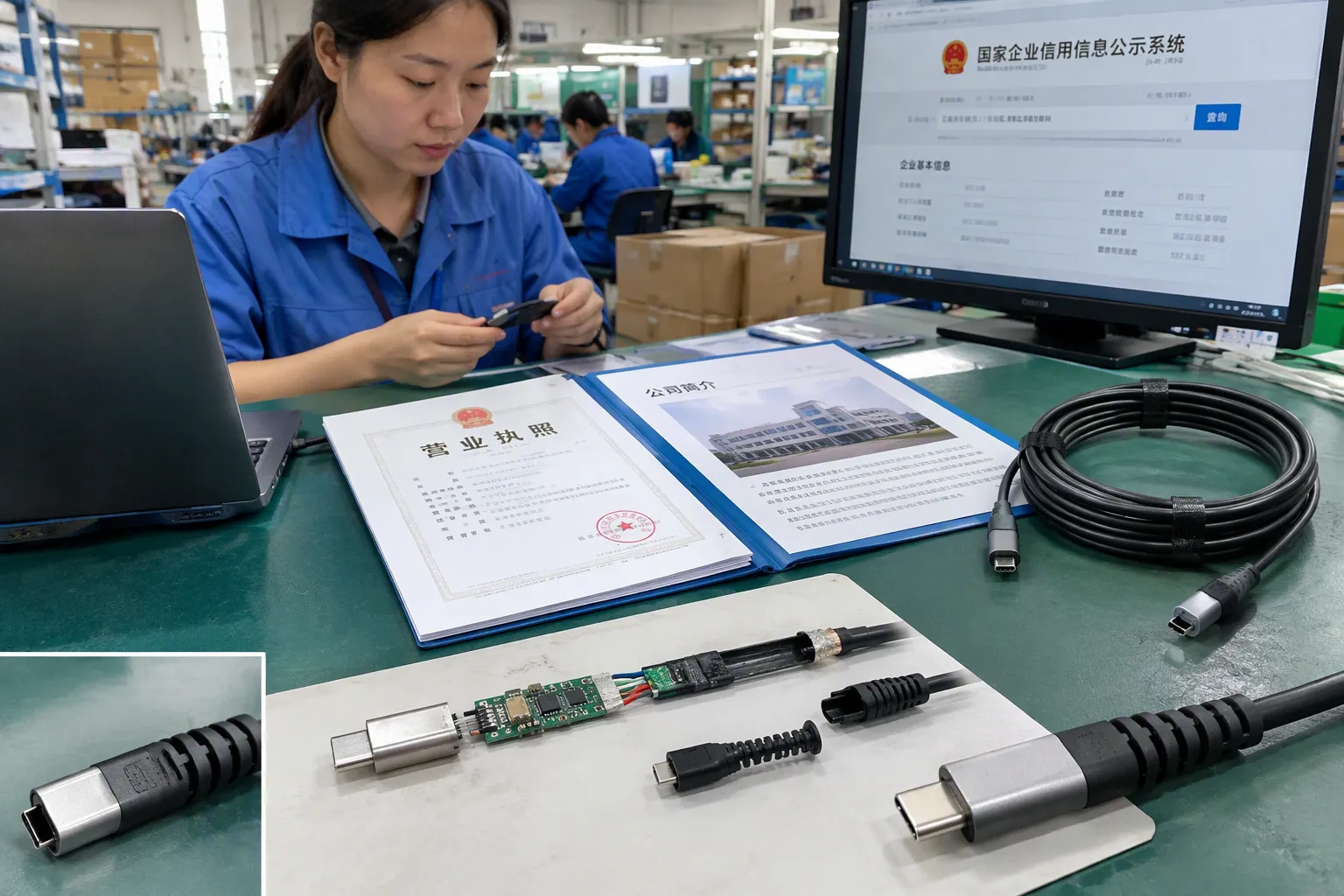
A buyer who writes only “USB-C to USB-C cable, 1 meter” has not yet created a complete sourcing brief. I have seen how quickly a simple inquiry becomes more detailed when the supplier asks about charging performance, data use, device compatibility, branding, and packaging. Those questions are not unnecessary obstacles. They determine whether quotations can be compared fairly.
A sourcing project becomes more reliable when I treat USB-C cable procurement as a specification and verification task rather than a supplier-search task. I define the application first, request comparable offers, review construction and documentation, approve samples based on actual use, and control mass production through written quality requirements.
Why does a basic product description create problems?
A short description often looks efficient, but it leaves important decisions open. When I ask several suppliers to quote the same incomplete description, each supplier may interpret it differently. One may offer a basic charging cable, another may include higher-performance internal components, and a third may quote a different connector or packaging arrangement.
The prices may appear comparable even though the products are not.
I handled an inquiry in which the customer initially provided only the connector type and cable length. The customer wanted a USB-C cable for a consumer product, but the first request did not explain the intended devices, required charging performance, data expectations, or packaging. I had to clarify those points before the supplier responses became useful. I treat that experience as a practical sourcing lesson, not as a universal engineering conclusion.
A clear product brief should answer questions such as:
- Will the cable connect a charger to a phone, tablet, laptop, power bank, monitor, storage device, or another product?
- Will the cable be used mainly for charging, data transfer, or both?
- What charging equipment and device combination will it support?
- Does the buyer need a specific data-transfer capability?
- Does the cable need to support a particular protocol or device feature?
- What length, color, jacket material, connector finish, and strain relief are required?
- Does the customer need retail packaging, bulk packing, or customized private-label packaging?
- What documents, test reports, or declarations does the importer need to review?
I do not assume that USB-C alone proves charging speed, data performance, or compatibility. The connector describes a physical interface, but it does not provide a complete description of the cable’s internal design or intended performance.[1]
What should I include in a USB-C cable specification?
I turn the buyer’s product idea into a written specification that suppliers can quote against and that inspectors can later use during production control. The document does not need to use complicated engineering language. It needs to remove important ambiguity.
I start with the use case because it guides the rest of the specification. A cable for a phone charger may have different requirements from a cable intended for a laptop, monitor, docking setup, or external storage device.
- Source device or charger
- Connected device
- Expected charging use
- Expected data use
- Whether video or display-related use is required
- Whether the product will be sold as a general-purpose accessory or for a named device family
- Any known restrictions from the buyer’s product team or technical adviser
I ask for qualified technical review when the application has important electrical, data, thermal, or device-specific requirements. My role is to translate the requirement into a sourcing document and coordinate verification. I do not present myself as a laboratory, electrical engineer, or USB standards authority.
I record the visible and dimensional requirements separately from the performance requirements. This prevents a supplier from treating appearance as proof of function.
- USB connector configuration at each end
- Cable length and measurement method
- Outer diameter, where relevant
- Jacket material and color
- Connector housing material
- Strain-relief design
- Flexibility or bend expectations
- Logo position and marking method
- Required color consistency
- Packaging dimensions and presentation
The phrase “USB-C cable” can describe several connector combinations.[8] I write the connector configuration explicitly, such as USB-C to USB-C or USB-A to USB-C. I also clarify whether the buyer needs a reversible connector at one or both ends.
I treat performance claims as requirements that need evidence, not as marketing labels. I ask the supplier to state the proposed configuration and supporting documents, while I keep the buyer’s required use case as the acceptance basis.
- Intended charging application
- Required power capability, subject to technical confirmation
- Data-transfer requirement, if applicable
- Whether the cable contains identification or control components relevant to its intended function[2]
- Supported device or charger combinations
- Cable resistance or other technical parameters, if the buyer’s engineer requires them
- Test method and acceptance criteria
I avoid writing a broad claim such as “fast charging cable” without a defined meaning. Different suppliers may use the same phrase for different products. I also avoid assuming that a cable’s advertised power or data rate will work with every charger and device combination.[4]
For a technical product, I ask the buyer or a qualified professional to confirm the required performance before the factory begins production. I can then request samples and arrange suitable testing against that requirement.
A private-label cable needs more than a product specification. I include commercial details because packaging, labeling, and order quantity affect the quotation.
- Target order quantity and possible trial quantity
- Sample quantity
- Logo artwork and printing method
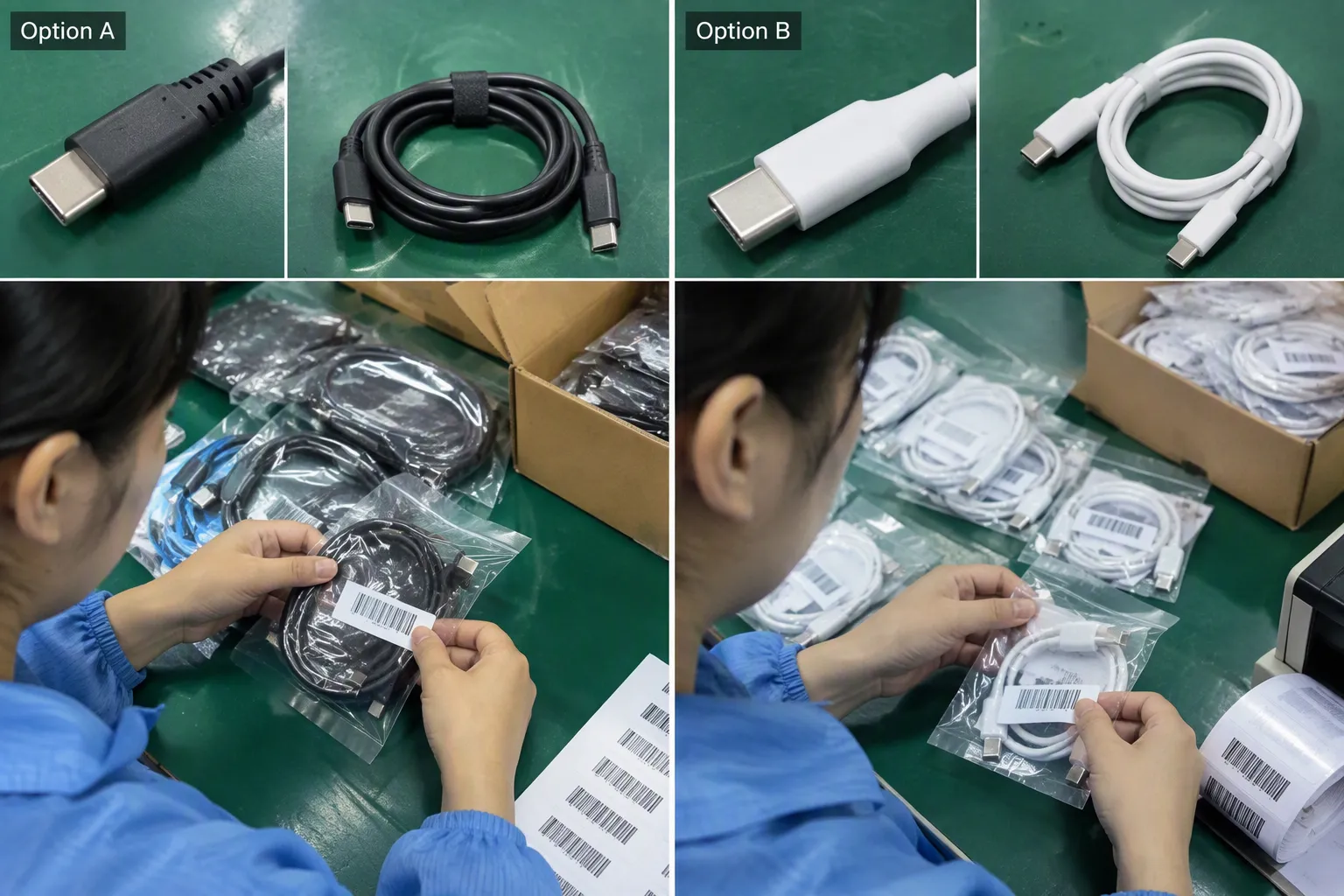
- Retail box, paper card, pouch, or bulk packaging
- Barcode and SKU requirements
- Language requirements for packaging
- Carton quantity and shipping marks
- Required delivery destination
- Inspection requirements
- Replacement or corrective-action expectations for nonconforming goods
I also ask whether the buyer wants standard packaging or a customized presentation. A low factory price can become less attractive after packaging development, printing, inner boxes, cartons, and inspection costs are added.
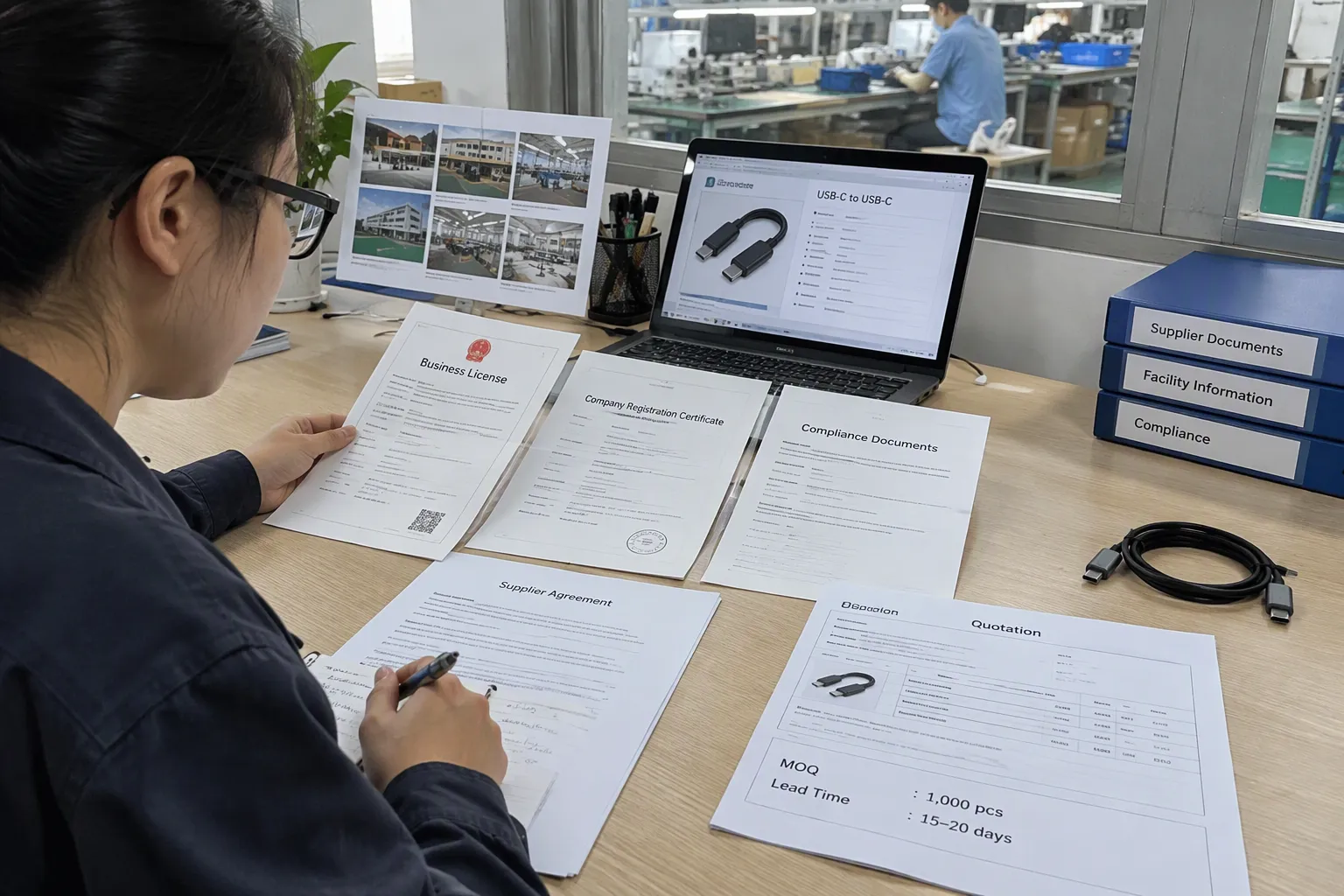
I compare quotations only after I standardize the specification. A quotation table helps me identify whether suppliers are offering the same product or merely using similar words.
| Quotation item | Questions I ask |
|---|---|
| Connector configuration | Are both ends specified clearly? |
| Length | Is the length measured in the same way? |
| Intended use | Is the offer for charging, data, or a defined combination? |
| Performance | Has the supplier stated the proposed capability and test basis? |
| Construction | Are jacket, conductor, shielding, strain relief, and housing details clear? |
| Branding | Does the price include logo setup and printing? |
| Packaging | Is the supplier quoting bulk or customized retail packaging? |
| Quantity | Is the price based on the same order quantity? |
| Tooling | Are molds, fixtures, or development charges included? |
| Testing | Are sample and production tests included or separate? |
| Lead time | Does the quoted time include materials, production, packaging, and inspection? |
| Commercial terms | Are payment, shipping, and destination assumptions the same? |
I often create a comparison sheet with one row for every requirement. I mark each supplier response as confirmed, needs clarification, or not offered. This method is more useful than sorting a spreadsheet from the lowest price to the highest price.
A lower price may reflect a different internal construction, a simpler connector assembly, different packaging, a smaller order quantity, or an assumption that the supplier has not stated. It may also exclude testing, customization, or shipping-related costs.
- Product unit price
- Customization and logo cost
- Packaging cost
- Tooling or development cost
- Sample cost
- Testing cost
- Inspection cost, if applicable
- Export packing and carton details
- Minimum order quantity
- Lead time and quotation validity
I do not treat a supplier’s willingness to say “yes” as proof that the supplier can manufacture the requested product. I ask for technical clarification, sample evidence, relevant production information, and documents that the buyer can review.
How do I evaluate a USB-C cable supplier in China?
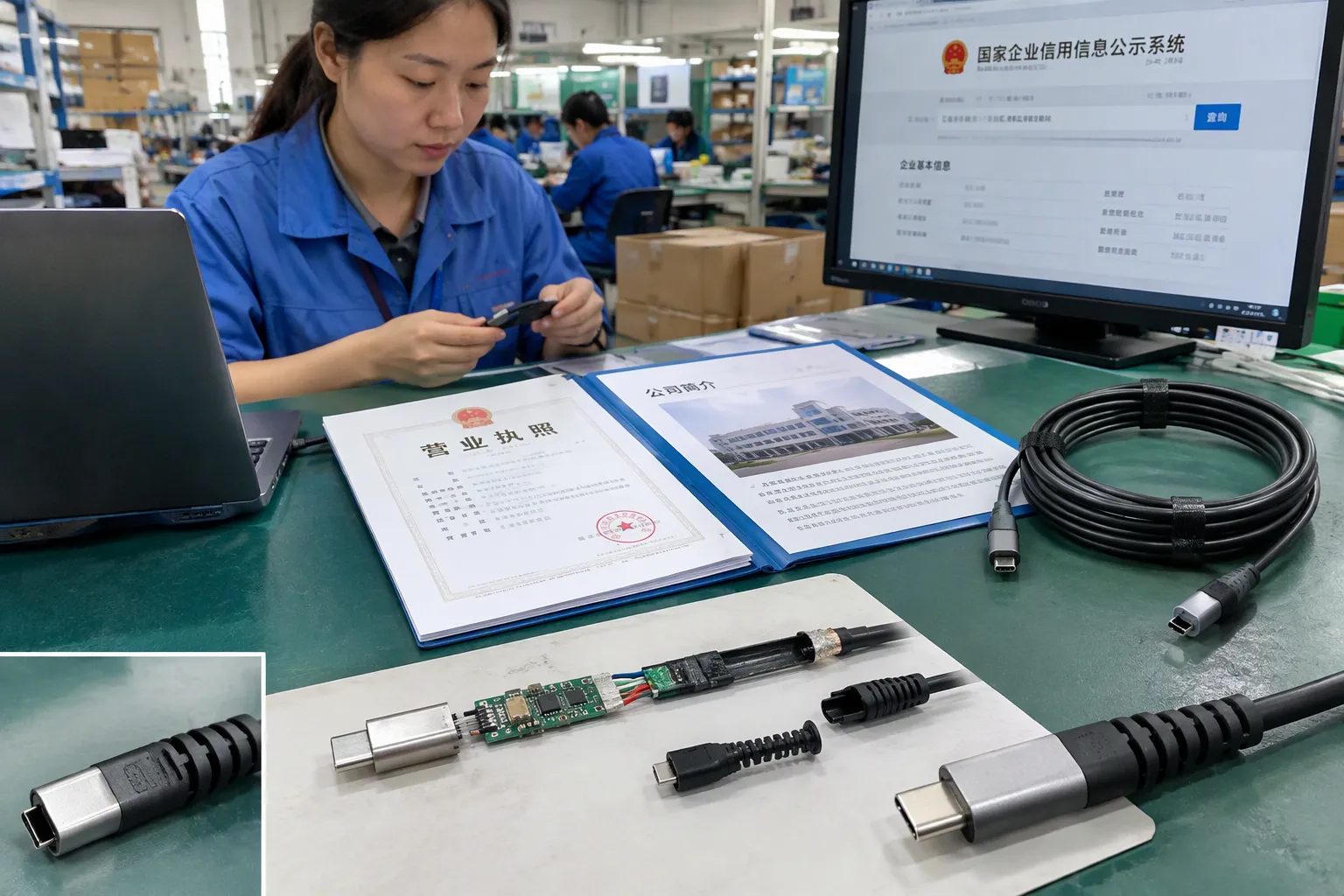
I evaluate the supplier at two levels: commercial capability and manufacturing capability. A trading company may provide useful sourcing support, while a factory may provide direct production control. Neither label alone proves that the supplier is the right choice.
- Whether the supplier understands the written specification
- Whether the supplier answers technical questions consistently
- Whether the quotation changes after clarification
- Whether the supplier can produce the requested connector and packaging configuration
- Whether the supplier has an organized sample and approval process
- Whether the supplier can explain its quality-control checkpoints
- Whether the supplier provides clear company and banking information
- Whether the proposed factory location and production capability are verifiable
- Whether the supplier accepts reasonable inspection and corrective-action terms
- Whether the supplier can support the buyer’s expected order volume
I also compare the supplier’s communication behavior. A supplier who asks useful questions may be safer than one who gives an immediate low price without discussing the application.
Before I recommend a supplier, I try to verify the following:
- Business identity and operating information
- Actual manufacturing or trading role
- Product categories and relevant experience
- Production location
- Main production processes
- Quality-control personnel or procedures
- Sample development capability
- Packaging and customization capability
- Export experience relevant to the buyer’s market
- Available product documents and test reports
I treat certifications and test reports as documents to review, not automatic proof that every shipment meets the buyer’s requirements.[5] I check the document scope, product model, issuing organization, dates, and whether the document applies to the proposed configuration. The buyer may also need independent professional review depending on the destination market and intended application.
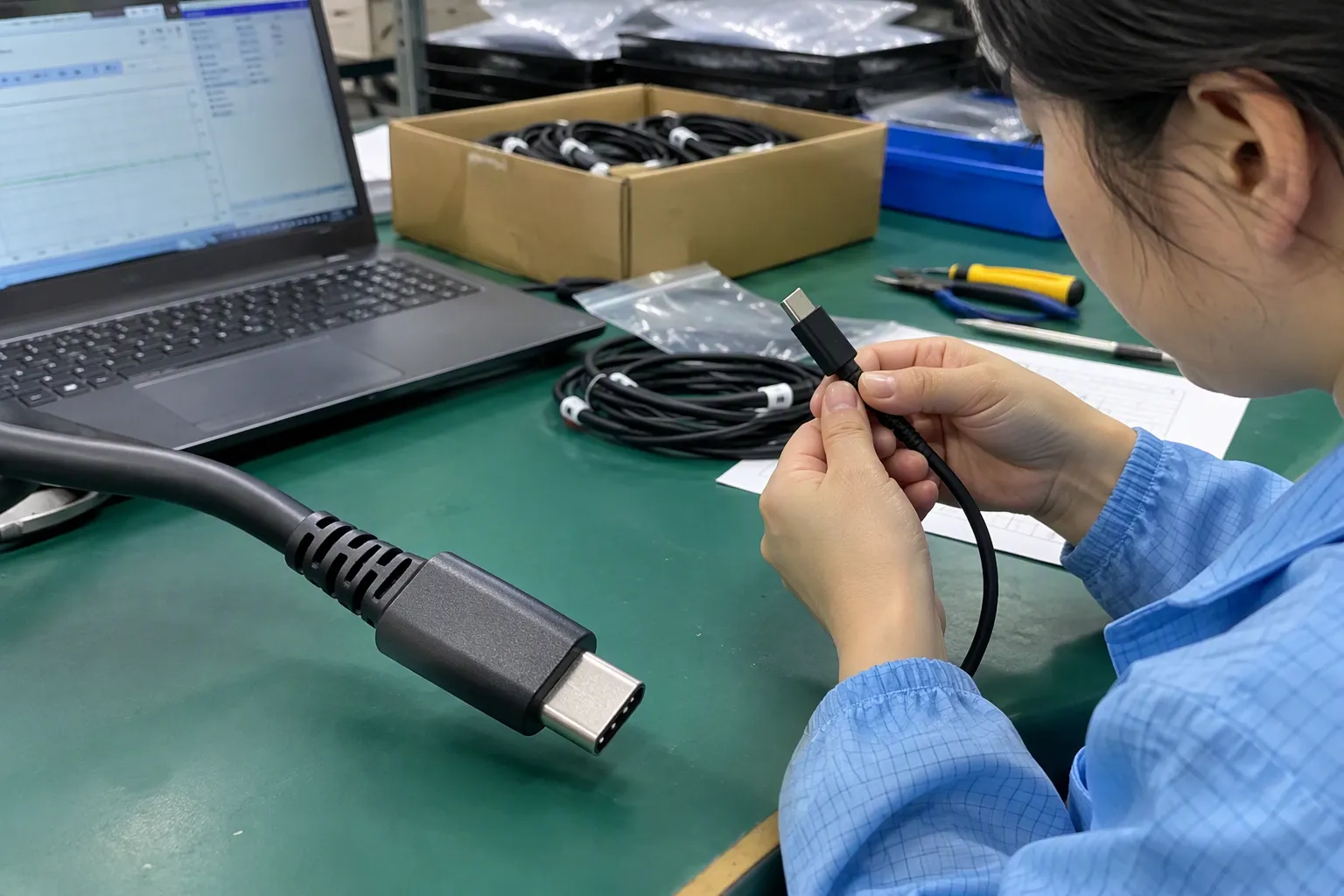
I do not approve a USB-C cable sample only because the connector looks correct. I check whether the sample matches the specification and whether it performs the intended use case.
- Connector alignment
- Housing finish
- Molding quality
- Strain relief
- Cable surface
- Logo placement
- Color and printing
- Visible damage or contamination
- Packaging accuracy
- Label and barcode details
These checks matter because poor workmanship can affect customer perception and product durability. However, appearance cannot confirm internal electrical or data performance.
I compare the sample with the approved drawing or written brief. I check cable length, connector style, jacket appearance, packaging size, and any agreed visible features. If the construction specification includes internal materials or components, I request supplier evidence or arrange an appropriate inspection method rather than relying only on visual inspection.
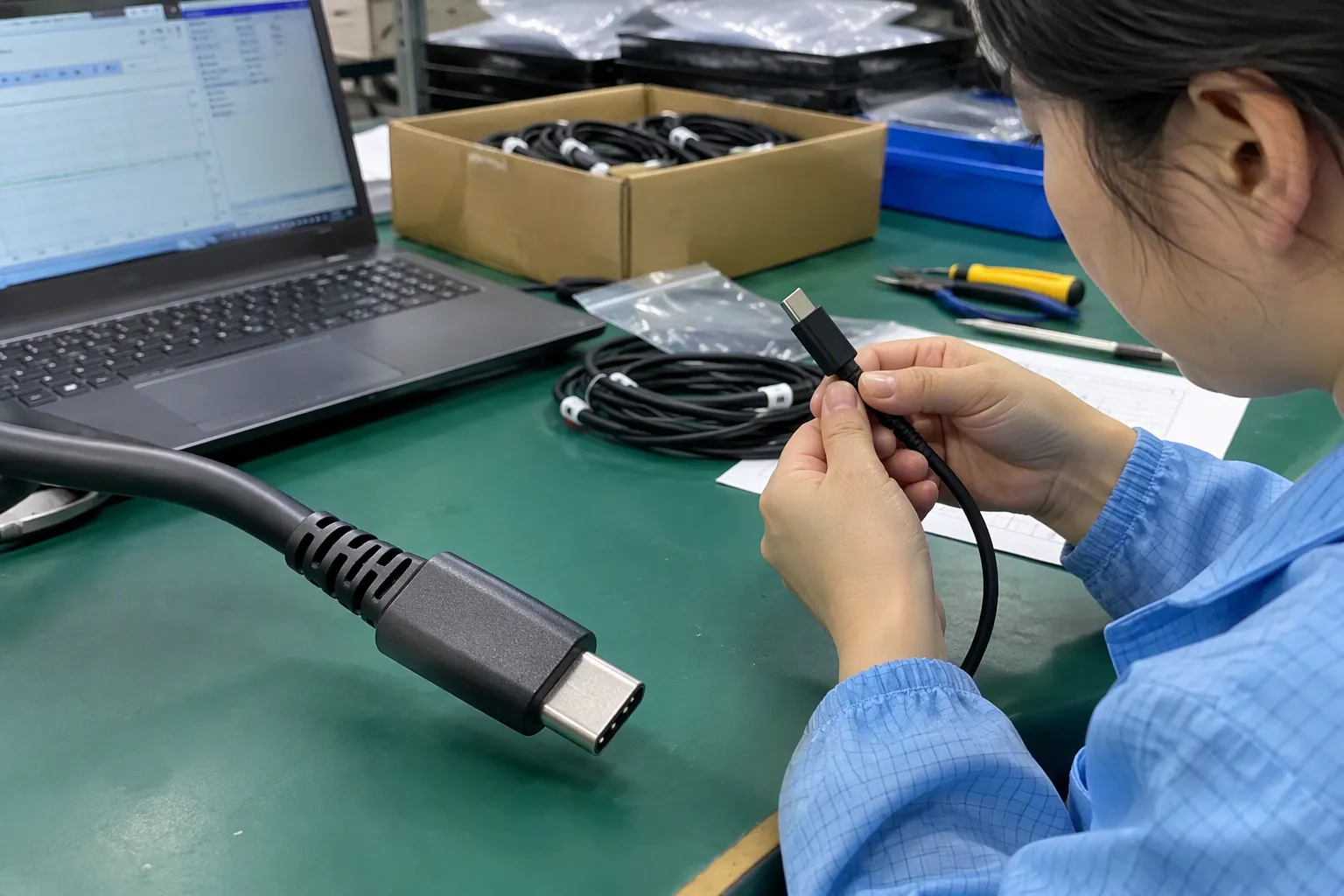
I test the sample using the buyer’s actual or representative device combination whenever possible. I record the charger, device, accessories, operating conditions, and test result. I do not describe a sample as universally compatible based on a limited test.
For a charging product, a qualified tester should confirm the relevant electrical requirements. For a data cable, the test should use the intended devices and a defined test method. If the product must support a specialized use, I ask the buyer’s technical team or an independent testing provider to define acceptance criteria.
- Sample appearance approval
- Basic functional check
- Technical performance testing
- Compliance or regulatory testing
These are different activities. One cannot automatically replace the others.
I compare the approved packaging sample with the production artwork. I check product name, specifications, logo, language, barcode, warnings, quantity, and carton marks. I also confirm whether the factory will use the same packaging materials and printing process during mass production.
I keep a signed or digitally confirmed approval record. That record becomes useful if the production sample later differs from the approved version.
Which quality-control steps help before shipment?
I use a quality-control plan that matches the buyer’s risk and order size. A small trial order may need a practical pre-shipment check, while a larger private-label program may justify a more detailed inspection and testing plan.
-
Pre-production confirmation
I confirm the final specification, approved sample, artwork, quantity, materials, and production schedule. -
During-production follow-up
I check whether production has started, whether the supplier has encountered material or tooling changes, and whether the order remains on schedule. -
Inline inspection
I inspect early or mid-production output when finding a problem before completion could reduce rework or delay. -
Final inspection
I check finished products, packaging, labeling, carton condition, quantity, and agreed workmanship criteria. -
Functional or technical sampling
I arrange suitable tests when the buyer’s requirements involve charging, data transfer, device use, or other performance claims. -
Corrective action
I document defects, agree on responsibility and timing, and verify the correction before shipment where appropriate.
I may use an AQL-based inspection plan when it suits the order, but an AQL result does not prove technical performance by itself.[6] The inspection level, defect definitions, sample size, and acceptance criteria should be agreed before production. For application-specific decisions, I recommend qualified professional evaluation.
How can I manage private-label USB-C cable production?
Private-label production adds coordination work because the product and its presentation must remain consistent. I create a single approval package that includes the product specification, approved sample, artwork, packaging details, carton marks, and inspection criteria.
- Final logo artwork
- Product color and finish
- Cable and connector appearance
- Packaging structure
- Printed text and language
- Barcode and SKU information
- Inner packing and carton quantity
- Shipping marks
- Any product insert or instruction sheet
I also clarify who owns the artwork, molds, tooling, and custom packaging materials. I do not assume that a factory will retain or reuse these items under the same terms for a future order. I put the commercial agreement in writing.
For e-commerce sellers, packaging can affect fulfillment and customer experience. I ask whether the product needs to fit a marketplace warehouse requirement, a retail shelf, a postal package, or a bundled product. I also account for carton dimensions and weight because they affect consolidation and international shipping.
KingSourcing can coordinate packaging development, factory communication, inspection, warehousing, and shipment consolidation. That support does not remove all sourcing risk, but it gives the buyer a local process for checking information and following up on issues.
How should I plan MOQ, samples, and repeat orders?
I separate the trial decision from the long-term purchasing decision. A buyer may need a small test order to evaluate customer demand, packaging, return rates, and real-world use. The factory may quote different pricing or MOQ for that first order.
- Will the supplier use the same materials as the larger production version?
- Will the factory produce the same packaging?
- Does the low quantity require a different production process?
- Will the supplier charge setup or printing fees?
- Can the supplier repeat the same specification later?
- What happens if the buyer changes the packaging or logo?
- Is the quoted price based on a one-time exception?
I retain the approved sample and written specification for repeat orders. I also ask the supplier to notify me before changing materials, components, molds, packaging, or production location. A repeat purchase should not rely only on the product name or a previous invoice.
For buyers working with several Chinese suppliers, I can arrange consolidation at a China warehouse. I still keep product identification separate by supplier and SKU so that quantity, packaging, and inspection records remain traceable.
I see several recurring mistakes in USB-C cable sourcing.
Mistake 1: Treating the connector as the full specification
The connector shape does not tell me the complete charging, data, construction, or compatibility profile. I define the intended use and performance requirement separately.
Mistake 2: Comparing prices before standardizing requirements
I do not compare a basic cable with a higher-performance cable simply because both are described as USB-C. I normalize length, construction, performance, packaging, quantity, and commercial terms first.
Mistake 3: Approving a sample by appearance alone
A clean connector and attractive package do not prove that the cable meets the intended use. I include functional checks and technical testing where appropriate.
Terms such as “fast,” “high speed,” and “universal” can create different interpretations. I replace them with defined requirements that the supplier and buyer can understand.
Cable performance depends on the complete setup.[3] I record the relevant charger, source, connected device, accessories, and intended operating conditions rather than evaluating the cable in isolation.
Mistake 6: Assuming documents guarantee every shipment
I review certificates and reports carefully, but I still use sample approval and production inspection. Documents may have limited scope, and production can vary if controls are weak.
Mistake 7: Leaving packaging until the final week
Custom packaging can require artwork approval, printing, assembly, and additional lead time. I confirm it early so that packaging does not delay production or shipment.
I use the following sequence when helping an importer, e-commerce seller, or consumer brand source USB-C cables from China:
-
Define the use case.
I identify the devices, charging purpose, data purpose, length, construction, and packaging needs. -
Write the product specification.
I separate physical appearance from technical performance and commercial requirements. -
Shortlist suitable suppliers.
I review supplier capability, communication, product range, and verification information. -
Request itemized quotations.
I ask each supplier to quote against the same specification and identify assumptions. -
Compare equivalent offers.
I review price, MOQ, lead time, packaging, documents, sample terms, and production support together. -
Order and review samples.
I check appearance, dimensions, packaging, and intended function. I arrange qualified technical testing when necessary. -
Approve the final production package.
I confirm the sample, artwork, inspection standard, quantity, and shipping details in writing. -
Follow production.
I monitor materials, schedule, output, and any proposed changes. -
Inspect before shipment.
I verify workmanship, quantity, packaging, labeling, and agreed functional or technical checks. -
Consolidate and ship.
I coordinate warehousing and international shipping when the buyer orders from multiple factories or needs a combined shipment.
This workflow does not guarantee zero risk. It creates more opportunities to identify and correct problems before the goods reach the buyer’s warehouse or customers.
Is USB-C to USB-C enough information for a supplier quotation?
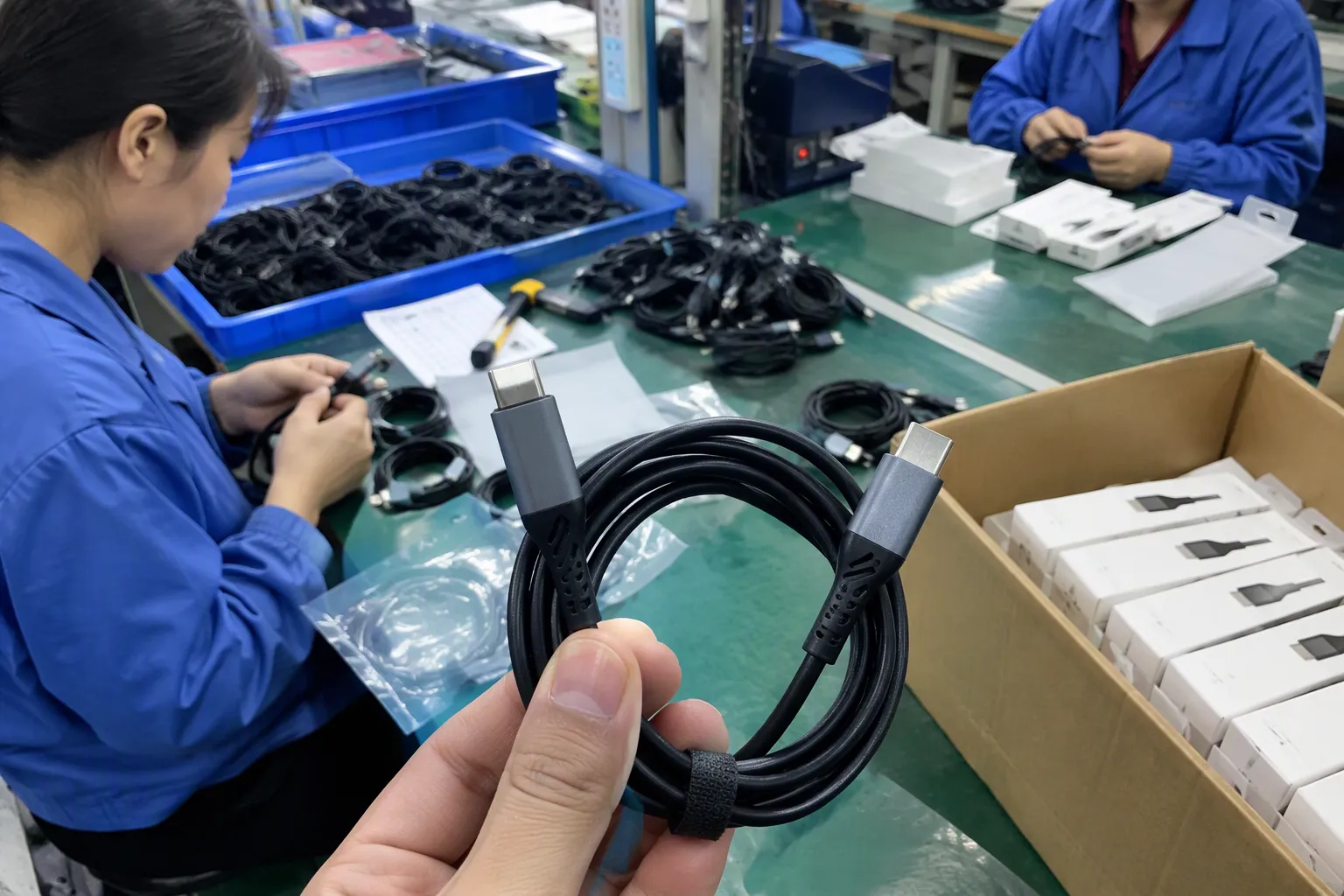
No. I also need the intended devices, charging requirements, data-transfer expectations, length, construction, branding, packaging, order quantity, and destination market. Without those details, suppliers may quote different internal configurations under the same general product description.
How do I know whether a USB-C cable supports the advertised performance?
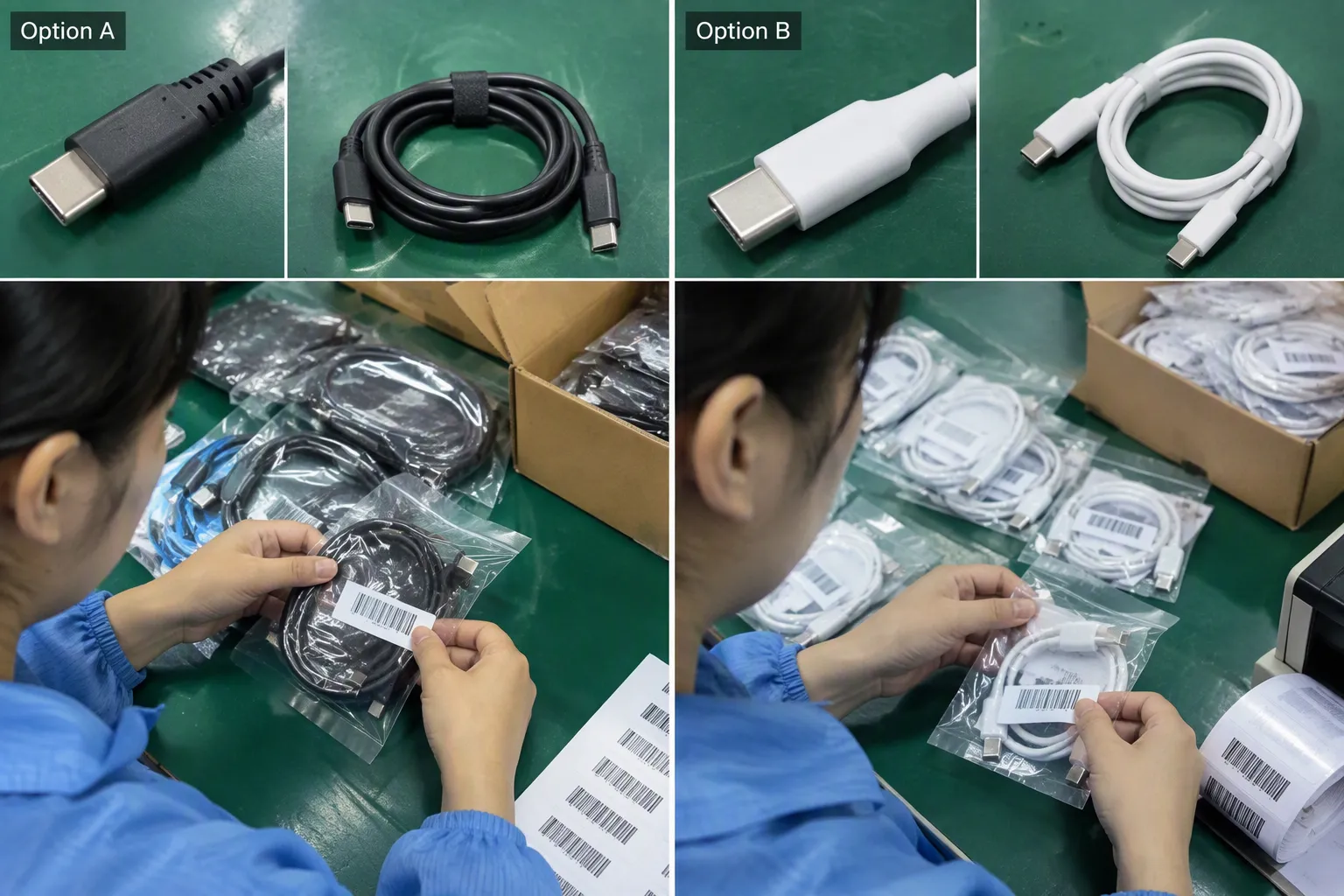
I ask the supplier to state the proposed configuration and provide relevant technical evidence, then I test samples against a defined use case and test method. I do not rely on connector appearance, packaging, or a broad marketing claim. A qualified technical provider should evaluate application-specific requirements.
Should I choose a factory or a trading company?
I choose based on the buyer’s needs and the supplier’s verified capability. A factory may provide direct manufacturing control, while a capable trading company may coordinate several production resources. I verify the actual supplier role, specification understanding, quality process, and willingness to support inspection.
Can I source private-label USB-C cables with a small order quantity?
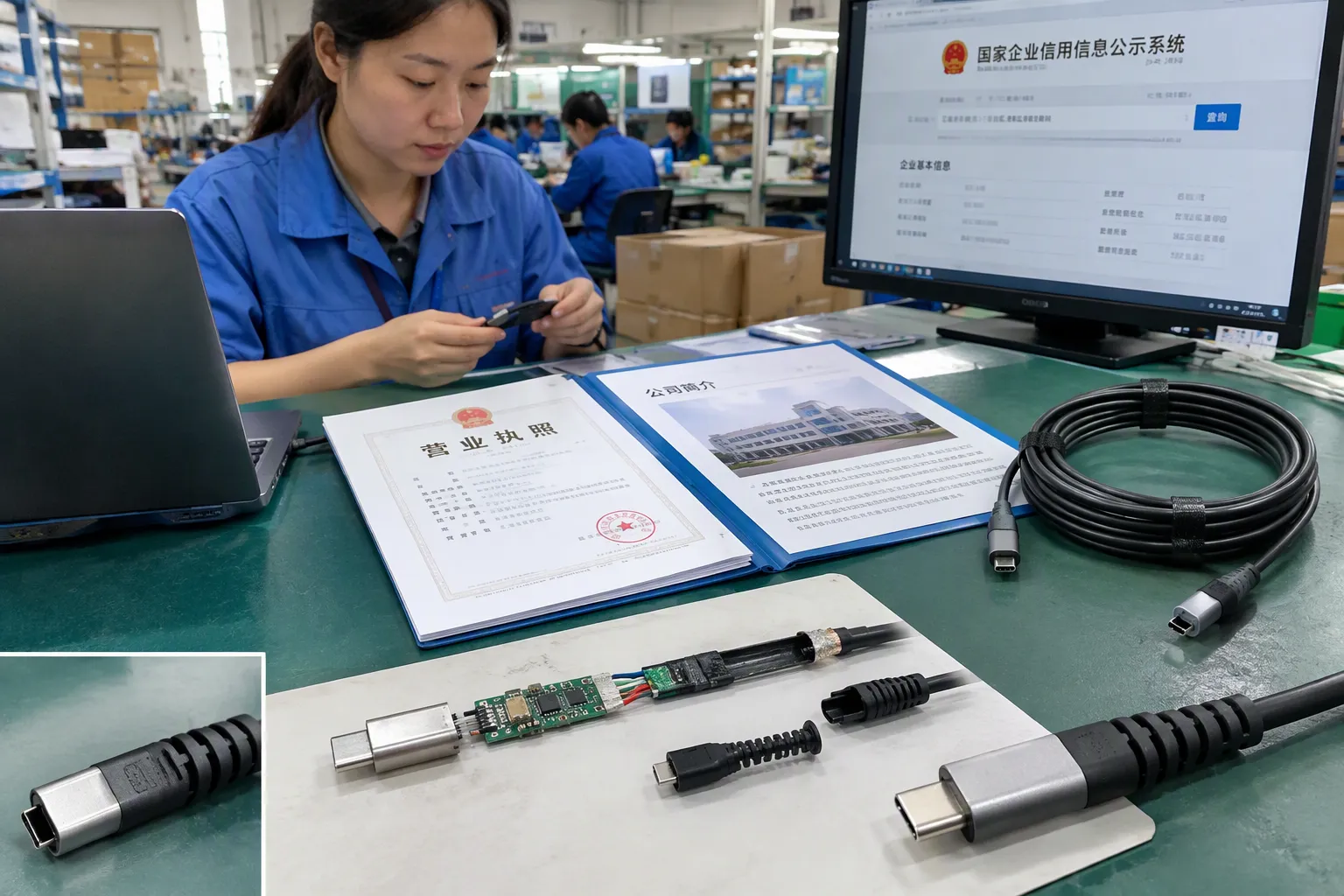
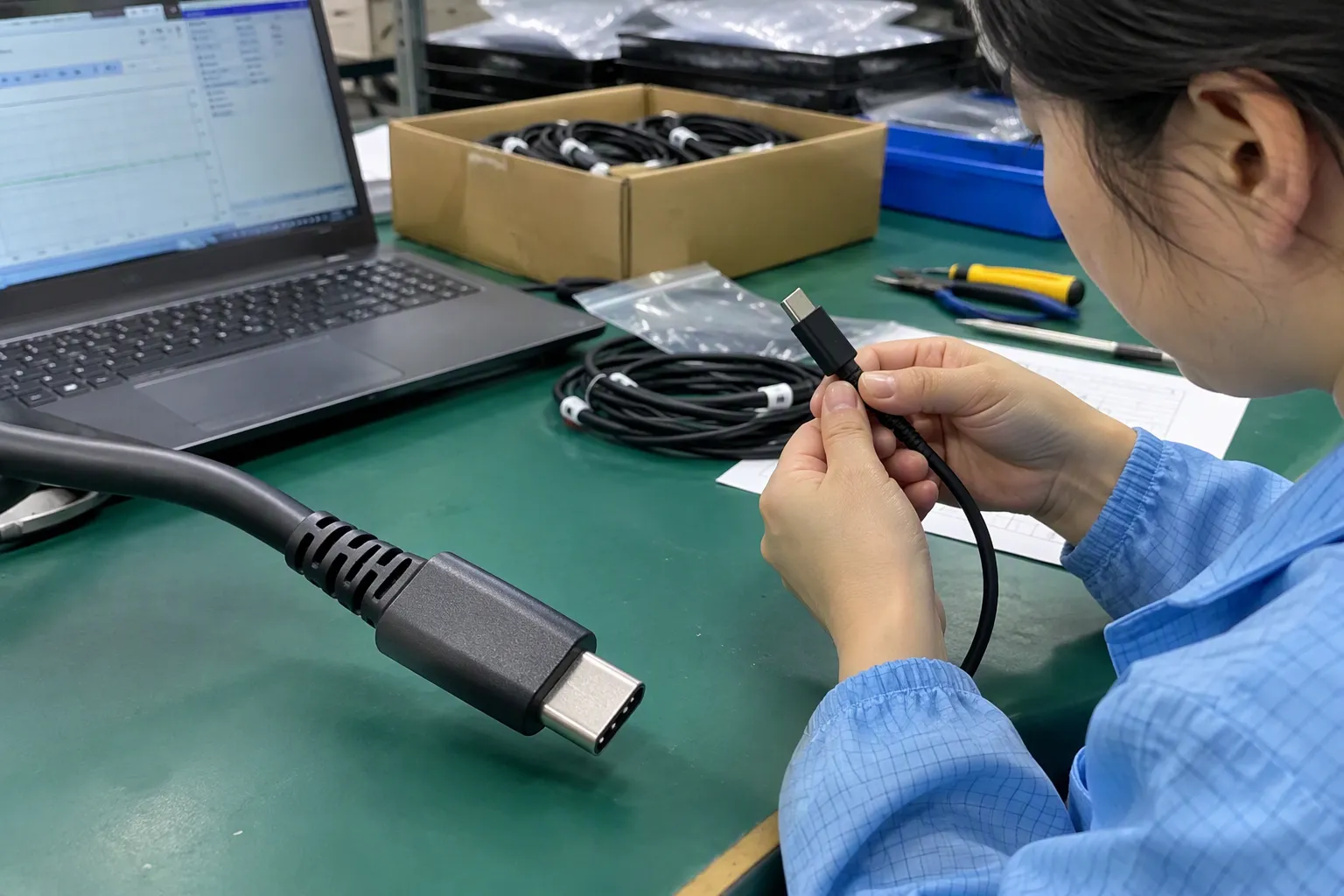
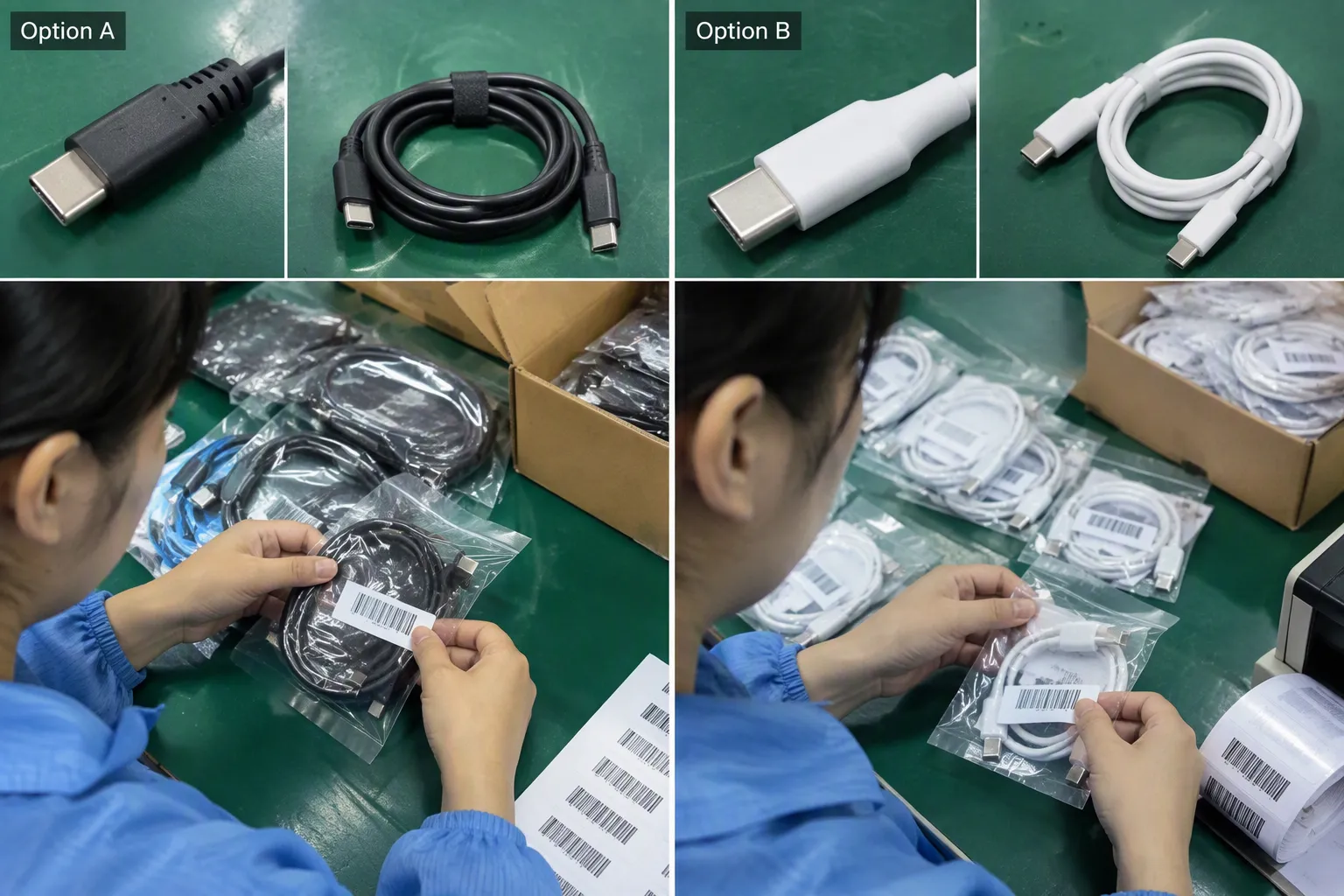
Many suppliers may offer trial quantities, but the available customization, packaging, and pricing can differ from a larger production order. I confirm whether the trial uses the same materials and process, and I document the approved sample so that future orders can be compared accurately.
What should I inspect before shipping USB-C cables from China?
I inspect quantity, connector configuration, length, workmanship, logo, packaging, labeling, carton condition, and any agreed functional or technical requirements. I also compare production goods with the approved sample and written specification. Visual inspection alone cannot confirm every electrical or data-performance claim.[7]
I source USB-C cables from China by defining the product before comparing suppliers. The connector type and length provide only a starting point. I clarify the intended devices, power and data requirements, construction, packaging, documentation, and commercial terms. I then compare equivalent quotations, verify the supplier, approve samples based on actual use, and inspect production before shipment. If you need help turning a cable idea into a clear sourcing brief, KingSourcing can support supplier comparison, sample coordination, factory communication, quality inspection, consolidation, and shipping from China.
Sources
- USB Charger (USB Power Delivery)", The USB Type-C specification defines a connector and cable interface, while power delivery, data-transfer modes, and alternate functions are governed by additional requirements and configurations
- Identifying USB-C E-Mark Cables", USB Type-C technical materials describe electronically marked cables as containing identification circuitry that can communicate cable characteristics relevant to power and operating modes
- USB Type-C Cable and Connector Specification - Academia.edu", Interoperability studies of USB-C and USB Power Delivery treat the cable, source, sink, and protocol configuration as interacting elements, indicating that measured behavior is system-dependent rather than a property of the cable alone
- USB proliferation of capabilities and compatibilities", USB-C interoperability guidance indicates that achievable power and data performance depends on the capabilities and negotiated modes of the connected equipment, rather than on a cable label alone
- Mutual Recognition Agreement", Conformity-assessment guidance distinguishes evidence produced for a defined product, model, sample, or requirement from continuous verification of all subsequent production, so document scope must be examined before treating it as shipment-wide evidence
- 6.2.2.2. Choosing a Sampling Plan with a given OC Curve", Acceptance-sampling standards such as ISO 2859 address lot decisions based on sampled nonconformities; they do not, without separately specified tests, establish all electrical, signaling, or interoperability characteristics of a cable
- USB3 Cables and Connectors Compliance Document", USB cable compliance procedures use defined electrical and functional measurements in addition to visual checks, demonstrating that external appearance does not by itself establish signaling quality, current capacity, or data-transfer performance
- Universal Serial Bus Type-C Cable and Connector ...", Technical references distinguish USB Type-C from other USB connector types and describe cable assemblies such as USB-C-to-USB-C and USB-A-to-USB-C, so the term alone does not specify both cable ends