I often see buyers lose money on small China orders because they chase the lowest MOQ before they check product fit, supplier type, and landed cost.
A China sourcing agent for low MOQ orders helps you test products with smaller quantities, but I do not treat low MOQ as a shortcut. I check if the product, budget, customization, supplier, inspection, packaging, and shipping plan make commercial sense before you scale.

When I handle low MOQ sourcing, I do not start by asking factories to break every rule. I first ask what the buyer wants to test, what quantity is realistic, what quality level is needed, and what market the product will enter. This keeps the project practical. A small order can be a smart first step, but it can also become expensive if the buyer only compares unit prices. I want the first order to answer a clear business question: can this product sell, arrive in good condition, and leave enough margin after all costs?
1. What Does Low MOQ Mean When Sourcing from China?
I see many buyers misunderstand low MOQ because they think it means any factory can make any product in any small quantity.
Low MOQ means a supplier accepts a smaller first order than its normal production quantity.[^1] I usually treat it as a test-order strategy, not a guaranteed cheap buying method. The exact MOQ depends on product type, stock status, materials, packaging, and customization needs.[^2]

How I judge whether a low MOQ request is realistic
I do not use one fixed number for low MOQ. For one product, 50 pieces may be low. For another product, 1,000 pieces may still be low. I look at the supply situation first. If the product is a stock item, the supplier may accept a small quantity. If the product needs new materials, new packaging, color matching, printing, or mold work, the order needs more preparation.
I also check if the buyer wants a standard product or a private label product. Standard products are easier for small tests. Light branding can work if the buyer accepts added cost and longer confirmation. Deep product changes are harder because the supplier needs more time and risk.
| Product situation | Low MOQ feasibility | My usual advice |
|---|---|---|
| Ready stock product | High | Test with small quantity first |
| Standard product with logo | Medium | Confirm logo cost and lead time |
| Custom packaging only | Medium | Check packaging MOQ separately |
| Structural product change | Low | Use samples or prototype stage first |
| Mold or regulated product | Very low | Avoid very small launch quantities |
2. Why Do Many Chinese Suppliers Have Minimum Order Quantity Requirements?
I hear buyers ask why a factory will not accept 20 pieces, but I also see why suppliers protect their production cost.
Chinese suppliers set MOQ because small orders still require material purchase, machine setup, labor planning, sampling, packing, inspection, communication, and export work.[^3] I do not see MOQ as a random barrier. I see it as a cost-control rule.
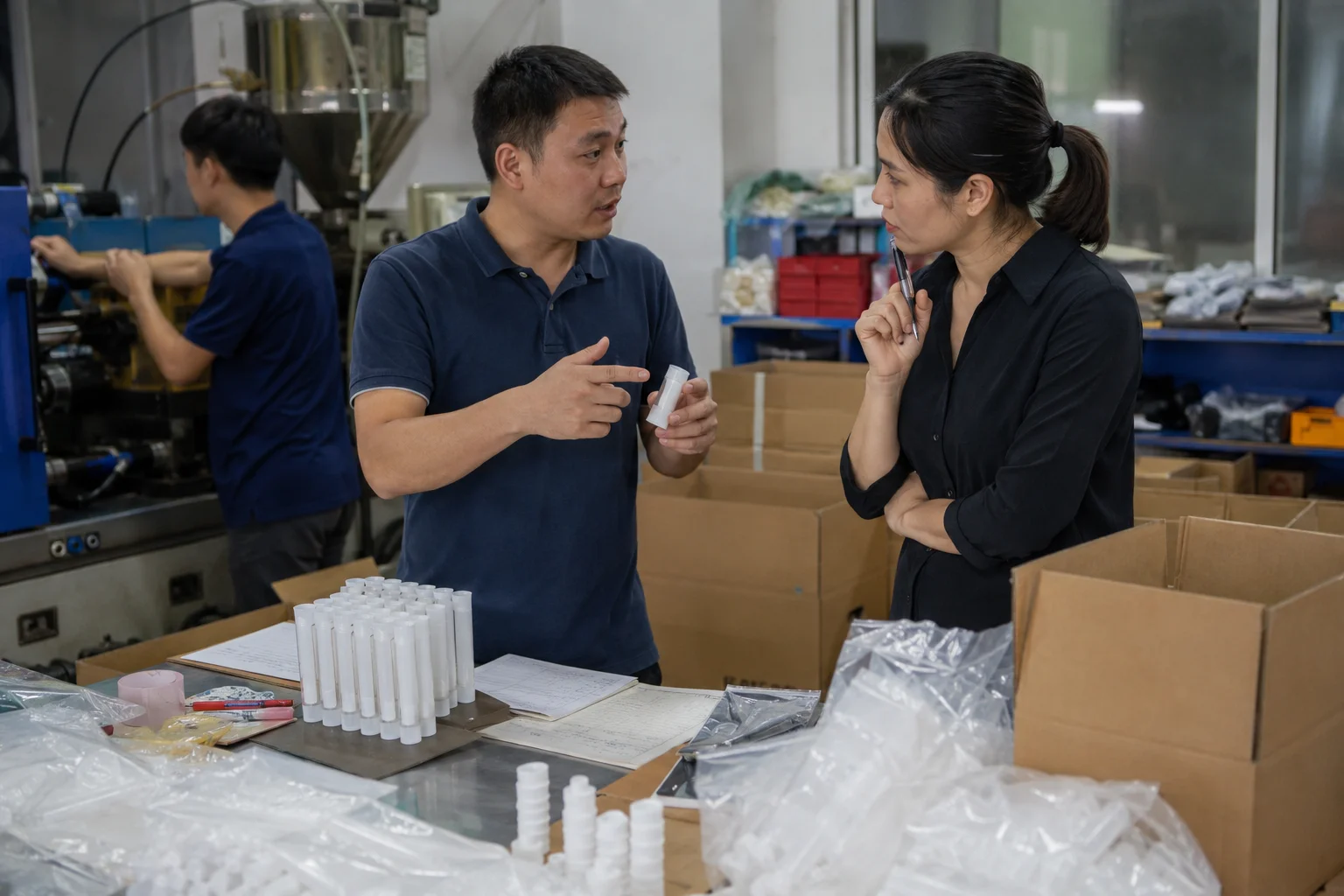
Why supplier resistance is often reasonable
I do not blame suppliers when they reject very small orders. A factory may need to buy raw materials from another upstream supplier. That upstream supplier also has its own MOQ. The factory may need to stop another production line, prepare tools, assign workers, print labels, check cartons, and arrange domestic delivery. These tasks cost time even when the order is small.
I also see many buyers compare a low MOQ quote with a high-volume quote. That comparison is not fair. A small order usually has a higher unit price because setup cost is spread over fewer units.[^4] If the buyer needs custom packaging, the packaging factory may have its own MOQ too.[^5] This is why I always explain the full cost structure before the buyer decides.
| Supplier cost item | Why it matters for low MOQ | Buyer impact |
|---|---|---|
| Material purchase | Supplier may not buy tiny material lots | Higher unit price |
| Machine setup | Setup time is the same for small runs | Extra setup fee |
| Packaging | Printing suppliers also require MOQ | Higher packaging cost |
| Labor time | Communication and checking still take time | Slower response or service fee |
| Export handling | Documents and transport still need work | Higher landed cost per unit |
3. When Do Low MOQ Orders Make Sense for Importers and Small Businesses?
I think low MOQ works best when the buyer wants to test demand before committing to a bigger order.
Low MOQ orders make sense for market testing, product validation, photography, influencer seeding, small online launches, and early private label trials.[^6] I usually recommend them when the product is standard, the budget is clear, and the buyer accepts higher unit cost for lower risk.

How I decide if a low MOQ test is worth doing
I ask buyers what they need the first order to prove. If they need to test customer demand, a small order can be useful. If they need to build a full brand launch with custom structure, special materials, and strict certifications, a tiny order may not support that goal. The test size must match the business purpose.
I also ask about the selling channel. Amazon sellers may need barcode rules, carton labels, FBA prep, and consistent quality.[^7] DTC brands may need better packaging and lifestyle photos. Dropshippers may need fast-moving stock and flexible replenishment. Each model changes the sourcing plan.
| Buyer goal | Low MOQ fit | What I check first |
|---|---|---|
| Test a new product idea | Strong | Stock availability and margin |
| Create product photos | Strong | Sample quality and packaging |
| Launch a small DTC batch | Medium | Branding cost and lead time |
| Test Amazon listing | Medium | Labeling, inspection, and FBA prep |
| Build a fully custom product | Weak | Tooling, sample stage, and budget |
4. What Can a China Sourcing Agent Do for Low MOQ Buyers?
I do not tell buyers that I can force every factory to accept a low MOQ, because that is not how sourcing works.
A China sourcing agent helps low MOQ buyers check feasibility, match the right supplier type, compare quotes, manage samples, follow production, inspect goods, consolidate orders, and coordinate shipping. I reduce execution risk, but I do not remove every risk.
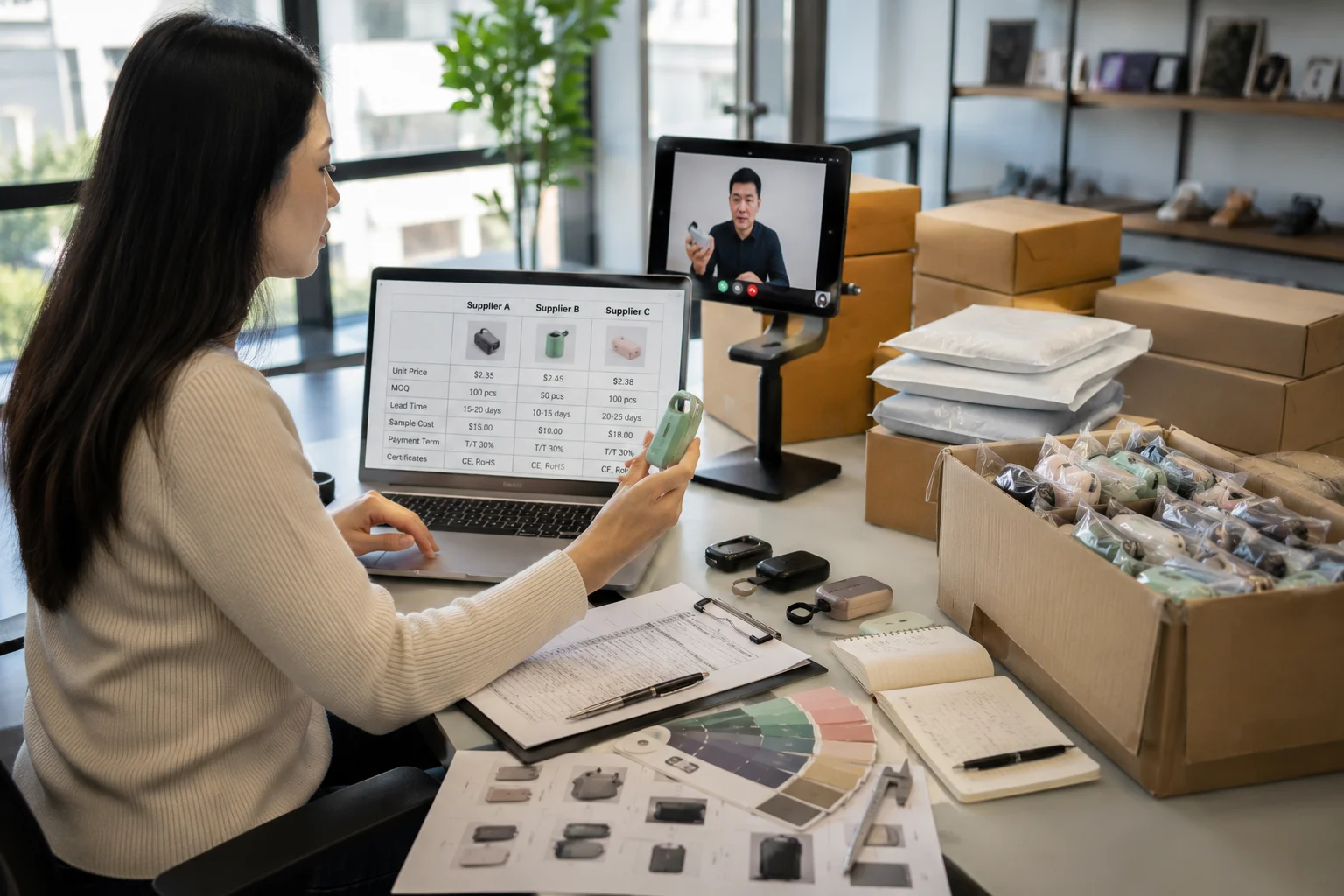
Where I add value beyond supplier search
I see many low MOQ buyers focus only on finding a supplier. That is only one part of the job. The harder part is choosing the right supplier for the order size. A large factory may offer stable quality, but it may reject small orders or quote high. A trading company may accept small quantities, but the buyer needs better quality control. A stock wholesaler may ship fast, but customization may be limited.
I also help buyers avoid hidden problems. I check if the quote includes packaging, inner cartons, export cartons, domestic delivery, inspection, and document needs. I help confirm samples before the buyer pays for production. I also coordinate consolidation when the buyer sources several products from different suppliers.
| Agent task | Why I do it | Result for buyer |
|---|---|---|
| Feasibility check | I test if the request is realistic | Fewer dead-end suppliers |
| Supplier matching | I choose supplier type by order size | Better execution fit |
| Quote comparison | I compare full cost, not only unit price | Clearer margin view |
| Sample follow-up | I confirm quality before mass order | Lower product risk |
| Inspection and shipping | I control final steps in China | Fewer delivery surprises |
5. How Do Low-MOQ Negotiation, Quote Comparison, and Supplier Selection Work?
I treat low MOQ negotiation as a trade-off process, not a simple request for a lower number.
Low-MOQ negotiation works by adjusting quantity, product version, packaging, customization, payment terms, and supplier type. I compare quotes by total cost, quality risk, lead time, and supplier reliability. I do not choose based on the lowest unit price alone.

How I compare suppliers for a small first order
I usually start with a reference link, photo, target quantity, target price, and customization request. Then I ask suppliers clear questions. I check if they have stock, what changes they can support, how long samples take, what packaging options exist, and what happens if defects appear. I also ask for product photos, videos, previous packaging examples, and basic company information.
I compare more than the price. A cheap quote can become expensive if the supplier gives poor packaging, slow replies, unclear specs, or weak after-sales support. A slightly higher quote can be better if the supplier has ready stock, stable quality, and clear communication.
| Comparison point | Question I ask | Why it matters |
|---|---|---|
| MOQ | Can the supplier accept the test quantity? | Confirms basic fit |
| Unit price | What is included in the price? | Prevents missing costs |
| Sample | Can the sample match production goods? | Controls quality expectation |
| Packaging | Is standard or custom packaging available? | Affects brand image |
| Lead time | When can goods be ready? | Protects launch timing |
| Defect handling | What is the solution for quality issues? | Reduces after-sales pressure |
6. What Costs Should You Expect with Small Quantity Orders?
I always tell buyers that low MOQ does not always mean low total cost.
Small quantity orders often include higher unit prices, sample fees, logo fees, packaging costs, inspection fees, domestic transport, international shipping, duties, and service costs. I focus on landed cost because that shows the real cost of selling the product.[^8]
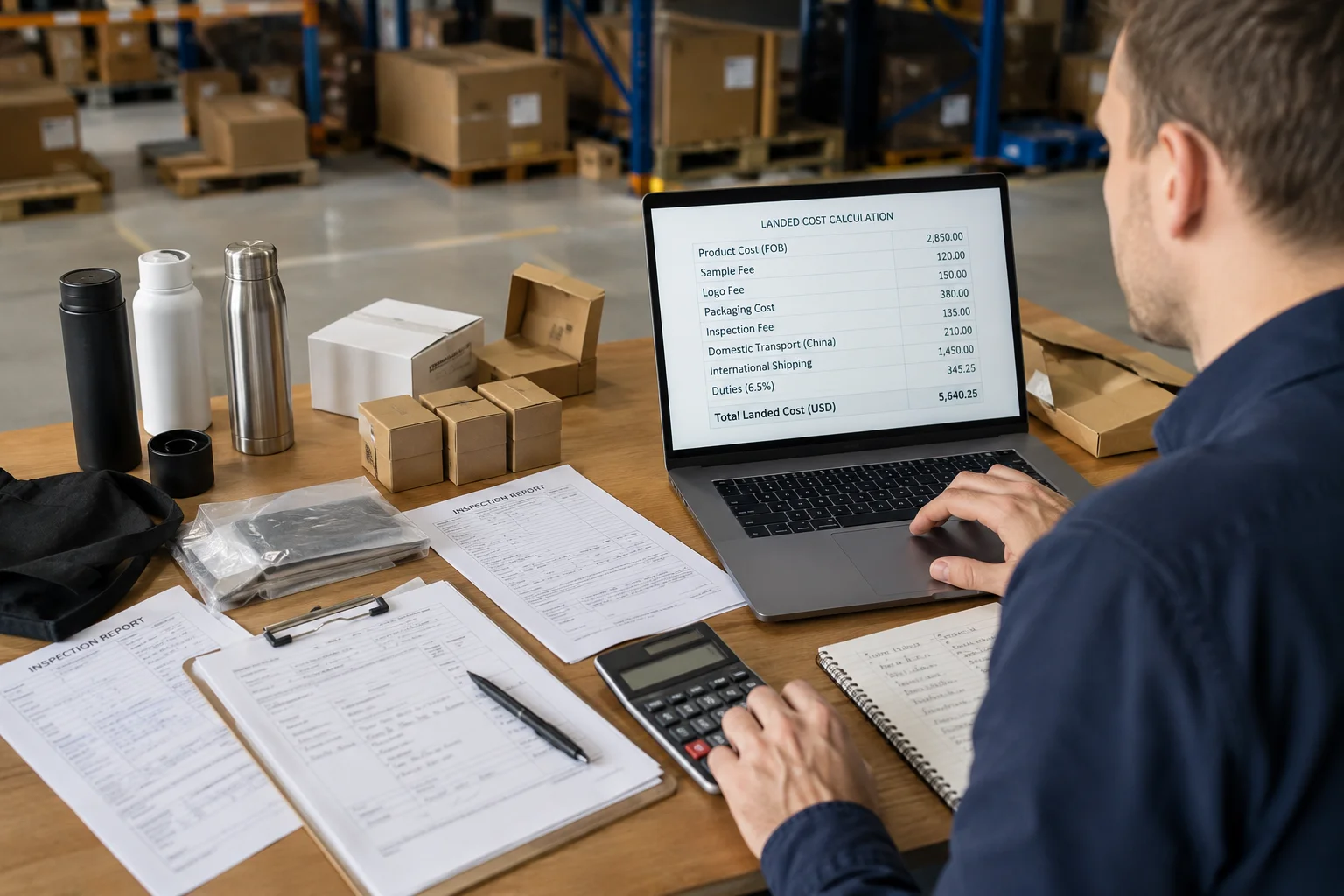
Why landed cost matters more than unit price
I have seen buyers celebrate a low product price, then feel surprised when shipping, packaging, and inspection change the real margin. A small order has less volume to absorb fixed costs.[^9] If the buyer ships by air or courier, the cost per unit can rise fast.[^10] If the product is bulky, the shipping cost can be higher than expected.[^11] If the product needs custom packaging, the packaging supplier may charge a setup fee or require a separate MOQ.
I usually build a simple landed cost view before the buyer confirms the order. This helps the buyer know if the test is only for learning or if it can still make profit. A first test may not have the best margin, but it should not hide basic cost risk.
| Cost type | Common reason | My advice |
|---|---|---|
| Sample fee | Supplier needs to prepare or ship samples | Treat it as validation cost |
| Product cost | Small runs have higher unit price | Compare with expected retail price |
| Packaging cost | Custom boxes and labels need setup | Start simple if budget is tight |
| Inspection cost | Third-party or agent checking takes labor | Use it for higher-risk products |
| Domestic transport | Goods move from factory to warehouse | Include it early |
| International shipping | Weight, volume, and speed affect price | Compare air, sea, and courier |
| Duties and taxes[^12] | Import rules vary by market | Check before pricing |
7. How Can I Reduce Payment, Quality, and Shipping Risk on Low MOQ Orders?
I do not believe small orders are automatically safe just because the payment amount is lower.
I reduce low MOQ risk by verifying supplier fit, confirming samples, using clear specs, checking goods before shipment, controlling packaging, consolidating orders when useful, and choosing a shipping method based on cost, speed, and product type.
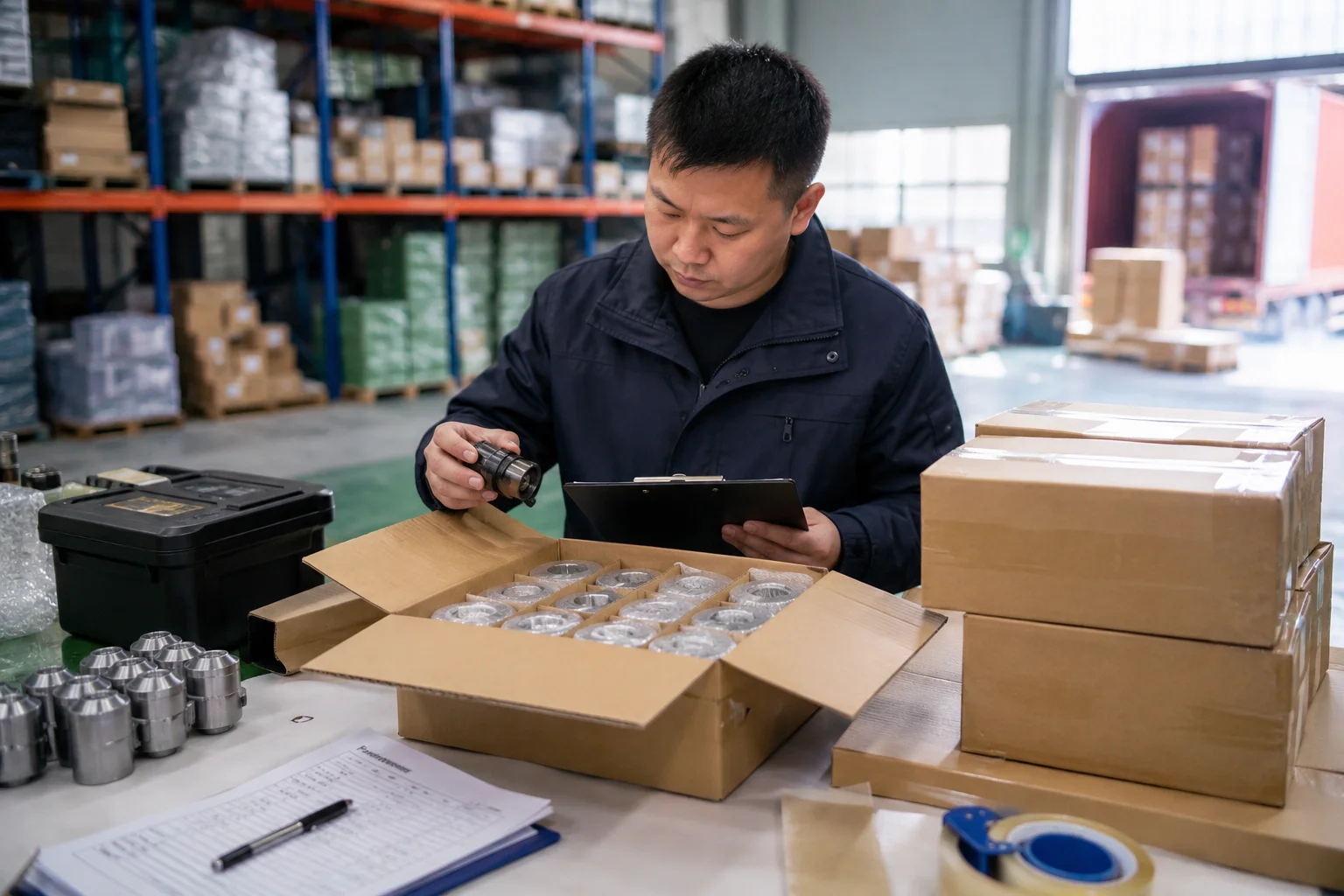
How I control the main risks before shipment
I start with clear product specifications. I do not rely only on photos. I confirm size, material, color, logo position, packaging, accessories, carton details, and acceptable defect standards. If the buyer approves a sample, I use that sample as the reference for production checks.
I also recommend inspection when the order has higher product risk, fragile goods, custom branding, or tight marketplace requirements. For some low-value stock goods, a lighter check may be enough. For branded or customer-facing products, I prefer a stronger check because bad goods can hurt reviews and repeat sales.
Shipping is another risk area. I check whether goods should ship by courier, air freight, sea freight, or door-to-door service. I also check if consolidation can lower cost when the buyer has several suppliers.
| Risk area | What I check | How it helps |
|---|---|---|
| Payment risk | Supplier background and order terms | Reduces blind payment risk |
| Product risk | Sample and production consistency | Reduces wrong-goods risk |
| Packaging risk | Inner packing and carton strength | Reduces damage risk |
| Labeling risk | SKU, barcode, carton marks | Reduces warehouse problems |
| Shipping risk | Route, cost, timing, documents | Reduces delivery surprises |
| After-sales risk | Defect records and supplier response | Improves problem handling |
8. How Does KingSourcing Help Buyers Manage Low MOQ Sourcing from China?
I built our low MOQ service around practical control because many buyers do not have a team on the ground in China.
KingSourcing helps low MOQ buyers by checking feasibility, finding suitable suppliers, comparing quotes, arranging samples, confirming packaging, following production, inspecting goods, consolidating orders, storing products, taking photos, and coordinating door-to-door shipping when needed.
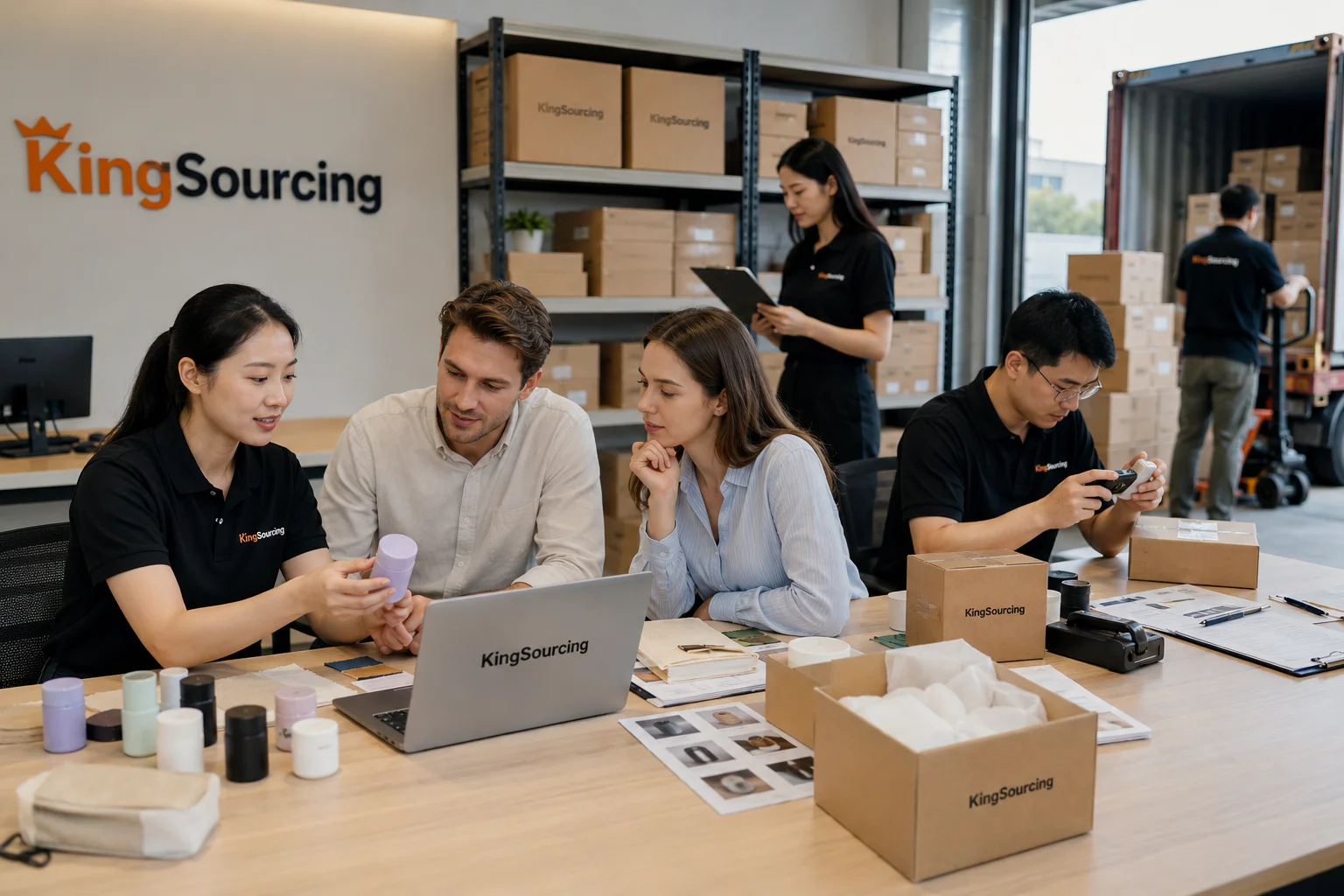
How I usually work with a low MOQ buyer
I first ask the buyer to send a product link, target quantity, budget, target market, customization needs, and any shipping or inspection requirements. This lets me judge whether the request is practical. If the buyer wants a stock product, I look for suppliers that can support small batches. If the buyer wants custom branding, I check logo method, packaging MOQ, sample cost, and lead time. If the buyer wants a complex product, I explain the limits before the buyer spends money.
After supplier matching, I help compare quotes and confirm samples. Then I follow production, check packaging, and arrange inspection if needed. If the buyer buys from several factories, I can help consolidate goods in our warehouse. I can also support product photos, labeling, carton marks, and shipping coordination.
| Buyer need | How I support it | Why it matters |
|---|---|---|
| Product testing | I check stock and low MOQ options | Faster market entry |
| Supplier choice | I match supplier type to order size | Better fit for small orders |
| Custom packaging | I confirm cost, MOQ, and timing | Fewer branding surprises |
| Quality control | I arrange sample checks and inspection | Lower defect risk |
| Order consolidation | I combine goods from different suppliers | Lower logistics complexity |
| Shipping support | I coordinate delivery options | Clearer landed cost |
If you want to test a product from China, I suggest you contact KingSourcing with your target product or reference link, estimated order quantity, budget, target market, customization level, and any inspection, packaging, warehousing, or logistics support you need. I can then help you see whether the project is suitable for a low MOQ start.
Conclusion
I see low MOQ sourcing as a controlled market test, not a magic shortcut. The right agent helps you reduce risk, compare real costs, and scale smarter.
[^1]: "Economic order quantity - Wikipedia", https://en.wikipedia.org/wiki/Economic_order_quantity. The cited source defines minimum order quantity as the smallest order size a supplier will accept, supporting the article’s use of low MOQ as an order below a supplier’s normal production or sales threshold. Evidence role: definition; source type: education. Supports: A neutral procurement or supply-chain source should define minimum order quantity and explain that it is the smallest quantity a supplier is willing to produce or sell under given terms.. Scope note: The source may define MOQ generally rather than the specific phrase “low MOQ.” [^2]: "[PDF] Raw Material Minimum Order Quantity Optimization - DSpace@MIT", https://dspace.mit.edu/bitstream/handle/1721.1/121302/1240293813-MIT.pdf?sequence=1. The cited source explains that minimum order quantities are shaped by production setup, purchasing lots, inventory availability, and product-specific requirements, providing operational context for why MOQs differ across products. Evidence role: mechanism; source type: paper. Supports: A supply-chain or operations-management source should explain that order quantity constraints are influenced by production setup, procurement lots, inventory status, and customization requirements.. Scope note: The source may discuss MOQ determinants in general manufacturing terms rather than specifically in China sourcing. [^3]: "Economic Order Quantity (EOQ) | www.waru.edu", https://www.waru.edu/acquipedia-article/economic-order-quantity-eoq. The cited source describes how setup costs, purchasing constraints, labor scheduling, and quality-control activities create fixed costs that suppliers must recover, supporting the explanation for supplier minimum order quantities. Evidence role: mechanism; source type: paper. Supports: An operations-management source should support the mechanism that fixed setup, purchasing, labor, and quality-control activities make very small production runs costly.. Scope note: The source may not list every activity named in the article, such as export documentation or communication. [^4]: "Economies of scale - Wikipedia", https://en.wikipedia.org/wiki/Economies_of_scale. The cited source explains that fixed setup costs are distributed across the number of units produced, so smaller production batches generally have higher per-unit costs. Evidence role: mechanism; source type: education. Supports: A cost-accounting or operations-management source should explain that fixed costs and setup costs raise per-unit cost when production volume is low.. [^5]: "Minimum Order Quantity: What Is It and Why Does It Matter", https://www.paramountglobal.com/knowledge/minimum-order-quantity/. The cited source notes that custom packaging and printing often require setup work and minimum production runs, supporting the point that packaging can carry an MOQ separate from the product order. Evidence role: general_support; source type: institution. Supports: A packaging or procurement source should support that custom printed packaging commonly involves production setup requirements and minimum production runs.. Scope note: The source may describe common industry practice rather than a universal rule for all packaging factories. [^6]: "Why Minimum Viable Products are the Real MVP", https://businesstech.bus.umich.edu/blog/why-minimum-viable-products-are-the-real-mvp/. The cited source explains that market testing and product validation are used to reduce uncertainty before scaling production, supporting the article’s claim that low-MOQ orders can serve early testing and launch functions. Evidence role: expert_consensus; source type: education. Supports: An entrepreneurship or product-development source should explain that early-stage firms can reduce uncertainty by testing demand and validating products before committing to larger production volumes.. Scope note: The source may support the general testing logic rather than each listed use case, such as influencer seeding or product photography. [^7]: "FBA packaging and prep series: Barcode types and requirements", https://sellercentral.amazon.com/seller-forums/discussions/t/4d633b6a-edf1-41d8-9521-209d4c8fdbbf. Amazon’s seller documentation states that FBA inventory must meet specified product barcode, shipment labeling, packaging, and preparation requirements, supporting the article’s discussion of Amazon-specific sourcing checks. Evidence role: case_reference; source type: institution. Supports: Official Amazon documentation should support that FBA sellers must follow requirements for product barcodes, shipment labels, packaging, and preparation before inventory is accepted.. Scope note: This support is platform-specific and may change as Amazon updates its seller policies. [^8]: "[PDF] TRADE TALK TUESDAY CALCULATE LANDED COSTS ...", https://ibc-static.broad.msu.edu/sites/DEC/PDFs/TradeTalk_LandedCosts.pdf. The cited source defines landed cost as the full import cost of goods after transport, insurance, duties, taxes, and related charges, supporting the article’s emphasis on landed cost rather than unit price alone. Evidence role: definition; source type: government. Supports: A government trade or customs source should define landed cost as the total cost of imported goods after purchase price, freight, insurance, duties, taxes, and related charges are included.. [^9]: "1.1 Variable and fixed costs | OpenLearn - The Open University", https://www.open.edu/openlearn/money-business/fundamentals-cost-accounting-and-environmental-management-accounting/content-section-3.1. The cited source explains the inverse relationship between output volume and fixed cost per unit, supporting the claim that small orders have less volume over which to absorb fixed costs. Evidence role: mechanism; source type: education. Supports: A cost-accounting or economics source should explain that fixed costs per unit decline as output increases, and therefore small volumes bear higher fixed cost per unit.. [^10]: "[PDF] Fathoming Shipping Costs: An Exploration - World Bank Document", https://documents1.worldbank.org/curated/en/099436104042241280/pdf/IDU0c20d2ae90046304ca009ab508217e50747bd.pdf. The cited source documents that air freight generally carries substantially higher transport costs than sea freight, supporting the article’s warning that air or courier shipping can raise per-unit costs for small orders. Evidence role: statistic; source type: institution. Supports: A neutral logistics or international trade source should show that air freight is generally more expensive than ocean freight and can raise logistics cost, especially for small shipments.. Scope note: The exact cost increase depends on shipment weight, volume, route, service level, and current freight market conditions. [^11]: "Volumetric Weight and Shipping to Europe: What to Know - ILG", https://www.international-logistics-group.com/us-en/insights/volumetric-weight-explained-161836/. The cited source explains that carriers may price freight using dimensional or volumetric weight, supporting the claim that bulky products can incur higher shipping costs than their actual weight alone would suggest. Evidence role: mechanism; source type: institution. Supports: A logistics institution or carrier-independent source should explain dimensional or volumetric weight pricing and how it affects bulky lightweight shipments.. Scope note: The source supports the pricing mechanism, but actual charges vary by carrier, route, and contract terms. [^12]: "Import Tariffs & Fees Overview and Resources", https://www.trade.gov/import-tariffs-fees-overview-and-resources. The cited customs source explains that imported goods may be subject to duties, taxes, and related fees according to classification, value, origin, and destination rules, supporting the inclusion of duties and taxes in low-MOQ landed-cost planning. Evidence role: general_support; source type: government. Supports: A customs or government trade source should explain that imported goods may be subject to duties, taxes, and fees based on classification, value, origin, and destination rules.. Scope note: The source will support the general obligation to consider duties and taxes, not the exact amount owed for any specific product or market.