Quick Answer
When I help an overseas buyer order samples from a Chinese factory, I often see the same problem: the buyer has a clear idea in mind, but the supplier receives only a picture and a short message. That gap can create the wrong sample, unexpected charges, and false confidence about production.[1] **To order samples from a Chinese factory correctly, I first prepare a written product brief covering specifications, materials, dimensions, functions, customization, packaging, acceptance criteria, costs, lead time, and shipping.
I then confirm the brief with the supplier before payment, review the sample against the agreed requirements, and treat it as a product-fit and communication test—not an automatic guarantee of mass-production quality.**

A sample is more useful when both sides understand what they are making and how the result will be judged. In my sourcing work, I use the sample stage to test three things at once: whether the product meets the buyer’s needs, whether the factory can interpret the requirements, and whether the supplier communicates clearly enough for a larger order.
How Can I Order Samples from a Chinese Factory the Right Way?
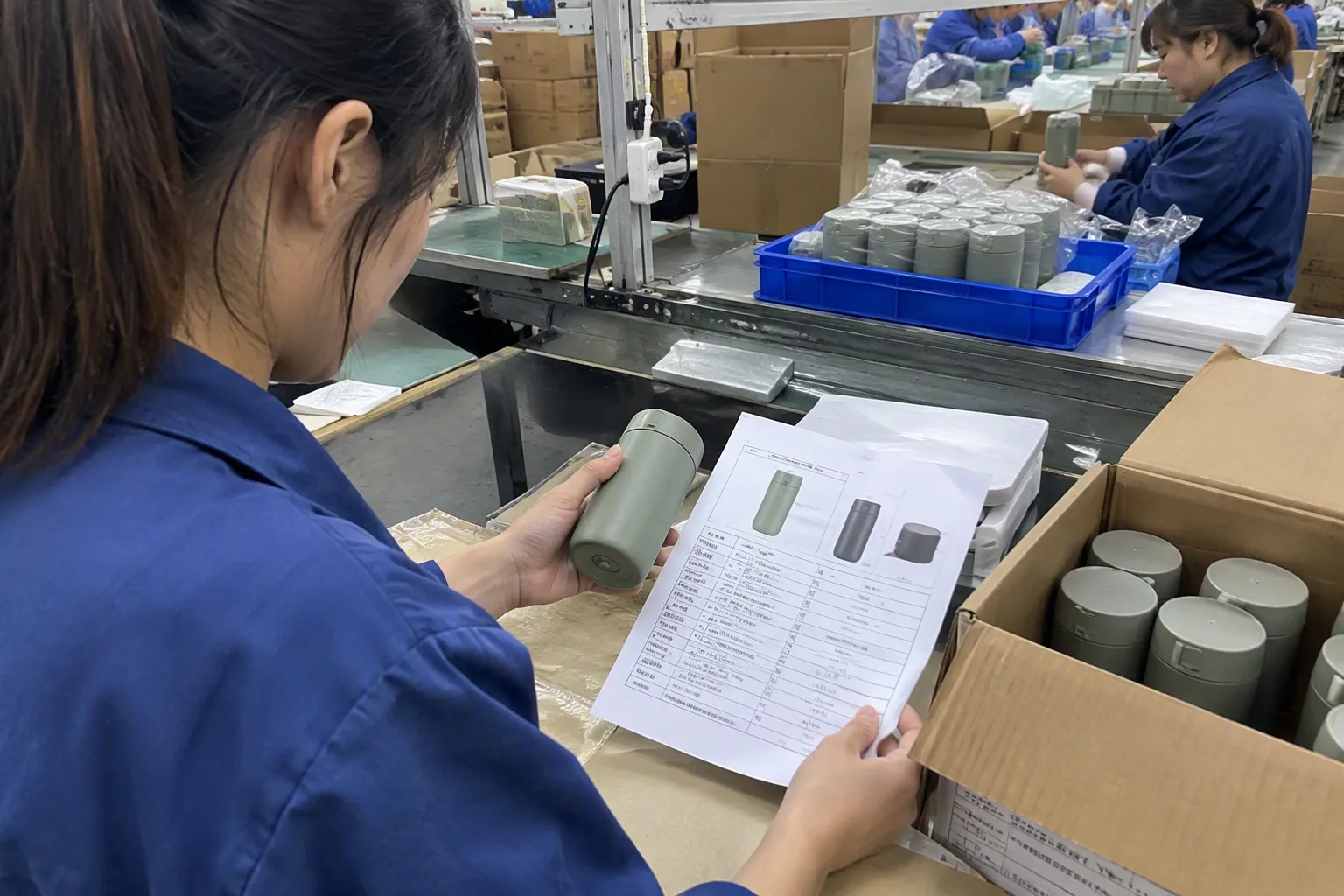
A vague sample request may save a few minutes at the beginning, but it can create days of clarification, revisions, and dispute later. When I see a message such as “make it like this picture,” I know the supplier may still need to guess the material, dimensions, finish, functions, packaging, and acceptable tolerances.
I order samples from a Chinese factory by turning the buyer’s idea into an executable brief[2], confirming the total commitment before payment, and establishing how I will inspect the result. This process helps me separate a product-design problem from a supplier-communication problem before I commit to mass production.
Why Does a Product Brief Matter Before I Request a Sample?
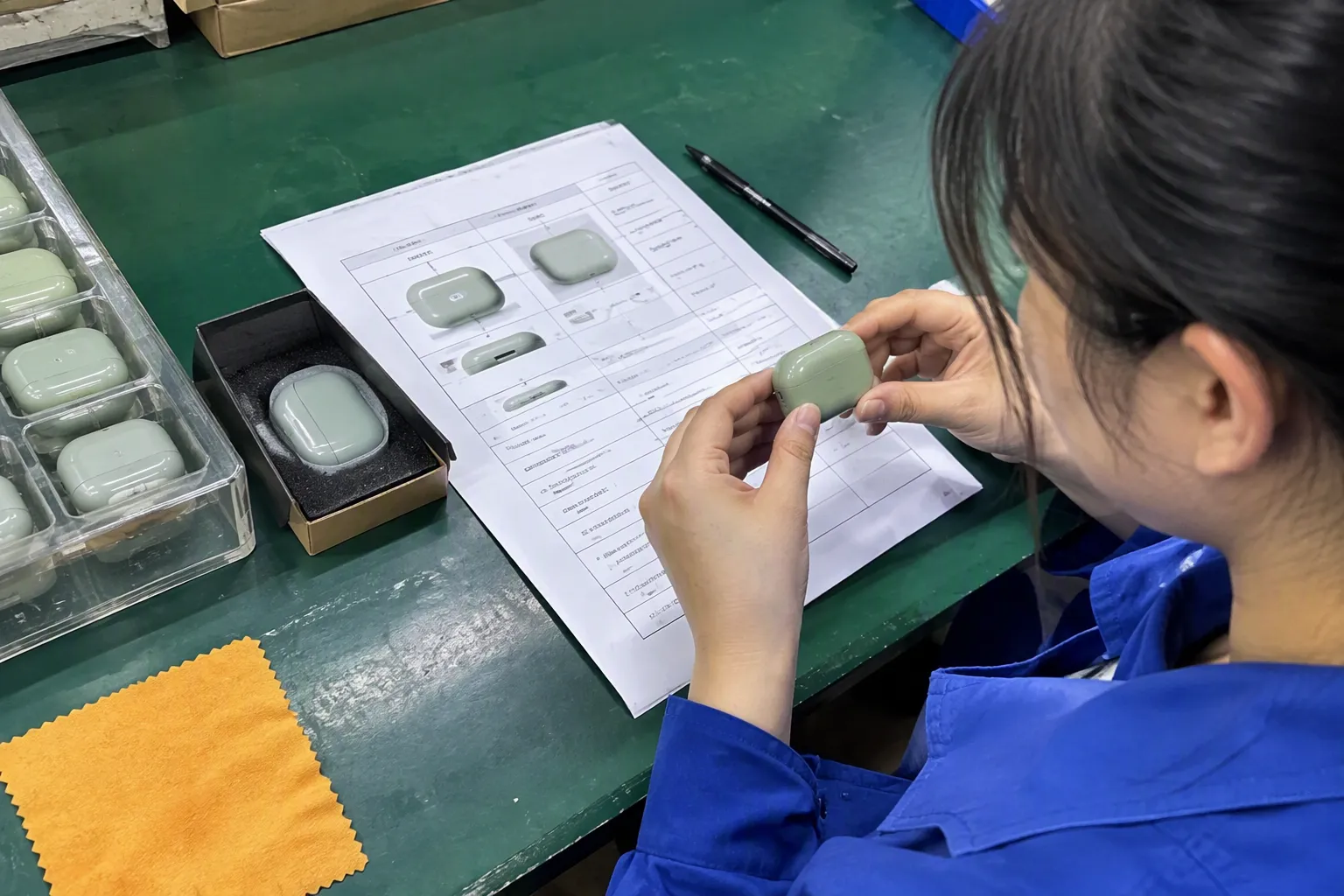
A factory cannot quote or produce consistently against requirements that exist only in the buyer’s imagination.[3] A usable brief gives the supplier enough information to estimate the sample cost, identify manufacturing limits, select materials, and ask focused questions.
I do not expect every first brief to contain a complete engineering drawing. I do expect it to define the important commercial and functional points. The right level of detail depends on the product category, customization level, and production method.
A useful sample brief normally includes:
| Requirement area | What I define | Risk that it helps prevent |
|---|---|---|
| Product purpose | Who will use the product and in what situation | A sample that looks correct but performs poorly |
| Dimensions | Length, width, height, weight, thickness, or size range | A product that is visibly or functionally oversized or undersized |
| Materials | Material type, grade if relevant, color, hardness, texture, or finish | Substitution with a cheaper or unsuitable material |
| Functions | Main functions, controls, power requirements, output, or operating steps | Different interpretation of how the product should work |
| Appearance | Reference images, drawings, Pantone references, logos, surface finish | Inconsistent color, shape, printing, or branding |
| Customization | Logo position, artwork, mold changes, accessories, and labels | Missing or incorrectly placed custom features |
| Packaging | Individual packaging, carton requirements, inserts, labels, and barcode needs | A product that arrives without retail-ready protection |
| Acceptance criteria | What I will measure, test, inspect, or approve | Disagreement about whether the sample is acceptable |
I have found that reference images are useful, but images cannot carry every requirement[4]. A photo can show the general shape while hiding the wall thickness, internal construction, material, dimensions, and functional limits. I therefore use images as supporting references rather than treating them as complete specifications.
What Should I Write in the Sample Request?
I write the sample request so the factory can answer the same commercial questions that I will later use to compare suppliers. This makes quotations more meaningful and reduces the risk that one supplier prices a basic version while another prices a customized version.
My request usually contains the following information:
-
Product description and intended use
I explain what the product is supposed to do and who will buy or use it. I avoid unnecessary marketing language, but I include practical use conditions when they affect construction. -
Technical and physical requirements
I list dimensions, materials, colors, weight targets, power specifications, connection types, and other relevant details. If I have a tolerance, I state it. If I do not know the correct tolerance, I ask the supplier what is commercially achievable and have the answer confirmed in writing. -
Reference files
I attach photos, sketches, artwork, 2D drawings, 3D files, existing samples, or competitor references where available. I label each file clearly and identify which features are mandatory and which features are only visual inspiration. -
Customization requirements
I specify the logo method, logo size, location, color, packaging artwork, accessories, manuals, labels, and language requirements. I also ask whether the customization requires a mold, tooling, printing plate, fixture, or special setup. -
Sample quantity and purpose
I explain whether the sample is for appearance approval, function testing, photography, market testing, packaging review, or pre-production confirmation. A factory may recommend a different sample process depending on the purpose. -
Expected timing and target order
I ask for sample lead time and, where appropriate, an estimated mass-production lead time. I may also share an expected order quantity or purchasing plan because the factory’s recommended process can depend on volume. -
Acceptance criteria
I state what I need to check. For example, I may need to verify dimensions, color, logo position, battery operation, stitching, packaging fit, or assembly. I do not rely only on the phrase “good quality.”
In my experience with client sample inquiries, the most common interpretation gap appears when the buyer gives a product photo but does not identify the features that matter most. The factory may copy the visible shape while using a different material or construction. The supplier may not be acting improperly; the request simply left room for a different interpretation.
How Do I Confirm Sample Fees and the Total Commitment?
I ask for the full sample commitment before payment[5]. The sample price shown in a quotation is not always the complete amount I will spend.
Depending on the product and factory process, the total may include:
- Sample unit price
- Customization or logo setup cost
- Tooling, mold, jig, or fixture charge
- Artwork or engineering fee
- Packaging sample cost
- Domestic delivery inside China
- International courier or freight
- Taxes, duties, or import charges where applicable
- Revisions or additional sample rounds
- Testing or documentation fees, if requested
Factories do not follow one universal sample-fee policy.[6] Some suppliers charge a standard sample price. Some charge more for a customized prototype. Some may deduct an agreed sample charge from a future bulk order, while others may not. I treat any refund or deduction as a commercial term that must be confirmed in writing.
I also confirm the following points:
| Question | Why I ask it |
|---|---|
| What exactly is included in the sample price? | I avoid comparing incomplete quotations |
| Is the sample made with final or temporary materials? | I understand what the sample can actually prove |
| Are tooling or mold charges separate? | I avoid unexpected development costs |
| Who pays shipping and import charges? | I calculate the real landed sample cost |
| What is the sample lead time? | I can plan product development and launch decisions |
| How many revisions are included? | I understand the cost of correcting an interpretation |
| Can the fee be deducted from a bulk order? | I record the supplier’s actual policy |
| What happens if the sample cannot meet the brief? | I clarify the commercial remedy before payment |
I do not assume that a supplier will refund a fee simply because I dislike the result. If a sample fails a written requirement, I discuss correction or revision based on the agreed terms. If the brief was vague, the resolution may be more difficult because both parties may have acted on different assumptions.
How Do I Use Questions to Test the Supplier?
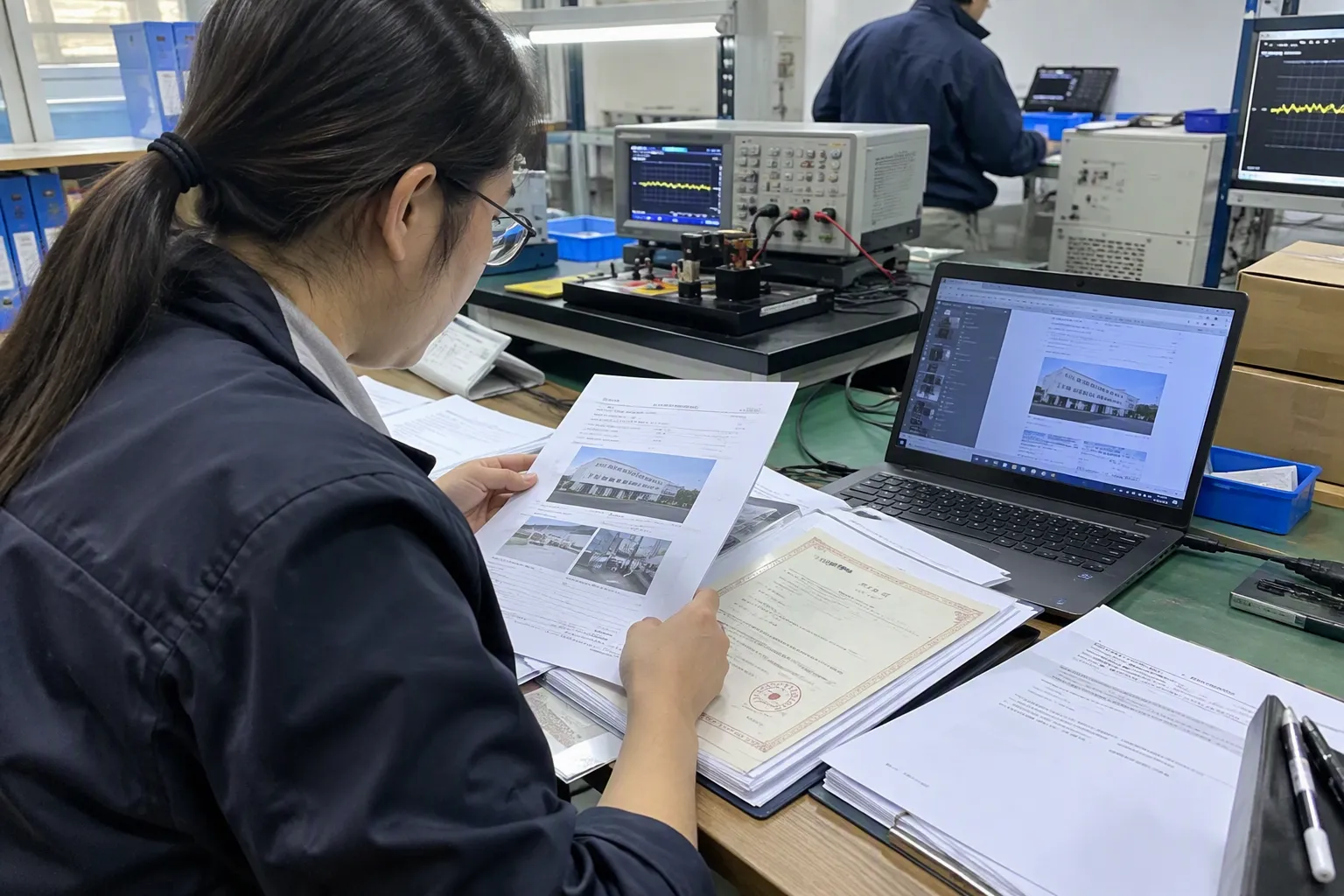
The sample stage gives me information about the supplier’s communication and working method. I pay attention to the questions the factory asks, not only to the price it offers.
A factory that asks about material grade, artwork files, dimensions, intended use, packaging, and inspection points may be showing useful process awareness.[7] A supplier that immediately confirms everything without checking basic details may still be capable, but I need more evidence before I rely on that confidence.
I use questions such as:
- Which parts of my brief are unclear?
- Which requirements may increase cost or lead time?
- Can the factory produce the requested material and finish?
- Will the sample use final production materials?
- Does the sample require a new mold or tooling?
- What manufacturing tolerances can the factory normally control?
- What will be different between the sample and mass production?
- How will the factory record the approved sample?
- Can the factory provide production photos or an inspection process later?
I record the answers in email, a quotation, a specification sheet, or another written document.[8] Verbal explanations can be helpful during a call, but I prefer to summarize important decisions afterward.
I use a simple practical test: can the brief be quoted consistently, produced against specific requirements, and checked against defined acceptance criteria?
If the answer is no, I do not consider the sample process ready. I first clarify the missing information.
How Should I Review the Sample When It Arrives?
I review the sample against the confirmed brief instead of judging it only by overall appearance. A product can look attractive while still failing a key dimensional, functional, packaging, or customization requirement.
I create a review record that includes:
- Date received
- Supplier and product reference
- Sample version
- Approved brief or drawing
- Photographs from several angles
- Measurements and observations
- Functional checks that are appropriate for the product
- Packaging and labeling observations
- Nonconformities or open questions
- Required corrections
- Approval status
I separate mandatory requirements from preferences. A mandatory requirement may include a specific connector, size, logo position, or packaging label. A preference may include a slightly different surface texture or a cosmetic detail that does not affect use. This separation helps me decide whether the sample needs a revision or whether it is commercially acceptable.
I also avoid testing beyond my competence. I can review the product against agreed visual, dimensional, functional, and packaging requirements, but I do not present a basic sample review as laboratory certification, regulatory approval, or a complete technical safety assessment. For electrical, mechanical, food-contact, children’s, medical, or other regulated products, I recommend qualified professional evaluation and the appropriate testing documents.
Does an Approved Sample Guarantee Mass-Production Quality?
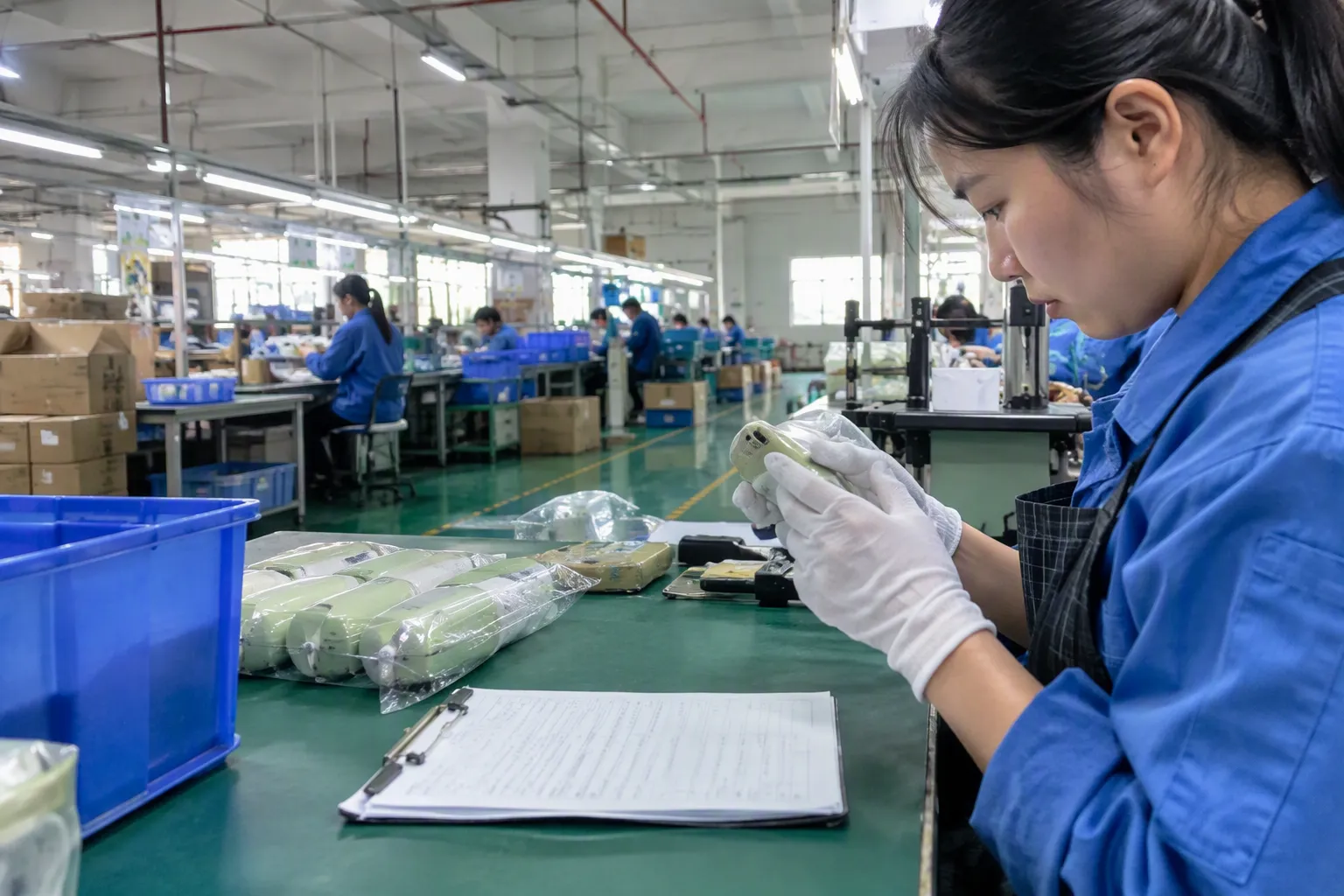
An approved sample does not automatically guarantee that every mass-produced unit will be identical. The sample may be handmade, adjusted individually, or produced with a different process from the eventual production run.
The sample can help me evaluate:
- Whether the product concept is suitable
- Whether the factory understood the brief
- Whether the materials and appearance are acceptable
- Whether the main functions work as expected
- Whether the packaging concept is practical
- Whether communication is organized
- Whether the supplier can explain production limitations
The sample cannot, by itself, fully prove:
- Long-term production consistency
- Final batch quality
- All raw-material sources
- Capacity during peak periods
- Reliability of every subcontractor
- Compliance with every destination-market requirement
- The supplier’s ability to meet a large order on schedule
Before mass production, I use additional controls where the order justifies them. These may include a signed specification, an approved reference sample, a pre-production sample, production follow-up, first-piece approval, inspection during production, final random inspection, packaging checks, and a written defect standard.
For a customized product, I ask the factory how it will preserve the approved result. The supplier may use a golden sample, a production specification, artwork approval, a color reference, a tooling record, or a combination of these documents. I confirm which record will control production if a disagreement occurs.
What If the Sample Is Wrong?
When a sample is wrong, I first classify the problem. I ask whether the supplier failed to follow a clear written requirement, whether the requirement was ambiguous, or whether the factory discovered a manufacturing limitation that requires a design decision.
This classification matters because the next step differs:
| Situation | Practical response |
|---|---|
| Clear requirement was missed | Request correction and document the nonconformity |
| Buyer’s instruction was ambiguous | Clarify the requirement and revise the brief |
| Material is unavailable or unsuitable | Ask for alternatives and compare their effect |
| Function works differently than expected | Reconfirm the intended use and acceptance test |
| Cost is higher than expected | Review tooling, material, quantity, and process assumptions |
| Sample is acceptable but production risk remains | Add pre-production and inspection controls |
I do not immediately assume that a wrong sample proves the factory is dishonest. I also do not ignore repeated mistakes. One clarification issue may be manageable. A pattern of missed instructions, unexplained substitutions, poor records, or defensive communication is a stronger supplier-selection concern.
I may request a revised sample, but I first ask what will change and whether the factory can identify the root cause. I also confirm whether the revision creates another fee or extends the lead time.
How Do I Decide Whether to Proceed to a Bulk Order?
I make the bulk-order decision using more than the sample itself. I consider the sample result together with the quotation, communication, documentation, production method, capacity information, and quality-control plan.
My review questions include:
- Did the factory understand the product brief?
- Did the sample use the agreed materials and components?
- Did the supplier disclose important limitations?
- Did the factory provide a clear cost breakdown?
- Did the supplier respond accurately and on time?
- Can the factory explain how production will match the approved sample?
- Can I inspect or verify the order before shipment?
- Are payment, lead time, packaging, and defect remedies documented?
- Does the supplier appear suitable for the expected order quantity?
For a small test order, I may use a limited quantity to gather more evidence. For a larger or highly customized order, I use stronger controls before approving production. I may also compare more than one supplier instead of treating the first acceptable sample as the only option.
In my role, I sometimes help buyers coordinate sample development, quotation comparison, factory communication, and inspection. My purpose is not to claim that one sample can remove every sourcing risk. My purpose is to make the buyer’s decision more informed and to identify preventable misunderstandings early.
Frequently Asked Questions
How much does it cost to order samples from a Chinese factory?
The cost varies by product, customization, tooling, packaging, and supplier policy. I normally calculate the sample item price, development or setup fees, mold charges, domestic delivery, international shipping, and possible taxes separately. I also confirm whether the factory offers a future deduction or refund because no universal policy applies.
How long does a Chinese factory take to make a sample?
Sample lead time depends on the product, materials, customization, tooling, and factory workload. A standard item may be available quickly, while a customized or molded product may require much longer. I ask the supplier for a written lead-time estimate and confirm whether shipping time is included.
Should I send a picture when requesting a factory sample?
I usually send pictures, but I do not rely on pictures alone. I add dimensions, materials, functions, colors, customization details, packaging requirements, and acceptance criteria. I also identify which features in the image are mandatory, because a photo may not show the construction details that affect cost and performance.
Can I ask a Chinese factory to refund the sample fee?
I can ask, but the answer depends on the supplier’s policy and the agreed commercial terms. Some factories deduct a sample charge from a qualifying bulk order, while others do not. I confirm the amount, minimum order condition, and timing of any deduction before paying.
Is one approved sample enough before placing a bulk order?
One approved sample is useful, but it is not complete proof of production consistency. I also confirm the production specification, materials, packaging, inspection method, lead time, and approval process. For higher-risk products, I recommend pre-production confirmation and qualified testing or inspection appropriate to the application.
Conclusion
To order samples from a Chinese factory successfully, I treat the request as a small procurement project rather than a simple purchase. I define the product brief, expose the complete sample commitment, record supplier answers, review the result against acceptance criteria, and remember that sample approval does not guarantee identical mass production. If you need help comparing suppliers, coordinating sample development, checking products, or managing a larger China order, contact KingSourcing to discuss your requirements.
Sources
- (PDF) Requirement ambiguity and fuzziness in large-scale projects", Studies of manufacturing requirements and buyer-supplier communication report that ambiguous specifications can increase interpretation differences, rework, and downstream quality risk
- A cost effective communication model for requirements elicitation in ...", Requirements-management research generally finds that documenting and validating product requirements improves stakeholder alignment and helps expose design or interpretation problems before later production stages
- [PDF] Quality and Consistency of Machined Components and Products", Quality-management guidance treats documented product and process requirements as a foundation for consistent production, inspection, and conformity assessment
- MFE 1260 - Engineering Graphics I (1) - - University Catalog", Engineering documentation commonly distinguishes illustrative images from drawings and specifications that define measurable dimensions, materials, interfaces, and performance requirements
- Import Tariffs & Fees Overview and Resources", International-trade guidance distinguishes the supplier’s product price from potentially separate costs for transport, customs treatment, duties, taxes, and related import services
- [PDF] EFFECTIVE METHODOLOGIES FOR SUPPLIER SELECTION AND ...", Procurement literature treats sampling, tooling, development fees, and order-related credits as contract-specific commercial terms rather than as a uniform industry entitlement
- [PDF] Supplier Selection and Assessment: Their Impact on Business ...", Supplier-quality research identifies information exchange, requirement clarification, and evidence of process control as relevant indicators in evaluating manufacturing suppliers
- Metrological Traceability: Frequently Asked Questions and NIST Policy", Document-control and quality-management guidance recognizes written, retrievable records as a means of preserving requirements, tracking changes, and supporting objective review when disagreements arise