Quick Answer
Small orders from China often look affordable until freight, packaging, separate supplier shipments, and delivery deadlines begin to add up. A low unit price can lose its advantage when shipping is planned too late. I help buyers reduce that risk by treating freight as part of the full purchasing decision, not as a last-minute expense.
The most cost-effective way to ship small orders from China is to match the shipping method, packaging, shipment timing, and supplier coordination plan to the real order conditions. Buyers should compare total landed and operational cost—not only the courier quote—and consider chargeable weight, delivery urgency, product restrictions, separate origin charges, and the value of consolidating goods from multiple factories before choosing a route.

Many new importers start by asking, “Which courier is cheapest?” That is understandable, especially for a first product test or small replenishment order. However, the better question is usually: What shipping plan creates the lowest practical cost while protecting the launch date, product condition, and buying margin?
Are High Shipping Costs for Small Orders from China Rarely Solved by Finding the Cheapest Quote?
High shipping costs for small orders from China can feel frustrating because the freight quote may be close to, or even higher than, the goods value. Buyers may then rush to choose the lowest visible rate. That choice can create extra cost through delays, repacking, multiple shipments, poor carton use, or unsuitable delivery service.
The cheapest quote is not always the lowest-cost shipping option for small orders from China. Buyers should compare the complete shipment plan, including freight, chargeable weight, supplier collection, packaging, inspection needs, delivery timing, possible duty exposure, and the cost of stockouts or launch delays. A suitable plan depends on the order, destination, and product type.
Start With Total Cost, Not the Freight Line
When I coordinate shipments for overseas buyers, I see that the freight line is only one part of the decision. A courier quote may look low, but the total process can still become expensive if each supplier sends goods separately or if cartons are oversized.
For small orders from China, I recommend looking at the following cost categories together:
| Cost area | What buyers should check | Why it matters |
|---|---|---|
| International freight | Rate, transit range, fuel or remote-area surcharges | The visible quote may not include every shipment-specific charge |
| Chargeable weight | Actual weight versus volumetric weight | Lightweight but bulky products can be billed by volume[1] |
| Origin handling | Collection, receiving, labeling, repacking, export handling | Several small shipments can create repeated charges |
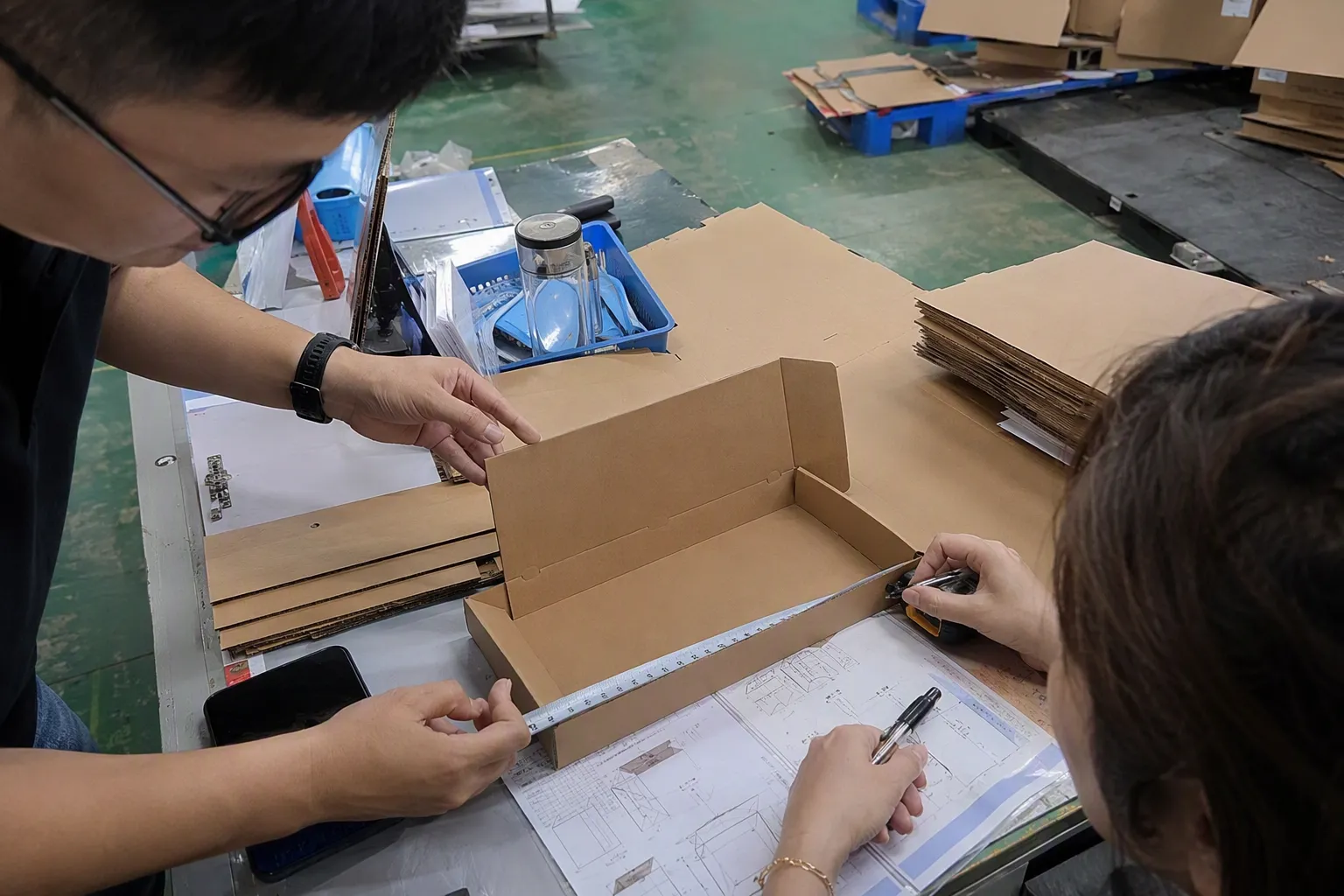
| Packaging | Carton size, void fill, carton strength, product protection | Poor packaging can increase volume or damage risk |
| Delivery timing | Stockout, product launch, marketplace deadlines | Slower freight can cost more if it interrupts sales |
| Customs and duties | Import taxes, clearance requirements, documents | These depend on the destination, product, value, and import arrangement |
| Coordination time | Supplier follow-up, shipment tracking, issue handling | Fragmented orders create more work and more opportunities for mistakes |
A buyer who only compares “door-to-door shipping price” may miss the real cost of a fragmented supply chain. For example, three factories may each ship one carton directly to the buyer. Each factory may use its own courier arrangement, carton size, documentation process, and pickup schedule. The final result may be three delivery charges, three tracking processes, and three separate receiving tasks.
That approach may still be sensible in some situations. If one product is urgently needed and the other goods are not ready, waiting for consolidation could create a costly delay. The point is not that one plan is always better. The point is that small orders from China need a decision based on the full commercial picture.
I generally encourage buyers to treat shipping as a procurement decision made before production is complete, not as an emergency task after suppliers announce that goods are ready.
Understand Actual Weight and Volumetric Weight
One of the most common surprises in shipping small orders from China is the difference between actual weight and chargeable weight.
Actual weight is straightforward: it is what the packed carton weighs on a scale. Chargeable weight may be higher because many shipping services also consider the space that a shipment occupies. A large carton filled with lightweight products can be priced according to its volume rather than its physical weight.[2]
The calculation method varies by carrier, route, and service. Buyers should therefore ask the shipping provider or coordinator which divisor and measurement rules apply to the specific quote. I do not recommend assuming that one formula applies to every shipment.
Why carton dimensions matter
A few extra centimeters on each side of a carton may not seem important. Yet dimensional charges can change quickly when a shipment contains several boxes.
Common causes of avoidable volumetric weight include:
- Factory cartons designed for local delivery rather than export efficiency
- Excess empty space around products
- Individual retail boxes that are much larger than necessary
- Mixed products packed without a carton plan
- Very low-density goods, such as foam items, cushions, display materials, or bulky packaging
- Cartons that cannot be stacked efficiently during transport
For small orders from China, carton optimization should never mean removing protection carelessly. A damaged shipment can cost far more than the space saved. Instead, the practical goal is to use packaging that is protective, reasonably compact, and suitable for the transport method.
Ask Suppliers for Packing Information Early
Many buyers request freight quotes before they know the packing details. That is normal for early budgeting, but a quote based on guesswork may change once cartons are finished.
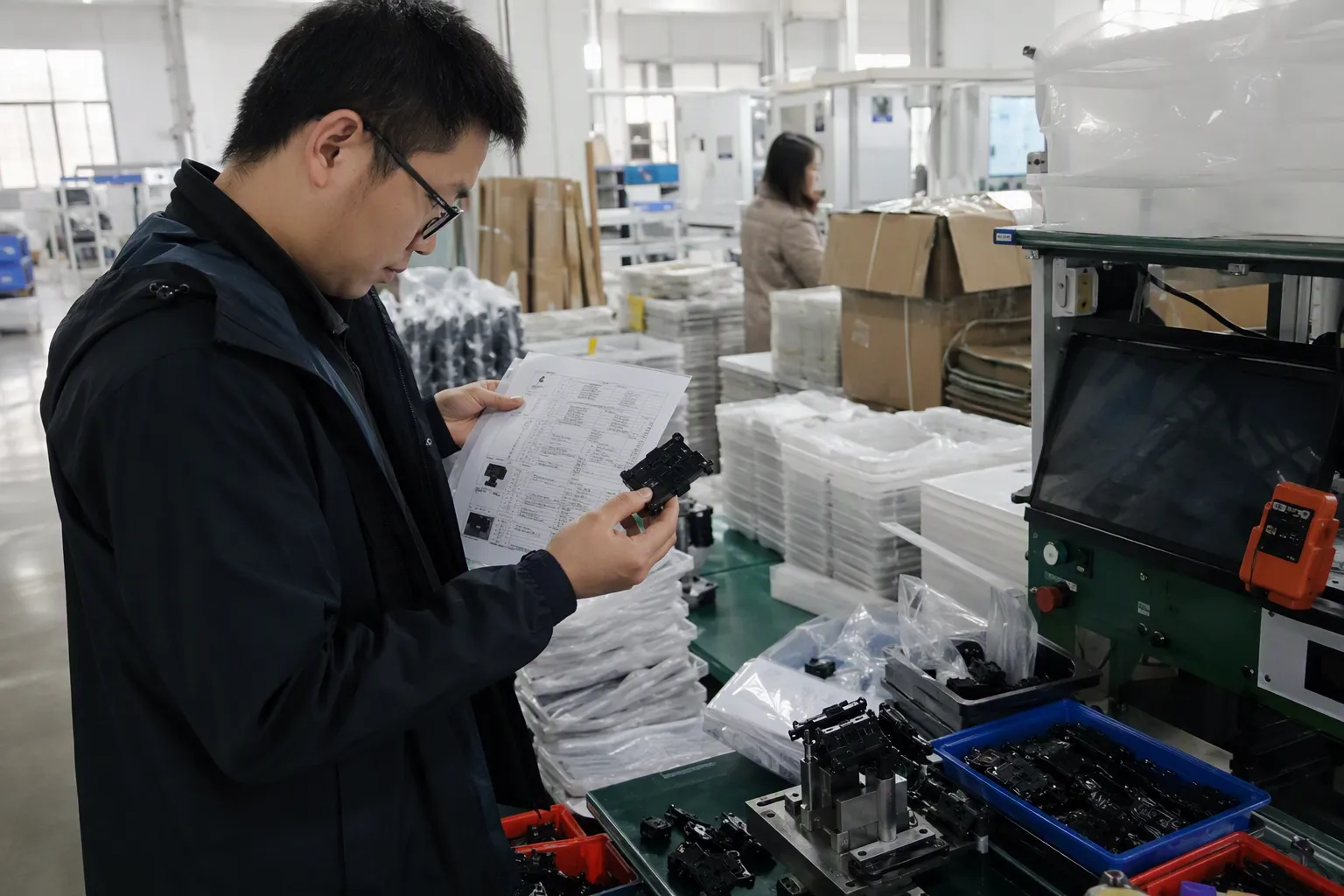
I suggest asking suppliers for estimated packing information before goods are ready:
- Number of cartons
- Carton dimensions
- Gross weight per carton
- Net weight per carton, when available
- Product quantity per carton
- Whether cartons can be adjusted or combined
- Whether products include batteries, liquids, magnets, powders, or other potentially restricted contents
- The expected ready date
This information gives you a more useful shipping comparison. It also reveals whether one supplier is using cartons that are substantially larger than the product requires.
For an early-stage seller, even estimated dimensions are better than no information. You can update the plan after final packing details are confirmed. The important thing is to avoid making an express-versus-consolidation decision with no understanding of shipment volume.
Choose Shipping Speed Based on Commercial Need
International express shipping is often convenient[3] for small orders from China. It can offer simple tracking, relatively fast transit, and practical delivery for samples, urgent replacements, launch inventory, and compact high-value goods. However, express shipping is not automatically the right option for every small order.
The best method depends on several connected factors:
- Actual and volumetric weight
- Destination country and delivery address
- Required arrival date
- Product value and sales margin
- Product category and transport restrictions
- Number of cartons
- Whether inventory is urgently needed
- Whether goods can wait for other suppliers
- The buyer’s import and customs arrangement
A slow method may appear cheaper, but it may not be commercially cheaper if it causes a marketplace stockout[8], delays a retail launch, or forces the buyer to place a second urgent shipment later. On the other hand, premium express may be unnecessary when the product has a flexible delivery window and the buyer can plan ahead.
A practical shipping-method comparison
| Shipment situation | Often worth considering | Main decision point |
|---|---|---|
| Product samples or urgent prototypes | International express service | Speed and tracking may justify the cost |
| Small, dense, higher-value goods | Express or priority air service | Actual weight may remain manageable |
| Lightweight but bulky products | Carton redesign, consolidation, or alternative routing | Volumetric weight can dominate the cost |
| Several suppliers with similar ready dates | Consolidation before outbound shipment | Savings must justify the waiting time |
| Non-urgent replenishment inventory | Planned air, rail, sea, or other available service | Transit time must fit stock planning |
| Restricted or sensitive product categories | Shipment-specific specialist evaluation | Carrier acceptance and destination requirements vary |
I avoid presenting these options as universal rules. Carrier service availability, restricted-goods handling, customs procedures, duties, and transit times can change by destination and shipment profile.[4] Buyers should verify the current conditions for each order.
Consolidate Small Orders From China When the Timing Makes Sense
For buyers sourcing from more than one factory, consolidation can be one of the most useful ways to manage small orders from China. Instead of every supplier shipping independently to the final destination, goods can be collected to one location, checked, labeled if necessary, combined into planned cartons, and sent as one outbound shipment.
At KingSourcing, we coordinate this type of workflow for buyers who purchase across several product categories or factories. A typical order may include accessories from Shenzhen, packaging from Guangzhou, household products from Yiwu, or customized components from Dongguan. The commercial benefit is not simply “one box is cheaper.” The potential value comes from reducing duplicated handling and creating one more controlled shipping plan.
However, consolidation has trade-offs.
Potential benefits of consolidation
- Fewer separate international shipments
- Less duplicated origin handling
- Better visibility over total order quantity
- Opportunity to inspect goods before final dispatch
- More control over labeling and outer-carton marks
- Better use of carton space for compatible products
- One delivery timeline instead of several unrelated arrivals
- Easier receiving for the buyer’s warehouse or fulfillment partner
Potential trade-offs
- Goods must be collected from suppliers first
- The shipment may wait for the last supplier to finish[7]
- Storage and handling may be required
- Repacking must be done carefully to avoid damage
- Mixed products may not always pack efficiently together
- Urgent items may need to ship separately
- Consolidation may not suit products with incompatible handling requirements
This is why I do not advise buyers to consolidate automatically. If one supplier will be ready three weeks later than the others, holding completed inventory may not make sense. A split shipment can be the better business decision when the earlier goods support sales, testing, or a scheduled launch.
Use a Shipment Brief Before You Request Quotes
A clear shipment brief is one of the simplest ways to improve decision-making for small orders from China. Without it, a shipping provider can only give a broad estimate. With it, you can compare options based on the same facts.
A useful shipment brief should include:
| Information needed | Why it helps |
|---|---|
| Destination country and postal code | Service availability and delivery conditions vary |
| Delivery address type | Residential, commercial, warehouse, and remote locations may be handled differently |
| Required delivery window | This determines whether speed is essential |
| Number of suppliers | This shows whether consolidation may be relevant |
| Supplier ready dates | This reveals whether waiting creates a problem |
| Carton count and dimensions | Needed to estimate volumetric weight |
| Gross weight | Needed to compare chargeable weight |
| Product category | Helps identify possible handling or compliance questions |
| Battery or restricted contents | Must be reviewed case by case |
| Inspection needs | Determines whether goods should be checked before dispatch |
| Labeling and packaging requirements | Helps prevent last-minute rework |
| Incoterm or delivery arrangement | Clarifies responsibilities, but should be reviewed carefully for the shipment |
| Product value and commercial documents | Supports a more complete import planning discussion |
I find that buyers get better quotes when they avoid asking only, “How much for 20 kg to the US?” A better request would explain the carton dimensions, product category, required date, and whether goods will arrive from multiple factories. That level of detail helps the provider recommend a route that fits the actual shipment rather than an incomplete estimate.
Reduce Repeated Shipment Costs at the Supplier Level

Shipping cost control starts before the goods leave the factory. For small orders from China, supplier behavior can create unnecessary freight expense if no one owns the overall plan.
A supplier may pack each SKU into a separate large carton because it is easier for their team. Another factory may send goods before the rest of the order is ready because they assume speed is the priority. Neither decision is necessarily wrong from the factory’s point of view. But the buyer needs to define the preferred shipping workflow.
I recommend agreeing on these points before production finishes:
- Do not dispatch goods without written shipping instructions.
- Confirm the receiving address for consolidation, if applicable.
- Ask suppliers to share final carton photos and measurements.
- Confirm whether export cartons need labels, shipping marks, or carton numbers.
- Clarify whether retail packaging must remain untouched.
- Identify any fragile, battery-powered, magnetic, liquid, or otherwise sensitive items early.
- Set a target ready date and communicate the consequences of delay.
- Confirm whether a pre-shipment inspection or 1-by-1 check is required.
For multi-SKU buyers, this discipline matters even more. A shipment with ten products from five suppliers can become confusing if each factory follows a different packing and dispatch process.
Consider Quality Risk Alongside Freight Cost
A buyer can save on shipping and still lose money if goods arrive damaged, mislabeled, incomplete, or unsuitable for sale. That is why I view shipping and quality control as connected activities.
Before consolidating small orders from China, buyers may want to consider:
- Quantity verification
- Basic product appearance checks
- Packaging condition checks
- Label and barcode checks
- Carton count confirmation
- Assortment checks for mixed-SKU orders
- Photo records before repacking or dispatch
The appropriate inspection scope depends on the order value, product complexity, defect risk, and sales channel. A simple visual review may be enough for some low-risk promotional products. A more detailed inspection may be appropriate for consumer electronics, customized products, or products that must meet marketplace packaging requirements.
No inspection process can guarantee that every product will be perfect. Still, checking goods before international dispatch can reduce the chance that the buyer discovers a preventable issue only after delivery overseas.
Build Shipping Into Your Reorder Plan
The most expensive shipping choice is often the one made under pressure. When stock is nearly gone, buyers may have little choice but to use a faster and more expensive service. A stronger reorder plan gives more room to compare options.
For recurring small orders from China, I suggest tracking:
- Average supplier production lead time
- Typical sample approval time
- Carton volume and weight by SKU
- Inspection and consolidation time
- Transit-time ranges for previous shipment methods
- Inventory coverage in the destination market
- Launch dates, promotions, and marketplace deadlines
- Products that require special shipping review
This record does not need to be complex. A shared spreadsheet can be enough for an early-stage brand. Over time, it helps you identify which SKUs are expensive to ship because of their volume, which suppliers often finish late, and which products should be reordered earlier.
A buyer who understands their own shipping pattern can make better decisions than a buyer who requests a new emergency quote every month.
Frequently Asked Questions
What is the cheapest way to ship small orders from China?
The cheapest visible option is not always the lowest total-cost option. The best method depends on carton dimensions, chargeable weight, destination, delivery deadline, product restrictions, and whether goods can be consolidated. Buyers should compare complete shipment costs, not only the headline freight rate.
Is express shipping always best for small orders from China?
No. Express shipping can be suitable for samples, urgent inventory, compact products, and time-sensitive launches. However, it may be less suitable for bulky low-density goods or non-urgent replenishment. The right choice depends on the shipment profile and current carrier options.
Can I consolidate products from different Chinese suppliers?
Yes, in many cases goods from multiple suppliers can be collected, checked, combined, and shipped together[5]. Consolidation can reduce duplicated shipment activity[6], but it also requires time for supplier collection, receiving, and carton planning. It is not always the fastest option.
What information do I need for an accurate China shipping quote?
You should provide the destination, postal code, required delivery date, product type, carton dimensions, gross weight, supplier ready dates, number of suppliers, and any battery or restricted-product details. You should also state whether inspection, repacking, labeling, or consolidation is needed.
Do small China orders need quality inspection before shipping?

Not every order needs the same inspection level, but buyers should assess the product value, defect risk, customization level, and sales-channel requirements. Checking quantities, packaging, labels, and visible condition before export can help reduce avoidable problems after delivery.
Conclusion
Shipping small orders from China without high cost requires more than finding a lower courier quote. I recommend planning around chargeable weight, carton design, supplier readiness, delivery deadlines, quality checks, and the full operational cost of separate shipments. Consolidation can be useful when timing and product compatibility support it, but it should be evaluated against waiting time and urgency. If you are sourcing from multiple Chinese factories, KingSourcing can help you compare suppliers, coordinate consolidation, check goods, optimize cartons, and plan a more controlled shipment workflow.
Sources
- Air Cargo Tariffs and Rules: What You Need to Know", Air-freight and express-carriage tariffs commonly calculate chargeable weight from the greater of actual and volumetric weight, so low-density consignments may be rated by the space they occupy
- Chargeable & Volumetric Weight Calculator", Volumetric-weight systems account for shipment density; where calculated volumetric weight exceeds actual weight, freight may be charged on the volumetric figure
- Postal shipments", International express-delivery services are generally structured to provide accelerated transport and tracking, features that can be relevant for time-sensitive consignments
- State Variations - Dangerous Goods", Cross-border shipments are subject to destination-specific customs requirements and may also face commodity- and operator-specific transport restrictions; applicable duties depend on the relevant import rules and classification
- Freight Consolidation Strategies", Freight consolidation is the logistics practice of combining smaller consignments, including goods received from different origins, into a larger shipment for onward transport
- Impacts of Freight Consolidation and Truck Sharing on ...", Logistics research finds that consolidating compatible shipments can reduce fragmented transport activity and may lower handling or transportation cost through economies of scale
- Will shipment consolidation effectively Foster sustainable ...", Shipment-consolidation models recognize a trade-off between transport economies and the additional waiting time required to accumulate or receive goods before dispatch
- The Impact of Stockouts on Customer Loyalty to Lean Retailers", Retail and operations research documents that stockouts can cause lost sales and other economic effects, meaning a lower transport price may not minimize total commercial cost when it increases stockout risk