Quick Answer
Bluetooth speakers from China can look attractive to e-commerce sellers because supplier listings often show low prices, many designs, and flexible customization[1]. However, vague requirements such as “good sound” or “long battery life” can create expensive quality problems. I reduce that risk by turning the product idea into measurable specifications, comparing like-for-like quotations, and checking samples before production.
To source Bluetooth speakers from China successfully, define the required sound, battery, connectivity, materials, packaging, customization, testing, and delivery conditions first. Then shortlist verified suppliers, compare equivalent quotations, evaluate samples against a written checklist, and confirm the final product specification before placing an order. The lowest quotation is not always the lowest-risk or lowest-cost choice.[2]
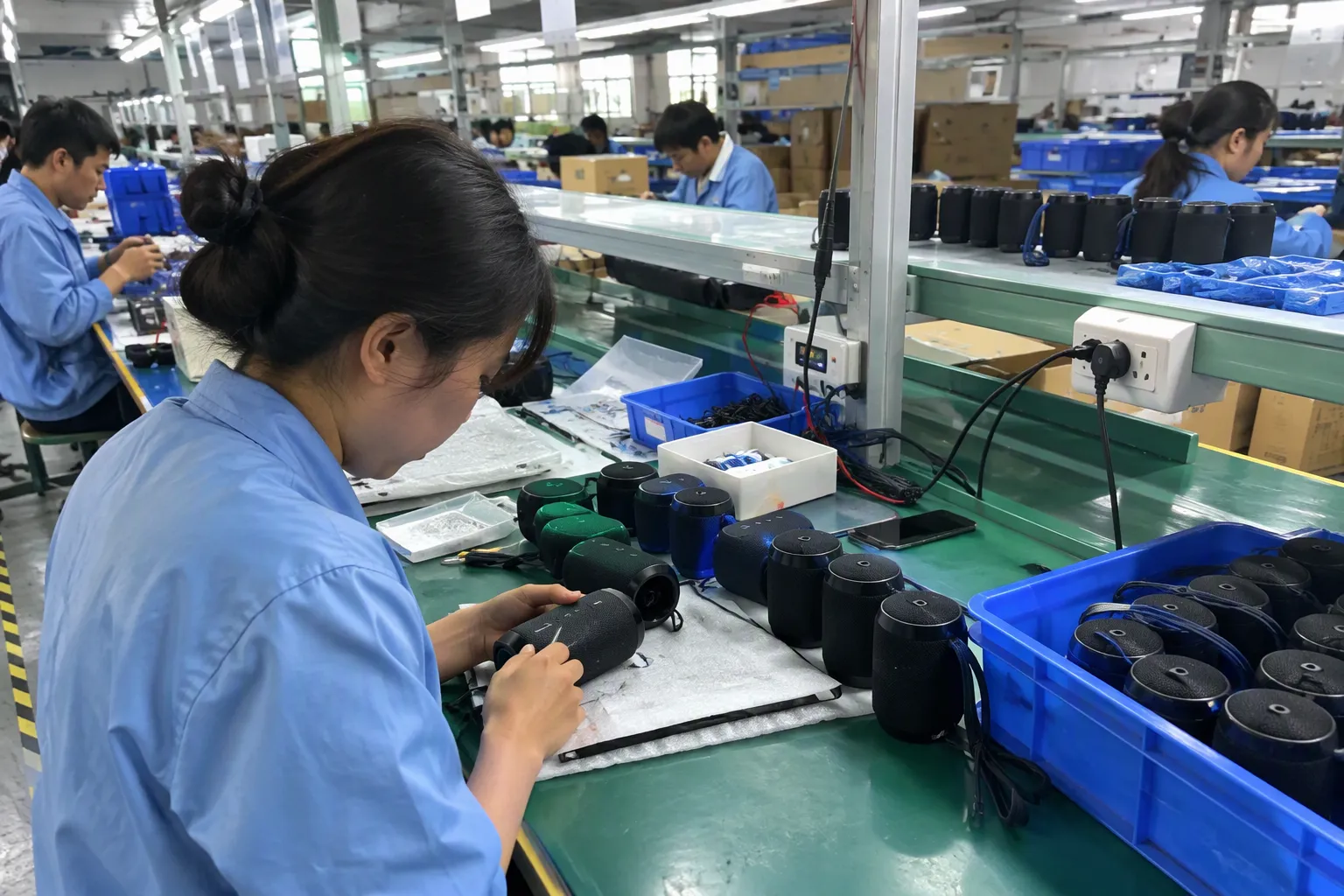
The process becomes much clearer when I separate product definition from supplier selection. A reliable supplier cannot compensate for an unclear product brief, and a low price cannot compensate for a sample that fails the intended use. Below, I explain the practical steps I use to make supplier and quotation comparisons more meaningful.
How Can I Source Bluetooth Speakers from China?
A rushed sourcing process can produce inconsistent samples, missing accessories, unclear battery claims, or packaging that does not suit the destination market. I approach Bluetooth speakers from China as a procurement project rather than a simple product search. That means I verify requirements, suppliers, samples, production controls, and shipping conditions in sequence.
I source Bluetooth speakers from China by preparing a detailed product brief, finding several suitable suppliers, checking their capabilities, requesting comparable quotations, testing samples, confirming compliance documents, and inspecting production before shipment. I also evaluate communication quality, customization ability, packaging, minimum order quantity, lead time, and after-sales support.
Start with a product brief, not a product listing
Many buyers begin with a marketplace search and send a supplier a screenshot. That approach can work for initial discovery, but it rarely provides enough detail for a reliable quotation. A supplier may quote a basic model while the buyer assumes the price includes a larger battery, better materials, custom packaging, and additional accessories.
I usually convert the product idea into a written brief before asking for final prices. The brief should describe the intended customer, sales channel, target price range, expected order quantity, and required product functions.
A practical brief can include:
- Product type and intended use
- Approximate dimensions and weight
- Housing material and preferred finish
- Color and logo requirements
- Speaker configuration and output claims
- Battery capacity and charging method
- Expected playback or operating time
- Bluetooth connection requirements
- Buttons, controls, microphone, and indicator lights
- Water or dust resistance requirements
- Included cable, manual, gift box, and other accessories
- Private-label packaging and barcode requirements
- Target order quantity and expected reorder volume
- Destination country or market
- Required delivery date
- Inspection and testing expectations
The buyer does not need to know every technical detail at the beginning. However, the buyer should identify which features are essential and which features are optional. This distinction helps suppliers quote accurately and helps me negotiate without removing important functions by accident.
Turn vague performance language into checkable requirements
“Good sound” is not a complete specification. Different buyers may mean clear speech, strong bass, high volume, low distortion, or balanced performance in a small room. I ask the buyer to describe the listening environment and the expected use case.
For example, a brief might request:
- Clear voice playback for podcasts
- Stronger low-frequency response for casual music listening
- Stable volume without obvious distortion at a defined setting
- Consistent performance across approved samples
- No rattling, buzzing, or loose internal parts during normal use
These requirements still need practical evaluation. I do not present a supplier’s description as laboratory evidence. I use samples for comparative checking and recommend qualified technical evaluation when the product will be marketed with specific acoustic or performance claims.
Battery life also needs careful definition. A supplier may quote a playback duration under conditions that are different from the buyer’s intended use. Volume level, lighting effects, wireless connection, battery age, and charging cycles can affect actual results.[3] A buyer should ask:
- What battery capacity is installed?
- What playback conditions support the quoted runtime?
- Does the figure include lighting or other power-consuming functions?
- What charging input and cable are included?
- What battery documentation is available?
- How will battery performance be checked during production?
The buyer should record the approved sample conditions. Otherwise, the factory may deliver a product that technically resembles the sample but performs differently in daily use.
Build a sensible supplier shortlist
I prefer to contact several suppliers instead of relying on one attractive listing. The exact number depends on the product, order size, and customization level, but a small comparison group usually reveals differences in capability and commercial terms.
Potential sourcing channels include:
- Chinese B2B supplier platforms
- Manufacturer referrals
- Industry exhibitions
- Local sourcing networks
- Existing supplier introductions
- A China sourcing company with factory-screening capability
A listing is useful for discovering product categories, but it is not proof of manufacturing capability.[6] I ask suppliers for evidence that relates directly to the proposed product. This may include:
- Company registration information
- Factory or trading-company status
- Product catalog and model history
- Production process description
- Quality-control workflow
- Sample lead time
- Customization examples
- Export market experience
- Available testing or compliance documents
- Production capacity for the expected order size
- References or verifiable business information where appropriate
Factory photos can support a conversation, but I do not treat them as verification.[7] A supplier may use professional photographs, shared facilities, or outdated images. For a serious order, I recommend a factory audit or an appropriate verification service.
Compare supplier capability, not only unit price
A supplier may be suitable for a standard stock model but unsuitable for private-label production. Another supplier may have stronger customization and quality systems but quote a higher price. I compare each supplier against the buyer’s actual project needs.
| Evaluation area | Questions I ask |
|---|---|
| Product fit | Does the supplier already make a model close to the brief? |
| Customization | Can the supplier change color, logo, firmware, packaging, or structure? |
| Quality control | What checks occur during incoming, assembly, and final inspection? |
| Battery handling | Can the supplier provide relevant battery information and shipping documents? |
| Communication | Does the team answer technical questions clearly and consistently? |
| MOQ | Does the minimum order suit the buyer’s test phase? |
| Lead time | Does the quoted schedule include sampling, production, and packaging? |
| Documentation | Can the supplier provide documents that buyers can independently verify? |
| Production stability | Can the supplier maintain the approved specification for repeat orders? |
| Commercial terms | Are payment, tooling, replacement, and delivery conditions clear? |
Communication quality is a practical risk indicator.[8] I pay attention to whether the supplier answers each question or simply repeats a price. A supplier that cannot explain the battery configuration, included accessories, or packaging process may create problems later, even if the initial quotation is attractive.
Make quotations comparable
Quotation comparison becomes unreliable when suppliers include different specifications. One price may cover a basic speaker with plain packaging. Another may include a larger battery, custom color, branded box, manual, testing, and delivery to a designated location.
I request quotations in a consistent format. A comparison sheet can include:
- Supplier and factory status
- Model number and product version
- Unit price and currency
- Price basis, such as EXW or FOB
- Minimum order quantity
- Sample cost and sample lead time
- Tooling or mold charges
- Logo method and setup cost
- Custom color surcharge
- Packaging materials and printing
- Included accessories
- Battery capacity
- Estimated production lead time
- Payment terms
- Inspection arrangements
- Shipping document support
- Validity period of the quotation
The buyer should also state the expected quantity. A supplier may offer a lower unit price at a volume that the buyer cannot realistically order. I separate the sample price, trial-order price, and repeat-order price where possible.
Why a low quotation can be misleading
A low offer may omit costs or reduce the specification. For example, the quote might exclude:
- Custom packaging
- Logo setup
- Printed manuals
- Higher-capacity battery
- Additional charging cables
- Pre-shipment inspection
- Export cartons
- Product testing
- Local transport
- Shipping and customs charges
A low price can also reflect a different component configuration. Two speakers with similar external dimensions may use different batteries, drivers, control boards, housing materials, or assembly processes. I ask suppliers to identify the key components that affect performance and cost.
I do not assume that a more expensive quotation guarantees better quality. I use the quotation to identify differences, then use samples and evidence to evaluate whether those differences matter.
Evaluate samples with a written checklist
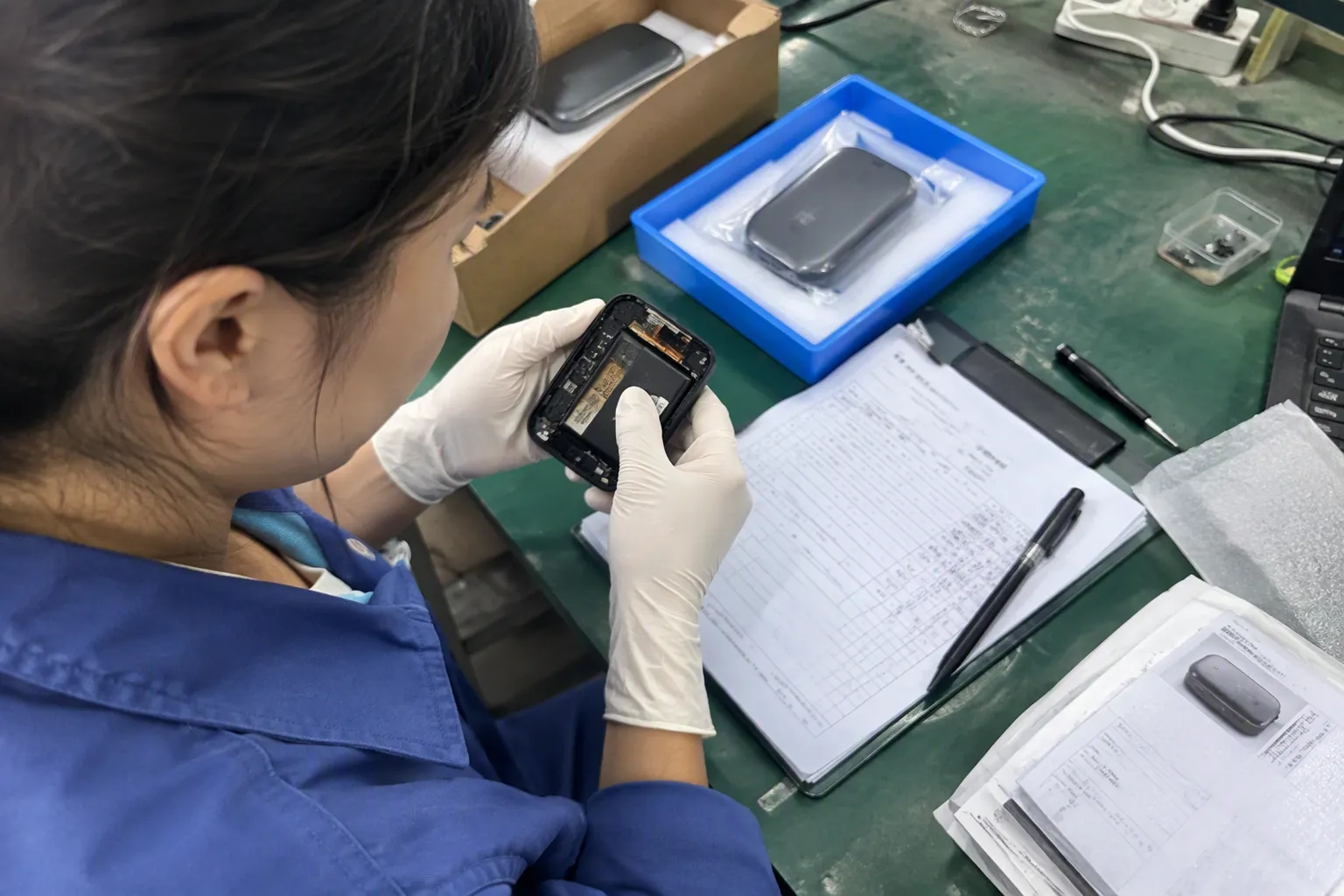
A sample is not only a product to approve. It is evidence about the supplier’s communication, development process, packaging, and attention to detail. When I review a sample, I compare it against the written brief rather than judging it only by appearance.
A sample evaluation checklist may cover:
Physical construction
- Are the housing panels aligned?
- Do buttons operate consistently?
- Are seams, grilles, and rubber feet secure?
- Does the product show scratches, gaps, glue marks, or uneven printing?
- Does the speaker remain stable on a flat surface?
- Does the sample match the promised color and finish?
Audio and user experience
- Does the speaker pair as expected?
- Does the connection remain stable in the intended environment?
- Does the volume control behave consistently?
- Is the sound acceptable for the stated customer use?
- Does the unit produce rattling, buzzing, or unexpected noise?
- Do calls or microphone functions work if they are part of the brief?
Battery and charging
- Does the product charge correctly?
- Does the indicator behave as described?
- Does the included cable match the agreed type?
- Is the battery information consistent with supplier documents?
- Does the observed operating time meet the agreed test method?
Packaging and accessories
- Are all listed accessories present?
- Does the inner packaging protect the product?
- Is the carton suitable for shipping and retail handling?
- Are labels, manuals, barcodes, and logos correct?
- Does the packaging match the approved artwork?
I record the sample model, date, supplier, configuration, and test conditions. I also photograph defects and keep the approved sample for comparison when production begins. A qualified testing laboratory or technical professional should assess claims that require specialized instruments or regulatory interpretation.
Check documents without treating them as automatic proof
Bluetooth speakers may involve wireless functions, rechargeable batteries, chargers, labeling, packaging, and import requirements.[4] The exact obligations depend on the destination country, product configuration, transport method, and sales channel.
Suppliers may provide declarations, reports, or certification-related documents. Buyers should verify that documents match:
- The correct supplier or manufacturer
- The exact product model
- The current hardware configuration
- The relevant market
- The stated test scope
- The document issuer and validity
- Any applicable labeling or packaging requirements
I treat supplier-provided documents as materials for review, not as automatic proof that the product is approved for every market. I recommend that buyers confirm country-specific requirements with a qualified compliance professional, testing laboratory, customs specialist, or legal adviser.
Battery shipping also deserves early attention.[5] The supplier should explain the battery type, packaging method, available transport documents, and any limitations that may affect air or sea freight. Shipping arrangements should not be left until after production because missing information can delay dispatch or increase costs.
Confirm the approved specification before placing an order
The approved sample and the purchase order should describe the same product. I recommend preparing a final specification sheet that both sides can reference. It should include the model, dimensions, materials, color, logo, battery, functions, accessories, packaging, carton details, and inspection criteria.
A final order file may contain:
- Product specification sheet
- Approved sample photographs
- Packaging artwork
- Logo and labeling files
- Accessory list
- Quantity by model or color
- Quality standards and defect definitions
- Testing or inspection checklist
- Delivery schedule
- Payment and replacement terms
This step reduces the risk of “sample drift,” where production gradually differs from the approved sample. It also makes a quality inspection more objective. An inspector can check agreed requirements, while a vague instruction such as “premium quality” is difficult to enforce.
Manage production and inspect before shipment
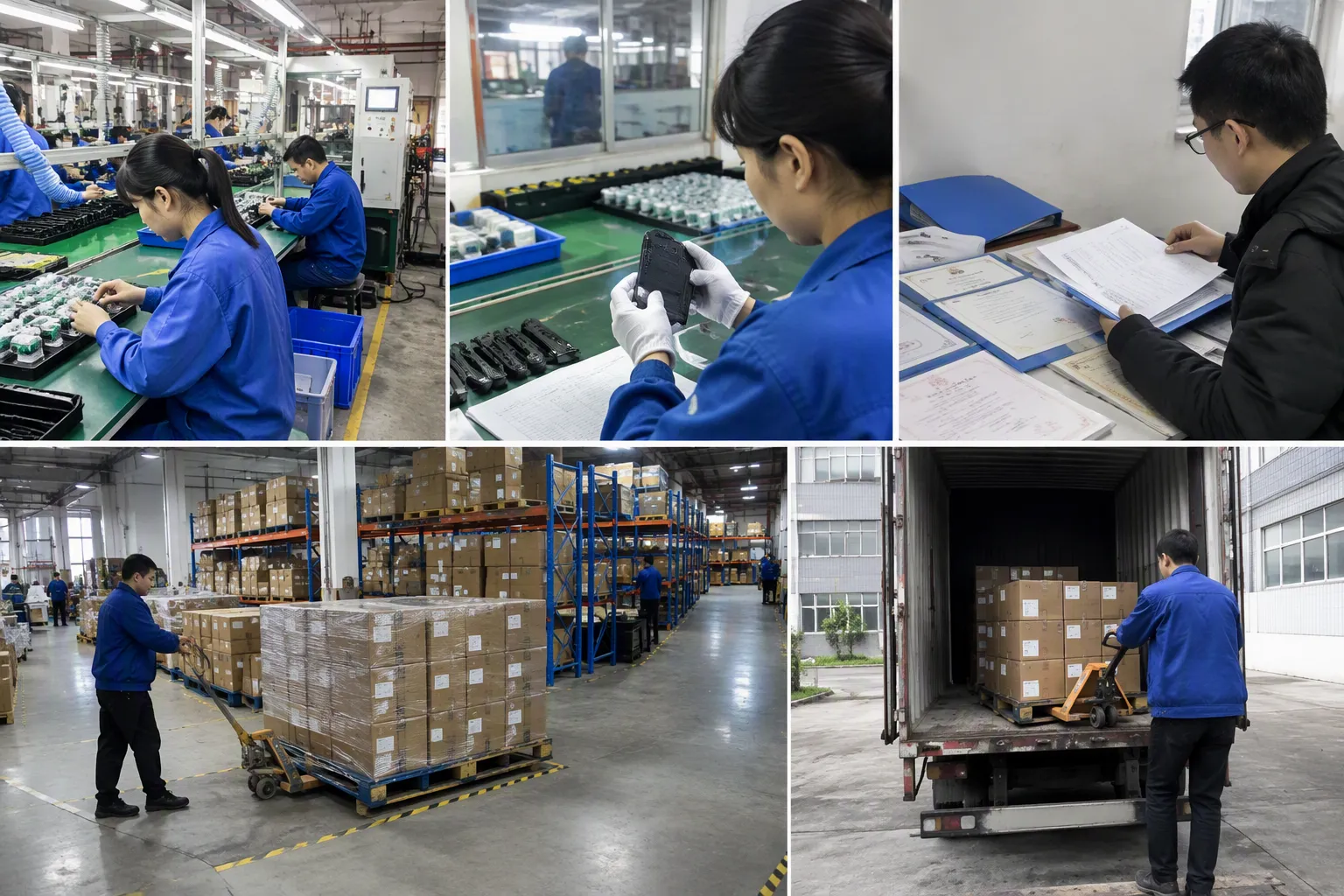
Supplier selection does not end when the purchase order is signed. Production follow-up helps identify issues before the goods leave the factory. I ask for updates at suitable stages, such as material preparation, assembly, packaging, and final completion.
A pre-shipment inspection may check:
- Quantity and model mix
- Product appearance
- Basic operation
- Pairing and charging
- Battery and accessory configuration
- Logo and packaging accuracy
- Carton quantity and markings
- Random sample measurements
- Defects against the agreed standard
For larger or repeat orders, buyers may also consider production-line checks, first-article approval, or third-party testing. The right method depends on the product risk and order value. Inspection cannot improve a product that was poorly specified, but it can help identify nonconformities before shipment.
I also recommend keeping records for future orders. If a buyer receives customer complaints, the team can compare the complaint with the approved sample, inspection report, batch information, and supplier communication. This record supports more informed decisions about corrective action and repeat purchasing.
Consider the total procurement cost
The unit price is only one part of the sourcing decision. I calculate a broader landed-cost estimate that includes:
- Product price
- Customization and tooling
- Packaging
- Sample and testing costs
- Inspection fees
- Local transport
- Export charges
- Freight
- Insurance where appropriate
- Customs duties and taxes
- Warehousing
- Rework or replacement risk
- Marketplace or retailer requirements
A supplier with a slightly higher unit price may be more economical if the supplier provides consistent quality, clearer documentation, better packaging, and fewer production problems. On the other hand, a higher price without supporting evidence should not be accepted automatically.
For small test orders, I focus on reducing irreversible risk. I may prioritize a manageable MOQ, responsive communication, sample consistency, and flexible packaging. For repeat or larger orders, I place more weight on production controls, component consistency, documentation, inspection access, and supply continuity.
Use a structured supplier scorecard
A scorecard helps me avoid making a decision based on one impressive feature. I can assign weighted scores according to the project. For example, a buyer selling a premium private-label product may give quality and customization more weight than the lowest price.
| Category | Example weight |
|---|---|
| Product and sample performance | 25% |
| Manufacturing and quality capability | 20% |
| Price and total cost | 20% |
| Communication and responsiveness | 10% |
| Customization and packaging | 10% |
| Documentation and market support | 10% |
| Lead time and supply flexibility | 5% |
These percentages are examples, not universal standards. I adjust them based on the buyer’s channel and risk. A promotional order may prioritize delivery and branding. An Amazon or DTC brand may prioritize customer experience, packaging, consistent performance, and documentation.
I also record unresolved questions separately. A supplier should not receive a high score simply because the buyer has not yet confirmed a weakness. Unknown information is a risk that requires follow-up.
When should I use a China sourcing partner?
A sourcing partner can help when the buyer lacks a purchasing team in China, needs several factories compared, or wants local support for samples, inspections, consolidation, and shipping. This can be useful when the order involves multiple SKUs, custom packaging, or several suppliers.
At KingSourcing, I would normally support the workflow by:
- Clarifying the product brief
- Identifying suitable Chinese suppliers
- Comparing quotations on a consistent basis
- Coordinating samples and revisions
- Supporting supplier and factory verification
- Following production progress
- Arranging quality inspection
- Checking products individually when the project requires it
- Coordinating packaging, warehousing, consolidation, and shipping
A sourcing service does not replace product-specific engineering, laboratory testing, or legal compliance advice. I use local access and procurement coordination to make the process more transparent, while qualified specialists should handle application-specific technical or regulatory decisions.
Common mistakes I try to prevent
Buyers often encounter avoidable problems because they move from a listing directly to a large order. I pay particular attention to these mistakes:
- Selecting a supplier solely because of the lowest unit price
- Comparing different product versions as if they were identical
- Accepting “long battery life” without test conditions
- Assuming a factory photo proves factory ownership
- Treating a supplier document as universal market approval
- Approving a sample without recording its configuration
- Omitting accessories and packaging from the purchase order
- Failing to define acceptable defects
- Ignoring shipping requirements for batteries
- Ordering too much before validating customer demand
- Changing specifications verbally without updating the order file
A controlled sourcing process does not eliminate every risk. It makes the remaining risks visible and gives the buyer evidence for a better decision.
Frequently Asked Questions
Is China a good place to source Bluetooth speakers?
China has a broad supplier base for consumer electronics, private-label products, packaging, and accessories. However, supplier quality varies. I recommend comparing several suppliers, checking samples, verifying documents, and inspecting production rather than assuming that every listing represents the same manufacturing capability.
What information should I send to a Bluetooth speaker supplier?
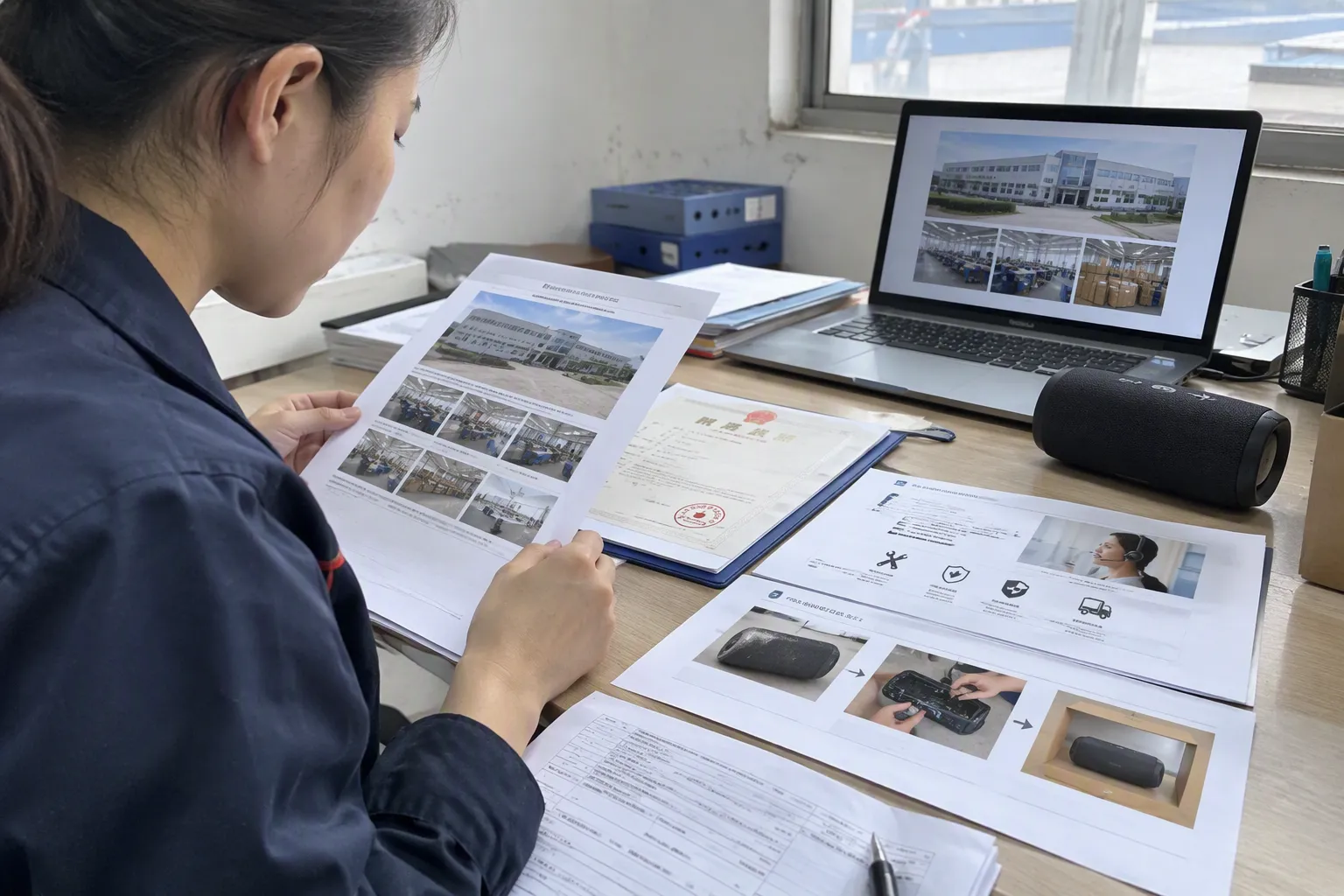
Send the intended use, target market, product functions, preferred materials, battery requirements, logo and packaging needs, accessories, quantity, delivery location, and target schedule. If some details are undecided, mark them as optional. This helps suppliers separate a basic quotation from a customized quotation.
How can I compare Bluetooth speaker supplier quotations?
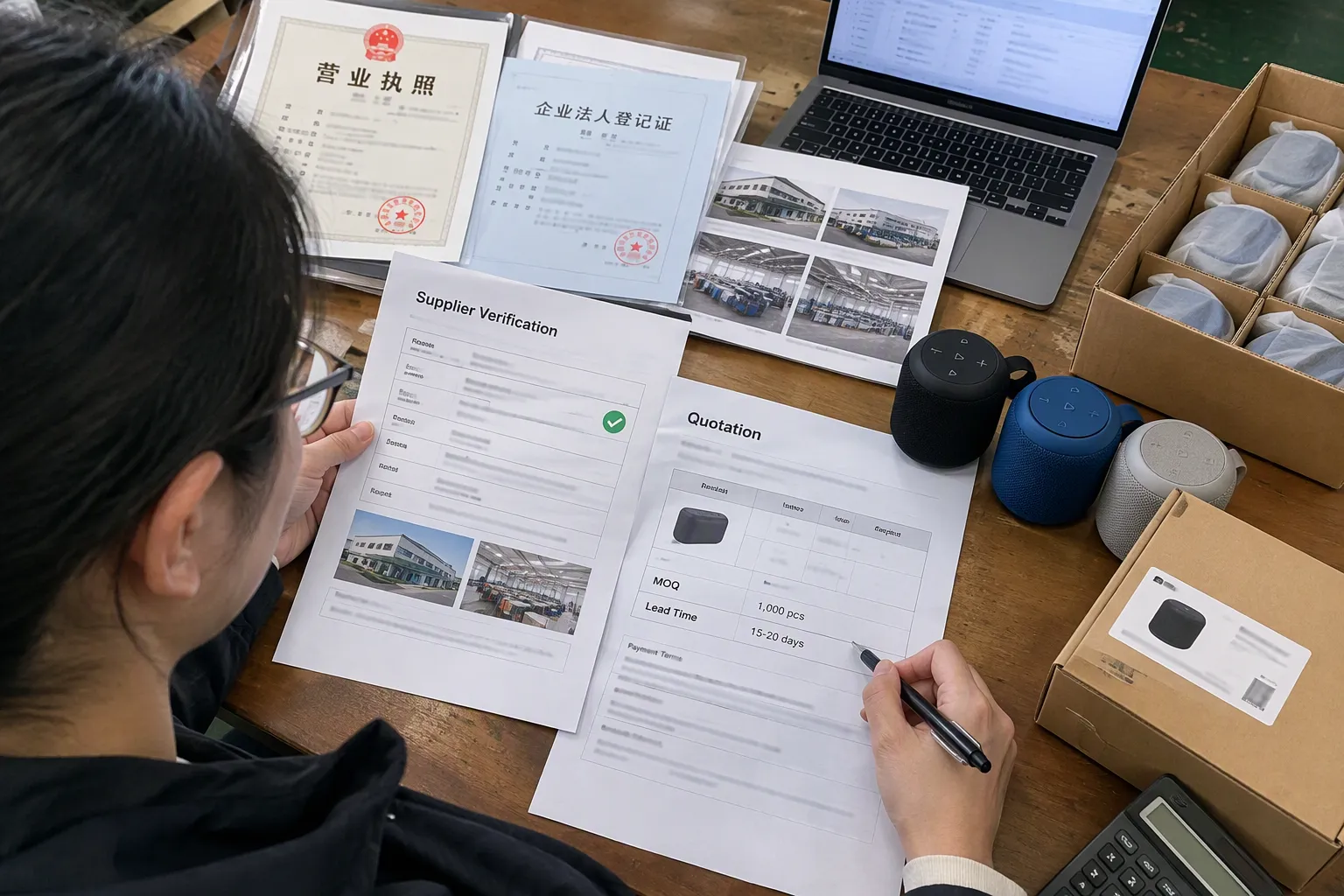
I compare quotations only after aligning the model, battery, functions, accessories, packaging, customization, MOQ, delivery terms, lead time, and inspection conditions. I also calculate total procurement cost. A lower unit price may exclude important items or describe a different product configuration.
Should I order samples before placing a bulk order?
Yes. Samples help buyers review construction, operation, pairing, charging, packaging, accessories, and the overall customer experience. I recommend documenting the approved sample and its test conditions. For specialized performance or market claims, buyers should use qualified testing professionals.
How can I reduce quality risk when importing Bluetooth speakers?
I reduce risk by using a detailed specification, screening suppliers, checking relevant documents, approving samples, confirming the purchase order, following production, and arranging inspection before shipment. I also request clear battery and shipping information and keep records that can support future quality decisions.
Conclusion
Sourcing Bluetooth speakers from China works best when I treat the project as a structured procurement process rather than a search for the cheapest listing. I define measurable requirements, compare equivalent quotations, review samples carefully, verify supplier evidence, confirm documentation, and inspect production against an approved specification. KingSourcing can help overseas e-commerce sellers, wholesalers, and brands manage supplier sourcing, sample development, quality control, consolidation, and shipping from China. Contact me with your product brief, target quantity, and destination market so I can help assess the next sourcing steps.
Sources
- A History of the Electronics Industry in Shenzhen, China", A trade or industry study on China's consumer-electronics sector supports the characterization of a large and diverse manufacturing base with customization capacity across product categories
- EFFECTIVE METHODOLOGIES FOR SUPPLIER SELECTION ...", Procurement literature supports assessing offers by life-cycle or total cost, including quality, logistics, and failure-related costs, rather than by quoted unit price alone
- [PDF] Residential Battery Modeling for Control-Oriented Techno-Economic ...", Battery-engineering studies show that operating load, cycle history, and aging affect the usable capacity and discharge behavior of rechargeable lithium-ion cells, which provides a mechanism for variation in device runtime
- Equipment Authorization – RF Device | Federal Communications ...", Regulatory guidance for wireless consumer electronics identifies potential requirements concerning radio equipment authorization, electrical safety, batteries, labeling, and market placement
- [PDF] DANGEROUS GOODS PANEL (DGP) - ICAO", International dangerous-goods guidance treats lithium batteries as regulated cargo and specifies conditions concerning classification, packaging, marking, documentation, and transport
- Guidance for federal contracting officials -Small Business ...", Supply-chain due-diligence guidance treats marketplace listings and supplier representations as preliminary information that require independent verification before they are relied upon for procurement decisions
- What is a Factory Audit? A Complete Guide for Importers", Supplier-qualification guidance distinguishes documentary or on-site verification from unaudited visual representations and treats facility evidence as requiring corroboration
- Relationship Quality in Supply Chain Management: A Dyad ...", Supplier-relationship studies associate timely, accurate, and reciprocal information exchange with improved coordination and relationship performance, making communication a potentially relevant risk signal