Quick Answer
LCL shipping from China can look attractive when your order is too small for a full container. However, a low ocean-freight rate may hide handling, documentation, delivery, and coordination costs[2]. I help buyers compare these details before they choose a shipment method, so a small order does not become an expensive or difficult import.
LCL shipping from China allows several importers to share container space[1] when each shipment does not fill a full container. It can suit small-volume or multi-SKU orders, but the correct choice depends on total delivered cost, cargo characteristics, supplier readiness, timing, destination charges, and coordination risk. Importers should compare LCL with FCL and air freight before booking.

The main decision is not simply whether your cargo is small. I also look at how many suppliers are involved, whether the goods can arrive at one consolidation warehouse, how urgently the inventory is needed, and whether the final quotation includes every important charge. These factors often matter more than the first ocean-freight number a buyer sees.
LCL Shipping from China: What Should Small Importers Know
A small importer may choose LCL because a full container would leave too much unused space or tie up working capital. The risk appears when the buyer compares only the shared-container freight rate and overlooks the work needed before and after the ocean leg. A better process starts with a complete shipment plan and written quotation.
LCL shipping from China is usually suitable when a buyer has cargo that is too small for FCL[3], can accept a longer and less predictable process than air freight, and can manage consolidation at origin. The buyer should confirm volume, chargeable measurement, supplier delivery dates, warehouse handling, export documentation, destination fees, customs requirements, and final delivery before making a decision.

Why the lowest LCL ocean rate may not be the lowest cost
An LCL quotation normally relates to shared container transport, but the final import bill can include several other services. The exact charges vary by route, forwarder, cargo, port, destination, and market conditions[4]. I therefore ask buyers to treat the first rate as one line in a cost model rather than as the final answer.
A practical cost structure may include:
| Cost area | What the buyer should verify |
|---|---|
| Origin pickup | Whether collection from each supplier is included or quoted separately |
| Origin warehouse | Receiving, unloading, weighing, measuring, storage, and handling charges |
| Consolidation | Palletizing, repacking, labeling, sorting, and loading services |
| Export documents | Commercial invoice, packing list, export filing, and document handling |
| Ocean freight | Rate basis, minimum charge, currency, validity, and applicable surcharges |
| Destination charges | Terminal, deconsolidation, documentation, handling, and release fees |
| Customs-related costs | Broker fees, duties, taxes, inspections, or other government charges where applicable |
| Final delivery | Trucking from the destination warehouse or port area to the buyer’s address |
| Special cargo services | Treatment of oversized, fragile, battery-containing, liquid, or regulated goods |
The buyer should request an all-in estimate and a separate list of excluded items. “All-in” does not have one universal meaning. One provider may include origin collection but exclude destination delivery. Another may include port handling but exclude customs brokerage and taxes. A written scope prevents a cheap-looking quote from creating surprises later.
I do not use fixed destination charges or universal transit times as planning facts. I ask the logistics provider to confirm the current figures for the exact origin, destination, cargo type, and service level. Buyers should also confirm whether the quotation is based on actual volume, estimated volume, chargeable weight, or a minimum billable quantity[5].
LCL is a coordination process, not only shared container space
LCL works only when several steps connect properly. Suppliers must finish production, pack the goods, prepare accurate documents, and deliver the cargo before the consolidation warehouse cut-off[6]. If one supplier misses the schedule, the buyer may need to choose between waiting, shipping partial cargo, paying additional storage or handling fees, or changing the transport plan[7].
In my own shipment coordination work, I treat the origin warehouse as a control point. I ask suppliers to provide:
- Confirmed production completion dates.
- Carton quantity and dimensions.
- Gross and net weight.
- Packing photographs when appropriate.
- Product and carton marks.
- Commercial invoice and packing list information.
- Any required product, battery, or transport declarations.
- The person responsible for delivery to the nominated warehouse.
This preparation helps the warehouse receive different supplier shipments without losing track of cartons or SKUs. It also gives the logistics provider better information for estimating the shipment’s chargeable volume.
A multi-supplier order can contain many separate risks. One factory may complete early while another is still waiting for packaging. A supplier may send cartons to the wrong warehouse. A packing list may show one carton count while the physical delivery contains another. These problems do not mean LCL is unsuitable, but they show why supplier follow-up and document checking are important.
How cargo type affects the decision
Product characteristics can change the cost and feasibility of LCL shipping from China. Compact, durable, non-sensitive cargo is usually easier to consolidate than goods that need special handling. Buyers should provide accurate information instead of assuming that standard cargo rules apply.
I ask the buyer and logistics provider to review:
- Whether the products contain lithium batteries.
- Whether the shipment includes liquids, powders, magnets, or chemicals.
- Whether cartons are stackable.
- Whether products need pallets, export cartons, or additional protection.
- Whether the cargo is fragile or vulnerable to compression.
- Whether the goods have unusual dimensions.
- Whether the cargo needs temperature or humidity controls.
- Whether the products require special documentation or transport approval.
I am not a customs lawyer, carrier, or regulatory authority. For application-specific questions, I recommend that buyers consult a qualified customs broker, freight forwarder, carrier, or other appropriate professional. The supplier should also provide truthful product information. Incorrect cargo descriptions can create document, clearance, or handling problems[8].
Why consolidation planning matters for multi-SKU orders
Many small importers do not buy one product from one factory. They may purchase accessories from Shenzhen, packaging from Dongguan, household goods from Guangzhou, or products from several other manufacturing clusters. In that situation, China supplier consolidation can reduce the number of international shipments, but it introduces an additional planning layer.
I normally separate the workflow into four stages:
- Supplier readiness: Each factory confirms production, packing, quantities, and delivery timing.
- Warehouse receiving: The consolidation warehouse checks incoming cartons against the expected information.
- Cargo preparation: Staff sort, count, measure, label, and consolidate the goods according to the shipping plan.
- Export and international handover: The final documents are prepared and the cargo moves according to the booking and cut-off.
A sourcing partner can support communication between suppliers, the warehouse, and the buyer. This support becomes more valuable when the buyer has many SKUs, several factories, customized packaging, or no purchasing team in China.
I have seen how a simple receiving discrepancy can require several messages between a supplier, warehouse, and buyer. A carton may arrive without a clear mark, or the declared dimensions may differ from the warehouse measurement. Early checking gives the buyer a chance to correct the information before the shipment reaches the export stage.
A practical comparison with FCL and air freight
LCL is one option, not a default choice for every small order. FCL may offer a simpler container movement when the cargo volume is high enough or when the buyer values control over the container. Air freight may be more appropriate when inventory urgency is greater than transport cost.
| Consideration | LCL | FCL | Air freight |
|---|---|---|---|
| Typical use | Smaller or mixed shipments | Larger shipments or container-level planning | Urgent, light, or high-value goods |
| Space | Shared with other cargo | Dedicated container | Aircraft cargo capacity |
| Consolidation | Usually required | May be simpler after loading | Often uses parcel or air-cargo networks |
| Cost basis | Volume, minimums, and service charges | Container rate and related charges | Chargeable weight and service level |
| Timing | Depends on consolidation and sailing schedule | Depends on booking and port schedule | Often faster, but route-dependent |
| Operational risk | More handovers and coordination points | Fewer shared-cargo interfaces | Higher transport cost and weight sensitivity |
I do not recommend a method based on a single volume threshold. Local charges, cargo density, route availability, product value, inventory urgency, and supplier readiness can change the result. A buyer should request comparable quotes for LCL, FCL where practical, and air freight where urgency justifies the review.
An LCL quoting checklist for small importers
Before accepting an LCL quotation, I suggest asking these questions in writing:
- What is the chargeable volume or weight?
- Is there a minimum billable quantity?
- Which origin pickup locations are included?
- Does the quote include delivery from each supplier to the consolidation warehouse?
- What warehouse receiving, storage, measuring, and repacking charges may apply?
- What is the planned consolidation cut-off?
- What happens if a supplier misses that cut-off?
- Is the quote port-to-port, door-to-door, or another handover?
- Which destination charges are included?
- Are customs brokerage, duties, taxes, inspections, and final delivery excluded?
- Who prepares and checks the commercial invoice and packing list?
- What cargo details must be declared before booking?
- What are the estimated origin handling and international transport timelines?
- What events can change the schedule?
- Which party coordinates claims, damage reports, or document corrections?
The buyer should also ask for the cargo handover points. A quote can sound like door-to-door shipping while actually ending at a destination warehouse. Clear handover points help the buyer understand who controls each stage.
I also recommend keeping a document folder with the purchase orders, supplier invoices, packing lists, carton measurements, inspection records, shipping quotation, booking confirmation, and final transport documents. Organized records support internal purchasing control and make it easier to investigate discrepancies.
How quality control fits into LCL shipping
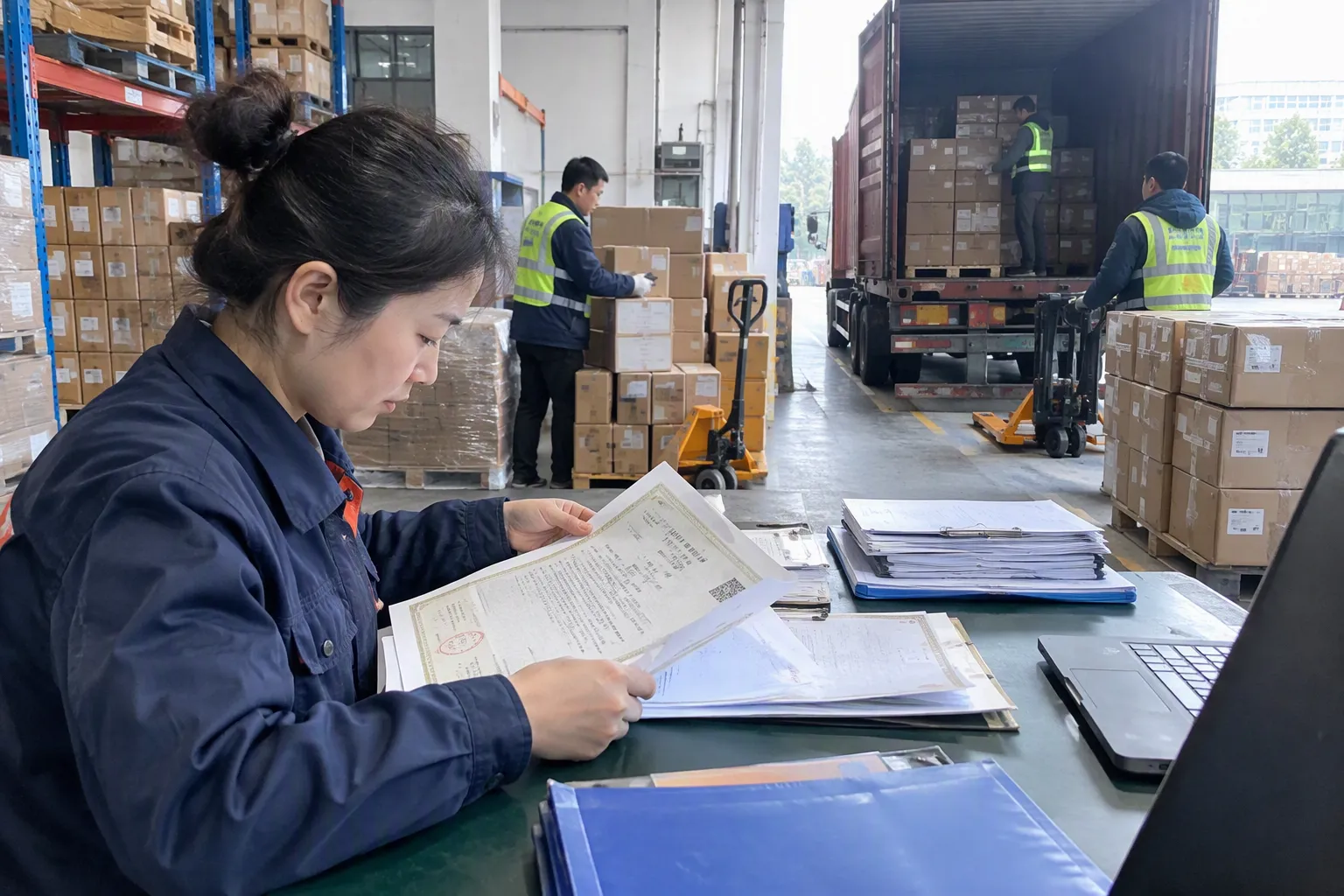
LCL shipping does not replace product inspection. If a buyer consolidates several supplier orders without checking them, the buyer may discover quality or quantity problems only after the goods have already moved internationally. Pre-shipment inspection, carton checks, and warehouse receiving checks can reduce this risk, although no inspection process removes every possible problem.
For multi-SKU orders, I may recommend a control plan that includes:
- Confirming the approved sample or product specification.
- Checking product quantity by SKU.
- Reviewing packaging and labeling requirements.
- Photographing cartons before dispatch.
- Checking carton marks against the packing list.
- Recording visible damage at warehouse receiving.
- Separating nonconforming goods when practical.
- Confirming the final shipment list before export documentation.
A pre-shipment inspection in China can be particularly useful when the buyer cannot visit the factory. The inspection scope should be agreed before production or before the inspection begins. Buyers should define sample sizes, acceptable quality limits, functional tests, packaging checks, and required reports with a qualified inspection provider.
I present inspection and supplier verification as risk-control services, not as guarantees. Buyers should still evaluate product suitability, legal requirements, safety obligations, and import compliance with qualified professionals for their market.
When LCL may not be the right choice
LCL may be a poor fit when the cargo needs urgent replenishment, has a high risk of damage from multiple handovers, requires special transport controls, or involves too many suppliers with uncertain production schedules. It may also become unattractive when the total origin and destination charges are large compared with the cargo value.
I ask the buyer to pause and compare alternatives if:
- The delivery deadline is fixed and the order has little schedule flexibility.
- Several suppliers cannot confirm a common warehouse delivery window.
- The cargo contains sensitive or restricted items.
- The shipment has high-value products that need stronger transport planning.
- The order contains many cartons with unclear marks or incomplete documents.
- A partial shipment would create serious inventory problems.
- The LCL quote has many exclusions that the buyer cannot estimate.
- An FCL quote is close enough to justify dedicated space and simpler handling.
- Air freight has a business case because a stockout would be more costly.
The right answer depends on the buyer’s complete purchasing situation. A small order does not automatically make LCL the cheapest or safest method.
Frequently Asked Questions
Is LCL shipping from China cheaper than FCL?
Not always. LCL can avoid paying for unused container space, but origin handling, consolidation, minimum charges, destination fees, and delivery costs can change the comparison. I recommend requesting a total-cost comparison for LCL and FCL using the same origin, destination, cargo details, and delivery scope.
What information do I need to obtain an LCL quote from China?
You should provide the product description, number of cartons, dimensions, gross weight, supplier locations, estimated ready date, destination address or port, cargo characteristics, and any battery or special-handling information. Accurate data helps the forwarder calculate chargeable volume and identify possible exclusions.
Can several Chinese suppliers be combined into one LCL shipment?

Yes, several supplier orders can often be delivered to one consolidation warehouse and shipped together. The suppliers must meet the warehouse cut-off and provide consistent carton and document information. A sourcing or procurement partner can help coordinate factory readiness, warehouse receiving, SKU identification, and final packing records.
How long does LCL shipping from China take?
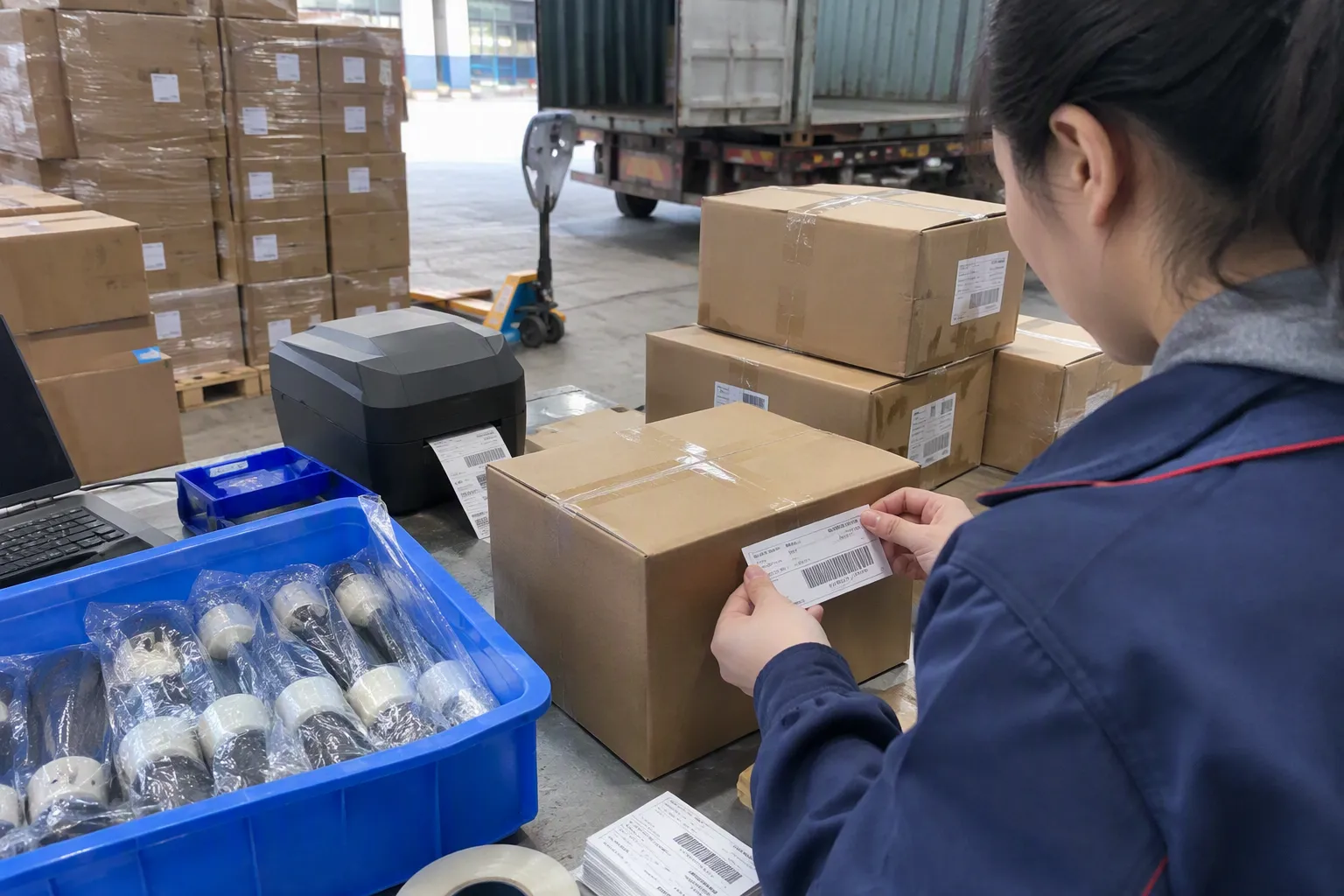
The timeline depends on supplier completion, warehouse receiving, consolidation schedules, booking availability, port procedures, international transport, customs clearance, and final delivery. I avoid quoting one universal number because routes and cargo conditions differ. Buyers should request an estimated schedule and ask what events could change it.
Should I inspect goods before sending them by LCL?
Inspection can be useful, especially for multi-supplier or customized orders, but the scope should match the product and purchasing risk. Buyers may check quantity, workmanship, functions, packaging, labeling, and carton condition before dispatch. A qualified inspection provider should evaluate application-specific requirements.
Conclusion
LCL shipping from China can help small importers move mixed or lower-volume orders without booking a full container. However, I do not treat it as automatically cheaper. I compare the complete delivered cost, supplier readiness, consolidation workload, cargo characteristics, timing, destination charges, and alternatives such as FCL or air freight. A detailed quotation and organized pre-shipment process make the decision more controllable. If you need help verifying suppliers, coordinating inspections, consolidating multi-SKU orders, and comparing shipping options, contact KingSourcing to discuss your purchasing plan.
Sources
- Less Than Container Load: The Engine of Flexible Logistics", An authoritative transport reference defines less-than-container-load shipping as the consolidation of freight from multiple shippers into a shared container rather than the use of a dedicated container
- Publication: Maritime Transport Costs and Port Efficiency", Logistics-cost guidance identifies ocean transport as only one component of an international shipment's total cost, with handling, documentation, customs, and inland-delivery charges potentially assessed separately
- FCL vs LCL shipping: How to choose the right one", Logistics education materials describe LCL as the conventional alternative when a shipment is insufficient in volume to occupy a full container, while noting that the commercial choice also depends on service and handling conditions
- [PDF] Fathoming Shipping Costs - World Bank Documents", Maritime-transport analyses identify route conditions, port services, cargo characteristics, and market conditions as factors that influence the price of international freight and related charges
- Air cargo chargeable weight calculation explained", Freight-pricing guidance explains that LCL billing commonly uses shipment volume or a weight-versus-measurement rule and may apply a minimum chargeable quantity
- LCL Shipping: Strategic Ocean Freight Consolidation for ...", Freight-consolidation guidance identifies cargo readiness, timely warehouse receipt, and complete shipping documentation as operational prerequisites for meeting a consolidation cut-off and planned departure
- LCL Container Shipping: Cutoffs, CFS Steps, and Costs", Freight-scheduling literature describes missed cargo cut-offs as a source of rollover, additional storage or handling, and possible changes to the planned transport sequence
- Strengthening data accuracy in postal supply chains - WCO News", Customs and maritime-safety authorities require accurate descriptions of goods because misdeclaration can impede clearance and create risks for transport documentation and cargo handling