A wrong supplier can look professional at first. I have seen buyers pay too fast, then face delays, poor quality, or hidden costs.
I verify a Chinese supplier by checking business identity, product fit, quotation details, sample quality, communication consistency, production ability, and inspection options before payment. This does not remove all risk, but it helps me avoid many common sourcing mistakes.
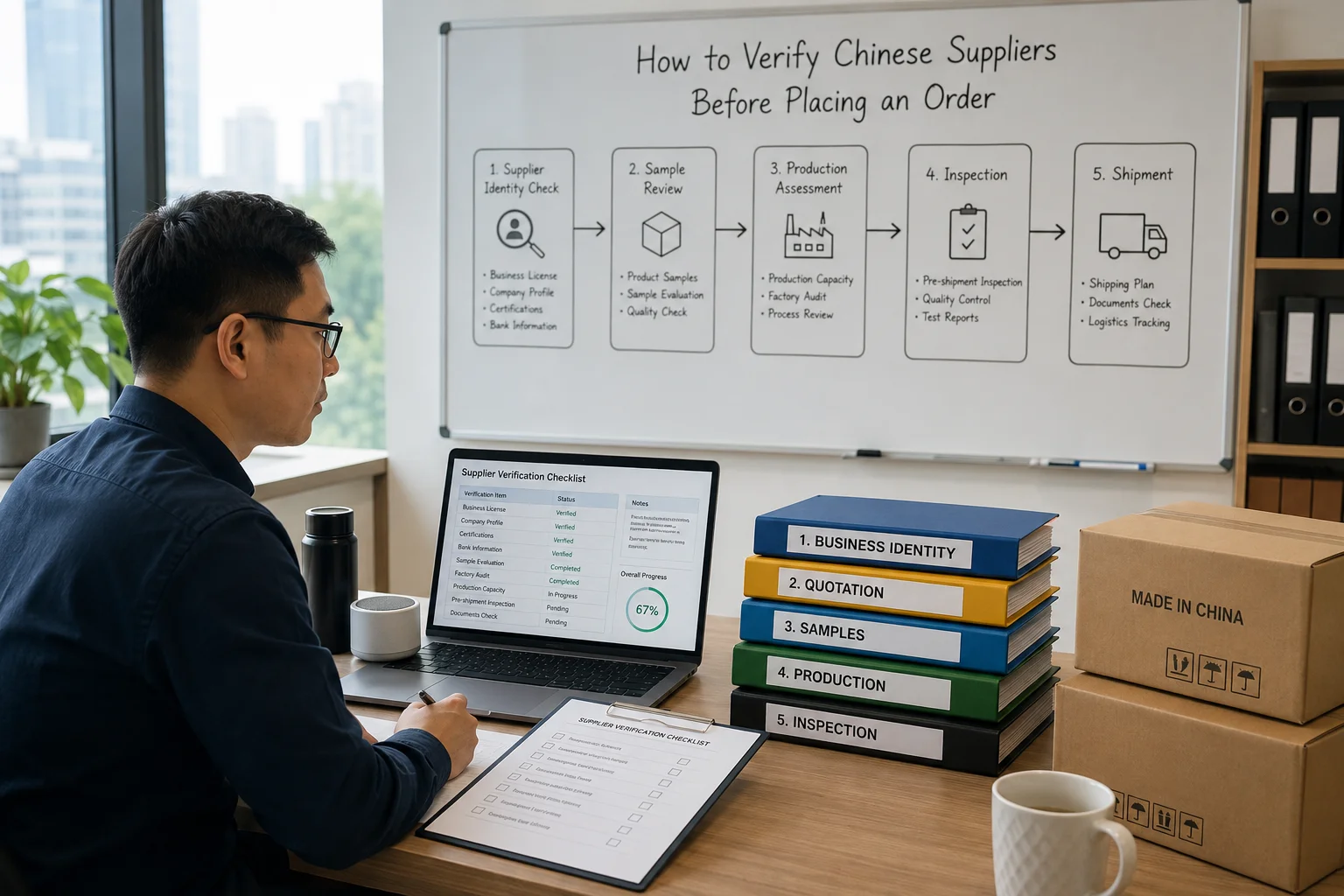
When I help overseas buyers source from China, I do not only ask, “Is this supplier real?” That question is too small. A supplier can be real and still be wrong for a specific order. I prefer to ask, “Can this supplier handle this product, this quantity, this quality level, this timeline, and this budget without creating extra risk?” That question gives me a much better starting point.
1. Why Supplier Verification Matters Before Ordering from China?
Many buyers feel safe after seeing a company profile. I do not. A nice profile can still hide weak production ability or unclear pricing.
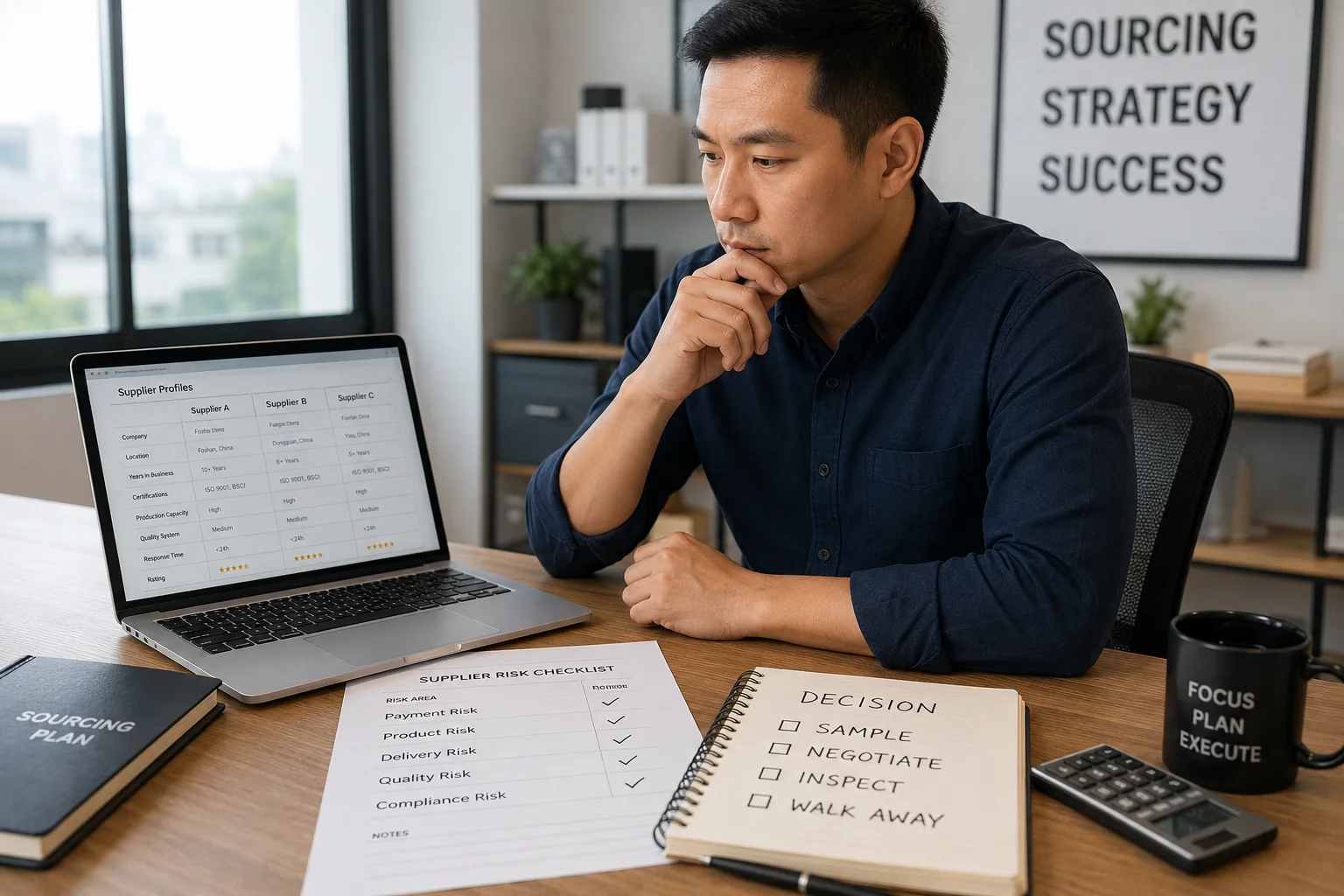
I verify suppliers before ordering because payment risk, product risk, and delivery risk usually appear after money has been sent[^1]. Early checks help me decide whether to sample, negotiate, inspect, or walk away.
I do not treat verification as a formality
In my sourcing work, supplier verification is not only about checking a license. It is about checking whether the supplier fits the order. A small ecommerce seller may need low MOQ, fast samples, clear packaging, and simple communication. A growing brand may need stable materials, custom molds, barcode labels, carton marks, and repeat production. These needs are very different.
I also look at the gap between what the supplier says and what the supplier can prove. A supplier may say, “We are a factory,” but the quotation may show no clear material details. A supplier may say, “Quality is good,” but the sample policy may be vague. These small signals matter.
| What I check | Why I check it | Risk if ignored |
|---|---|---|
| Product match | I need to know if the supplier handles this category often | Wrong supplier may outsource everything |
| MOQ and order size | I need to know if my order is attractive to them | Small orders may get weak attention |
| Quotation detail | I need to see what is included | Low price may hide missing costs |
| Communication | I need clear answers before payment | Confusion may become production errors |
| Sample process | I need proof before bulk order | Good talk may not mean good product |
2. What Can Go Wrong If You Do Not Verify a Chinese Supplier?
A cheap quote can feel like a win. I have seen it become the start of material changes, delayed shipment, and extra fees.
If I do not verify a Chinese supplier, I may face poor quality, wrong specifications, fake promises, late production, hidden packaging costs, weak after-sales support, or a supplier that cannot repeat sample quality in bulk.
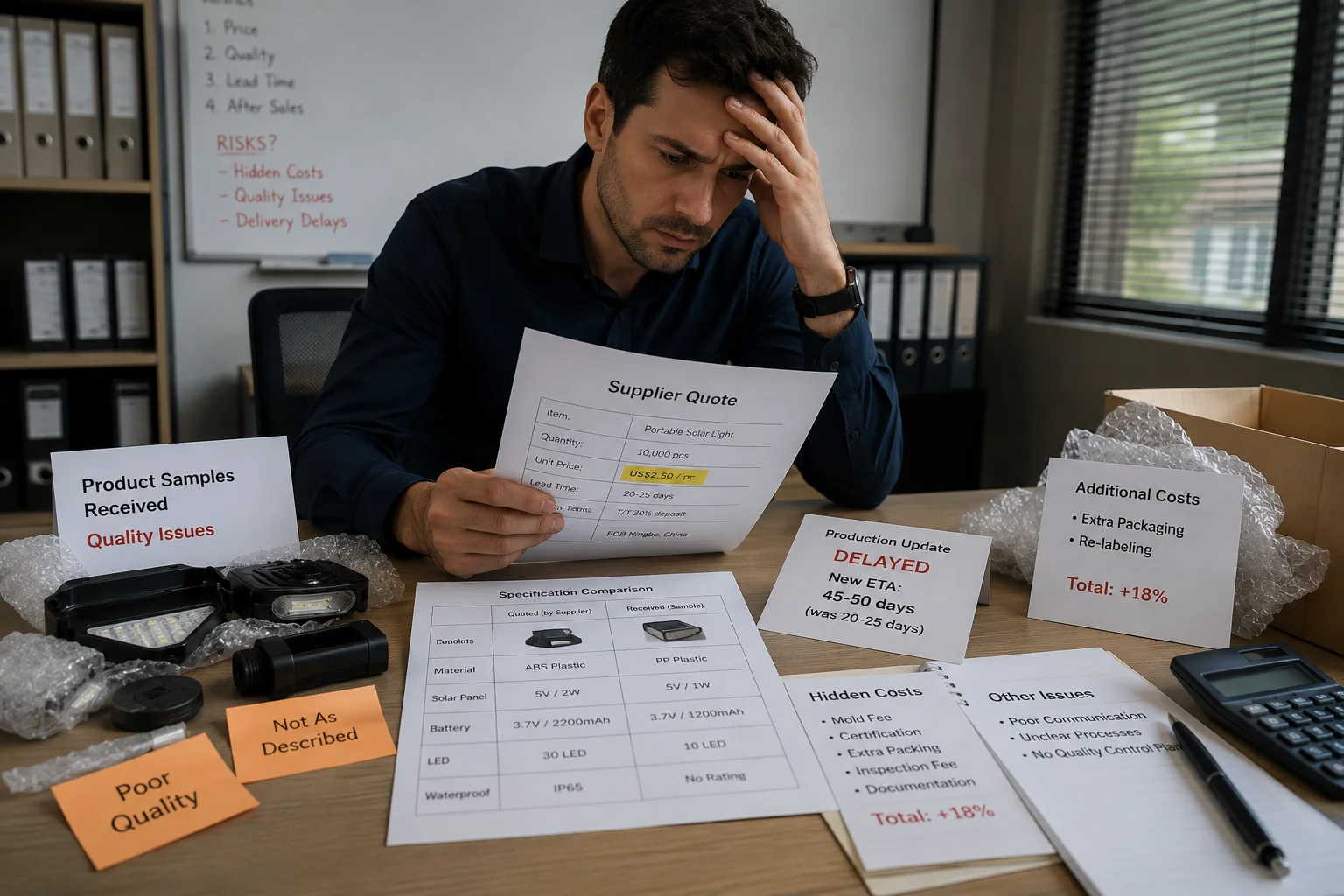
I treat low prices as a question, not an answer
In China sourcing, the lowest quote is not always the best quote[^2]. I often compare quotes by total risk, not only unit price. A supplier can reduce price by using thinner material, weaker parts, simpler stitching, lower-grade packaging, fewer accessories, or less inspection time[^3]. The buyer may not notice this until the goods arrive.
I also check whether the supplier changes answers. If the supplier first says the material is stainless steel, then later says it is “metal,” I slow down. If the supplier says the price includes packaging, then later adds a carton fee, I ask for a full cost sheet. The goal is not to accuse the supplier. The goal is to reduce surprise.
| Common problem | What it may look like | How I reduce the risk |
|---|---|---|
| Material substitution | Sample feels better than bulk goods | I request material specs and inspection points |
| Hidden costs | Packaging, logo, labels, or cartons added later | I ask what is included in writing |
| Late delivery | Supplier accepts order but misses schedule | I confirm production lead time and capacity |
| Wrong packaging | Product arrives hard to sell online | I confirm retail packaging before production |
| Weak after-sales | Supplier stops replying after shipment | I check response quality before payment |
3. How to Check a Chinese Supplier’s Business License and Company Background?
A business license is useful, but I do not stop there.[^4] A registered company can still be unsuitable for my order.
I check a Chinese supplier’s business license, registered name, address, business scope, years in operation, platform profile, website, product focus, and contact details. I also compare these details with the quotation and communication records.
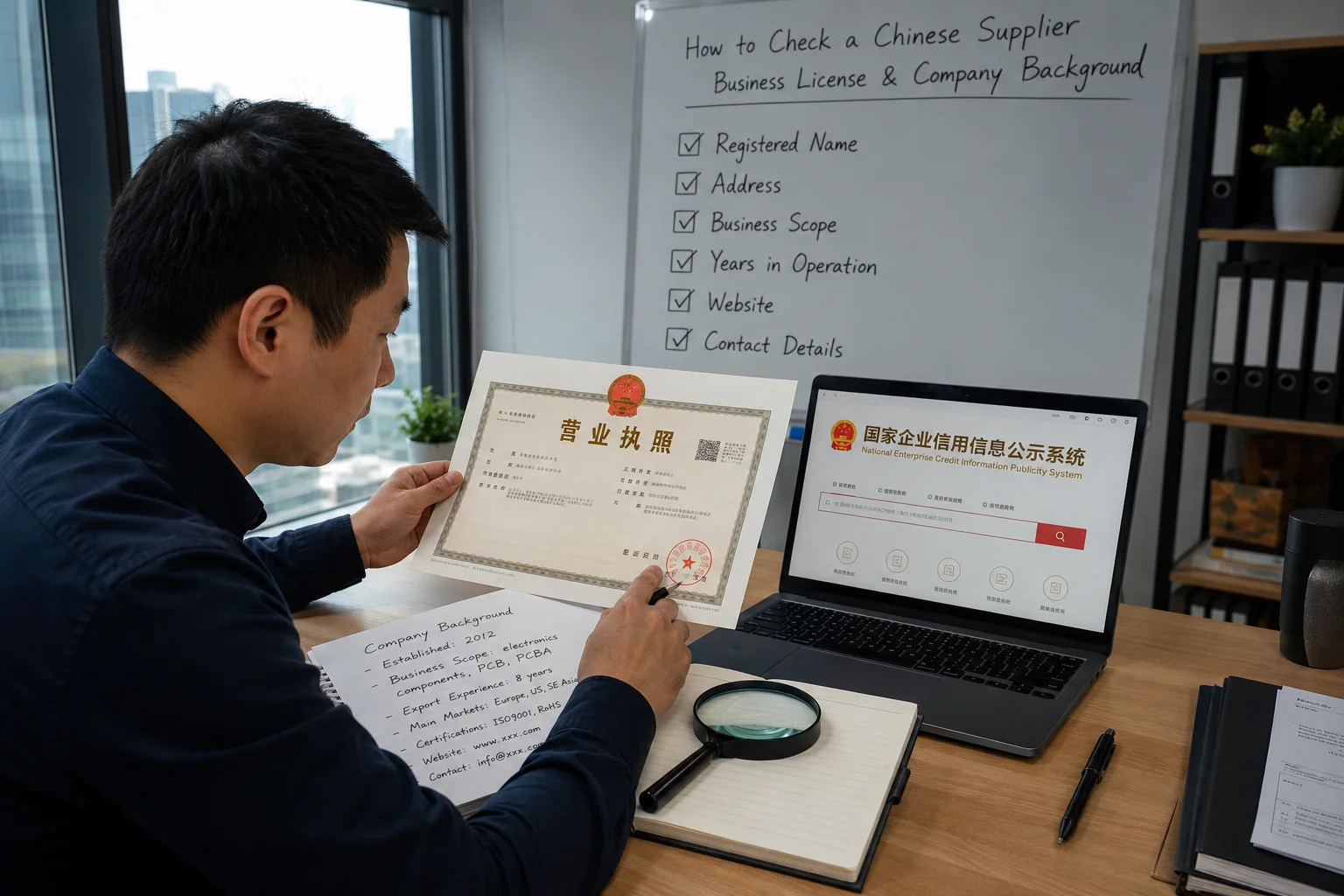
I look for consistency across every source
When I review a supplier’s background, I first ask for the Chinese business license. I check whether the company name matches the invoice name, bank account name, Alibaba profile, email signature, and official quotation.[^5] If these names are all different, I ask why. Sometimes there is a normal reason. Sometimes it is a warning sign.
I also look at the business scope. If the supplier claims to manufacture pet products, kitchen tools, electronics, toys, and apparel at the same time, I become careful. Some trading companies do handle many categories, and that is not automatically bad. But I need to know how they control suppliers and quality.
| Check point | What I want to see | What makes me careful |
|---|---|---|
| Company name | Same name across documents | Different names with no clear reason |
| Registered address | Real location that matches business type | No clear office or factory link |
| Business scope | Related to the product category | Too broad with no explanation |
| Years in business | Enough history for my order type | Very new company with bold claims |
| Payment account | Account name matches company | Personal account for a larger order |
I do not confuse existence with reliability
A supplier can exist legally and still give a weak quote.[^6] A supplier can have a platform badge and still outsource to an unknown workshop. I use background checks as the first filter, not the final decision. After that, I still need samples, video checks, production follow-up, and inspection when the order has real value.
4. How to Confirm Whether a Supplier Is a Real Factory or Trading Company?
Many buyers ask if a supplier is a factory. I ask a better question: does this supplier type fit my buying goal?
I confirm supplier type by checking product range, factory videos, production photos, address, staff knowledge, sample handling, quotation structure, and whether the supplier can explain production details clearly.
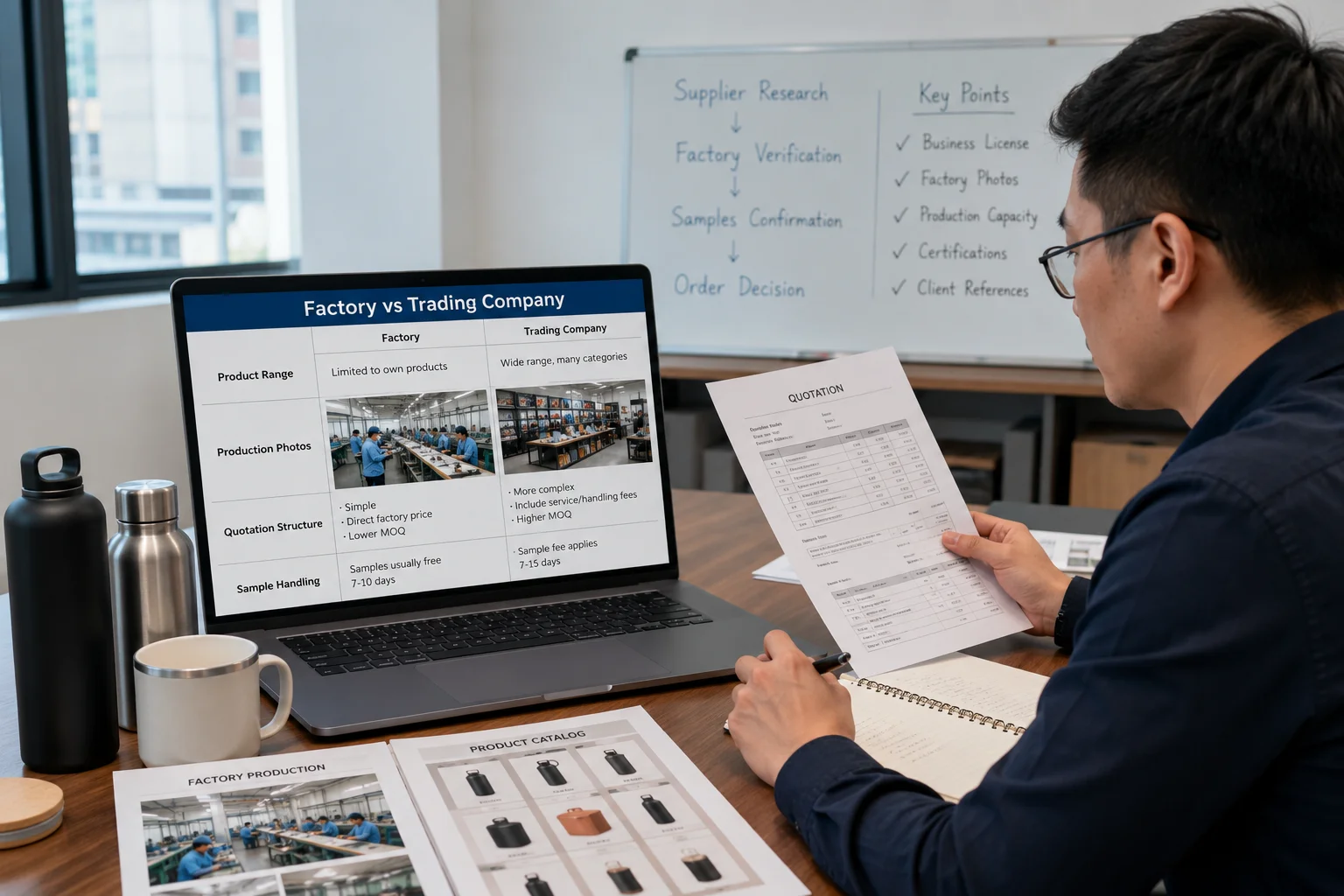
I do not believe “factory good, trader bad”
In my experience, some factories are strong in production but weak in English, packaging design, small orders, or export documents[^7]. Some trading companies are useful when the buyer needs product bundles, mixed categories, low MOQ, or better communication. The real issue is not the label. The real issue is control.
If a supplier says they are a factory, I ask product-specific questions. I may ask about material grades, mold options, production steps, packaging line, testing process, daily capacity, and defect control. A real production team usually answers with clear details. A reseller may answer with general words.
| Supplier type | Possible strength | Possible risk |
|---|---|---|
| Factory | Better control on one product type | May have higher MOQ or weaker service |
| Trading company | Good communication and mixed sourcing | May not control production deeply |
| Sourcing agent | Can compare several suppliers and inspect | Service quality depends on team ability |
| Small workshop | Flexible and low MOQ | Quality system may be unstable |
I focus on the fit for my order
If I need one simple product in a large quantity, a direct factory may be better. If I need ten related products in small quantities, a good trading company or sourcing agent may be more practical. If I need custom packaging, product photos, warehousing, and door-to-door delivery, I need more than a factory quote. I need supply chain support.
5. What Documents and Product Details Should You Request Before Payment?
Payment should not be based on chat messages only. I want written details before I send money.
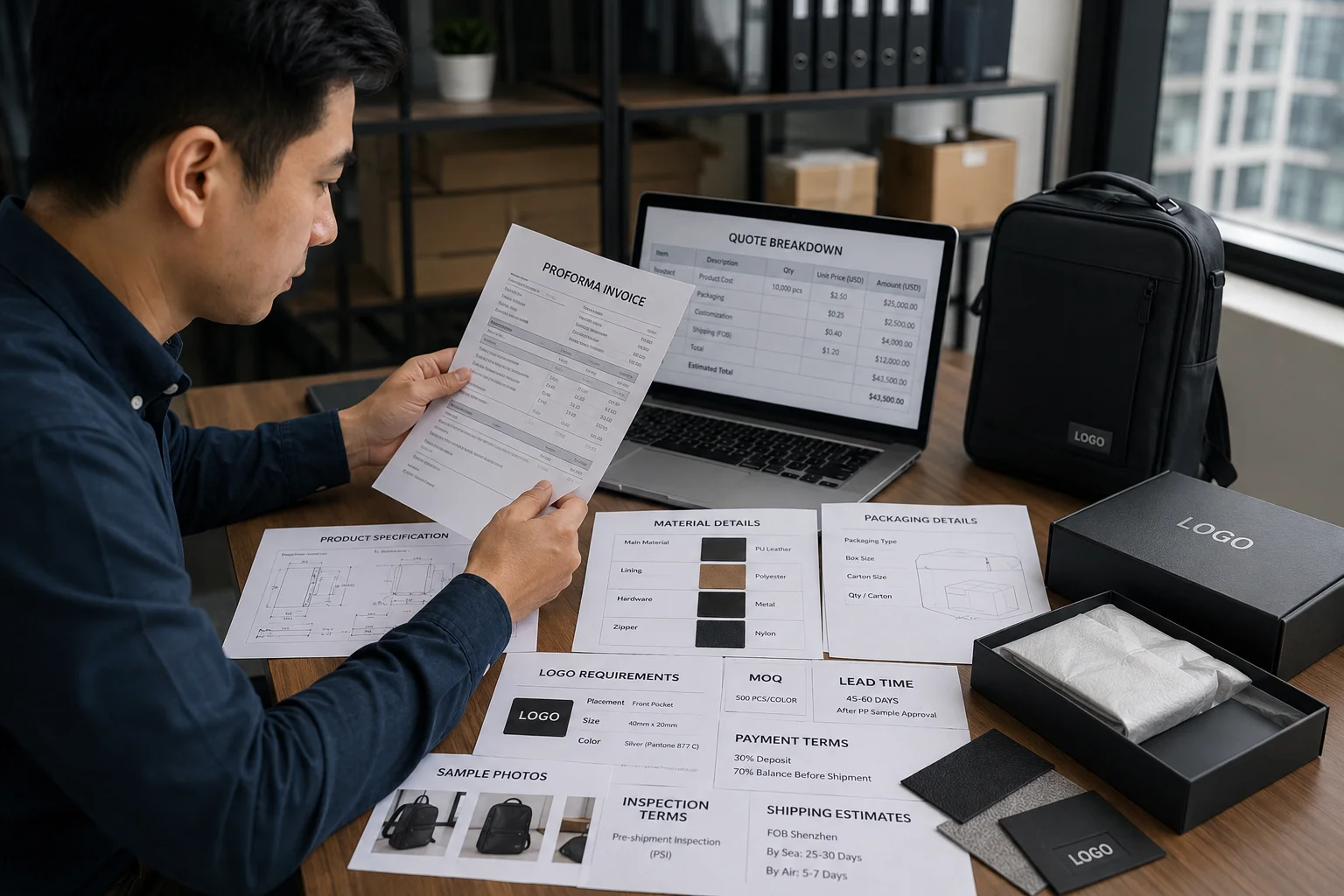
I make the order clear before money moves
A proforma invoice is not enough if the product details are vague. I want the product name, model number, size, color, material, weight, quantity, unit price, total price, packaging method, carton size, delivery time, and payment terms. If the product has accessories, I want each accessory listed. If the product needs a manual, sticker, barcode, or color box, I want that included too.
I also ask for sample confirmation records. A sample photo is helpful, but a sample approval sheet is better. It creates a shared reference. It also helps during inspection. If the bulk product does not match the approved sample, I have a clearer basis for discussion.
| Document or detail | Why I request it | What I check |
|---|---|---|
| Proforma invoice | I need a written order base | Company, price, quantity, terms |
| Specification sheet | I need clear product standards | Size, material, color, function |
| Packaging details | I need to avoid surprise costs | Inner pack, carton, labels |
| Sample confirmation | I need a reference for bulk goods | Photos, notes, approved version |
| Lead time record | I need schedule control | Sample time and production time |
| Inspection agreement | I need access before shipment | When and how goods can be checked |
I avoid unclear words
Words like “good quality,” “standard packing,” and “same as sample” can create problems. I prefer measurable words[^9]. I want thickness, grams, color code, voltage, fabric type, grade, carton size, or test requirement when these details matter. Clear details do not make the order perfect, but they make mistakes easier to find.
6. How Samples, Factory Checks, and Video Calls Help Reduce Supplier Risk?
A supplier can speak well and still fail in production. I need proof before I move to a larger order.
Samples, factory checks, and video calls help me test product quality, supplier response speed, production reality, packaging details, and whether the supplier can follow instructions before a bulk order.
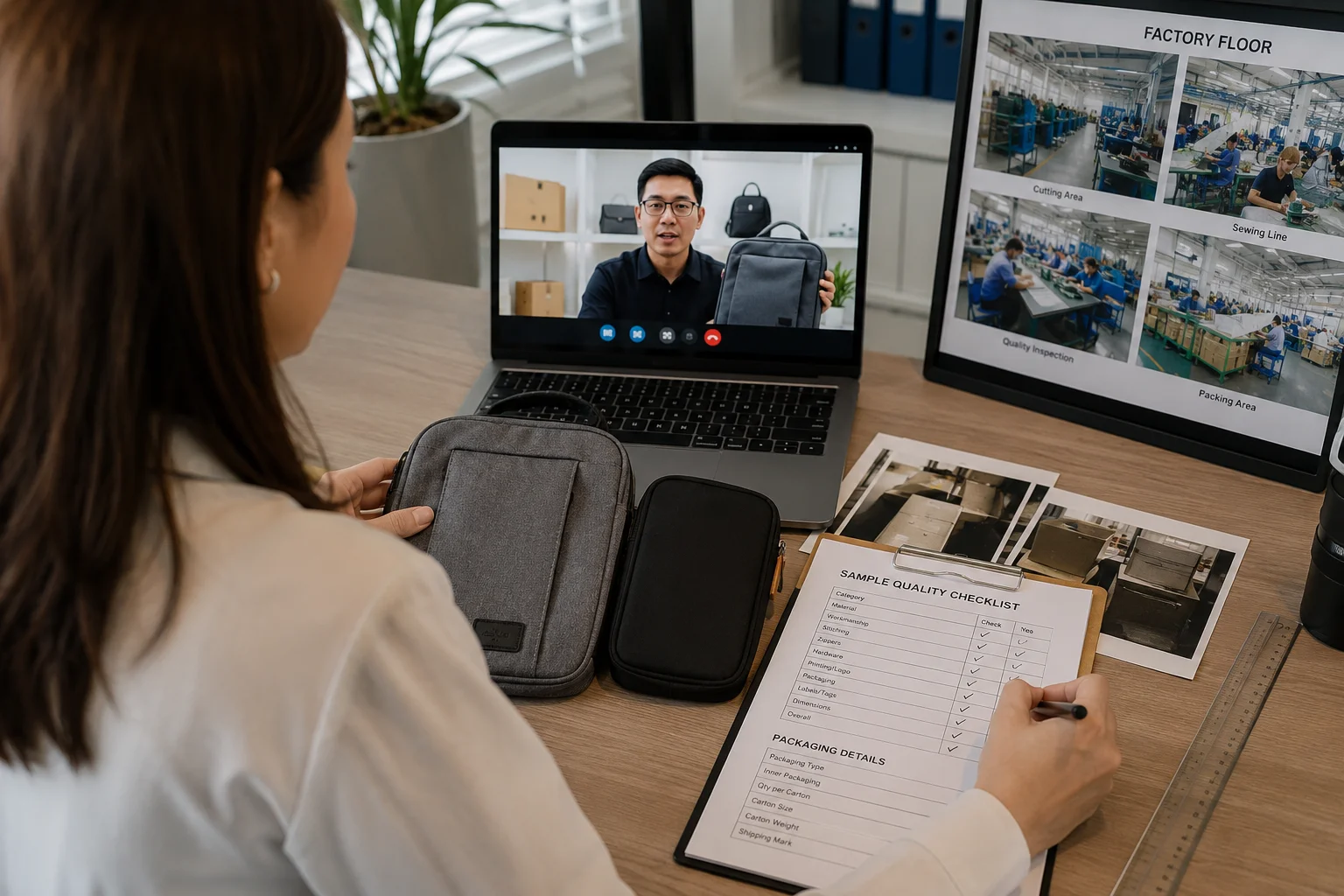
I use samples to test more than the product
When I arrange samples, I check the supplier’s process. I look at how fast they reply, whether they follow product requirements, whether they pack the sample well, and whether the sample matches the quote. A sample is not only a product. It is a test of communication and execution.
But I never assume a good sample guarantees good bulk goods[^10]. The sample-to-bulk gap is one of the most common problems I see. A sample may be made with more care. Bulk production may use another material batch, another worker group, or another subcontracted factory. This is why I prefer small trial orders, production checks, and pre-shipment inspection for new suppliers.
| Method | What I learn | Limit |
|---|---|---|
| Sample order | Product feel, material, function, packaging | It may not represent bulk quality |
| Video call | Real-time communication and basic site view | Supplier may only show selected areas |
| Factory check | Production setting and business reality | It is not a full audit unless deeper work is done |
| Trial order | Supplier performance on real quantity | It still needs inspection |
| Pre-shipment inspection[^11] | Bulk goods condition before final payment or shipping | It cannot fix all problems if done too late |
I make video calls practical
During a video call, I may ask the supplier to show the production area, warehouse, sample room, packaging area, testing tools, or current orders. I also ask product questions during the call. If the person cannot answer basic production questions, I note that. This does not always mean fraud. It may mean I am speaking with a salesperson who has limited product knowledge. But I still need better proof before I place a larger order.
7. Why Backup Suppliers Are Important Before Placing a Bulk Order?
One supplier can look perfect until price, capacity, or delivery changes. I do not like having only one option.
Backup suppliers help me compare prices, check market reality, avoid pressure, recover from delays, and reduce dependence on one supplier[^12] before placing a bulk order.
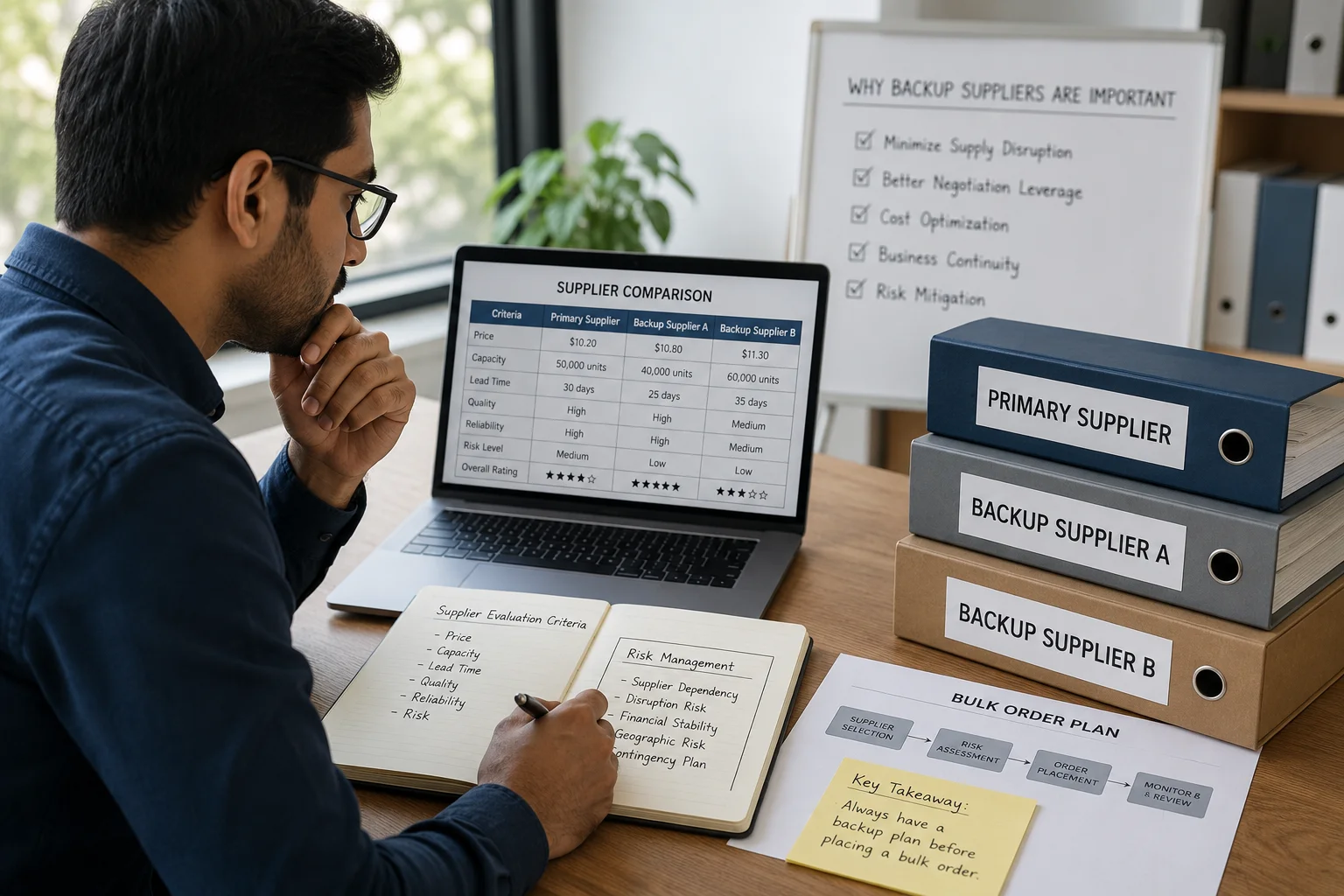
I keep backup suppliers before I need them
Many buyers search for backup suppliers only after a problem happens. At that point, they are under pressure. They may accept a poor quote or rush into another risky deal. I prefer to shortlist backup suppliers early, even if I plan to use only one main supplier.
Backup suppliers also help me understand whether a quote is reasonable. If one supplier gives a much lower price than all others, I need to know why. If one supplier gives a much faster lead time than all others, I also need to know why. Sometimes the supplier has real stock or strong capacity. Sometimes they are saying yes too easily.
| Backup supplier use | Why it matters | What I compare |
|---|---|---|
| Price comparison | I need market range | Unit price and included items |
| MOQ comparison | I need flexible order planning | Minimum order and sample policy |
| Lead time comparison | I need realistic schedule | Sample time and bulk production time |
| Quality comparison | I need better product fit | Materials, workmanship, packaging |
| Risk control | I need a fallback option | Communication and reliability |
I do not use backup suppliers only to push price
Price negotiation is part of sourcing, but I do not use backup suppliers only to force the lowest price. That can damage cooperation. I use them to understand the market and reduce risk. If my main supplier has a machine issue, raw material shortage, or sudden delay, I have another path. For ecommerce sellers, this matters because stockouts can hurt ads, rankings, and customer trust.
8. How a China Sourcing Agent Helps Verify Suppliers and Manage Safer Orders?
Remote checking has limits. I can review documents online, but I may still need local support before production and shipment.
A China sourcing agent helps verify suppliers by screening options, comparing quotes, checking documents, arranging samples, visiting or video-checking factories, following production, inspecting goods, and coordinating shipping.
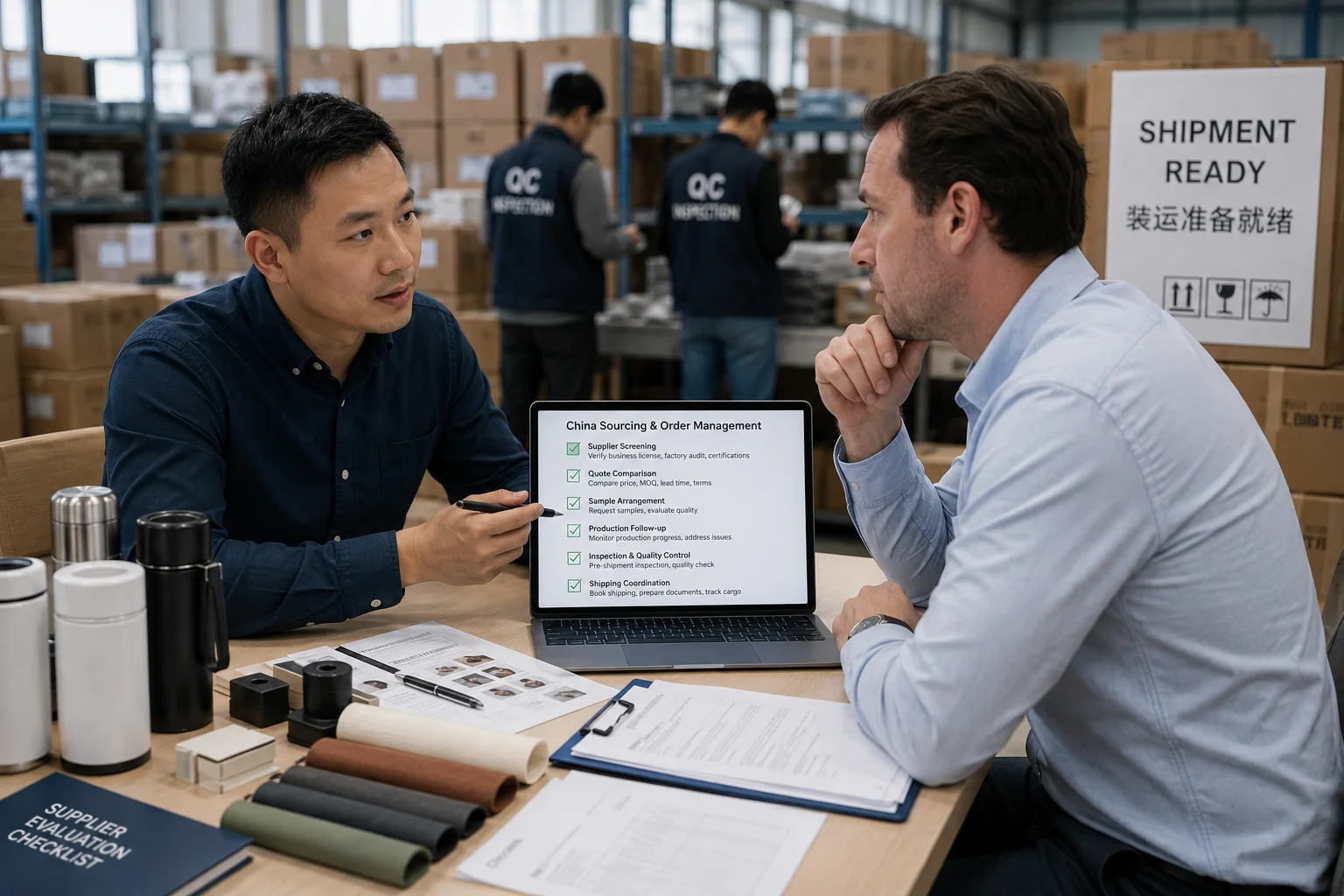
I use local work to reduce avoidable mistakes
At KingSourcing, I help buyers who do not have a local China team. Many of them are first-time importers, ecommerce sellers, DTC brands, wholesalers, or growing businesses. They need more than a supplier list. They need someone to check whether suppliers match their order, price level, product details, and delivery plan.
In our sourcing work, I often compare several suppliers for the same product. I check whether their prices include the same packaging, same material, same accessories, and same shipping terms. I help arrange samples and collect feedback. I can also support factory checks, production follow-up, 1-by-1 product checks when needed, pre-shipment inspection, warehousing, product photos, order consolidation, and logistics coordination.
| Sourcing agent task | How it helps the buyer | Risk it reduces |
|---|---|---|
| Supplier screening | I compare more than one option | Choosing based on one weak quote |
| Quotation comparison | I check what is included | Hidden costs and unfair comparison |
| Sample coordination | I manage sample details | Sample confusion and wrong versions |
| Factory or video check | I confirm basic supplier reality | False claims or poor fit |
| Production follow-up | I track order progress | Late updates and missed details |
| Inspection support | I check goods before shipment | Receiving unsellable products |
| Logistics support | I coordinate shipping plans | Delays, wrong labels, or unclear costs |
I still do not promise zero risk
No supplier verification method can remove all risk. A factory can have a sudden material issue. A shipment can face customs delay. A product can pass a basic check but still need lab testing for a special market. I do not present sourcing work as legal due diligence or a formal financial audit. I present it as practical risk reduction.
When remote self-checking is not enough, a local China sourcing team can save time and reduce mistakes. This is why I see KingSourcing as more than a middleman. I see it as the buyer’s China sourcing office, quality follow-up team, supply chain coordinator, and logistics helper.
Conclusion
I verify suppliers to judge order fit, not just company existence. Clear checks, samples, inspections, and backup options help me place safer China orders.
[^1]: "[PDF] Procurement Regulations for IPF Borrowers - The World Bank", https://thedocs.worldbank.org/en/doc/6c0602876d68949e80820507d90a14ed-0290012023/original/Procurement-Regulations-September-2023.pdf. International Trade Centre guidance on import procurement describes supplier checks before contracting as a way to reduce commercial risks related to payment exposure, product conformity, and delivery performance; the guidance supports the general risk-management principle rather than proving the frequency of these problems in China-specific sourcing. Evidence role: general_support; source type: institution. Supports: Supplier due diligence before purchase commitments helps reduce commercial risks such as nonconforming goods, delivery failures, and payment exposure.. Scope note: Contextual support for import sourcing generally, not direct statistical proof that these risks usually appear after payment. [^2]: "Analyzing Costs Using Total Cost of Ownership", https://psep.smeal.psu.edu/short-courses/supply-chain-accelerator/advanced-procurement-analyzing-costs-using-total-cost-of-ownership. Research on total cost of ownership in purchasing explains that supplier selection should account for quality, delivery, service, and transaction costs in addition to unit price; this supports the claim as a procurement principle rather than as evidence about any single quotation. Evidence role: expert_consensus; source type: paper. Supports: Purchasing research treats supplier selection as a multi-criteria decision in which acquisition price is only one component of total cost and risk.. Scope note: Contextual procurement support; it does not verify the specific examples in the article. [^3]: "Manufacturability Assessment of Design Decisions for Reducing ...", https://pmc.ncbi.nlm.nih.gov/articles/PMC12842659/. Academic work on supplier opportunism and manufacturing quality degradation describes mechanisms such as input substitution and reduced quality-control effort as ways suppliers may lower costs after price pressure; this supports the mechanism, not the assertion that a particular supplier has acted this way. Evidence role: mechanism; source type: paper. Supports: Manufacturing suppliers can lower costs by changing inputs or reducing quality-control effort, creating quality risk for buyers.. Scope note: Mechanistic support only; it does not establish that these substitutions occur in every low quote. [^4]: "China - Due Diligence - export.gov", https://legacy.export.gov/article?id=China-Due-Diligence. Government guidance on overseas supplier due diligence distinguishes legal registration checks from broader verification of business capability, reputation, and transaction risk; this supports the article’s distinction between existence and reliability. Evidence role: definition; source type: government. Supports: Official business registration identifies a legal entity, while broader due diligence is needed to assess commercial capability and reliability.. Scope note: General due-diligence support; it does not evaluate any supplier named or implied in the article. [^5]: "Business Email Compromise - FBI", https://www.fbi.gov/how-we-can-help-you/scams-and-safety/common-frauds-and-scams/business-email-compromise. Government fraud-prevention guidance on invoice and payment scams advises buyers to verify payment instructions and beneficiary details through trusted records before transferring funds; this supports the use of cross-document name checks as a risk-control practice. Evidence role: general_support; source type: government. Supports: Payment and invoice-fraud guidance commonly advises verifying beneficiary and account details against trusted company records before sending funds.. Scope note: Supports the anti-fraud rationale generally, not the reliability of any particular online platform profile. [^6]: "Supplier Performance Evaluation", https://scm.ncsu.edu/scm-articles/article/supplier-performance-evaluation. Institutional procurement guidance treats supplier evaluation as a multi-factor assessment involving technical capability, price basis, delivery terms, and quality requirements, indicating that legal registration alone does not establish quotation adequacy. Evidence role: expert_consensus; source type: institution. Supports: Supplier assessment normally includes commercial, technical, quality, and delivery criteria beyond legal registration.. Scope note: General procurement guidance; it does not define a universal threshold for a 'weak quote.' [^7]: "SMALL AND MEDIUM-SIZED ENTERPRISES (SMEs) EXPORT ...", https://www.usitc.gov/press_room/news_release/2010/er0715hh1.htm. International Trade Centre materials on SME export readiness identify documentation, communication, packaging, and market-service capacity as export requirements distinct from production capability; this supports the general distinction made in the article. Evidence role: general_support; source type: institution. Supports: Export readiness requires capabilities beyond production, including documentation, communication, packaging, and compliance-related processes.. Scope note: Contextual support for export readiness, not evidence about all Chinese factories. [^8]: "Pro Forma Invoice - International Trade Administration", https://www.trade.gov/pro-forma-invoice. Trade-documentation guidance explains that proforma invoices and purchase specifications should state the goods, quantities, prices, delivery terms, payment terms, and relevant packaging or shipping details before an import transaction proceeds. Evidence role: expert_consensus; source type: institution. Supports: Import-purchase documentation should define the goods, price, delivery, payment, packaging, and other transaction terms before the order is finalized.. Scope note: Supports the need for detailed prepayment documentation generally; it does not prescribe the exact checklist for every product category. [^9]: "Standards | NIST - National Institute of Standards and Technology", https://www.nist.gov/standards. Quality-management guidance describes product requirements as most useful when they are specified in objective and verifiable terms, supporting the article’s preference for measurable specifications over vague expressions such as 'good quality.' Evidence role: definition; source type: institution. Supports: Quality-management and procurement guidance emphasize defining requirements in objective, verifiable terms.. Scope note: General standards-based support; the relevant measurements vary by product type. [^10]: "What kinds of Lot Acceptance Sampling Plans (LASPs) are there?", https://www.itl.nist.gov/div898/handbook/pmc/section2/pmc22.htm. Quality-control literature on sampling and process variation explains that an individual sample cannot fully characterize the variability of a later production lot, supporting the caution that sample approval does not guarantee bulk-order conformity. Evidence role: mechanism; source type: paper. Supports: Sampling and manufacturing-variation literature shows that a sample provides limited evidence about the quality distribution of a later production lot.. Scope note: Supports the statistical and process-risk principle, not the stated frequency of sample-to-bulk gaps. [^11]: "[PDF] ISO 2859-1 - UNT Chemistry", https://chemistry.unt.edu/~tgolden/courses/iso2859-1.pdf. Inspection and acceptance-sampling guidance describes pre-shipment inspection as a conformity check conducted before goods are shipped, typically on a sample or defined lot, and therefore supports its risk-control role while also indicating why it cannot eliminate all production defects. Evidence role: definition; source type: institution. Supports: Pre-shipment inspection is used to assess conformity of finished goods before shipment, often through sampling, while late inspection may not prevent all defects or delays.. Scope note: Contextual support; the effectiveness of inspection depends on sampling plan, product type, defect criteria, and timing. [^12]: "Supply chain disruptions and resilience: a major review and future ...", https://pmc.ncbi.nlm.nih.gov/articles/PMC7792559/. Supply-chain resilience research identifies dependence on a single supplier as a disruption exposure and discusses supplier diversification or backup sourcing as one method for reducing that exposure. Evidence role: expert_consensus; source type: paper. Supports: Supply-chain research identifies supplier diversification or backup sourcing as a way to reduce exposure to disruption from a single supplier.. Scope note: General resilience support; it does not prove that multiple suppliers are optimal in every cost or quality situation.