A product idea can feel clear in my head, but it can become costly when a supplier reads it in a different way.
A China sourcing agent helps DTC brands turn product ideas into clear sourcing requirements, find suitable suppliers, manage samples, follow production, check quality, prepare packaging, and coordinate shipping before goods leave China.
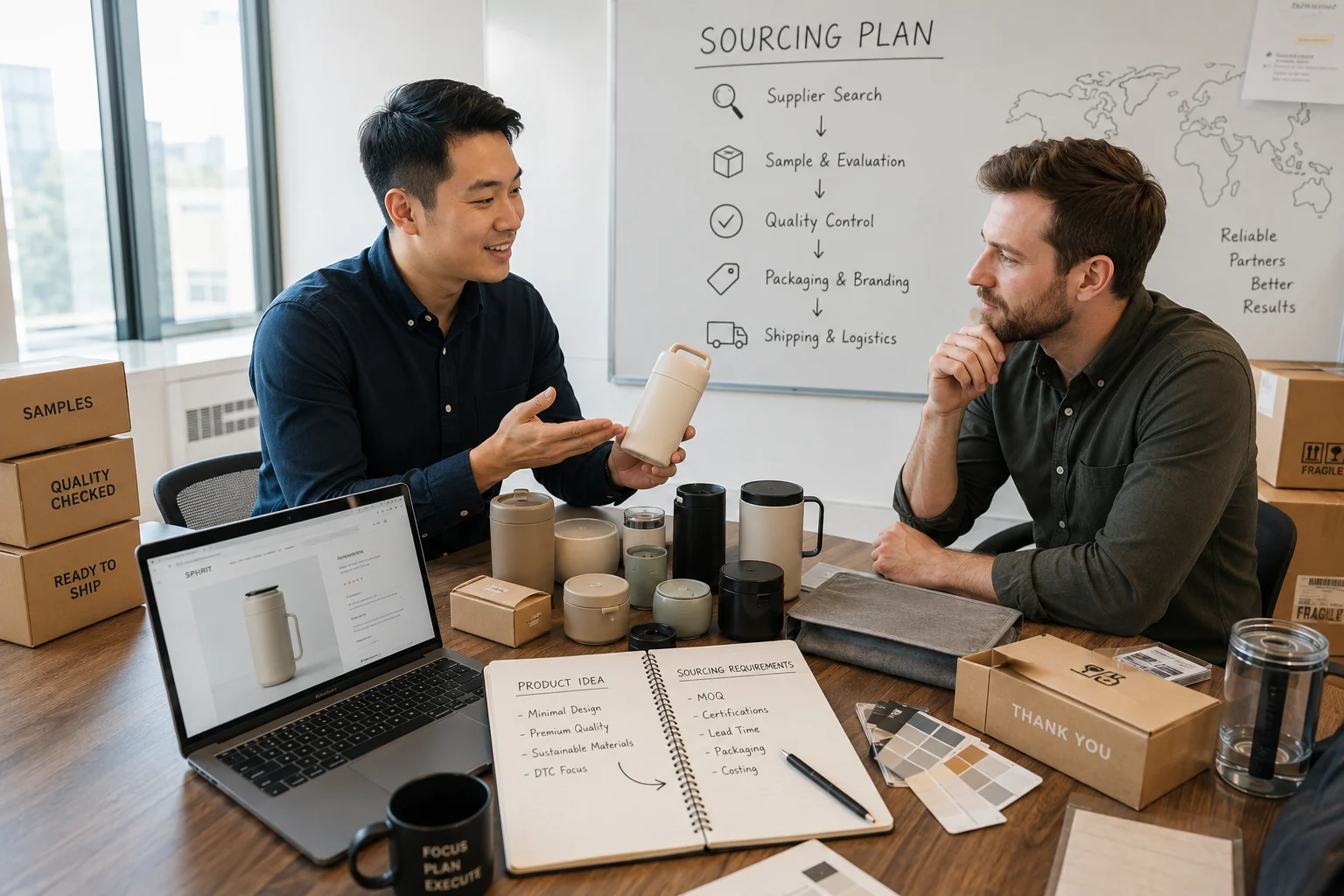
In my daily work at KingSourcing, I see one common problem. A DTC brand does not only need a factory name. It needs a process that makes each step clear enough for a supplier to quote, sample, produce, inspect, pack, and ship. When I help a brand source from China, I do not treat sourcing as one message to one supplier. I treat it as a project with real risks at each step. If I miss the brief, the quote can be wrong. If I miss the sample detail, mass production can change. If I miss the packaging or shipping plan, the launch can be delayed. I will walk through how I manage this process from product idea to delivery, because this is where many sourcing problems start and where many of them can also be avoided.
1. Why DTC Brands Need a Reliable China Sourcing Agent?
A DTC brand can move fast, but a fast decision can create slow problems when product quality, packaging, and delivery are not controlled.
The real need is not only finding a factory
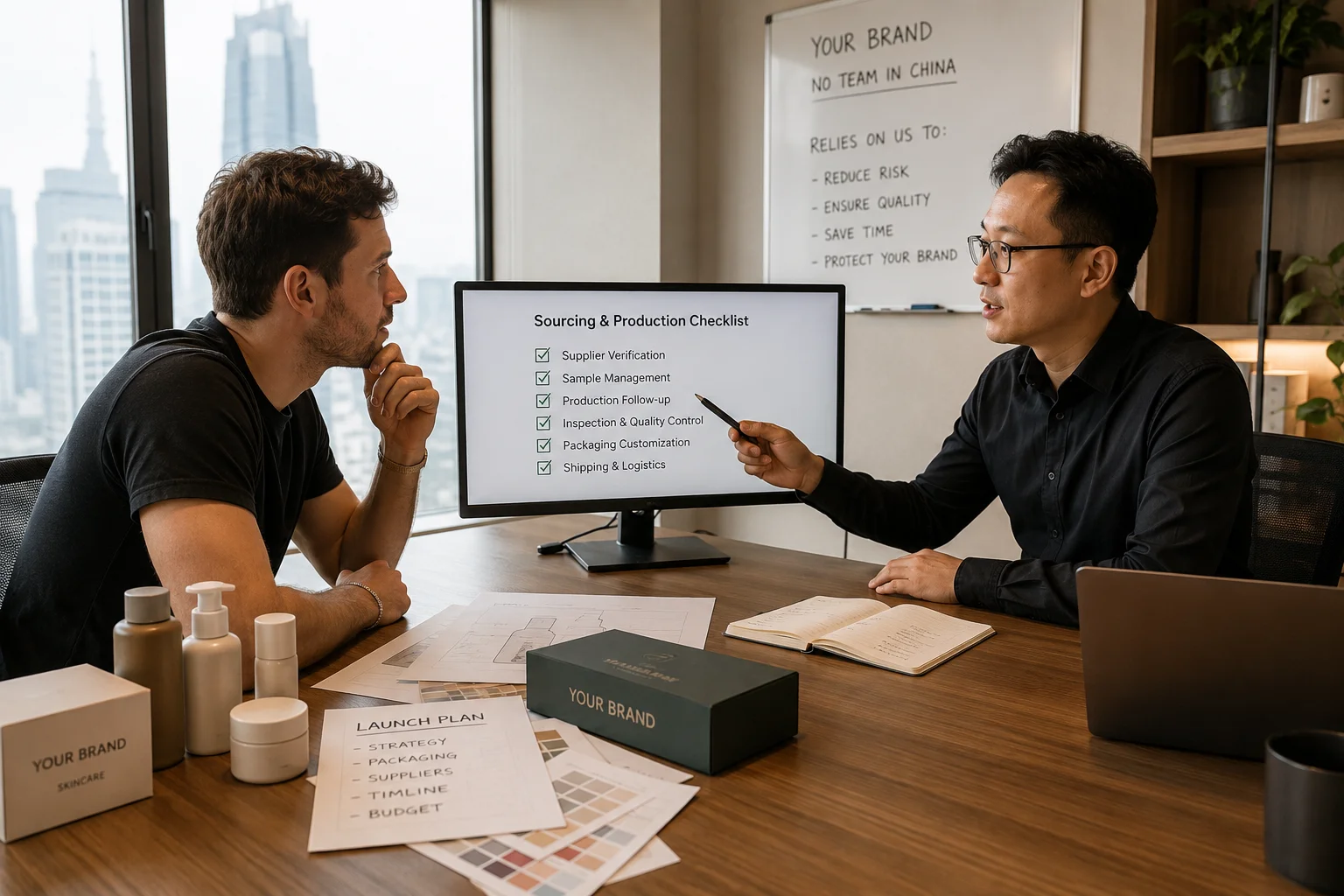
In my experience, many DTC teams start with a simple request. They send me a product link, a photo, or a short idea. They ask if I can find the same item or make it better. I can start from that point, but I usually need to slow the process down first. A DTC brand sells directly to customers, so small product issues can become public reviews, returns, or support tickets.[^2] A wrong color, weak carton, missing accessory, or late shipment can hurt the brand more than it hurts a pure trading order.
| DTC risk | What I check in China | Why it matters |
|---|---|---|
| Supplier mismatch | Factory type, MOQ, product focus | I need a supplier that fits the brand stage |
| Quality drift | Samples, materials, production checks | I need mass goods to match the approved sample |
| Weak packaging | Inner box, carton, label, inserts | I need the product to arrive and look brand-ready |
| Poor timing | Production plan, inspection date, shipping plan | I need the brand to plan launch and inventory |
I do not promise that I will always find the lowest price. I focus on fit, control, and fewer surprises. For a DTC brand, the best supplier is often the one that can handle the order size, accept the needed customization, communicate clearly, and keep quality stable enough for repeat sales.[^3]
2. What Makes Product Sourcing Different for DTC Brands?
A wholesale buyer may only need supply, but a DTC brand needs a product that matches customer promise, brand image, and launch timing.
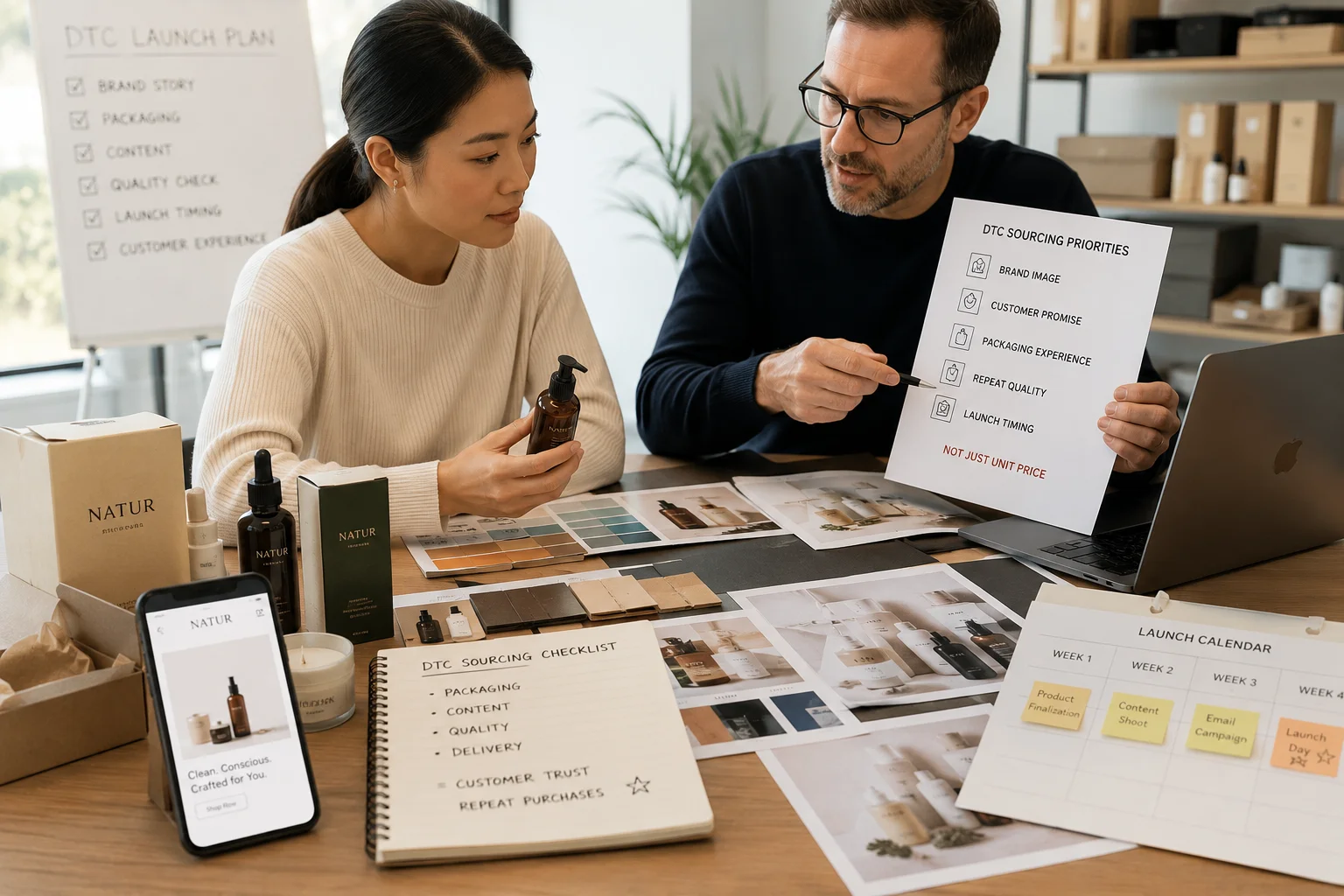
The product must support the brand promise
When I source for a DTC brand, I ask more questions than I ask for a normal wholesale order. I want to know who will use the product, how the product will be shown online, what problem it solves, and which details customers will notice first. I also ask about the sales channel. A Shopify brand, an Amazon seller, a TikTok shop, and a retail-ready brand may need different packaging, labels, photos, inserts, and compliance documents.
| Normal sourcing focus | DTC sourcing focus |
|---|---|
| Is the product available? | Does the product fit the customer promise? |
| Is the price low? | Is the value clear after packaging and shipping? |
| Can the supplier ship? | Can the supplier support launch timing and repeat orders? |
| Is the sample acceptable? | Can mass production stay close to the sample? |
I do not act as a brand strategist. I do not replace the founder’s product manager or engineer. My role is different. I help turn the brand’s idea into workable sourcing steps inside China. I also help the brand see where a supplier may say yes too quickly. Some factories are good at standard products but weak at custom packaging. Some factories can make good samples but do not like small test orders. Some suppliers can accept low MOQ, but they may not control every detail well. I help compare these trade-offs before money is committed.
3. From Product Idea to Clear Sourcing Requirements?
A product idea becomes a sourcing requirement when I define target users, use cases, key functions, reference samples, expected quantity, target price, test budget, custom needs, acceptable MOQ, packaging, and delivery needs.
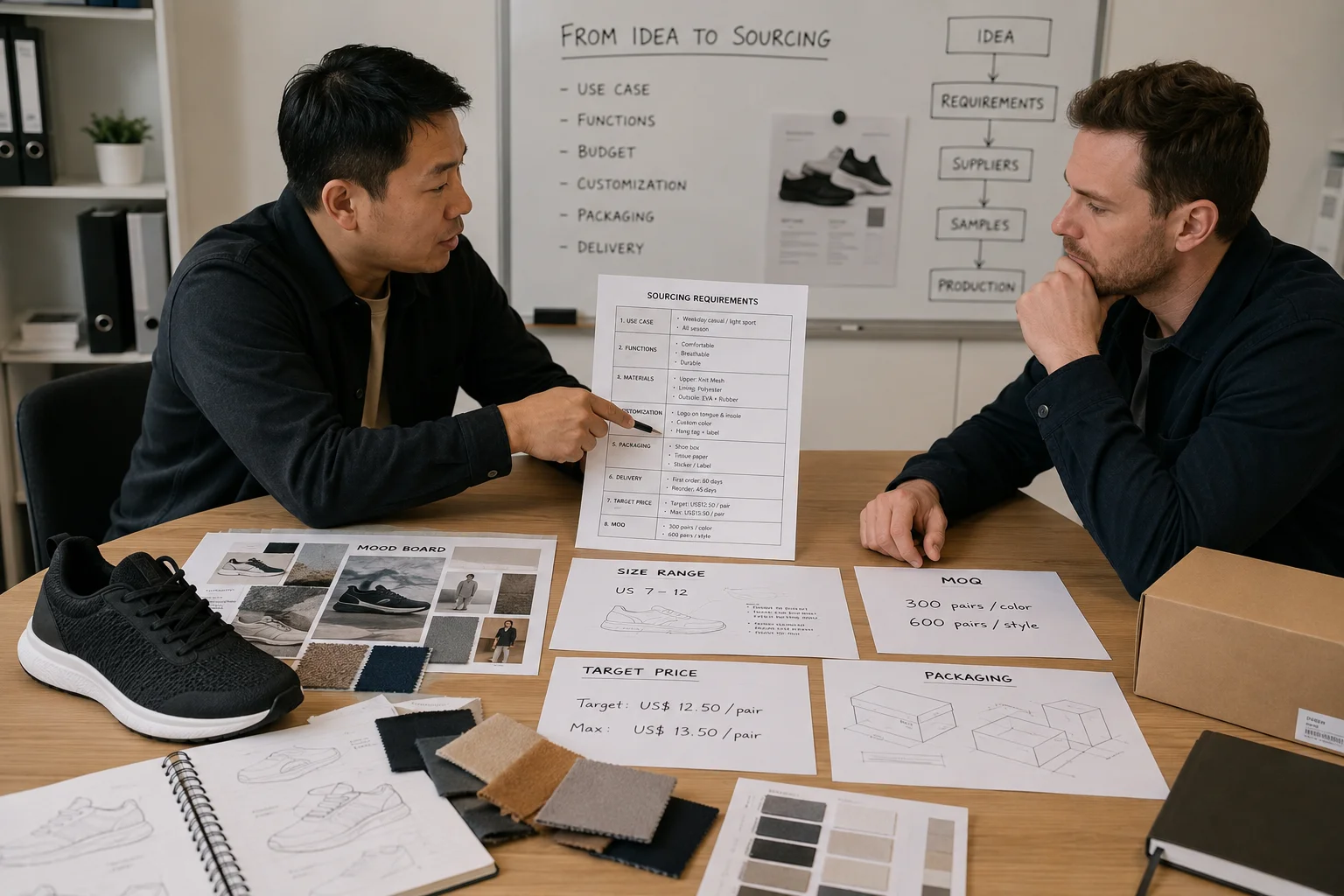
I turn the idea into a brief that suppliers can quote
Before I contact suppliers, I try to make the request clear. If I only send one image and ask for a price, I may receive fast replies, but those replies may not mean much. One supplier may quote cheaper material. Another may quote a smaller size. Another may include packaging, while another may not. The brand may think it is comparing suppliers, but it is really comparing different products.
| Question I ask | Why I ask it |
|---|---|
| Who is the target user? | I need to understand the real use and expected quality |
| What is the must-have function? | I need to avoid quoting a product that looks similar but works differently |
| Do we have links, photos, drawings, or samples? | I need suppliers to understand the reference point |
| What is the test quantity? | I need to match the order with suitable MOQ |
| What is the target price range? | I need to avoid wasting time on the wrong factory level |
| What packaging is needed? | I need to include brand-ready costs early |
| Where will it ship? | I need to think about carton, weight, and logistics from the start |
In one common project pattern, a founder shows me a winning product from another market. The founder wants a better version with private label packaging. I first separate what is fixed and what is flexible. I list the must-have parts, the nice-to-have parts, and the parts that can change for cost. This simple step helps suppliers quote in the same direction.[^6] It also helps the brand avoid surprise costs after sampling.
4. How a Sourcing Agent Finds, Compares, and Verifies Chinese Suppliers?
A supplier can look strong online, but the real question is whether that supplier fits the product, order size, quality need, and schedule.
A sourcing agent finds and compares Chinese suppliers by checking product match, factory or trading role, MOQ, customization ability, communication, sample support, price structure, quality control process, delivery time, and business fit.
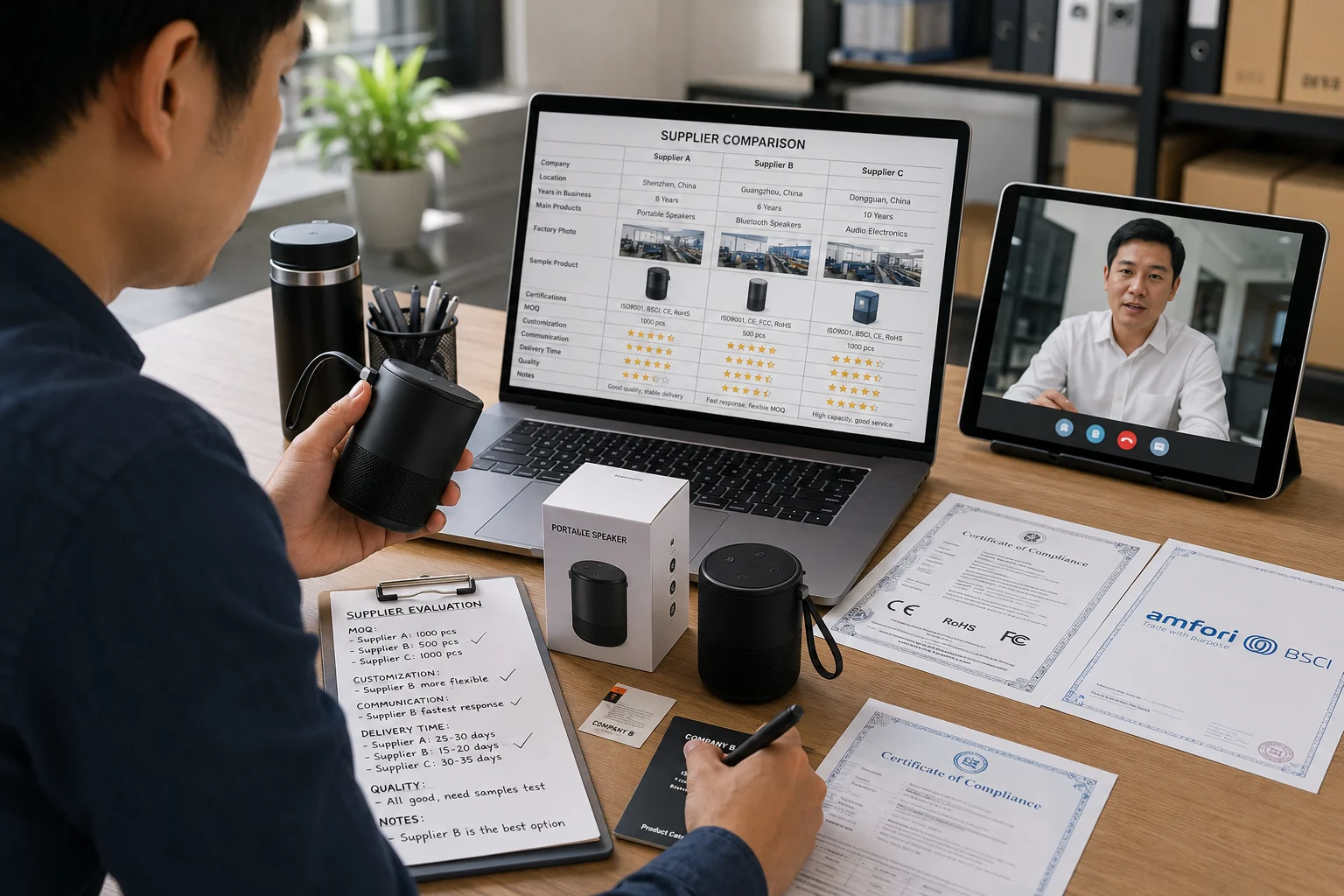
I compare supplier fit, not only supplier price
I do not treat all Chinese suppliers as the same. Some suppliers are factories with narrow product focus. Some are trading companies with broad options.[^7] Some are strong with bulk production. Some are better for small test orders. Some are flexible with packaging. Some have better engineers, but higher MOQ. Alibaba, trade shows, factory networks, and local supplier channels can all work. The issue is not the channel itself. The issue is whether the DTC team can check the supplier and manage the follow-up.
| Supplier factor | What I look for | Risk reduced |
|---|---|---|
| Product focus | Similar products already made | Lower learning risk |
| MOQ fit | Small test order or bulk capacity | Less cash pressure or better scale |
| Custom ability | Logo, color, mold, material, packaging | Better brand control |
| Communication | Clear answers and fast updates | Fewer hidden misunderstandings |
| Price details | Product, packaging, sample, tooling, freight | Fewer surprise costs |
| Quality habit | Inspection support and defect handling | Better issue control |
I also pay attention to how a supplier answers questions. A good supplier does not only say “yes.” A good supplier explains limits, lead time, options, and cost changes. When a supplier gives only a low price and avoids details, I become careful. I may still keep that supplier in the list, but I will not push the brand to choose only because the number is attractive. For DTC sourcing, the wrong low price can become expensive after rework, delay, or customer complaints.
5. Samples, Customization, Private Label, OEM, and Packaging for DTC Brands?
A good quote can look promising, but the real test starts when the supplier must make the sample and follow brand details.

I use samples to test execution, not only appearance
When I manage samples, I do not only check if the item looks close to the photo. I check if the supplier understood the brief. I check the material, size, logo position, color, surface finish, accessories, and packaging. I also check if the supplier can explain what changed from the original request. This tells me how the supplier may perform during mass production.
| Sample or custom item | What I confirm | Common risk |
|---|---|---|
| Product sample | Size, function, material, finish | Product looks right but feels wrong |
| Logo sample | Position, color, method, durability | Logo is off-brand or not stable |
| Packaging sample | Box size, print, inserts, barcode | Packaging looks cheap or fails in transit |
| OEM change | New part, shape, or function | Cost and lead time increase |
| Private label | Logo, label, manual, carton mark | Brand details get missed |
I often tell brands that a sample is not a guarantee of mass production.[^9] A sample may be made by a skilled worker with extra care. Mass goods may be made by a larger production line with different workers and faster speed. This is why sample approval must be clear. I ask the brand to confirm what is approved and what still needs change. I also keep records with photos, videos, and written notes. These records become the reference point for production and inspection. Without this reference, supplier and buyer may argue later about what “approved” really meant.
6. How Production Follow-Up, Quality Control, and Inspection Protect Your Brand?
A confirmed sample can make a brand feel safe, but production can still drift when no one follows the order in China.
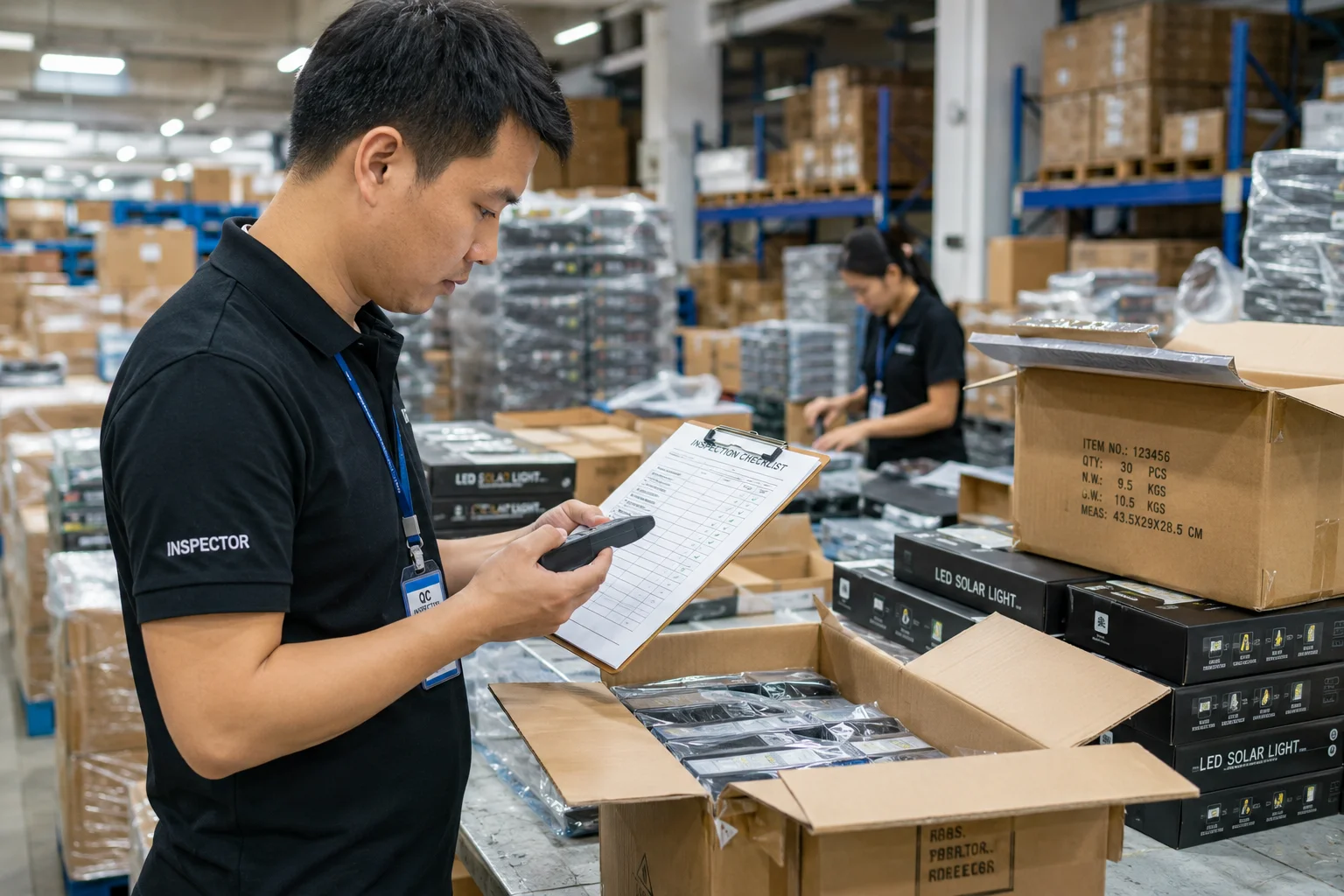
I try to find problems before shipping, not after delivery
In my work, production follow-up is one of the most important parts of sourcing. It is also one of the easiest parts to underestimate. A supplier may confirm a delivery date, but materials may arrive late. A logo plate may need adjustment. A package file may have a wrong barcode. A carton may be too weak. If I wait until the final shipping day, I may have fewer choices.
| Control step | What I check | Why it protects the brand |
|---|---|---|
| Pre-production check | Final sample, files, packaging details | I reduce wrong-start risk |
| Production follow-up | Material status, production schedule, photos | I catch delays earlier |
| During-production check | Workmanship, key dimensions, logo, assembly | I reduce large batch defects |
| Pre-shipment inspection | Quantity, defects, packaging, cartons | I decide if goods are ready to ship |
| Issue handling | Rework, replacement, discount, sorting | I keep problems in China when possible |
I do not claim that inspection can make every order perfect. Inspection is a risk control tool, not magic. It gives the brand a clear view before the shipment leaves China. If the goods have serious issues, the brand can ask for rework, sorting, replacement, or another solution while the supplier can still act. Once the goods arrive overseas, the cost of fixing problems becomes much higher.[^11] This is why I prefer to check before shipping, even for small batches. A small DTC brand may have less room to absorb returns and bad reviews, so early control matters.
7. Warehousing, Consolidation, Fulfillment Support, and Shipping from China?
Shipping can look like the final step, but it often depends on packaging, inspection, warehouse timing, carton size, and product readiness.
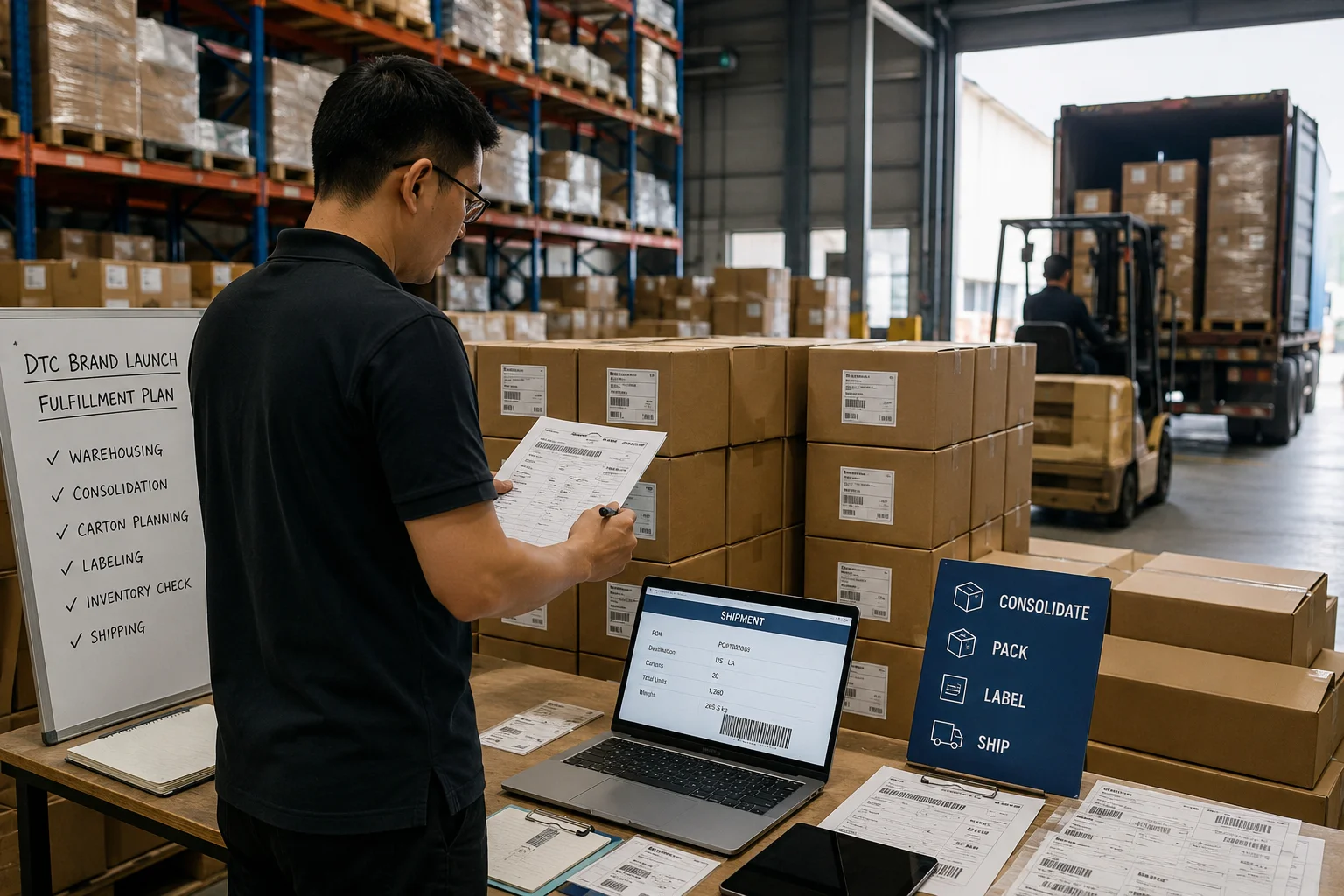
I see delivery as part of supply chain control
Many brands ask me, “Can you ship it?” I can help coordinate shipping, but I first need to know what is ready, where it is stored, how it is packed, and when the brand needs it. Delivery is not only booking air freight, sea freight, express, or door-to-door service. It is also making sure the goods can move without packaging damage, missing labels, wrong carton marks, or unclear documents.
| Delivery need | What I coordinate | Risk reduced |
|---|---|---|
| Warehousing | Receive goods from one or more suppliers | I avoid scattered shipments |
| Consolidation | Combine products into one shipment | I reduce handling and simplify logistics |
| Fulfillment support | Sorting, labeling, kitting, basic prep | I support DTC launch needs |
| Shipping plan | Air, sea, express, rail, truck where suitable | I match speed and cost |
| Document support | Invoice, packing list, shipping details | I reduce customs confusion |
| Timing control | Production, inspection, warehouse, shipping | I help the brand plan inventory |
For example, a DTC brand may order the main product from one supplier and packaging or accessories from another supplier. If each supplier ships separately, the brand may pay more and lose control. I can receive the goods in our China warehouse, check the basic condition, combine items, and prepare the shipment according to the plan. I also remind brands that shipping time is not the only time to consider. The real timeline includes production, inspection, rework if needed, warehouse receiving, packing, booking, customs, and final delivery. When the brand sees the full timeline, it can plan launches with less guesswork.
8. How KingSourcing Helps DTC Brands Source from China More Safely?
A sourcing project can break at many small points, so a DTC brand needs local execution, clear records, and steady follow-up.
KingSourcing helps DTC brands source from China more safely by managing supplier search, quotation comparison, samples, customization, production follow-up, quality inspection, packaging, warehousing, consolidation, and shipping coordination.
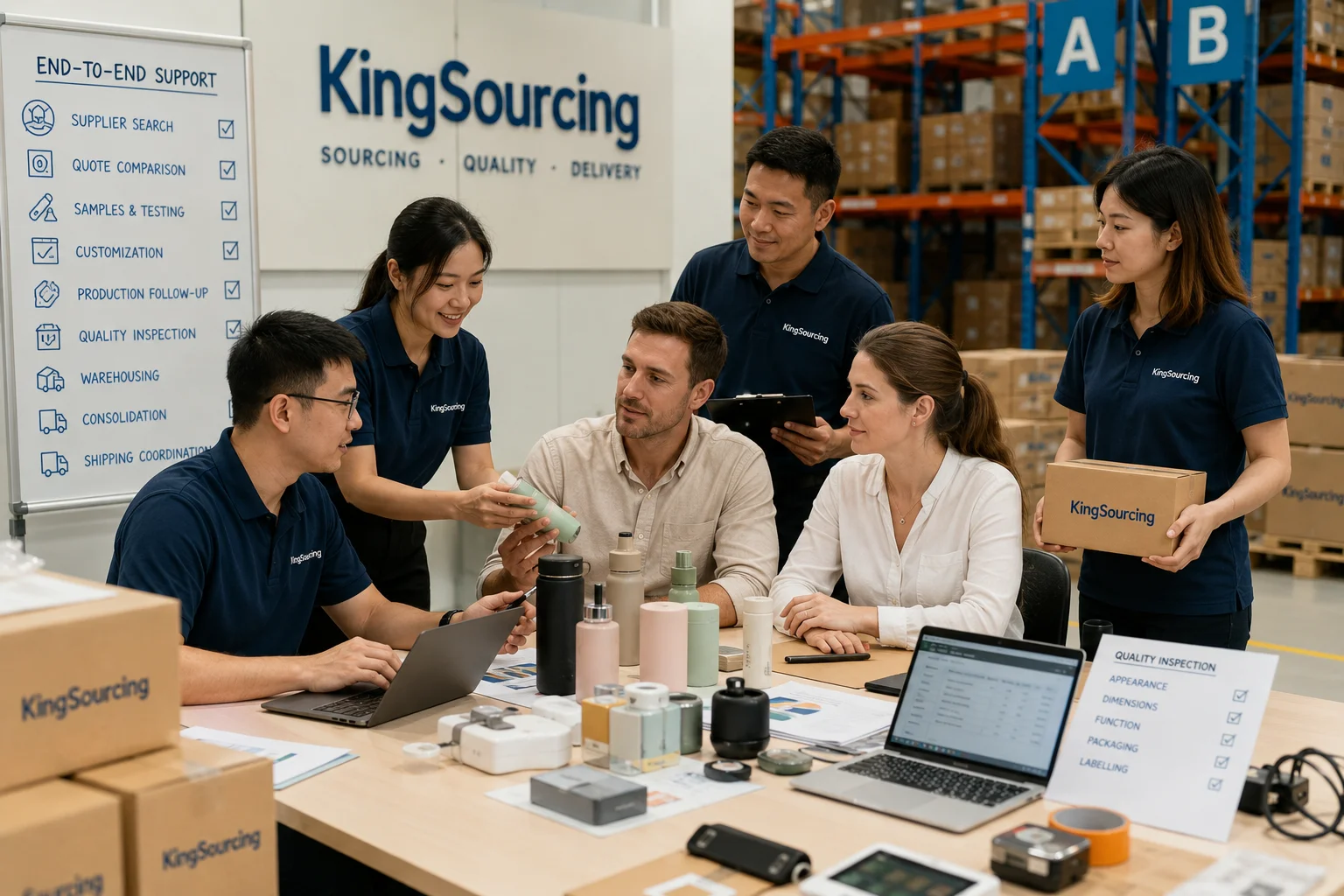
I work as the brand’s sourcing office in China
At KingSourcing, I see our role as practical and hands-on. I do not simply pass supplier names to a brand and disappear. I help build the sourcing brief, contact suppliers, compare options, request samples, track changes, follow production, inspect goods, and coordinate the next step before shipment. This work reduces many daily risks that overseas teams face when they do not have people on the ground in China.
| KingSourcing support | What I do | What the brand gains |
|---|---|---|
| Sourcing brief | I turn the idea into clear supplier questions | Better quotes and fewer wrong assumptions |
| Supplier development | I search and compare suitable suppliers | Better fit for MOQ, price, and custom needs |
| Sample management | I follow samples and record details | Clear approval before mass production |
| Production follow-up | I track schedule and key details | Earlier warning when problems appear |
| Quality inspection | I check product, packaging, and quantity | More control before goods leave China |
| Warehousing and consolidation | I receive, combine, and prepare goods | Simpler shipping and better coordination |
| Logistics coordination | I arrange suitable shipping support | Smoother delivery planning |
I work with early-stage brands that want to test from a small budget. I also work with growing buyers that need more structured order management. The main goal is the same. I want to reduce the cost of trial and error when buying from China. I want the brand to make decisions with clearer information. I want the supplier to understand the request. I want the goods to be checked before they move too far. I want the shipping plan to match the launch plan. This is what I mean by making China sourcing simple. It does not mean every step is easy. It means I help manage the hard parts in a clear and practical way.
Conclusion
I help DTC brands turn product ideas into controlled China sourcing projects, from supplier search and samples to inspection, packaging, warehousing, and delivery.
[^1]: "OECD Due Diligence Guidance for Responsible Supply Chains of ...", https://www.oecd.org/en/publications/2016/04/oecd-due-diligence-guidance-for-responsible-supply-chains-of-minerals-from-conflict-affected-and-high-risk-areas_g1g65996.html. Institutional guidance on international supply-chain due diligence identifies supplier assessment, production oversight, quality verification, and logistics documentation as recurring controls in cross-border procurement. Evidence role: general_support; source type: institution. Supports: A neutral supply-chain or trade source should support the idea that international sourcing commonly requires supplier due diligence, production monitoring, quality checks, and logistics coordination.. Scope note: This would support the general need for these functions in international sourcing, not prove that every DTC brand lacks a local China team. [^2]: "Direct-to-consumer - Wikipedia", https://en.wikipedia.org/wiki/Direct-to-consumer. Research on ecommerce consumer behavior shows that product quality problems can affect firms through returns, complaints, and publicly visible online reviews. Evidence role: mechanism; source type: paper. Supports: A research source should support that online customer feedback and returns are important mechanisms through which product quality issues affect consumer-facing ecommerce brands.. Scope note: This evidence would be contextual to ecommerce and DTC operations rather than a direct study of this specific sourcing-agent scenario. [^3]: "[PDF] EFFECTIVE METHODOLOGIES FOR SUPPLIER SELECTION AND ...", https://etda.libraries.psu.edu/files/final_submissions/419. Supplier-selection research treats sourcing decisions as multi-criteria evaluations in which quality, delivery performance, technical capability, flexibility, and cost are assessed together. Evidence role: expert_consensus; source type: paper. Supports: Academic supplier-selection literature should support that buyers commonly evaluate suppliers using multiple criteria, including quality, delivery, capability, flexibility, and communication, not just price.. Scope note: The source would support the general procurement principle, not establish which supplier is best for any particular DTC order. [^4]: "The Impact of Visual Elements of Packaging Design on Purchase ...", https://pmc.ncbi.nlm.nih.gov/articles/PMC11851823/. Studies of direct-to-consumer and ecommerce models emphasize that product experience, fulfillment reliability, and brand-controlled presentation shape the customer relationship beyond the unit purchase price. Evidence role: general_support; source type: paper. Supports: A scholarly or institutional source should support that DTC models depend heavily on direct customer experience, fulfillment performance, and brand-controlled presentation.. Scope note: This would contextualize why these factors matter for DTC sourcing but would not directly validate every listed sourcing requirement. [^5]: "[PDF] DOJ Guide to Procurement Procedures - Office of Justice Programs", https://www.ojp.gov/doj-guide-to-procurement-procedures. Public procurement guidance states that clear, complete specifications are necessary for suppliers to prepare comparable bids and for buyers to evaluate offers on a consistent basis. Evidence role: mechanism; source type: government. Supports: A procurement guide should support that specifications must be clear and complete so suppliers bid on the same requirements and buyers can compare offers fairly.. Scope note: Public procurement guidance is not specific to DTC private sourcing, but the bidding and specification principle is directly relevant. [^6]: "Chapter 4 -Specifications | Procurement | Finance Division", https://procurement.gwu.edu/chapter-4-specifications. Requirements-engineering and procurement guidance commonly distinguishes mandatory requirements from desirable or optional features to clarify supplier responses and support consistent evaluation. Evidence role: mechanism; source type: education. Supports: A requirements-engineering or procurement source should support that distinguishing mandatory and optional requirements improves clarity for vendors and evaluation.. Scope note: The evidence would support the method generally rather than measure its effect in this specific project pattern. [^7]: "Factory vs Trading Company China: Know the Difference", https://www.advantasourcing.com/blog/factory-vs-trading-company-china. Trade guidance on sourcing from China distinguishes manufacturers, which produce goods directly, from trading companies, which act as intermediaries and may offer access to a wider range of products. Evidence role: definition; source type: government. Supports: A trade or import guide should define the distinction between manufacturers and trading companies in international sourcing.. Scope note: Such a source would explain common supplier categories, not verify the capabilities of any individual supplier. [^8]: "Q7A Good Manufacturing Practice Guidance for Active ... - FDA", https://www.fda.gov/regulatory-information/search-fda-guidance-documents/q7a-good-manufacturing-practice-guidance-active-pharmaceutical-ingredients. Quality-management guidance treats pre-production samples and prototypes as tools for verifying product characteristics and production requirements before full-scale manufacturing. Evidence role: mechanism; source type: institution. Supports: A quality-management or product-development source should support that samples or prototypes are used to verify design, materials, function, and packaging before production release.. Scope note: The source would support sample verification as a general manufacturing control, not prove that the listed checks are sufficient for all DTC products. [^9]: "Real-Time Monitoring and Control of Additive Manufacturing ...", https://www.nist.gov/programs-projects/real-time-monitoring-and-control-additive-manufacturing-processes. Quality-control literature explains that manufacturing processes are subject to variation, so an approved sample provides a reference standard but does not by itself guarantee conformity across mass production. Evidence role: mechanism; source type: research. Supports: A quality-control source should support that manufacturing processes exhibit variation and that sample approval alone cannot guarantee conformity of every production unit.. Scope note: This supports the risk mechanism generally; actual conformity depends on the product, process controls, and inspection plan. [^10]: "[PDF] ISO 2859-1 - UNT Chemistry", https://chemistry.unt.edu/~tgolden/courses/iso2859-1.pdf. Inspection standards and quality-control guidance describe pre-shipment inspection as a process for checking sampled goods against requirements such as quantity, workmanship, defects, packaging, and labeling. Evidence role: definition; source type: institution. Supports: An inspection standard or quality-control source should support that inspections commonly assess quantity, workmanship, defects, packaging, and labeling using sampling plans.. Scope note: Inspection reduces uncertainty but cannot guarantee that every unit in a shipment is defect-free. [^11]: "(PDF) Prevention, Appraisal, Internal failure, external failure cost ...", https://www.academia.edu/40388861/Prevention_Appraisal_Internal_failure_external_failure_cost_and_Quality_Optimization. Cost-of-quality frameworks distinguish prevention and appraisal costs from external failure costs and note that defects discovered after delivery can create higher costs through returns, rework, claims, and customer dissatisfaction. Evidence role: mechanism; source type: institution. Supports: A quality-management source should support that external failure costs, including problems found after delivery, are typically more burdensome than prevention or early detection costs.. Scope note: The exact cost difference varies by product, market, logistics route, and contractual responsibility. [^12]: "[PDF] The New Logistics Performance Index - Open Knowledge Repository", https://openknowledge.worldbank.org/server/api/core/bitstreams/d1e1fba0-5d32-4bb3-8e9b-87575fca8488/content. International logistics guidance describes cross-border delivery as a coordinated process involving warehousing, consolidation, packaging suitability, transport-mode selection, customs documentation, and schedule management. Evidence role: general_support; source type: institution. Supports: A logistics or international trade source should support that cross-border shipment planning involves warehousing, consolidation, packaging, transport-mode choice, customs documentation, and timing coordination.. Scope note: The source would support the general logistics scope, not confirm that every DTC shipment requires every listed activity.