Sending a deposit to a new supplier in China can feel risky. What if they disappear? This guide will show you how to protect your investment and find a reliable partner.
To properly verify a Chinese factory, you must go beyond checking a business license. You need to assess their actual production capability for your product, evaluate their communication, and review physical samples. The level of due diligence should match the financial risk of your order.[^1]
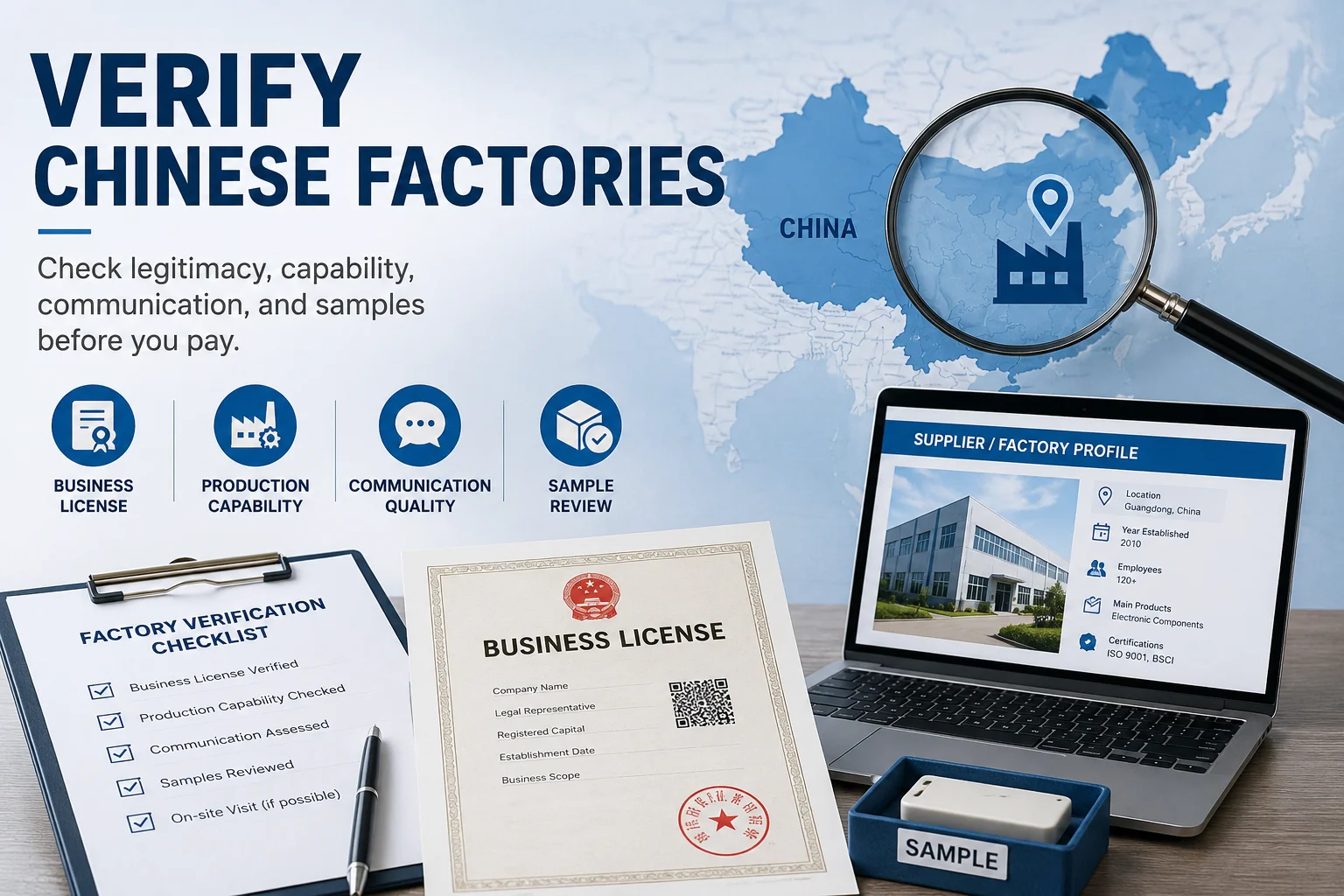
I've seen too many importers get burned by skipping these steps. They find a great price, send the money, and then the problems start. Verification isn't about being paranoid; it's about being professional. It’s the difference between hoping for a good outcome and building a process that ensures one. Let's break down how you can do this effectively, so you can build your business on a solid foundation.
Why You Should Verify a Chinese Factory Before Paying a Deposit?
Paying a deposit feels like a leap of faith. What if the supplier is not who they say they are? Instead of just hoping for the best, you can build a bridge of trust.
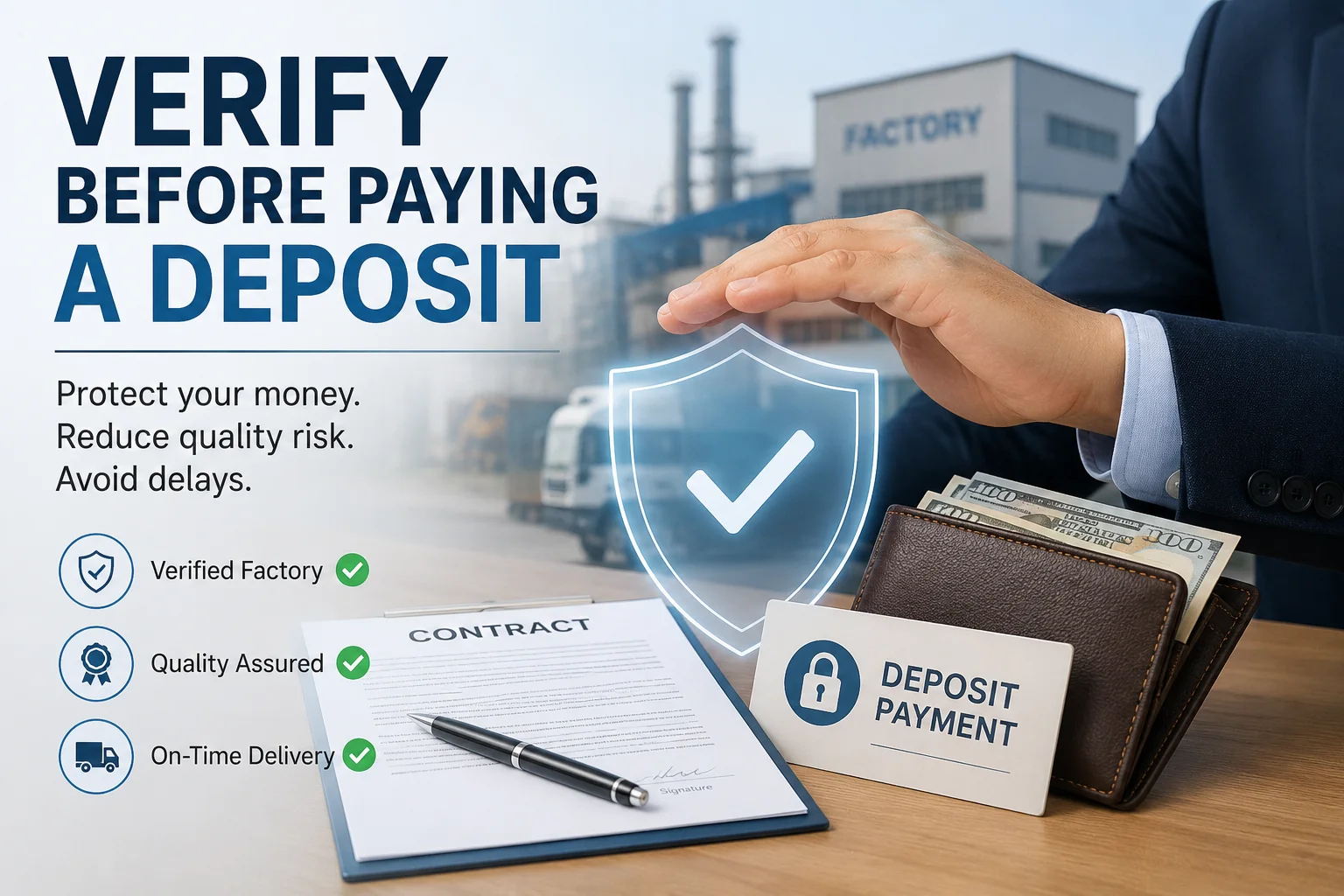
You verify a factory to protect your money, ensure product quality, and avoid production delays. It's a crucial step to prevent scams, quality issues, and communication breakdowns that can ruin your import business before it even starts.
Many first-time buyers think verification is only about avoiding scams. That's part of it, but it’s a small part. The bigger risk is partnering with a real factory that is simply not the right factory for you. They may lack the specific machinery, the right quality control processes, or the experience with your type of product. The goal of verification is not just to ask, "Is this factory real?" but to ask, "Is this factory right for my business?" The amount of verification you do should match your risk. For a small $500 test order, the risk is low. But for a $50,000 order with custom tooling, your business is on the line. You need to dig deeper.
Matching Verification to Your Risk Level
| Risk Level | Typical Order Size | Recommended Verification Level |
|---|---|---|
| Low | $500 - $2,000 | Basic online check, review samples, video call. |
| Medium | $2,000 - $15,000 | All of the above, plus detailed background checks and contract review. |
| High | $15,000+ | All of the above, plus a third-party factory audit and pre-shipment inspection. |
What Can Go Wrong If You Pay a Deposit Without Factory Verification?
You found a supplier with a fantastic price. But what if it’s too good to be true? Paying a deposit without proper checks can lead to a complete business nightmare.
Without verification, you risk losing your deposit to a scammer. Worse, a real supplier might deliver terrible quality, use bait-and-switch tactics with materials, cause constant delays, or simply lack the capability to make your product correctly.
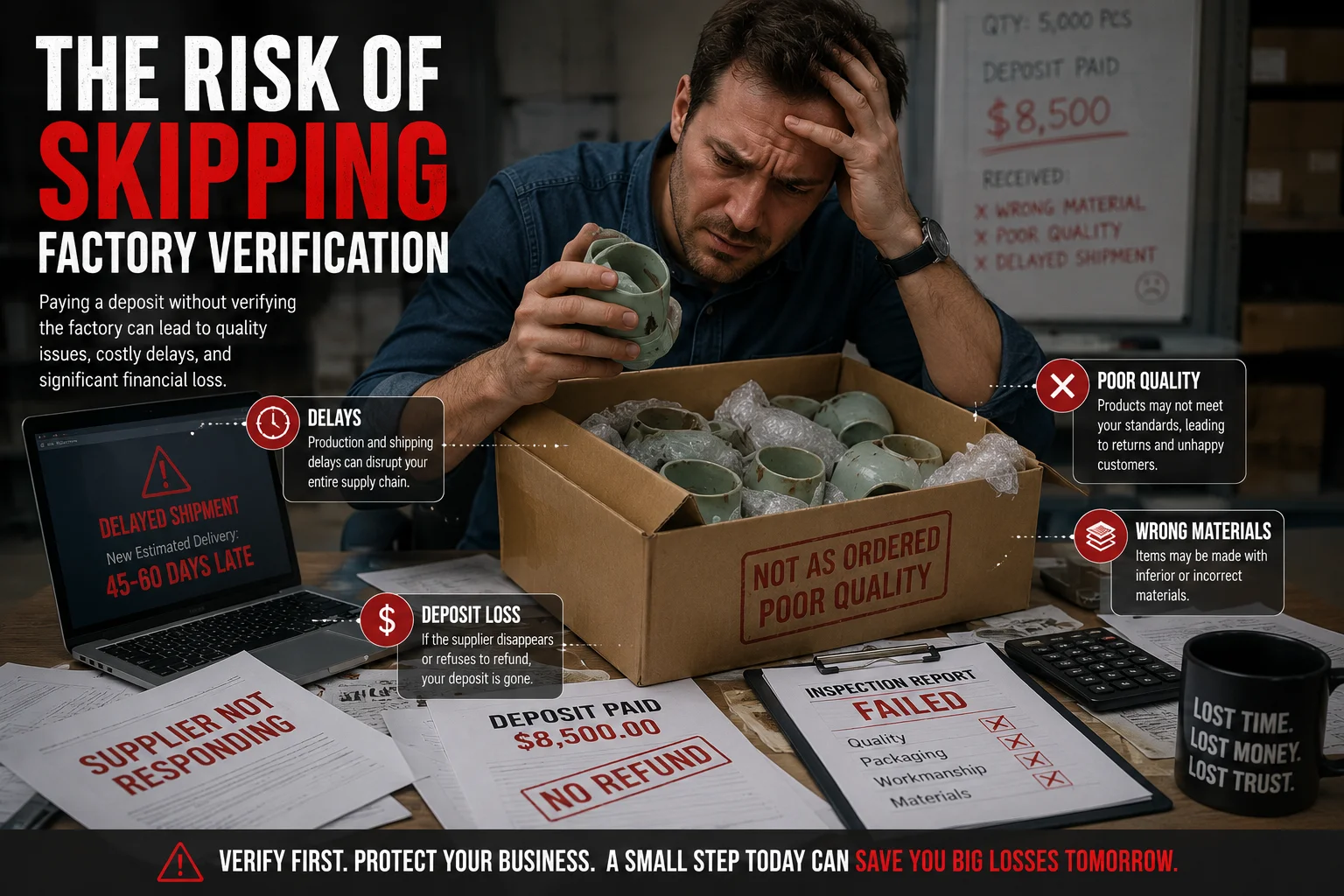
I remember a client who came to us after a disaster. He paid a 30% deposit, about $15,000, to a supplier he found online. Their website was professional, and their communication was great—at first. After he paid, they started making excuses. The materials cost more than they quoted. The production was delayed. When he finally got the products, they were unusable. The "factory" was just a trading company that outsourced the order to the cheapest workshop they could find. He lost his deposit and months of time.[^2] Proper verification could have shown that the supplier had no production line of their own.
Common Nightmares of Unverified Deposits
| Problem | What It Looks Like | Impact on Your Business |
|---|---|---|
| Deposit Scam | The supplier disappears after you pay. Their website and contacts go dead. | Total loss of your deposit. You have to start over. |
| Poor Quality | Products arrive with defects, wrong materials, or poor finishing. | Unsellable inventory, brand damage, financial loss, angry customers. |
| Constant Delays | The supplier repeatedly misses production deadlines for various excuses. | Missed market opportunities, stockouts, cash flow problems. |
| Bait and Switch | The sample is perfect, but the bulk order is made with cheaper materials. | Loss of quality, potential safety issues, and a product you can't sell. |
How to Check a Chinese Factory’s Business License and Company Background?
A supplier sent you their business license. Does this mean they are legitimate and trustworthy? It's a good first step, but it doesn't tell you the whole story.
You can use China's official National Enterprise Credit Information Publicity System (NECIPS)[^3] to check a license. Look for a matching company name and business scope. But remember, this only proves the company exists, not that it's a good factory.
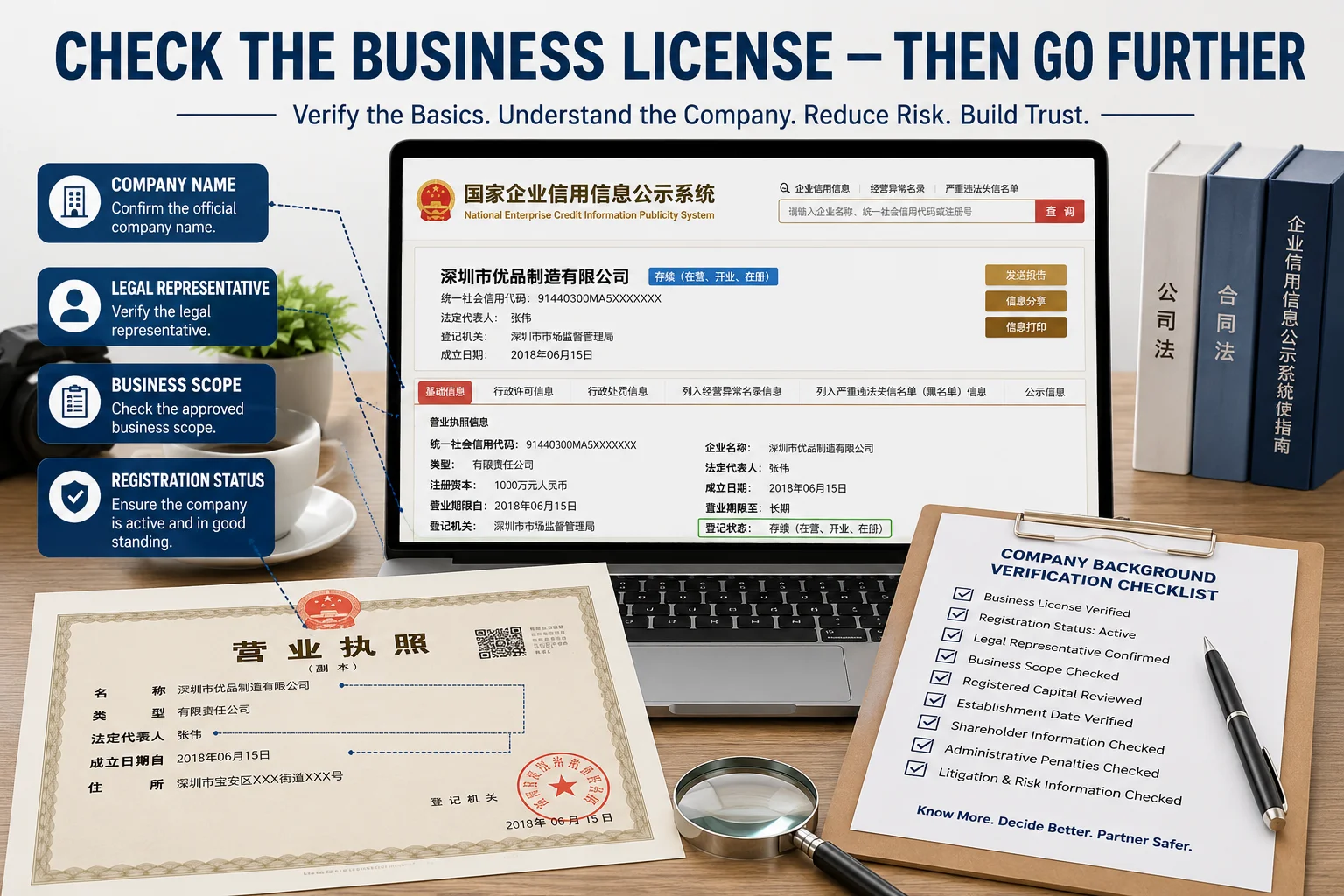
A business license is like a birth certificate for a company. It proves it's legally registered. But it tells you nothing about their reputation, the quality of their products, or if they are a good fit for you. The most important field to check is the "Business Scope" (经营范围). You want to see words like 生产 (shēngchǎn, production) or 制造 (zhìzào, manufacturing).[^4] If you only see words like 贸易 (màoyì, trade) or 销售 (xiāoshòu, sales), you are likely dealing with a trading company. Even if it says "production," it doesn't confirm they can produce your specific product well.
What to Look for in a Business License
| Key Field | What It Means | What It Doesn't Mean |
|---|---|---|
| Company Name | Confirms the legal name. You must pay this exact name. | Doesn't confirm they are a factory or have a good reputation. |
| Business Scope | Lists legally approved activities (e.g., manufacturing, trade). | Doesn't guarantee expertise or capability in all listed areas. |
| Registered Capital | The amount of money the owners committed. | A high number isn't a guarantee of quality or financial health.[^5] |
How to Confirm Whether the Supplier Is a Real Factory or a Trading Company?
Your supplier claims to be a factory, but their product range is huge and their answers are vague. Are they really the manufacturer? Here’s how you can find out.
Ask for a factory tour via video call. A real factory will happily show you their production lines, machinery, and warehouse. A trading company might refuse or only show you a generic office. Also, a factory specializes; a trading company sells everything.
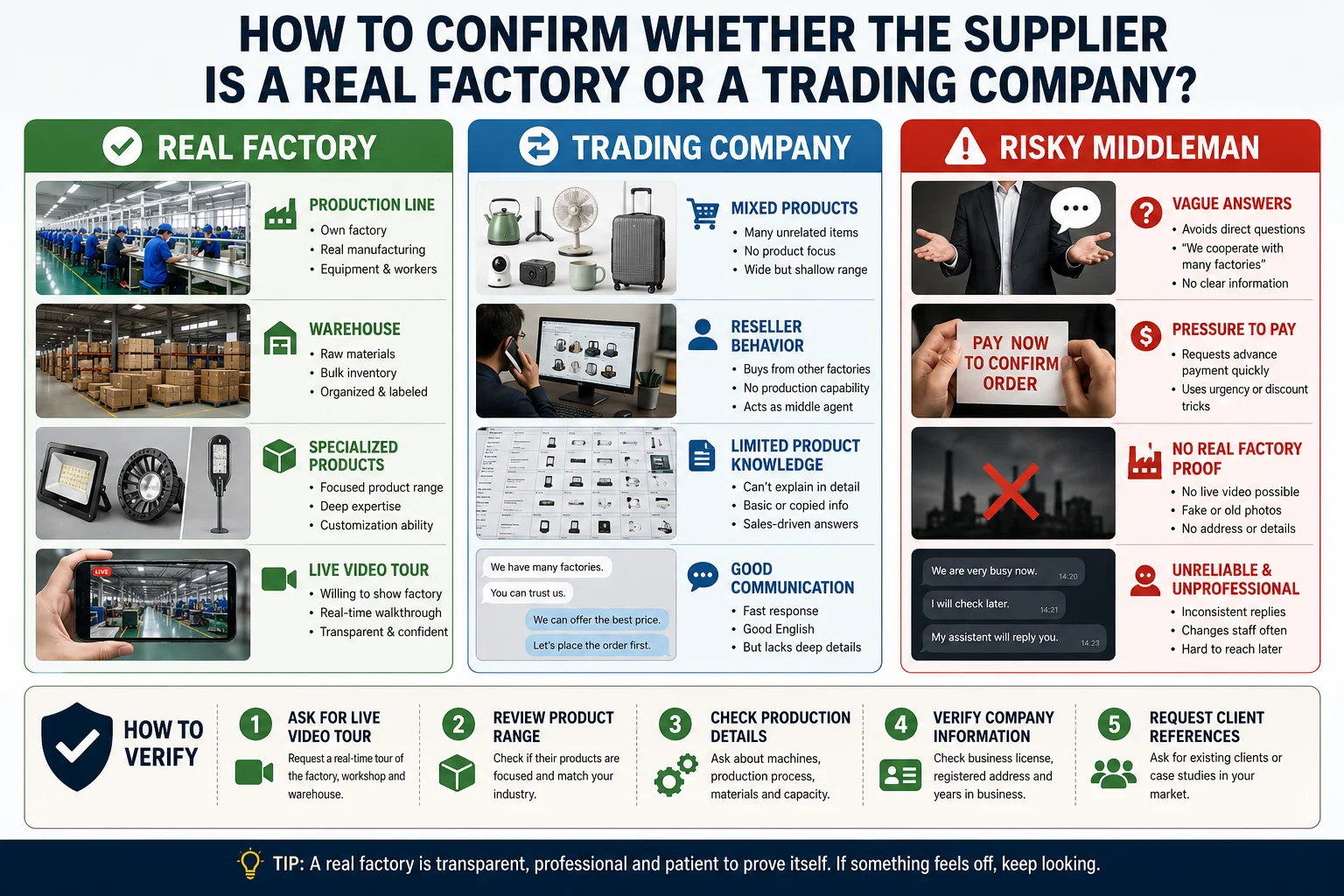
Working with a factory is not always better than working with a trading company. A good trading company can add value, especially for smaller buyers, by offering more flexible MOQs and consolidating products. The most important thing is transparency. You need to know who you are dealing with to manage your project correctly. The best way to find out is to ask specific, technical questions about the production process. A factory manager will know the answers instantly. A salesperson at a trading company will have to go ask someone else.
Questions to Uncover the Truth
| Question to Ask | A Factory's Likely Answer | A Trader's Likely Answer |
|---|---|---|
| "Can you do a quick video call and show me your production line for this item?" | "Yes, of course! When is a good time? Let me walk you over to the workshop." | "Our workshop is very busy right now. Maybe later. Let me send you a video instead." |
| "What is the daily capacity of your injection molding machines for this part?" | "We have 8 machines, so we can produce about 10,000 units per day." | "Let me check with the engineering department and get back to you." |
| "What other products do you make in your facility?" | "We specialize in silicone kitchenware, mostly spatulas and baking mats." | "We can do kitchenware, electronics, textiles, anything you need!" |
What Documents, Samples, Product Details, and Certificates Should You Review?
You have a price quote, but what else do you need? Relying on price alone is a huge mistake. The details you gather now will save you from major headaches later on.
Before paying, review everything. Get a detailed Product Specification Sheet, a physical sample, and any relevant quality certificates (like CE or RoHS)[^6]. A professional supplier provides these willingly. The quality of their documents reflects the quality of their work.
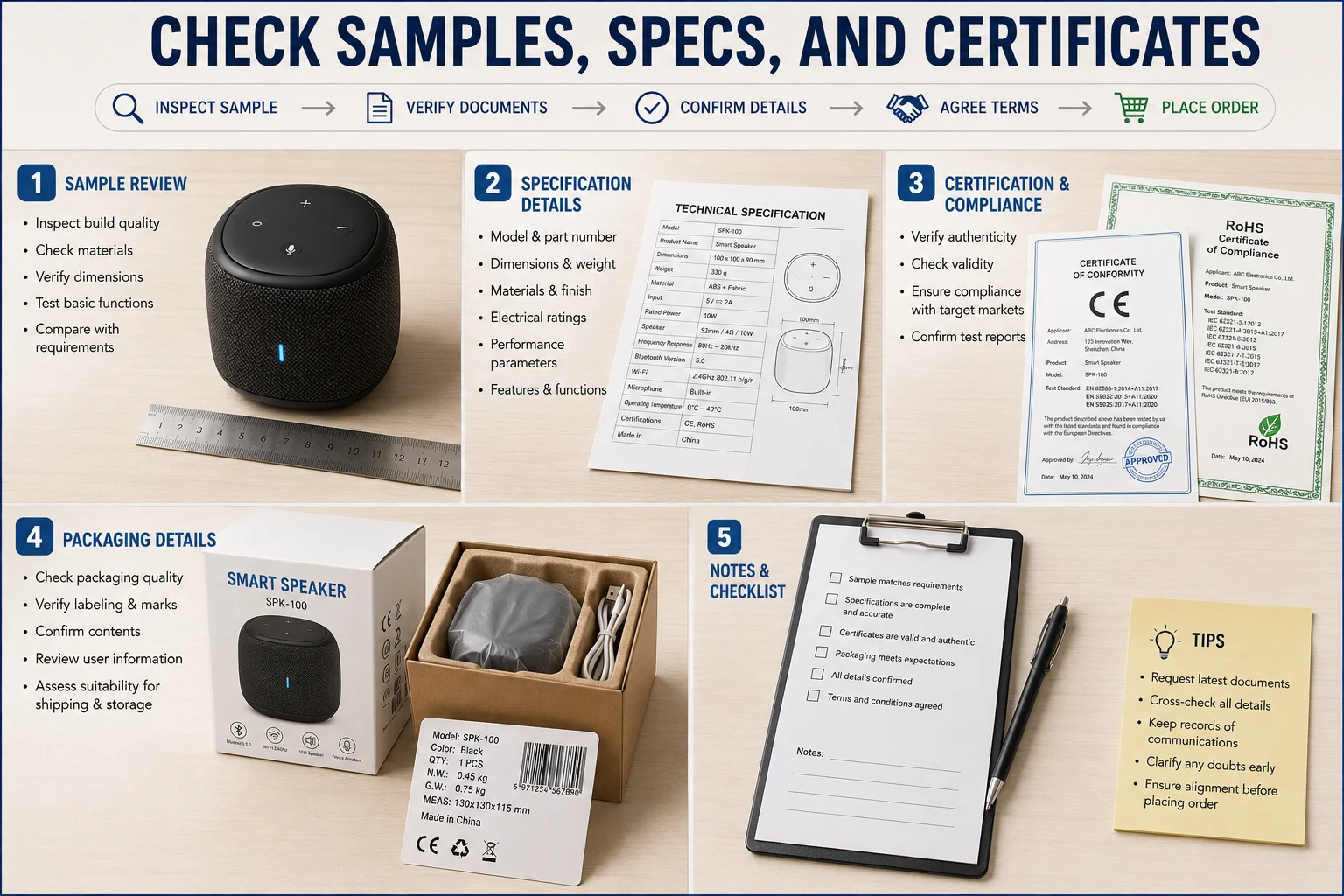
Think of this stage as building a case for or against a supplier. Every piece of information is evidence. A detailed quote with clear specifications is a good sign. A sloppy, one-line quote is a red flag. The physical sample is your most critical piece of evidence. Does it match your requirements exactly? Is the quality good? How was it packaged? Don't just look at the product; look at the effort they put into it. Also, ask for quality certificates, but be careful. It's common for suppliers to provide expired or fake certificates.[^7] You should always verify the certificate number with the issuing lab.
Building a Case for a Good Supplier
| Evidence Type | What to Look For | A Red Flag |
|---|---|---|
| The Sample | Matches all your specs: color, material, function, and quality. | The supplier charges an extremely high sample fee or is reluctant to send one. |
| The Quotation | Very detailed, listing material specs, dimensions, weight, and packaging. | A simple quote with just a product name and a price. |
| Certificates | The certificate is for the correct product and issued to the correct company name. | The supplier sends a blurry image or a certificate for a different product. |
How Factory Checks, Video Calls, and Third-Party Inspections Reduce Deposit Risk?
You're thousands of miles away. How can you be sure the factory is as good as they claim to be? You don't have to fly to China or just trust their word.
A simple live video call can reveal a lot about a factory's operations and professionalism. For larger or more complex orders, a third-party inspection agent can conduct an on-site factory audit to give you an unbiased report before you commit funds.
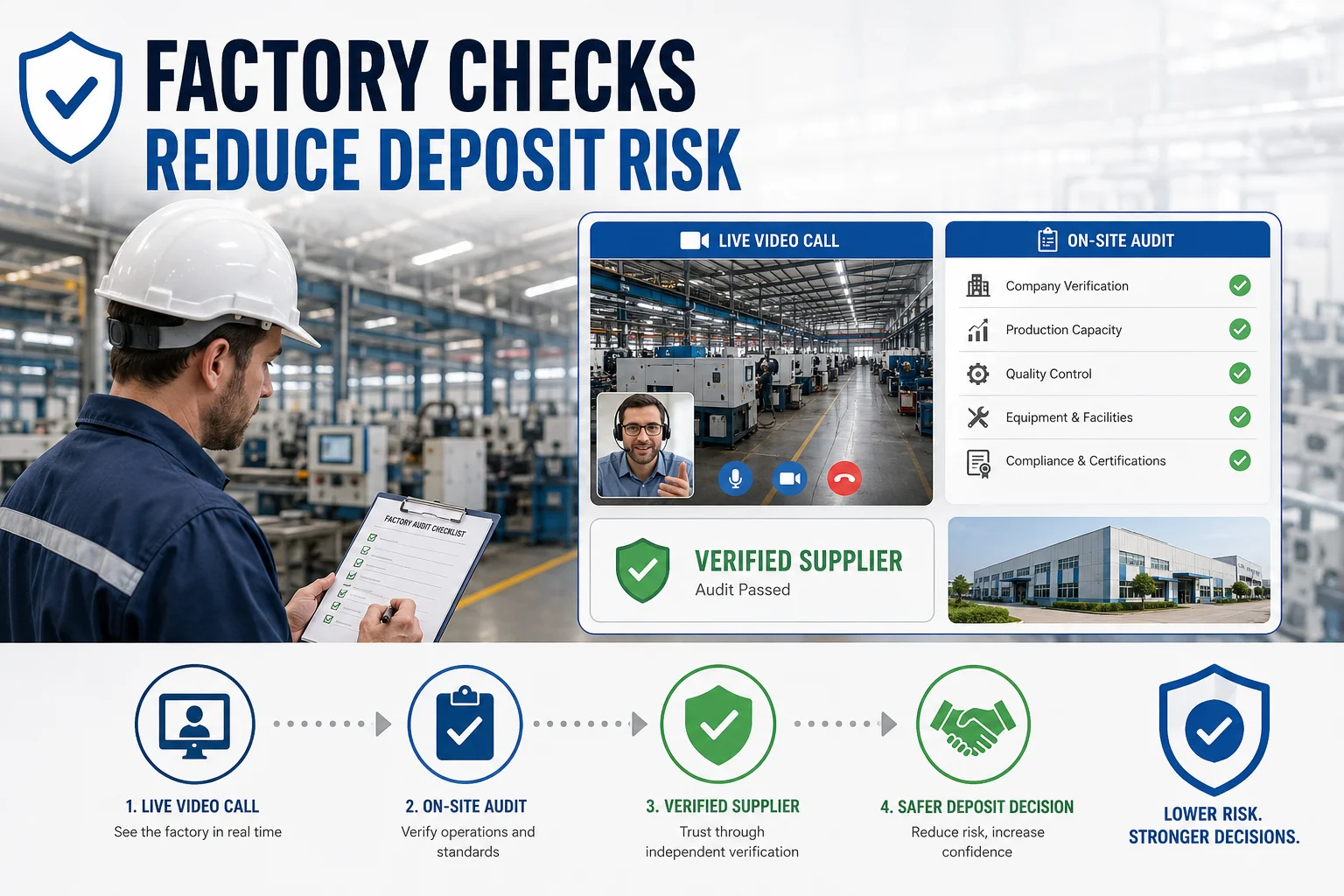
These checks give you eyes on the ground. A video call is a fast, low-cost way to get a feel for the supplier. Ask them to show you their raw material warehouse, the production line in action, and the finished goods area. See how they respond. Are they organized and professional? For higher-risk orders, a third-party audit is a smart investment. An agent (like my team at KingSourcing) can visit the factory. We verify their documents in person, assess their production capacity, and check their internal quality control systems. This gives you a clear picture of their real capabilities, not just what their salesperson tells you.
Levels of On-Site Verification
| Verification Method | Best For | Key Outcome |
|---|---|---|
| Live Video Call | All orders, especially smaller ones. | A quick, low-cost way to confirm the factory looks real and get a feel for their operation. |
| Basic Factory Audit | Medium-risk orders ($2k+). | Confirmation that the supplier is a legitimate manufacturer with the basic equipment to make your product. |
| In-Depth Quality Audit | High-risk or custom orders ($15k+). | A detailed report on their quality management systems (like ISO 9001)[^8], social compliance, and overall reliability. |
What Payment Terms and Contract Details Should You Confirm Before Sending Money?
The supplier is asking for a 50% deposit upfront. Is that normal? Agreeing to bad payment terms can leave you with no leverage if something goes wrong during production.
Never pay 100% upfront. A standard and fair term is a 30% deposit to start production and 70% for the balance.[^9] You should only pay the balance after the goods have passed a pre-shipment quality inspection.[^10]
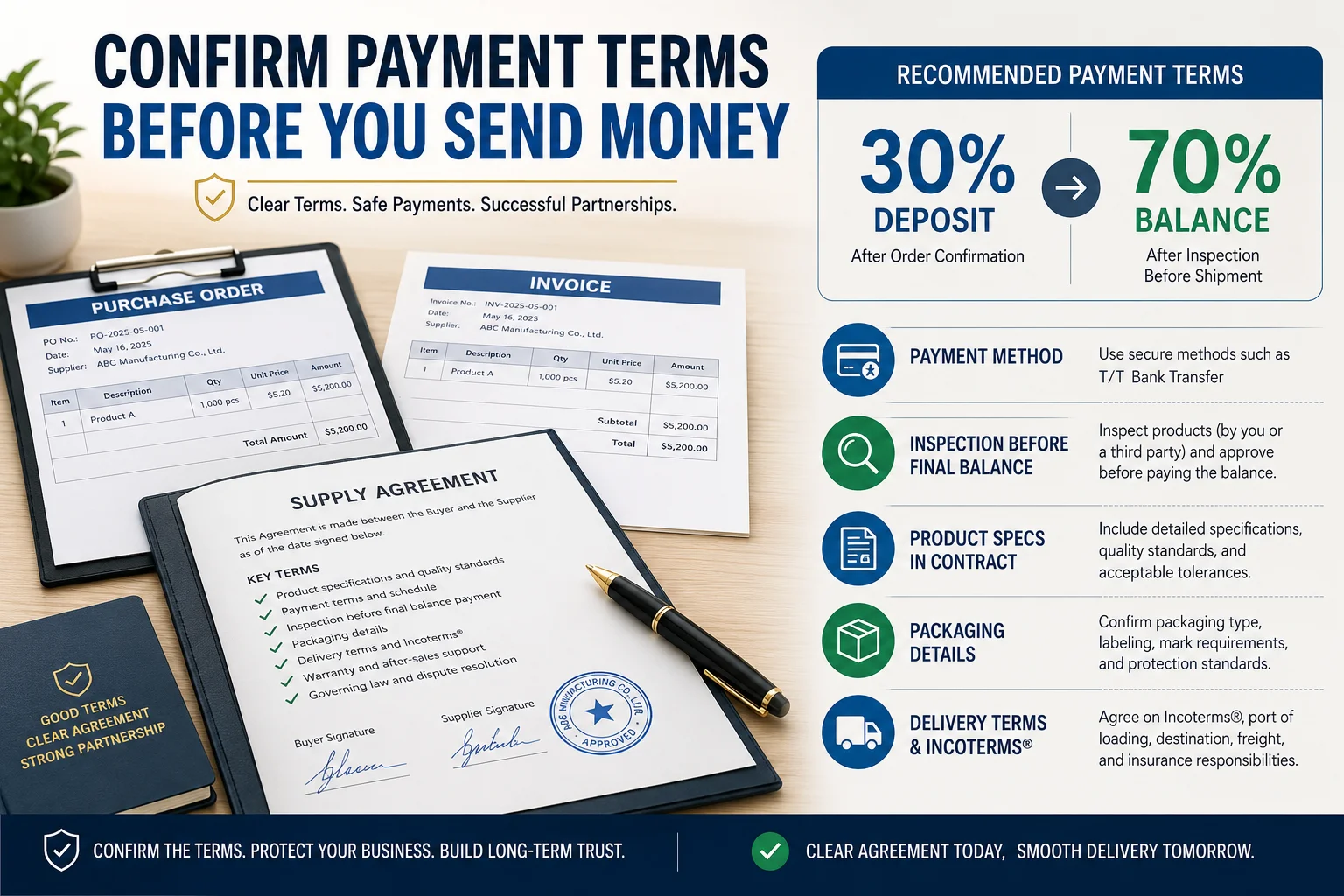
Before you send a single dollar, you need a clear agreement in writing. This is usually a Proforma Invoice (PI) or a Purchase Contract. This document is your shield. It must list every single detail of your order: exact product specifications, materials, colors, logos, packaging, shipping marks, price per unit, and lead time. Most importantly, check the bank account details. The beneficiary company name on the bank account must be the same as the company name on the business license and your contract. If they ask you to pay a personal account or a different company, it's a giant red flag.
Your Pre-Payment Checklist
| Contract Clause | What to Confirm | Why It's Critical |
|---|---|---|
| Beneficiary Name | The bank account name matches the supplier's company name exactly. | Paying the wrong entity could mean your money is gone and you have no legal claim to the goods. |
| Product Specs | Every detail is listed: size, material, color codes, weight, etc. | This prevents the supplier from saying "You didn't specify that" when delivering a sub-par product. |
| Payment Terms | Clearly states deposit percentage and balance terms (e.g., 30/70). | Protects your cash flow and gives you leverage to ensure quality before final payment. |
How KingSourcing Helps Buyers Verify Factories and Manage Safer Orders?
Feeling overwhelmed by all of these steps? You don't have to handle this all by yourself. Having a professional partner on the ground in China changes everything.
We act as your local team in China. KingSourcing verifies suppliers by conducting on-site audits, checking documents, and confirming their real capabilities. We find the right factory for your product, not just any factory, which massively reduces your risk.
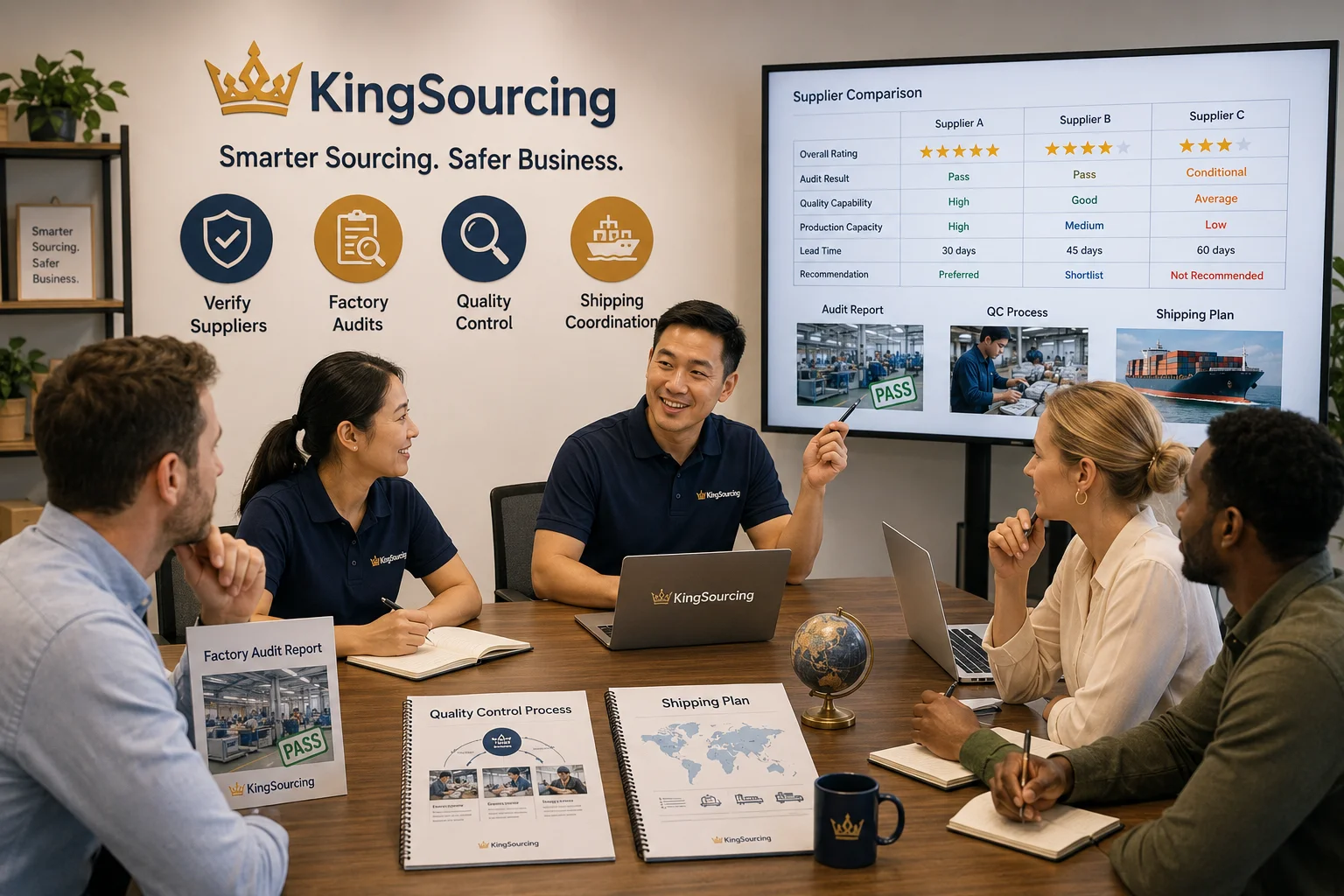
Our job is to make your China sourcing simple and safe. We've built a process based on years of experience. We don't just follow a checklist; we dig deep to understand if a supplier is a good long-term partner for your business. We handle the background checks, ask the tough technical questions, and visit the factory floor. Then, we manage the entire order process for you—from negotiating fair terms to conducting quality inspections before you pay the balance. This frees you up to focus on what you do best: marketing and growing your business. We are your sourcing office in China.
Our Verification and Order Management Process
| Our Service | How It Protects You | The KingSourcing Advantage |
|---|---|---|
| Supplier Vetting | We audit factories in person to verify they are capable, reliable, and a good fit for your product. | We have a database of trusted suppliers and the expertise to spot red flags instantly. |
| Sample Management | We consolidate and review samples to ensure they meet your specs before sending them to you. | We save you time and money on international shipping fees for samples. |
| Quality Control | We perform on-site inspections during and after production, ensuring goods are perfect before shipment. | You don't release your final payment until we confirm the quality, giving you total peace of mind. |
Conclusion
Verifying a Chinese factory is not a single task, but a crucial process. It ensures your money is safe and helps you partner with the right supplier for long-term success.
[^1]: "Perform Due Diligence - International Trade Administration", https://www.trade.gov/perform-due-diligence. A source from a business or trade advisory firm can confirm that a risk-based approach, where the level of due diligence corresponds to the order's financial value and complexity, is a standard best practice in international sourcing. Evidence role: general_support; source type: other. Supports: The source should support the principle that the intensity of supplier verification activities should be scaled according to the level of risk, which is often correlated with the financial value of the transaction..
[^2]: "New FTC Data Show People Have Lost Billions to Social ...", https://www.ftc.gov/news-events/news/press-releases/2026/04/new-ftc-data-show-people-have-lost-billions-social-media-scams. A report from a government agency like the FBI's Internet Crime Complaint Center (IC3) or a trade commission can provide statistics and case examples of businesses losing significant funds through supplier fraud, including deposit scams where a purported manufacturer disappears or delivers unusable goods. Evidence role: case_reference; source type: government. Supports: The source should provide statistics or documented case studies on financial losses incurred by businesses due to supplier impersonation, deposit scams, or other forms of international trade fraud.. Scope note: The source would provide general statistics or similar case studies, not confirmation of this specific anecdotal event.
[^3]: "[PDF] China's Corporate Social Credit “System” - Yale Law School", https://law.yale.edu/sites/default/files/area/center/china/document/horsley_china_corporate_social_credit_1-31-20.pdf. A source from the Chinese government or a legal advisory firm can confirm that the National Enterprise Credit Information Publicity System (NECIPS) is the official, publicly accessible database for verifying the legal registration status and business details of companies in mainland China. Evidence role: definition; source type: government. Supports: The source should be the official government portal for the NECIPS or a guide from a legal or government entity explaining its purpose..
[^4]: "[PDF] Company Law of China, The", https://mckinneylaw.iu.edu/practice/law-reviews/iiclr/pdf/vol6p461.pdf. A guide from a law firm or business consultancy specializing in Chinese trade can confirm that the 'Business Scope' (经营范围) on a business license legally defines a company's approved activities, and that terms like 生产 (production) are typically required for legitimate manufacturers, while their absence may indicate a trading company. Evidence role: definition; source type: other. Supports: The source should explain the legal and practical significance of terms found in the 'Business Scope' (经营范围) field of a Chinese business license..
[^5]: "Registered Capital in China: New Rules for Shareholder Payment ...", https://www.china-briefing.com/news/registered-capital-in-china-payment-terms-rules-and-transition-period/. A legal or business advisory source can explain that since reforms in 2014, China's company law generally allows for registered capital to be 'subscribed'—a pledged amount to be paid over many years—rather than fully 'paid-in' upfront. Therefore, a high registered capital figure does not necessarily reflect the company's current liquid assets or financial health. Evidence role: mechanism; source type: other. Supports: The source should explain the concept of registered capital under Chinese company law, particularly the difference between subscribed and paid-in capital..
[^6]: "Certificates of Compliance", https://www.federalregister.gov/documents/2025/01/08/2024-30826/certificates-of-compliance. An official source, such as the European Commission, can explain that CE marking signifies a product's conformity with EU health, safety, and environmental standards, while the Restriction of Hazardous Substances (RoHS) directive restricts the use of specific hazardous materials in electrical and electronic equipment. Evidence role: definition; source type: government. Supports: The source should define what CE marking and the RoHS directive are and what they signify..
[^7]: "U.S. Consumer Product Safety Commission Launches Crackdown ...", https://www.cpsc.gov/Newsroom/News-Releases/2026/US-Consumer-Product-Safety-Commission-Launches-Crackdown-on-Fake-Safety-Labels-Used-to-Push-Dangerous-Foreign-Products-into-US-Homes. A report from a third-party testing or quality control company can substantiate the claim that importers frequently encounter invalid, expired, or outright fraudulent product compliance certificates, and that verification with the issuing laboratory or authority is a necessary due diligence step. Evidence role: general_support; source type: other. Supports: The source should document the issue of fraudulent or invalid compliance certificates in international trade..
[^8]: "ISO 9000 family", https://en.wikipedia.org/wiki/ISO_9000_family. The International Organization for Standardization (ISO) defines ISO 9001 as the international standard for a quality management system (QMS). Certification to this standard demonstrates an organization's ability to consistently provide products and services that meet customer and applicable statutory and regulatory requirements. Evidence role: definition; source type: institution. Supports: The source should define the ISO 9001 standard and its purpose..
[^9]: "Methods of Payment - International Trade Administration", https://www.trade.gov/methods-payment. A guide on international trade or sourcing from China can confirm that a payment structure of a 30% deposit to initiate production and a 70% balance payment due upon completion or after a pre-shipment inspection is a widely used industry standard that balances risk between the buyer and the supplier. Evidence role: expert_consensus; source type: other. Supports: The source should confirm that 30/70 payment terms are a common and widely accepted practice in the industry..
[^10]: "Fact Sheet: President Donald J. Trump Imposes Tariffs on Imports ...", https://www.whitehouse.gov/fact-sheets/2025/02/fact-sheet-president-donald-j-trump-imposes-tariffs-on-imports-from-canada-mexico-and-china/. A guide from a quality control agency or international trade association can explain that withholding the final balance payment until after a successful pre-shipment inspection is a critical mechanism for buyer leverage, ensuring that the supplier rectifies any quality issues before the goods are shipped and final payment is released. Evidence role: mechanism; source type: other. Supports: The source should explain the strategic importance of linking the final payment to a successful pre-shipment inspection..