Quick Answer
When you combine products from multiple factories, the process can look simple from outside China: ask each supplier to send goods to one warehouse, then ship everything together. In practice, one late supplier, failed inspection, damaged cartons, or missing labels can delay the whole order and create costly inventory gaps. **To combine products from multiple factories into one shipment, buyers need every SKU to be production-ready, checked, correctly packed, received at the same warehouse, and suitable for the same freight plan.

At KingSourcing, we treat consolidation as a procurement coordination decision, not simply a warehouse task. Before we approve a combined shipment, we review supplier completion dates, inspection status, carton details, labeling requirements, warehouse receiving capacity, and the commercial cost of waiting for the final factory.
Why Is Combining Products from Multiple Chinese Factories Not Automatically Cheaper or Faster?
Buyers often choose consolidation because several separate shipments can look inefficient and expensive. That concern is understandable. However, when buyers combine products from multiple factories, they can unintentionally tie fast-moving inventory to the slowest factory in the purchasing plan.
Combining products from multiple Chinese factories is only beneficial when the expected freight and handling savings are greater than the cost and risk of waiting. Buyers should compare separate-shipment and consolidated-shipment scenarios using production dates, inspection results, carton measurements, chargeable weight, delivery deadlines, and the potential impact of delayed inventory.
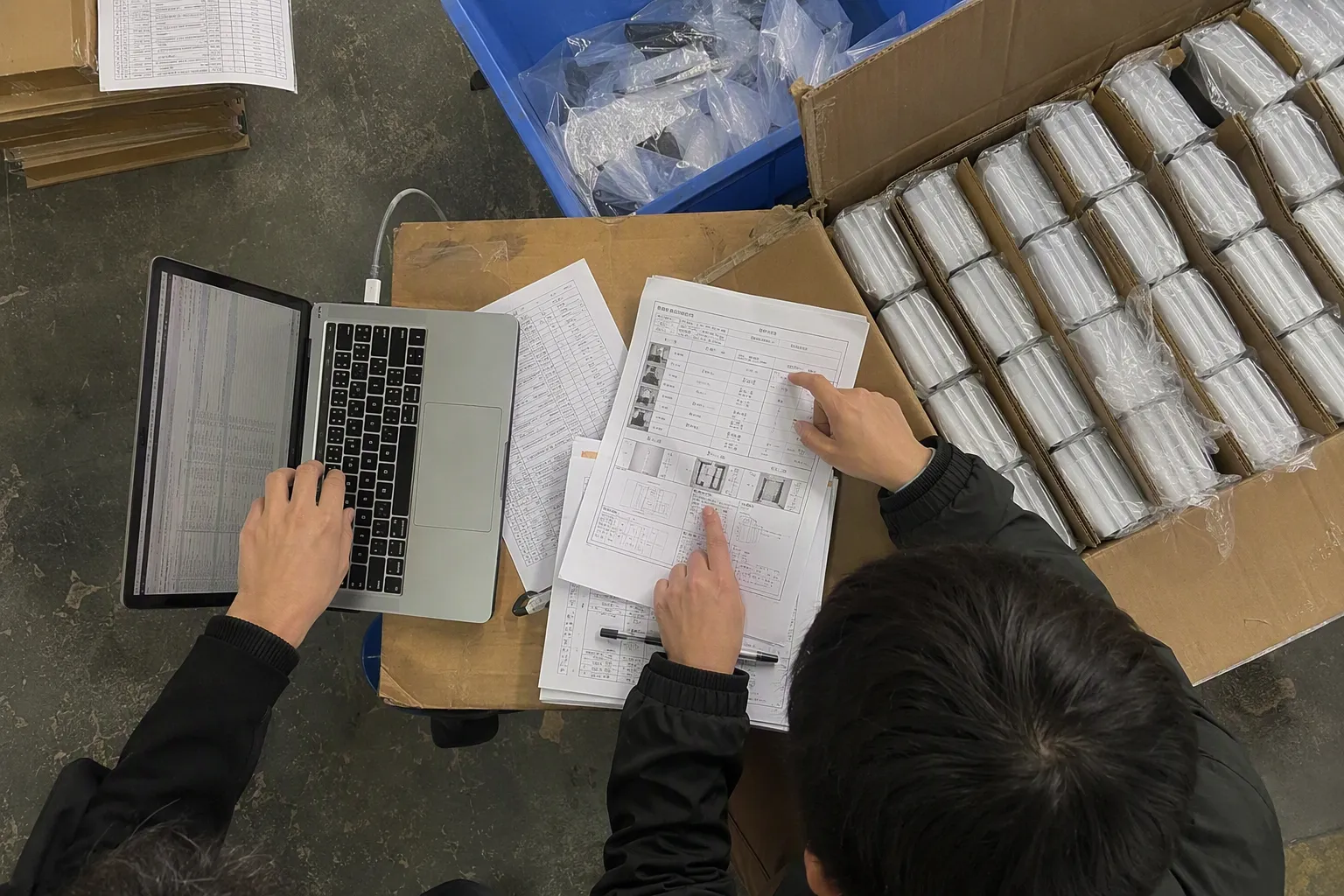
Consolidation starts before production finishes
Many buyers think consolidation begins when factories deliver cartons to a warehouse. We see it differently. The decision starts much earlier, ideally when a buyer confirms purchase orders and production schedules.
Every factory in a combined shipment creates a dependency. If you order five SKUs from five factories, all five factories must meet the planned completion date closely enough for the shipment to remain commercially practical.[2] One supplier may finish early, but another may need extra time for material sourcing, production changes, rework, packaging, or export-carton preparation.
We usually ask buyers to consider these questions before they commit to one consolidated shipment:
- When is each supplier expected to complete production?
- Which production dates are confirmed, and which are only estimates?
- Does each factory need product samples, packaging approvals, or label confirmation before mass production?
- Will goods require pre-shipment inspection or 1-by-1 product checking?
- Are products ready to ship in export cartons, or must the warehouse repack them?
- Are all items compatible with the intended shipping method?
- What happens if one supplier is seven, 14, or 21 days late?
- Would a delay create a stockout, missed launch date, marketplace problem, or retail delivery issue?
A factory’s stated completion date should not be treated as the same thing as shipment readiness. Production can be “finished” while goods still need counting, inspection, carton marking, labeling, final payment confirmation, or collection scheduling.
A consolidated shipment is only ready when the last required SKU is physically received, verified, and cleared for the same shipping plan.
This is why we encourage buyers to build a realistic schedule rather than relying on a single final production date. A good schedule includes factory completion, inspection, factory delivery to warehouse, warehouse receiving, packaging checks, and freight booking.
The slowest supplier can set the real delivery date
The biggest hidden cost of consolidation is often not freight. It is delay.
For example, imagine that three suppliers complete their products on time, while a fourth factory needs another 12 days because it is correcting packaging artwork. If all goods must travel together, the completed items may sit in the warehouse while the buyer waits. The buyer may save money on one freight booking, but lose sales because a popular SKU reaches the destination later.
This risk matters most for:
- Seasonal products
- Promotional campaigns
- Product launches
- Amazon replenishment orders
- Retail delivery windows
- Low-stock items
- Products with fast sales velocity
- Businesses using limited working capital
We do not assume that separate shipments are always better. Multiple shipments can create more handling, more documentation, more freight transactions, and possibly higher total costs. However, the correct comparison is not “one shipment is cheaper than two shipments.” The correct comparison is “which plan creates the lowest total commercial risk?”
A buyer should compare the freight difference against the cost of delayed inventory. That cost can include missed sales, advertising spend that cannot be used, marketplace stockouts, lost ranking momentum, customer backorders, or a delayed product launch.
Compare two shipping scenarios before approving consolidation
Before we combine products from multiple factories, we recommend comparing at least two practical scenarios.
| Scenario | Typical approach | Potential advantage | Main risk |
|---|---|---|---|
| Ship available goods separately | Dispatch completed, approved SKUs first | Protects inventory availability and launch timing | More shipments may increase total handling and freight cost |
| Wait and consolidate all goods | Hold completed goods until every SKU is ready | May simplify shipment management and reduce some costs | One late factory can delay the entire order |
| Partial consolidation | Consolidate ready goods, split only delayed SKUs | Balances freight efficiency with stock protection | Requires more planning and clear inventory priorities |
| Consolidate by product category | Ship related products together rather than all SKUs | Can simplify receiving and fulfillment at destination | May still create delays if categories depend on late suppliers |
We find that a partial consolidation plan is often worth considering. For example, a buyer may ship high-priority replenishment products first, then wait for lower-priority accessories, promotional items, or new test products. This approach does not remove all complexity, but it can prevent one delayed item from blocking the entire order.
The right decision depends on the buyer’s sales plan, inventory levels, shipping budget, and tolerance for delay. Freight rates, available routes, transit times, and destination requirements must also be verified shipment by shipment.
Carton dimensions can matter as much as product weight

A common mistake is to compare freight quotes based only on gross weight. Many shipping methods use chargeable weight, which may be based on actual weight or volumetric weight, depending on which is higher.[3]
A product can be lightweight but expensive to ship if its cartons are large.[4] Packaging choices can also affect whether it is practical to combine products from multiple factories. If one supplier uses oversized cartons, poor internal packing, or inconsistent carton sizes, that supplier’s goods may increase the total shipment volume.
We ask factories for carton information before shipping decisions are finalized:
- Number of cartons
- Carton dimensions
- Gross weight and net weight
- Product quantity per carton
- Carton markings
- Pallet requirements, if applicable
- Whether cartons are suitable for stacking
- Whether the cartons contain batteries, magnets, liquids, or other items requiring shipment-specific review
Here is a simple planning example:
| Product group | Cartons | Actual weight | Carton volume | Planning concern |
|---|---|---|---|---|
| Phone accessories | 25 | Moderate | Low | Usually compact, but SKU mixing must be checked |
| Promotional packaging | 10 | Low | High | May increase volumetric weight significantly |
| Small electronics | 18 | Moderate | Moderate | May need product and battery documentation review |
| Display stands | 6 | Low | Very high | Can make consolidation less economical |
The table does not determine the freight outcome by itself. Freight forwarders calculate chargeable weight using their own applicable method, and the final result depends on the shipment route and service. Still, carton data gives buyers a more reliable basis for planning than product weight alone.
A warehouse should verify more than receipt
A consolidation warehouse adds value when it acts as a control point. It should not operate as a passive transfer location where cartons are simply moved from one truck to another.
At KingSourcing, our warehouse coordination can include receiving factory deliveries, checking carton quantities, reviewing visible carton condition, confirming labels and marks, organizing storage, and preparing goods for the chosen shipment plan. The exact scope should be agreed in advance because different orders need different levels of checking.
Warehouse receiving can help identify problems such as:
- Missing cartons
- Incorrect carton counts
- Damaged outer cartons
- Wet, crushed, or poorly sealed cartons
- Missing shipping marks
- Incorrect FNSKU, barcode, warning label, or carton label placement
- Mixed SKUs that were supposed to be separated
- Packaging that does not match approved requirements
- Factory deliveries that arrive later than planned
However, warehouse receiving is not automatically the same as a full quality inspection.[6] Counting cartons does not prove that every product inside meets the required standard.[5] A carton-condition check does not confirm product performance. If a buyer needs detailed quality control, such as random inspection, functional testing, or 1-by-1 checking, that requirement should be arranged clearly before dispatch.
Inspection status must be clear before goods enter the shipping queue
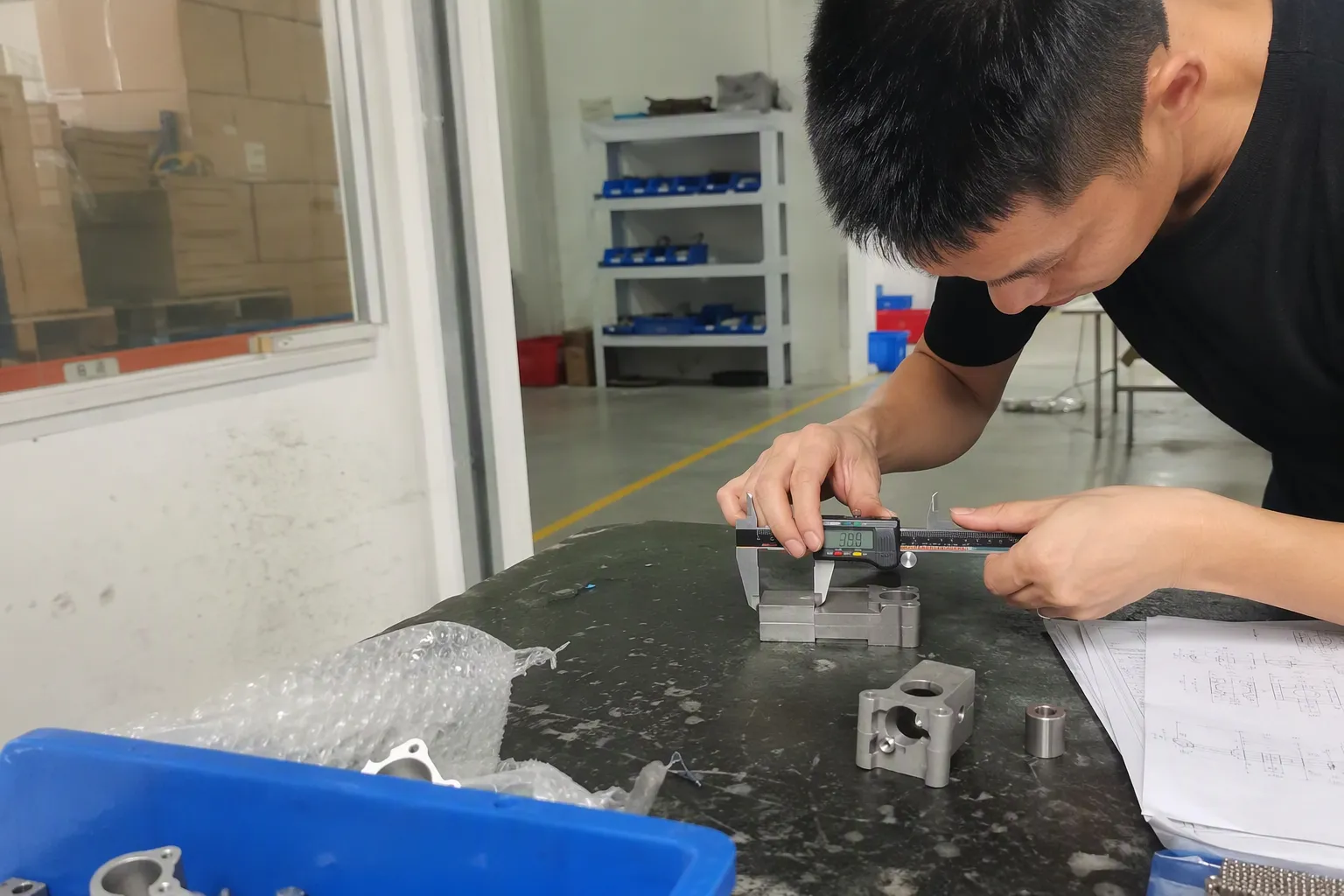
When buyers combine products from multiple factories, they should avoid treating freight consolidation as a solution for quality risk. A warehouse can identify obvious handling issues, but it cannot undo a production problem after a large batch is packed and delivered.
We recommend defining an approval sequence for each supplier:
- Production completion: The factory confirms that goods are finished.
- Quality inspection: The buyer, sourcing team, or qualified inspection provider checks goods according to the agreed scope.
- Issue resolution: The factory corrects confirmed defects or discrepancies where required.
- Packaging and labeling confirmation: Cartons, inserts, barcodes, and shipping marks are checked against the approved requirements.
- Warehouse delivery: The supplier delivers goods to the consolidation location.
- Receiving verification: The warehouse confirms carton count and visible condition.
- Shipment release: The buyer approves dispatch after receiving the final shipment summary.
This sequence reduces confusion. It also prevents a common problem: goods arrive at the warehouse, but the buyer later discovers that inspection was incomplete or labels were not approved. At that point, the shipment may need to be held, unpacked, relabeled, or returned to the supplier for correction.
For multi-SKU orders, we recommend a simple status tracker. Each row should show the supplier, SKU, ordered quantity, completion date, inspection status, carton details, warehouse receipt status, and shipment release status.
| Supplier | SKU status | Inspection status | Warehouse status | Action needed |
|---|---|---|---|---|
| Factory A | Complete | Passed agreed check | Received | Ready for dispatch |
| Factory B | Complete | Rework pending | Not received | Hold shipment decision |
| Factory C | In production | Not scheduled | Not received | Confirm revised completion date |
| Factory D | Complete | Passed agreed check | Received with carton issue | Review repacking requirement |
A tracker does not eliminate supplier delays, but it makes dependencies visible early. That visibility helps buyers decide whether to split, wait, or partially consolidate.
Packaging, labeling, and SKU separation need active control
Multi-factory sourcing creates more opportunities for packaging inconsistency. Each supplier may interpret instructions differently unless the buyer provides clear artwork, label files, carton marks, packing rules, and approval procedures.
For e-commerce sellers, this issue can be especially important. Different products may need marketplace barcodes, polybag warnings, bundle labels, carton labels, or specific inbound preparation.[7] These requirements should be confirmed before goods leave the factory, not after every carton reaches the consolidation warehouse.
We advise buyers to clarify:
- Which barcode applies to each SKU
- Whether labels must be applied to units, inner boxes, or master cartons
- Whether products should remain separated by SKU
- Whether mixed cartons are allowed
- Whether bundles require special packing
- Whether inserts, manuals, or promotional cards are included
- Whether carton marks must show purchase order or destination details
- Whether final packaging photos are required before factory delivery
The warehouse can support repacking, relabeling, or SKU sorting when agreed in advance. Still, these services add labor, materials, time, and possible handling risk. It is usually more efficient to make factories follow the correct packaging instructions from the start.
Shipping suitability must be confirmed for the final mix of goods
Not every product can necessarily travel under the same service or route.[8] This is particularly relevant for consumer electronics, products containing batteries, magnetic products, liquids, aerosols, sharp items, and goods with destination-specific requirements.
A mixed shipment may involve several product categories, each with different documentation or carrier acceptance conditions. We do not provide universal customs or restricted-product advice because feasibility depends on the shipment, destination, product details, transport method, and current carrier rules.
Before booking a combined shipment, buyers should confirm:
- The product description for each SKU
- Battery type and specifications, where applicable
- Whether safety or transport documents are required
- Whether the chosen freight channel accepts the full product mix
- Whether destination labeling or import requirements apply
- Whether goods should be separated into different shipping plans
A qualified freight provider and, where necessary, an appropriate compliance professional should review application-specific requirements. This step is especially important when a buyer is launching a new product type or shipping into a new market.
A practical decision framework for buyers
We use a simple operational framework when reviewing whether consolidation makes sense. It is not a fixed formula, but it helps buyers avoid making a decision based only on a headline freight quote.
| Decision factor | Question to ask | Why it matters |
|---|---|---|
| Production readiness | Are all suppliers likely to finish within a workable window? | A late supplier can hold the entire order |
| Inspection release | Have required checks been completed and approved? | Unapproved goods can create costly delays |
| Inventory urgency | Can the buyer wait without stockout or launch risk? | Delay may cost more than split freight |
| Carton data | What are the final carton dimensions and weights? | Volumetric weight may affect the result |
| Warehouse work | Is repacking, labeling, or sorting required? | Extra handling changes cost and timing |
| Shipping compatibility | Can all products move under the same route? | Mixed goods may need separate arrangements |
| Destination plan | Are delivery windows or fulfillment appointments fixed? | Late arrival can affect operations |
| Total landed cost | What is the full cost of each scenario? | Freight alone is not the full decision |
In many cases, the best approach is to set a decision deadline. For example, the buyer may decide that all suppliers must deliver to the warehouse by a particular date. If one factory misses that date, the available goods ship first and the delayed items follow later.
This kind of rule helps prevent endless waiting. It also gives suppliers a clear operational target and gives the buyer time to protect inventory.
Frequently Asked Questions
Is it cheaper to combine products from multiple factories into one shipment?

It can be cheaper, but it is not guaranteed. Savings depend on carton dimensions, chargeable weight, warehouse handling, shipping route, and the cost of waiting for late suppliers. Buyers should compare total landed cost and delivery risk for consolidated and separate shipment options.
How long can a warehouse hold products from different Chinese factories?
Storage time depends on the warehouse provider, available space, product type, and agreed service terms. Buyers should confirm storage conditions, fees, insurance arrangements, receiving procedures, and the expected consolidation timeline before factories begin sending goods.
Can a consolidation warehouse inspect products from multiple suppliers?
A warehouse can check carton counts, visible carton condition, labels, and shipment readiness. However, receiving checks are not always a full product quality inspection. Buyers should define whether they need random inspection, functional testing, 1-by-1 checking, or another specific quality-control scope.
Should I ship available products first if one factory is late?
That depends on inventory urgency, freight cost, product priority, and the expected delay. If waiting could cause a stockout or missed launch, shipping available goods first may be sensible. If the delayed factory will finish shortly, consolidation may still be practical.
Can different product types be shipped together from China?
Sometimes they can, but shipping suitability depends on the products, route, carrier rules, packaging, and destination requirements. Batteries, liquids, magnetic goods, and other controlled items may need shipment-specific review. Buyers should confirm feasibility with their logistics provider before booking.
Conclusion
To combine products from multiple factories successfully, buyers need more than one warehouse address. They need a realistic production plan, clear inspection status, verified carton details, correct packaging, and a shipping decision that accounts for the cost of waiting. Consolidation can support lower handling costs and simpler order management, but it should never be assumed to be faster or cheaper. At KingSourcing, we help overseas buyers coordinate supplier deliveries, warehouse receiving, quality checks, packaging, consolidation, and shipment planning with clearer control over every SKU.
Sources
- Strategies to reduce risks in ARV supply chains in the ... - PMC - NIH", Supply-chain research describes freight consolidation as a trade-off: combining loads can reduce transportation-related costs through higher utilization, while waiting to form consolidated loads can increase inventory and delivery-delay costs
- [PDF] Synchronization of Ocean Export Supply Chain - DSpace@MIT", Operations-management literature shows that load consolidation depends on the coordinated availability of component shipments; variability in one inbound flow can postpone dispatch of the combined load
- Air Cargo Tariffs and Rules: What You Need to Know", Air-cargo and parcel-rating guidance explains that chargeable weight may be determined by comparing actual weight with volumetric or dimensional weight and applying the higher value under the relevant tariff
- 150 Quick Service Guide - Postal Explorer - USPS", Dimensional-weight guidance indicates that a low-mass shipment can be rated at a higher chargeable weight when its package volume exceeds the carrier's volumetric threshold
- 6.2.1. What is Acceptance Sampling?", Quality-control guidance distinguishes receipt and quantity verification from product inspection: confirming package counts does not by itself test whether the contents conform to specified quality characteristics
- [PDF] Use of quality assurance systems in the fastener industry", Quality-management references distinguish receiving inspection, which may focus on quantity, condition, and documentation, from broader conformity assessment that evaluates specified product characteristics and performance
- CPSC Labeling Requirements Overview", Marketplace fulfillment documentation specifies that inbound inventory may be subject to product identification, labeling, packaging, and preparation requirements, including requirements for particular product configurations
- How to Comply with Federal Hazardous Materials Regulations", Dangerous-goods and carrier-acceptance frameworks establish that transport eligibility depends on commodity classification, packaging, documentation, mode, and operator or carrier conditions, so a mixed consignment may require separate arrangements