Quick Answer
Door-to-door shipping from China can look simple when a supplier offers one quote and promises delivery to your warehouse, home, or fulfillment center. The risk appears when the scope is unclear. Buyers may face surprise charges, incomplete paperwork, delayed customs clearance, or goods leaving China before they are actually ready.
We help buyers control those risks by defining the shipment before booking it.
Door-to-door shipping from China is a delivery arrangement in which cargo is collected in China and delivered to a stated destination address, usually through a logistics provider and its destination partners.[1] However, buyers must confirm the exact quote scope, import responsibility, tax treatment, customs support, chargeable weight, delivery terms, and possible extra charges before they accept a booking.
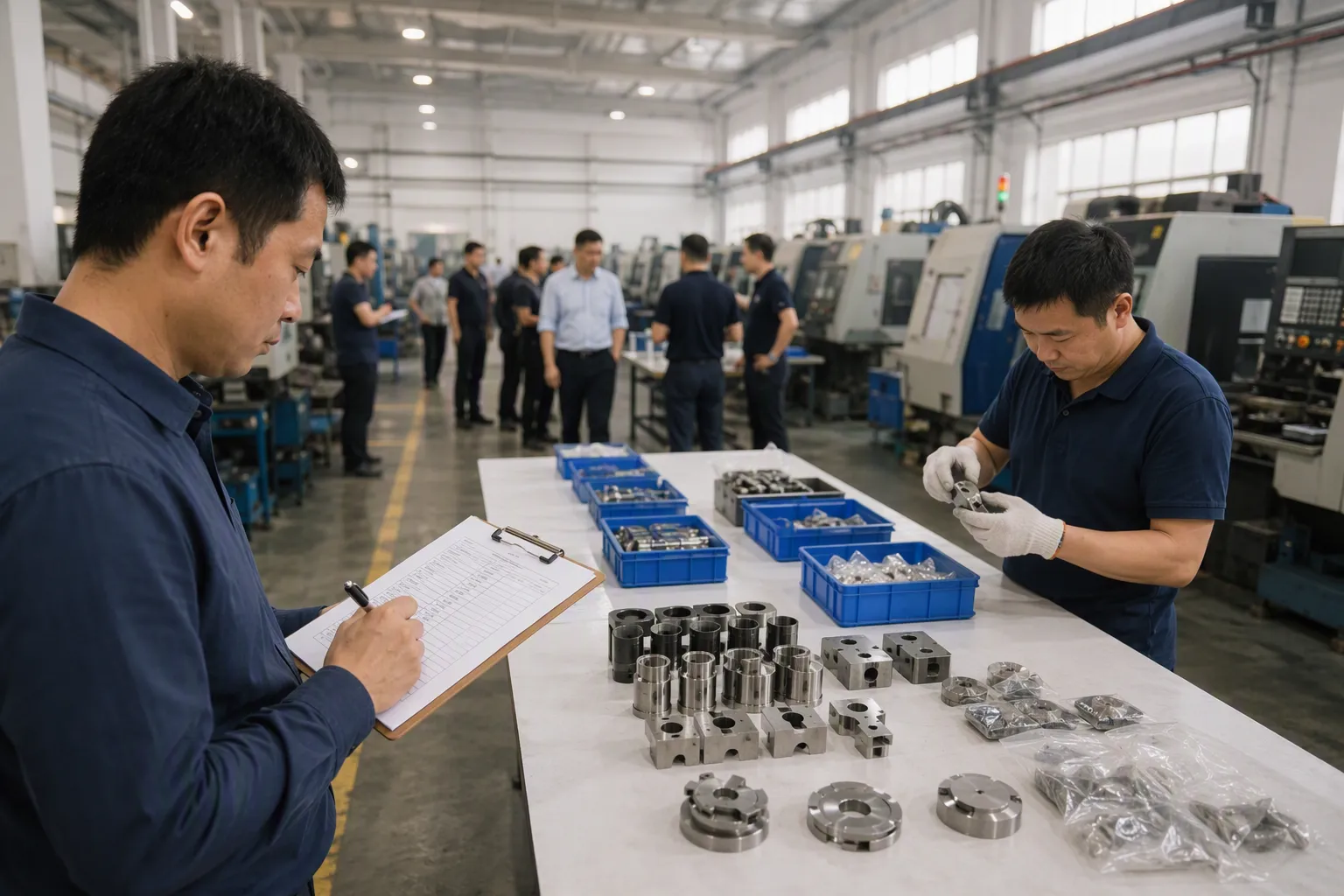
At KingSourcing, we see that shipping problems often start long before cargo reaches a port or airport. A strong shipping arrangement begins with product readiness, supplier coordination, inspection, packing, and clear communication. The carrier matters, but the shipment handoff matters just as much.
Arranging Door-to-Door Shipping from China Is Not Simply Choosing a Carrier
When buyers first arrange door-to-door shipping from China, they often compare courier, air freight, and sea freight quotes as if each option offers the same service. That can create confusion. A low rate may exclude destination charges, customs support, tax handling, delivery appointments, or remote-area fees.
Arranging door-to-door shipping from China requires buyers to compare service scope before comparing price. We recommend confirming where collection begins, how cargo is measured, who handles export and import documentation, whether duties and taxes are included, where final delivery ends, and how delivery exceptions are handled.

A shipping quote should answer more than one question: “How much will it cost?” It should also show what the logistics provider has actually agreed to manage, what the buyer still needs to provide, and what could change after the cargo is collected.
We Start With Shipment Readiness, Not Freight Rates
In our work as a Shenzhen-based sourcing partner, we often coordinate the stage between factory completion and freight booking. This is where many overseas buyers can prevent avoidable delays.
A shipment is not ready merely because one supplier says, “Your goods are finished.” For a multi-supplier order, one factory may be complete while another is still waiting for packaging materials, product labels, or final approval. If cargo leaves too early, buyers can lose the cost benefit of consolidation and may have to arrange another shipment later.
Before we help arrange door-to-door shipping from China, we normally encourage buyers to confirm the following points:
- All suppliers have completed the agreed quantities.
- Products have passed the buyer’s required quality checks or third-party inspection.
- Cartons are sealed, strong enough for the transport method, and correctly marked.
- Product labels, barcode labels, carton marks, warning labels, and country-specific requirements are reviewed where applicable.
- Carton dimensions and gross weights are available.
- Batteries, liquids, magnets, wireless products, branded items, and other sensitive goods have been disclosed.
- The delivery address, contact person, postcode, phone number, and receiving restrictions are correct.
- The buyer has confirmed whether the final address is a warehouse, residence, retail store, Amazon-related destination, fulfillment center, or another commercial location.
We do not treat this as unnecessary administration. Each point affects the freight quote, available shipping channels, customs documents, and final delivery process.
For example, a supplier may provide an estimated carton size before production ends. If the final cartons are larger, the chargeable weight can rise significantly for air and courier shipments. If a buyer books based on an early estimate, the final invoice may be higher even when the freight provider has applied its stated rate correctly.
We view shipping as the final stage of procurement control, not as a separate task that begins only after production is complete.
We Clarify What “Door-to-Door” Actually Includes
The phrase door-to-door shipping from China describes the overall delivery route. It does not automatically mean that every cost, import obligation, or customs requirement is included.
Different logistics providers may use similar wording while offering very different service scopes. One quote may include pickup from a Shenzhen warehouse, export handling, international transport, customs-related processing, and local delivery. Another may cover transport to the destination country but exclude duties, taxes, customs disbursement fees, address corrections, storage, delivery appointments, or unloading.
We recommend asking for a written scope rather than relying on short phrases such as “DDP,” “tax included,” “customs included,” or “all-in shipping.” Those descriptions can be useful, but buyers still need to understand what the provider means in the context of their product and destination.
Here are practical questions we suggest asking before accepting a quote:
-
Where is the pickup point?
Is collection from each supplier included, or must all goods be delivered to one warehouse first? -
Is consolidation included?
If cargo comes from several factories, ask whether receiving, counting cartons, storage, palletizing, and repacking are included or billed separately. -
What is the stated delivery endpoint?
Does delivery mean curbside, ground-floor, reception, warehouse dock, or a booked delivery appointment? -
Who is the importer of record, where applicable?
This is destination-specific and should be confirmed with the logistics provider or a qualified import adviser. -
Are duties, taxes, customs fees, and disbursement charges included?
Ask for the answer in writing. Buyers should not assume that “door-to-door” settles this question. -
What happens if customs requests more information?
Ask which party provides product descriptions, invoices, test reports, declarations, or other documents. -
What destination fees may still apply?
Common examples can include remote-area service, residential delivery, oversized-item handling, waiting time, address changes, storage, or failed-delivery charges.
We do not act as a customs authority or tax adviser. Destination rules can differ by country, product category, declared value, importer status, and current regulations. Buyers should verify destination-specific customs, duties, restricted-product requirements, and final carrier terms with the relevant logistics provider or a qualified import professional.
We Compare Landed Cost, Not Only Price per Kilogram or CBM
A common mistake is to compare one shipping quote by kilograms and another by cubic meters without checking the pricing method behind each number. This can make one option appear cheaper even though the services are not comparable.
For door-to-door shipping from China, the more useful comparison is the expected total landed cost under the stated assumptions. That means we look at freight, origin handling, consolidation, export documents, destination processing, taxes or duties where quoted, and final delivery scope.
Air freight and express services often use chargeable weight, which may be based on either actual gross weight or volumetric weight. The logistics provider usually charges whichever figure is higher.
A common volumetric calculation may look like this:
| Transport option | Typical charge basis to confirm | Why it matters |
|---|---|---|
| International courier | Actual weight or volumetric weight | Large but light cartons can cost more than expected |
| Air freight | Actual weight or volumetric weight, plus handling | Airport and destination handling may be quoted separately |
| [LCL sea freight | Cubic meters, minimum charges, local fees | Small shipments can carry disproportionate fixed charges](https://www.maersk.com/transportation-services/ocean-transport/lcl)[3] |
| FCL sea freight | Container size and related local charges | Container utilization and delivery conditions affect cost |
| Rail or multimodal routes | Weight, volume, route, handling scope | Availability depends on destination and cargo type |
For illustration only, a carton measuring 60 × 50 × 40 cm has a volume of 120,000 cubic centimeters. If a provider uses a divisor of 5,000 for volumetric weight, that carton may be charged as 24 kg even if its actual weight is only 12 kg.[2] The correct divisor and rules vary by service, so buyers should confirm them with the quoted provider.
We also recommend asking whether the quote is based on:
- Estimated or final carton dimensions
- Estimated or final gross weight
- A minimum chargeable weight
- A specific pickup city or warehouse
- Standard commercial delivery conditions
- A fixed validity period
- A particular exchange rate, fuel surcharge, or peak-season surcharge
This detail matters because freight rates can change, especially around major shipping seasons, capacity constraints, route disruptions, and holiday periods.[4] We avoid presenting one shipping method as universally cheapest because the answer changes with the shipment.
We Match the Shipping Method to the Actual Order
Buyers often ask us whether air freight, sea freight, or express courier is “best.” We usually answer with more questions first. The right method depends on the cargo profile and the commercial purpose of the shipment.
For example, a small quantity of urgently needed replacement accessories may justify a faster service. A larger replenishment order with flexible delivery timing may suit a slower, more cost-focused option. A bulky product with a relatively low unit value may become uneconomical by air because the volumetric weight is high.
When we discuss door-to-door shipping from China with a buyer, we consider five main factors:
| Decision factor | Questions we ask | Effect on shipping choice |
|---|---|---|
| Product type | Is it fragile, oversized, battery-powered, liquid, magnetic, branded, or regulated? | Some goods need specialized channels, documents, or packaging[5] |
| Shipment size | What are the final carton count, dimensions, and gross weight? | Determines whether express, air, LCL, FCL, or another option is practical |
| Destination | Is the address residential, commercial, remote, or appointment-only? | Affects final-mile cost and delivery limitations |
| Urgency | What is the real required delivery date? | Helps buyers avoid paying for speed they do not need |
| Risk tolerance | Can the business absorb cost changes or transit uncertainty? | Supports more realistic route and inventory planning |
We also encourage e-commerce sellers to separate marketing urgency from actual stock urgency. A seller may want products quickly because a launch date is approaching. However, if the product has not passed inspection or packaging is still unconfirmed, paying for premium freight may not solve the real problem.
In those situations, we focus first on readiness. We may help coordinate supplier follow-up, sample confirmation, packaging review, inspection, carton measurements, and consolidation before the buyer commits to a transport plan.
We Treat Consolidation as a Cost and Quality-Control Step

For buyers sourcing from multiple Chinese factories, consolidation can be one of the most valuable parts of the shipping process. Instead of sending separate international shipments from Shenzhen, Dongguan, Guangzhou, Yiwu, Ningbo, or other production areas, buyers may send completed goods to one warehouse for collection and dispatch.
Consolidation can help buyers:[6]
- Reduce repeated origin and destination handling costs
- Combine cartons into one shipment where practical
- Verify that all supplier deliveries have arrived
- Check carton counts against supplier packing lists
- Apply outer carton marks and shipping labels consistently
- Repack damaged or weak export cartons where needed
- Photograph cargo before dispatch
- Coordinate a single delivery schedule at destination
However, consolidation is not automatically beneficial in every case. It can add warehouse handling, storage time, or repacking costs. It may also delay an urgent part of the order while waiting for another supplier. We therefore recommend comparing the cost and timing impact instead of assuming that one combined shipment is always better.
At KingSourcing, we regularly see multi-SKU buyers benefit from a simple receiving checklist. Each supplier should provide a packing list before delivery to the consolidation point. The list should identify the purchase order, SKU, carton count, carton dimensions, gross weight, and any special handling notes. This makes discrepancies easier to identify before international dispatch.
If a supplier sends 18 cartons when the packing list says 20, we want that issue identified at the warehouse stage, not after the shipment reaches the buyer’s destination. A shipping provider may only receive and move cartons; the buyer should not assume that the provider will verify product quantities or retail packaging unless this is explicitly included in the service.
We Plan for Documentation and Exceptions Before Cargo Leaves
Many shipping delays are not caused by the physical movement of cargo. They are caused by missing, inaccurate, or inconsistent information.
The basic shipping file may include a commercial invoice, packing list, product description, consignee information, and transport-related paperwork.[7] Depending on the product and route, additional documents or declarations may be required. Requirements can be especially important for products involving batteries, electronics, wireless functions, children’s products, cosmetics, food-contact materials, medical claims, chemicals, wood materials, or protected brands.[8]
We advise buyers to use clear product descriptions. A description such as “accessories” may be too vague. A better description identifies the product in straightforward terms, such as “silicone phone case,” “USB charging cable,” or “stainless-steel drink bottle,” while remaining accurate.
Before booking door-to-door shipping from China, we recommend this confirmation checklist:
| Confirmation item | What we ask the buyer or provider to confirm |
|---|---|
| Pickup location | Supplier addresses, warehouse address, and pickup date |
| Cargo readiness | Inspection status, carton count, final dimensions, gross weight |
| Product details | Accurate descriptions, material, intended use, and special cargo status |
| Packaging | Export carton strength, labels, pallet needs, and fragile markings |
| Transport mode | Courier, air, sea, rail, or multimodal route |
| Charge basis | Actual weight, volumetric weight, CBM, minimums, and surcharges |
| Quote scope | Pickup, export, transport, customs-related handling, delivery, and exclusions |
| Import handling | Importer responsibilities, tax/duty treatment, and required buyer information |
| Delivery endpoint | Residential or commercial address, appointment, unloading, and access limits |
| Tracking | Tracking number, milestone updates, and the provider’s reporting process |
| Exceptions | Customs query, damage, delay, delivery failure, storage, or address correction process |
We also recommend that buyers ask what “transit time” means in the quote. It may refer to airport-to-airport movement, port-to-port movement, or an estimated door-to-door range after cargo departs. It may not include supplier production delays, warehouse consolidation time, customs holds, weather disruption, port congestion, or a delivery appointment.
A realistic delivery plan includes buffer time. This is especially important for product launches, retail promotions, marketplace inventory deadlines, and seasonal sales periods.
We Keep Communication Clear After Booking
A good door-to-door shipping from China arrangement should not become a black box after cargo is collected. Buyers should know who is responsible for updates and what milestones they can expect.
We suggest requesting a simple communication plan that covers:
- Cargo received at the origin warehouse
- Final carton count and shipment measurement confirmed
- Cargo dispatched from China
- Main transport departure and arrival milestones
- Customs-related information requests, if any
- Final-mile handover
- Delivery confirmation
The level of tracking varies by transport mode. Courier services may provide detailed scan events. Consolidated air or sea shipments may provide broader milestone updates. Buyers should ask what type of tracking is available instead of expecting the same visibility from every service.
We also encourage buyers to document exceptions immediately. If cartons arrive visibly damaged, the receiver should photograph the outer cartons, labels, and affected goods before disposing of packaging where possible. The buyer should then notify the logistics provider and relevant supplier promptly according to the agreed claims process.
Insurance availability, coverage limits, exclusions, claim deadlines, and documentary requirements vary. Buyers should ask the logistics provider about available cargo insurance and evaluate whether it suits the shipment’s value and risk profile. We do not assume that standard carrier liability will cover the full commercial value of every order.
For many smaller importers, the practical goal is not to eliminate every logistics risk. That is not realistic. The goal is to make responsibilities visible, reduce preventable mistakes, and ensure that the buyer can make an informed decision before goods leave China.
Frequently Asked Questions About Door-to-Door Shipping from China
Is door-to-door shipping from China the same as DDP shipping?
Not necessarily. Door-to-door describes collection in China and delivery to a destination address. DDP is an Incoterms® rule with specific seller obligations. Providers may use the terms differently in commercial quotes, so we recommend confirming written responsibility for duties, taxes, import clearance, and destination charges.
Does door-to-door shipping from China include customs clearance?
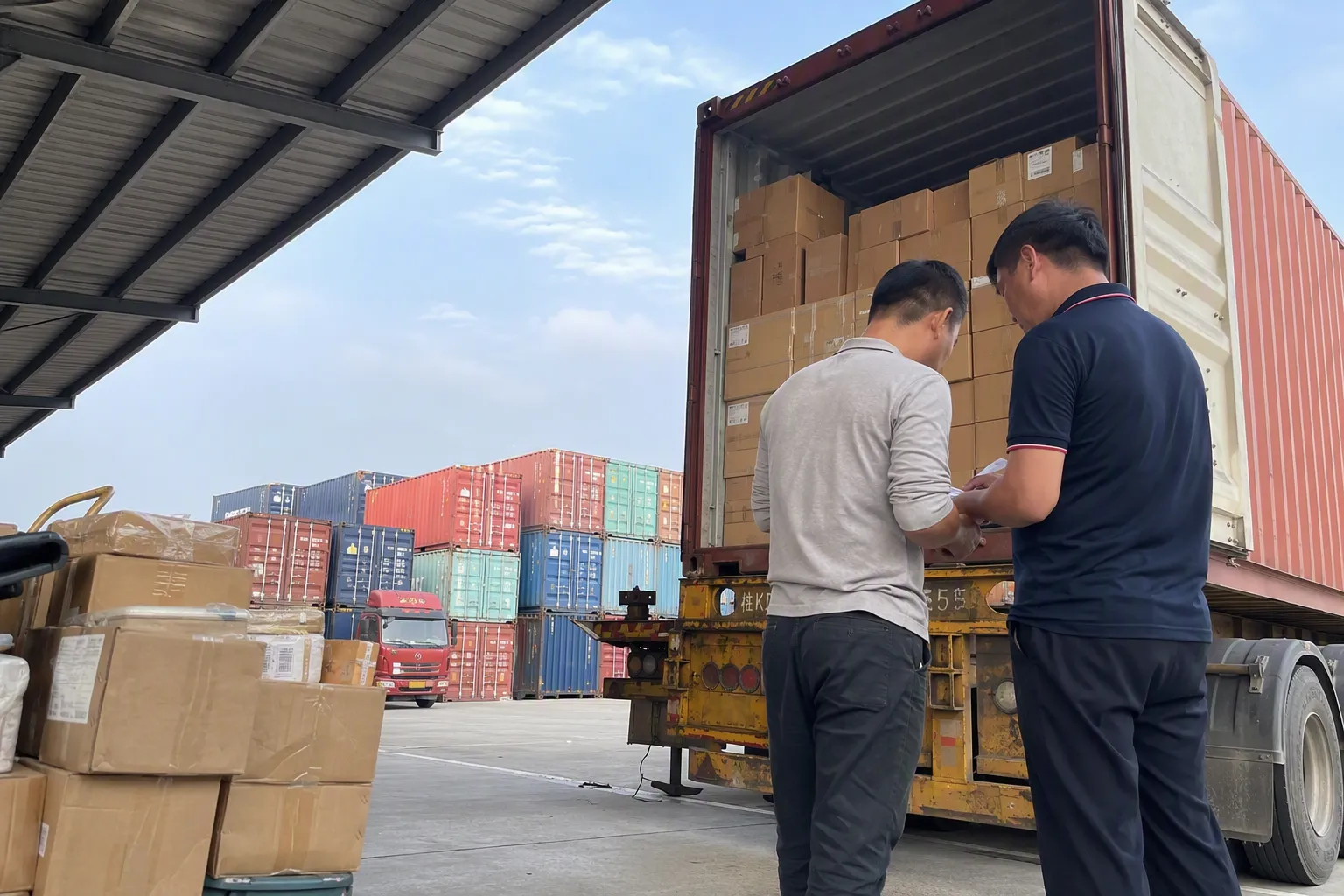
Some services include customs-related handling, but the exact scope varies by provider, product, and destination. Buyers should ask who provides customs documents, who is responsible for import declarations, and what happens if customs requests additional information. We recommend confirming destination requirements with a qualified adviser.
What information do I need for a shipping quote?
We suggest providing pickup location, destination address and postcode, product description, carton count, carton dimensions, gross weight, shipment urgency, and any special cargo details. For batteries, liquids, magnets, branded goods, or regulated products, buyers should disclose the details early because channel availability may change.
Can I combine goods from different Chinese suppliers into one shipment?
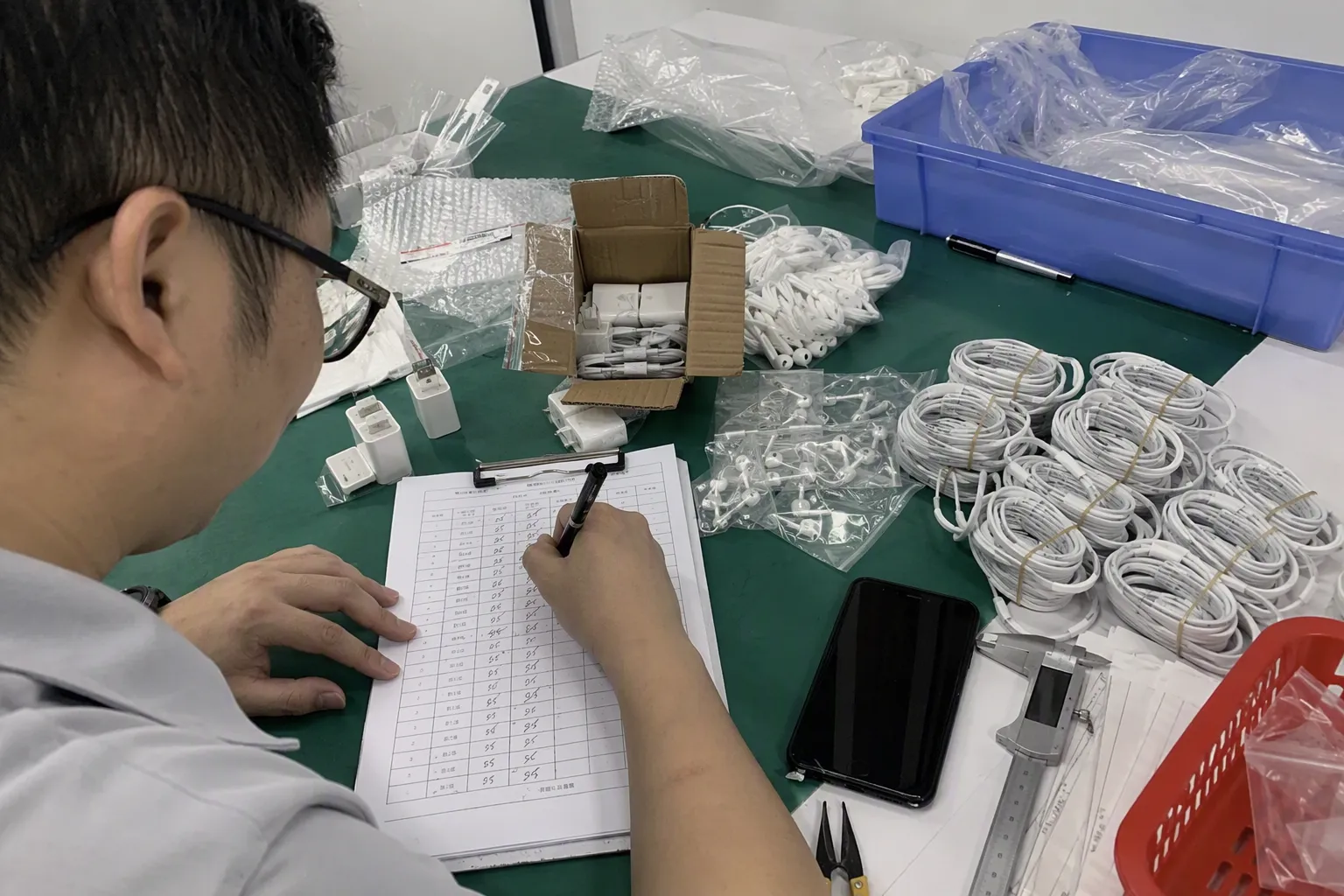
Yes, consolidation may be possible when suppliers send goods to the same receiving warehouse. Buyers should confirm receiving fees, storage limits, carton checks, repacking needs, final measurements, and whether all products are ready on time. Consolidation can reduce cost, but it can also delay an urgent partial order.
How can I avoid hidden shipping charges?
We recommend requesting a written quote breakdown and asking about chargeable weight, minimum charges, fuel or peak-season surcharges, destination fees, taxes and duties, remote-area charges, delivery appointments, storage, and failed-delivery costs. A quote is easier to compare when its inclusions, exclusions, and validity period are clear.
Conclusion: How We Make Door-to-Door Shipping From China More Controllable
Door-to-door shipping from China works best when buyers treat it as a procurement and risk-control decision rather than a simple carrier choice. We recommend confirming shipment readiness, final measurements, quote scope, import responsibility, chargeable weight, delivery conditions, and exception handling before booking. At KingSourcing, we can help overseas buyers coordinate supplier follow-up, inspection, consolidation, packaging, shipping preparation, and delivery arrangements from China. Contact us to discuss a clearer sourcing-to-shipping workflow for your next order.
Sources
- Transport vs Logistics: What's the difference? - ICC Academy", Transport terminology sources describe door-to-door carriage as a service that coordinates movement from the consignor's origin location to the consignee's destination, potentially through more than one carrier or transport stage
- What is volumetric weight and how is it calculated?", Carrier dimensional-weight guidance illustrates that, where a 5,000 cm³/kg divisor applies, a 60 × 50 × 40 cm package has a volumetric weight of 24 kg
- Less-than-Container Load | LCL Logistics & Shipping | Maersk", LCL freight-pricing guidance notes that shipments are commonly rated by volume and may be subject to minimum and local handling charges, which can increase the effective cost of very small consignments
- [PDF] OECD Supply Chain Resilience Review: Navigating Risks", International transport analyses report that freight prices and service availability can be affected by demand conditions, available capacity, supply-chain disruptions, and route interruptions
- Dangerous Goods Regulations (DGR) - IATA", Dangerous-goods transport standards require specified classification, packaging, marking, documentation, and handling procedures for goods that present transportation hazards
- Customs Brokers and Freight Forwarders", Logistics guidance describes freight consolidation as combining smaller consignments into a larger shipment, a practice that can reduce duplicated transport and handling activity and facilitate warehouse processing before dispatch
- Common Export Documents - International Trade Administration", Customs and trade guidance identifies commercial invoices, packing lists, consignee information, and transport documents as common records used to describe and process international shipments
- Philippines - Prohibited & Restricted Imports", Regulatory guidance indicates that product-specific controls may apply to categories such as batteries, children's products, cosmetics, food-contact materials, chemicals, wireless equipment, and wood packaging, depending on the market and product characteristics