Quick Answer
Chinese New Year shipment delays can leave e-commerce sellers out of stock just when they need inventory most.[1] The problem often looks like a freight booking issue, but the real risk usually begins much earlier, when production, inspection, rework, packaging, and approvals consume the remaining factory working days[2]. I avoid this risk by planning backward from the date inventory must be sellable. **To avoid Chinese New Year shipment delays, start with the date your inventory must be available for sale or accepted by your marketplace, then work backward through d
A shipment is only safe when every checkpoint—not just freight space—has a verified date and contingency.**
I have found that the most useful question is rarely, “Can you ship before Chinese New Year?” A better question is, “What must happen before this order is genuinely eligible to ship?” That change in thinking gives buyers a more realistic China sourcing timeline and more control over their replenishment decisions.
Avoiding Chinese New Year Shipment Delays Is Not Primarily a Booking Problem
Chinese New Year shipment delays become expensive when buyers focus only on vessel space or airfreight availability. A factory may say that an order can be “finished” before the holiday, yet the goods may still need inspection, defect correction, re-inspection, labeling, carton approval, booking release, or warehouse delivery. Each unfinished step can push cargo beyond the practical shipping window.
Avoiding Chinese New Year shipment delays is mainly a backward-planning and checkpoint-control process. I recommend confirming the required sellable date in the destination market first, then validating every upstream milestone. Freight booking matters, but a booking does not help if goods fail inspection, miss warehouse receiving, lack final packaging, or are not released by the factory.
Start With the Date Inventory Must Be Sellable
I start every pre-holiday sourcing plan with the destination-side requirement, not the factory’s estimated completion date.
For an Amazon seller, that date may be when inventory must be received, checked in, and available for sale.[3] For a DTC brand, it may be when stock must arrive at a fulfillment center before a promotion. For a distributor, it may be the date goods must reach a warehouse to support retail replenishment.
These dates are not the same as the carrier departure date.
A shipment can depart China before the holiday and still arrive too late because of:
- International transit time[4]
- Port congestion or transshipment changes
- Customs clearance[5]
- Inland delivery after arrival
- Marketplace appointment availability
- Fulfillment-center receiving delays
- Labeling or carton compliance issues
- Inventory check-in time at the destination
I do not treat any transit estimate as a guarantee. Freight schedules, port operations, customs processing, and marketplace receiving rules can change. Buyers should verify those details with their freight provider, customs adviser, marketplace account information, and destination warehouse where relevant.
Work Backward Through the Entire Order Timeline
Once I know the required in-stock date, I build a practical schedule in reverse. This is the core method I use to reduce Chinese New Year shipment delays.
| Backward-planning checkpoint | What I confirm | Why it matters |
|---|---|---|
| Required sellable date | When inventory must be available for customers | This is the commercial deadline |
| Marketplace or warehouse receiving | Appointment, receiving, and check-in requirements | Delivered cargo may still not be sellable |
| Destination clearance and delivery | Customs, port, inland trucking, warehouse handover | Arrival at port is not final delivery |
| International transit | Freight route, mode, estimated transit, possible delays | Transit varies by route and season |
| Shipment cutoff | Latest practical handover date for the selected service | Booking alone does not equal loading |
| Cargo-ready date | When inspected, packed, labeled, and released goods can leave | This is the factory-side shipping reality |
| Inspection and rework buffer | Time for defect correction and re-inspection | Quality issues often appear late |
| Production completion | When all units are physically produced | “Finished” can still mean incomplete packing |
| Sample and artwork approval | Approval of product, packaging, labels, inserts, and cartons | Late approvals can hold production |
This approach exposes weak assumptions early. If the backward plan shows that production must be complete by a certain date, I ask whether the supplier can realistically meet that date with quality control and correction time included.
That is different from asking whether the factory can complete assembly.
“Finished” Does Not Always Mean Ready to Ship[6]
One of the most common causes of Chinese New Year shipment delays is the gap between a factory’s definition of “finished” and a buyer’s definition of “cargo ready.”
A supplier may use “finished” to mean that the main product has been assembled. However, a shipment may still require several steps before it can be handed to a forwarder:
- Final assembly completion
- Functional or appearance checks
- Quantity counting
- Defect sorting
- Rework or replacement production
- Re-inspection
- Product cleaning or protective packing
- Retail packaging
- Barcode, warning label, or FNSKU application
- Master-carton packing
- Carton marks and shipping labels
- Final quantity reconciliation
- Buyer release or third-party inspection release
- Warehouse or forwarder handover
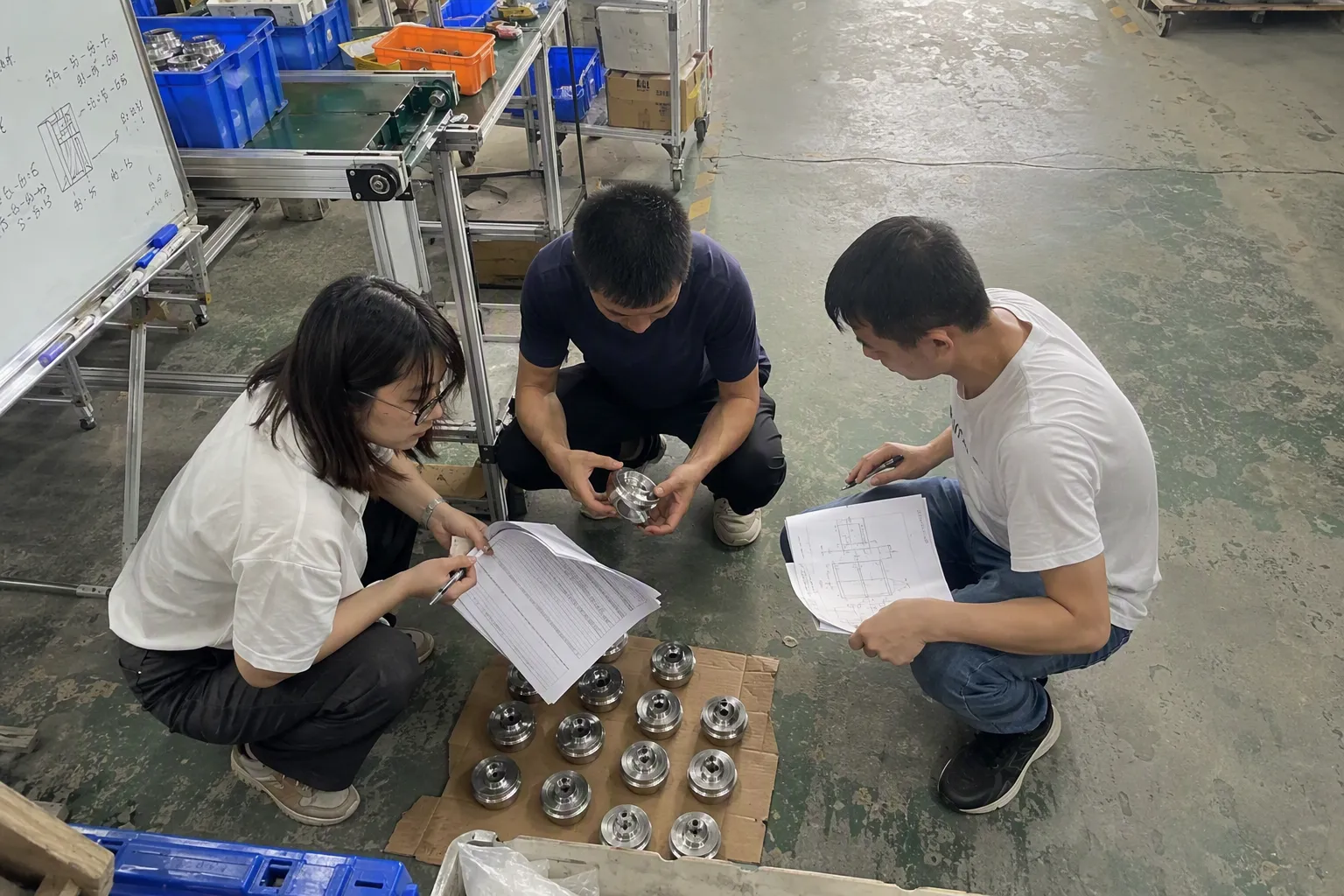
I have seen how quickly the available window disappears when inspection identifies issues that require correction. A defect may look minor in a report, but the correction process can involve reopening cartons, replacing components, reassembling units, retesting, repacking, and recounting the order.
That is why I treat inspection as a schedule checkpoint, not a final formality.[7]
A product is not ready to ship because production is “almost done.” It is ready when the approved quantity is packed, labeled, inspected, released, and physically available for handover.
For multi-SKU orders, the risk is even higher. One delayed component, one missing accessory, or one unfinished color variation can hold up the consolidation of the full order. Buyers should decide in advance whether partial shipment is commercially acceptable or whether the complete order must move together.
Build a Real Rework and Re-Inspection Buffer
I recommend that buyers ask what will happen if the first inspection does not pass. This is not a negative assumption about the supplier. It is basic procurement control.
A pre-shipment inspection can identify problems such as:
- Incorrect logo placement
- Color variation outside the approved sample expectation
- Scratches, stains, or cosmetic damage
- Missing accessories
- Weak packaging
- Incorrect labels or barcodes
- Product-function failures
- Carton quantity errors
- Mixed models or mixed colors
- Incomplete assembly
- Inconsistent dimensions or fit
The important question is not only whether defects exist. The important question is whether the factory has enough workers, materials, and time to correct them before its holiday closure preparations begin.
Chinese New Year shipment delays often start before the official holiday dates. Factory staffing can become less stable, workers may leave early, material suppliers may reduce responsiveness[8], and management attention may shift toward closing arrangements. A factory may still be open on paper, but its ability to solve a last-minute problem can be reduced.
I therefore prefer a schedule that includes:
- A first inspection date before the final possible handover date
- Time for a written corrective action plan
- Time for rework or replacement production
- A second inspection or targeted re-inspection
- Time for repacking and cargo release
- A final buffer before freight handover
The exact buffer depends on the product, order quantity, defect risk, supplier maturity, packaging complexity, and freight method. I do not use one universal number of days. Each order needs its own assessment.
Replace Vague Questions With Checkpoint-Based Confirmations
The question “Can you ship before Chinese New Year?” produces vague answers because it is vague itself.
A supplier may honestly answer “yes” based on its production plan, while the buyer is thinking about carrier departure, destination delivery, or marketplace availability. Those are different milestones.
To avoid Chinese New Year shipment delays, I use a checkpoint-based confirmation list. I ask the supplier, inspection team, and freight partner to confirm dates against the same order plan.
| Checkpoint question | Who should confirm it | What I look for |
|---|---|---|
| When will all production be physically complete? | Factory production manager | A specific date, not “before the holiday” |
| When can inspection take place? | Factory and inspection provider | Confirmed access to finished goods |
| If defects are found, who will correct them? | Factory | Named responsibility and likely correction process |
| How much time is available for rework? | Factory and sourcing coordinator | Enough time before closure risk increases |
| When will goods be fully packed and labeled? | Factory | Product and carton packaging completion |
| When will goods be cargo ready? | Factory | Released quantity available for collection |
| What is the latest practical handover date? | Freight forwarder or carrier representative | Order-specific cutoff confirmation |
| Does the destination have special receiving requirements? | Buyer, warehouse, marketplace | Labels, appointments, carton rules, documents |
I also recommend putting these dates into one shared document. A simple production and shipping tracker is often enough. The key is that every party works from the same definitions.
For example, I separate these terms clearly:
- Production complete: Products have been manufactured.
- Inspection ready: Enough finished goods are available for inspection.
- Passed inspection: The inspected lot meets the agreed standard, subject to report scope.
- Cargo ready: Approved goods are packed, labeled, and ready for handover.
- Shipped: Goods have been accepted into the selected transport process.
- Delivered: Goods have reached the destination address or warehouse.
- Sellable: Goods are received and available for customer orders or marketplace sales.
This language reduces misunderstandings. It also makes Chinese New Year shipment delays easier to identify before they become urgent.
Review Supplier Readiness, Not Just Supplier Price
A low quotation can become expensive if the supplier cannot manage pre-holiday production control. When I evaluate suppliers for orders near Chinese New Year, I look beyond unit price and estimated lead time.
I review operational readiness, including:
- Whether the supplier is a factory, trading company, or mixed operation
- Whether the supplier controls the critical production steps
- Whether key components come from external subcontractors
- Whether packaging is handled in-house or by another supplier
- Whether the supplier has a written production plan
- Whether the supplier can provide photos or video updates at defined stages
- Whether the supplier can support inspection before holiday preparations accelerate
- Whether replacement materials are available if defects are found
- Whether the supplier has experience with export packaging and labeling
- Whether the supplier can coordinate delivery to a consolidation warehouse
For customized products, I add more checkpoints. Custom packaging, printed inserts, molded logos, color matching, and private-label accessories can introduce dependencies that do not appear in a simple product lead-time quote.
A factory may be capable of producing the product quickly, while a packaging supplier needs more time. In that situation, the packaging supplier becomes the controlling factor.
I have found that buyers get better answers when they ask suppliers to identify the critical path. The critical path is the sequence of tasks that determines the earliest realistic cargo-ready date. If a custom color box, battery, electronic component, or logo plate is late, the entire order may be late even if the main production line is on schedule.
Use Freight Booking as One Checkpoint, Not the Whole Plan
Freight booking still matters. I do not suggest waiting until goods are ready before discussing shipping. Early communication with a qualified freight provider can help buyers understand available options, documentation requirements, cargo handover rules, and likely booking constraints.
However, freight booking cannot solve upstream production problems.
A booked shipment may still be missed when:
- Goods are not ready for collection
- Inspection has not been completed
- Rework is still underway
- Cartons are not labeled correctly
- Final commercial documents are incomplete
- The factory cannot release the goods
- The consolidation warehouse receives incomplete quantities
- The cargo misses the warehouse receiving cutoff
This is why I connect freight planning to the factory plan. I ask for order-specific verification of freight cutoffs and handover requirements, while I separately confirm factory completion, inspection, and packing readiness.
For some buyers, airfreight may appear to be the solution to Chinese New Year shipment delays. It can shorten transit in some cases, but it may also increase landed cost and still depends on cargo readiness, airline acceptance, documentation, and destination handling. I recommend evaluating freight mode against the value of avoiding a stockout, the margin on the product, the size and weight of the shipment, and the actual destination deadline.
Create a Pre-Holiday Control Routine
I use a tighter update rhythm as the practical shipping window approaches. This helps me spot delays while there is still time to respond.
A useful control routine can include:
- Weekly updates during early production
- More frequent updates as key milestones approach
- Photo or video evidence of production progress where appropriate
- A confirmed inspection booking once goods are expected to be ready
- A written list of packaging and labeling requirements
- A final packing-list reconciliation before collection
- Coordination between the factory, inspection team, consolidation warehouse, and freight provider
- Escalation rules if a checkpoint slips
I also keep a record of open issues. A simple issue tracker should show:
| Issue | Owner | Required action | Deadline | Status |
|---|---|---|---|---|
| Barcode artwork approval | Buyer | Approve final file | Date to verify | Open |
| Carton mark confirmation | Factory | Send carton layout photo | Date to verify | In progress |
| Inspection booking | Sourcing team | Confirm factory-ready date | Date to verify | Pending |
| Freight handover | Forwarder | Confirm order-specific receiving requirements | Date to verify | Pending |
This process may look detailed, but it is often less work than managing an emergency after the factory has closed.
For multi-supplier sourcing, I pay particular attention to consolidation. One supplier may finish early while another misses the plan. Buyers should decide whether they will wait for all goods, split the shipment, or hold completed goods in a warehouse. That decision affects freight cost, inventory availability, and risk.
Frequently Asked Questions
When should I start planning for Chinese New Year shipment delays?
I recommend starting when you set the inventory requirement, not when the holiday is close. You should work backward from your required sellable date and verify production, inspection, rework, packaging, cargo-ready, freight, and destination-receiving milestones for the specific order.
Can a factory ship before Chinese New Year if production is finished?
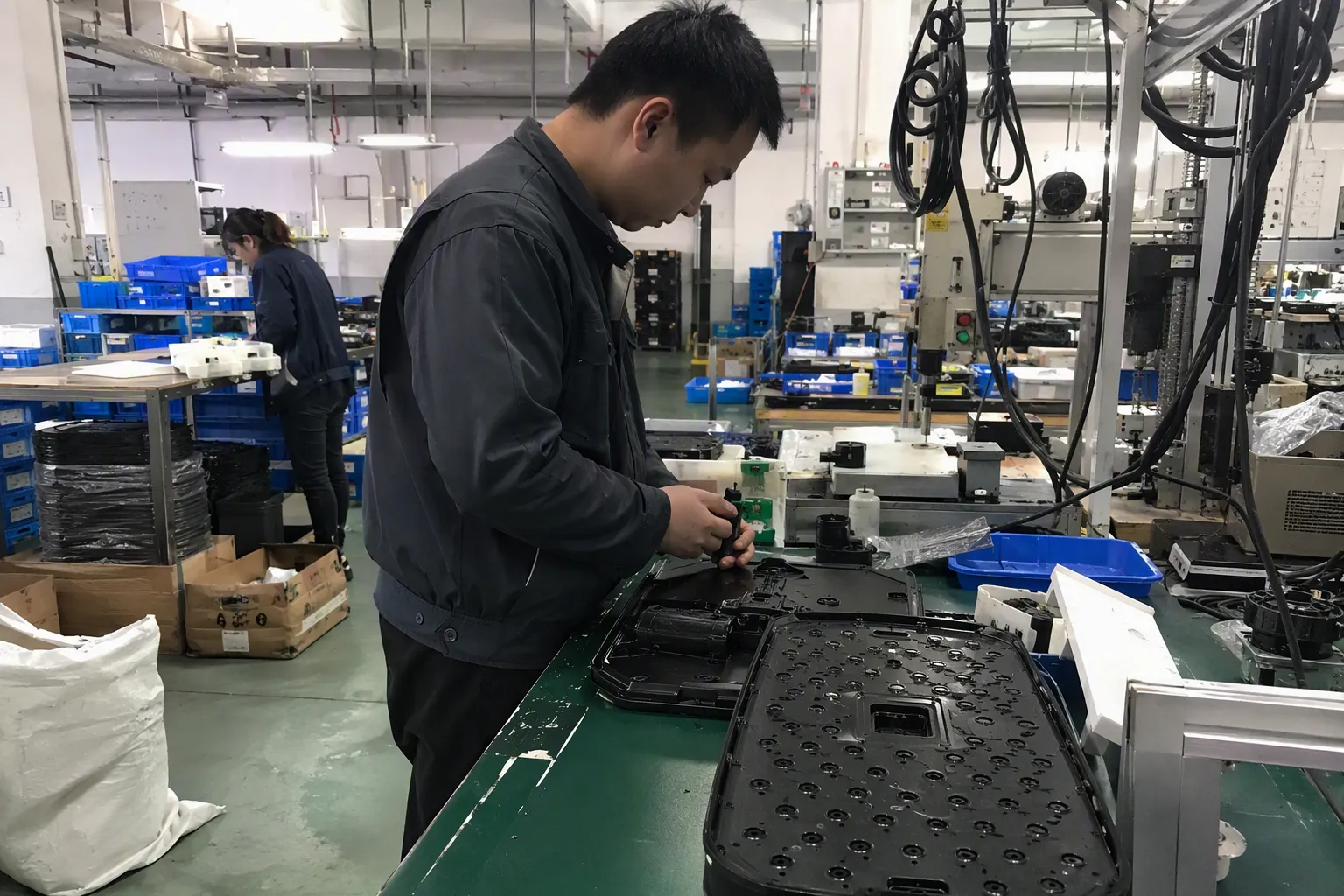
Not necessarily. Finished production may still require quality inspection, defect correction, re-inspection, packaging, labeling, carton marking, final approval, and freight handover. I treat “cargo ready” as the more important milestone because it reflects whether approved goods can actually leave the factory.
Does booking freight early prevent Chinese New Year shipment delays?
Early freight planning can be useful, but it does not prevent delays caused by unfinished production, failed inspection, missing packaging, or late cargo handover. I view booking as one part of a wider order-control plan, not as a substitute for factory readiness.
What should I ask my Chinese supplier before the holiday period?
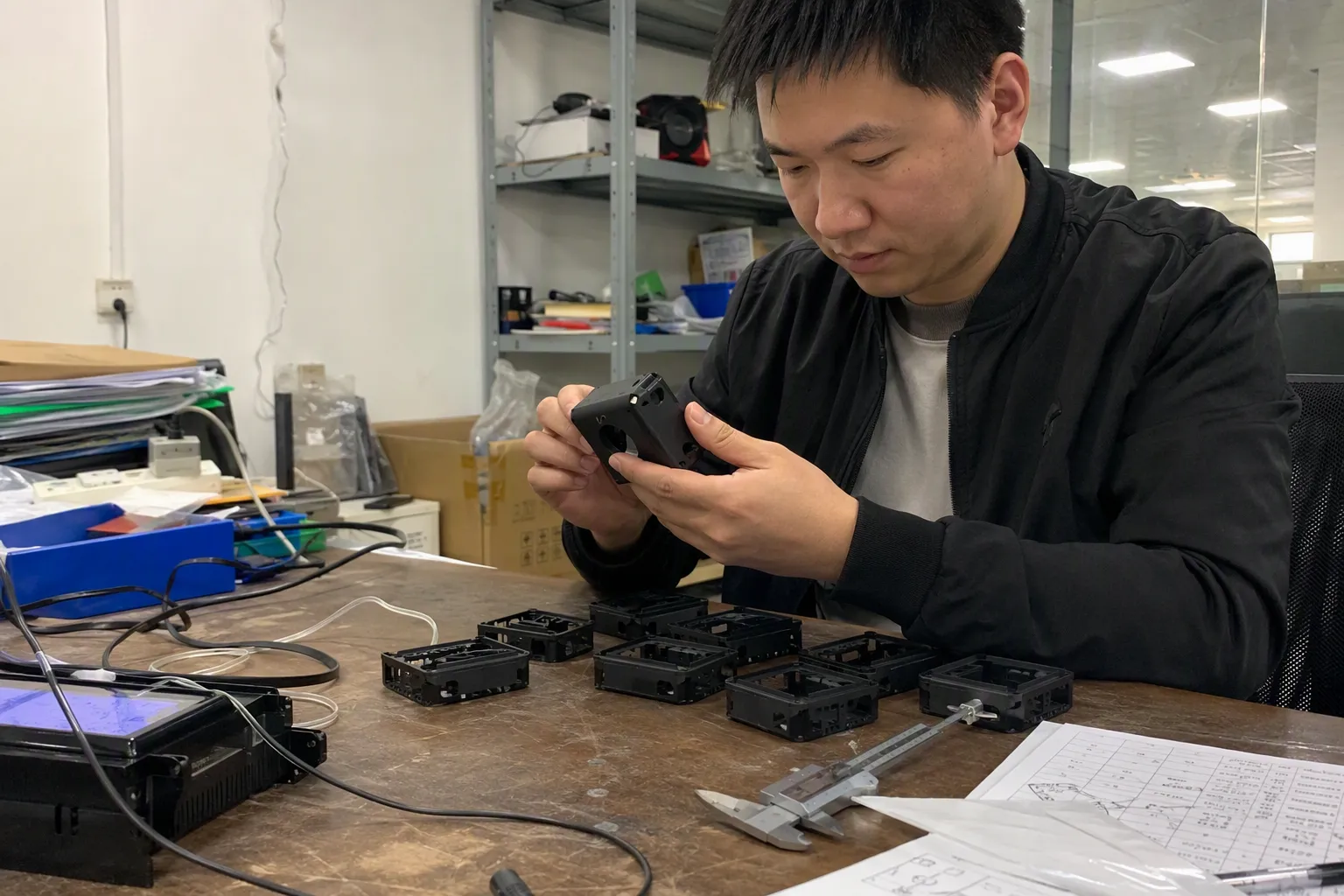
I recommend asking for confirmed dates for production completion, inspection readiness, rework contingency, final packaging, cargo-ready status, and factory release. You should also ask about critical materials, packaging dependencies, worker availability, and the supplier’s planned closure period for that specific order.
Should I use airfreight to avoid Chinese New Year shipment delays?
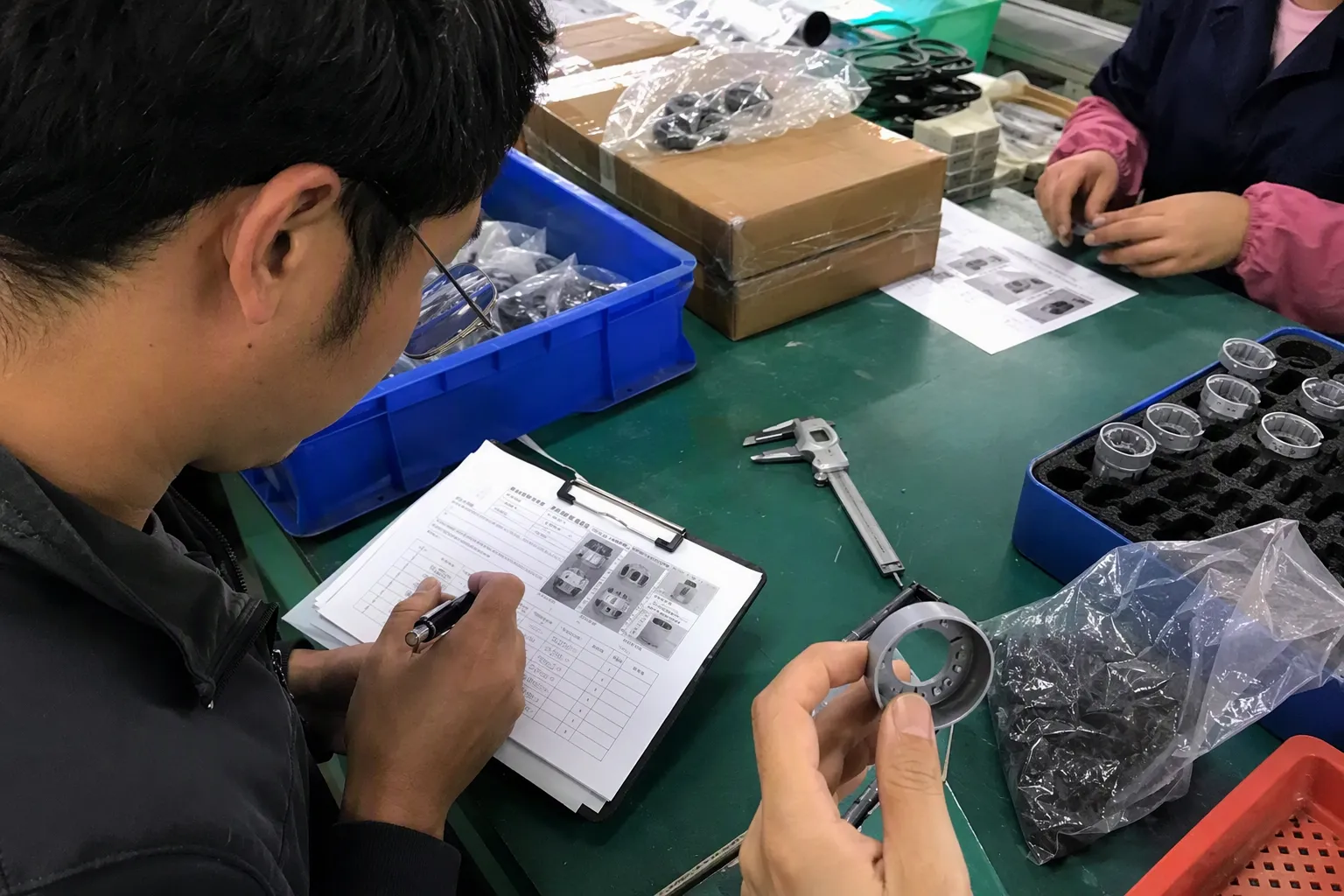
Airfreight may be appropriate for high-value, urgent, or lightweight goods, but it is not automatically the best answer. You should compare its landed cost with the cost of a stockout and confirm that the goods, documents, labels, and destination receiving process are ready.
Conclusion
Chinese New Year shipment delays are usually the result of weak timeline control, not one missed freight booking. I recommend planning backward from the date inventory must be sellable, then confirming production completion, inspection, rework, packaging, cargo readiness, shipment handover, transit, and destination receiving. Each factory, freight route, and marketplace requirement must be checked for the specific order. If you need support coordinating suppliers, inspections, consolidation, and shipment readiness in China, I can help KingSourcing build a clearer, lower-risk procurement plan.
Sources
- Chinese New Year and its Impact on Global Supply Chain", Studies of supply-chain seasonality describe how Lunar New Year shutdowns and reduced operating capacity in China can interrupt production and logistics flows, creating inventory-planning risk for downstream firms
- Special Documents - International Trade Administration", Export-quality-control guidance identifies inspection, corrective action, packing, labeling, and documentation as distinct activities that may need completion before goods are released for shipment
- Active and available inventory but its unavailable on the ...", Amazon seller documentation explains that inventory sent to fulfillment centers undergoes receiving and processing steps before units are reflected as available for sale
- Review of Maritime Transport 2025: Staying the course in turbulent ...", UNCTAD reporting on maritime transport notes that voyage timing and schedule reliability can be affected by congestion, network disruption, and other operational conditions
- Entry Summary and Post Release Processes", Customs authorities require imported cargo to satisfy entry, documentation, and admissibility procedures before release, making customs clearance distinct from physical arrival
- Common Export Documents - International Trade Administration", International trade guidance distinguishes manufacturing completion from the further steps needed to prepare goods for transport, including packing, marking, export formalities, and delivery to the carrier
- The management of good manufacturing practice (GMP ... - PMC", Quality-management standards treat inspection findings and nonconforming outputs as matters requiring control and, where appropriate, corrective action before product release
- The labour surplus and COVID‐19: the outlook for Chinese ...", Research on China's migrant workforce documents substantial holiday-related mobility around Lunar New Year, a pattern that can constrain labor availability for factories dependent on migrant workers