Quick Answer
Carton marks can look correct while still creating serious receiving problems. I have seen buyers approve attractive carton photos without checking the SKU, carton sequence, quantity, or packing list. A practical document-to-carton check helps me catch these mistakes before the supplier releases the shipment.
I check carton marks before shipping from China by comparing the printed information with the purchase order, SKU list, packing list, carton numbers, quantities, and actual carton count. I also review clear photos or conduct a physical inspection. This process confirms that each carton can be identified and matched to the correct order, but it does not replace destination-specific customs, carrier, or product-marking checks.

Carton marks are often treated as a small packaging detail. I see them differently. They are part of shipment readiness because they connect physical cartons with commercial documents and the buyer’s receiving process. Below, I explain what I check, which mistakes matter most, and how I handle corrections before shipment.
How Do I Check Carton Marks Before Shipping from China?
Many first-time importers focus on the logo, font, and print quality. I understand why, because these details are easy to see in a photograph. However, a professional-looking carton can still show the wrong SKU or an incorrect carton number. I start with the information that affects identification and reconciliation.
I check carton marks before shipping from China by using a controlled comparison. I review the approved order information, compare it with the supplier’s proposed mark, and then confirm the printed marks against the actual cartons and packing documents. I do not approve a mark based on appearance alone.
What Are Carton Marks?
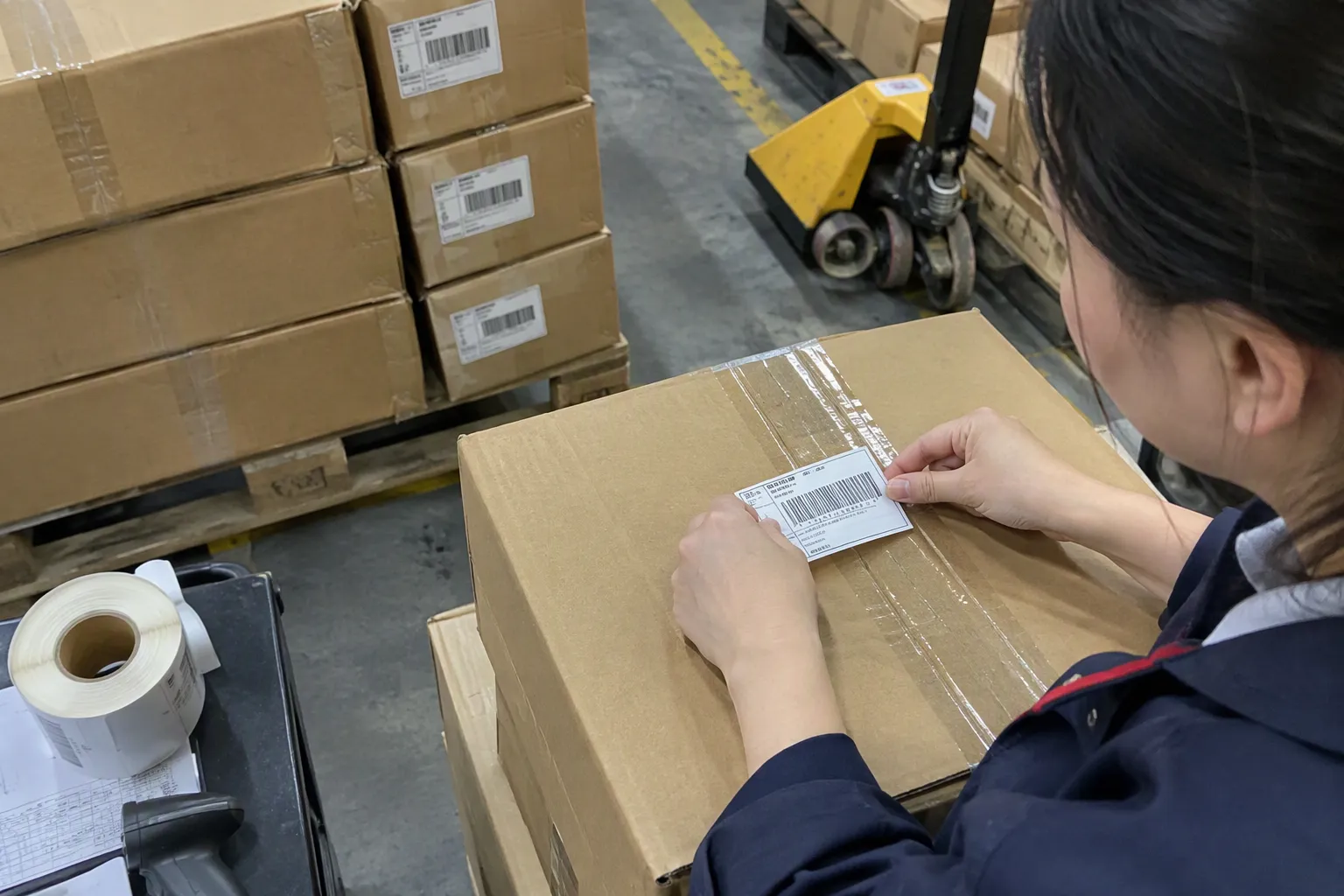
Carton marks are the words, numbers, symbols, or handling information printed or applied to outer shipping cartons.[1] They help the supplier, forwarder, warehouse, customs broker, and receiving team identify a shipment or carton group.
Carton marks are not the same as retail packaging. Retail packaging presents the product to the end customer. Carton marks primarily support shipment identification, handling, sorting, and receiving.[2] A master carton may carry a brand name, but the brand alone does not make the carton mark complete or useful.
Depending on the order, carton marks may include:
- Buyer or consignee reference
- Purchase order number
- Product name or short description
- SKU or model number
- Color, size, or variant
- Carton sequence, such as “1 of 8”
- Quantity inside the carton
- Gross weight and net weight
- Carton dimensions
- Country-of-origin information, where applicable
- Handling symbols or transport references
- Special instructions agreed with the buyer or logistics provider
I do not treat this list as a universal legal template. The correct information depends on the buyer’s receiving system, product, shipping method, destination, carrier, and official requirements.[3] I ask the buyer and logistics partners to confirm any special marking requirements before production.
Why Does Document Consistency Matter?
Document consistency matters because the carton mark becomes useful only when it agrees with the documents and the physical shipment.[4] If the packing list says a carton contains one SKU but the carton mark names another SKU, a warehouse worker may put the carton in the wrong receiving group.
I compare at least these sources:
- Purchase order: I confirm the order number, product references, variants, and agreed quantities.
- SKU or product list: I check the exact model, color, size, and other identifiers.
- Packing list: I compare carton numbers, carton quantities, total units, weights, and dimensions.
- Supplier carton-mark artwork: I verify that the approved information appears in the right locations.
- Actual carton count: I confirm that the carton sequence matches the number of cartons packed.
- Physical or photographic evidence: I check that the approved mark was actually applied to the cartons.
The most important principle is simple:
I approve the carton mark as part of the shipment information system, not as an isolated graphic.
My Pre-Shipment Carton Mark Checklist
I normally divide the check into four stages. This structure helps me avoid spending too much time on visual details before confirming the commercial information.
1. Check the order references
I first confirm that the carton mark refers to the correct buyer, order, and product. I look for:
- Correct purchase order number
- Correct supplier order reference
- Correct SKU or model number
- Correct variant information
- Correct product description
- Correct buyer or warehouse reference, if required
I pay special attention to similar SKUs. A product code with one incorrect character can identify a different item.[5] Color and size errors are also common when a supplier uses a previous production template.
I ask the supplier to use the exact reference from the approved order document rather than relying on memory or an old file.
2. Check carton numbering and actual count
I then compare the carton sequence with the actual number of cartons. If the shipment contains eight cartons, the sequence should normally allow the receiving team to recognize all eight cartons. The exact format can vary, but the sequence must be clear and internally consistent.
I check for:
- Missing carton numbers
- Duplicate carton numbers
- Carton numbers outside the expected range
- A sequence that does not match the packing list
- Mixed numbering systems between product groups
- Unmarked cartons
- Cartons added after the original packing list was prepared
A carton marked “3 of 8” creates a problem if the shipment actually contains nine cartons and the additional carton is not explained. The issue may be a packing-list revision, a split SKU, or a packing change. I do not assume that the carton is wrong until I reconcile the records, but I do hold approval until the difference is explained.
3. Check quantities and product grouping
The carton mark may state the quantity inside. I compare that quantity with the packing list and the agreed packing method. I also check whether the carton contains one SKU or multiple SKUs.
I ask the supplier:
- Does the stated quantity match the physical carton?
- Does the carton contain one product variant or several?
- Does the packing list use the same grouping?
- Are samples, spare units, or free goods included?
- Are damaged or rejected units excluded from the shipping quantity?
- Has the supplier changed the inner-pack quantity?
A quantity mismatch can affect receiving, inventory records, and payment reconciliation.[6] It can also create confusion when a buyer uses carton marks to scan or count incoming stock.
4. Check the printed cartons
After reviewing the documents, I inspect the actual printed mark. I check whether:
- The text is readable
- The carton has the correct mark on the agreed sides
- The print is not covered by tape or strapping
- The mark remains visible after normal handling
- Different SKU cartons are distinguishable
- The carton is not using an outdated version
- The physical carton count matches the final documents
I may use photographs for an initial review, but I do not treat photographs as complete proof. Photos can miss the opposite side of a carton, fail to show an unmarked carton, or hide differences between cartons.[7] For higher-risk orders, I arrange physical inspection or ask an inspector to verify a sample or the full shipment, depending on the buyer’s quality plan.
A Practical Comparison Table
I use a table like this when reviewing a shipment:
| Checkpoint | Order or source document | Physical carton check | What I do if it differs |
|---|---|---|---|
| PO number | Purchase order | Printed carton mark | Ask supplier to correct the reference |
| SKU or model | Approved SKU list | Carton text and product contents | Separate affected cartons and investigate |
| Variant | Color, size, voltage, or version list | Printed variant and product label | Confirm actual contents before relabeling |
| Carton sequence | Packing list | Number printed on each carton | Reconcile the complete carton count |
| Quantity | Packing list and order | Actual packed quantity | Request a revised count or repacking |
| Weight and dimensions | Final packing data | Measured or supplier-confirmed values | Update documents and shipping instructions |
| Handling information | Buyer or logistics instruction | Mark visibility and placement | Verify with the relevant carrier or authority |
This table does not replace a formal inspection standard. It gives me a practical way to identify inconsistencies before the supplier releases the goods.
Why Visual Approval Is Not Enough
I have learned that visual approval answers only a narrow question: “Does the carton look acceptable?” It does not answer:
- Is this the correct SKU?
- Is this the latest order version?
- Does the carton number match the final count?
- Does the quantity match the packing list?
- Does the carton contain the item shown on the mark?
- Is the information suitable for the destination or carrier?
- Were any cartons packed after the photograph was taken?
I therefore ask suppliers to send the relevant documents with the carton-mark photos. I also request photos that show enough of the carton to identify the product group and the mark clearly. When the order includes several SKUs, I want evidence from each group rather than one representative carton.
An Anonymized Client-Order Example
In one anonymized client order I reviewed, the carton mark looked clean and professionally printed. The supplier had used a previous carton-mark file, however. The printed SKU reference was not the current reference in the buyer’s purchase order, and the carton sequence did not agree with the actual carton count shown during packing.
I did not rely on the photograph alone. I compared four items:
- The buyer’s latest purchase order
- The approved SKU information
- The supplier’s packing list
- The actual carton count and carton photographs
The comparison showed that the problem was not simply a printing mistake. The supplier had carried forward an older template while preparing the current order. I asked the supplier to stop shipment release, replace the incorrect marks, and update the packing list so that the document set and physical cartons used the same references.
The buyer avoided receiving cartons under the wrong SKU reference. I am not presenting this as a guarantee that every shipment problem can be prevented. The example shows why I connect the mark to the order and packing records before approval.
How I Manage Corrections
When I find an error, I try to make the correction specific. I do not send a general message such as “Please fix the carton marks.” I identify the affected carton group and explain the required change.
My correction message normally includes:
- The incorrect text
- The approved text
- The affected SKU or carton range
- A reference to the purchase order or packing list
- Whether the physical carton must be relabeled or repacked
- Whether the packing list must be revised
- The evidence I need after correction
- The person responsible for final confirmation
I ask the supplier to send a revised artwork file before printing new marks. After the marks are corrected, I request new photographs or arrange a recheck. If the carton contents may also be wrong, I do not approve a label-only correction until the contents are verified.
What About Shipping, Customs, and Destination Rules?
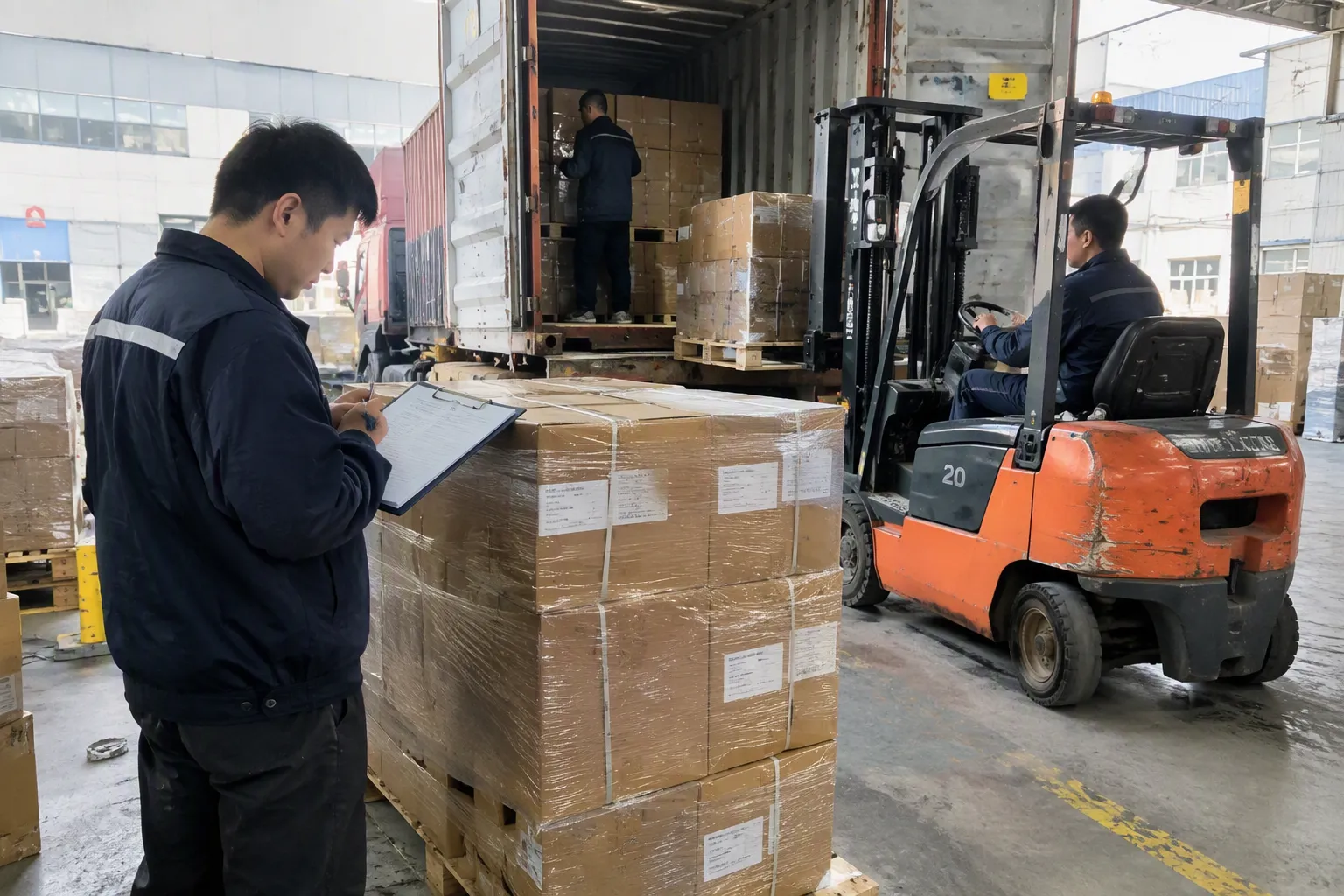
Carton-mark checking supports shipment control, but it does not guarantee customs clearance, carrier acceptance, or trouble-free delivery. Different products and destinations may have additional requirements. Dangerous goods, batteries, food-contact products, regulated goods, oversized cargo, and other categories may require specific marks or documents.[8]
I tell buyers to verify current requirements with:
- The destination-country authority
- The appointed customs broker
- The freight forwarder or carrier
- The product compliance professional
- The relevant official transport or customs source
I do not present one carton-mark format as globally mandatory. I also do not assume that a supplier’s usual export mark is suitable for every destination. The supplier may have used the same format for years, but the buyer still needs to confirm whether it fits the current shipment.
Should I Use a Standard Carton-Mark Template?
A template can reduce repeated typing errors, especially for repeat orders. I find it useful when the template contains controlled fields rather than permanent assumptions.
A useful template may include editable fields for:
- Buyer reference
- PO number
- SKU
- Variant
- Carton number
- Total cartons
- Quantity
- Weight
- Dimensions
- Destination or warehouse reference
I keep the master template separate from the shipment-specific version. I also assign a revision date or version reference. That practice helps me identify whether a supplier has used an old file.
However, I never approve a template automatically. I validate each new shipment against the latest purchase order and packing list. A template reduces risk, but it does not remove the need for checking.
How Can Small Buyers Make the Process Easier?

Small businesses often lack a dedicated warehouse or China-based quality team. I recommend a simple approval workflow:
-
Create one final order reference sheet.
I include every SKU, variant, quantity, and special receiving requirement. -
Ask the supplier for a proposed carton mark before mass printing.
I review the design and information while correction is still inexpensive. -
Request the preliminary packing list.
I compare carton grouping and quantities with the order. -
Inspect or request evidence after packing.
I check actual carton numbers and marks, not only the artwork. -
Approve shipment release in writing.
I keep a record of what version was approved and when. -
Require updates after any packing change.
If the supplier adds, removes, or repacks cartons, I ask for revised marks and documents.
This process is practical for small test orders and larger purchasing programs. It also helps when I coordinate several suppliers and later consolidate their goods in one warehouse. Each supplier’s carton identity needs to remain clear before consolidation.
When Should I Use an Inspection Service?

I consider an inspection or local sourcing partner when the order has several SKUs, high product value, strict warehouse requirements, multiple factories, or limited tolerance for receiving errors. I also consider one when the buyer cannot communicate easily with the factory or cannot review Chinese documents.
The inspection scope may include:
- Carton count
- Carton numbering
- SKU and variant references
- Quantity per carton
- Product-to-carton matching
- Packing-list consistency
- Mark visibility
- Damage to outer cartons
- Photos of representative or selected cartons
The scope should be agreed before inspection. A basic visual inspection may not verify every carton or every unit. I make sure the buyer understands what was checked and what was not checked.
I also separate carton-mark inspection from product quality inspection. A carton can carry the right information while the product inside has a quality defect. Conversely, a good product can be placed in a carton with the wrong mark. I manage both risks, but I report them as different checkpoints.
Frequently Asked Questions
Are carton marks the same as product packaging?
No. Product packaging is usually designed to present and protect the product for the end customer. Carton marks identify outer shipping cartons and support handling, sorting, documentation, and warehouse receiving. A master carton may include brand information, but the brand is only one possible part of the identification system.
What information should carton marks include?
The information depends on the order and destination. Buyers commonly check the PO reference, SKU or model, variant, carton number, total carton count, quantity, and sometimes weight, dimensions, or handling information. I recommend confirming the required fields with the buyer, forwarder, carrier, and relevant official sources.
Can I approve carton marks from photographs?
Photographs can support an initial review, but I do not treat them as complete proof. A photo may not show every carton or every side. I compare the photographs with the purchase order and packing list, and I use physical inspection when the order risk justifies it.
What should I do if the carton number does not match the packing list?
I ask the supplier to stop shipment release while the difference is investigated. I compare the actual carton count, carton sequence, SKU grouping, and latest packing list. The supplier may need to correct the physical marks, repack cartons, revise the packing list, or complete more than one of these actions.
Do carton marks guarantee customs clearance?
No. Correct carton marks can improve identification and document consistency, but they do not guarantee customs clearance or carrier acceptance. I ask buyers to verify current destination, product, carrier, and dangerous-goods requirements with qualified customs and logistics professionals.
Conclusion
I treat carton marks before shipping from China as a shipment-release control, not just a packaging-design approval. I compare the marks with the purchase order, SKU details, packing list, carton quantities, carton sequence, and actual physical evidence. I also distinguish carton identification from product branding and verify any destination-specific requirements separately. If you need help checking suppliers, coordinating inspections, correcting carton information, or consolidating orders in China, contact KingSourcing to discuss your procurement workflow.
Sources
- Interpretation Response #12-0211 ([HAZMATEAM] [Mr. Paul Dambek])", An official customs or trade guidance source defines shipping marks as identifying information placed on packages or containers to support cargo recognition and handling
- Packaging/Container Guidance | I-WASTE DST | US EPA", Logistics literature describes external package identifiers as operational information used to distinguish, route, handle, and receive shipped goods rather than as a substitute for consumer-facing product packaging
- Marking of Country of Origin on U.S. Imports", Government customs and transport guidance indicates that package-marking obligations are determined by applicable jurisdictional, commodity, and transport requirements rather than by one universal carton-marking format
- Supply chain management in times of crisis: a systematic review", Supply-chain and warehouse research supports the mechanism by which consistent identifiers across packages and records facilitate receiving, matching, and inventory reconciliation
- The Financial Impact of Manual Inventory Record Errors", Research on inventory identification and data-entry accuracy shows that character-level discrepancies in item identifiers can lead to incorrect record-to-item matching
- Invoice Matching – AP Team Step-by-Step Guide", Procurement and inventory-control research supports the link between quantity discrepancies and errors in goods receipt, stock records, and invoice reconciliation
- The Utility of Remote Inspections During the COVID-19 Health ...", Research on remote visual inspection identifies incomplete field of view and limited contextual information as constraints that can prevent photographs from establishing the condition of all inspected surfaces or units
- LITHIUM BATTERY GUIDE FOR SHIPPERS", Official transport and product-regulatory guidance establishes additional marking or documentation obligations for categories such as dangerous goods, lithium batteries, and regulated food-contact materials