Quick Answer
Amazon FBA prep in China is often treated as a simple labeling task, but that assumption can create expensive problems. A product may have a barcode and still be assigned to the wrong SKU, packed in the wrong carton, or shipped against an outdated plan. I reduce this risk by aligning labels, packaging, carton data, and inspection checks before the goods leave the factory.
Amazon FBA prep in China means preparing each product, package, and shipping carton according to the current shipment plan and applicable Amazon requirements. The process should verify SKU labels, product quantities, carton contents, carton markings, packaging condition, and shipment information before dispatch. Buyers should confirm current requirements directly with Amazon because rules can vary by product, marketplace, fulfillment program, and shipment[1].
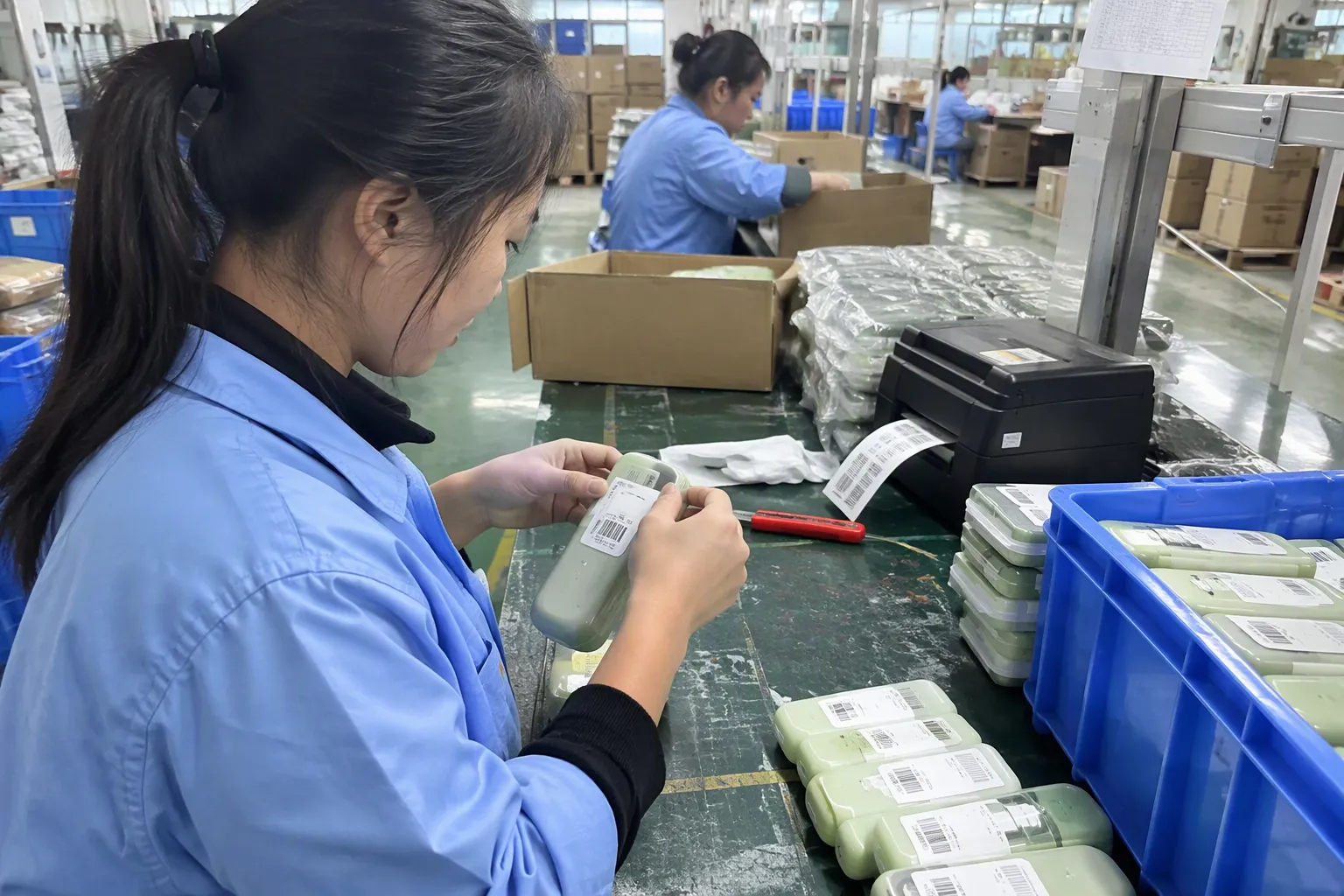
The practical issue is not only whether a supplier can print a label. The real question is whether the supplier understands which label belongs to which SKU[2], where it must be placed, how the units should be packed, and what the final carton contains. In the sections below, I explain how I organize this work with Chinese suppliers and how buyers can create a more reliable release check.
Amazon FBA Prep in China: How Should Labels, Cartons, and Inspection Work Together
Many first-time sellers send a supplier a general request such as “please prepare the products for FBA.” That instruction is too broad. The supplier may label the units, but the label may use an old SKU, cover important product information, or fail to match the carton count. I treat FBA preparation as a controlled purchasing and quality task.
A reliable Amazon FBA prep process connects four records: the product SKU list, the approved label files, the packing instructions, and the shipment plan. The supplier should confirm the instructions before packing, and an inspection should check the actual units and cartons against those records before the shipment is released.
Why Does Amazon FBA Prep in China Require More Than Product Labels?
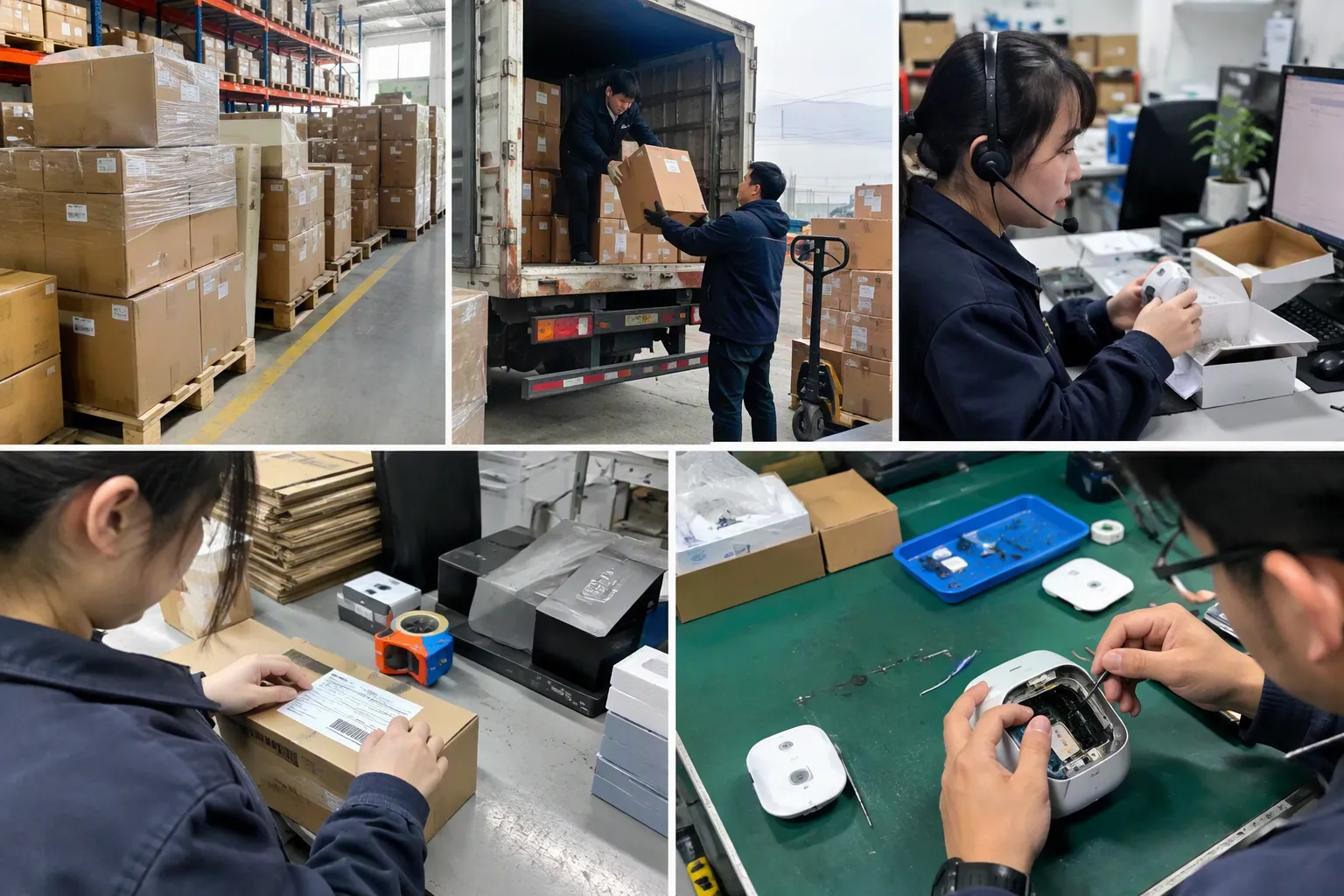
A missing or incorrect unit label can make inventory difficult to identify[4]. A correct unit label inside an incorrectly marked carton can still create receiving and counting problems[5]. When goods come from several suppliers, the risk becomes higher because each factory may use different carton styles, packing habits, and interpretations of the same instruction.
I have seen this misunderstanding in multi-supplier coordination. One factory understood “label the products” as applying a barcode to the retail box. Another understood it as placing a label on the outer polybag. Both factories believed they had completed the request. However, the buyer’s intended SKU identification depended on the label being visible on the correct sellable unit.
That is why I separate the process into connected checkpoints:
- SKU and product identity
- Unit-level label application
- Retail and protective packaging
- Carton packing and carton information
- Shipment-plan alignment
- Pre-shipment inspection and release approval
The exact Amazon requirements must be checked against the current product and shipment. I do not treat this article as a substitute for Amazon’s official Seller Central instructions. Instead, I use the following workflow to translate platform requirements into instructions that a factory can execute.
1. Start With a Controlled SKU and Shipment File
Before I ask a factory to print anything, I create or request a clear working file. The file should identify every product variation and the packaging details that apply to it.
A practical file may include:
| Field | Example of information to confirm |
|---|---|
| Internal product name | Wireless charging stand |
| Seller SKU | The current seller-created SKU |
| Product variation | Black, white, 15W version |
| Unit quantity | Number of sellable units |
| Unit label file | Approved barcode or product label |
| Label position | Exact surface and orientation |
| Retail packaging | Box, pouch, sleeve, or polybag |
| Carton quantity | Units packed in each master carton |
| Carton dimensions | Final packed dimensions |
| Gross weight | Final packed gross weight |
| Supplier | Factory responsible for the SKU |
| Shipment reference | Current shipment or fulfillment plan |
| Inspection focus | Label, quantity, packaging, carton, accessories |
I ask the buyer to confirm that the file reflects the current shipment plan. This step matters because a seller may revise quantities, combine purchase orders, split shipments, or change a product variation after the first label artwork was sent.
The file also helps prevent a common communication problem: suppliers often use their own product names, while Amazon and the buyer use seller SKUs. A product called “Type-C Hub 6-in-1” in a factory spreadsheet may have several versions that look almost identical. The supplier needs a stable reference that connects the physical product to the correct seller SKU.
2. Turn General Requirements Into Supplier Instructions
Factories usually work best with visual and operational instructions. A sentence such as “apply the FNSKU label correctly” may not tell a packing worker enough. I prefer to provide:
- The approved label artwork or print file.
- The exact SKU connected to the file.
- The number of labels required.
- A marked product photograph.
- The required label position.
- Instructions about covering or not covering existing barcodes.
- A sample photo of a correctly labeled unit.
- The carton quantity and packing pattern.
- A confirmation deadline before mass packing.
I also ask the supplier to send a first-article photo before applying labels to the whole batch. The supplier can show one finished unit, one opened retail package, and one completed carton. I can then compare the physical result with the instruction instead of discovering the misunderstanding during final inspection.
For example, a label may be technically present but placed over a curved edge, a seam, or a removable protective film. The barcode may scan poorly after handling[8]. A label may also cover required product information or an existing barcode that should remain visible. A photo review will not replace physical verification[3], but it can catch an obvious interpretation error before the supplier repeats it across thousands of units.
3. Treat Labels as Inventory-Control Information
Labels are not only a packaging detail. They identify inventory. If the label does not match the physical variation, the shipment can become difficult to reconcile even when the product itself appears correct.
I pay particular attention to products that have:
- Different colors or sizes.
- Multiple language versions.
- Different plugs or voltage versions.
- Different accessory combinations.
- Different capacities or technical specifications.
- Retail packaging that looks nearly identical.
- Bundles that contain a different number of pieces.
- Separate private-label and unbranded versions.
These variations can be mixed during production when the supplier uses one general product name. I ask the factory to separate finished units by SKU before labeling. I also ask for a count by SKU rather than only one total production quantity.
A useful control is a simple reconciliation:
Units produced by SKU = Units labeled by SKU = Units packed by SKU = Units listed for shipment
The numbers do not always need to be identical at every stage because samples, defects, and replacements may be handled separately. However, any difference should have an explanation. If the factory reports 1,000 units produced, 990 units labeled, and 1,000 units packed, I need to know how the remaining units were treated.
4. Check the Retail Package and Protective Packaging
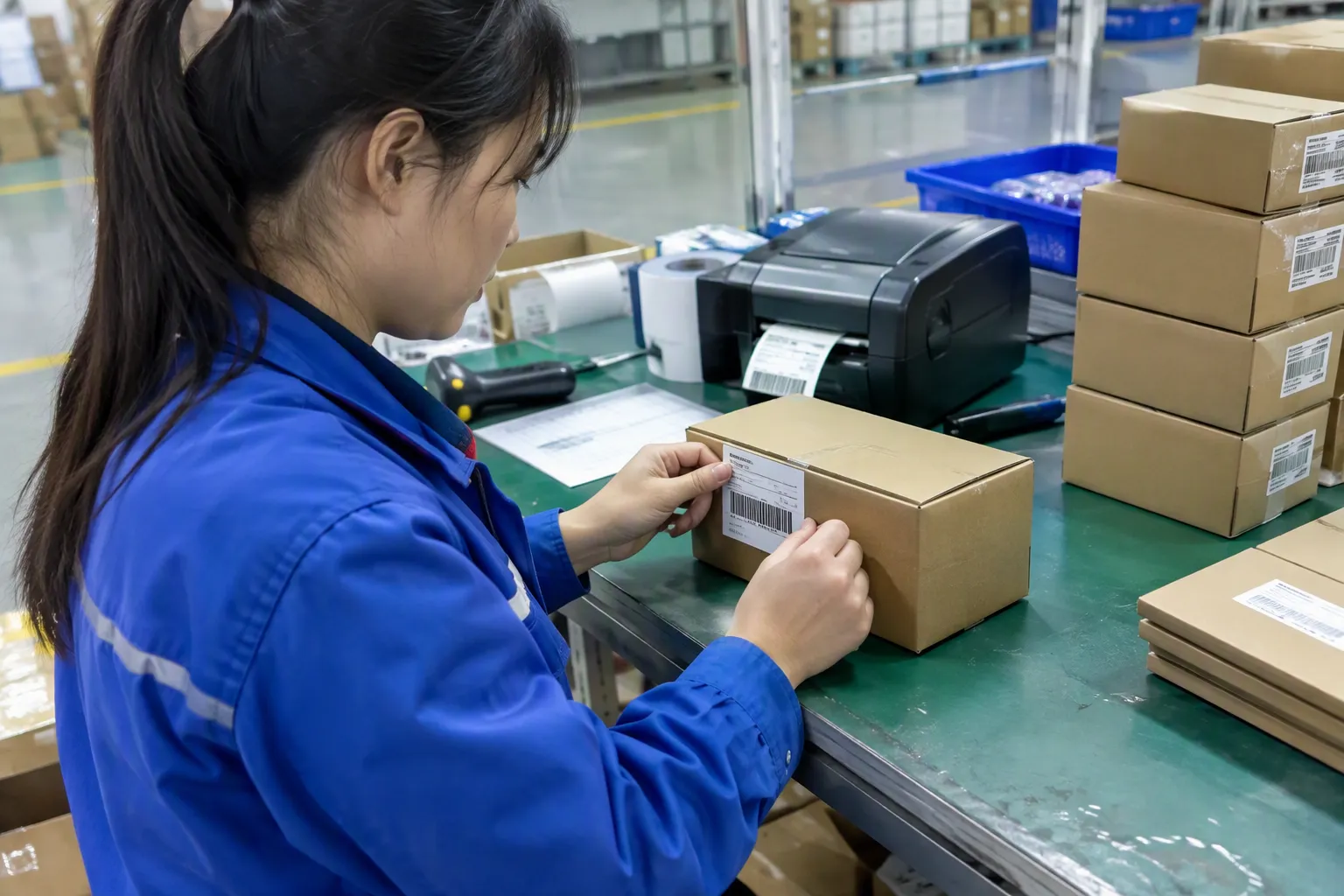
The label is only one part of the sellable unit. Amazon preparation may also involve packaging that protects the product, keeps small parts together, and prevents loose items from becoming separated during transport or receiving.
I check whether the unit requires:
- A sealed polybag or other protective covering[6].
- A suffocation warning or other packaging statement where applicable.
- A sticker to secure a box flap.
- Protection for fragile screens, lenses, or polished surfaces.
- Separate containment for cables, adapters, or accessories.
- A bundle configuration that keeps all pieces together.
- A clear distinction between individual units and multipacks.
I do not assume that the supplier’s normal export packaging is suitable for the intended FBA shipment. A factory may usually pack products in open display boxes because its local customers inspect the items before purchase. That method may not protect the item during warehouse handling.
At the same time, I avoid adding packaging without checking the product and marketplace requirements. Extra material can change carton dimensions, shipping weight, storage volume, and customer experience. The right approach is to confirm the required protection and then validate the final packed unit.
5. Why Do Cartons Matter as Much as Unit Labels?
Cartons connect the physical goods to the shipment. A warehouse team needs to receive, count, move, and identify those cartons. If carton quantities are wrong or carton information is copied from an earlier order, a correct unit label does not solve the entire problem.
I ask suppliers to confirm the following carton information after packing:
- Carton number, when a numbered sequence is used.
- SKU or SKU combination inside the carton.
- Units per carton.
- Total cartons for the shipment.
- Carton dimensions.
- Gross weight.
- Whether the carton is mixed-SKU or single-SKU.
- Whether the carton contains a bundle or multipack.
- Whether the carton is sealed and protected for international transport.
The current shipment plan may define the labels or information required for cartons[7]. Buyers should verify those requirements before printing carton markings. The supplier should not rely on carton data from a previous shipment simply because the product name is unchanged.
Why Are Mixed-SKU Cartons Riskier?
Mixed cartons can be useful when a seller ships small quantities of several products. However, mixed cartons create more counting and identification points. A worker may place the correct products in the wrong carton, record the wrong quantity, or use one SKU’s carton information for another SKU.
I do not automatically reject mixed cartons. I ask whether they are necessary and whether the packing list clearly identifies their contents. When a buyer has several SKUs, I often recommend a visible internal packing record or a carton-level list that shows:
| Carton | SKU A | SKU B | Total units |
|---|---|---|---|
| 1 | 20 | 0 | 20 |
| 2 | 0 | 20 | 20 |
| 3 | 10 | 10 | 20 |
The exact format can vary. The important point is that the physical carton must match the record. If the carton contains two variations that look similar, the factory should use separate inner bags, dividers, or another practical method to prevent mixing.
What Should a Supplier Confirm Before Mass Packing?
I normally seek written confirmation before the supplier begins full packing. The confirmation should not simply say “OK.” It should show that the factory understands the details.
I ask the supplier to confirm:
- The SKU list is the latest version.
- Each label file is linked to the correct product variation.
- The label position has been checked on a physical sample.
- The retail packaging and protective packaging are approved.
- The units per carton are confirmed.
- The carton dimensions and weight will be measured after packing.
- Mixed cartons, if any, are identified.
- The factory will keep each SKU separated during production and packing.
- The supplier will provide photos or samples before completion.
- The inspection criteria are understood.
This confirmation helps separate a real production instruction from an informal message. It also gives the buyer a reference if the supplier later claims that the requirement was unclear.
How Should I Inspect Amazon FBA Prep in China?
I treat inspection as a shipment-specific release check, not as a generic certificate that guarantees acceptance. A normal quality inspection may check appearance, function, dimensions, or accessories. Those checks are useful, but they may not cover label placement, carton count, shipment-plan accuracy, or FBA preparation details.
A task-specific inspection should sample or verify the points that matter for this shipment:
Product and SKU identity
The inspector should compare the physical variation with the approved SKU list. The check should include color, size, model, plug, language version, accessories, and bundle contents where relevant.
Label quality and position
The inspection should verify that the label is on the correct sellable unit, in the instructed position, and readable. The inspector should check whether the label is peeling, folded, damaged, or placed over an unsuitable surface.
If barcode scanning is part of the buyer’s agreed inspection scope, the inspector should use an appropriate scanner and record the result. A visual check alone cannot prove that every label will scan correctly.
Quantity by SKU
The inspector should count the finished units by SKU or use an agreed sampling method. A total carton count without SKU-level reconciliation can hide a mix-up between variations.
Packaging condition
The check should confirm that the retail box, pouch, polybag, inserts, accessories, and protective materials match the approved sample or specification. The inspector should open selected units rather than checking only the outside of the cartons.
Carton information
The inspector should compare carton markings, carton number, SKU contents, units per carton, dimensions, and gross weight with the packing record. The final measurements should be taken from packed cartons, not copied from an earlier quotation.
Shipment readiness
The inspector should confirm that the goods are packed, sealed, and separated according to the current shipping instructions. If goods from several suppliers will be consolidated, the inspection should identify each supplier’s cartons and SKU groups clearly.
What Is the Difference Between a Generic QC Inspection and an FBA Release Check?

A generic QC inspection asks whether the product meets the agreed quality standard. An FBA release check asks whether the specific shipment is correctly identified, packed, documented, and ready for the planned fulfillment route.
| Check type | Main question |
|---|---|
| Product inspection | Does the product meet the agreed quality and function requirements? |
| Packaging inspection | Does the unit have the correct retail and protective packaging? |
| Label inspection | Does the label identify the correct unit and remain readable? |
| Carton inspection | Does each carton contain and identify the expected units? |
| Shipment release check | Do the products, cartons, records, and shipment plan align? |
A supplier can pass a product inspection and still fail a shipment-readiness check. For example, all products may function correctly, but two similar SKUs may be packed into the wrong cartons. That is why I ask buyers to provide an inspection checklist that reflects the shipment rather than using only a general factory QC form.
How Do I Manage FBA Prep When Products Come From Multiple Chinese Suppliers?
Multi-supplier orders require an additional layer of coordination. A buyer may source electronics from Shenzhen, packaging from Dongguan, accessories from Guangzhou, and storage or consolidation support through another location. Each supplier may finish at a different time.
I first create a master list that assigns responsibility:
| Work item | Responsible party | Confirmation needed |
|---|---|---|
| Product manufacturing | Factory | Final SKU and quantity |
| Retail packaging | Factory or packaging supplier | Approved artwork and packout |
| Unit labeling | Assigned prep supplier or factory | Label position and quantity |
| Carton packing | Factory or warehouse | Carton contents and measurements |
| Inspection | Qualified inspection provider | Shipment-specific report |
| Consolidation | Warehouse or sourcing partner | Carton receipt and count |
| International shipping | Freight provider | Final shipping documents |
This structure prevents a supplier from assuming that another party will complete the labeling or carton work. It also helps the buyer identify where a mismatch occurred.
In my experience coordinating several batches, the most useful control is a carton receipt record at the consolidation warehouse. The record should show which cartons arrived, from which supplier, with what SKU information, and in what condition. If the warehouse receives a carton that has no clear supplier reference or contains a different quantity from the packing list, the issue can be investigated before export.
What Should I Do When a Supplier Says the Goods Are Already Labeled?

I ask for evidence and clarification. “Labeled” can mean several different things:
- A factory barcode was added.
- A product model sticker was added.
- A seller-provided label was applied.
- A label was printed but not applied.
- Labels were applied to outer cartons only.
- Labels were applied to a sample but not the full batch.
I request photographs of representative finished units, opened cartons, and carton markings. I also ask the supplier to confirm the label file version and the number of labeled units by SKU.
If the issue remains uncertain, I arrange a physical check before the goods are released. A buyer should not rely only on a supplier’s message because a misunderstanding may become expensive after consolidation or international shipment.
How Can Small Sellers Reduce Preparation Risk?
First-time sellers do not need a complex enterprise system, but they do need disciplined records. I recommend a short preparation pack containing:
- The latest SKU list.
- Approved label files.
- Product and packaging photographs.
- Unit and carton packing instructions.
- A shipment-specific inspection checklist.
- A packing list by SKU.
- A list of unresolved questions.
- Written approval for any exceptions.
I also recommend a small pilot order when the product, packaging, or supplier is new. The pilot can reveal whether the label fits the packaging, whether accessories stay together, whether cartons are too heavy, and whether the supplier understands the SKU structure.
I do not promise that a pilot removes every risk. It simply creates an opportunity to test the process before a larger purchasing program. A qualified inspection provider or sourcing professional can also help evaluate application-specific packaging and shipment requirements.
Frequently Asked Questions
Is Amazon FBA prep in China the same as applying a barcode?
No. Barcode application is only one part of Amazon FBA prep in China. The process may also involve SKU identification, product packaging, protective materials, carton quantities, carton information, shipment-plan alignment, and inspection. Buyers should verify current Amazon requirements for the specific product and marketplace.
Can my Chinese supplier complete FBA preparation without a sourcing agent?
Yes, some suppliers can complete parts of the preparation. However, the buyer must provide precise instructions and verify the result. A factory may understand manufacturing well but still misunderstand SKU labeling, mixed cartons, or shipment-specific requirements. A sourcing partner can help translate the requirements and coordinate checks.
Should I inspect products before labels are applied or after packing?
I normally recommend checks at both stages when the order justifies them. A sample review before mass labeling can catch a wrong label or position. A final inspection after packing can check quantities, carton contents, packaging, and shipment readiness. The appropriate scope depends on the product, order size, and risk.
What should I do if two product variations look almost identical?
I would separate the variations physically and document them with clear SKU references. The factory should use different labels, packing areas, inner packaging, or carton markings as appropriate. The inspection should compare the physical variation with the SKU list and count the units separately.
Do carton measurements need to be checked after production?
Yes. Final carton dimensions and weight can change because of revised packaging, additional protection, or a different packing arrangement. The buyer should use actual packed measurements for the relevant shipping and fulfillment records and verify the current platform and carrier requirements.
Conclusion
Amazon FBA prep in China works best when I treat it as an inventory-control and shipment-release process rather than a simple labeling service. The buyer, supplier, inspection provider, warehouse, and freight partner should work from the same current SKU and shipment information. I recommend confirming label placement, packaging, carton contents, quantities, and final measurements before release. Because platform requirements can change, buyers should verify the current official rules for each shipment. If you need help sourcing, coordinating Chinese suppliers, inspecting products, consolidating cartons, or arranging shipping, contact KingSourcing to discuss your procurement workflow.
Sources
- Prepare your products for FBA shipping - Amazon Seller Central", Amazon Seller Central guidance specifies that FBA preparation and shipping requirements are determined by the relevant product, marketplace, and fulfillment context
- FNSKU Unique per Product Line or Product? HELP!", Amazon Seller Central documentation explains that FBA product labels identify the seller-specific inventory associated with a particular SKU
- Artificial Intelligence-Based Smart Quality Inspection for ... - PMC", Research on remote visual inspection indicates that photographs can reveal visible placement and packaging defects, while physical verification remains necessary for properties such as dimensions, weight, handling durability, and reliable scanning
- Effectiveness of Laboratory Practices to Reducing Patient ...", Warehouse and inventory-management research identifies accurate item-level identification as a prerequisite for reliable receiving, tracking, and stock reconciliation
- Logistics FAQs: Receiving and Distribution", Warehouse-receiving research describes container-level identification and contents records as controls that support counting, routing, and reconciliation in addition to item-level labels
- Small Parts Ban and Choking Hazard Labeling | CPSC.gov", U.S. consumer-product safety guidance requires specified plastic-bag packaging to meet thickness, closure, and suffocation-warning conditions in covered circumstances
- Send to Amazon: Print box labels", Amazon Seller Central shipment guidance links carton-label and shipment-identification information to the shipment created in the seller workflow
- Print Quality Assessment of QR Code Elements Achieved by ...", GS1 technical guidance identifies print quality, contrast, substrate, curvature, and physical damage as factors that can affect barcode scanning performance