I see many importers lose money because they treat China sourcing as a price hunt. The low quote looks safe, then problems start.
A China sourcing agent helps importers find suppliers, compare options, manage samples, follow production, check quality, arrange warehousing, and coordinate shipping[^1]. I use one when I need local execution in China, not only cheaper prices.
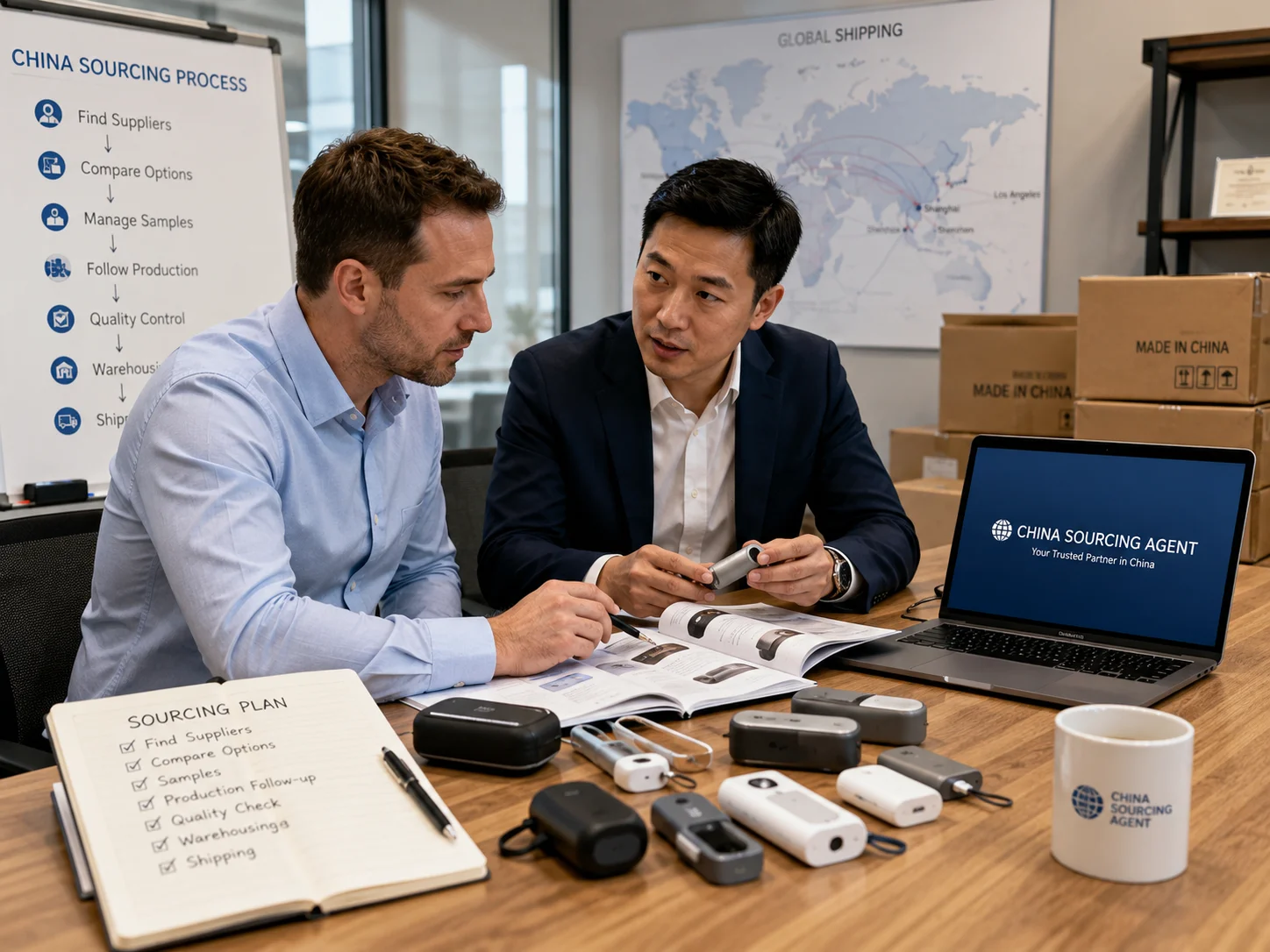
I have handled sourcing projects where the product looked simple at first. Then the buyer needed a new color, a better box, a barcode label, mixed cartons, and delivery to two warehouses. At that point, the real work was not only finding a supplier. The real work was managing details every week. That is where a sourcing agent becomes useful.
1. What Is a China Sourcing Agent?
I often hear buyers say, “I only need someone to find a cheaper factory.” That view can create trouble because sourcing is not only price[^2].
A China sourcing agent is a local partner who helps buyers source products from China, compare suppliers, manage communication, check orders, control risks, and coordinate delivery from supplier to final destination.
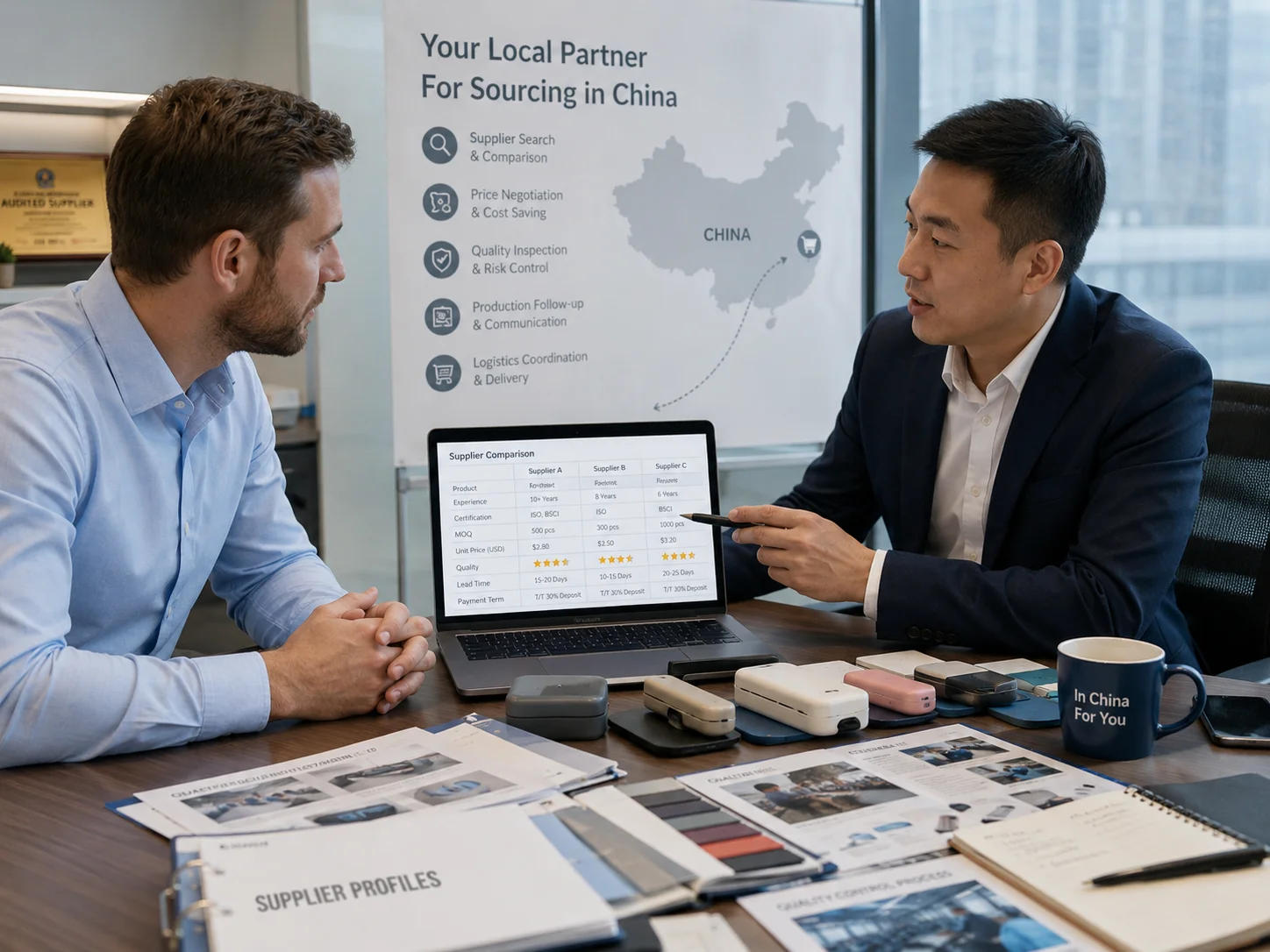
I define a China sourcing agent as a buyer-side execution partner. I do not see the role as a simple middleman. In my daily work, I help buyers turn an idea, link, sample, or product photo into a workable order. I search for supplier options. I compare quotes. I check whether the supplier understands the specification. I ask for samples. I review packaging details. I follow production. I arrange inspection. I help solve shipment issues.
A buyer may work with a factory directly, and that can work well for standard products. A sourcing agent becomes more useful when the buyer needs extra control and local follow-up.[^3]
| Area | What I Do as a Sourcing Agent | Why It Matters |
|---|---|---|
| Supplier search | I find and compare supplier options | The buyer avoids relying on one quote |
| Sampling | I manage sample requests and feedback | The buyer reduces wrong production risk |
| Production | I follow order progress | The buyer sees problems earlier |
| Quality control | I arrange checks before shipment | The buyer reduces receiving bad stock |
| Logistics | I coordinate packing, storage, and shipping | The buyer saves time and avoids confusion |
I once handled a project for a small brand that wanted a simple home product. The buyer first chose the cheapest supplier. The sample was acceptable, but the production batch had weaker material. The buyer did not have anyone in China to check before shipment. After that, the buyer understood that a low quote was only one part of the decision.
2. How Does a China Sourcing Agent Work?
I see buyers get stuck when they skip steps. They ask for prices first, but the supplier does not have clear product details.
A China sourcing agent usually works through inquiry review, supplier search, quotation comparison, sample management, specification confirmation, production follow-up, quality inspection, warehousing, and shipment coordination.
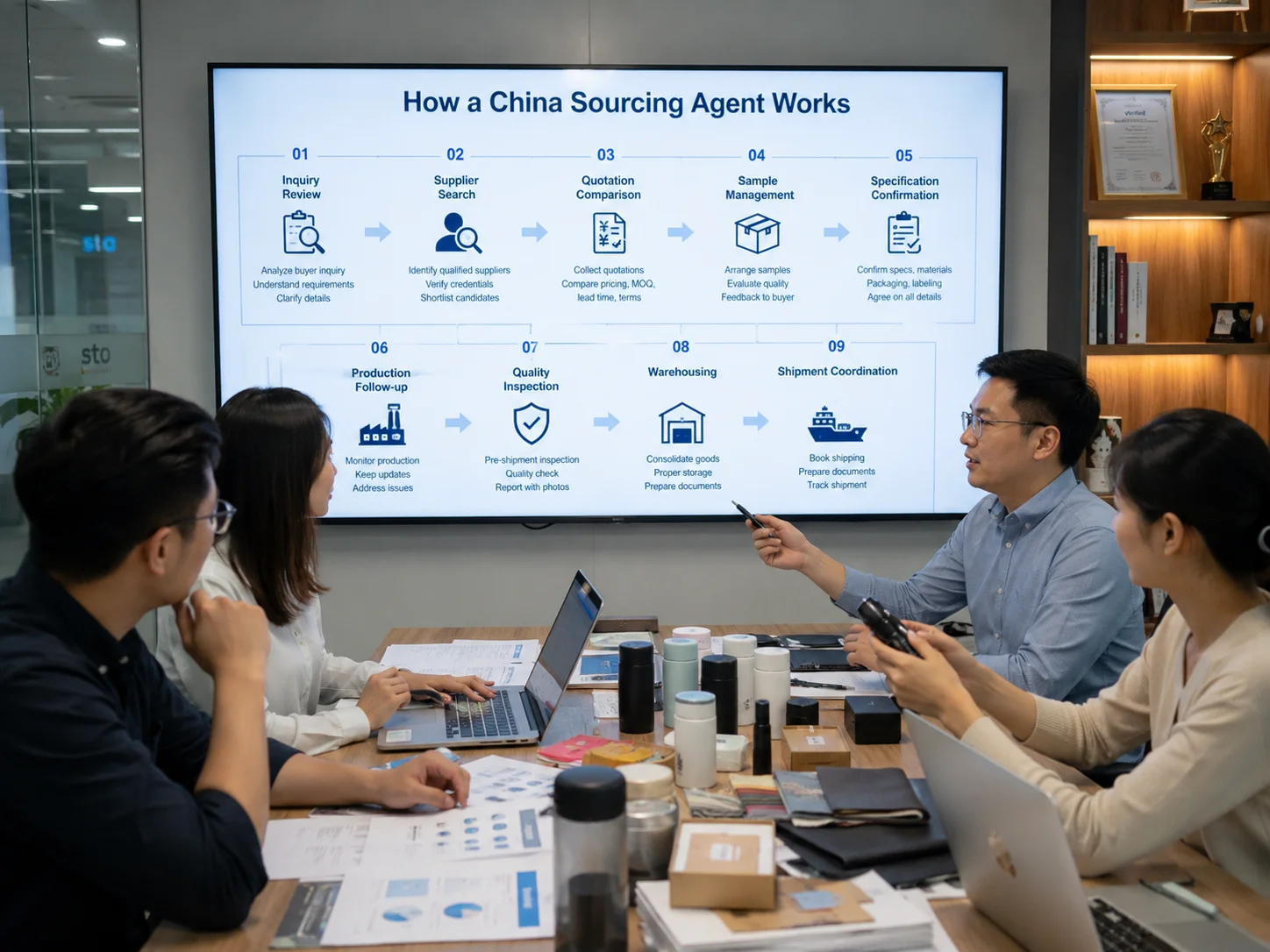
I start with the buyer’s real need. I ask for product photos, links, target quantity, target market, packaging needs, and budget range. I also ask how the buyer plans to sell the product. A DTC brand may need branded packaging and lifestyle photos. An Amazon seller may need FNSKU labels, carton marks, and shipment plans. A wholesaler may care more about carton packing, MOQ, and stable repeat orders.
Then I compare suppliers. I do not only compare unit price. I compare material, MOQ, lead time, payment terms, sample cost, communication speed, and production ability.[^4] After that, I arrange samples and help the buyer confirm details before production.
| Step | My Action | Buyer’s Decision |
|---|---|---|
| Inquiry | I review the product need | I confirm whether the request is clear |
| Supplier search | I find and compare suppliers | I choose which option to test |
| Sampling | I arrange and check samples | I approve or revise the sample |
| Production | I follow progress and issues | I approve key changes |
| Inspection | I check before shipping | I decide ship, rework, or hold |
| Shipping | I arrange logistics support | I choose speed and cost balance |
This workflow looks simple, but the details matter. If the sample is not confirmed clearly, the factory may use its own standard.[^5] If the packaging file is late, production can wait. If carton size is not checked, shipping cost can rise. I work through these small details because small mistakes can become big costs.
3. What Services Can a China Sourcing Agent Provide?
I see many buyers think sourcing ends after the supplier sends a price. That is a risky idea because orders fail in the details.
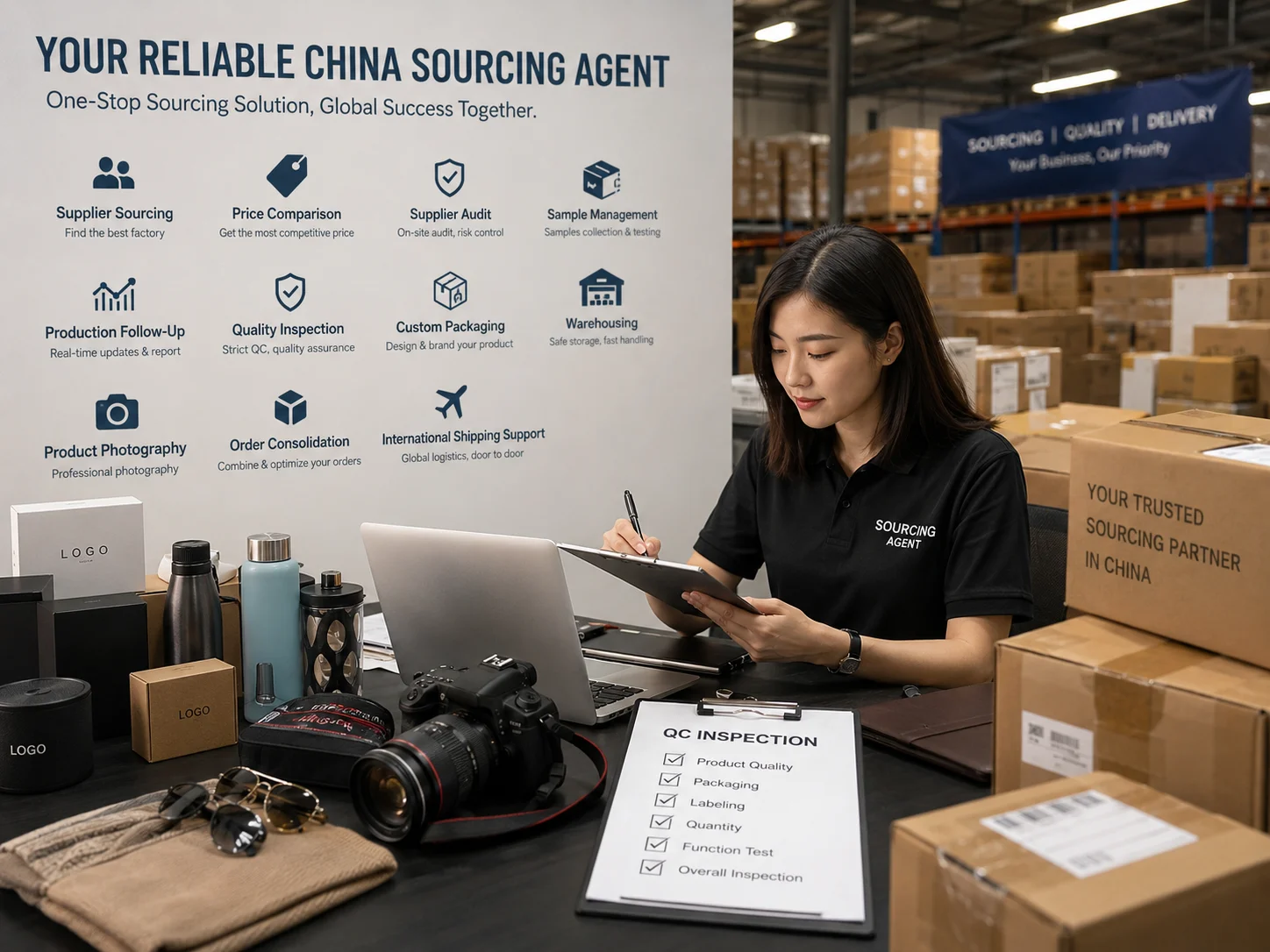
In my work, I usually divide sourcing services into three groups. The first group is before ordering. This includes supplier research, quotation comparison, sample collection, and specification confirmation. The second group is during production. This includes production follow-up, issue checking, supplier communication, and change confirmation. The third group is after production. This includes inspection, packaging check, warehousing, consolidation, photo or video records, and shipping coordination.
A sourcing agent does not replace every professional service. I do not claim to provide laboratory certification or engineering-level testing unless a qualified third party is involved.[^7] I can help coordinate these needs when required. This boundary is important.
| Service Type | Common Tasks | Good Fit |
|---|---|---|
| Sourcing | Supplier search, quotation comparison, sample request | New product search |
| Order management | Specs confirmation, production follow-up | Custom or repeat orders |
| Quality control | Product check, packing check, photo report | Buyers without local staff |
| Warehouse | Storage, sorting, bundling, relabeling | Multi-supplier orders |
| Shipping support | Consolidation, freight coordination, documents | Buyers shipping to warehouse or door |
I handled one project where the buyer bought accessories from three suppliers. Each supplier was fine alone. The problem was that the buyer needed one final kit. We collected the goods, checked quantities, matched parts, added inserts, repacked cartons, and arranged one shipment. Without local coordination, the buyer would have paid three shipments and handled missing parts later.
4. When Do You Need a China Sourcing Agent?
I see buyers hire help too late. They wait until production is delayed, quality is wrong, or the supplier stops replying.
I need a China sourcing agent when I lack a local China team, need customization, manage several suppliers, buy repeat orders, or want stronger control over quality, timing, packaging, warehousing, and shipping.
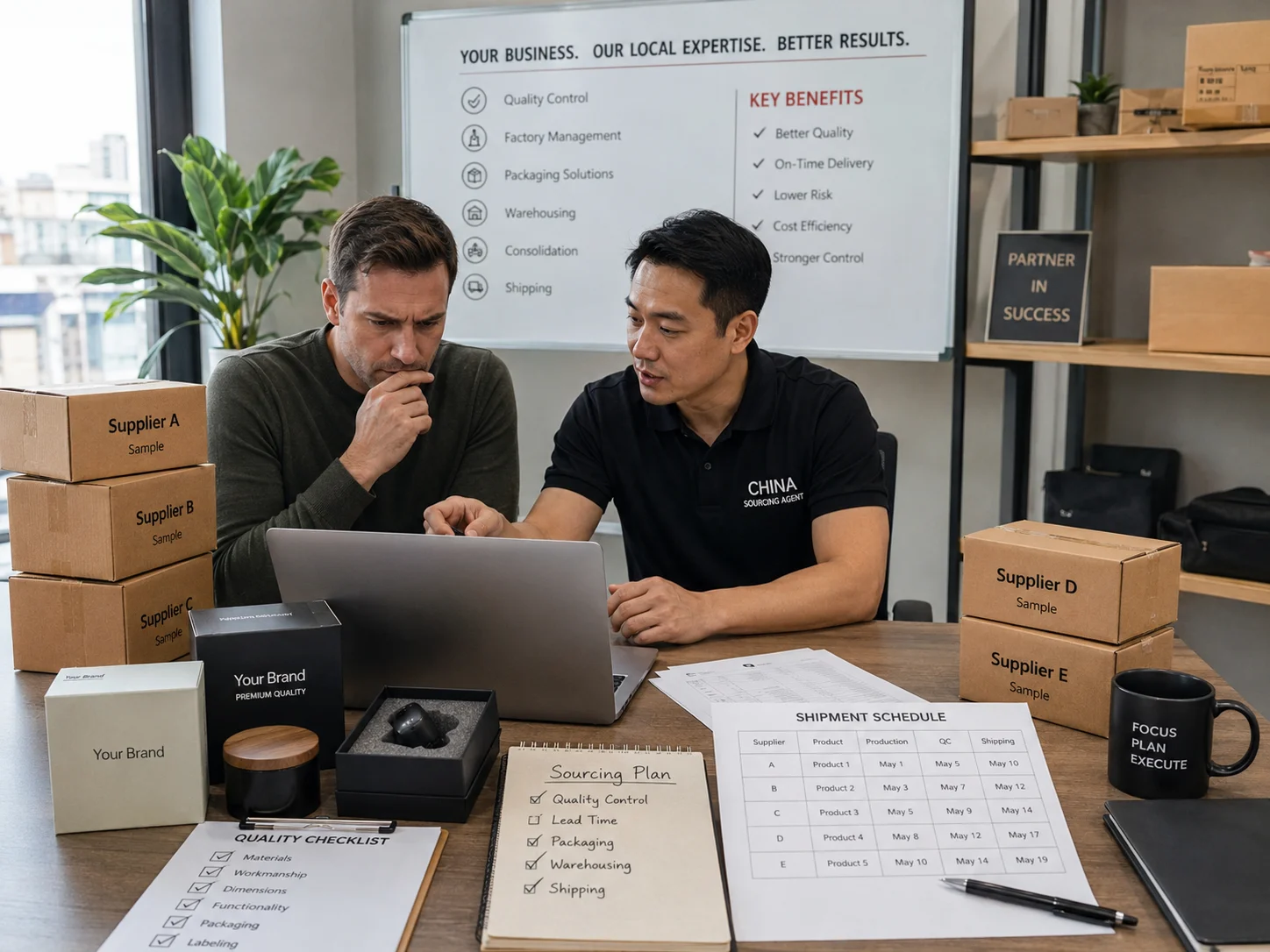
I do not think every buyer needs a sourcing agent from day one. If a buyer only buys a small standard product from a platform, accepts the platform rules, and can handle limited control, self-sourcing may be enough. A sourcing agent becomes more useful when the order has more moving parts.
I use a simple decision view. If the product is standard, the quantity is low, and the risk is acceptable, direct purchase can work. If the product needs custom color, logo, packaging, mixed SKUs, carton marks, delivery schedule, or pre-shipment checking, local support becomes more valuable.[^8]
| Situation | Agent Needed? | Reason |
|---|---|---|
| Small standard sample order | Usually no | The buyer can test with low risk |
| One product with logo and packaging | Often yes | The buyer needs detail control |
| Several suppliers in one shipment | Often yes | The buyer needs consolidation |
| Repeat monthly orders | Often yes | The buyer needs stable follow-up |
| Large order with quality risk | Yes | The buyer needs inspection and records |
| Buyer has own China office | Maybe no | The buyer already has local execution |
I once worked with a buyer who started with a test order of about 500 dollars. At that stage, the buyer only needed basic help. Later, the product sold well, and the buyer needed custom packaging, better photos, and faster repeat orders. The need changed. The buyer did not only need a supplier. The buyer needed a small supply chain system.
5. China Sourcing Agent vs Direct Factory: Which Is Better for Importers?
I hear the same belief often. Buyers say direct factory must be cheaper. That can be true, but it is not always the full cost.

I do not tell every buyer to avoid factories. Good factories are important. Many of my projects depend on stable factories. The key question is not “factory or agent.” The better question is “which model matches the buyer’s control ability?”
A factory is strong when the buyer already knows the product, has clear specs, can manage communication, and can handle QC and shipping. A sourcing agent is useful when the buyer needs several options, local checks, sample comparison, and follow-up across the whole process.
| Model | Best For | Main Risk |
|---|---|---|
| Direct factory | Clear specs, stable orders, larger volume | Buyer must manage details alone |
| Trading company | Broad catalog, smaller MOQ, faster response | Buyer may have less factory visibility |
| Sourcing agent | Custom projects, multi-supplier orders, local control | Buyer must choose a reliable agent |
| Platform purchase | Small tests, standard goods | Limited control and higher variation |
The lowest unit price can become expensive. I saw one buyer save a few cents per unit on a plastic item. Later, the cartons were too weak, and many units arrived damaged. The buyer paid more in replacements, customer complaints, and delayed selling time. In that case, the direct price looked cheaper, but the total cost was higher.
I prefer to compare total cost. Total cost includes unit price, sample cost, rework cost, defect rate, packaging loss, delay cost, shipping cost, and time spent by the buyer.[^10] This view is more honest than only comparing the product price.
6. How a Sourcing Agent Helps with Supplier Management, QC, Warehousing, and Shipping?
I see orders fail because no one owns the process. The supplier makes the goods, the forwarder ships them, but gaps remain.
A sourcing agent helps by managing supplier communication, checking production status, arranging quality control, storing goods, consolidating orders, checking packaging, preparing labels, and coordinating shipping with the right documents.
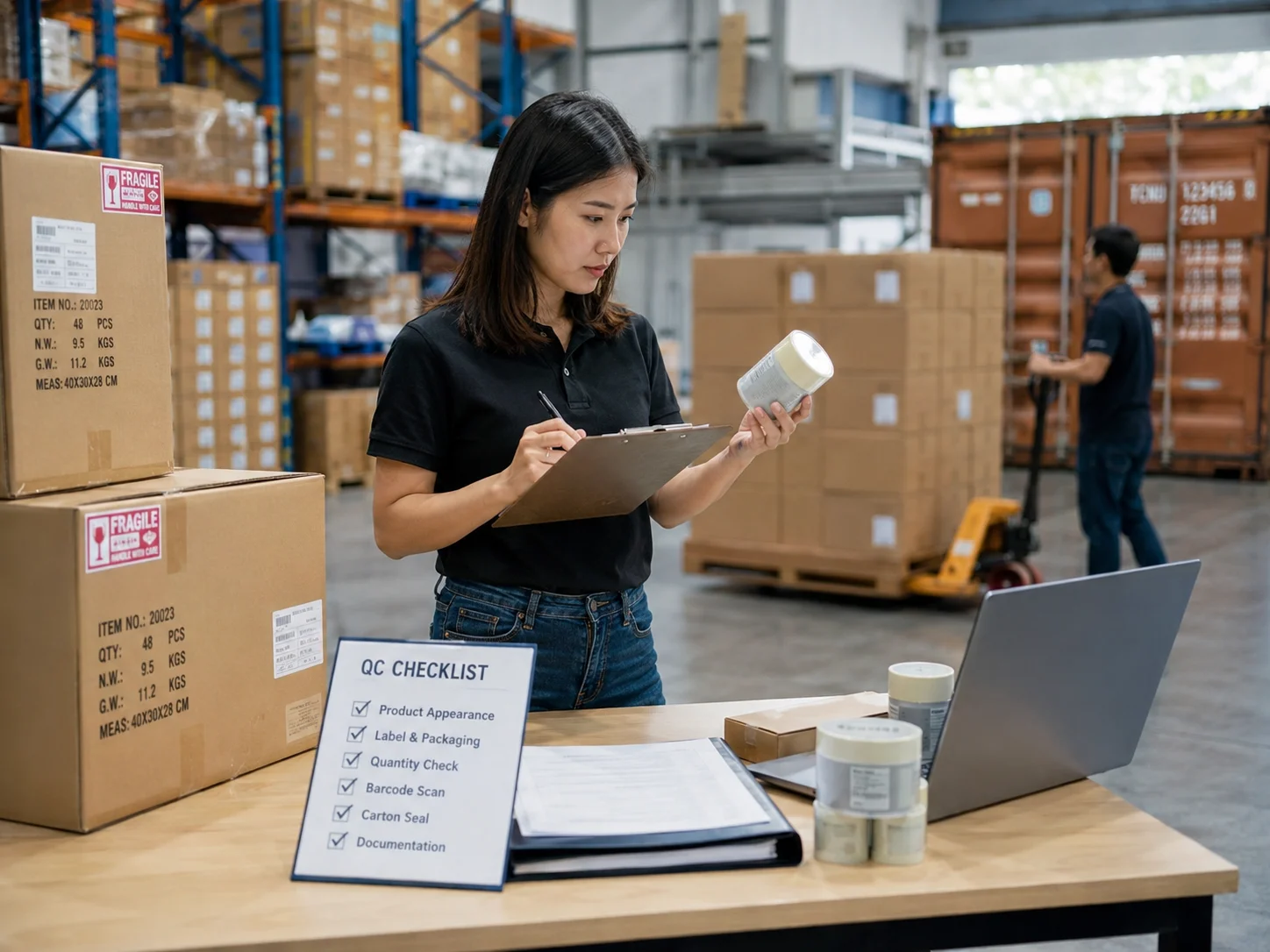
I often act as the person who connects all parts of the order. The supplier focuses on production. The freight forwarder focuses on transport. The buyer focuses on sales. My role is to watch the space between these parts. This space is where many mistakes happen.
For supplier management, I keep the order details written and clear. I confirm material, color, size, logo, packaging, carton mark, quantity, and timeline. For QC, I help arrange checks before goods leave China. The check may include appearance, function, quantity, packaging, labels, and carton condition. For warehousing, I receive goods from different suppliers and hold them for sorting or consolidation. For shipping, I work with the logistics side to prepare shipment information and reduce avoidable delays.
| Area | What I Check | Common Problem Prevented |
|---|---|---|
| Supplier management | Specs, timeline, payment, changes | Wrong production or late response |
| QC | Product, packing, quantity, labels | Defects shipped overseas |
| Warehousing | SKU sorting, carton count, storage | Missing or mixed goods |
| Consolidation | Goods from many suppliers | High shipping cost |
| Shipping | Address, terms, documents, timing | Customs or delivery delay |
I once managed an order where three suppliers delivered at different times. One supplier used different carton sizes from the confirmed plan. If we shipped directly, the freight plan would change and cost more. We found the issue in our warehouse, repacked part of the goods, and updated the shipping plan. The buyer did not need to solve this from overseas at midnight.
7. Common Mistakes Importers Make When Sourcing from China?
I see importers repeat the same mistakes. They chase the lowest quote, skip samples, accept unclear specs, and inspect too late.
Common China sourcing mistakes include choosing only by price, using unclear specifications, skipping sample approval, ignoring packaging, paying without records, missing QC, underestimating lead time, and treating shipping as an afterthought.

I have seen many mistakes that look small at the beginning. A buyer sends a photo and says, “Make this.” The supplier quotes based on its own version. The buyer assumes the material is the same. The supplier assumes the buyer wants the cheapest version. Both sides think they are clear. Then the sample arrives, and the buyer feels disappointed.
Another mistake is skipping packaging details. Product packaging is not only about looks. It affects damage rate, customer feeling, warehouse handling, barcode scanning, and shipping cost.[^11] A weak carton can destroy a good product. A wrong label can delay a warehouse receiving process.
| Mistake | What Happens | Better Action |
|---|---|---|
| Chasing lowest quote | Quality or material may change | Compare specs and total cost |
| No clear spec sheet | Supplier uses its own standard | Write size, material, color, packing |
| Skipping sample approval | Production may be wrong | Confirm sample before mass order |
| No QC before shipment | Defects arrive overseas | Inspect before final payment or shipping |
| Ignoring packaging | Damage and complaints increase | Confirm inner and outer packing |
| No timeline buffer | Launch plan gets delayed | Add time for sample, production, shipping |
| Poor record keeping | Disputes are hard to solve | Keep written confirmations |
I also see buyers treat shipping as the final step. It should start earlier. Carton size, weight, shipping method, destination, and customs needs can affect the sourcing decision.[^12] A product with a low unit price may become less profitable if it is bulky, fragile, or hard to pack. I prefer to consider shipping before the buyer places the full order.
8. How to Choose a Reliable China Sourcing Agent for Your Business?
I see buyers worry about trust. That concern is reasonable because the sourcing agent controls important order information.
I choose a reliable China sourcing agent by checking process clarity, communication quality, service scope, fee structure, supplier comparison method, QC ability, warehouse support, shipment coordination, and proof of real project experience.

I believe a good sourcing agent should explain how the work is done. I would not only look for the lowest service fee. I would check whether the agent asks the right questions. A reliable agent should ask about product use, target market, quantity, packaging, budget, timeline, and shipping destination. If the agent only says “yes” to everything, I would be careful.
Pricing can vary. Some agents charge a service fee, some charge a percentage of order value, some earn margin from suppliers, and some use a mixed model. I think the key is not one “perfect” pricing model. The key is transparency. The buyer should know what is included and what is not included.
| Check Point | Good Sign | Warning Sign |
|---|---|---|
| Communication | Clear questions and written records | Vague promises |
| Supplier comparison | Several options with reasons | Only one unexplained quote |
| QC process | Photos, videos, checklist, reports | No pre-shipment check |
| Fee structure | Clear fee and service scope | Hidden or unclear costs |
| Warehouse ability | Can receive, store, sort, consolidate | No control after factory pickup |
| Logistics support | Can coordinate shipping details | Shipping is handled too late |
| Experience | Practical cases and process knowledge | Only general claims |
I also use a self-check list before deciding whether I need an agent:
- I do not have a person in China to follow suppliers.
- I need custom logo, color, packaging, or bundles.
- I need to compare more than one supplier.
- I need samples checked and documented.
- I need production follow-up before shipment.
- I need quality inspection or packing checks.
- I buy from several suppliers and need consolidation.
- I need warehouse support, relabeling, or carton sorting.
- I need shipping coordination to my warehouse, Amazon, or door.
- I want to reduce avoidable mistakes before I scale the order.
If most answers are yes, I would use a sourcing agent. If most answers are no, and the order is small and standard, I may start with direct platform buying. For buyers with complex sourcing needs, I am always open to reviewing the product, the order plan, and the main risks before any large commitment.
Conclusion
I use a China sourcing agent when local execution, quality control, supplier coordination, and total-cost control matter more than a low quote alone.
[^1]: "Supply chain management - Wikipedia", https://en.wikipedia.org/wiki/Supply_chain_management. A neutral sourcing or procurement reference describes procurement as a process that can include supplier identification, supplier evaluation, contract or order coordination, quality-related controls, and logistics interfaces; this supports the article’s broad description of a sourcing agent’s work, although it does not by itself verify the services of any particular China-based agent. Evidence role: definition; source type: institution. Supports: The source should support that sourcing/procurement functions extend beyond price negotiation to supplier selection, evaluation, order management, quality-related controls, and logistics coordination.. Scope note: Contextual support for the role; not direct proof of one agent’s service scope. [^2]: "Supplier selection and order allocation: a literature review - PMC", https://pmc.ncbi.nlm.nih.gov/articles/PMC8127846/. Procurement research on supplier selection identifies price as only one of several decision criteria, alongside quality, delivery performance, technical capability, and risk; this supports the article’s statement that sourcing is not merely a price comparison. Evidence role: expert_consensus; source type: paper. Supports: The source should show that supplier selection and sourcing decisions commonly include multiple criteria such as quality, delivery reliability, supplier capability, risk, and cost.. [^3]: "Supply Chain Management Guidance", https://thedocs.worldbank.org/en/doc/1c3b517f003b53a2e2e170e93124be84-0290032023/original/World-Bank-Supply-Chain-Management-Guidance.pdf. Research on international sourcing and transaction-cost governance links cross-border purchasing risk to monitoring, coordination, and information asymmetry, providing a mechanism for why a local sourcing representative may add value when buyers require closer follow-up and control. Evidence role: mechanism; source type: paper. Supports: The source should explain that monitoring costs, coordination complexity, information asymmetry, or supplier-control needs can make intermediaries or local representatives useful in international sourcing.. Scope note: The support is theoretical and contextual rather than a direct measurement of China sourcing-agent performance. [^4]: "An integrated multi-criteria decision-making approach to optimize ...", https://pmc.ncbi.nlm.nih.gov/articles/PMC9070982/. Supplier-selection literature commonly treats supplier choice as a multi-criteria decision involving cost, quality, delivery time, capacity, and supplier capability, which supports the article’s broader comparison of suppliers beyond unit price. Evidence role: expert_consensus; source type: paper. Supports: The source should support that supplier evaluation commonly uses multiple criteria, including cost, quality, delivery or lead time, capacity, and supplier capability.. [^5]: "Manufacturing and Quality | www.waru.edu", https://www.waru.edu/tools/dau-systems-engineering-brainbook/design-considerations/manufacturing-quality. Quality-management standards emphasize the need to define product requirements and control production against documented specifications, supporting the article’s point that unclear sample approval can allow suppliers to default to their own standards. Evidence role: mechanism; source type: institution. Supports: The source should support that documented product requirements, approved samples, and production controls help ensure that manufactured output conforms to buyer requirements.. Scope note: The source would support the quality-control mechanism generally, not a specific factory behavior. [^6]: "Global Sourcing and Logistics - PDXScholar", https://pdxscholar.library.pdx.edu/cgi/viewcontent.cgi?article=1113&context=busadmin_fac. Trade and supply-chain references identify supplier evaluation, supplier audits, inspection, warehousing, consolidation, and logistics coordination as recognized functions in international sourcing and distribution, which contextualizes the article’s list of possible sourcing-agent services. Evidence role: general_support; source type: institution. Supports: The source should establish that supplier sourcing, supplier audits, inspection, warehousing, consolidation, and logistics coordination are recognized activities within international sourcing and supply-chain support.. Scope note: Contextual support only; the source may not confirm that every China sourcing agent provides every listed service. [^7]: "ISO/IEC - Agricultural Marketing Service - USDA", https://www.ams.usda.gov/services/auditing/iso-guide65. International conformity-assessment standards such as ISO/IEC 17025 set competence requirements for testing and calibration laboratories, supporting the article’s distinction between sourcing coordination and qualified laboratory or engineering testing. Evidence role: definition; source type: institution. Supports: The source should support that formal testing and certification are specialized conformity-assessment activities requiring competent, accredited laboratories or certification bodies.. [^8]: "[PDF] A Meta-Analysis of Supply Chain Complexity and Firm Performance", https://pdxscholar.library.pdx.edu/cgi/viewcontent.cgi?article=1231&context=busadmin_fac. Supply-chain research links product variety and customization to increased coordination and operational complexity, supporting the article’s claim that custom specifications, mixed SKUs, marking, scheduling, and pre-shipment checks can make local support more valuable. Evidence role: mechanism; source type: paper. Supports: The source should support that product variety, customization, labeling, packaging, and inspection requirements increase coordination complexity in supply chains.. Scope note: The evidence supports the complexity mechanism generally rather than proving that a sourcing agent is always the best solution. [^9]: "[PDF] Transaction Cost Economics: An Assessment of Empirical Research ...", https://scholarship.law.duke.edu/cgi/viewcontent.cgi?referer=&httpsredir=1&article=2287&context=faculty_scholarship. Transaction-cost and sourcing-governance literature indicates that purchasing arrangements vary with complexity, scale, monitoring needs, and coordination costs, supporting the article’s comparison between direct factory purchasing and agent-assisted sourcing. Evidence role: expert_consensus; source type: paper. Supports: The source should support the principle that sourcing governance choices depend on order complexity, supplier-management needs, scale, and monitoring or coordination costs.. Scope note: The source would support the decision logic, not a universal rule for all importers. [^10]: "Analyzing Costs Using Total Cost of Ownership", https://psep.smeal.psu.edu/short-courses/supply-chain-accelerator/advanced-procurement-analyzing-costs-using-total-cost-of-ownership. Purchasing research on total cost of ownership defines supplier cost as extending beyond purchase price to include quality, delivery, transaction, and failure-related costs, supporting the article’s broader total-cost framing. Evidence role: definition; source type: paper. Supports: The source should define total cost of ownership in purchasing as including acquisition price and additional costs such as quality, delivery, administration, defects, and lifecycle or transaction costs.. [^11]: "Shipping Barcode Scanner: Your Guide to Efficient Shipping", https://www.finaleinventory.com/blog/guides/shipping-barcode-scanner/. Packaging and logistics references describe packaging as serving protective, handling, identification, and distribution functions, supporting the article’s statement that packaging affects damage, warehouse processes, barcode scanning, and shipping cost rather than appearance alone. Evidence role: mechanism; source type: institution. Supports: The source should show that packaging design influences protection in transport, handling efficiency, labeling or barcode readability, and logistics cost.. Scope note: The source may support the logistics and identification functions more directly than the subjective customer-feeling component. [^12]: "Chapter 4: Customs in a World of Enhanced Trade Facilitation in", https://www.elibrary.imf.org/display/book/9798400200120/CH004.xml. Freight and customs guidance explains that transport charges and import processing depend on shipment dimensions, weight, mode, destination, and required customs information, supporting the article’s claim that logistics factors can affect sourcing decisions. Evidence role: general_support; source type: government. Supports: The source should support that shipping cost and import processing are affected by package dimensions, weight, transport mode, destination, and customs documentation or compliance requirements..