 Skip to content

Quick Answer
Plan inventory before Chinese New Year carefully, or a normal reorder can become a stockout, rushed production request, or expensive air shipment. Many sellers react by ordering far too early and tying up cash. I find a better solution in SKU-level planning: match demand, available stock, supplier capacity, production time, inspection, and shipping risk to each required delivery date.
To plan inventory before Chinese New Year, work backward from the date when each SKU must be available for sale. Add realistic time for supplier confirmation, sampling or customization, production, quality inspection, consolidation, shipping, customs, and possible schedule changes. Confirm each supplier’s holiday timetable early, then order according to sales velocity, inventory coverage, and the cost of a stockout rather than using one fixed number of weeks.
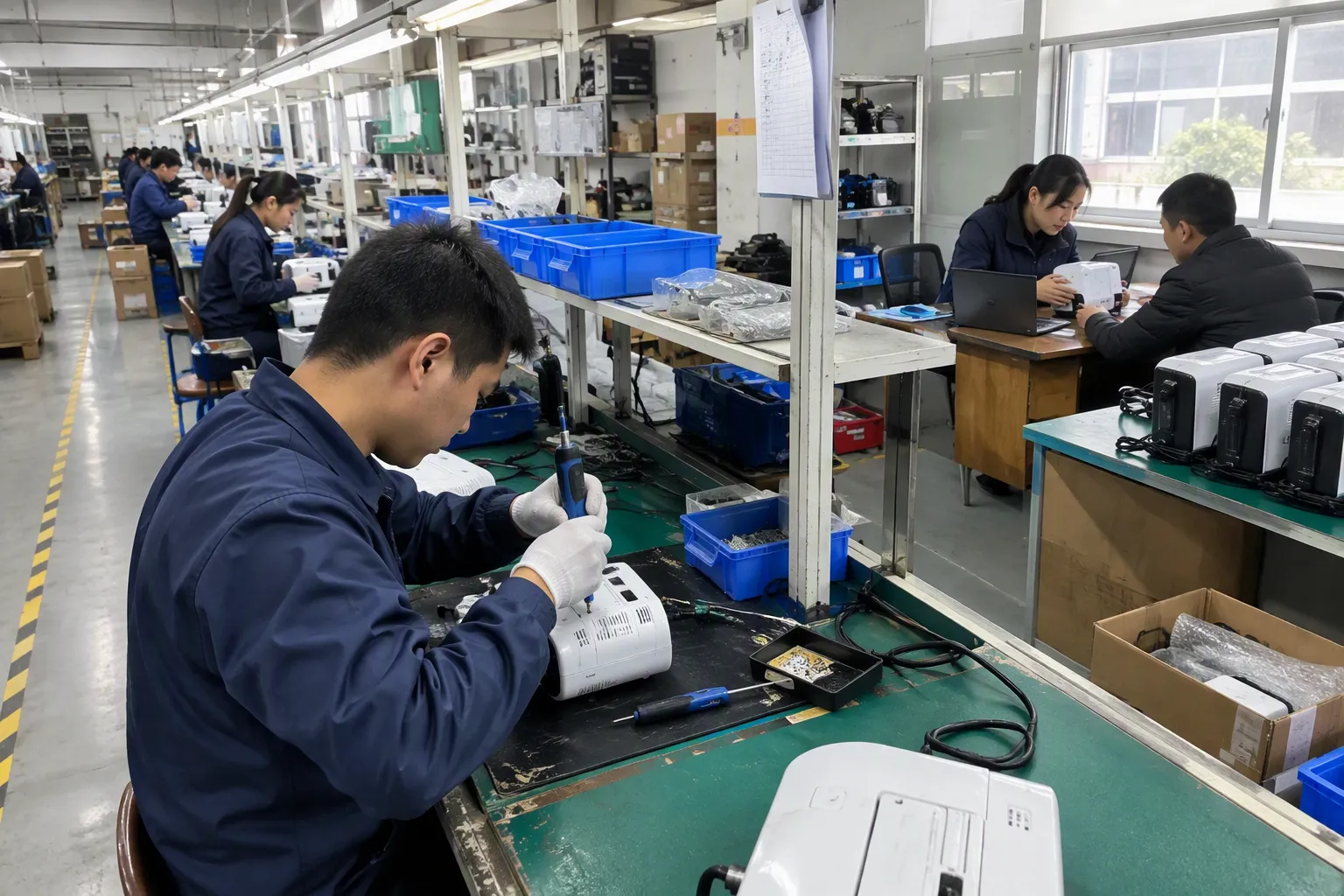
Early ordering helps, but it does not guarantee the normal lead time. Suppliers may already have a full production schedule, key components may become difficult to secure, and logistics capacity can change before the holiday. I use a practical planning process that separates SKU demand, supplier readiness, and delivery milestones so buyers can make measured decisions instead of panic purchases.
How Can I Plan Inventory Before Chinese New Year?
A late reorder can affect more than one product listing. It can interrupt advertising, marketplace ranking, customer promises, and cash flow. At the same time, over-ordering creates storage costs and exposes a business to slow-moving stock. I start with the individual SKU, then work backward through the full purchasing and delivery process.
The most reliable way to plan inventory before Chinese New Year is to calculate the required stock coverage for each SKU, confirm the supplier’s production window, and build a schedule that includes procurement, production, inspection, shipping, and post-holiday uncertainty.[3] I then classify the order by risk and decide whether to reorder, split the shipment, adjust demand, or accept a controlled stockout risk.
Why Does Chinese New Year Change Normal Procurement Planning?
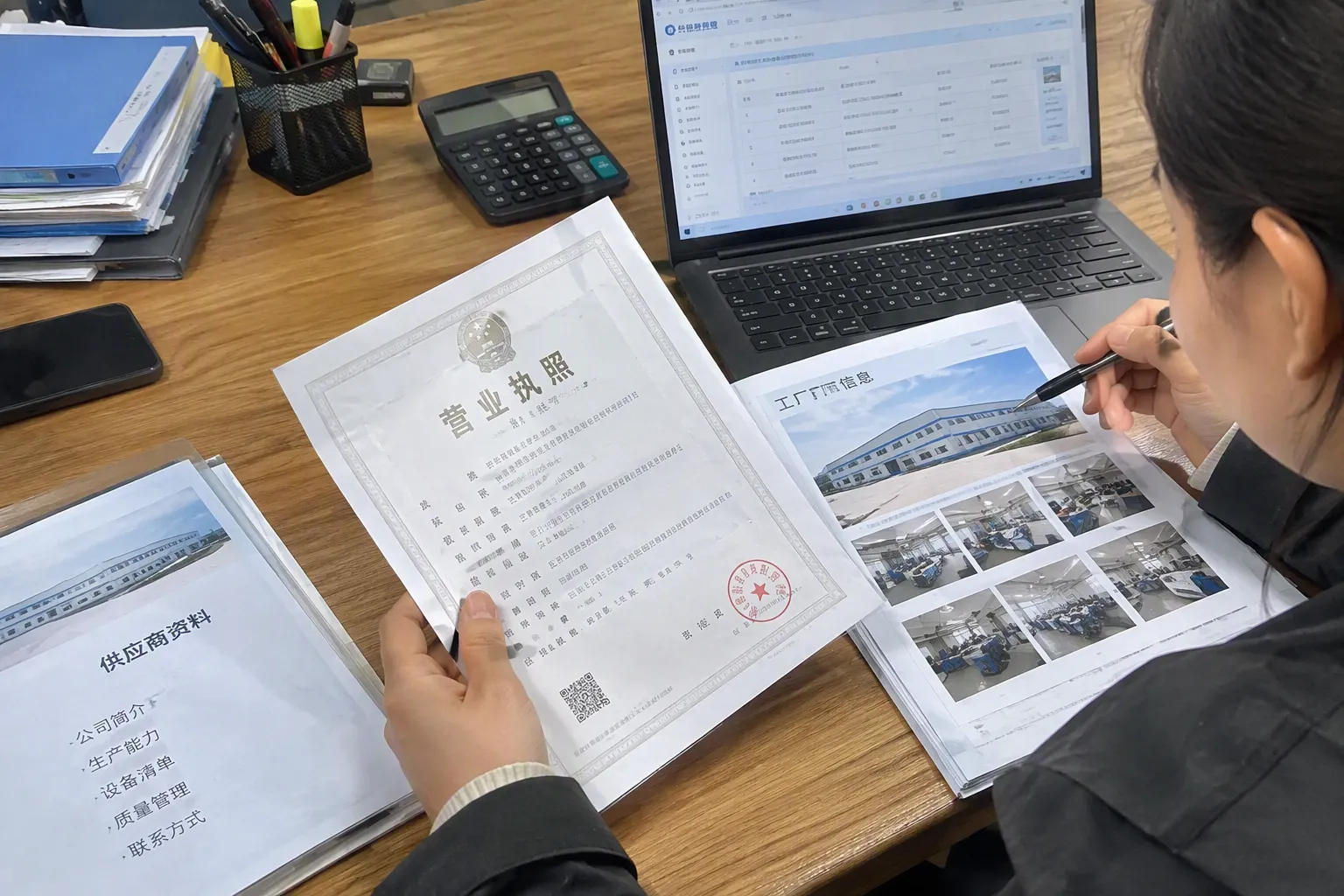
Chinese New Year is not simply a few days when factories close. The practical impact can begin earlier, when factories receive a high volume of orders, and continue later, when employees return at different times and production schedules rebuild.[1] The exact effect differs by supplier, product, region, workforce, and order type.
I have seen customers assume that placing an order three or four weeks earlier would produce the same result as a normal reorder. That assumption can fail. The supplier may quote a standard production time but have no available production slot before the holiday. A component supplier may also have a different schedule from the final assembly factory.
For a buyer, the important question is not only:
“How long does this product normally take to manufacture?”
The more useful question is:
“What is the realistic end-to-end time for this SKU to become sellable before or after the holiday period?”
That answer may include:
- Product specification confirmation
- Quotation approval and purchase order processing
- Deposit payment and material purchasing
- Component availability
- Artwork, packaging, or labeling approval
- Sample approval, where needed
- Production queue and manufacturing time
- Factory quality checks
- Third-party or pre-shipment inspection
- Rework or replacement time
- Export documentation
- Pickup and consolidation
- International transportation
- Customs clearance and final delivery
A supplier’s quoted production lead time usually covers only part of this list.[4] I treat it as a starting point, not as a complete delivery promise.
Which SKU Data Should I Review First?
I normally begin with a simple SKU-level worksheet. The worksheet does not need a complex forecasting model. It needs current information that the purchasing decision can use.
| SKU information | Why it matters |
|---|---|
| Average weekly sales | Shows the normal rate of inventory consumption |
| Recent sales trend | Identifies growth, decline, or seasonal movement |
| Current sellable stock | Indicates the available inventory position |
| Reserved or inbound stock | Prevents double-counting inventory |
| Supplier lead time | Provides a starting point for the schedule |
| Customization requirements | Shows whether artwork, molds, packaging, or approvals add time |
| Stockout cost | Helps prioritize important products |
| Storage and cash constraints | Limits how much extra inventory makes sense |
| Alternative supplier availability | Provides a possible risk-reduction option |
I calculate inventory coverage by dividing sellable stock by the expected weekly demand.[2] For example, if a product has 1,200 sellable units and expected weekly sales are 200 units, the current coverage is six weeks. That number alone does not determine the order quantity, but it tells me when the available stock may run out.
I also separate demand into different confidence levels:
- Base demand: A conservative estimate based on recent sales.
- Expected demand: A reasonable plan that includes known campaigns or seasonal changes.
- High-demand case: A risk scenario used for fast-selling products or important promotions.
This approach helps avoid treating an optimistic sales forecast as a fact. A seller may want enough stock for a large promotion, but the business should also consider what happens if the promotion underperforms.
How Do I Work Backward From the Required Delivery Date?
I start with the date when the inventory must be available for sale, not the date when the factory says production will finish. Then I work backward through each milestone.
A basic planning sequence looks like this:
-
Required sellable date
When should the inventory be available in the warehouse or fulfillment center? -
Final delivery buffer
How much time is needed for customs, domestic transport, receiving, counting, and booking into the sales channel? -
International shipping
Which transportation method is realistic, and how variable is its transit time? -
Inspection and release
When can the goods be inspected, and what happens if the inspection finds defects? -
Production completion
What date must production finish for inspection and dispatch to remain possible? -
Production start
When must materials and components be ready? -
Purchase order and supplier confirmation
When must the supplier receive an approved order, deposit, specifications, and packaging details?
This reverse schedule should include separate dates for planned completion and latest acceptable completion. The difference between those dates is the working buffer. I do not treat the buffer as guaranteed protection. It simply gives the buyer room to respond when a milestone moves.
For customized products, I add time for decisions that are often underestimated:
- Artwork corrections
- Packaging material production
- Barcode or compliance label approval
- Color or material confirmation
- Mold or tooling review
- Sample testing
- Customer approval
- Changes after the first production run
A standard product with existing packaging may be easier to schedule than a private-label product that requires several approvals. Two SKUs from the same supplier can therefore require different reorder decisions.
Should I Order All Inventory Before the Holiday?
No. I do not use Chinese New Year as a reason to buy the maximum possible quantity.[5] I use it as a reason to review demand uncertainty and supply risk more carefully.
A business can consider several purchasing options:
| Situation | Possible action |
|---|---|
| Fast-selling SKU with high stockout cost | Place a priority order and confirm capacity early |
| Stable SKU with moderate demand | Order based on realistic coverage and a measured buffer |
| Slow-moving SKU | Avoid excessive pre-holiday stock unless supply risk is unusually high |
| Customized SKU | Start approvals and material planning earlier |
| Product with uncertain forecast | Split the order or reduce the commitment |
| SKU with a reliable alternative supplier | Compare capacity, quality, and total cost |
| Product with a long component lead time | Secure critical materials before final assembly planning |
A split order can reduce exposure, but it needs a clear purpose.[7] For example, I may recommend producing a core quantity first and reviewing a second quantity only if demand and capacity support it. This is not always possible because the supplier may have minimum order quantities or may need to purchase materials in one batch.
I also compare the cost of additional inventory with the cost of a stockout. The comparison can include:
- Lost gross profit
- Marketplace ranking or advertising impact
- Customer cancellations
- Expedited freight
- Emergency supplier changes
- Storage and insurance
- Cash tied up in inventory
- Product obsolescence
- Discounting risk
A stockout is not automatically worse than overstock.[6] For a seasonal or trend-sensitive product, excess inventory may create a larger financial problem than a short sales interruption. I explain this trade-off to buyers before recommending an order increase.
What Should I Confirm With Chinese Suppliers?
Supplier communication should move beyond a general question such as, “Can you ship before Chinese New Year?” I ask for a schedule that identifies the conditions behind the answer.
The buyer should confirm:
- The factory’s expected final production date before the holiday
- The date when the factory plans to stop accepting new orders for pre-holiday production
- The last date for material or component purchasing
- Whether the quoted lead time starts after deposit, artwork approval, or another event
- The supplier’s holiday closure period
- The expected return-to-production period
- Whether the same production team will be available afterward
- The availability of key components and packaging
- The inspection and dispatch date
- The supplier’s plan if production misses the agreed milestone
I prefer written confirmation in the purchase order, production schedule, or another traceable document. A conversation in a messaging application may be useful, but the final timeline should be clear enough for someone else on the purchasing team to review.
I also ask suppliers to identify critical path items. These are tasks that can delay the entire order. Common examples include custom packaging, batteries, electronic components, molded parts, printed materials, and products assembled from several factories.
Supplier capacity matters as much as supplier willingness. A factory may want to support an order but still lack available workers, materials, or machine time.[8] In my experience, an early capacity discussion is more useful than a late request for a rush order.
How Can I Manage Inspection and Quality Risk?

Quality control should remain part of the inventory plan. Buyers sometimes remove inspection from the schedule because they fear losing shipping time. That decision can create a larger delay if defective goods arrive at the warehouse and require replacement or rework.
For suitable products, a buyer may plan:
- During-production inspection
- Final random inspection
- Quantity verification
- Product function checks
- Packaging and labeling checks
- Barcode verification
- Carton marking review
- Photo or video confirmation for selected details
The inspection scope should match the product and the buyer’s risk. A simple promotional item may need different checks from a consumer electronic device or a customized product with many accessories.
I also distinguish between inspection completion and goods released for shipping. If the inspection finds a problem, the factory may need time to correct it. The schedule should not assume that every order passes on the first inspection.
A practical quality plan identifies:
- The specification used for inspection
- Critical, major, and minor defects
- Sampling or checking method
- Packaging requirements
- Required corrective action
- Who approves rework or replacement
- The latest date for release
I never present an inspection report as a guarantee that every unit will perform perfectly. Inspection is a risk-control step. It gives the buyer information and an opportunity to act before shipping.
How Should I Plan Shipping Around Chinese New Year?

Shipping decisions should follow the required delivery date and the order’s risk profile. Air freight may reduce transit time, but it usually costs more and may have capacity constraints. Sea freight may offer a lower unit cost, but it requires earlier planning and can be less flexible when a milestone slips.
I compare options using the full landed-cost picture:
| Shipping factor | Questions to ask |
|---|---|
| Transit time | Does the estimate include origin handling and destination delivery? |
| Cost | What is the cost per unit after all relevant charges? |
| Reliability | How much variation is normal on this route? |
| Cargo readiness | Will goods actually be ready when the booking is needed? |
| Customs | Are documents and product details complete? |
| Consolidation | Can multiple supplier orders be combined? |
| Delivery priority | Which SKUs must arrive first? |
For customers buying from several Chinese factories, consolidation can improve control. However, consolidation also means one late supplier may delay a combined shipment. I may recommend shipping urgent SKUs separately while holding lower-priority goods for consolidation.
I also ask whether the inventory is being sent to a marketplace fulfillment center, a third-party warehouse, or the buyer’s own facility. Each destination can have receiving requirements and appointment delays. The required date should mean available for sale, not merely “departed from China.”
I avoid promising that a particular shipping method will eliminate holiday risk. Transportation providers, ports, customs agencies, and receiving warehouses have their own schedules. A realistic plan recognizes these dependencies.
What Should I Do With Orders That Finish After the Holiday?
Post-holiday planning needs its own schedule. A factory’s first day back does not always mean that normal production has resumed. The supplier may need time to confirm attendance, restart lines, receive materials, inspect equipment, and arrange the production sequence.
For an order expected to finish after the holiday, I ask:
- When will the supplier resume production?
- When will the order enter the post-holiday production queue?
- Are all materials already available?
- Will the product use the same workers and subcontractors?
- Could the packaging or component supplier return later?
- When can the factory provide the next confirmed milestone?
- Can the buyer accept a partial shipment?
- What is the fallback if the date moves again?
I have seen pre-holiday and post-holiday orders behave differently even when they involved similar products. A pre-holiday order may face intense capacity pressure before closure. A post-holiday order may face uncertainty while suppliers rebuild their normal schedule. Neither situation should be treated as automatically safer.
For this reason, I often divide the order into three categories:
- Must arrive: Inventory required to protect a critical sales period.
- Should arrive: Inventory that supports normal operations but has some flexibility.
- Can arrive later: Inventory that can be consolidated or scheduled after higher-priority goods.
This ranking helps a buyer communicate with suppliers and logistics providers. It also helps the business decide where to spend extra freight or inspection resources if a problem develops.
What Does a Practical Chinese New Year Checklist Include?
I recommend creating one checklist with separate rows for each SKU and supplier. The checklist should be updated when a supplier changes a milestone.
SKU checklist
- Current sellable quantity
- Confirmed inbound quantity
- Average weekly sales
- Recent sales direction
- Estimated stockout date
- Required sellable date
- Stockout cost
- Maximum sensible order quantity
- Backup or substitute product
Supplier checklist
- Supplier name and factory location
- Product and SKU reference
- Normal production lead time
- Customized production requirements
- Material and component status
- Pre-holiday order cutoff
- Planned production completion
- Holiday closure period
- Expected return-to-production date
- Post-holiday production milestone
- Escalation contact
Quality and shipping checklist
- Approved specification
- Approved packaging and labels
- Inspection requirement
- Inspection booking date
- Corrective-action buffer
- Cargo-ready date
- Freight plan
- Consolidation requirements
- Customs documents
- Warehouse receiving appointment
- Final available-for-sale date
I also add an owner and a last-confirmed date to every important milestone. This small detail prevents an old supplier estimate from being treated as current information.
Frequently Asked Questions
When should I start planning inventory before Chinese New Year?
I start planning as soon as the holiday period becomes relevant to the sales calendar, especially for customized products, fast-selling SKUs, and orders involving several suppliers. The right timing depends on demand, product complexity, supplier capacity, and shipping method. Buyers should confirm actual supplier schedules instead of relying on a universal advance-order rule.
Is ordering early enough to guarantee delivery before Chinese New Year?
No. Early ordering can improve the chance of securing materials and production capacity, but it cannot guarantee delivery. Suppliers may have full order books, component shortages, quality issues, labor changes, or logistics delays. Buyers should obtain written milestones and maintain a practical response plan.
How much extra inventory should I buy for Chinese New Year?
There is no responsible universal percentage or number of weeks. I base the decision on SKU sales velocity, current coverage, demand confidence, stockout cost, storage capacity, cash flow, and supplier risk. A high-priority SKU may justify more protection, while a slow-moving or seasonal product may not.
Should I use air freight to reduce Chinese New Year inventory risk?
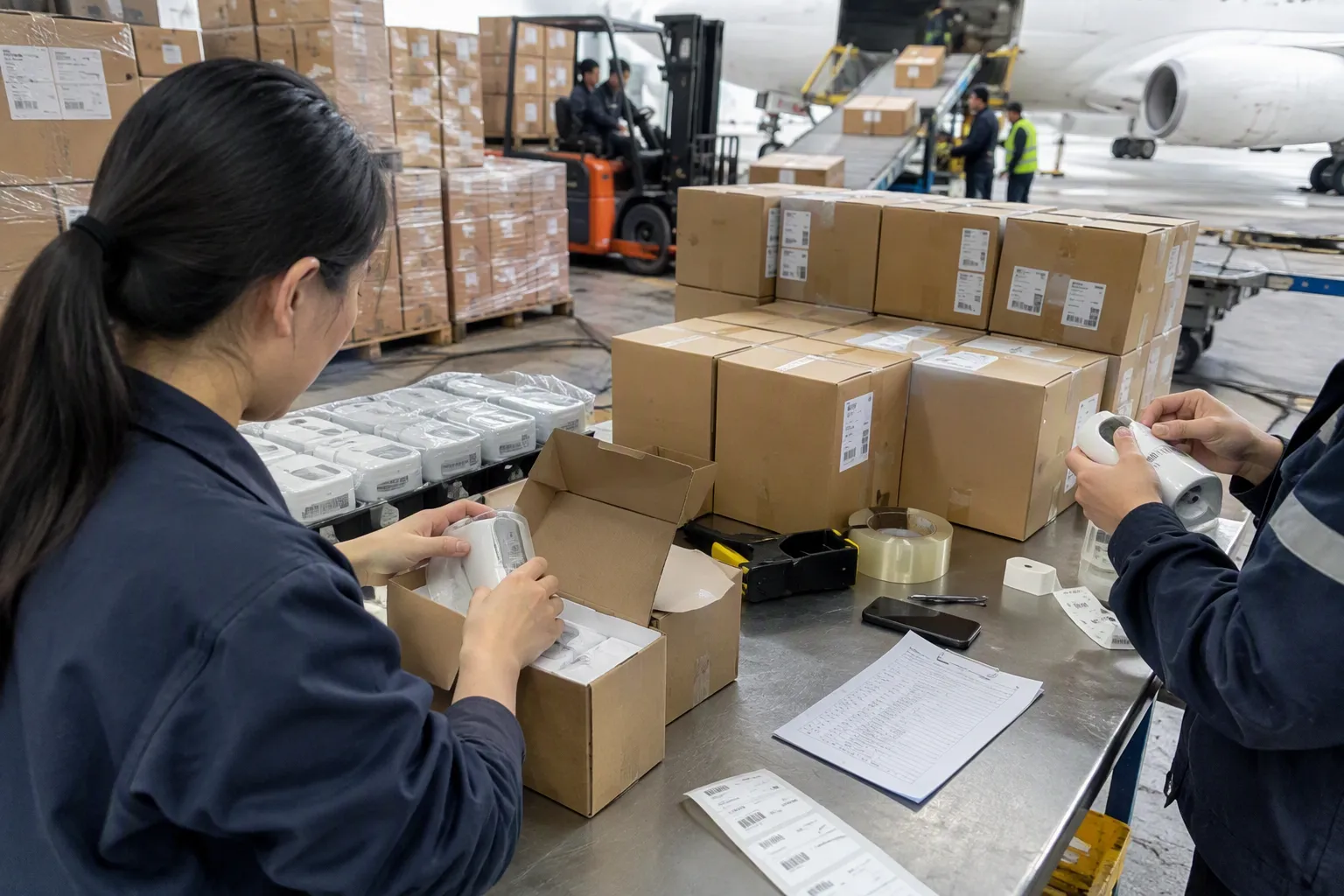
Air freight can reduce transportation time for selected goods, but it does not solve production or inspection delays. It also increases landed cost and may have capacity limits. I compare air and sea options by required delivery date, cargo readiness, product margin, order priority, and the financial cost of a stockout.
How can a sourcing partner help with Chinese New Year planning?
A sourcing partner can organize SKU-level purchasing information, confirm supplier schedules, compare quotations, follow production, arrange inspections, consolidate orders, and coordinate shipping. The buyer should still approve demand assumptions, order quantities, quality requirements, and acceptable risk. Professional evaluation remains important for application-specific products and regulated goods.
Conclusion
To plan inventory before Chinese New Year, I recommend starting with each SKU rather than applying one general ordering deadline. Review sales velocity, stock coverage, demand uncertainty, supplier capacity, production requirements, inspection, shipping, and warehouse receiving. Confirm both pre-holiday and post-holiday milestones in writing, and avoid assuming that early ordering guarantees delivery. KingSourcing can help overseas buyers verify suppliers, compare quotations, manage production, inspect goods, consolidate multi-supplier orders, and coordinate shipping from China. Contact us to review your upcoming inventory plan.
Sources
- Chinese New Year and its Impact on Global Supply Chain", A source on seasonal manufacturing and labor mobility in China supports the contextual claim that Spring Festival disruptions may begin before the official holiday and persist while workers return and production is restored
- Determining appropriate inventory levels is one of the most ...", Operations-management references define inventory coverage, commonly expressed as weeks of supply, by relating usable inventory on hand to the expected demand rate over the same period
- How to Think About Planned Lead Times - The MIT LGO Review", Research on multi-item inventory and supply-chain planning supports integrating SKU-specific demand and inventory positions with variable replenishment lead times and upstream capacity constraints
- How to Think About Planned Lead Times - The MIT LGO Review", Supply-chain terminology distinguishes production lead time from end-to-end fulfillment lead time, which may also include purchasing, quality release, transportation, customs, and delivery activities
- Lecture 13: Deterministic-demand Inventory Models", Inventory-control research shows that order quantities should balance shortage and holding or overage costs under uncertain demand, rather than automatically maximizing stock before a supply interruption
- Inventory Management – Business Operations Analytics", Inventory research demonstrates that the relative costs of shortage and excess stock determine the preferred service level and order quantity; excess inventory can be more costly when demand declines or products lose value
- Supply Chain Management and Demand Uncertainty", Research on staged procurement and supply uncertainty supports the use of partial commitments to limit exposure to forecast error, while recognizing that order splitting may increase setup, minimum-order, or logistics costs
- 7 Capacity Management Supply Chain Strategies for ...", Operations and supply-chain studies show that supplier delivery commitments are constrained by finite labor, material, and machine capacity, so willingness to accept an order is not equivalent to confirmed executable capacity


