Quick Answer
China vs Vietnam sourcing can look like a simple cost comparison, but startup brands often face a more difficult problem: choosing a country before they understand the product, supplier, and total landed cost. A lower wage figure may not solve high MOQs, slow development, quality problems, or expensive mistakes. I use a product-fit and supplier-evaluation process instead.
China vs Vietnam sourcing has no universal winner in 2026. China may be more practical for complex products, broad component access, small test orders, customization, and fast supplier comparison.[1] Vietnam may suit some buyers seeking specific manufacturing capacity or supply-chain diversification.[2] The best decision depends on product requirements, factory capability, order size, quality control, logistics, tariffs, and verified total landed cost.
The useful question is not simply which country has cheaper labor. I encourage buyers to compare specific factories in both markets when practical, then calculate the cost of getting acceptable products delivered on time. The details below explain how I would structure that decision for a startup, e-commerce seller, or growing importer in 2026.
China Vietnam Sourcing: Which Is Better in 2026
Many new buyers search for one clear winner because country-level comparisons feel easier than factory-level research. However, a country does not produce the quotation, approve the sample, or manage the production line. A specific supplier does. If a buyer chooses based only on labor cost, the initial saving may disappear through materials, defects, delays, or unsuitable MOQs.
China Vietnam sourcing is better evaluated as a product-fit decision. China often offers broader supplier depth, component ecosystems, customization options, and support for smaller or mixed orders. Vietnam can be a strong option for selected product categories and supply-chain strategies. Buyers should verify current quotations, capacity, origin requirements, logistics, and quality before making a final decision.
What I compare before recommending a sourcing location
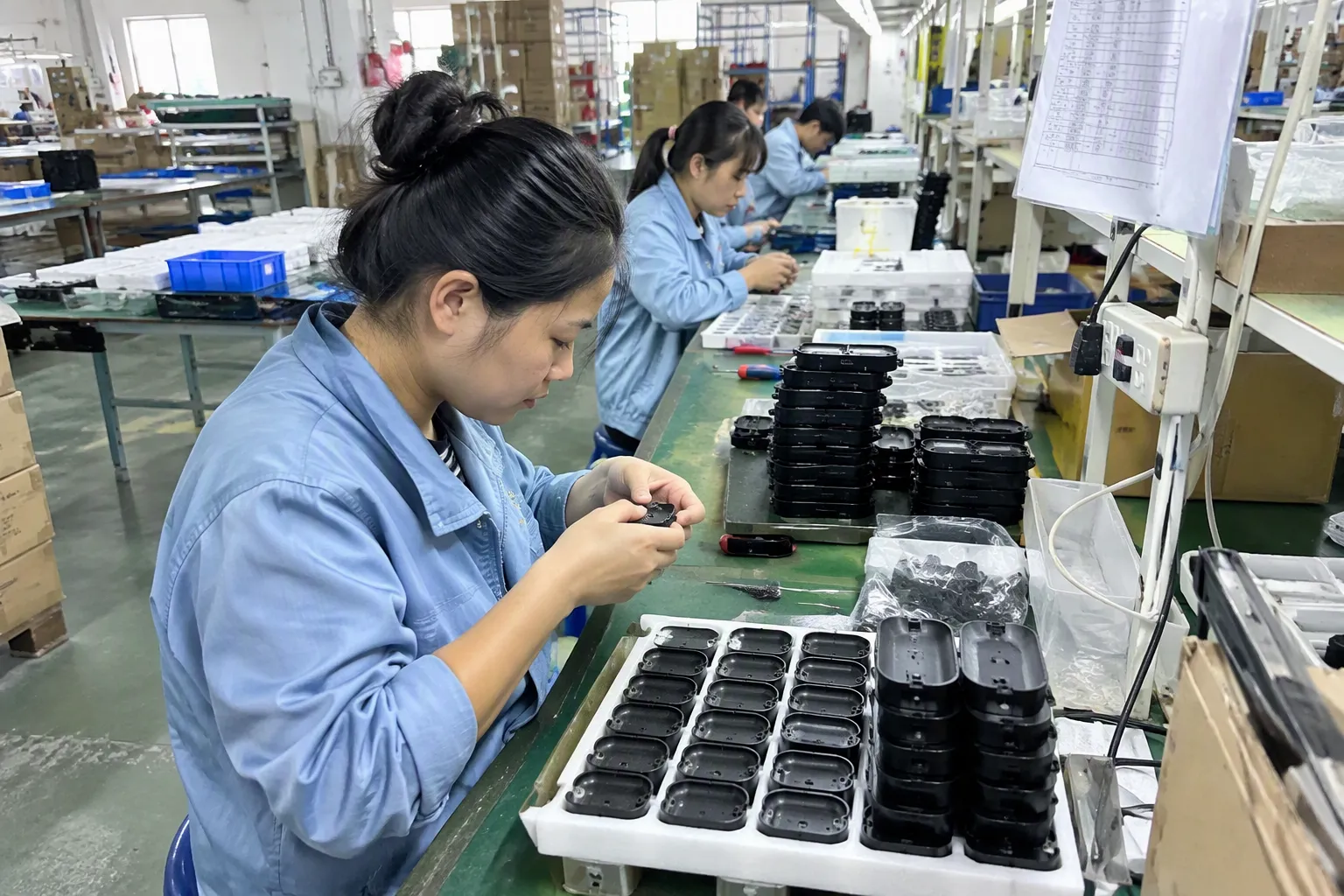
In my China sourcing work, I usually start with the product rather than the country. I ask what the product is made from, how many processes it requires, whether it needs tooling, how much customization it involves, and how quickly the buyer needs samples.
A simple product with stable specifications may be suitable for several manufacturing markets. A product that combines electronics, molded parts, printed packaging, batteries, firmware, or multiple finishing processes needs a more connected supply base. The location with the lowest assembly labor cost may not have the most efficient upstream network.
I also separate supplier availability from supplier suitability. A marketplace may show many factories, but the visible number does not prove that those factories have the right equipment, export experience, quality system, or production capacity.
Product complexity matters more than a headline wage rate
The following questions help me classify a sourcing project:
- Does the product require custom molds, dies, or tooling?
- Does it use electronic components or battery cells?
- Does it require several materials from different suppliers?
- Does it need precise color matching or surface finishing?
- Does it require private-label packaging and labeling?
- Does the buyer need a small test order before a larger purchase?
- Does the product require testing, inspection, or application-specific professional review?
- Does the buyer need several SKUs consolidated from different factories?
China has extensive manufacturing clusters that support many of these requirements.[3] Shenzhen and Dongguan are important for electronics and 3C accessories. Guangzhou, Foshan, Yiwu, Ningbo, and other areas support different product and trading networks. That does not mean every Chinese supplier is suitable. It means buyers may have more options to investigate within a connected manufacturing environment.
Vietnam can be attractive for particular categories, established production programs, and diversification plans. However, I would verify the exact factory’s capabilities instead of assuming that a country-level reputation applies to every supplier. Vietnam-specific costs, capacity, export procedures, origin treatment, and current policy conditions should be checked with qualified local or trade professionals.
Why labor cost does not equal total landed cost
A factory’s labor cost is only one part of the purchase decision. I prefer to build a landed-cost model that includes every meaningful expense from product development to delivery.
| Cost area | Questions for the buyer |
|---|---|
| Product price | Does the quotation include the same materials, functions, finish, and packaging? |
| Tooling and development | Are molds, samples, engineering, or setup fees included? |
| MOQ | Can the buyer order a realistic test quantity? |
| Quality control | Who pays for inspections, rework, sorting, and replacement? |
| Packaging | Does the price include retail packaging, labels, inserts, and carton protection? |
| Inland transport | How far is the factory from the port, warehouse, or consolidation point? |
| Freight and insurance | What transport route, service level, and insurance assumptions apply? |
| Duties and taxes | Which current tariff and import rules apply to the destination? |
| Delay cost | What happens if production misses a launch or sales window? |
| Payment risk | What deposits, balances, and protections are available? |
I have seen buyers focus on a unit-price difference while ignoring the cost of a failed sample or a large defect rate. A supplier that is slightly more expensive but provides consistent production and clearer communication may create a lower commercial risk.
A practical landed-cost formula
I would use this basic structure:
The final terms depend on the product and destination. Buyers should confirm current rates and import obligations with a customs broker or other qualified professional. I would not treat a general online comparison as a substitute for a shipment-specific calculation.
Expected quality cost can be difficult to measure, but buyers should still consider it. For example, if a buyer expects a 4% defect rate and each defective unit creates replacement, refund, inspection, and customer-service expenses, the quoted unit price does not represent the real cost. A pre-shipment inspection and production follow-up may reduce uncertainty, although no inspection removes every risk.[6]
Why startup buyers need a different framework
A large company may already have demand forecasts, engineers, regional staff, approved vendors, and enough volume to negotiate favorable terms. A startup often has none of those advantages.[7] The first order may be a market test rather than a long-term production commitment.
For an early-stage brand, I usually give more weight to:
- Low-risk product development
- Reasonable sample speed
- Small or manageable test quantities
- Clear communication
- Supplier willingness to explain costs
- Accessible quality control
- Flexible packaging and labeling
- The ability to consolidate several orders
China may be practical for this profile because buyers can often compare a broad range of suppliers and related service providers. A buyer may source the main product from one factory, packaging from another, and accessories from a third, then use a consolidation workflow. That model still requires careful control. Multiple suppliers increase coordination work, and consolidation does not fix poor product quality.
Vietnam may still be the better fit when a buyer has a suitable verified factory, an established production program, or a strategic reason to diversify manufacturing. The key point is that a startup should not select Vietnam merely because an article says wages are lower. The startup should identify a factory that accepts its order stage and can meet the product specification.
China and Vietnam are not single, uniform markets
Country comparisons can hide major regional and supplier differences. A factory in one industrial area may have very different access to materials, labor, tooling, ports, and subcontractors from a factory in another area.
I would compare suppliers using the same brief and the same questions:
- What is the exact bill of materials?
- Which components are made internally?
- Which processes are subcontracted?
- What is the minimum order quantity for the first order?
- What is the repeat-order MOQ?
- What is the sample lead time?
- What is the mass-production lead time?
- What quality checks occur during production?
- What happens if the goods fail inspection?
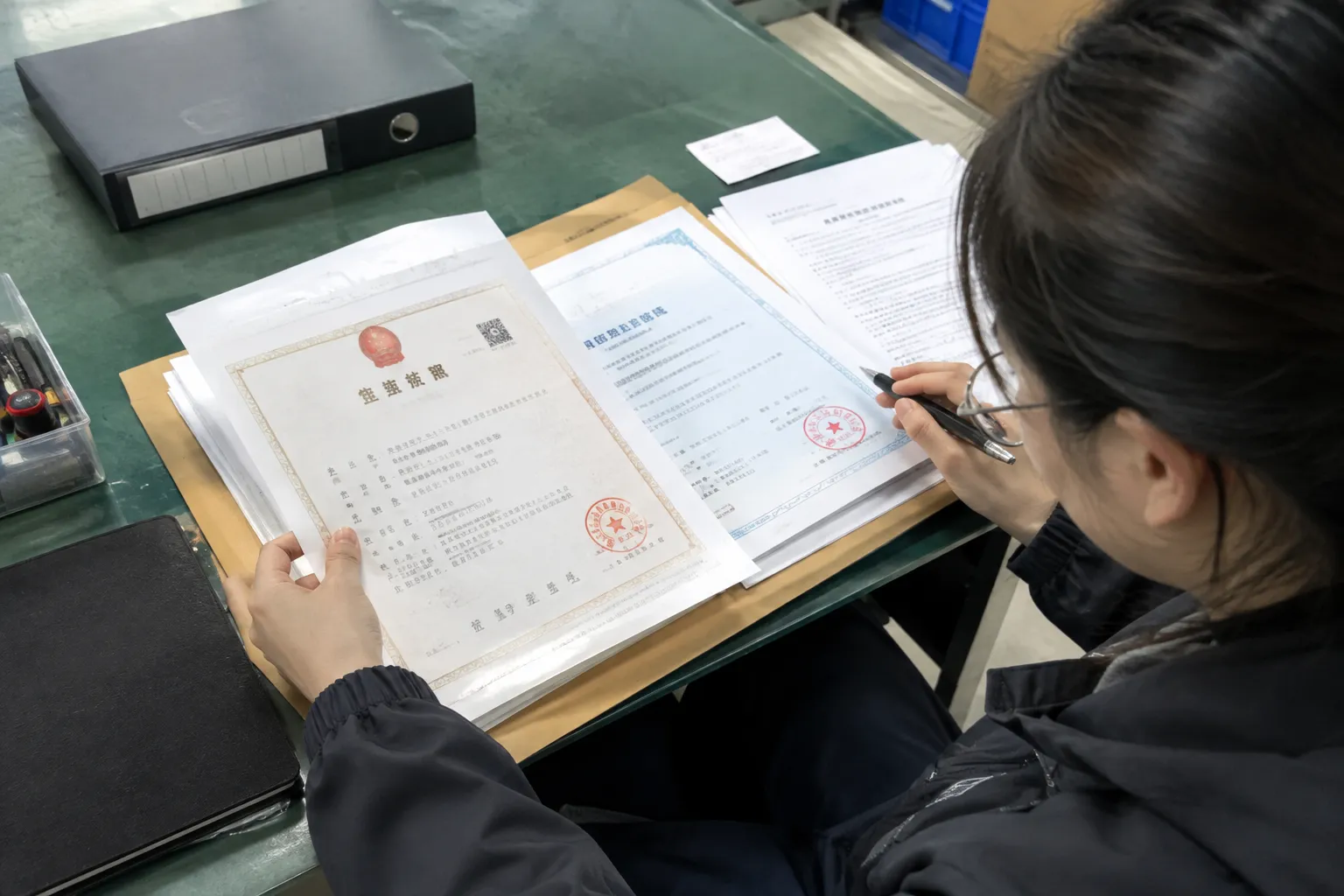
- Can the factory provide relevant business and export documents?
- Can the factory explain its ownership, address, equipment, and production role?
- Can the factory support the required packaging and labeling?
- Can the factory provide references or verifiable production evidence where appropriate?
I would also distinguish a factory from a trading company. A trading company may be useful, especially for multi-category purchasing, but the buyer should understand who controls production and who is responsible for quality. Supplier verification should match the risk of the order.
Quotation comparison must be like-for-like
A common mistake occurs when a buyer compares one low quotation from Vietnam with one higher quotation from China without checking whether the offers describe the same product. The quotations may differ in:
- Material grade
- Component brand or specification
- Product dimensions
- Surface treatment
- Color standard
- Packaging quality
- Testing scope
- Warranty or replacement terms
- Incoterms
- Payment terms
- Production quantity
- Tooling ownership
I prefer a quotation comparison sheet with separate columns for included and excluded items. I ask each supplier to quote against the same specification and to identify assumptions. If a supplier cannot explain the quotation clearly, that weakness matters even if the number looks attractive.
A buyer should also request a sample before placing a substantial order. The sample should represent the intended production specification, not merely a promotional demonstration. For customized products, the buyer should approve drawings, artwork, materials, dimensions, and packaging before mass production.
Quality control changes the country decision
Quality control is not a country label. It is a process involving specification, supplier selection, sample approval, production monitoring, and inspection.
A practical control plan may include:
- Pre-production review: Confirm approved samples, materials, artwork, packaging, and production schedule.
- During-production check: Identify process problems before the entire order is finished.
- Pre-shipment inspection: Check quantity, workmanship, function, packaging, labeling, and agreed sampling criteria.
- Loading supervision: Confirm carton counts, product protection, and shipment details when the order justifies it.
- Receiving inspection: Check a sample again when the goods arrive at the buyer’s warehouse.
The correct inspection scope depends on the product. Buyers should ask qualified inspectors or technical professionals to define suitable tests for safety-critical, electrical, regulated, or application-specific products. Certifications and test reports should be treated as documents to verify, not as automatic proof that every production batch is compliant.
I often tell buyers that inspection is most useful when the specification is already clear. An inspector cannot reliably judge an undefined requirement. “Good quality” must become measurable points such as dimensions, color tolerance, functional performance, packaging instructions, or acceptable defect criteria.
MOQ and production flexibility can outweigh unit price
A lower unit cost usually comes with assumptions about volume.[4] A factory may quote a favorable price at 10,000 units but require 3,000 or 5,000 units as its minimum order. A startup may not have enough demand to justify that commitment.
I would request at least three scenarios:
| Scenario | What it reveals |
|---|---|
| Small test order | Whether the supplier supports market validation |
| Standard production order | The realistic operating price |
| Larger repeat order | The potential scale benefit |
The buyer should ask whether the MOQ applies to the total order, each color, each size, each SKU, or each packaging design. A multi-SKU order can become much larger than expected when the supplier applies a separate MOQ to every variation.
Small orders may carry higher prices because of setup, material purchasing, labor scheduling, and packaging costs. That result is not necessarily unfair. The important issue is whether the supplier explains the reason and whether the test order creates a credible path to scale.
Logistics and consolidation need early attention
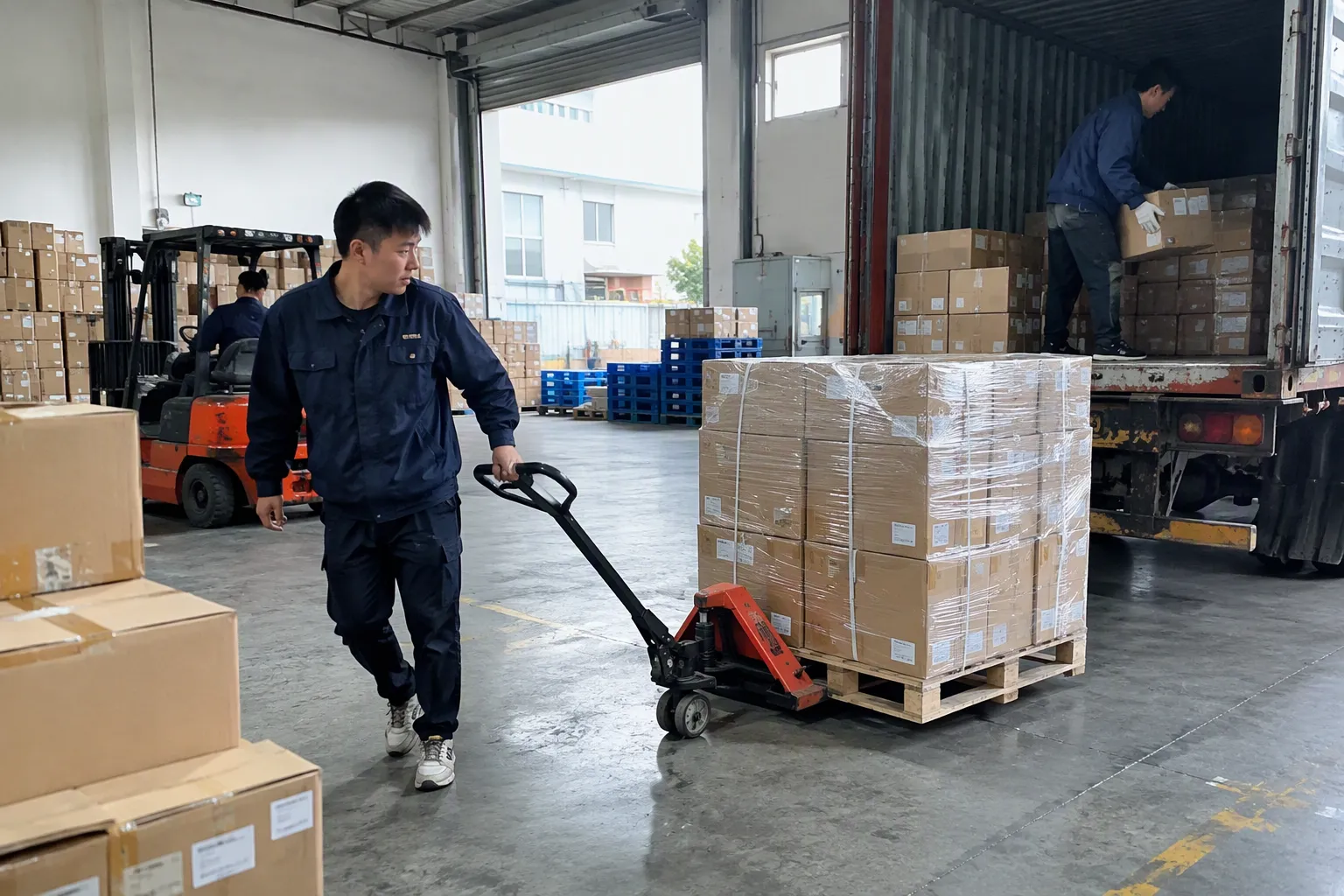
A sourcing decision also affects logistics. The factory’s location, port access, carton dimensions, order timing, and shipment mode all influence the final result.
For a buyer using several factories, consolidation can simplify international shipping and reduce fragmented deliveries.[8] However, the buyer must manage:
- Different production completion dates
- Different carton markings
- Separate invoices and packing lists
- Storage and handling fees
- Product inspection before consolidation
- Missing or mixed cartons
- Export documentation
- Final shipping deadlines
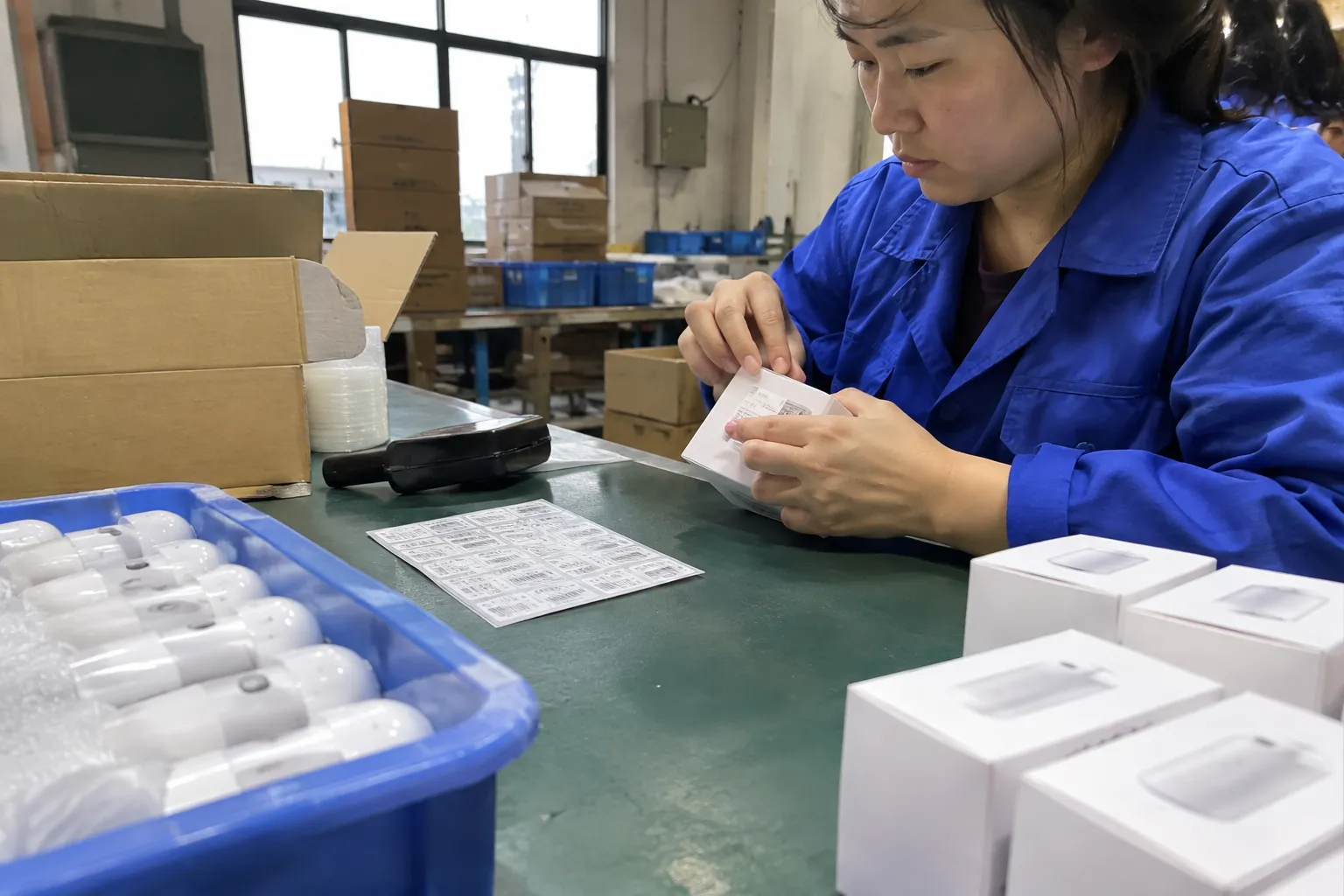
In my work with overseas buyers, multi-supplier consolidation can be useful for e-commerce launches and wholesale programs, but it requires a clear warehouse process. I would not wait until production finishes to discover that one supplier has used non-standard carton information or that another supplier has missed the consolidation cut-off.
Vietnam may have a good logistical fit for a specific program, while China may be more convenient for another. I would compare the actual factory location and shipping plan, not only the country’s major ports. Freight pricing and transit times change, so the buyer should obtain current forwarder quotations before approving a sourcing strategy.
Tariffs, origin, and policy must be verified for the shipment
Trade policy is a moving part of sourcing in 2026. Buyers should not rely on a general statement that one country has a permanent tariff advantage. Applicable duties may depend on the product classification, destination, manufacturing steps, origin rules, documentation, and current policy.
I recommend that buyers:
- Obtain the likely HS classification from a qualified customs professional.
- Confirm current duties and taxes for the destination market.
- Check whether processing changes the product’s origin under applicable rules.
- Review whether any trade preference has specific eligibility conditions.
- Confirm documentation requirements before production.
- Avoid making origin claims based only on final assembly location.
- Recheck the position before shipment if policy conditions have changed.
I can help a buyer organize supplier documents and product information, but customs classification and legal interpretation should be confirmed by the buyer’s broker or trade adviser. This step protects the buyer from building a sourcing model on an assumption that later proves incorrect.
A decision matrix for a first overseas order
I would score each verified supplier rather than scoring China or Vietnam in the abstract.
| Decision factor | Weight for a startup | Supplier A | Supplier B |
|---|---|---|---|
| Product and process fit | High | ||
| Sample quality and speed | High | ||
| MOQ flexibility | High | ||
| Comparable landed cost | High | ||
| Communication and responsiveness | Medium | ||
| Quality-control cooperation | High | ||
| Packaging and customization | Medium | ||
| Production capacity | High | ||
| Documentation and traceability | High | ||
| Logistics and consolidation fit | Medium |
The scores do not replace professional judgment. They make hidden assumptions visible. A supplier with a lower initial quotation may score poorly on MOQ, quality control, or development speed. Another supplier may cost more per unit but provide a more practical launch route.
When China may be the practical first choice
Based on my China-side sourcing experience, China often deserves early consideration when the buyer needs:
- Consumer electronics or 3C accessories
- Several related components
- Custom molds or product modifications
- Fast sample iteration
- Private-label packaging
- Multiple SKUs from different factories
- Small test orders followed by scaling
- Supplier comparison across several manufacturing clusters
- Inspection, warehousing, consolidation, and shipping coordination
These points describe potential advantages, not guarantees. A buyer still needs to verify the individual factory. I would also avoid assuming that a supplier in a major cluster performs every process in-house. Factory audits and production follow-up can reveal the actual production structure.
When Vietnam may be the practical choice
Vietnam may deserve serious consideration when the buyer has:
- A verified supplier with relevant product experience
- A production program that matches the factory’s minimum scale
- A clear diversification objective
- A product and process suited to the available local supply base
- Confirmed material access and subcontracting arrangements
- A current, shipment-specific landed-cost advantage
- A logistics plan that works for the destination market
I would qualify each of these points through evidence. The buyer should verify factory capacity, ownership or operating role, material sourcing, quality procedures, lead times, export documentation, and current commercial terms. I do not treat broad assumptions about Vietnam as sufficient evidence.
My recommended process for a 2026 sourcing decision
I would use the following sequence:
- Write a complete product brief. Include materials, dimensions, functions, tolerances, packaging, labeling, target quantity, destination, and required documents.
- Create a supplier shortlist. Search by product and process, not only by country.
- Verify the suppliers. Check business information, factory role, equipment, production capacity, and relevant experience.
- Request comparable quotations. Ask every supplier to state inclusions, exclusions, MOQs, lead times, payment terms, and packaging assumptions.
- Order and evaluate samples. Record differences against the specification.
- Build a landed-cost model. Include logistics, quality control, duties, taxes, and likely failure costs.
- Run a controlled test order. Use agreed specifications and inspection checkpoints.
- Review the result before scaling. Measure quality, delivery, communication, actual cost, and customer response.
This approach prevents a country decision from becoming a substitute for procurement work. It also gives a startup useful evidence before it commits to a long-term supplier relationship.
Frequently Asked Questions
Is China or Vietnam cheaper for sourcing in 2026?
Neither country is always cheaper. The answer depends on the product, material costs, order size, supplier efficiency, packaging, quality requirements, freight, duties, and delay risk. I recommend comparing verified, like-for-like quotations and shipment-specific landed costs instead of using labor rates as a pricing conclusion.
Is China better for small test orders?
China may be more practical for some small test orders because many buyers can access a broad supplier base, customization support, and sourcing services. However, each factory sets its own MOQ and terms. I would confirm the actual test quantity, setup costs, sample process, and repeat-order conditions before choosing a supplier.
Should a startup source from both China and Vietnam?
A startup can compare both markets, but managing two countries may add communication, inspection, documentation, and logistics work. I would first identify the product’s best-fit suppliers and run a controlled comparison. Dual sourcing becomes more useful when the buyer has enough volume or a clear supply-continuity objective.
How can I compare China and Vietnam supplier quotations fairly?
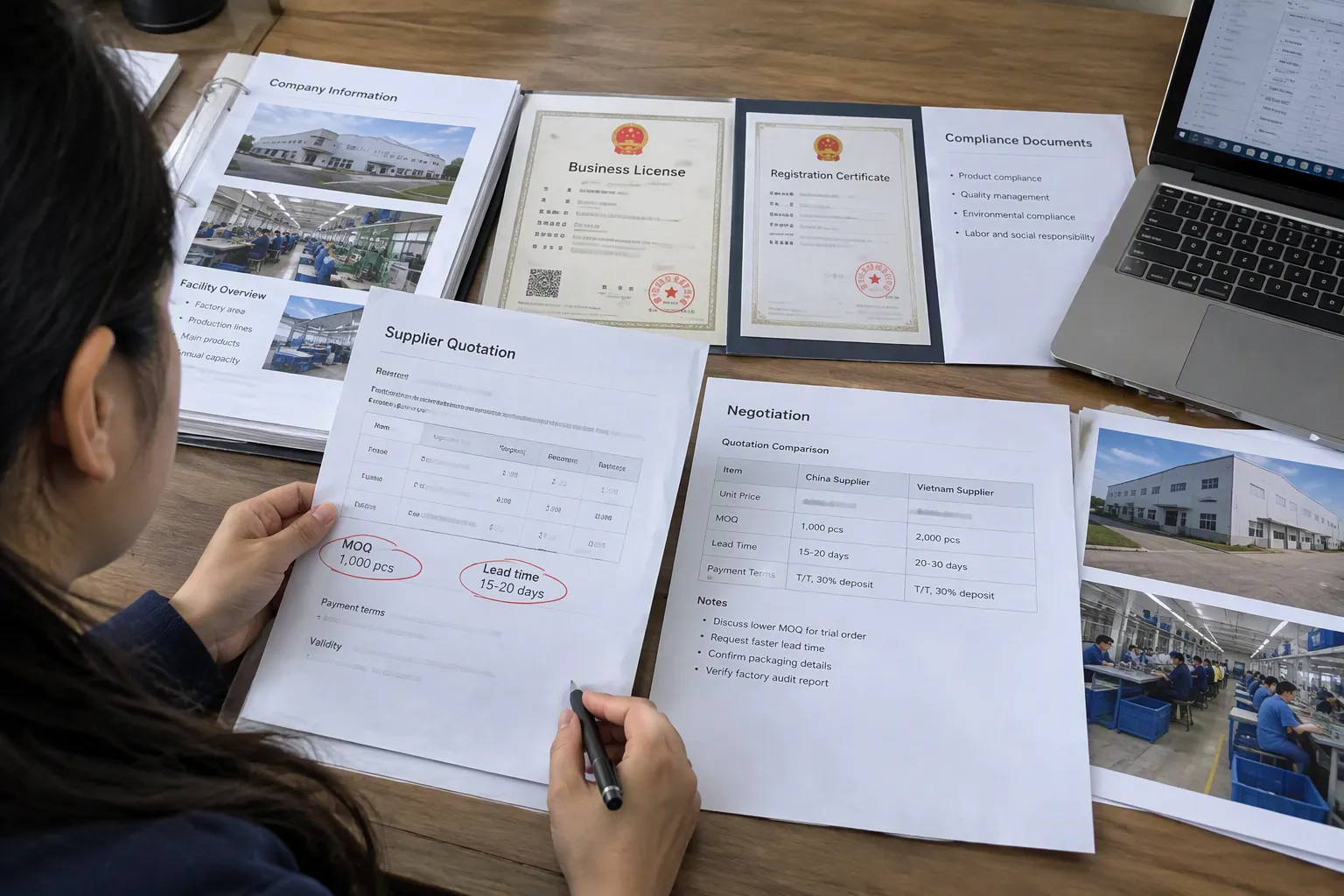
I would issue the same product brief to each supplier and compare materials, specifications, packaging, MOQ, tooling, lead time, payment terms, Incoterms, inspection scope, and exclusions. I would then add freight, duties, taxes, and expected quality costs to create a more realistic landed-cost comparison.
Do certifications prove that a supplier is reliable?
No. A certification or test report may support a specific compliance claim, but buyers should verify its scope, issuer, validity, product model, and applicability. A document does not automatically prove production consistency, factory ownership, or shipment quality. Qualified technical and compliance professionals should review application-specific requirements.
Conclusion
China vs Vietnam sourcing is not a contest with one permanent winner. I would choose the location that offers the strongest fit for the product, order stage, supplier capability, quality-control plan, and total landed cost. China may offer useful depth for complex, customized, multi-SKU, or smaller test-order programs, while Vietnam may suit selected products and verified diversification strategies. KingSourcing can help compare China suppliers, verify factories, manage samples, inspect production, consolidate orders, and coordinate shipping so international buyers can make a more controlled decision.
Sources
- Manufacturing and supply chain management in China", Research on Chinese industrial clusters and production networks supports the contextual claim that some Chinese manufacturing regions provide dense supplier and component ecosystems that can facilitate complex or customized production
- Viet Nam 2045 - Trading Up in a Changing World", International institutional assessments describe Vietnam's growing participation in selected global manufacturing value chains, supporting its relevance as one possible location for supply-chain diversification
- How do special economic zones and industrial clusters ...", Studies of Chinese industrial agglomeration support the mechanism that geographically concentrated firms and specialized suppliers can improve access to complementary manufacturing capabilities
- 11 Ways to Reduce Manufacturing Costs", Operations-management literature explains that fixed setup costs and production-scale efficiencies can cause average unit costs to decline as order volume increases
- Total Landed Cost Model", Customs and trade guidance identifies purchase price, transportation, insurance, duties, taxes, and related import charges as components commonly included in an import-cost calculation; quality and delay costs are additional managerial estimates
- Strategic implications and the paradox of AI inspection", Quality-management literature supports the view that process controls and inspections can detect or reduce some nonconformities, while sampling limitations and process variation mean that inspection cannot guarantee defect-free shipments
- Removing Barriers to SME Access to International Markets", Research on small and young firms identifies limited financial, managerial, technical, and purchasing resources as common constraints in developing and managing supply chains
- Defense Logistics Agency's Regional Freight ...", Logistics research describes shipment consolidation as a method that can combine compatible consignments and improve transport utilization, while also creating additional handling, timing, and warehouse requirements