Quick Answer
A sourcing agent can help with sample checking when a supplier’s product looks acceptable in photos but the buyer still cannot judge whether it matches the agreed requirements. Small differences in dimensions, materials, functions, labeling, or packaging can create larger production problems. I reduce this uncertainty by turning the product brief into a practical checklist and coordinating corrections before production begins.
A sourcing agent helps with sample checking by defining acceptance criteria, comparing the sample with the buyer’s specifications, checking appearance and basic function, documenting discrepancies, and coordinating supplier revisions. Sample approval can support a better production decision, but it does not guarantee that every mass-produced unit will match the approved sample.[1] Buyers may still need factory assessment, production follow-up, and pre-shipment inspection.
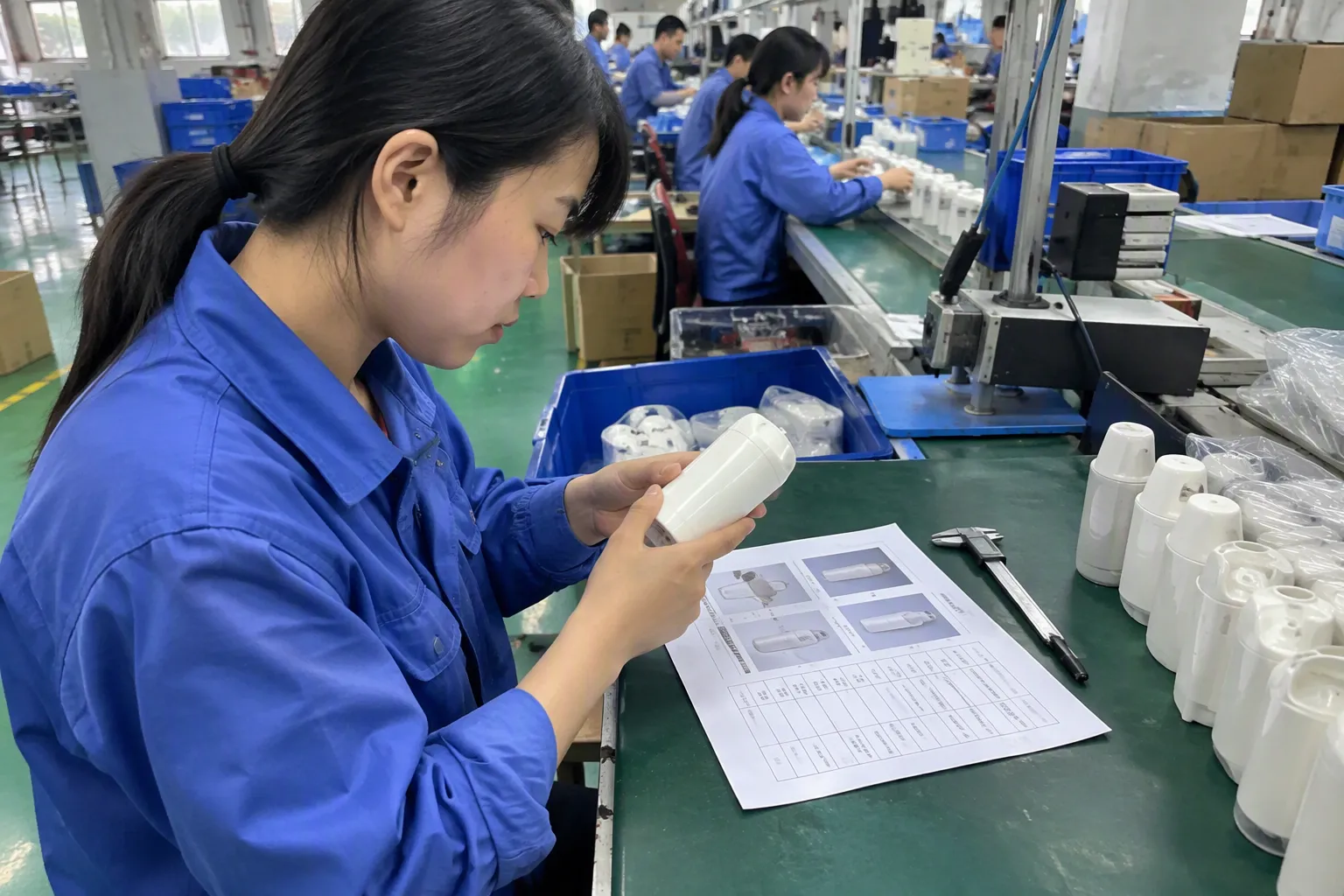
Sample checking is therefore more than receiving a parcel and sending photographs. I see it as an early decision point in the purchasing process. A useful review should answer two questions: What does the buyer require, and does this specific sample provide enough evidence to move forward?[2] The sections below explain how I approach that decision and where the limits of sample approval remain.
How Can a Sourcing Agent Help with Sample Checking?
A supplier sample can create false confidence when nobody has defined what “good” means. A buyer may notice the color but miss a wrong connector, unsuitable material, inaccurate dimensions, or incomplete packaging. I help by clarifying the purpose of the sample, building a requirement-based checklist, checking the physical item, and turning findings into specific supplier actions.
A sourcing agent helps with sample checking through five connected steps: clarifying the buyer’s requirements, examining the sample item by item, recording evidence, communicating corrections, and coordinating a revised sample or production control plan. This process helps the buyer make a more informed decision without treating the sample as a guarantee of batch-wide quality.
What should be defined before sample checking?
Before I check a sample, I first establish what the sample is supposed to prove. A product sample can serve different purposes, and each purpose changes the review.
For example, a sample may be:
- A market-testing sample used to assess customer interest.
- A functional sample used to confirm operation or compatibility.
- A visual approval sample used to approve color, finish, shape, or branding.
- A pre-production sample intended to become the reference for manufacturing.
- A packaging sample used to check labels, inserts, boxes, and retail presentation.
- An engineering or development sample that is still expected to change.
I ask the buyer to provide the available product information before the supplier sends anything. This information can include drawings, photographs, dimensions, material requirements, logo files, packaging artwork, target functions, and notes about unacceptable features. When the buyer has no formal specification sheet, I help convert the conversation into a working document.
That conversion matters because phrases such as “premium quality,” “strong material,” or “the same as the reference product” are difficult to inspect objectively.[3] I may need to ask:
- Which dimensions are critical?
- Which parts must move, connect, charge, close, or fit?
- Which surfaces may show minor marks?
- Which color reference should the supplier follow?
- Is the packaging part of the approval?
- Does the sample need to represent final materials and tooling?
- Which differences would stop production approval?
- Which differences could be corrected later?
I also clarify tolerances where they are important. A buyer may accept a small dimensional variation for a flexible textile item but reject the same variation for a fitted accessory. I do not invent technical tolerances. I ask the buyer, product engineer, or qualified professional to define them when the application requires technical judgment.
The sample’s purpose also affects the language of the decision. A development sample may be useful even when it is not ready for production. In that case, I record what it confirms and what still needs to change. I avoid labeling it simply “approved” because that word can be misunderstood by the factory and the buyer.
How does the agent check more than appearance?
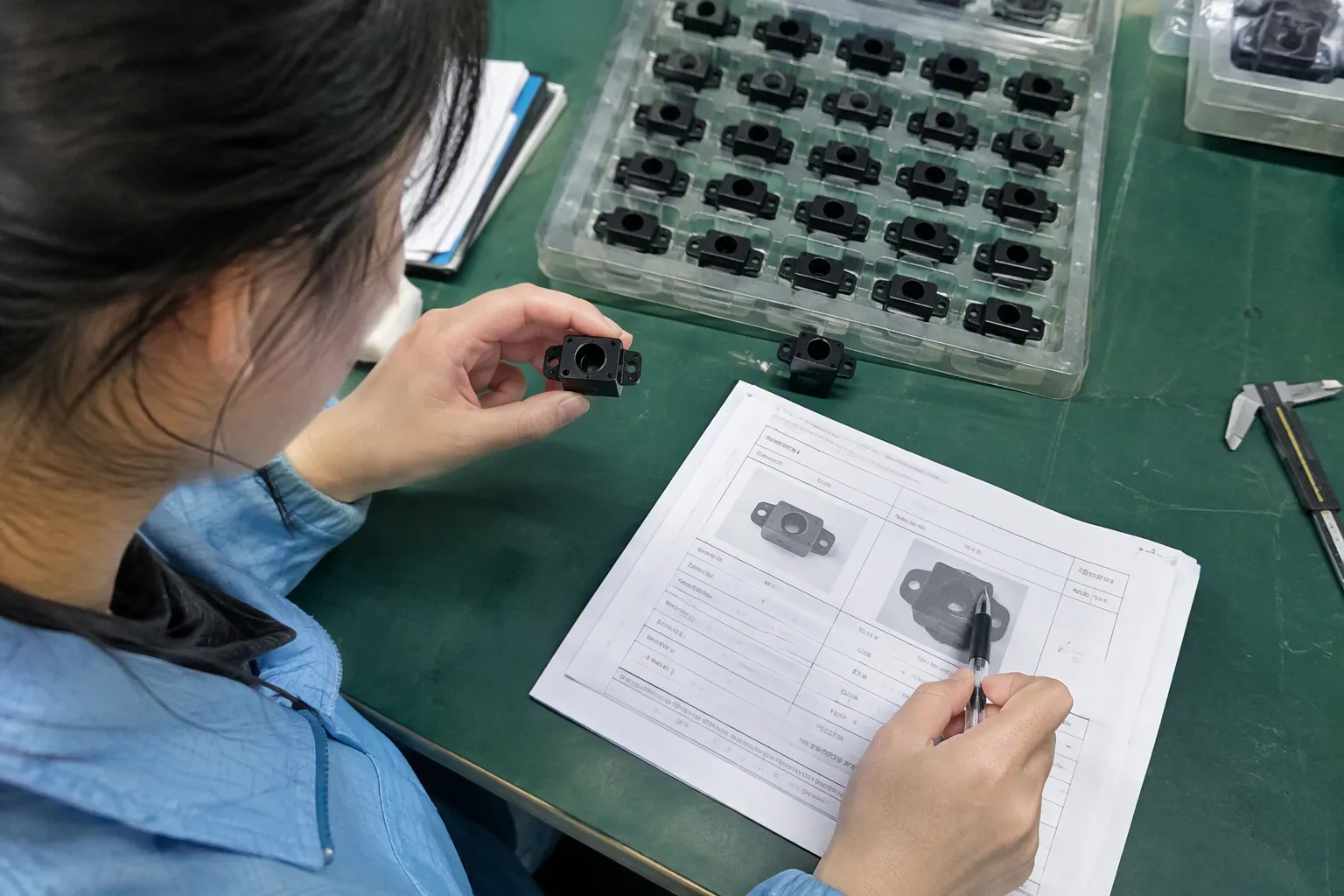
A visual review is useful, but it is only one part of sample checking. I normally compare the sample with the agreed information across several categories. The exact categories depend on the product, and I do not treat a generic checklist as a substitute for product-specific evaluation.
| Check area | What I may review | Why the finding matters |
|---|---|---|
| Dimensions | Length, width, height, weight, hole position, fit | A mismatch may affect assembly, storage, compatibility, or customer expectations |
| Materials | Stated material, visible construction, hardness, flexibility, finish | A different material can change performance, appearance, durability, and cost |
| Function | Basic operation, connection, movement, charging, closure, or fit | A functional failure may make the product unsuitable for approval |
| Workmanship | Seams, edges, molding, printing, assembly, scratches, loose parts | Defects can affect customer perception, usability, returns, or rework |
| Appearance | Color, gloss, shape, logo position, surface consistency | Differences may affect branding and retail acceptance |
| Labeling | Logo, warning text supplied by the buyer, SKU, barcode, language, placement | Incorrect information can create operational or commercial problems |
| Packaging | Box size, inserts, protective materials, printed artwork, quantity | Poor packaging can increase damage, storage, and fulfillment risks |
| Documentation | Supplier specification, drawing version, sample notes, declared details | Conflicting records can cause the factory to use the wrong reference |
I use ordinary tools when they are suitable, such as a ruler, scale, measuring tape, camera, and basic functional test setup. These tools support a procurement review. They do not replace laboratory testing, engineering validation, safety assessment, certification review, or legal compliance verification.[4]
For instance, I can compare a sample’s external dimensions with a drawing. I cannot conclude from appearance alone that a material meets a chemical, fire, electrical, or structural requirement. If the product has a regulated or safety-sensitive application, I recommend that the buyer obtain appropriate evidence from qualified laboratories, engineers, or compliance professionals.
I also separate observations from assumptions. “The printed logo is 4 mm lower than the approved artwork position” is an observation if I measured it against the agreed reference. “The supplier used the correct polymer grade” is not something I should claim without suitable documentation or testing. This distinction protects the buyer from overconfidence.
In my work, a recurring type of discrepancy involves a sample that is visually close to the reference item but differs in a detail that matters to production. One example is a component whose external shape looked correct, while its fit with the paired part was too tight. I documented the fit issue with photographs, measurements, and a short description of the expected movement. I then asked the supplier to confirm the likely cause and propose a correction rather than merely reporting that the sample was “not good.”
That approach changed the conversation. The supplier received a defined problem, an acceptance expectation, and a requested response. The buyer could then decide whether to revise the design, accept a tolerance, or request another sample. I present this kind of example as an operational lesson, not as a guarantee that the same process will identify every possible problem.
How should sample findings be documented?
A useful sample-checking report should help someone make a purchasing decision. It should not become a collection of attractive photographs with no connection to the product requirements.
I usually organize findings into four levels:
-
Confirmed match
The sample agrees with the available requirement or reference. -
Deviation requiring correction
The sample differs from a requirement, and the difference should be addressed before approval. -
Open point requiring buyer decision
The requirement is unclear, or the buyer may reasonably choose between alternatives. -
Point requiring specialist evidence
The issue concerns safety, certification, regulatory compliance, laboratory performance, or another area beyond a normal sourcing review.
Each finding should include enough context for the supplier and buyer to understand it. A practical record may contain:
- Requirement or reference version.
- Sample identification and date received.
- Check item.
- Observation.
- Measurement or photograph where relevant.
- Risk to fit, function, appearance, packaging, cost, or schedule.
- Requested correction.
- Responsible party.
- Target date for response.
- Status after revision.
I avoid vague comments such as “please improve quality.” Instead, I write comments such as “the inner edge has a visible burr that catches when the two parts are assembled; please remove the burr and confirm that the revised edge will not interfere with assembly.” The second comment gives the supplier something concrete to investigate.
The buyer should also decide which findings are critical to approval. For example:
- A missing function may block approval.
- A wrong logo color may block a branded launch.
- A minor carton scuff may be acceptable if the packaging is not customer-facing.
- A small variation may be acceptable if it falls within an agreed tolerance.
I do not make that commercial decision for the buyer unless the buyer has already provided the acceptance rule. My role is to make the difference visible and explain its likely purchasing impact.
How does a sourcing agent coordinate supplier revisions?
Sample checking creates value only when the information leads to action. I treat supplier communication as a feedback loop:
- I review the buyer’s requirement and the sample evidence.
- I identify the difference between the requirement and the sample.
- I send the supplier a prioritized correction list.
- I ask the supplier to confirm the proposed change and expected timing.
- I coordinate a revised sample or other evidence.
- I compare the revision with the original requirement and previous findings.
- I update the buyer’s decision record.
This process prevents a common communication failure. A buyer may send a long list of comments, while the supplier interprets only the most obvious item. I prefer to separate corrections into “must change,” “please confirm,” and “buyer decision required.” The supplier can then respond point by point.
I also ask the supplier to identify whether a correction affects:
- Tooling or mold design.
- Material purchasing.
- Production cost.
- Minimum order quantity.
- Lead time.
- Packaging dimensions.
- Existing inventory.
- Other product variants.
A seemingly small sample change can affect the quotation or schedule. For example, a different insert, print process, finish, or package structure may require a new setup. I want the buyer to learn about that consequence before placing a production order.
When a supplier sends a revised sample, I compare it against the original checklist instead of checking only the latest complaint. A revision can fix one problem and introduce another. The comparison should therefore include the full set of important requirements.
I also keep version control. The buyer, supplier, and sourcing agent should know which artwork, drawing, photograph, or specification is current. Old files can remain in email threads and confuse production. A simple file name with the product code, revision number, and date can reduce that risk.
What cannot sample checking prove?
Sample checking reduces uncertainty, but it does not eliminate it. A sample is usually one item or a small number of items made under conditions that may differ from full production.[5] The factory may produce the sample carefully, use temporary materials, or make manual adjustments that are not repeated consistently.[6]
I explain these limits clearly because approval language can create risk. A buyer should not assume that an approved sample proves:
- Every production unit will have identical dimensions.
- The supplier will use the same material batch.
- All workers will follow the same process.
- The supplier has stable process control.
- The factory can maintain the requested output volume.
- A product meets a legal, safety, or certification requirement.
- Packaging will remain undamaged during international transport.
- The supplier will not change a component without notice.
The next controls depend on the product and the order. They may include supplier capability assessment, a written purchase specification, a golden sample retained by the buyer or factory, production follow-up, first-piece confirmation, in-process checks, and pre-shipment inspection.
| Buyer decision | Useful evidence before proceeding |
|---|---|
| Approve design for market testing | Sample comparison, open-issue list, basic function review |
| Approve mass production | Finalized specification, confirmed sample status, supplier commitments, production controls |
| Approve private-label packaging | Artwork comparison, label review, packaging dimensions, carton information |
| Purchase a technical or regulated product | Qualified technical evaluation, testing, and applicable compliance documents |
| Place a repeat order | Previous production records, defect history, supplier change-control confirmation |
A sourcing agent can coordinate these steps, but the buyer remains responsible for application-specific decisions. If a product presents electrical, medical, children’s, food-contact, structural, chemical, or other specialized risks, I recommend professional evaluation and appropriate testing. Supplier documents should be treated as documents to verify, not automatic proof of compliance.
When is local support especially useful?
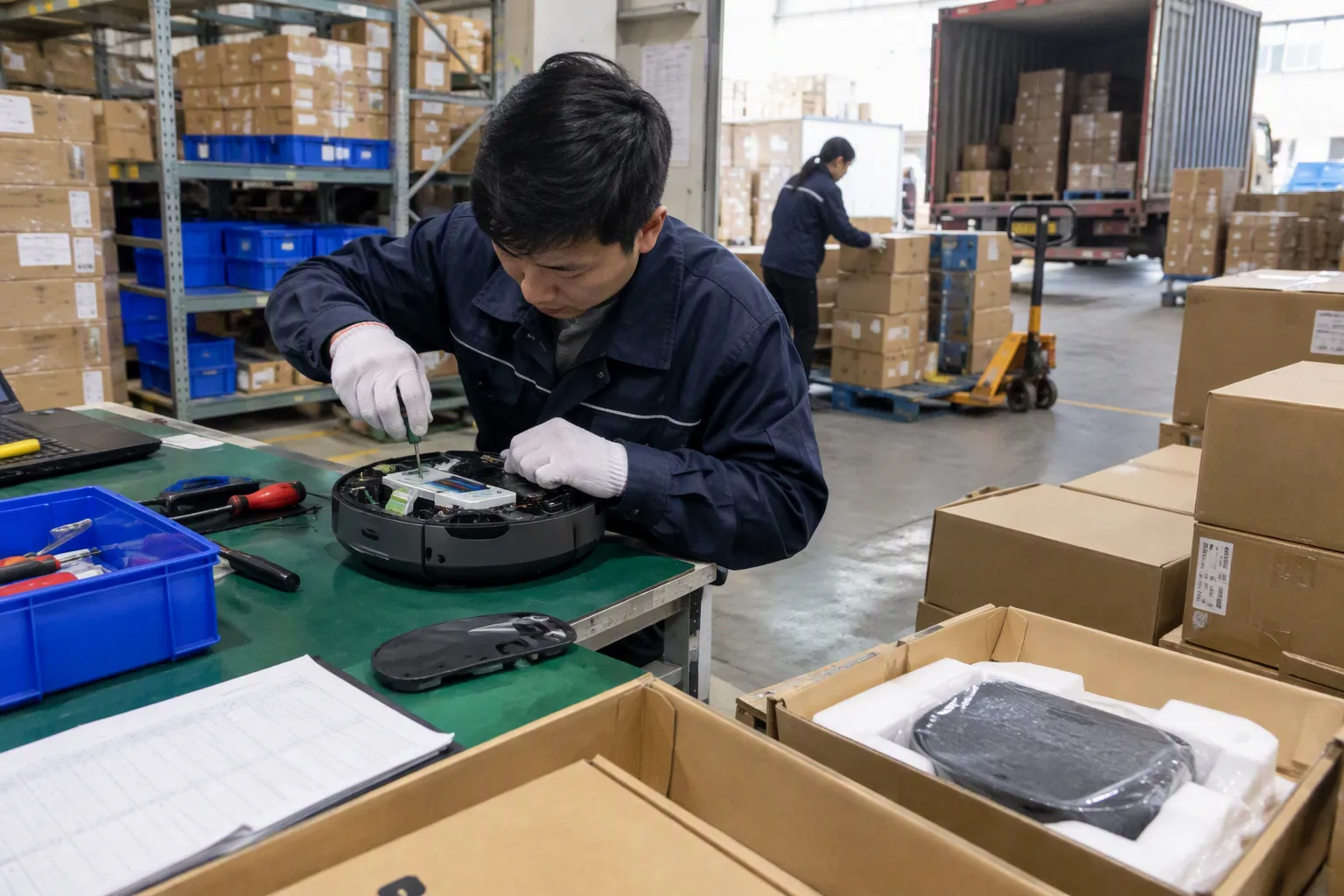
Remote buyers often have the product knowledge but lack a person near the supplier who can handle a physical sample, ask follow-up questions in the local language, and maintain pressure during revision. This gap becomes more serious when several suppliers, many SKUs, or custom packaging are involved.
Local sourcing support can help when:
- The buyer has no China-based purchasing team.
- The product requires several rounds of sample development.
- The supplier’s English communication is incomplete or ambiguous.
- The buyer is comparing samples from several factories.
- The order combines products from multiple manufacturing clusters.
- Packaging and product changes must be coordinated together.
- The buyer needs sample storage, consolidation, or international shipment.
- The buyer wants sample findings connected to later production follow-up.
I have found that the most useful contribution is often not the physical inspection itself. It is the translation of a commercial goal into a sequence of supplier actions. A buyer may say, “I want this to feel more premium.” I can help break that into finish, material, edge treatment, packaging, print quality, and acceptable alternatives. The buyer then chooses which changes justify extra cost or lead time.
This support is particularly relevant for e-commerce sellers and DTC brands. Their product reviews may be strongly affected by fit, appearance, packaging, and ease of use. A wholesaler may focus more on carton quantity, SKU consistency, and repeat-order stability. A distributor may need clearer documentation and change control. The sample-checking plan should reflect that business model.
How should buyers decide whether to approve a sample?
I recommend that buyers avoid a simple “yes” or “no” unless the requirements are already clear. A more useful decision is based on the status of each important item.
A buyer may choose one of these outcomes:
- Approved for production: The sample meets the defined requirements, and remaining risks have appropriate controls.
- Approved with documented minor deviations: The buyer accepts specific differences and records them in writing.
- Revision required: The supplier must correct listed issues before production.
- Approved for development only: The sample helps confirm direction but is not a production reference.
- Rejected: The sample does not meet essential requirements, and another supplier or design may be needed.
I encourage buyers to connect approval with a written specification. The sample should not be the only reference because physical samples can deteriorate, become unavailable, or fail to show hidden construction details. A specification, approved artwork, photos, measurements, and sample identification provide a stronger purchasing record.
Before approval, I also ask:
- Are the critical functions confirmed?
- Are the important dimensions measured?
- Are the materials and construction understood well enough for this decision?
- Are branding and packaging details correct?
- Has the supplier responded to every open issue?
- Will production use the same process and components?
- What inspection or follow-up will occur during the order?
- Which points still require specialist testing or professional review?
This approach keeps sample approval proportionate. A low-risk promotional item may need a straightforward appearance and packaging review. A more complex product may require engineering validation and formal testing before any production commitment.
How does sample checking connect with later quality control?
Sample checking is an early control, not the entire quality program. I use its findings to improve later inspection instructions. If the sample review identifies a loose hinge, incorrect logo placement, or a packaging weakness, those points should appear in the production checklist.
The production plan may include:
- Pre-production confirmation: Check that the factory has the latest specification and approved reference.
- First-piece review: Examine early production before the factory completes the full quantity.
- During-production follow-up: Check whether materials, workmanship, and packaging remain consistent.
- Pre-shipment inspection: Review finished goods against agreed requirements before shipment.
- Random or 1-by-1 checking: Use the method appropriate to the product, order size, and buyer’s risk tolerance.
- Shipment and consolidation control: Confirm SKU quantities, cartons, labels, and packing lists.
The exact inspection method should be agreed before production. A sample review cannot tell me how a supplier will behave across a large order.[7] Production follow-up helps reveal execution problems, while pre-shipment inspection provides a later opportunity to identify visible deviations before the goods leave the factory.[8]
I also recommend retaining an approval record. The buyer can keep the approved sample, photographs, measurement notes, artwork, and supplier confirmation. If the buyer later places a repeat order, the record provides a reference for checking whether the supplier has changed a material, component, finish, or package.
This is where a China sourcing and procurement partner can support the complete workflow. At KingSourcing, I can connect sample checking with supplier verification, quotation comparison, OEM or ODM coordination, factory communication, inspection, packaging, consolidation, and shipping coordination. The purpose is not to promise risk-free purchasing. The purpose is to make each decision more visible and manageable.
Frequently Asked Questions
Can a sourcing agent check a supplier sample before I visit China?
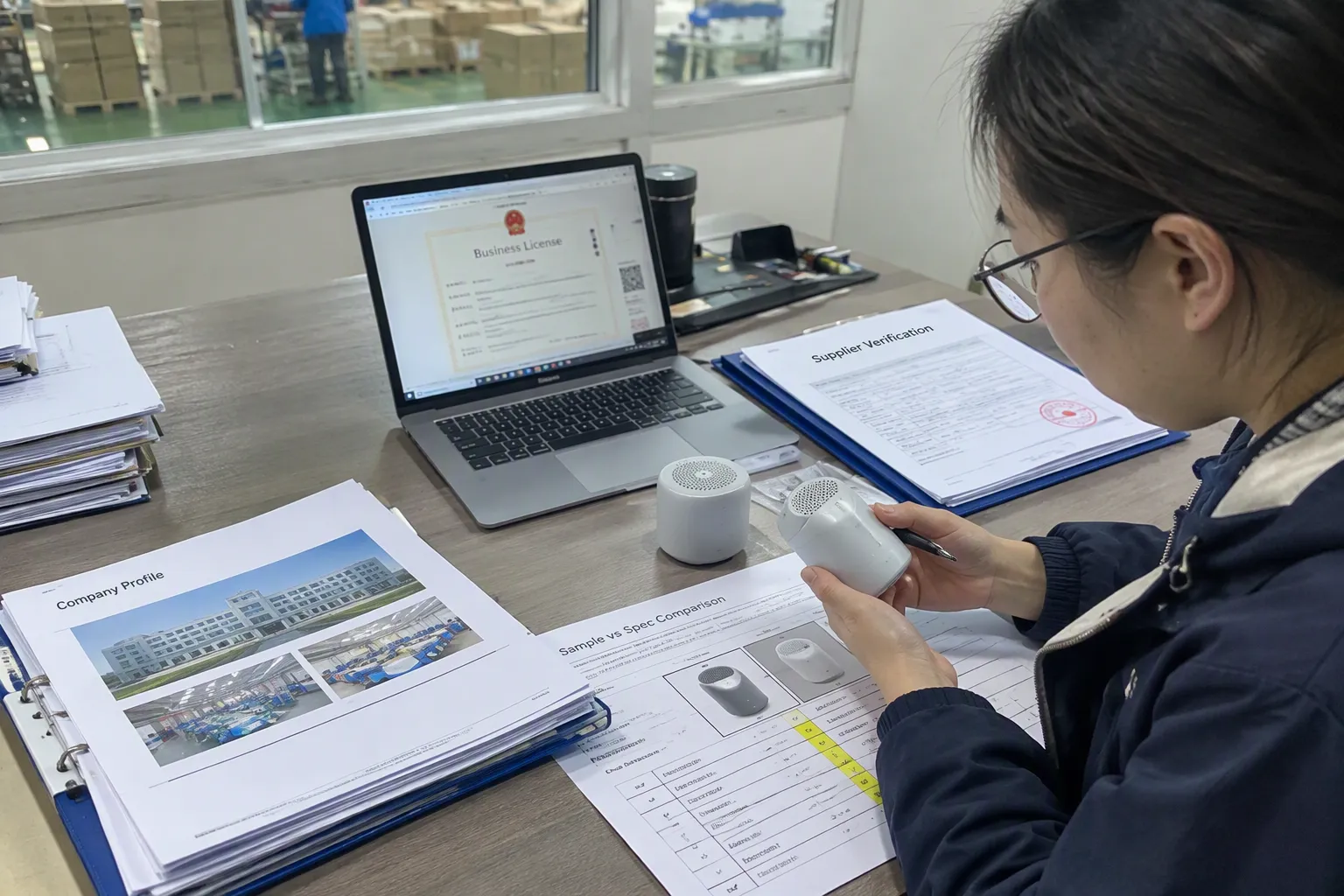
Yes. A sourcing agent can receive or collect the sample, compare it with your documents, record measurements and observations, and coordinate questions with the supplier. I still need clear requirements from you, and remote sample checking does not replace specialist testing or an on-site factory evaluation when those controls are necessary.
Does an approved sample guarantee mass-production quality?
No. An approved sample confirms what was observed in that sample against the agreed requirements. Mass production can introduce variation through materials, workers, equipment, process control, or supplier changes. I recommend connecting sample approval with production follow-up and pre-shipment inspection.
What information should I send before sample checking?
I recommend sending product drawings or dimensions, reference photos, material requirements, functional expectations, logo and packaging artwork, target quantity, and known unacceptable defects. You should also explain whether the sample is for development, market testing, visual approval, or production reference.
Can a sourcing agent verify product certifications during sample checking?
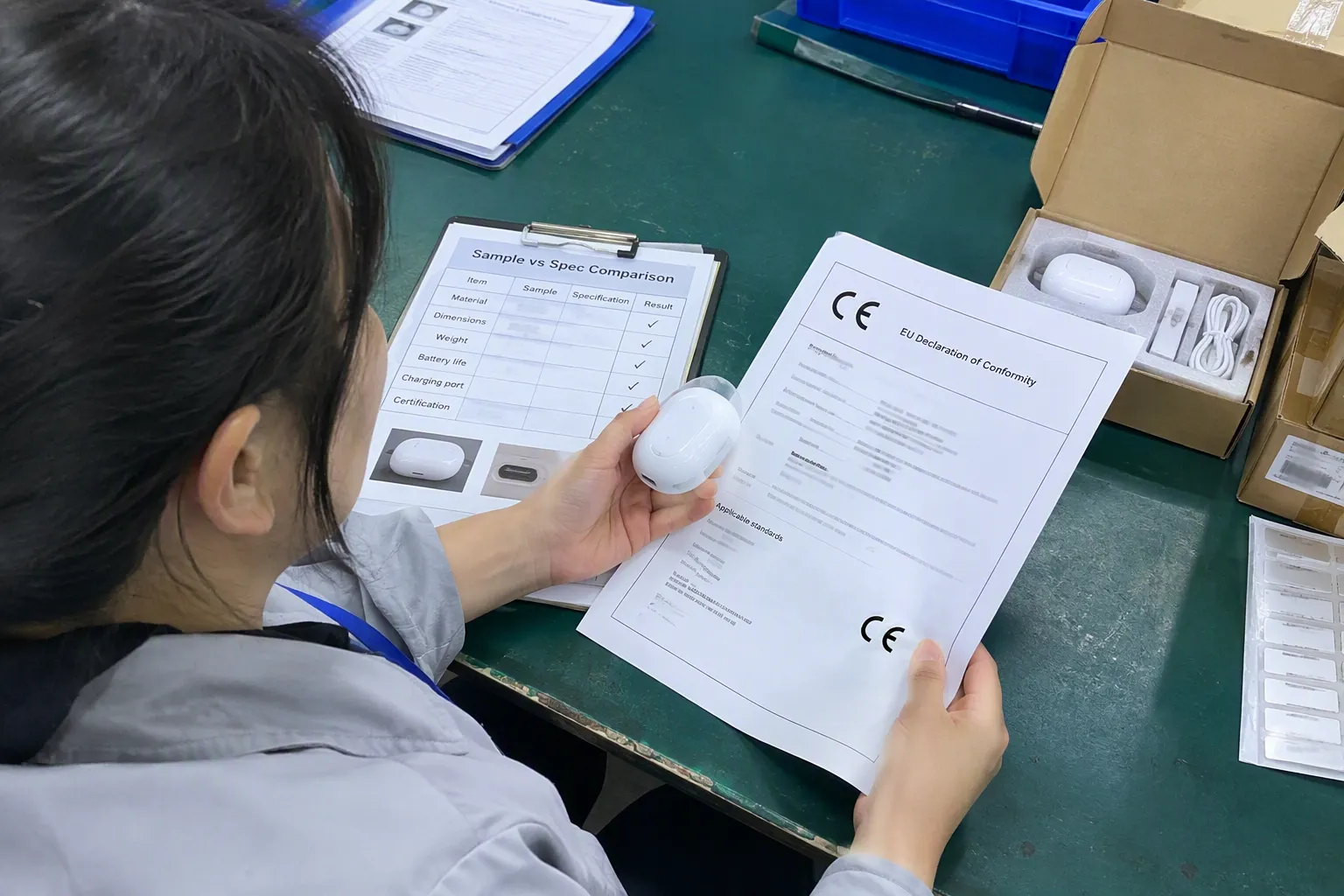
A sourcing agent can collect and organize supplier documents, but document collection is not the same as technical or legal verification. Buyers should confirm the applicable requirements with qualified professionals and verify that reports, certificates, product versions, manufacturers, and testing scope match the actual goods.
How many sample revisions should I expect?
The number depends on product complexity, tooling, customization, supplier capability, and how clearly the original requirements were defined. A simple branded item may need one revision, while an OEM product can require several development rounds. I recommend agreeing on revision expectations, costs, and lead times before development begins.
Conclusion
A sourcing agent helps with sample checking by creating a clear connection between buyer requirements, physical evidence, supplier corrections, and the final purchasing decision. I do not treat sample approval as a guarantee or as a substitute for testing and production inspection. I use it as an early risk-control step that can expose problems with fit, function, dimensions, workmanship, branding, and packaging before a larger commitment. If you need local support with China supplier communication, sample revisions, quality control, and production follow-up, contact KingSourcing to discuss your product requirements and procurement plan.
Sources
- Statistical Process Monitoring for Autocorrelated Data - NIST", Quality-control literature describes production output as subject to process variation and therefore distinguishes evidence from a sample or inspection from proof that every unit conforms to the reference
- [PDF] NIST Special Publication 500-234", Quality-management guidance treats verification as the documented evaluation of an output against specified requirements, making defined acceptance criteria a prerequisite for a meaningful approval decision
- [PDF] Extending the Notion of Quality from Physical Metrology to ...", Requirements-engineering guidance emphasizes that ambiguous quality terms are difficult to verify consistently and should be converted into observable, measurable, or otherwise testable criteria
- Conformity assessment - NIST", Conformity-assessment frameworks distinguish inspection and measurement from laboratory testing, certification, and formal evaluation against regulatory or technical requirements; a basic sample review therefore cannot by itself establish specialized compliance
- Prototype vs Pre-Production Sample: Complete Guide", Manufacturing research distinguishes prototype and pre-production work from scaled production because tooling, process parameters, materials, and operator practices may change when output is industrialized
- [PDF] An Assessment of the State-ofthe-Art in Rapid Prototyping Systems ...", Studies of manufacturing scale-up report that prototype work can rely on manual operations, substituted inputs, or process conditions that require further control before they become repeatable production methods
- 6.1.6. What is Process Capability?", Supplier-quality guidance treats production capability as an organizational and process characteristic assessed through controls, capacity, records, and performance evidence, not through a single inspected sample alone
- QUALITY CONTROL & PRE-SHIPMENT INSPECTION", Quality-control frameworks place in-process and final inspection before product release to detect defined nonconformities and provide opportunities for corrective action before shipment