Quick Answer
Alibaba quotes can look simple at first: several suppliers reply, each gives a unit price, and one appears cheaper. The problem is that Alibaba quotes often describe different versions of the product. If I compare prices before I compare deliverables, I can choose an offer that looks affordable but cannot support a sellable final product.
The professional way to compare Alibaba quotes is to first confirm that every supplier is pricing the same defined product, with the same materials, functions, accessories, customization, packaging, quality requirements, and shipping terms[1]. Only then can I compare unit prices fairly. A lower quote is not automatically better or worse; it may simply include less than another supplier’s offer.
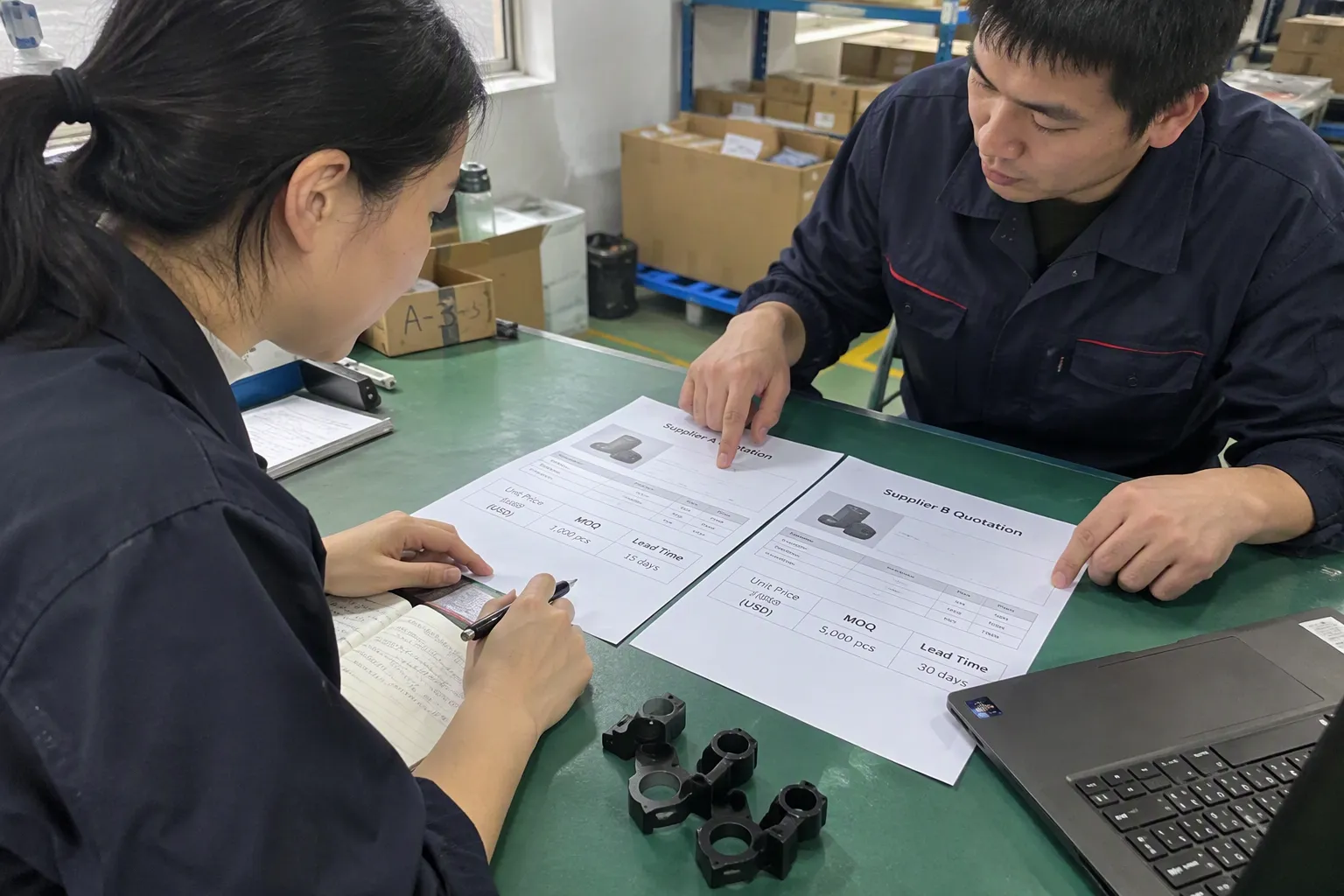
When our team helps overseas buyers organize supplier responses, we often find that the real issue is not the price itself. The issue is that suppliers answer the same inquiry in different levels of detail. I treat each missing detail as a question to resolve before I make a purchasing decision.
Professional Alibaba quote comparison is not about finding the lowest unit price
A low number can create pressure to decide quickly, especially for a first order or a new e-commerce product. However, I can create a much larger problem if I choose a price before checking what it covers. The cost of receiving an incorrectly configured product can be far greater than a small difference in the original unit price.[2]
Professional Alibaba quote comparison means converting every supplier reply into one shared product-and-conditions checklist. I compare prices only after I can see what each supplier commits to supply at that price. This process helps me identify exclusions, assumptions, and specification differences before I place an order.
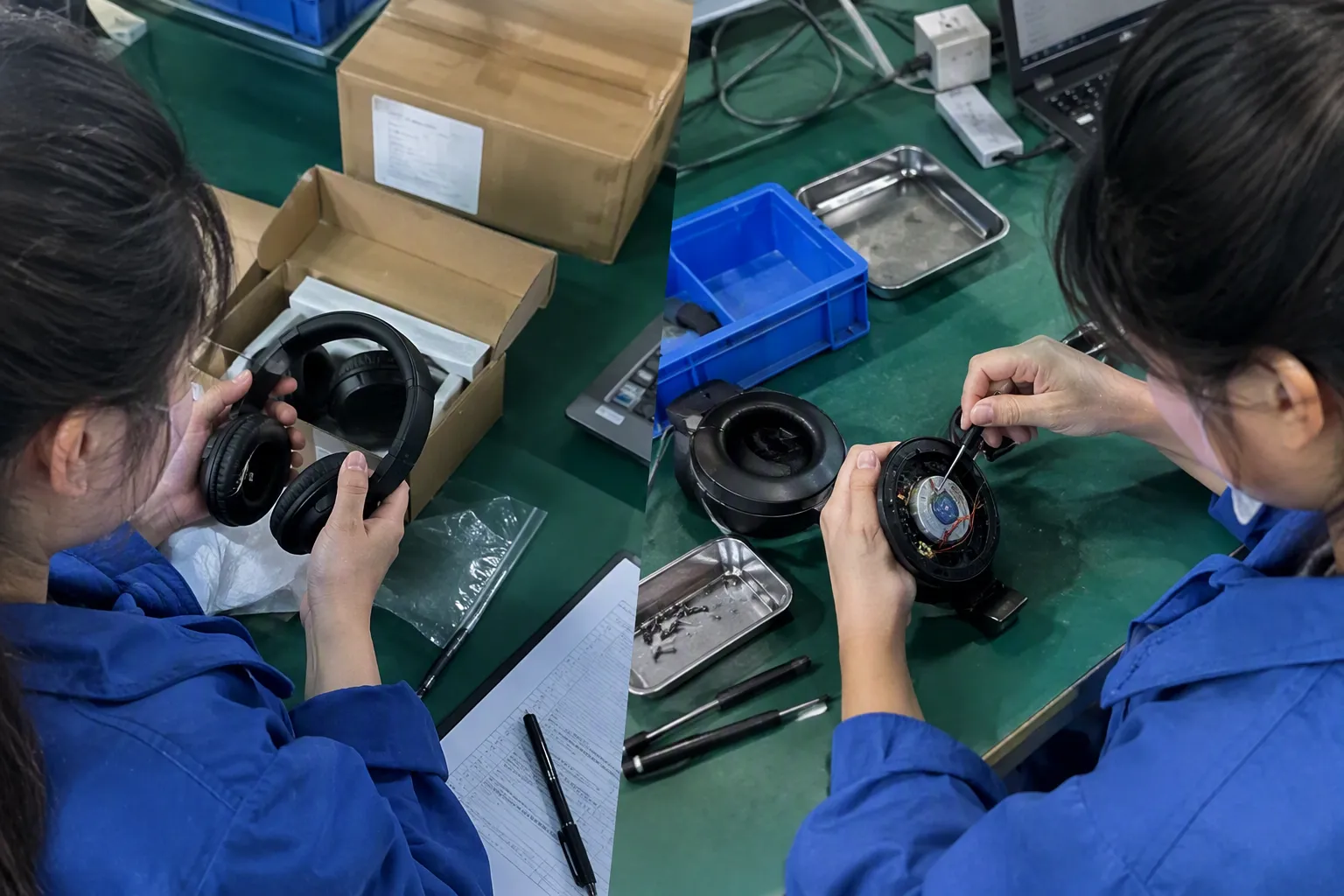
Why a displayed price is rarely a complete purchasing answer
I do not assume that a supplier’s first price is misleading. Many suppliers respond quickly because they need to understand whether a buyer is serious, what quantity is needed, and which version of a product is required. A preliminary quote can be useful, but it is not yet a complete basis for comparison.
A quote may say “$X per piece” while leaving several important questions unanswered:
- Which material grade is included?
- What dimensions, capacity, color, or model does the price cover?
- Are batteries, cables, adapters, manuals, or replacement parts included?
- Does the quote include a logo, custom color, artwork, or private-label packaging?
- What packaging method is assumed?
- What is the MOQ for the quoted price?
- Is the price EXW, FOB, DDP[3], or based on another delivery term?
- Does the supplier include mold fees, printing fees, setup fees, or sample charges?
- What quality standard or inspection expectation has been discussed?
- How long is the quotation valid?
For a straightforward, uncustomized item, some of these details may be simple. For private-label products, bundles, electronics accessories, or multi-SKU orders, they can change the commercial result significantly.
When helping overseas clients compare supplier responses, we often see quotes that look comparable only because they use the same product name. The product name may be broad, while the actual deliverable differs in material, size, accessory configuration, packaging, or customization method.
I do not ask, “Which Alibaba quote is cheapest?”
I ask, “What exactly will each supplier deliver for this quoted price?”
That change in question is the foundation of better procurement decisions.
Start with one product definition before requesting Alibaba quotes
I get better quotes when I give suppliers a clear product brief. I do not need a perfect engineering document for every purchase, but I need enough detail to reduce assumptions. If I leave key requirements open, each supplier may quote the version that is easiest for them to supply.
For example, an inquiry for a “custom phone stand” may lead to very different offers depending on whether I mean:
- ABS plastic, aluminum alloy, or a mixed-material design
- A fixed stand or an adjustable stand
- A standard color or a Pantone-matched color
- A printed logo, engraved logo, or no logo
- Individual retail packaging or bulk carton packing
- A product with a charging cable, adhesive pad, or no accessories
- A standard factory item or a new OEM design
The suppliers may all be acting reasonably. They may simply be making different assumptions from an incomplete inquiry. This is why I avoid treating a broad request and a finished specification as the same thing.
Build a quote request checklist
Before I request Alibaba quotes, I create a simple checklist that applies to every supplier. I can place it in an RFQ, a spreadsheet, or a product brief attached to my inquiry.
| Comparison area | What I define or ask | Why it matters |
|---|---|---|
| Product identity | Model, photos, drawings, dimensions, intended use | Prevents suppliers from quoting different versions |
| Materials | Material type, grade where relevant, finish, color | Material substitutions can affect cost and usability[5] |
| Functions | Required features, compatibility, performance expectations | Clarifies what the product must do |
| Included items | Accessories, components, manuals, inserts | Avoids missing items after purchase |
| Customization | Logo method, artwork, color, packaging, labeling | Custom work often changes price and MOQ[4] |
| Packaging | Unit packaging, carton requirements, barcodes, warning labels | Packaging affects cost, damage risk, and fulfillment[6] |
| Quantity | Trial quantity, target quantity, repeat-order expectation | Unit price often changes by quantity tier |
| Price term | EXW, FOB, or another agreed term | Prevents freight and local charges from being mixed up |
| Timing | Sample time, production lead time, quote validity | Helps plan a realistic order schedule |
| Quality process | Required inspection points and acceptance criteria | Gives both sides a clearer standard to discuss |
I use the same checklist for every supplier. I do not let one supplier provide detailed information while another provides only a low unit price. If the response is incomplete, I mark it as incomplete rather than treating it as a cheaper equivalent offer.
Treat missing quote details as open questions, not savings
A vague quote line is not necessarily a red flag. It is an open item. I need to ask what it means before I compare it against a more detailed offer.
For example, suppose one supplier provides a price with “standard packaging,” while another confirms an individual printed box, barcode label, protective insert, and export carton marks. I cannot say the first supplier is cheaper until I know what “standard packaging” includes.
The same principle applies to accessories and product features. A lower quote may exclude a cable, a manual, a logo fee, an inner tray, a specific finish, or a required component. It may also assume a different MOQ or delivery term.
I recommend asking short, direct follow-up questions instead of sending a broad message such as “Please give your best price.” A focused question usually produces a more useful answer.
Examples include:
- Please confirm the exact material and finish included in this unit price.
- Please confirm whether the quoted price includes the accessory list below.
- Please confirm the unit packaging, carton quantity, and carton dimensions.
- Please confirm whether our logo and artwork setup are included or charged separately.
- Please confirm the quoted quantity and MOQ for this configuration.
- Please confirm whether the price is EXW or FOB, and name the port if FOB.
- Please confirm the sample charge, sample lead time, and bulk production lead time.
- Please confirm any costs not included in the quoted price.
I keep these answers in writing. A chat record, formal quotation, product specification sheet, or proforma invoice can all help document the commercial discussion. For a larger order, I recommend that buyers make sure the final agreed product definition and commercial terms are reflected in the order documentation, not only in scattered message threads.
Normalize every Alibaba quote in one comparison sheet
I do not compare supplier replies in separate chat windows for long. That method makes it easy to remember the headline price and forget the conditions. Instead, I transfer the information into one comparison sheet.
At KingSourcing, our practical normalization process is based on turning supplier replies into the same product-and-conditions checklist. We do not assume two quotations are comparable because both suppliers use the same product photo or product title. We look for the information needed to understand the deliverable.
A useful Alibaba quote comparison sheet might include the following columns:
| Item | Supplier A | Supplier B | Supplier C | Follow-up needed |
|---|---|---|---|---|
| Product model or reference image | ||||
| Dimensions and weight | ||||
| Material and finish | ||||
| Required functions | ||||
| Included accessories | ||||
| Logo method and location | ||||
| Custom packaging included | ||||
| Unit price | ||||
| MOQ | ||||
| Tooling, mold, or setup charges | ||||
| Sample cost | ||||
| Price term | ||||
| Production lead time | ||||
| Validity period | ||||
| Notes and exclusions |
I use “not confirmed” rather than guessing. This is important. A blank cell does not mean “included.” It means I still need an answer.
Compare the total landed purchasing picture, not only the unit price
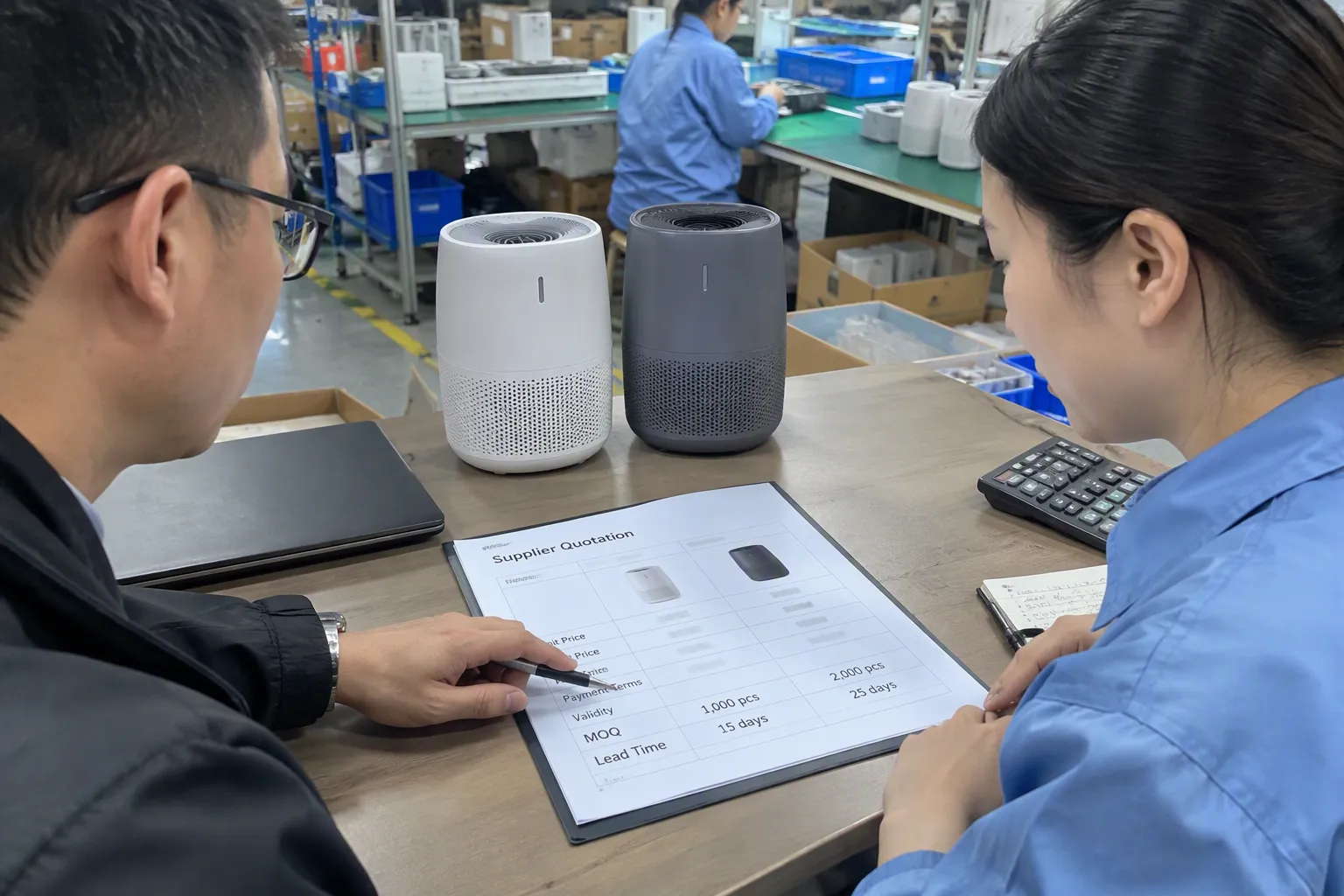
Once the product definition is aligned, I can compare commercial costs more realistically. Unit price remains important, but it is only one element of the buying decision.
I separate costs into clear categories:
- Product cost: the confirmed price for the defined product
- Customization cost: logo, printing, color matching, packaging design, labeling, or setup
- Sample cost: sample unit charges and sample shipping
- Tooling or development cost: when a new mold, fixture, or product change is needed
- Inspection cost: third-party inspection or 1-by-1 checking where required
- Local China costs: pickup, warehousing, consolidation, or export handling where applicable
- International freight: based on the chosen shipping method and terms
- Destination costs: duties, taxes, customs clearance, and local delivery[8], depending on the shipping arrangement
I do not expect every supplier to quote every category. A factory may quote only an EXW price, while a trading company or logistics provider may quote other services. The key is to keep each cost category visible rather than blending them into one number.
For example, an FOB quote and an EXW quote are not directly comparable[7] until I account for the cost of moving goods from the factory to the export point and completing the related handling. Similarly, a price that includes a plain polybag is not directly comparable with a price that includes retail-ready packaging.
This does not mean I must always select the quote with the most inclusions. I may decide that a simpler package is appropriate for my sales channel. The point is that I should make that decision intentionally.
Check whether the configuration is actually sellable
The main risk in comparing Alibaba quotes is not always paying a little too much. I can recover from a small price difference more easily than I can recover from a product that does not match my intended market, listing, packaging plan, or customer expectations.
Before I choose among normalized Alibaba quotes, I ask whether the quoted configuration is usable for my business.
For an e-commerce seller, I may need to confirm:
- Does the product match the listing images and description I plan to use?
- Are all expected accessories included?
- Is the packaging suitable for parcel delivery and warehouse handling?
- Is there space for required labels, barcodes, or inserts?
- Are the carton dimensions available for freight planning?
- Does the MOQ match my test-order strategy?
- Can the supplier repeat the same configuration for future orders?
For a wholesaler or distributor, I may also need to consider:
- Whether the product can be packed in the required case quantity
- Whether color, size, or model assortments are defined
- Whether replacement parts or spare accessories are available
- Whether the packaging fits the retailer’s requirements
- Whether product documentation is available where needed
I do not assume that a supplier understands these requirements without being told. Buyers and suppliers operate in different markets, and a factory’s standard configuration may not suit an overseas retail channel.
If a product has technical, safety, regulatory, or market-specific compliance requirements, I recommend seeking qualified professional advice for the intended market. I also recommend verifying any claimed test reports, certificates, or compliance documents directly. A quotation alone does not establish that a product meets a particular legal, technical, or marketplace requirement.
Use samples to confirm the quote, not replace the specification
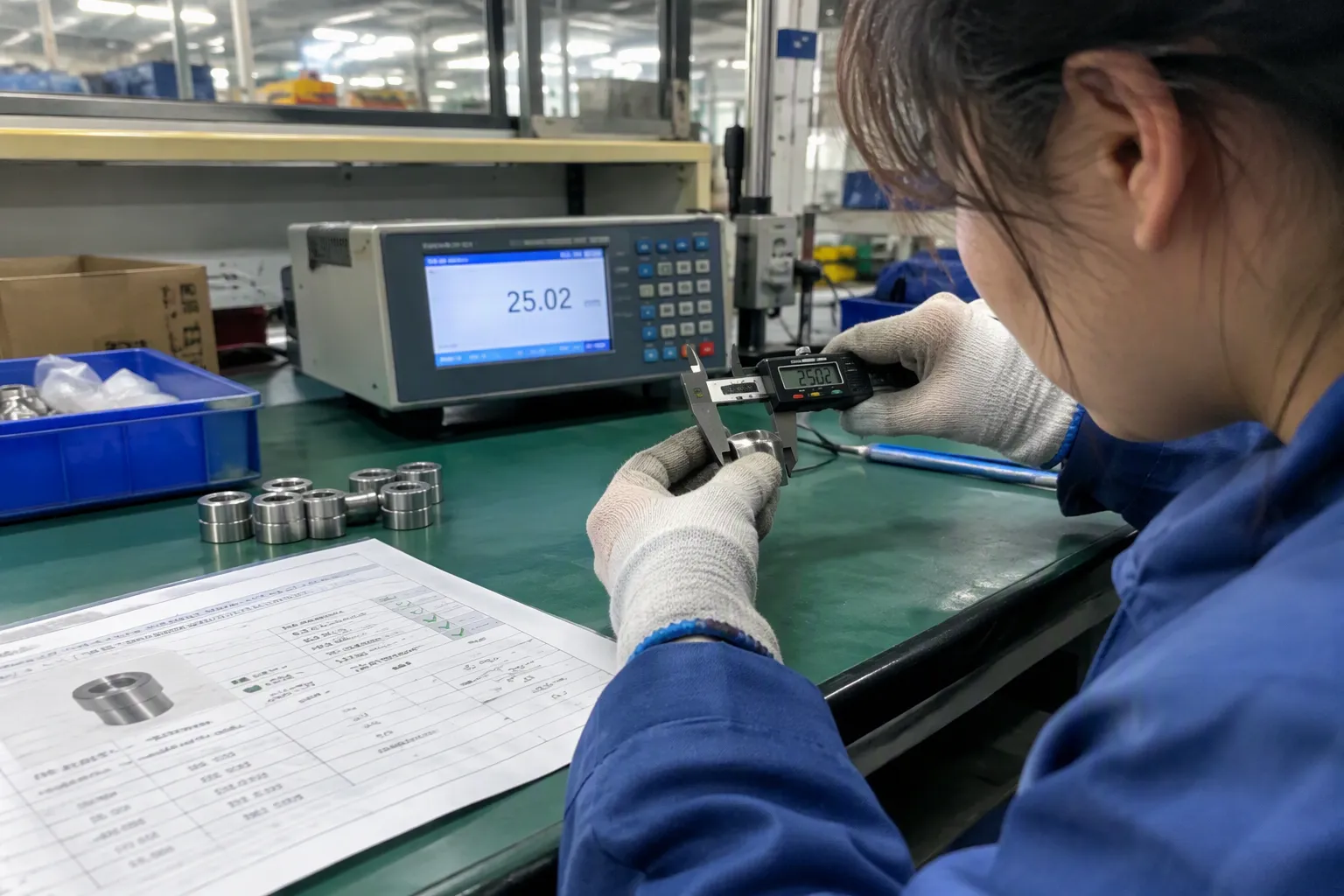
Samples are valuable, but I do not treat a sample as a substitute for a written product definition. A sample can show physical appearance, fit, packaging, color, and general workmanship. However, I still need to confirm what the supplier will reproduce in bulk production.
I try to connect the sample process to the quotation by confirming:
- Which supplier reference or model the sample represents
- Which material, color, dimensions, and accessories are included
- Whether the sample uses the same customization method planned for bulk production
- Whether packaging is a sample version or the final production packaging
- Which changes remain before the bulk order
- Whether the final quote has been updated after sample feedback
I also avoid assuming that a good sample guarantees every future unit will be identical. Production quality control still requires planning. For application-specific decisions, buyers should consider appropriate inspection arrangements, clear acceptance criteria, and qualified evaluation of the product’s intended use.
When we support production follow-up or quality inspection, we focus on the buyer’s agreed checklist. That checklist is stronger when the original Alibaba quote has been normalized properly. It gives the buyer a clearer basis for checking materials, included items, branding, packaging, and visible workmanship against the agreed order requirements.
Watch for changes between quotation, sample, and final order
An Alibaba quote can evolve as the project becomes more specific. That is normal. A supplier may revise a price after receiving final artwork, adjusting packaging, confirming a color, or learning that a requested accessory requires a different component.
I do not treat every price revision as a problem. I ask what changed and whether the updated quotation reflects the final deliverable. A professional purchasing process records the reason for changes.
I pay close attention to these common change points:
| Project stage | What can change | What I confirm |
|---|---|---|
| Initial inquiry | Assumed material, model, quantity, packaging | Whether the first quote is preliminary |
| Sample stage | Color, logo method, dimensions, accessories | Whether sample changes affect bulk price |
| Artwork approval | Printing area, number of colors, packaging artwork | Setup charges and final packaging details |
| Pre-production | Component availability, carton configuration, lead time | Written update before production starts |
| Final order | Quantity, shipping term, payment schedule | Final unit price and all inclusions |
I recommend reviewing the proforma invoice carefully before payment. I look for the same key points I used in my comparison sheet: product description, configuration, unit price, quantity, customization, packaging, delivery term, and agreed timing. If something is unclear, I resolve it before production begins.
A practical decision framework after quote normalization
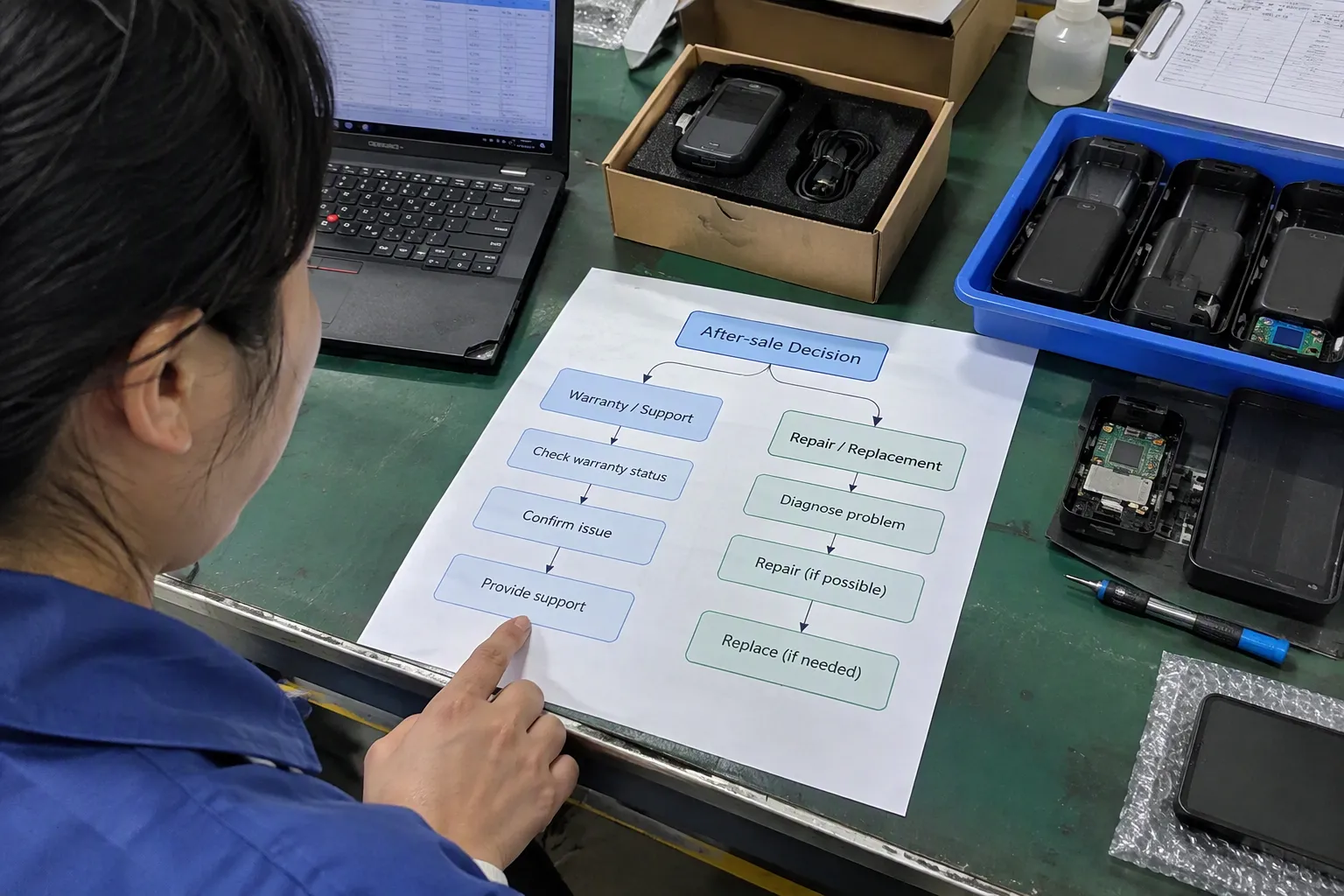
After I have aligned the product definition, I can make a more disciplined decision. I do not need a complicated scoring system, but I do need a consistent way to think.
I usually separate the decision into three questions.
1. Is the product definition complete?
I first ask whether the supplier has confirmed the necessary details. If the answer is no, I do not treat the quote as final. I continue asking questions.
A complete quote does not need to be long, but it should make the deliverable understandable. The supplier should be able to confirm the key product, customization, packaging, quantity, and trade-term details relevant to the order.
2. Is the commercial offer comparable?
I then check whether I am comparing equivalent terms. I compare the same quantity, same product configuration, same packaging level, and same delivery basis.
If one offer includes an extra cost separately, I add it to the comparison. If one offer has an uncertain item, I flag it instead of ignoring it.
3. Can the supplier support the intended order process?
Finally, I consider whether the supplier’s communication and quotation process supports the order I want to place. This is not about judging a supplier based on one fast reply, a platform badge, or a low MOQ. It is about whether the supplier can clearly address the defined requirements and provide the information needed for a controlled purchase.
A supplier that asks sensible clarification questions may be helping create a more accurate quote. I do not automatically prefer the shortest or fastest answer. I prefer a response that helps me understand what I will receive.
Frequently Asked Questions
How many Alibaba quotes should I compare?
I recommend comparing enough Alibaba quotes to understand the market range and the differences in available configurations. The exact number depends on the product and project complexity. I focus less on collecting many prices and more on obtaining a few complete, comparable responses.
What should I do if one Alibaba supplier gives a much lower price?
I do not assume the lower-priced supplier is unreliable. I ask the supplier to confirm the same specifications, materials, included accessories, customization, packaging, quantity, and trade term as the other quotes. The price becomes meaningful only after those points are aligned.
Are Alibaba RFQ replies enough for making a purchase decision?
Alibaba RFQ replies can be a useful starting point, but they are often preliminary. I use them to identify potential suppliers and ask follow-up questions. Before placing an order, I want a clear written product definition and confirmed commercial terms.
Should I compare EXW and FOB Alibaba quotes directly?
No. EXW and FOB quotes cover different responsibilities and cost elements. I first identify the applicable trade term, then add the relevant local handling, freight, and shipping costs as needed. I compare the total cost on the same basis.
Can a sample confirm that an Alibaba quote is accurate?
A sample can help me evaluate the physical product and visible details, but it does not replace a written specification. I confirm that the sample, final quotation, and bulk order describe the same materials, accessories, customization, packaging, and production requirements.
Conclusion
I compare Alibaba quotes professionally by making the product definition equivalent before I compare the price. I do not celebrate vague low offers or reject them automatically. Instead, I clarify what is included, record the answers in one comparison sheet, and evaluate whether each quoted configuration is genuinely sellable for my market. If you need support organizing supplier quotations, verifying details, managing samples, or checking production in China, I invite you to contact KingSourcing for practical procurement support.
Sources
- [PDF] EVALUATING BIDS AND PROPOSALS - Public Documents", Public-procurement guidance commonly requires offers to be evaluated against the same stated specifications and contractual conditions, rather than by headline price alone
- [PDF] End-to-End Quality Information Framework (QIF) Technology Survey", Quality-management literature identifies downstream costs of nonconformance—including rework, replacement, returns, and customer-related losses—which may exceed a small initial purchase-price difference
- Know Your Incoterms", EXW, FOB, and DDP are Incoterms rules with different allocations of delivery obligations, costs, and risk between seller and buyer
- Integrating lean and other strategies for mass customization...", Operations-management research explains that customization can require setup, tooling, changeover, or design work, thereby affecting both order cost and economically viable batch size
- [PDF] Platform-Based Product Design and Development: A Knowledge ...", Materials-selection principles recognize that material choice affects manufacturing cost as well as properties such as strength, durability, weight, and functional performance
- Sustainable Packaging | US EPA", Packaging and distribution literature recognizes that package design affects material and handling costs, protection against transit hazards, and compatibility with fulfillment operations
- Know Your Incoterms - International Trade Administration", Because EXW and FOB allocate delivery and export-related responsibilities differently, their quoted prices do not represent the same cost basis without adjustment for the applicable additional costs
- Import Tariffs & Fees Overview and Resources", Official import guidance notes that cross-border shipments can be subject to customs duties, taxes, clearance procedures, and destination-side handling or delivery charges