Quick Answer
Product labels and manuals often look like small final-stage details, but they can create expensive confusion when the wording, diagrams, product sample, and print files do not match. A translation may read well and still describe the wrong function, accessory, model, or safety instruction.[1] The solution is to treat translation as a controlled production approval process, not just a text task. **To translate product labels and manuals before production, buyers should first confirm the source content against the physical sample, then review the translated wording in its final artwork and print-ready files.
One controlled version should be approved by the buyer before printing. Qualified language, compliance, or legal reviewers may also be needed depending on the product and destination market.**
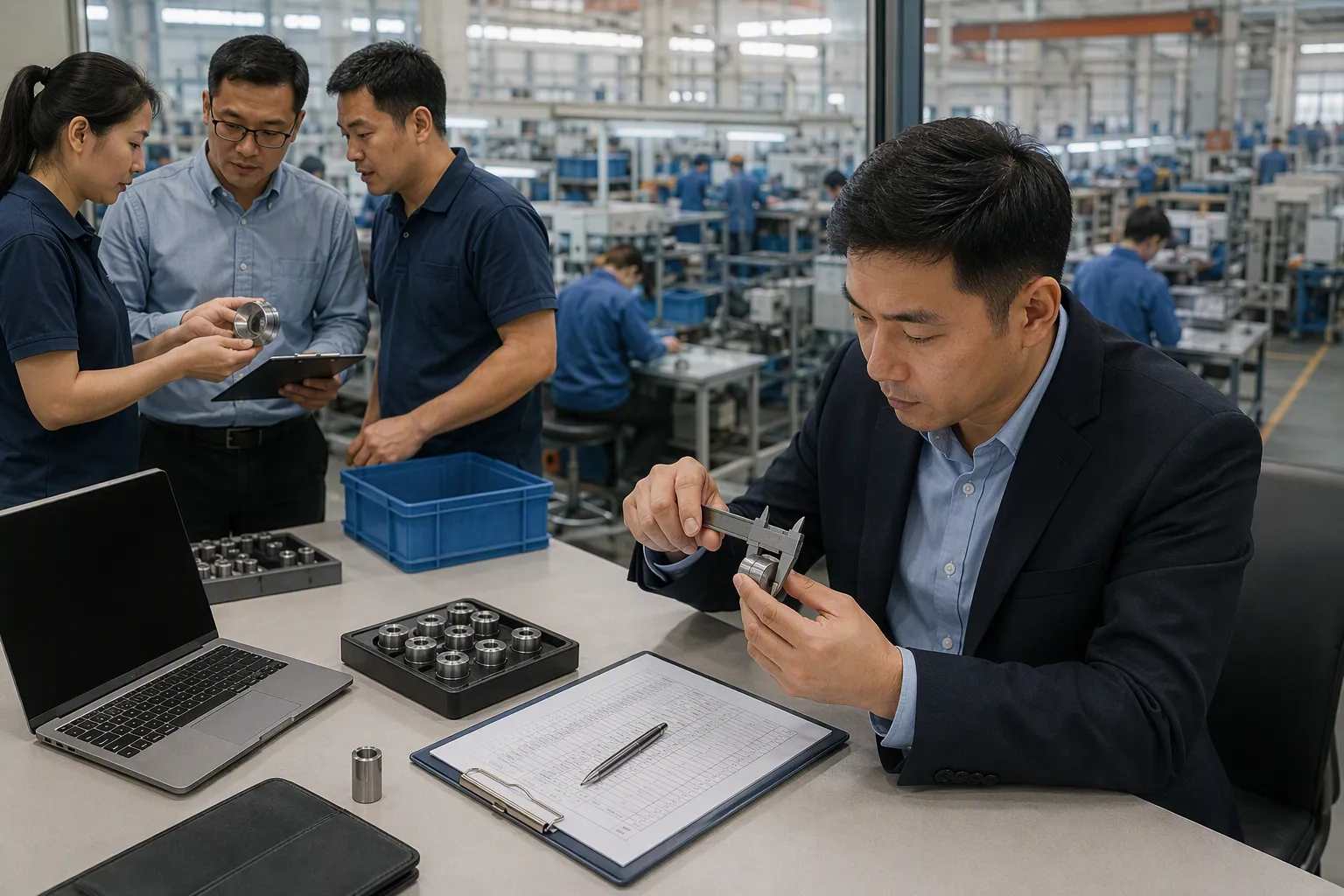
At KingSourcing, we often see that the difficult part is not sending text to a translator. The difficult part is making sure every approved sentence still matches the actual product when it appears on a box, label, insert card, or instruction manual. That is where a clear version-control process becomes essential.
Why Is Translating Product Labels and Manuals Not a Language-Only Task?
A buyer may receive a fluent English translation and assume the job is complete. However, the factory may later use a different product configuration, a revised diagram, or an old packaging template. Those gaps can leave buyers with printed materials that are grammatically correct but commercially unusable.
Translating product labels and manuals is not a language-only task because the content must match the physical product, included accessories, diagrams, model number, packaging claims, and final print file.[2] Buyers should validate the translation at several production milestones and approve one final version before the factory sends materials to print.

In practical sourcing work, the same content can move through several people and files: the buyer, translator, product engineer, factory sales representative, packaging designer, printing supplier, and production team. Each handoff creates a chance for an approved detail to change.[3]
I would not treat a translated Word document as final approval. I would treat it as one input into a broader packaging and production review.
A correct sentence can still describe the wrong product
The most common problem is not always poor grammar. A sentence can be perfectly written but still be wrong for the product that will ship.[4]
For example, a manual may say that a device includes a charging cable, adapter, spare filter, remote control, or mounting hardware. The factory may have changed the standard accessory list during quotation or sample development. If the manual was translated from an old source file, it may list items that are no longer in the retail box.
The same issue can happen with:
- Product names and model numbers
- Voltage, battery, power, size, or weight units
- Button names and control locations
- Functions shown in product diagrams
- Charging, assembly, installation, or cleaning instructions
- Usage limits or warning statements
- Color names, materials, and finish descriptions
- Package contents
- Warranty wording or contact details
- Marketplace-oriented claims on packaging
A translated instruction such as “Press the power button for three seconds” sounds simple. Yet it must be checked against the actual sample. Does the product have one button or two? Is the button marked with the same icon used in the manual? Does a three-second press activate the device, reset it, or pair it with another device?
That is why we recommend that buyers review translated content with the latest approved sample nearby. The buyer does not need to be a technical expert in every product category, but someone should verify that the written instructions correspond with the real user experience.
A translation can be linguistically accurate while still being operationally inaccurate.
For private-label products, this point matters even more. A factory may use a standard manual as a starting point, while the buyer may order a customized model, logo, color, bundle, plug type, or feature configuration. The factory’s standard copy may not reflect the customized version.
Start with a controlled source document
Before anyone translates product labels and manuals, the source content needs to be clear. Many buyers receive fragmented text from a supplier: a PDF manual, an image of a label, a spreadsheet with carton markings, product listing copy, and a few messages in chat. That is difficult to control.
A better process is to create one source-content package.[5] It does not need to be complicated, but it should identify what is being translated and which version is current.
| Source item | What to confirm before translation | Common risk |
|---|---|---|
| Product name | Exact retail name and brand format | Old product name remains in the manual |
| Model number | Final SKU, variant, or model code | Packaging and product label show different models |
| Product specifications | Units, ratings, dimensions, capacity | Supplier uses unconfirmed or inconsistent data |
| Package contents | Every included item | Manual lists accessories not included |
| Product functions | What the sample actually does | Standard manual describes another version |
| Warnings | Product-specific wording and placement | Warning is copied from an unrelated template |
| Diagrams | Correct product view and callouts | Diagram shows old buttons or accessories |
| Contact details | Company name, address, support channel | Placeholder supplier details remain visible |
We usually suggest assigning a simple file name and revision number from the beginning. For example:
BrandX_ModelA_Manual_Source_V1BrandX_ModelA_Manual_English_V2BrandX_ModelA_Manual_Artwork_V3BrandX_ModelA_Manual_PrintApproved_V4
The exact naming system is less important than consistency. Every person involved should know which file is the active version.
Translation should follow the product, not lead it
When a product is still changing, translated materials can quickly become outdated.[6] That does not mean buyers must wait until every production detail is finished. It means the translation process should be connected to sample confirmation and product development.
A practical sequence looks like this:
-
Confirm the product configuration.
The buyer confirms the intended product, color, model, accessories, logo placement, and target market. -
Collect the latest source content.
The factory provides the current manual, label copy, product specifications, diagrams, package claims, and accessory list. -
Cross-check the source content against the sample.
The buyer or appointed reviewer checks whether the text describes the approved sample and order configuration. -
Translate the confirmed source content.
A qualified translator or native-language reviewer handles the required language version. -
Place the translated content into artwork.
The factory or design team inserts the wording into the label, packaging, insert, or manual layout. -
Review the artwork, not only the text.
The buyer checks line breaks, diagrams, icons, units, claims, model numbers, and page order. -
Approve the print-ready file.
The buyer gives final sign-off on a clearly identified version before printing begins. -
Check printed output during production when appropriate.
A pre-production sample, first printed copy, or inspection-stage review can help confirm that the approved file was used.
This workflow is particularly useful when a buyer works with multiple suppliers. One factory may make the product, another may print the color box, and another may assemble inserts or labels. Without a controlled final file, an old version can reappear at any point.
The highest-risk gap is between copy approval and printing[7]
In our coordination work, we pay close attention to the gap between “the wording was approved” and “the final file was sent to print.” This is where buyers can lose control without realizing it.
A buyer may approve translated text in an email or spreadsheet. Later, the packaging designer may adjust the layout to fit a smaller label. The designer may shorten a sentence, move a warning to another panel, use an older diagram, or replace a model number from a previous project. The factory may then send the printer an artwork file that differs from the text the buyer originally approved.
This does not always happen because someone is careless. Packaging production often moves quickly, and factories may use templates, shared folders, or previous artwork as references. Still, buyers should not assume that approved wording automatically stays unchanged through artwork and printing.
What final-version control should include
A useful final approval should identify more than the translated text. It should confirm the complete production file.
We recommend that the buyer’s final approval covers:
- The product name and brand spelling
- The model number, SKU, and variant details
- The final language version
- The latest approved product sample or configuration
- The correct product images and diagrams
- All button names, icons, and callouts
- Confirmed specifications and units
- The final package contents
- Required warnings, instructions, and claims
- Label size, placement, and readability
- Manual page count, page order, and print orientation
- The exact artwork file name and revision number
- Confirmation that the file is approved for printing
A short approval message can be enough if it is specific. For example:
“We approve
BrandX_ModelA_Manual_Artwork_V3.pdfandBrandX_ModelA_BoxLabel_V3.aifor production. These files apply to Model A, black version, with USB-C cable included. Please use no earlier artwork versions.”
This kind of message is more useful than “manual approved” because it identifies the files and product configuration.
Review the artwork as a physical object
When buyers translate product labels and manuals, they should review the layout as carefully as the wording. A correct sentence can become unclear when it is printed too small, cut off by a fold, placed over a dark image, or separated from the diagram it explains.[8]
I suggest checking the artwork at normal viewing size rather than only zooming in on a computer screen. A manual may appear readable at 200% zoom but be difficult to read once printed in a compact folded leaflet.
Check placement, hierarchy, and readability
The following questions help connect translation to the final printed result:
- Does the text fit inside the label’s safe area?
- Are warning statements visible and close to the relevant instruction?
- Does every diagram use the same button names as the text?
- Are arrows, numbered callouts, and symbols easy to follow?
- Are units written consistently, such as
cmversusin? - Has the layout separated a heading from the paragraph it belongs to?
- Are translated lines wrapping in a way that changes meaning?
- Is the font size suitable for the product format and market expectations?
- Is there enough contrast between text and background?
- Are barcodes, batch spaces, or other required fields left clear?
For multilingual materials, space becomes an even bigger issue. German, French, Spanish, and other languages may require more space than English. Arabic, Hebrew, and some Asian languages may require different layout considerations. A translated sentence should not simply be forced into the original text box without review.
Diagrams need their own approval step

Diagrams create a special risk because they carry product information without much text. A manual may have a correct translation but still show the wrong port, button, connector, accessory, or assembly direction.
For products with controls, removable parts, charging ports, or setup steps, we recommend reviewing diagrams against the approved sample.
| Diagram element | What to verify | Why it matters |
|---|---|---|
| Product outline | Shape and visible components match sample | A standard image may show another model |
| Numbered callouts | Numbers match the translated legend | Mismatch creates confusing instructions |
| Button icons | Icons match product markings | Users may press the wrong control |
| Accessories | Only included items are shown | Buyers should not promise missing items |
| Direction arrows | Assembly or use direction is correct | Incorrect orientation can affect use |
| Measurements | Units and dimensions are current | Old drawings may contain obsolete values |
A supplier may say, “The diagram is only for reference.” That may be acceptable during early development. It is not a strong basis for final production approval if the manual will ship to end users.
Use specialists where the risk requires it
KingSourcing can coordinate supplier communication, sample checks, artwork collection, printing confirmation, and final approval tracking. However, a sourcing service, factory English speaker, or machine translation tool should not automatically be treated as a replacement for qualified language, legal, compliance, certification, or technical review.
Requirements vary by product and destination market. A consumer electronics item, children’s product, cosmetic accessory, food-contact item, medical-related product, battery-powered device, or product with safety claims may need more specialized review than a simple promotional item.
Buyers should consider qualified external review when:
- The content includes safety warnings
- The product makes performance, health, environmental, or technical claims
- The target market requires specific consumer information
- The manual covers installation, electrical use, batteries, chemicals, or protective equipment
- The buyer sells under a brand with established legal or compliance procedures
- The translated material will be used across several markets and languages
The goal is not to make every packaging project unnecessarily slow. The goal is to match the level of review to the product’s risk and commercial importance.
Build approval around real production milestones
A checklist only works when it is tied to the production schedule. If it is sent after printing has started, it is no longer a control tool.
For most OEM, ODM, and private-label orders, I would connect document approval to these milestones:
| Production milestone | Translation and document action |
|---|---|
| Product brief | Identify target markets, languages, brand details, and expected documents |
| Quotation stage | Confirm whether labels, manuals, inserts, and packaging artwork are included |
| Sample stage | Compare source content, diagrams, functions, and accessories with sample |
| Pre-production stage | Finalize translated text and place it into artwork |
| Artwork approval | Review layout, claims, diagrams, revision number, and print-ready PDF |
| Before mass printing | Send written approval for named final files only |
| Production follow-up | Confirm the factory is using approved packaging and manual versions |
| Inspection stage | Check selected printed materials against approved artwork where applicable |
| Shipment preparation | Keep the final approved files with the order records |
This approach also helps when a product changes after sample approval. If the factory changes a cable type, button marking, package insert, or model code, the buyer has a clear trigger to reopen the affected content rather than hoping that someone notices.
A practical sign-off checklist for buyers
Before you approve translated product labels and manuals for printing, review the following points as one connected package.
Product and sample match
- Does the product name match the final brand and retail listing?
- Does the model number match the product, packaging, and purchase order?
- Does the manual describe the current approved sample?
- Do all listed accessories match the confirmed package contents?
- Do images and diagrams show the correct version, color, and components?
Content and translation match
- Are all functions described accurately?
- Are button names, ports, icons, and settings consistent?
- Are measurements, capacities, voltage information, and other units confirmed?
- Are instructions clear in the target language?
- Has a suitable native-language or professional reviewer checked the content where needed?
- Are warnings, claims, and user instructions appropriate for the intended market and product category?
Artwork and print-file match
- Is the translated content placed in the correct location?
- Are fonts, line breaks, page order, and text size readable?
- Does the manual include the correct diagrams and callout numbers?
- Does the label fit the product or package area?
- Is the file name, revision number, and approval date visible in your records?
- Has the factory confirmed that this exact file will go to print?
Final approval control
- Have you approved a specific PDF, AI, or other print-ready file?
- Have you stated which product model and variant the approval applies to?
- Have you instructed the factory not to use earlier versions?
- Have you saved the approved files, approval message, and relevant sample photos together?
- Have you agreed on how changes will be handled after approval?
This process can feel detailed for a small order. Yet it is usually easier than correcting printed manuals, relabeling products, delaying a shipment, or explaining inconsistent product information to customers later.
Frequently Asked Questions
Should I translate the manual before or after product sampling?
You can begin collecting source content before sampling, but final translation approval should follow confirmation of the latest product sample and configuration. The manual must match the actual buttons, functions, accessories, diagrams, and model details that will go into production.
Can I rely on the factory’s English translation?
A factory’s English translation can be useful as a starting point, especially for standard product information. However, it should not automatically replace qualified translation or native-language review. Buyers should also verify that the wording matches the actual sample, artwork, and final production files.
What is the most important file to approve before printing?

The most important file is the final print-ready artwork version that the factory will send to the printer. A text document alone is not enough. Buyers should approve the named file, revision number, language, product model, diagrams, and layout in writing.
How can I prevent the factory from using an old manual version?
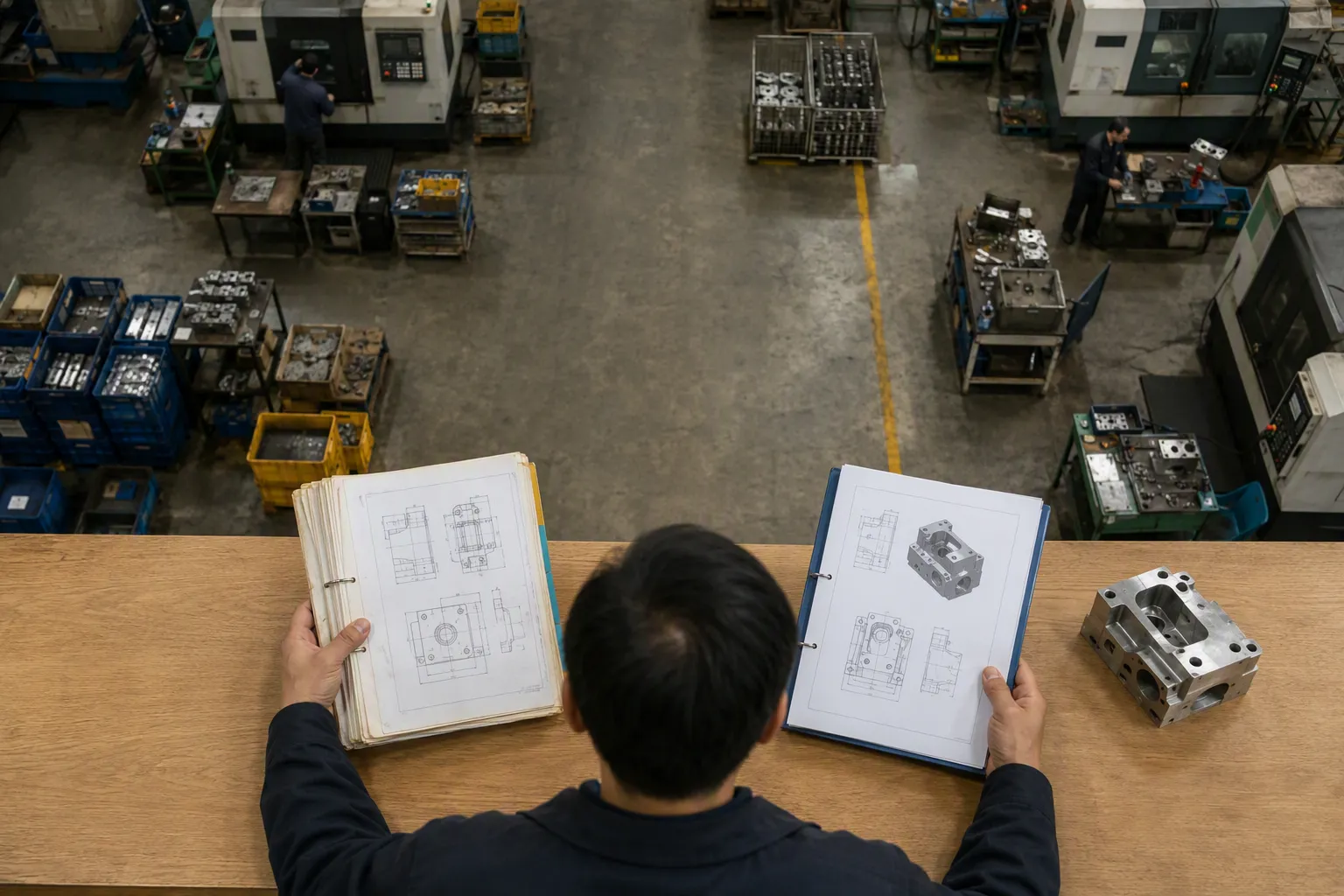
Use clear version names and approve one specific file in writing. Ask the factory to confirm that earlier versions are obsolete and will not be used. Keep the approved PDF or artwork file together with your purchase order, sample confirmation, and approval record.
Do product labels and manuals need professional compliance review?
That depends on the product, claims, destination market, and applicable requirements. Products involving safety, electronics, batteries, children, chemicals, food contact, health-related use, or regulated claims may need qualified compliance, legal, certification, or technical review before production.
Conclusion
To translate product labels and manuals successfully, buyers need more than correct grammar. They need content that matches the approved sample, product functions, accessories, diagrams, packaging claims, and print-ready artwork. The safest approach is to manage translation through real production milestones and approve one controlled final version before printing. At KingSourcing, we can help buyers coordinate factories, samples, artwork, packaging approvals, quality checks, consolidation, and shipping so product information stays aligned from sourcing through delivery.
Sources
- Technical Document Translation Services: A Complete Guide", Technical-translation scholarship distinguishes grammatical fluency from terminological and domain accuracy, noting that reliable technical documentation requires correspondence with the relevant product, process, and intended use
- Product Baseline | www.waru.edu", IEC 82079-1 sets out principles for information for use, including producing documentation that is appropriate to the product, its intended users, and the relevant lifecycle context
- SP 800-128, Guide for Security-Focused Configuration ...", Configuration-management guidance describes baselines, revision identification, and authorized change control as mechanisms for preserving the integrity of approved product and documentation information
- Manufacturing Best Practices | CPSC.gov", Product-safety guidance treats instructions and safety information as part of the information needed for safe use, which requires that such information correspond to the product supplied to users
- SP 800-128, Guide for Security-Focused Configuration ...", ISO 9001 requires organizations to control documented information so that appropriate versions are available and protected from unintended alteration or use of obsolete information
- Configuration and patch management planning", Configuration-management practice links approved product baselines with associated documentation so that changes can be evaluated, authorized, recorded, and reflected in the applicable revision
- What is an Artwork Approval Process", Prepress quality-control practices use proofing and final-file verification to detect content, layout, and production errors before printing, when corrections are generally less costly than after output is produced
- Accessibility | Color & Type", Human-factors research on document design finds that legibility and comprehension are affected by factors including type size, contrast, spatial layout, and the relationship between explanatory text and visual material