Quick Answer
Product profit margins can look attractive when I first see a low factory quote from China. The problem is that a low unit price rarely shows the full cost of getting a finished product into a customer’s hands[1]. If I ignore packaging, freight, duties, fulfillment, and selling costs, I can source a product that looks profitable but is not.
A reliable way to compare product profit margins before sourcing from China is to test a realistic selling price against a like-for-like landed cost and expected sales-channel costs. I should align product specifications, MOQ, packaging, customization, delivery terms, freight, duties, payment charges, fulfillment, and marketplace costs before deciding whether a supplier quote supports a viable margin.
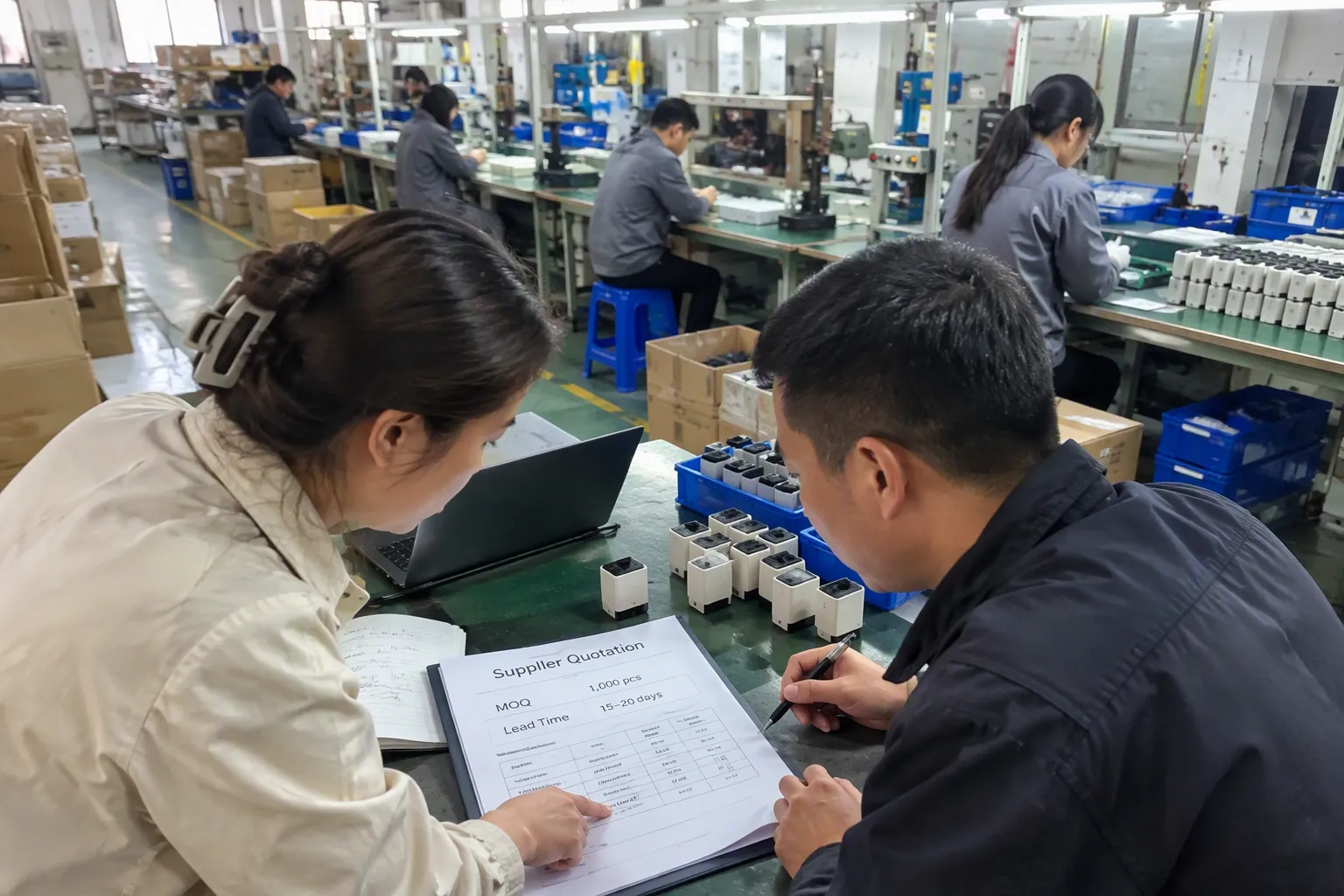
I see this issue regularly in quotation-comparison work. Buyers may receive three supplier quotes that appear very different at first. Once we align material, product size, packaging, branding, MOQ, and shipping terms, the gap often becomes smaller[2]—or the lowest quote turns out not to cover the product the buyer actually wants to sell.
How Should Product Profit Margins Be Judged Against a Realistic Selling Price and a Like-for-Like Landed Cost?
Product profit margins should be judged by subtracting all reasonably known acquisition and selling costs from a realistic expected selling price. I should not compare supplier prices until each quote covers the same product specification, order quantity, packaging, customization, and delivery term. The goal is to compare commercially usable offers, not simply identify the lowest factory price.
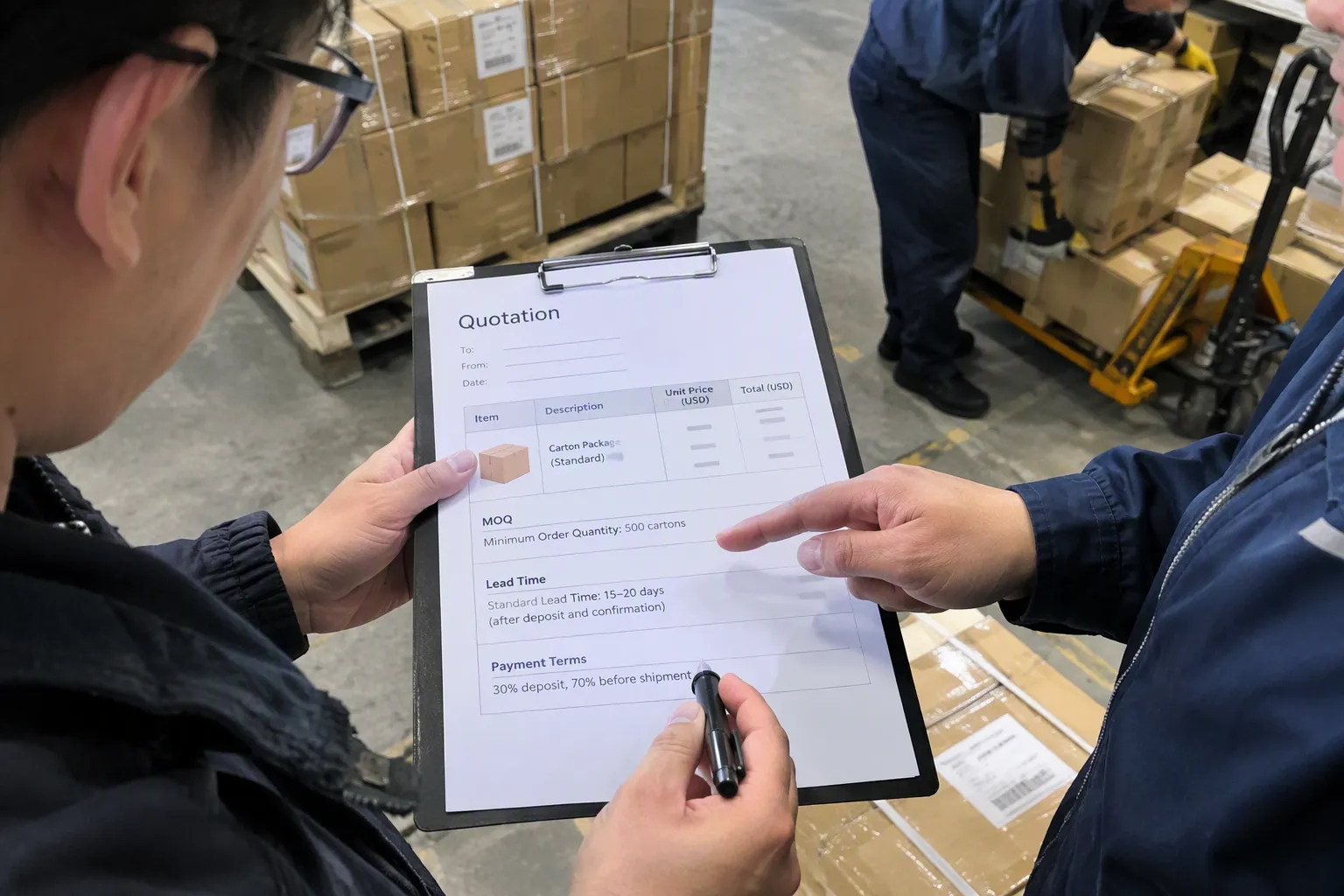
A low quote can be useful as a starting point, but I treat it as an input for investigation rather than proof that a product will be profitable. Every buyer needs to verify costs for the destination country, product category, selling channel, and order size. Freight, import charges, platform fees, advertising costs, and returns are not universal figures.
Start With a Comparable Product Specification
I cannot compare product profit margins accurately if two suppliers are quoting different products. This sounds obvious, but it is one of the most common reasons that China supplier quotations appear confusing.
One factory may quote a lower price because it uses a lighter material, a simpler finish, a different internal component, standard packaging, or a lower inspection standard. Another factory may include branded packaging, a specific color, a larger capacity, or a stricter tolerance. Neither quote is automatically wrong. They may simply describe different commercial offers.
Before I compare pricing, I create a basic specification sheet that all suppliers can review. It does not need to be a complex engineering document for every consumer product. It does need to be clear enough that suppliers understand what they are pricing.
I normally ask buyers to define the following points:
- Product function and intended use
- Material type and material grade, where relevant
- Dimensions, weight, color, and finish
- Key components or accessories
- Required quality level or approved sample standard
- Logo method, such as printing, engraving, embossing, or label application
- Retail packaging requirements
- Carton packing requirements
- Barcode, warning label, instruction, and label placement needs
- Target order quantity and expected repeat-order volume
- Testing, documentation, or certification requirements, where applicable
- Target delivery date and preferred Incoterm
For example, a supplier may quote a product in a plain polybag while another quotes it in a printed gift box with a custom insert. The difference is not just the packaging cost. The gift box can affect carton size, carton quantity, freight volume, packing labor, and damage risk during transport.[3]
I consider a supplier quote comparable only when I can explain why every material difference exists.
This is especially important for private-label products. Logo printing, custom molds, color matching, inserts, product manuals, and branded cartons can all change the unit economics. A supplier may also spread setup charges differently depending on MOQ.[4] One factory might show a low unit price while listing separate tooling, printing plate, or packaging charges later. Another may include part of those costs in the unit price.
Separate Factory Price From Landed Cost
The factory unit price is only one layer in the product profit margins calculation. I use the term landed cost to describe the cost of getting saleable inventory to its intended destination. The exact components vary by shipment and market[5], so I do not treat any single template as complete for every buyer.
A practical starting formula is:
Estimated landed cost per unit = product cost + customization and packaging cost + allocated origin charges + freight + import duties/taxes where applicable + payment and transaction charges + receiving or preparation costs
For many e-commerce sellers, I then extend the model:
Estimated contribution per unit = realistic selling price − landed cost − sales-channel fees − fulfillment cost − expected promotional and return-related costs
This does not produce a guaranteed profit result. It gives me a clearer basis for deciding whether the product deserves more research, better quotes, sample development, or a small test order.
| Cost area | Questions I ask before comparing quotes | Why it affects margin |
|---|---|---|
| Factory product cost | Does the quote match the approved specification? | Product differences can make a low quote misleading. |
| Customization | Are logos, colors, molds, inserts, and artwork setup included? | One-time and recurring charges can change the effective unit cost. |
| Packaging | Is retail packaging included? What are the carton dimensions? | Packaging affects both conversion value and freight volume. |
| Shipping | Is the quote EXW, FOB, CIF, DDP, or another term? | Delivery terms determine which costs are included or excluded. |
| Import charges | What duties, taxes, clearance fees, or compliance costs may apply? | These are destination- and product-specific costs to verify. |
| Payment costs | Are bank, card, currency conversion, or platform transaction fees involved? | Small percentages can matter across repeat orders. |
| Fulfillment | Will inventory go to a warehouse, marketplace, 3PL, or direct customers? | Storage, pick-and-pack, and inbound handling affect each unit. |
| Selling costs | What channel fees, discounts, advertising, and returns are likely? | Revenue is not the same as retained contribution. |
I find it helpful to keep these cost areas separate instead of forcing everything into one supplier price. This makes later decisions easier. If freight changes, I can update freight without rebuilding the entire product quote. If the supplier changes packaging, I can see how that affects both product cost and shipping.
Compare Delivery Terms Before Comparing Prices
When I compare product profit margins, I always check the delivery term attached to each quote. A price without an Incoterm or clear delivery condition is incomplete.[6]
For example, an EXW price generally means the buyer takes responsibility from the supplier’s factory or designated pickup point[7]. A FOB price generally includes delivery to the agreed port and export handling under the stated terms.[8] A delivered quotation may include more logistics steps, but I still need to confirm exactly what it covers and what it excludes.
I do not assume that one term is always better. The right option depends on the buyer’s shipping arrangement, destination, shipment type, and ability to manage import procedures.
Here is how I approach it:
-
I ask each supplier to state the price basis clearly.
I want the quote to identify the factory location, port if relevant, currency, MOQ, lead time, and delivery term. -
I request carton information early.
Carton dimensions, gross weight, net weight, and units per carton help estimate freight. For many products, shipping volume matters as much as factory price. -
I identify what is not included.
A quote may exclude export documents, local delivery, packaging, inspection support, labeling, or destination charges. -
I compare the same shipping basis.
If one supplier quotes EXW and another quotes FOB, I adjust the comparison rather than treating them as directly equivalent. -
I verify destination-specific charges separately.
I do not rely on broad assumptions about duties, taxes, clearance, or regulatory requirements. Buyers should verify these with qualified customs, tax, freight, and compliance professionals where necessary.
A low EXW price may still lead to better product profit margins in some situations. In other cases, a slightly higher FOB price from a factory that can pack efficiently and meet the required specifications may be commercially stronger. The decision should follow the total cost model, not the headline quote.
Use a Realistic Selling Price, Not the Highest Listing Price
A product cannot support healthy product profit margins just because competing listings show a high price. I need to ask whether that price is realistic for my own product, positioning, sales channel, review profile, brand strength, and launch stage.
A marketplace listing price may be promotional, temporary, bundled, or supported by a well-established brand. It may also belong to a seller with lower fulfillment costs, stronger organic ranking, or a different sourcing arrangement. I do not treat the visible selling price as proof that a new seller can earn the same result.
Instead, I look for an achievable selling-price range. I consider the lower end of the range, not only the best-case figure. This creates a more cautious test for product profit margins.
I ask questions such as:
- What prices do comparable products actually appear to sell for?
- Are lower-priced competitors offering a simpler specification?
- Does my product have a real, understandable difference?
- Will my packaging and branding justify a higher price?
- Does my sales channel require discounts, coupons, or seasonal promotions?
- Are customers likely to compare this product mainly on price?
- Could shipping, returns, or damage claims reduce the net revenue?
- Is the product likely to need paid advertising to gain visibility?
I also separate the listed price from the realized price. A product listed at one price may sell after a coupon, promotion, bundle adjustment, referral fee, payment charge, or return. That distinction matters.
For private-label brands, the right question is usually not, “Can I list it at this price?” The better question is, “Can I sell enough units at a realistic net price after all acquisition and channel costs?”
That question does not validate demand by itself. Product research, customer feedback, competitor analysis, legal review, and channel research are separate tasks. Still, a careful margin model can stop me from spending time on a product that has little room for normal commercial variation.
Build a Cost Model That Shows Assumptions
I recommend using a spreadsheet rather than relying on mental arithmetic. A simple model makes uncertainty visible and gives me a way to update the numbers as suppliers clarify their offers.
My basic worksheet has four sections:
| Section | Typical inputs | What I want to learn |
|---|---|---|
| Product specification | Materials, dimensions, packaging, logo, MOQ | Whether suppliers are quoting the same item |
| Acquisition costs | Factory cost, customization, inspection, freight, import charges | Estimated landed cost per saleable unit |
| Sales-channel costs | Platform fees, fulfillment, payment charges, promotions | Estimated contribution after selling costs |
| Scenario testing | Lower selling price, higher freight, higher defect rate, lower order volume | How much commercial room remains |
I prefer scenario testing because early sourcing costs are rarely final. A buyer may receive a preliminary freight estimate, then learn that the final carton size is larger. A supplier may confirm that a custom color has a higher MOQ. A marketplace may charge different fulfillment fees after final measurements are available.
A useful approach is to test at least three scenarios:
- Expected case: Current best estimate based on confirmed information.
- Cautious case: Lower selling price or higher total costs.
- Improved case: Better quote, better freight efficiency, or stronger average selling price.
If the product works only in the improved case, I treat that as a warning. If the product retains reasonable room in the cautious case, it may be more suitable for deeper sourcing work. I still do not call it guaranteed profitability, because sales performance and future costs remain uncertain.
Evaluate the Supplier Behind the Quote
The supplier also affects product profit margins over time. A factory quote can be low because the supplier is efficient and well suited to the order. It can also be low because the quotation is incomplete, the supplier misunderstood the requirements, or the production controls are weak.
I do not assume that the lowest quote means poor quality. I also do not assume that a higher quote means better quality. I need evidence.
During supplier comparison, I look beyond the quoted amount:
- Does the supplier answer specification questions clearly?
- Does the supplier identify unclear details before production?
- Can the supplier provide product samples that match the quotation?
- Does the supplier have relevant manufacturing capability for the product category?
- Is the MOQ workable for the buyer’s test order and cash flow?
- Are lead times realistic and explained?
- Can the supplier support required packaging and labeling?
- Does the supplier accept appropriate inspection arrangements?
- Are quality documents or test reports relevant, current, and verifiable?
- Does the supplier communicate consistently about changes and exceptions?
Where certifications, test reports, or compliance documents are important, I recommend that buyers verify the documents with appropriate qualified parties. A document shown in a sales conversation should not be treated as automatic proof that a finished product meets every requirement in the buyer’s market.
At KingSourcing, we often find that a quote comparison becomes more useful after clarification. Several prices may initially look far apart. Then the buyer asks about packaging, logo setup, MOQ, carton dimensions, or delivery terms. The suppliers revise their offers, and the buyer can finally see which option is genuinely comparable.
This is why I avoid selecting a supplier from a single price column. The better sourcing decision usually comes from a combination of specification alignment, total cost clarity, supplier responsiveness, sample quality, and manageable risk.
Watch for Margin Erosion After the First Order

A product may show acceptable product profit margins on paper and still lose room after the first order if I ignore routine operating issues. I do not need to assume the worst, but I do need to make room for normal commercial friction.
Common sources of margin erosion include:
- Product defects found before shipment
- Carton damage or packaging failures
- Rework or replacement costs
- Product labeling changes
- Delays that increase storage or expedited shipping costs
- MOQ increases for customized components
- Foreign-exchange movement
- Returns, refunds, or customer complaints
- Price competition after launch
- Inventory that moves slower than planned
I cannot predict every issue at the quotation stage. However, I can avoid building a business case that leaves no space for any issue at all.
For example, if a product’s projected margin depends on the cheapest quote, the highest expected selling price, the lowest freight estimate, and no returns, I would consider the model fragile. A stronger opportunity has room for changing conditions.
I also distinguish between one-time costs and repeat-order costs. A packaging design fee or mold charge may be spread across the first order, while a product inspection cost may apply to every shipment. Both matter, but they should not be mixed without explanation.
This distinction helps buyers make better decisions about test orders. A small first order may have weaker unit economics because fixed costs are spread across fewer units. That does not automatically make the product unsuitable. It does mean I should understand whether a larger repeat order could improve the cost structure without creating excessive inventory risk.
Frequently Asked Questions
What is the difference between factory price and landed cost?
Factory price is the amount a supplier charges for producing the goods under stated terms. Landed cost is broader. I calculate it by adding applicable customization, packaging, shipping, import, payment, receiving, and preparation costs needed to bring saleable goods to the intended destination.
Should I choose the lowest China supplier quote?

I would not choose a supplier based only on the lowest quote. I first confirm that every supplier is quoting the same specification, MOQ, packaging, quality level, and delivery term. Then I evaluate total cost, sample quality, communication, production capability, and supplier reliability.
How can I estimate product profit margins for an online store?
I start with a realistic expected selling price, then subtract estimated landed cost, platform fees, payment charges, fulfillment costs, promotions, and likely return-related costs. I also test cautious scenarios because selling prices, freight, and channel costs can change after sourcing begins.
Do supplier quotations include customs duty and taxes?

Some quotations may include certain delivery or import-related costs, while others do not. I always ask suppliers and freight providers to state the delivery terms and inclusions clearly. Buyers should verify destination-country duties, taxes, and customs requirements with qualified professionals.
Can a profitable product quote prove that there is market demand?
No. A positive sourcing-cost model only shows that the product may have enough financial room to investigate further. It does not prove demand, sales volume, customer acceptance, final selling price, legal compliance, or future advertising performance.
Conclusion
Product profit margins should be based on more than a factory’s lowest unit price. I recommend aligning the product specification first, then comparing like-for-like supplier quotes, landed costs, and realistic sales-channel costs. A careful model will not guarantee profitability, but it can reveal whether a product has enough room for normal sourcing and selling risks. If you need support comparing China supplier quotations, verifying suppliers, managing samples, or calculating more complete sourcing costs, I can help you build a clearer procurement comparison before you place an order.
Sources
- Determine Total Export Price - International Trade Administration", Government trade guidance defines landed cost as a broader measure than the supplier's invoice price, incorporating applicable transportation, insurance, duty, tax, and other costs incurred in bringing goods to market
- Analyzing Costs Using Total Cost of Ownership", Procurement research emphasizes that supplier bids should be normalized for specification, quantity, quality, and commercial terms before price differences are interpreted, because non-equivalent offers can distort apparent savings
- [PDF] Load Securement and Packaging Methods to Reduce Risk of ...", Packaging and distribution research shows that package design affects cube utilization and handling requirements while also serving a protective function against damage in transport
- [PDF] Raw Material Minimum Order Quantity Optimization - DSpace@MIT", Operations-management analysis explains that fixed setup costs are spread across the units produced in a run, so order quantity can materially affect the unit cost quoted to a buyer
- Determine Total Export Price - International Trade Administration", International trade authorities note that import charges and border requirements depend on the importing market and product classification, meaning landed-cost calculations must be tailored to the specific transaction
- Know Your Incoterms", The International Chamber of Commerce's Incoterms rules allocate specified delivery obligations, costs, and risk between buyer and seller; consequently, a quoted price requires an identified trade term to be interpreted consistently
- Know Your Incoterms", Under Incoterms® EXW, the seller makes goods available at its premises or another named place, and the buyer ordinarily assumes the subsequent loading, export, carriage, and import arrangements
- Know Your Incoterms", Under Incoterms® FOB, the seller delivers when the goods are placed on board the vessel nominated by the buyer at the named port of shipment, with export clearance normally allocated to the seller