Quick Answer
Total import cost from China can look simple when a supplier sends a low unit price, but the real budget often changes once packaging, freight, customs, taxes, and destination charges appear. This can make a seemingly profitable product difficult to sell. I recommend building a landed-cost estimate before you approve a purchase order.
To estimate total import cost from China, add the product cost, China-side execution costs, international freight, destination import charges, and a contingency reserve. Buyers should first make every supplier quote comparable by confirming the Incoterm, packaging, labeling, sample, tooling, and delivery scope. Final duty, tax, customs, and destination costs must be verified with a qualified forwarder, customs broker, or local advisor.
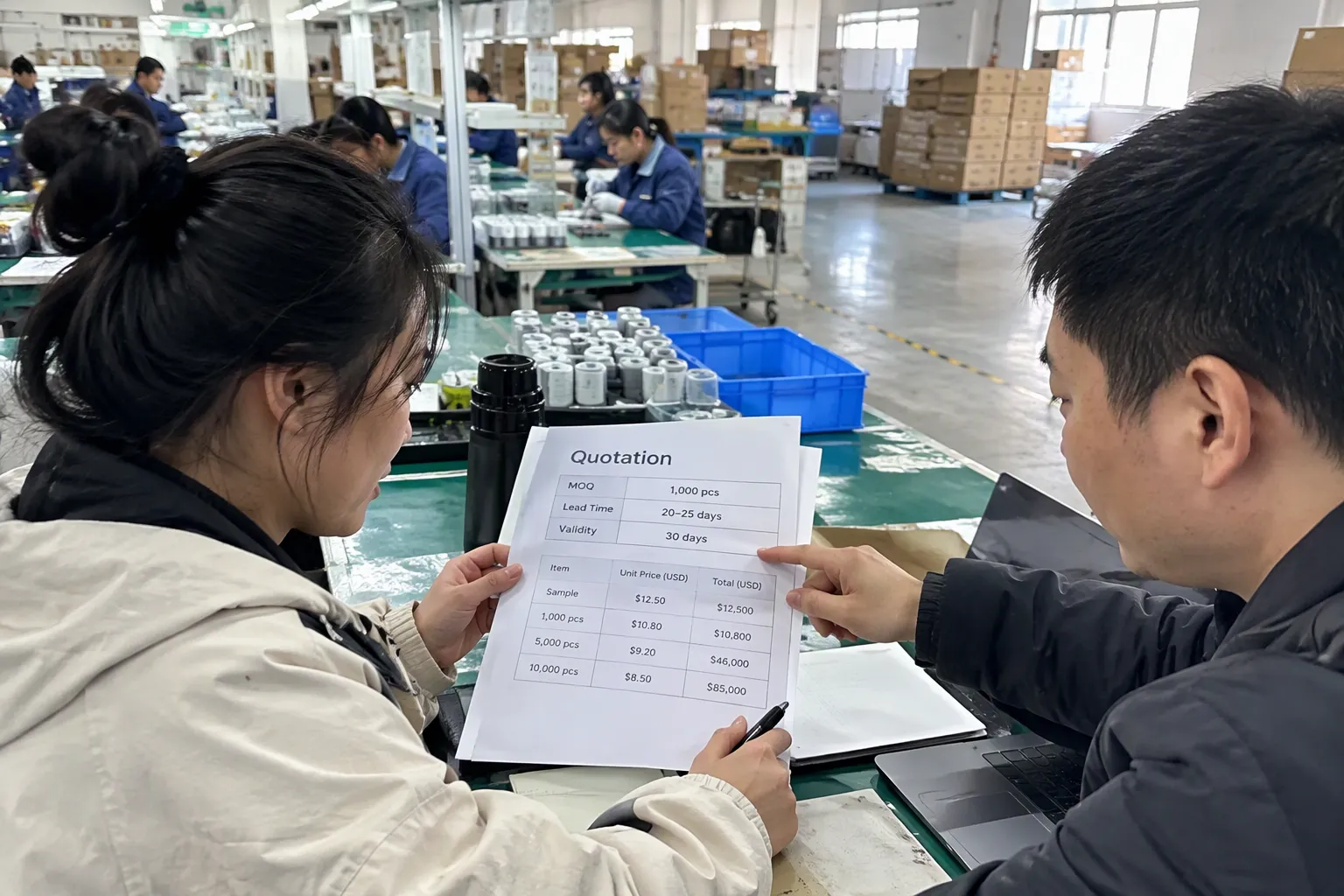
A supplier’s factory price is only one part of the purchasing decision. In my China-based quotation coordination work, I see that many early-stage importers compare unit prices before they compare responsibilities. That order creates risk. A better approach is to identify every cost layer, then decide whether the order remains commercially viable.
Total import cost from China is not the factory price or FOB quote
A low factory quote can create a false sense of certainty. Buyers may assume that EXW, FOB, or even DDP pricing represents the final amount they will pay, only to find that important services or destination charges were excluded. I recommend treating every quote as a scope document, not simply a price list.
Total import cost from China is the full estimated amount required to buy, prepare, export, transport, import, and receive goods. Factory price and FOB price are useful purchasing references, but neither automatically includes every cost. A reliable estimate separates product costs, China-side costs, freight, import charges, and uncertain items that require professional confirmation.
The goal is not to make the calculation complicated. The goal is to prevent hidden assumptions. When I help buyers compare China supplier quotations, I start by asking a straightforward question:
“What exactly is included in this number, and who is responsible for everything that is not included?”
That question often changes the comparison completely.
Start With a Quote-Scope Audit

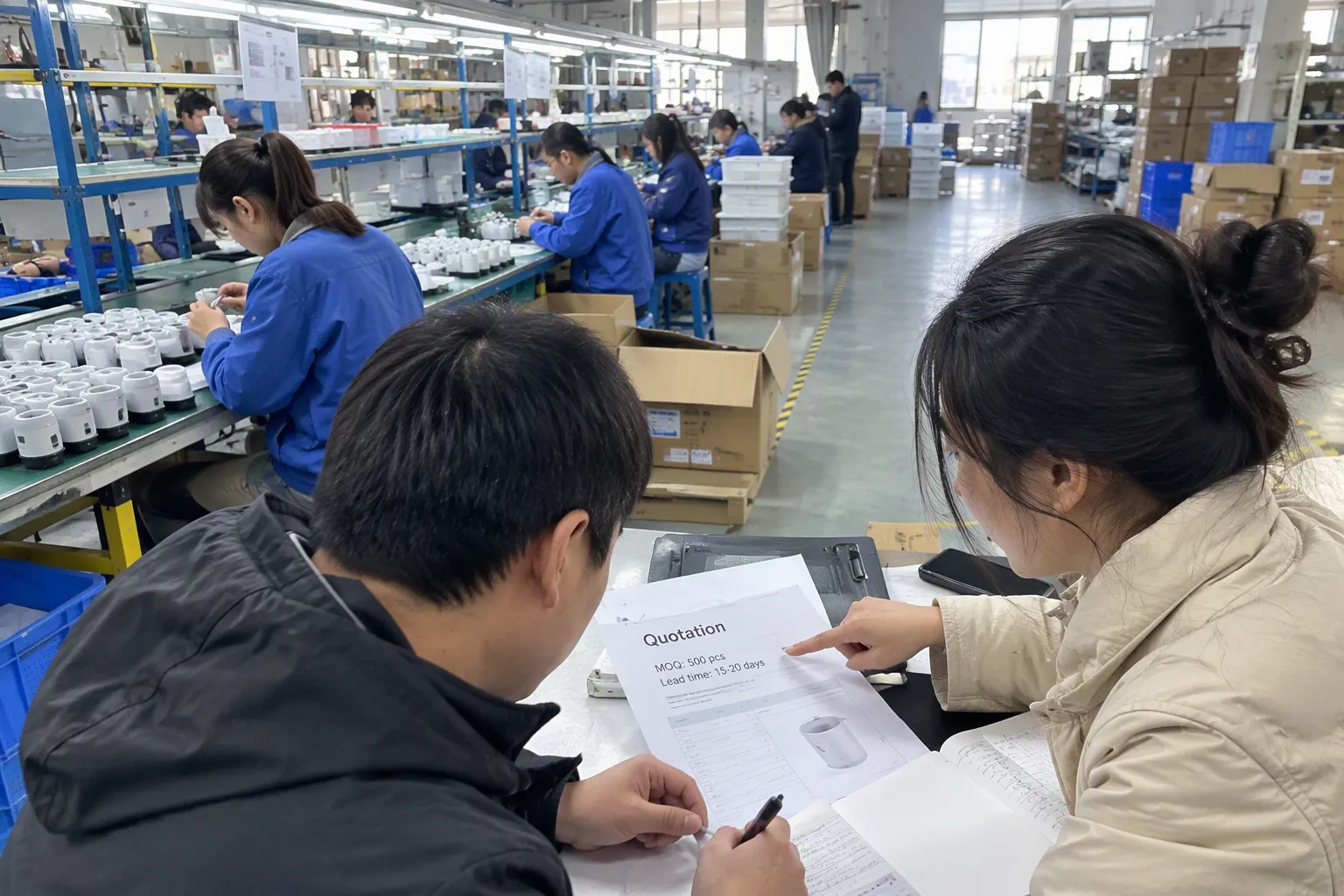
Before calculating total import cost from China, I recommend reviewing each supplier quote line by line. Two suppliers may quote the same product at different prices because they are not offering the same thing.
For example, Supplier A may quote a lower unit price but use basic bulk packaging. Supplier B may quote a higher price but include retail boxes, barcode labels, export cartons, and delivery to a designated port. If the buyer needs all of those items, Supplier B may have the lower usable cost.
A practical quote-scope audit should confirm the following items.
| Cost or responsibility | Questions to ask the supplier | Why it matters |
|---|---|---|
| Product unit price | Is this price based on the approved specification and materials? | Small specification changes can affect quality and price. |
| MOQ | Is the MOQ per color, model, design, or total order? | MOQ rules can raise the real purchase quantity. |
| Sample charges | Are samples free, refundable, or separate from production cost? | Sample development can affect early-stage budget planning. |
| Tooling or mold fees | Is tooling needed? Who owns it? Is it reusable? | Custom products may require upfront investment. |
| Packaging | Is retail packaging, inner packing, master carton, or protective packing included? | Packaging is often treated differently by different suppliers. |
| Labeling | Are barcodes, warning labels, country markings, inserts, or FNSKU labels included? | Marketplace and retail requirements can create extra work. |
| Quality control | Does the supplier include internal inspection? What is the agreed quality standard? | Internal checks do not replace independent inspection if one is required. |
| China inland transport | Is delivery to the port, warehouse, or forwarder included? | This is often excluded from EXW quotes.[3] |
| Export documentation | Is export customs handling included? | Export scope varies by trade term and shipment arrangement. |
| Incoterm | Is the quote EXW, FOB, CIF, DAP, DDP, or another agreed term? | The Incoterm defines a division of responsibilities, not the entire commercial agreement.[1] |
I do not assume that a familiar Incoterm solves every question. An FOB quote, for instance, may be useful for comparing suppliers that ship from the same port. However, the buyer should still confirm the named port, export packing requirements, local charges, production lead time, and whether the supplier can meet the handoff procedure required by the selected forwarder.
Convert Quotes Into One Comparable Purchasing Baseline
A cheaper unit price does not always mean a cheaper purchase. I recommend converting each quote into the same purchasing baseline before ranking suppliers.
For many buyers, that baseline could be:
- The same product specification and approved sample
- The same order quantity
- The same packaging and labeling requirements
- The same inspection expectation
- The same China delivery point or export term
- The same currency and payment assumptions
- The same production lead-time expectation
If one supplier quotes EXW and another quotes FOB, I do not compare the numbers as if they are equal.[2] I first identify the missing China-side services in the EXW offer. These may include pickup from the factory, local trucking, warehouse receiving, export handling, port delivery, and related coordination.
The same principle applies when a supplier offers a very broad “all-inclusive” price. Buyers should ask what “all-inclusive” means in writing. The term can refer only to China-side services, or it may be used informally without clearly defining tax treatment, customs clearance responsibility, destination delivery limits, or excluded fees.
Here is a simple example of a quote comparison worksheet. The figures are illustrative only. They are not freight, duty, or import-cost benchmarks.
| Cost item | Supplier A | Supplier B | Comparison note |
|---|---|---|---|
| Product unit price | Lower | Higher | Compare only after confirming specification. |
| Retail box | Excluded | Included | Add the actual box cost to Supplier A. |
| Barcode labeling | Excluded | Included | Confirm label format and placement. |
| Export carton | Basic carton | Reinforced carton | Check whether both meet shipping needs. |
| Delivery to named port | Excluded | Included | Normalize the China-side delivery scope. |
| Sample cost | Charged | Credited after order | Review cash-flow impact and conditions. |
| Production lead time | Shorter estimate | Longer estimate | Confirm capacity before relying on timing. |
In my experience coordinating quotations, the most commonly missed line items are not always large on their own. The problem is that several small omissions can combine into a meaningful cost difference. Packaging, labeling, local transport, warehouse handling, and inspection arrangements can affect the final purchasing decision, especially for lower-value or multi-SKU orders.
Build the Estimate in Five Cost Layers
I find that a five-layer model is the clearest way to estimate total import cost from China. It helps buyers separate confirmed costs from variable costs and prevents freight or customs assumptions from being buried inside the product price.
1. Goods Cost
Goods cost is the supplier-facing cost of the items being purchased. It may include:
- Product unit price multiplied by order quantity
- Color, size, model, or design variations
- Custom printing, logo application, or private-label work
- Tooling, mold, setup, or artwork charges
- Sample and pre-production sample charges
- Product-specific testing or documentation requested by the buyer
- Retail packaging, inserts, labels, and export cartons
The key point is that the goods cost should match the final specification. A quotation based on an early drawing, different material, different battery capacity, or different packaging may not remain valid after sample approval.
I recommend keeping a version-controlled product brief. It does not need to be complicated. It should state the product dimensions, materials, colors, accessories, packaging, label requirements, quantity, and quality expectations. This gives suppliers the same basis for quotation.
2. China-Side Execution Costs
China-side execution costs cover the work required to prepare goods for export or handoff. Depending on the trade term and service arrangement, these costs may include:
- Factory pickup or inland transport
- Delivery to a consolidation warehouse
- Warehouse receiving and counting
- Carton measurement and weight verification
- Multi-supplier order consolidation
- Repacking or carton reinforcement
- Product labeling and carton marking
- Quality inspection or 1-by-1 checking
- Palletizing, if required
- Export documentation coordination
- Delivery to a port, airport, or forwarder warehouse
This category is especially important when a buyer purchases from multiple Chinese factories. One low-cost supplier may be located far from the consolidation point. Another may have a higher unit price but simpler logistics. I would not decide based on unit cost alone when the order requires consolidation, special packaging, or production follow-up.
At KingSourcing, we support supplier comparison, inspection coordination, labeling, warehousing, consolidation, and shipment handoffs. However, I still recommend defining these services separately in the estimate. Clear line items make it easier for buyers to understand what is included and decide what level of support their order requires.
3. International Freight
International freight is often the largest variable in total import cost from China, particularly for bulky products, low-value products, or small shipments that do not use container space efficiently.
Freight may be influenced by:
- Shipment mode: express courier, air freight, rail where applicable, sea LCL, or sea FCL
- Chargeable weight for air shipments
- Volume, carton dimensions, and volumetric weight
- Actual gross weight
- Product type and handling requirements
- Battery, liquid, magnetic, hazardous, or regulated cargo classification
- Origin location and departure point
- Destination country, port, airport, or delivery address
- Seasonal capacity and carrier surcharges
- Fuel, security, congestion, or peak-season charges
- Delivery urgency
I recommend asking for freight estimates only after carton dimensions and weights are reasonably reliable. A freight estimate based on a rough product size can be misleading because carriers charge according to shipment measurements, not just the item itself[4].
For early-stage planning, buyers can ask a forwarder for several shipment scenarios. For example:
- A small test order by express or air freight
- A medium-volume order by air freight or LCL sea freight
- A larger order by FCL or a suitable consolidated sea option
This comparison helps buyers understand the relationship between order quantity, inventory planning, delivery speed, and cash flow. It does not guarantee final freight cost. Carriers and forwarders should confirm current charges near the time of booking.
4. Destination-Side Import Charges
Destination-side charges are where buyers should be especially careful. These costs depend on the importing country, product classification, declared value, shipping method, customs rules, tax treatment, and local delivery arrangement.
Potential destination costs may include:
- Customs duty
- Import VAT, GST, sales tax, or similar tax
- Customs broker or entry filing fees
- Customs examination or inspection-related charges
- Port, terminal, airline, or warehouse charges
- Deconsolidation charges for LCL shipments
- Bond-related charges where applicable
- Local delivery, appointment, liftgate, or residential delivery fees
- Storage or demurrage-related charges if clearance is delayed
I do not use a generic duty percentage when estimating total import cost from China. A duty rate can vary by product classification, materials, product function, origin rules, and the importing country’s current tariff policy.[5] Import VAT or similar taxes may also be recoverable for some registered businesses, while they remain a cost for others.[6] That is a local tax and customs question, not a supplier quotation question.
A qualified customs broker, freight forwarder, tax advisor, or compliance professional should verify these costs for the buyer’s specific product and destination. Buyers should provide accurate product information, including composition, intended use, product images, value, and country of origin details. Incomplete information can lead to unreliable estimates.
5. Contingency Reserve
No estimate predicts final landed cost exactly.[7] I recommend adding a contingency reserve for variables that are not confirmed when the order is being planned.
A contingency reserve is not an excuse for poor planning. It is a transparent way to recognize uncertainty. The reserve may cover possible changes such as:
- Final carton dimensions differing from the initial estimate
- Currency movement between quotation and payment
- Freight rate changes before booking
- Additional packaging or labeling corrections
- Reinspection after production corrections
- Production delays that require a different shipping method
- Destination charges that were not confirmed early enough
- Customs or documentation issues that need professional support
The reserve should be reviewed as information becomes clearer. Once the supplier confirms packing data, the forwarder confirms a shipment quote, and the broker reviews classification, the buyer can reduce the uncertainty in the model.
Use a Landed-Cost Worksheet Before You Place the Order

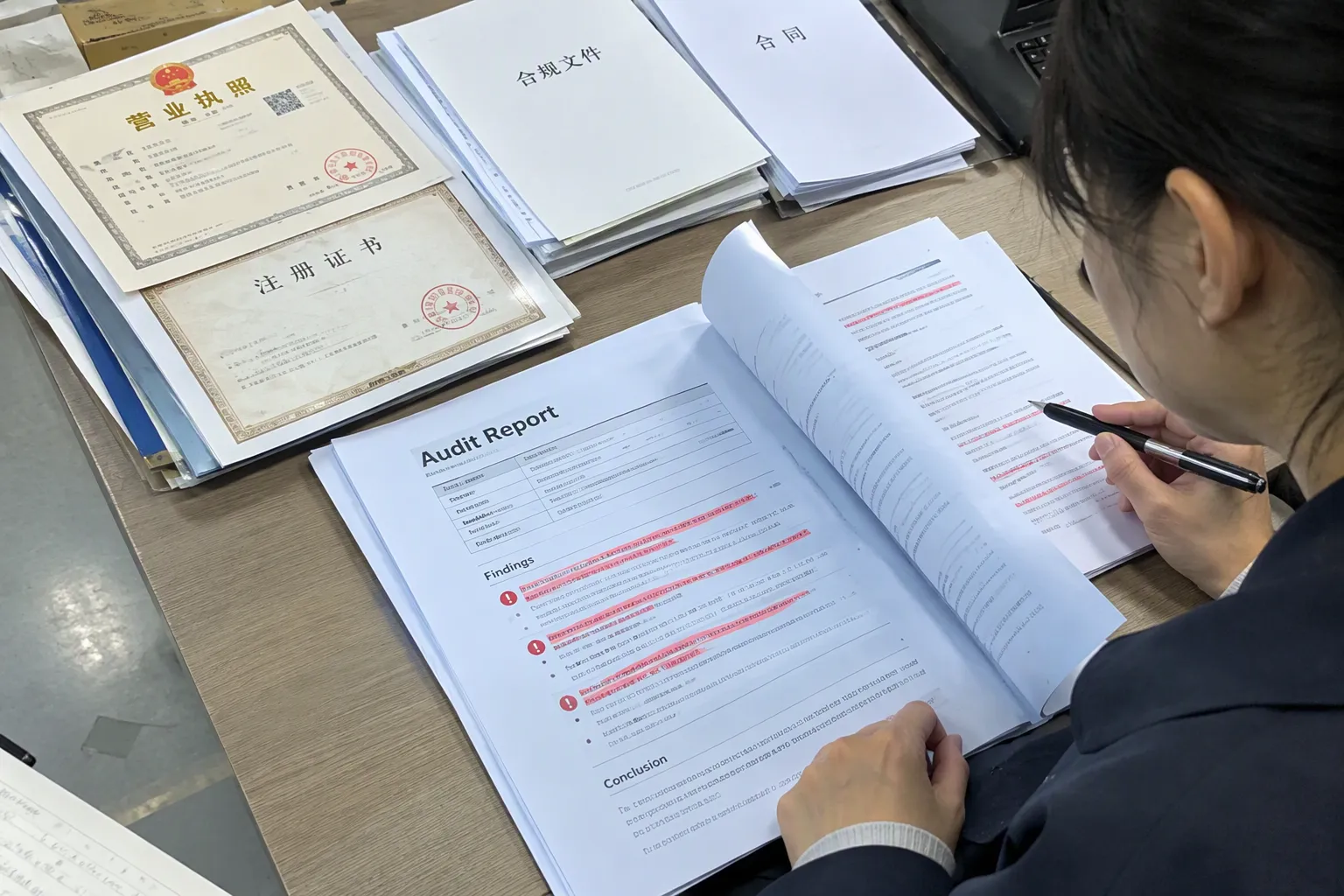
A spreadsheet is usually enough for a first estimate. I recommend using one worksheet per supplier or per sourcing option, then adding a summary page for comparison.
| Landed-cost layer | What to include | Status to record |
|---|---|---|
| Goods cost | Product, packaging, samples, tooling, labels | Confirmed, estimated, or pending |
| China-side costs | Inspection, warehouse, consolidation, inland delivery | Included, excluded, or quoted separately |
| International freight | Freight, fuel, handling, insurance if selected | Estimate date and validity period |
| Destination import costs | Duty, tax, broker, port, clearance, delivery | Verify with local professional |
| Contingency | Unconfirmed variables and change risk | Review before each payment stage |
I also recommend adding these calculation fields:
- Supplier name and factory location
- Product SKU and specification version
- Currency used in each quote
- Exchange-rate assumption and date
- Order quantity
- Carton quantity, dimensions, net weight, and gross weight
- Incoterm and named place or port
- Production lead time
- Deposit and balance payment schedule
- Freight quotation date and validity
- Broker or forwarder contact responsible for import confirmation
- Notes on exclusions, assumptions, and unresolved questions
This worksheet gives buyers a practical decision tool. It also creates a record of what was agreed before payment. That can reduce confusion when a supplier, forwarder, warehouse, and buyer are each handling different parts of the order.
Avoid Common Cost-Estimation Mistakes
The biggest errors are usually caused by assumptions rather than arithmetic.
Comparing only the unit price
A unit price without scope is incomplete. Buyers should compare the same product, packaging, quantity, delivery term, and service requirements.
Treating an Incoterm as a complete price guarantee
EXW, FOB, CIF, DAP, and DDP describe defined responsibilities[8], but the actual commercial arrangement still needs written clarification. Buyers should confirm the named place, included services, exclusions, documentation, and handoff procedure.
Using old freight quotes
Freight charges can change. I recommend recording the quote date and validity period, then requesting an updated quote before booking.
Ignoring carton data
Freight charges depend heavily on shipment volume and weight. Buyers should request a packing list or at least estimated carton details before relying on a shipping budget.
Assuming all “DDP” offers are comparable
A DDP offer may look convenient, but buyers should still understand the declared shipment arrangement, destination delivery scope, tax handling, product eligibility, and documentation. I do not present DDP as universally best or cheapest. It may suit some shipments, while another arrangement may be more appropriate for other importers.
Leaving compliance questions until shipping
Product compliance, labeling, battery restrictions, safety requirements, and marketplace rules can affect both cost and shipment options. Buyers should seek qualified advice for application-specific requirements before production is complete.
Frequently Asked Questions
What is included in total import cost from China?
Total import cost from China usually includes goods cost, packaging, China-side handling, international freight, customs-related charges, tax, local delivery, and a contingency reserve. The exact items depend on the product, Incoterm, shipping method, destination, and service scope agreed with suppliers and logistics providers.
Is FOB price the same as landed cost?
No. An FOB price generally covers the product and the supplier’s responsibilities up to the agreed export handoff point, subject to the specific contract and named port. Landed cost also includes freight, insurance if applicable, destination charges, customs clearance, duty, tax, and local delivery.
How can I compare China supplier quotes fairly?
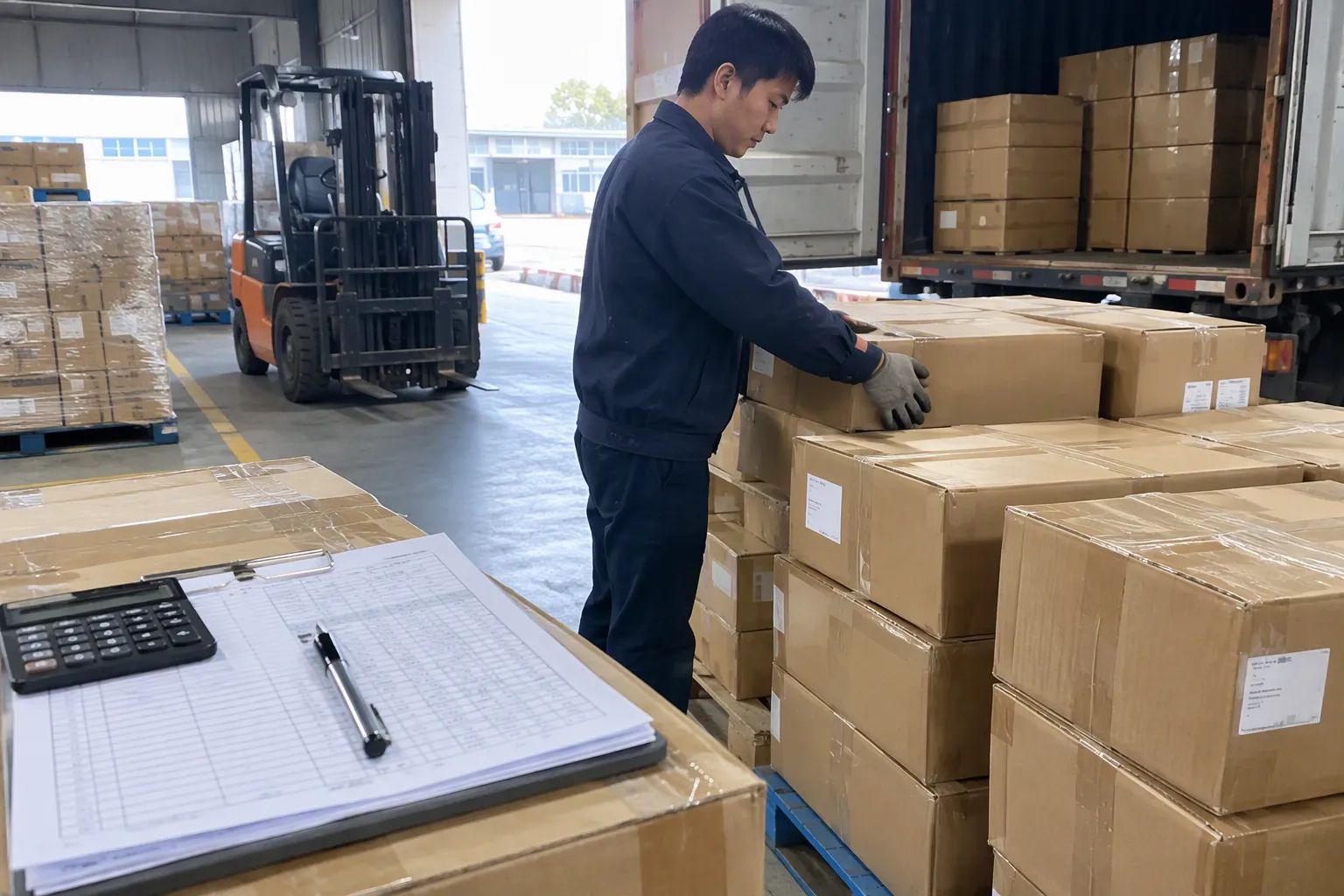

I recommend converting all quotes to the same basis. Confirm the product specification, order quantity, packaging, labels, inspection requirements, Incoterm, China delivery point, and currency. Then add excluded costs to each quote before deciding which supplier has the best overall commercial offer.
Can I estimate duty and import tax before ordering from China?


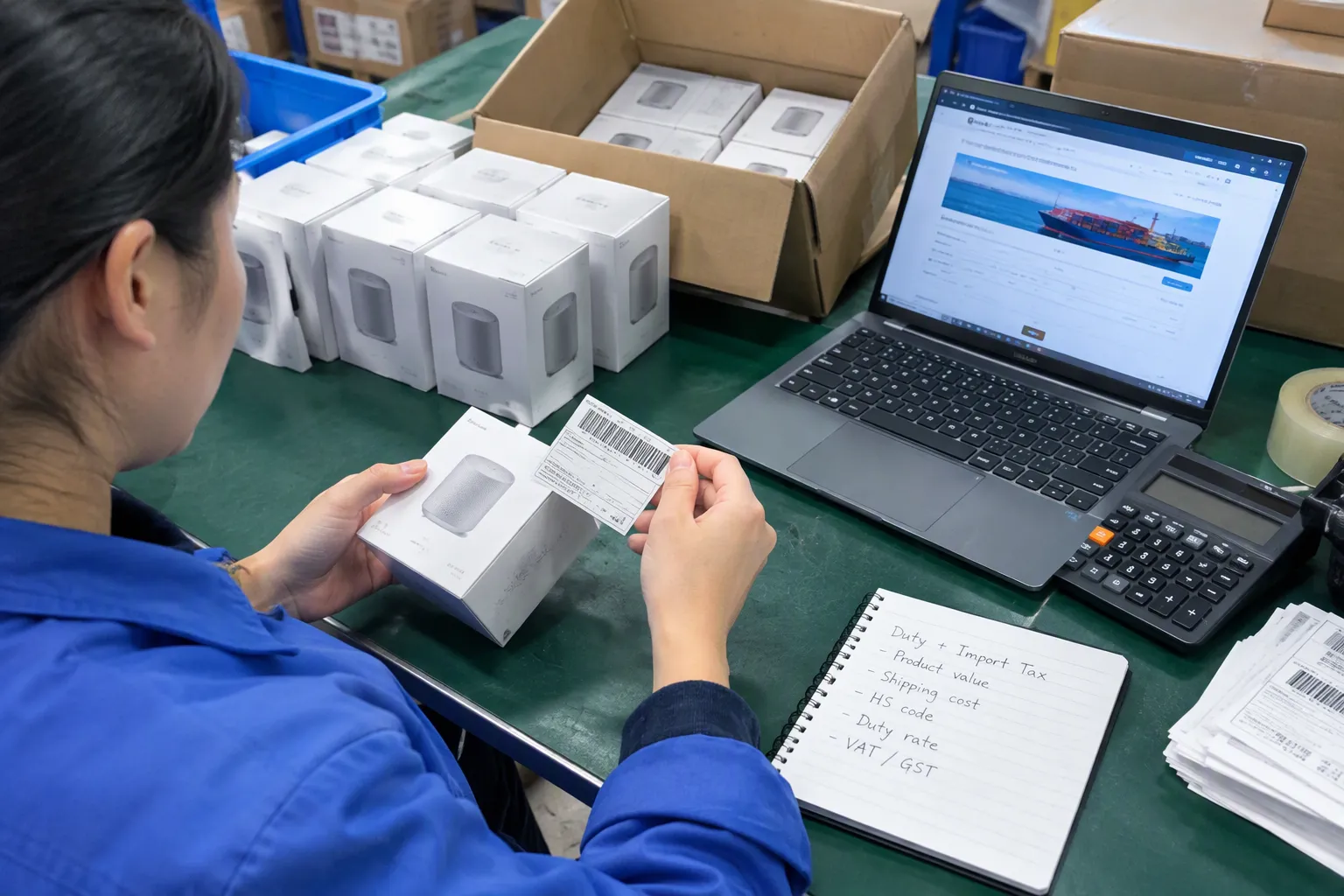
Yes, buyers can request an estimate, but they should not treat it as final. Duty and tax depend on product classification, declared value, origin, destination rules, and current policy. A customs broker, tax advisor, or qualified local professional should verify the applicable treatment.
Should I include a contingency in my import budget?
Yes. A contingency reserve helps account for variables such as freight changes, final carton measurements, exchange-rate movement, extra inspection, packaging corrections, or destination charges not yet confirmed. The reserve should be revised as the supplier, forwarder, and customs professional provide more accurate information.
Conclusion
Estimating total import cost from China requires more than multiplying a factory price by your order quantity. I recommend building a layered estimate that separates goods, China-side execution, international freight, destination import charges, and contingency. This method makes supplier quotes easier to compare and exposes costs that may otherwise appear after payment. If you need help making China supplier quotations comparable, coordinating inspections, packaging, consolidation, or shipment handoffs, I can help you build a clearer purchasing baseline before you commit to an order.
Sources
- Know Your Incoterms", International Chamber of Commerce guidance describes Incoterms® rules as standardized terms allocating delivery obligations, costs, and risk; they do not by themselves settle all terms of an underlying sales contract
- Know Your Incoterms", ICC Incoterms® guidance distinguishes EXW from FOB by allocating delivery and export-related responsibilities differently, so quoted prices under the two terms represent different scopes of service
- Know Your Incoterms", Official trade guidance defines EXW as delivery when goods are placed at the buyer's disposal at the seller's premises; onward pickup and transport are generally arranged by the buyer
- Air Cargo Tariffs and Rules: What You Need to Know", Air-cargo guidance explains that freight may be charged on chargeable weight, which can be based on volumetric weight when a shipment occupies more space relative to its actual mass
- Harmonized Tariff Schedule - United States International ...", Customs authorities determine tariff treatment by classifying goods under the applicable tariff schedule and applying origin-dependent rates and trade measures where relevant
- VAT Deductions - Taxation and Customs Union", Tax-authority guidance indicates that eligible VAT-registered businesses may generally deduct or reclaim import VAT subject to documentary and substantive requirements, whereas import VAT may remain an unrecoverable cost where those conditions are not met
- Dollar Exchange Rate Volatility and Productivity Growth in ...", Trade and macroeconomic research shows that shipping rates and exchange rates can change over time, meaning a landed-cost estimate made before booking and payment is necessarily subject to revision
- Know Your Incoterms", The International Chamber of Commerce publishes EXW, FOB, CIF, DAP, and DDP as Incoterms® rules that define specified delivery-related obligations between sellers and buyers