Quick Answer
China sourcing for DTC brands often begins with an exciting product idea, but unclear requirements can quickly create expensive delays, inconsistent quotations, and quality problems[1]. I help overseas businesses turn early concepts into purchase-ready specifications, verified supplier decisions, controlled production, and delivery plans that support a more predictable launch. **China sourcing for DTC brands works best as a staged procurement process[2].
A buyer should first define the product clearly, then compare suppliers against quality and delivery requirements, approve samples without treating them as a bulk-production guarantee, and control packaging, inspection, consolidation, and shipping before the order leaves China.**
A DTC founder does not only need a factory contact. The founder needs a process that reduces uncertainty at each decision point. In my experience, most sourcing problems begin before production starts[4], when product details, quality expectations, or delivery responsibilities remain unclear.
How Can China Sourcing Help DTC Brands Move From Product Idea to Delivery?
A vague product idea can produce several quotations, but those quotations may describe different products. That makes price comparison unreliable and creates pressure during sampling and production. I use a staged approach that connects product definition, supplier evaluation, sample approval, production control, and delivery planning.
China sourcing can take a DTC product from concept to delivery by converting the idea into a detailed brief, matching it with capable suppliers, testing and approving samples, monitoring mass production, inspecting finished goods, and coordinating packaging and logistics.[3] Each stage should have clear documents, responsibilities, and acceptance criteria.
The most important shift is to treat sourcing as risk management rather than a search for the lowest factory price. I have worked with overseas buyers who initially wanted only a supplier list. After we clarified the product, packaging, target market, and delivery requirements, the purchasing decision became much more practical.
A supplier can offer an attractive unit price and still create a poor commercial result if the product requires repeated rework, arrives late, uses unsuitable packaging, or fails the buyer’s inspection criteria. A slightly higher quotation may represent a more complete specification, better process control, or more realistic lead time.
1. Start with a purchase-ready product brief
The first document does not need to be perfect, but it must be specific enough for suppliers to quote the same product. A useful brief may include:
- Product purpose and target customer
- Dimensions, materials, colors, and finishes
- Functional requirements
- Reference images, sketches, or competitor samples
- Logo, private-label, or OEM requirements
- Packaging structure and labeling needs
- Target order quantity and expected reorder volume
- Destination country and preferred delivery timing
- Quality expectations and inspection points
- Required samples, revisions, and approval process
I often see founders describe a product with phrases such as “premium quality,” “durable material,” or “minimal packaging.” These phrases communicate intent, but they do not give a factory measurable instructions. I need to help translate them into details that a supplier can quote and produce.
For example, “premium packaging” might mean a rigid box, a printed mailer, an insert card, or simply thicker material. Each option changes cost, production time, storage requirements, and shipping volume. If the buyer does not define the packaging direction early, suppliers may quote different assumptions.
A product brief also helps identify which details remain undecided. I prefer to mark open items instead of hiding them. A buyer can then decide whether to resolve the issue before supplier outreach, during sampling, or after receiving technical feedback.
2. Make supplier quotations comparable
A quotation comparison is useful only when the underlying offers are comparable.[5] I do not recommend placing supplier prices in a spreadsheet without recording the assumptions behind each price.
| Comparison point | Questions I would ask |
|---|---|
| Product specification | Does the quotation cover the same material, size, components, and finish? |
| Quantity | Is the price based on the requested quantity, a higher MOQ, or a different quantity tier? |
| Tooling | Are molds, dies, plates, or setup costs included? |
| Packaging | Does the price include retail packaging, inserts, labels, and cartons? |
| Samples | Are sample fees and revisions included or charged separately? |
| Lead time | Does the stated time begin after deposit, sample approval, or material confirmation? |
| Quality control | What checks does the supplier perform, and what inspection access is available? |
| Shipping basis | Is the price for the product only, or does it include a logistics service? |
| Payment terms | What deposit, balance, and payment milestones apply? |
I usually seek several suitable supplier options rather than collecting the largest possible number of contacts. A long list can create the appearance of progress while increasing communication work. The more important task is to understand which suppliers can actually produce the requested item at the required quantity and quality level.
Supplier capability includes more than machinery. I consider whether the factory understands the product brief, answers questions consistently, has relevant production experience, can support the order quantity, and communicates changes promptly. I also look at whether the supplier is the actual manufacturer, a trading company, or a combination of both. A trading company may still be suitable for some projects, but the buyer should understand who controls production.
3. Evaluate total purchasing risk, not just unit price
The lowest unit price can hide costs that appear later.[6] These costs may include extra sampling, rejected goods, relabeling, rework, replacement components, storage, urgent shipping, or missed sales during a delayed launch.
I use a broader evaluation framework:
- Product fit: Can the supplier meet the intended specification?
- Quality capability: Can the supplier repeat the approved standard at scale?
- Capacity: Can the factory meet the required quantity within the launch window?
- Communication: Does the supplier respond clearly and record changes?
- Commercial terms: Are MOQ, payment terms, tooling, and packaging costs acceptable?
- Delivery readiness: Can the supplier prepare export cartons and documents on time?
- Verification level: What information has been checked, and what still needs confirmation?
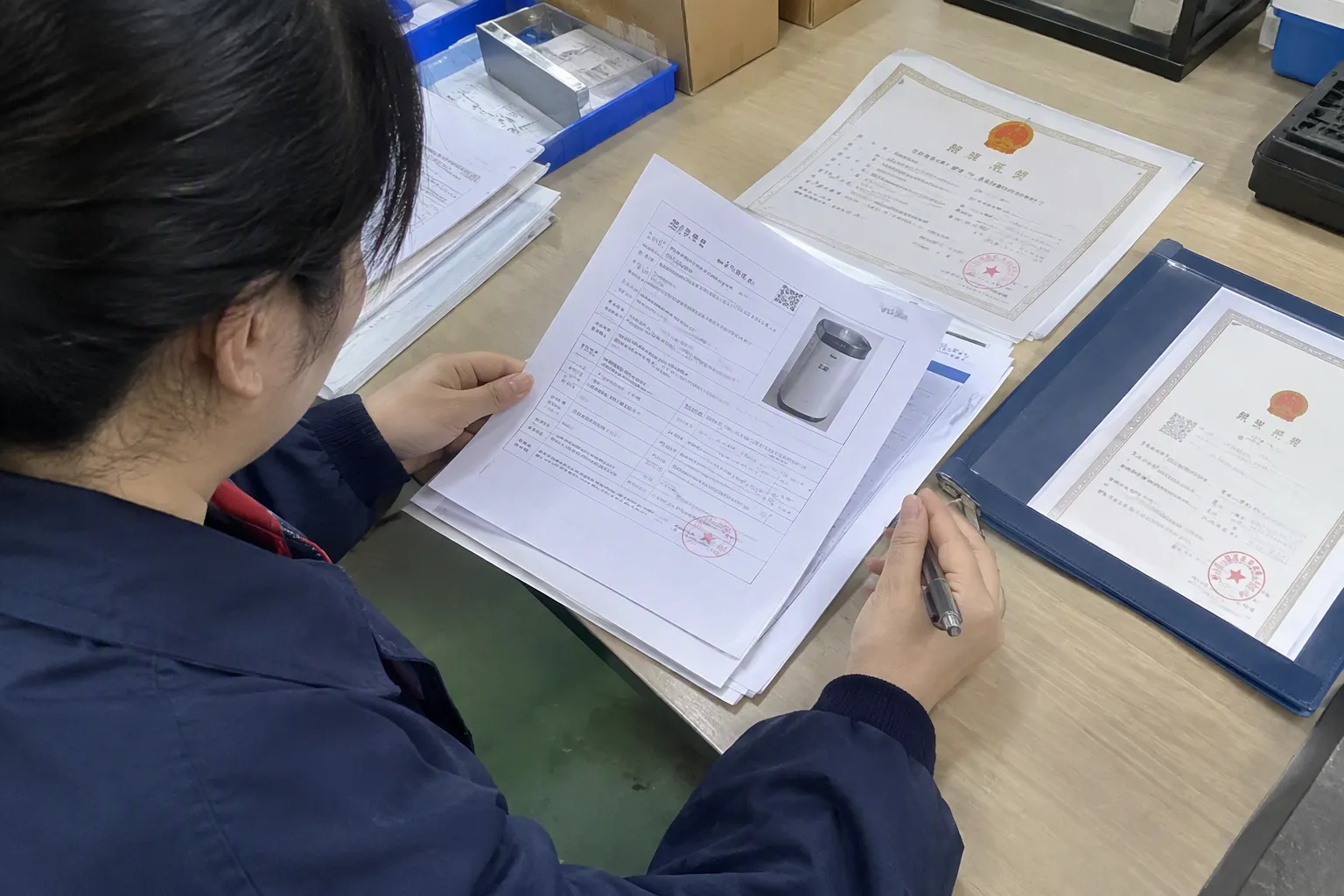
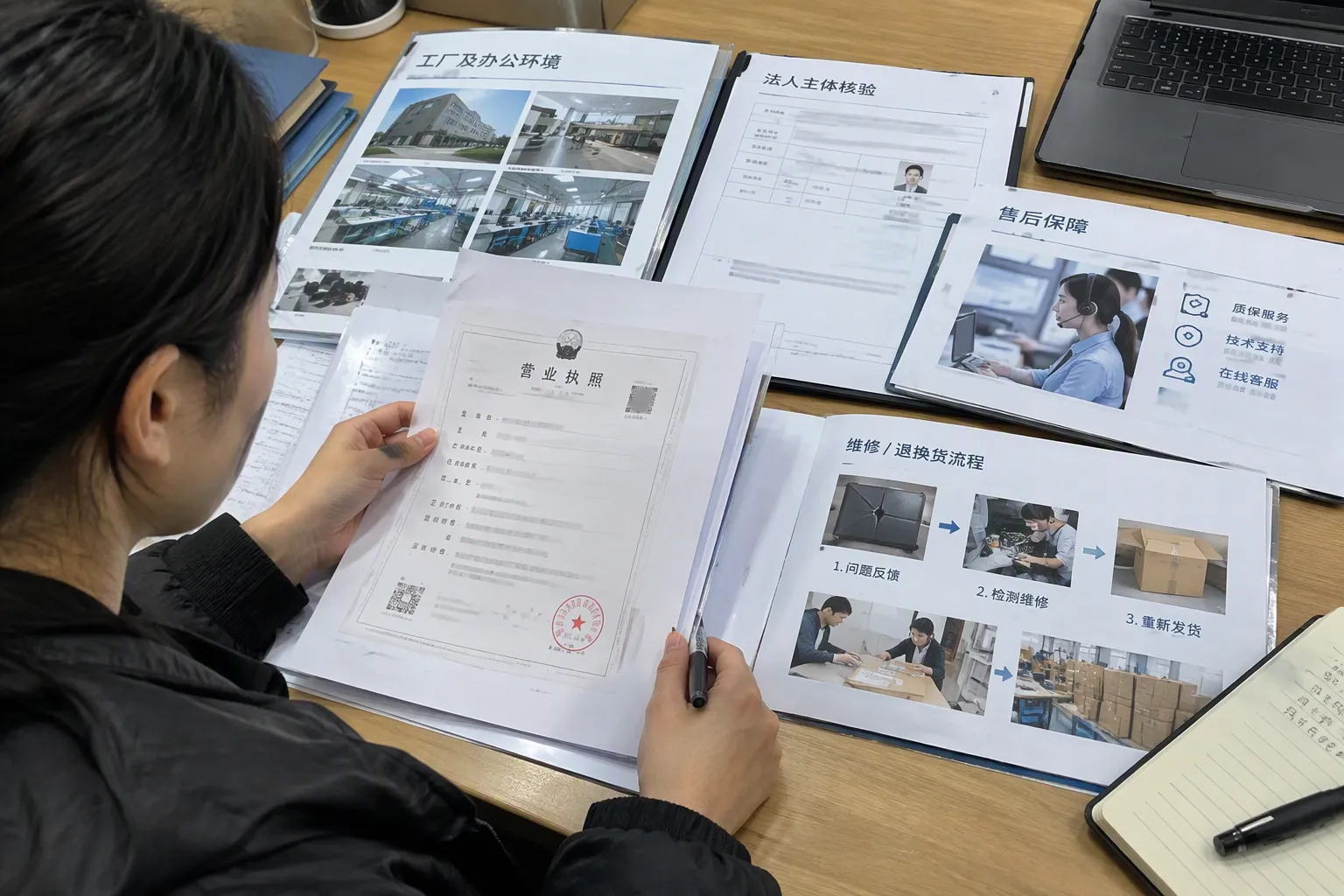
A supplier evaluation does not remove uncertainty. It makes uncertainty visible.[7] I treat factory audits, business-license information, production photos, samples, references, and other supplier documents as evidence to review rather than automatic proof of suitability. Certifications, test reports, and compliance documents should also be checked for scope, validity, issuing organization, and relevance to the exact product and destination market.
I do not present any certification as a universal guarantee. Product-specific compliance may depend on the destination country, product category, materials, claims, labeling, and intended use. I recommend that buyers obtain independent legal, regulatory, or technical advice when those issues affect market access.
4. Use sample development as a structured control milestone
A sample is valuable because it gives the buyer something concrete to evaluate. It can reveal problems that are difficult to detect in photographs or supplier descriptions. However, I do not treat sample approval as proof that every bulk unit will match the sample.[8]
The sample process should answer several questions:
- Does the product perform its intended function?
- Does the size and appearance match the product brief?
- Are the materials and components acceptable?
- Does the packaging protect the product and support the brand?
- Can the supplier explain how the approved result will be repeated?
- Which details require a written production standard?
I prefer to record sample feedback in a revision sheet. The sheet can include photos, marked-up drawings, measurements, color references, packaging notes, and a clear approval date. The buyer and supplier should know which version is approved.
In my work with DTC projects, specification clarification and sample iteration often take more time than founders first expect. That time is not necessarily waste. It can prevent a production order from moving forward with unresolved assumptions.
At the same time, a sample may be made by a more experienced technician, with additional attention that is not automatically applied to every production unit. Materials may also come from a different batch. Packaging may be assembled manually. For that reason, the approved sample should become one part of the bulk-production control system, not the entire system.
5. Connect sample approval with mass-production controls
Before production begins, I want the supplier and buyer to agree on a practical production reference. Depending on the product, this may include:
- Approved sample retained by the buyer or inspection team
- Product specification sheet
- Critical dimensions and acceptable tolerances
- Material or component requirements
- Color and surface references
- Logo position and printing artwork
- Packaging artwork and assembly instructions
- Carton packing requirements
- Defect definitions and inspection method
The exact inspection standard depends on the product and the buyer’s risk tolerance. A professional inspection provider or qualified technical specialist may be appropriate for application-specific requirements. I avoid presenting a general checklist as a substitute for product expertise.
Production follow-up is also important. I use it to confirm whether the supplier has started on schedule, whether materials are available, whether the production line has encountered problems, and whether changes have been made. Early communication matters because a small delay at the beginning can affect packaging, inspection, booking, and final delivery.
A production update should contain useful evidence rather than only a sentence saying “everything is going well.” Depending on the project, evidence may include:
- Material or component photographs
- Work-in-progress photographs
- Quantity completed
- Quantity remaining
- Identified defects and corrective actions
- Packaging progress
- Updated completion date
- Issues requiring buyer approval
I have seen situations where the approved sample looked acceptable but bulk production differed in quality, packaging, or timing. That experience is why I separate sample approval, production follow-up, and final inspection into different control points.
6. Define inspection before goods are finished
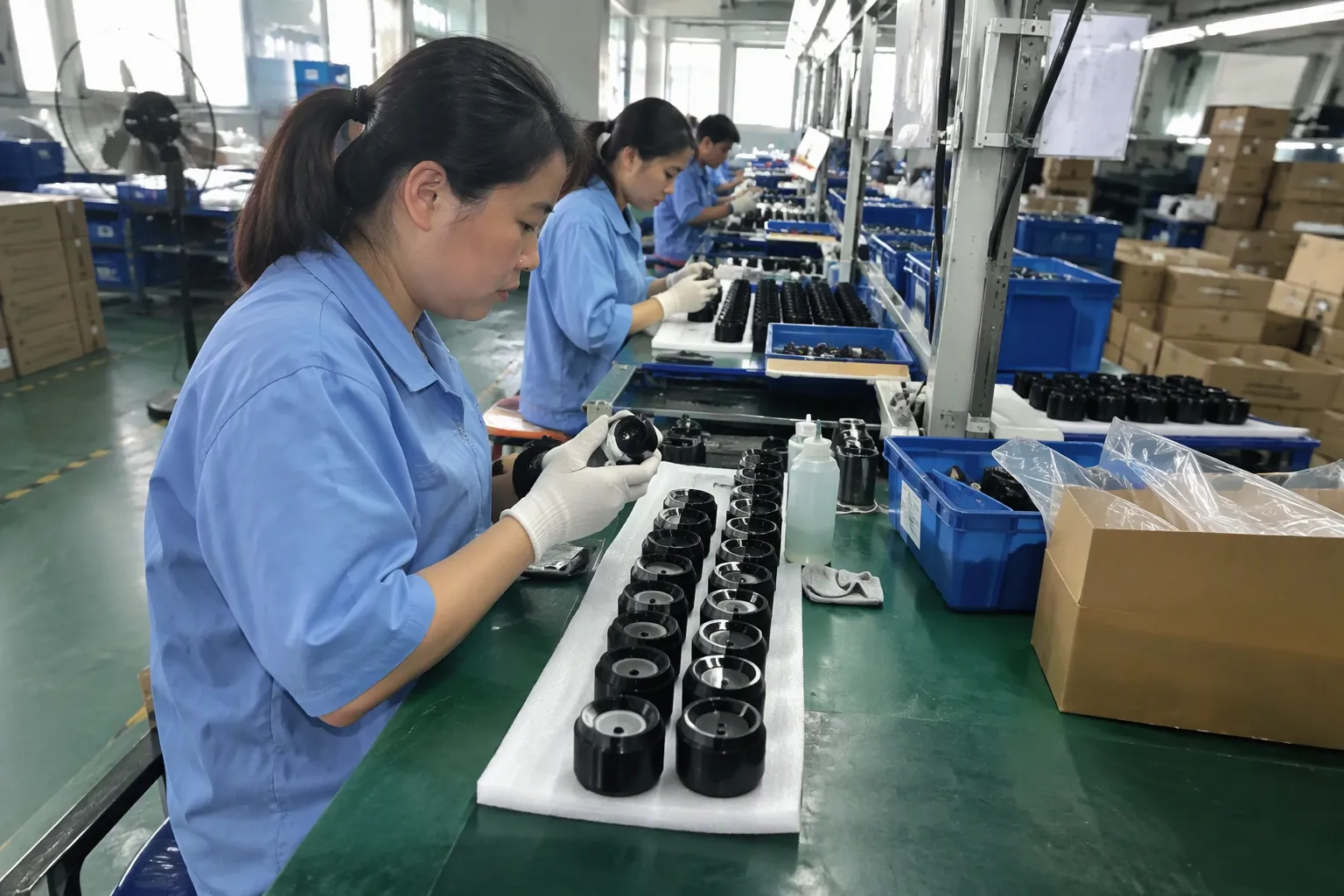
A buyer should decide what inspection means before the factory completes the order. If the buyer waits until a problem appears, the supplier may argue about standards that were never documented.
A pre-shipment inspection may review:
- Quantity and SKU mix
- Product appearance
- Dimensions and key functions
- Workmanship and visible defects
- Logo, color, and finish
- Accessories and included components
- Packaging and labeling
- Carton markings
- Shipping quantity and packing list
The inspection result should lead to a decision: release, hold, rework, or further evaluation. I do not recommend treating an inspection report as a universal technical certification. It is a checkpoint based on the agreed scope and sample size.
For larger or repeat orders, the buyer may also consider an earlier production inspection. An early check can identify a recurring issue while corrective action is still possible. The right timing depends on the product, production cycle, order value, and consequences of failure.
7. Plan packaging and delivery at the beginning
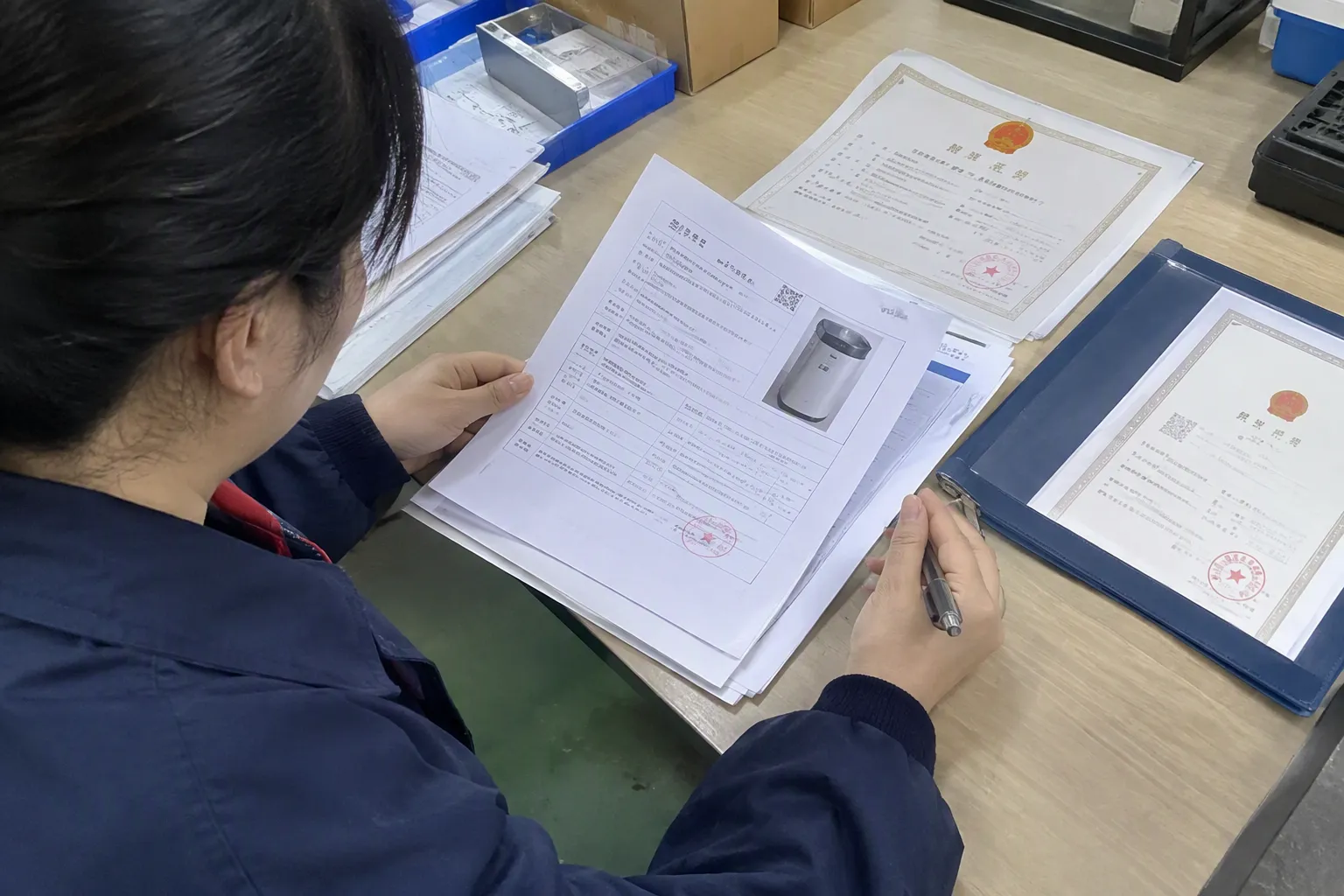

Delivery problems often begin during product development. Packaging affects product protection, carton dimensions, warehouse space, freight calculations, labeling, and the customer’s unboxing experience.
I ask buyers to consider these questions early:
- Does the retail package protect the product during normal handling?
- Does the packaging meet the brand’s presentation requirements?
- Are labels and inserts correct for the destination market?
- Can the factory pack the order consistently?
- What are the master-carton dimensions and gross weights?
- Will several suppliers need to send goods to one consolidation point?
- Does the buyer need warehousing before shipment?
- Which party will coordinate export and international transport?
I treat freight rates, duties, taxes, customs requirements, and delivery times as variables that require current confirmation. They can change according to route, season, shipment size, product classification, destination, and service type. I do not promise a fixed delivery outcome without reviewing the actual order and logistics plan.
For a DTC brand buying from multiple factories, consolidation can simplify inbound inventory. Several suppliers may send finished goods to a warehouse, where the order can be counted, checked, repacked, and prepared for one shipment. This can also introduce handling time and storage costs, so the buyer should compare the operational benefits with the added steps.
8. Use clear checkpoints from purchase order to delivery

A simple project timeline can reduce confusion between the buyer, sourcing team, suppliers, inspectors, warehouse, and freight provider.
| Stage | Main decision | Useful record |
|---|---|---|
| Product definition | Is the brief complete enough to quote? | Product specification and artwork |
| Supplier selection | Which supplier best fits the requirements? | Comparison sheet and verification notes |
| Sampling | Does the sample meet the current standard? | Sample comments and approval record |
| Purchase order | Are price, quantity, terms, and dates clear? | Purchase order and pro forma invoice |
| Production | Is production following the approved standard? | Progress updates and issue log |
| Inspection | Can the goods be released? | Inspection report and corrective-action record |
| Packing | Are packaging, labels, and cartons correct? | Packing list and carton information |
| Shipping | Is the shipment ready for its route? | Shipping documents and booking details |
| Receipt | Did the delivered goods match the order? | Receiving check and discrepancy report |
I have found that written records protect both sides. They reduce disputes caused by memory, informal messages, or different versions of artwork. A sourcing partner can help maintain these records, but the buyer should still understand and approve the important commercial and product decisions.
9. Know when to use a China sourcing partner
A DTC founder may manage a small order directly with a supplier, especially when the product is simple and the factory is already trusted. However, the workload increases when the project involves custom development, several suppliers, private-label packaging, tight launch dates, or quality-sensitive components.
A sourcing and procurement partner may support the buyer with:
- Local supplier communication
- Quotation normalization
- Factory and supplier verification
- Sample coordination
- Production follow-up
- Inspection scheduling
- Packaging and labeling checks
- Multi-supplier consolidation
- Warehousing and shipping coordination
I see the sourcing partner’s role as coordination and risk control, not as a replacement for the buyer’s product ownership. The DTC brand still needs to define its customer promise, approve the product standard, confirm the commercial terms, and obtain any specialist advice required for its market.
My own work is based in Shenzhen, with sourcing access to manufacturing clusters including Dongguan, Guangzhou, Foshan, Yiwu, Ningbo, and other areas. That local access can help reduce communication delays, but location alone does not make a supplier suitable. I still match the supplier to the product, order, quality expectations, and delivery plan.
Frequently Asked Questions
Is China sourcing suitable for a first-time DTC brand?
China sourcing can suit a first-time DTC brand when the buyer has a clear product brief, realistic order expectations, and a plan for samples, quality control, packaging, and delivery. A small test order may reduce exposure, but it does not remove the need to verify the supplier and inspect the goods.
How much product information should I provide to a Chinese supplier?
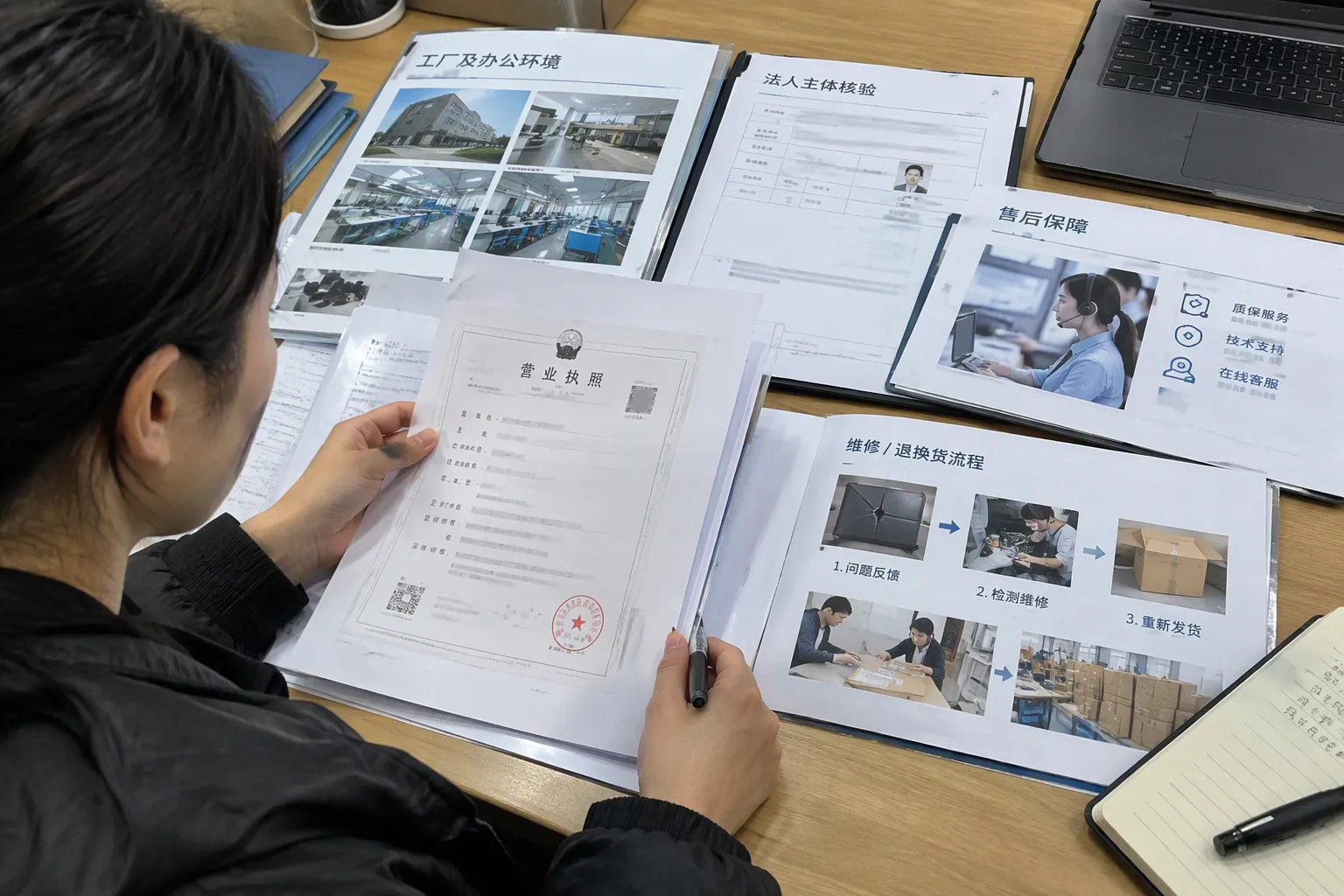
You should provide enough information for suppliers to quote the same product. Include dimensions, materials, functions, colors, packaging, branding, quantity, destination, and quality expectations where known. Reference images help, but they should not replace written requirements or technical clarification.
Does an approved sample guarantee consistent mass production?
No. An approved sample confirms that one sample or sample batch met the buyer’s current expectations. Bulk production can differ because of material batches, operator variation, equipment settings, substitutions, or production pressure. Buyers should use production follow-up and an agreed inspection process.
Should I choose the supplier with the lowest quotation?
Not automatically. You should compare the full offer, including specification, MOQ, tooling, packaging, lead time, payment terms, quality controls, communication, and delivery capability. A low unit price can become more expensive if it creates rework, defects, delays, or urgent logistics costs.
Can a sourcing company handle several Chinese suppliers for one DTC order?
A sourcing company may coordinate supplier communication, sample development, production follow-up, inspections, consolidation, warehousing, and shipping. The exact support depends on the project. Buyers should confirm responsibilities, fees, documentation, approval points, and how quality issues will be managed before starting.
Conclusion
China sourcing for DTC brands is more reliable when I treat it as a sequence of controlled decisions rather than a single supplier search. I start with a purchase-ready brief, compare suppliers beyond price, record sample revisions, monitor production, inspect finished goods, and plan packaging and delivery early. This process cannot eliminate every product or logistics risk, but it can make important risks visible while corrective action is still possible. If you are developing a China-made product, contact KingSourcing to discuss your brief, supplier requirements, samples, quality controls, and delivery plan.
Sources
- Manufacturing and Quality | www.waru.edu", A study of manufacturing and procurement processes finds that incomplete or ambiguous specifications can increase interpretation variance, rework, and schedule risk across suppliers
- [PDF] Procuring Research and Evaluation Services", Research on supplier-development and procurement workflows supports sequencing requirements definition, supplier evaluation, validation, and production oversight as a means of structuring purchasing decisions
- Analysis of supplier involvement in new product ...", Research on supply-chain integration describes product sourcing as a cross-functional process linking specification, supplier selection, production coordination, quality assurance, and distribution
- Cross-Cutting Supply Chain Services Issues", Studies of manufacturing-project failures identify inadequate requirements definition and planning among the upstream conditions associated with later quality, cost, and schedule problems
- The Source of the Problem: Comparing Pre- and Post-Qualification ...", Procurement guidance states that supplier bids should be compared against a common specification, quantity, scope of work, and commercial basis to avoid misleading price comparisons
- 52.249-14 Excusable Delays. | Acquisition.GOV", Public procurement guidance treats acquisition price as only one component of total cost and advises considering quality failures, delays, maintenance, logistics, and other downstream costs
- NIST Cybersecurity Supply Chain Risk Management: Due ...", Risk-management research treats supplier qualification and due diligence as methods for identifying and reducing uncertainty rather than as guarantees of future compliance or performance
- Manufacturing and Quality | www.waru.edu", Quality-control literature distinguishes approval of a reference sample from verification of continuing production consistency because materials, equipment, operators, and process conditions can vary