Quick Answer
OEM makes sense for importers when a standard product no longer gives them enough control over what they sell. A logo alone may look like progress, but it can create confusion once a factory asks about materials, features, packaging, labels, testing, and quality expectations. I help buyers approach OEM with a clearer product plan.
OEM makes sense for importers when they can define a product version that a factory can repeatedly produce and they can consistently evaluate. Importers should have a documented product brief, clear packaging and labeling requirements, measurable quality expectations, and a commercial reason to control the product version. If they only need branding on an existing item, a lighter private-label approach may be lower risk.[1]

The decision is not simply about whether a buyer can meet a factory’s MOQ. In the OEM/private-label projects we coordinate, the more important question is whether the buyer is ready to make product decisions before production starts—and manage those decisions through samples, production, inspection, and final shipment.
OEM Makes Sense for Importers Not When They Merely Want a Logo, but When They Can Define What the Factory Must Deliver
Many importers start with a simple request: “Can you add my logo?” That question is understandable, especially for e-commerce sellers moving away from generic listings. The problem is that branding requests often become much larger product-definition decisions once sampling begins. Without a clear brief, buyers can receive a product that is branded but still not truly controlled.
OEM makes sense for importers when they can specify the version of the product they want, explain how it should be packed and labeled, and set acceptance criteria for quality. A factory needs more than a logo file to deliver consistent OEM production.[2] It needs clear instructions that can be quoted, sampled, approved, produced, and inspected.
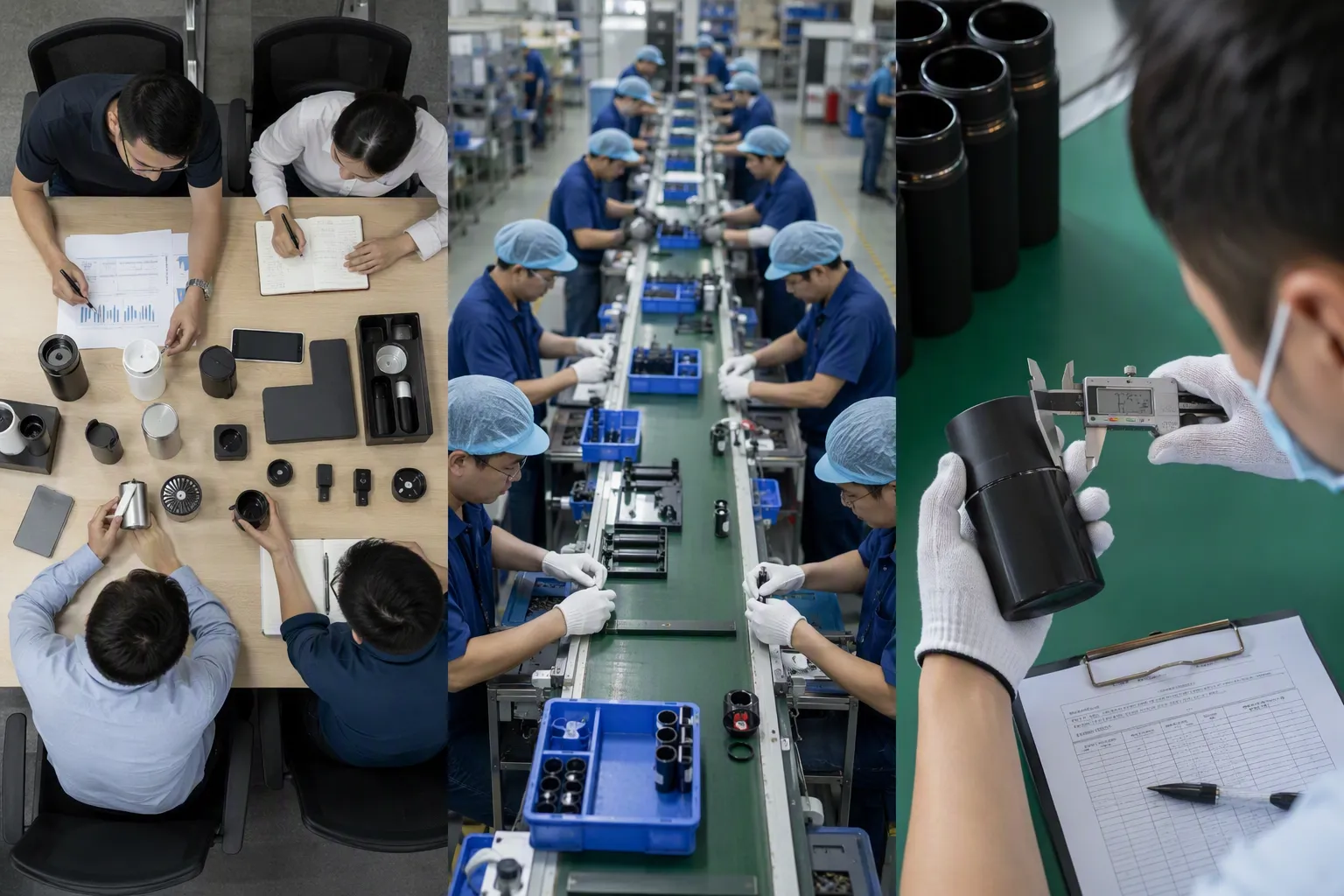
A Logo Is One Decision, Not the Whole OEM Project
I do not treat OEM as a synonym for putting a logo on an existing product. A logo can be part of an OEM project, but it is only one part of the production instruction.
For some products, the logo may be the only change needed. For example, an importer may choose a standard item, add a printed logo, use a custom color box, and apply marketplace labels. That can be a sensible private-label starting point. However, the buyer should still confirm exactly what will change and what will remain standard.
A more developed OEM request may involve decisions such as:
- Product dimensions or model selection
- Materials, finishes, colors, or component options
- Product features and accessory combinations
- Logo method, logo position, and logo size
- Retail box design and carton markings
- Barcode, SKU, warning label, and country-of-origin requirements
- User manuals, inserts, and multilingual labels
- Quality standards and defect classifications
- Testing or compliance documents required for the target market
- Final inspection criteria and packaging checks
The number of decisions depends on the product category. A simple promotional item may require fewer decisions than a consumer electronic accessory, a baby product, or a product with electrical, chemical, food-contact, or safety considerations.[3]
In OEM/private-label projects we coordinate, branding requests often become specification and packaging decisions once sampling begins.
That is not a bad outcome. It simply means the buyer is moving from buying an item to managing a defined product version. OEM makes sense for importers who are prepared for that responsibility.
Start With Product Definition, Not MOQ
Many buyers first ask, “What is the MOQ for OEM?” MOQ matters, but I usually see product definition as the more useful first test.
A buyer can meet a 500-unit or 1,000-unit MOQ and still have a risky project if the factory does not have a usable instruction set. If the buyer cannot explain what “correct” looks like, the supplier may make assumptions. Those assumptions can appear in the sample, the mass-production order, the packaging, or the finished goods.
Before requesting OEM quotations, I recommend preparing a practical product brief. It does not need to be a complicated engineering document. It does need to give the sourcing team and factory enough information to quote the same request.
| Product brief area | Questions an importer should answer | Why it matters |
|---|---|---|
| Product base | Which existing model, reference sample, or product link is the starting point? | Prevents suppliers from quoting different versions |
| Product changes | What must be changed from the standard version? | Separates essential changes from optional requests |
| Materials and finish | Which materials, colors, coatings, or finishes are acceptable? | Reduces appearance and durability misunderstandings |
| Branding | What logo format, position, color, and application method are required? | Avoids vague “logo customization” instructions |
| Packaging | Is the packaging standard, custom printed, or retailer-ready? | Packaging can affect MOQ, cost, lead time, and damage risk[4] |
| Labels | Which barcodes, warning labels, SKU labels, and carton marks are needed? | Supports fulfillment and market-entry preparation |
| Quality | What defects are unacceptable? What is the approval reference? | Creates a basis for inspection |
| Compliance | Which market-specific requirements apply? | Requires product-specific verification, not assumptions |
I have found that a concise brief often makes quotation comparison more useful. Without it, one factory may quote a standard product with simple printing while another assumes custom packaging, upgraded materials, or a different accessory set. The buyer may think they are comparing prices for the same item when they are not.
For that reason, OEM makes sense for importers who can control the scope of the request. A focused brief is usually safer than trying to customize every possible element at once.
The Real Readiness Test Is Whether You Can Approve a Sample Properly
A sample is not just a chance to see a product. It is also a decision point. The buyer needs to decide whether the sample represents the version that should go into production.
This is where many first-time OEM buyers discover gaps in their plan. They may receive a sample and then realize that they have not decided:
- Whether the color matches their brand direction
- Whether the logo placement looks balanced
- Whether the packaging feels appropriate for the selling price
- Whether the included accessories are correct
- Whether instructions need changes
- Whether labels are complete for their sales channel
- Whether small cosmetic issues are acceptable
- Whether the product works as intended for the target customer
A sample approval should not be based only on “It looks good.” I recommend that importers review it against an approval checklist. This creates a record of what was accepted and what still needs revision.
What a Practical OEM Sample Checklist Can Include
For many consumer products, a buyer can organize sample review into four areas.
1. Product appearance and construction
Review visible details and basic assembly consistency:
- Color and finish
- Surface marks, scratches, dents, or contamination
- Alignment of parts
- Seams, edges, molding marks, and printing quality
- Logo placement and legibility
- Accessory fit and presentation
The buyer should use a real reference whenever possible. A Pantone reference, approved artwork file, signed sample, or written photo annotation can be more useful than broad language such as “premium quality.”[6]
2. Functional expectations
The buyer should confirm the product performs according to the intended use. The exact checks depend on the category. For a 3C accessory, that may include compatibility, charging behavior, connector fit, or basic operation. For a storage product, it may involve capacity, closure, assembly, or load expectations.
I do not present a sourcing team as a product engineering laboratory. Product-specific performance testing should be planned with qualified professionals, relevant laboratories, or appropriate technical specialists where needed.[7] Still, the buyer should identify the basic functional checks that matter before placing the order.
3. Packaging and labeling
A packaging review can cover:
- Retail box dimensions
- Printed colors and artwork layout
- Barcode scan quality
- Polybag warnings where applicable
- Instruction manual content
- Insert cards and promotional materials
- FNSKU or warehouse labels
- Export carton markings
- Inner carton quantity and master carton quantity
4. Production reference and inspection criteria
The buyer should decide what the approved sample means. Is it only an appearance reference? Is it the product benchmark for mass production? Which details are critical, major, or minor?
For example, a buyer might state that:
- The logo must match approved artwork.
- The barcode label must scan and match the assigned SKU.
- Retail packaging must not have visible crushing, staining, or incorrect printing.
- Every unit must include the specified accessory set.
- Functional defects are not acceptable.
The exact acceptance criteria should match the product and the buyer’s risk level. A qualified inspection provider can help turn product requirements into an inspection checklist, but the importer still needs to make the commercial decisions about what they will accept.
OEM Requires Repeatable Decisions, Not One-Time Preferences
OEM makes sense for importers when their product decisions are repeatable. This matters because a good-looking first sample does not automatically create a stable purchasing program.[8]
A repeatable OEM product has a version that can be reordered. The buyer can explain which model is approved, which materials are accepted, which packaging artwork is current, and which quality points must be checked before shipment.
This does not mean every product detail must be fixed forever. Brands often improve products over time. However, each change should be controlled. If a buyer changes material, packaging, dimensions, color, accessories, or logo method, they should understand that the change may affect cost, production feasibility, lead time, quality risk, and inspection requirements.
I often encourage buyers to think in versions:
| Product version | What changes? | What should be updated? |
|---|---|---|
| Version 1 | Standard product plus logo | Artwork approval, logo placement, packaging details |
| Version 2 | New retail box and inserts | Packaging dieline, barcode, carton data, packing method |
| Version 3 | Material or component adjustment | Sample, quotation, quality checklist, production reference |
| Version 4 | New accessory bundle | Packing list, unit packaging, inspection points, SKU setup |
This approach helps prevent a common problem: a factory continues using an older instruction because the buyer’s changes were discussed casually in chat messages but never consolidated into a revised production document.
A sourcing partner can help organize supplier communication, samples, artwork files, and production follow-up. However, the importer should remain responsible for approving the commercial product version. The factory can make products; it cannot reliably make every brand decision on behalf of the buyer.
A Clear Commercial Reason Should Support the OEM Decision
OEM is not automatically better because it sounds more advanced. It also does not automatically lower the unit cost, increase margins, or guarantee meaningful differentiation.
Importers should have a reason for controlling their own version of the product. That reason might include:
- The brand needs a consistent product and packaging presentation.
- The buyer wants a specific accessory combination.
- The selling channel requires particular labeling or packaging.
- The standard market version does not meet the buyer’s positioning.
- The buyer has recurring demand and wants a stable reorder specification.
- The buyer needs to address repeated customer feedback with a defined product change.
- The buyer is building a product range with consistent colors, materials, or packaging.
These are commercial reasons, not guarantees of success. A custom product can still face demand risk, quality issues, inventory risk, and changing marketplace requirements.
I recommend asking a straightforward question: Would this product change still matter if the buyer had to reorder it several times?
If the answer is yes, OEM may be worth the added coordination. If the answer is no, a standard product or light private-label model may be more practical.
When a Standard Product or Lighter Private Label Is the Better Start
Some importers are not yet ready for full OEM coordination, and that is completely reasonable. A lighter approach can help a brand test product demand and supplier reliability before it commits to customized materials, molds, packaging, or large inventory positions.
A lower-risk starting point may make sense when:
- The buyer is testing a new category.
- The buyer has limited information about customer preferences.
- The product has many technical or regulatory unknowns.
- The buyer has not finalized brand packaging.
- The buyer cannot yet approve product details confidently.
- The order quantity is too low to support meaningful customization.
- The supplier offers customization but cannot show a clear process for controlling it.
For example, an importer may begin with a standard product, a simple logo treatment, an insert card, and warehouse labels. That can still support a recognizable brand while keeping the product definition manageable.
Later, after sales feedback and supplier performance are clearer, the buyer may move toward more structured OEM changes. This sequence can reduce the risk of committing too early to packaging inventory, customized components, or untested product features.
Evaluate the Factory’s OEM Capability Instead of Accepting “Yes” at Face Value
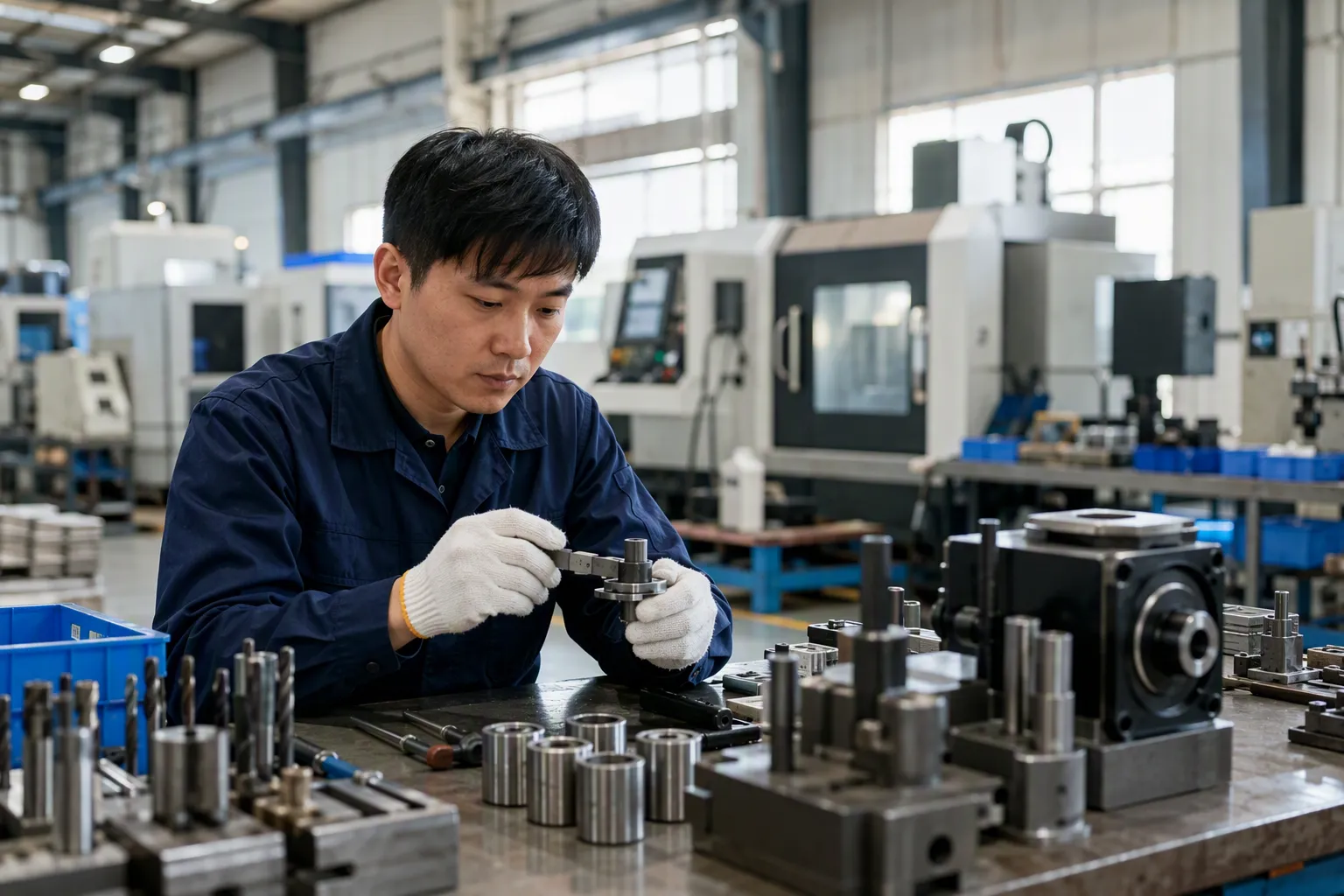
A factory may say it can customize a product. That answer is only the start of supplier evaluation. The buyer should find out what the supplier can actually control in-house, what it outsources, and how it manages quality during customized production.
For OEM sourcing from China, I recommend asking practical questions such as:
-
What customization has the factory completed on this product category before?
Ask for a process explanation rather than relying on broad claims. -
Which parts of the work are handled internally?
The supplier may manufacture the base item but outsource printing, packaging, labels, or specialized components. -
Can the factory provide a sample before mass production?
A sample process helps reveal communication gaps early. -
What files and references does the factory need?
This shows whether the supplier understands artwork, packaging, and specification control. -
How will the factory confirm changes before production?
Look for a clear approval process, not only chat confirmations. -
How does the factory control materials and components?
This matters when color, finish, performance, or accessory combinations are important. -
How will the supplier manage packaging and labeling accuracy?
Incorrect labels and packaging can create fulfillment and compliance problems even when the product itself is acceptable. -
Can the factory support inspection based on the buyer’s checklist?
A reliable supplier should be willing to clarify measurable requirements.
At KingSourcing, we can support supplier sourcing, quotation comparison, factory verification, sample coordination, production follow-up, inspection, packaging review, labeling, consolidation, and shipping coordination. However, I would still advise buyers to verify supplier capability against the specific product and customization level they need.
For regulated products, buyers should also verify the applicable requirements for their destination market. Certifications, test reports, declarations, and supplier claims should be reviewed as documents requiring verification. Product-specific legal, technical, and compliance decisions should be handled with qualified professionals.
Build an OEM Workflow Before You Place the Order

A structured workflow helps importers reduce avoidable confusion. I prefer a simple sequence that makes each approval visible.
-
Define the product brief
Identify the base product, required changes, target market, packaging, and quality expectations. -
Screen suppliers for relevant capability
Compare not only price and MOQ, but also communication quality, sample process, production scope, and documentation. -
Request comparable quotations
Make sure suppliers quote the same product version, branding method, packaging level, and order quantity. -
Develop and review samples
Check product appearance, function, packaging, labels, and accessories against the brief. -
Confirm production documentation
Consolidate approved artwork, product references, packing requirements, and inspection points. -
Follow production progress
Confirm that materials, packaging, and production scheduling follow the approved plan. -
Inspect before shipment
Use an inspection scope that reflects the buyer’s actual quality priorities. -
Consolidate and ship correctly
Confirm carton data, labels, packing lists, and shipping arrangements before dispatch.
This workflow does not eliminate risk. It gives the buyer more control over the points where risk often appears.
Frequently Asked Questions
Is OEM just adding a logo to a product?
No. A logo can be one part of an OEM project, but OEM usually involves a defined product specification, branding method, packaging, labeling, quality expectations, and approval process. If a buyer only needs simple branding on a standard product, a lighter private-label option may be sufficient.
What is the first sign that OEM makes sense for an importer?
The first sign is that the importer can clearly describe what the factory must produce and how they will judge whether it is correct. This includes the product version, packaging, labels, accessories, appearance, and key quality requirements—not only the logo.
Should I choose OEM if I can meet the factory MOQ?
Meeting MOQ is not enough by itself. An importer should also be ready to approve samples, manage product files, make packaging decisions, and define acceptance criteria. Without these controls, a larger OEM order can create more inventory and quality risk.
Can every China factory handle OEM customization?
No. Some suppliers can handle basic logo printing but may have limited control over materials, packaging, components, or technical changes. Buyers should verify what the supplier can actually deliver, which processes are outsourced, and how changes are approved before mass production.
Do I need third-party inspection for OEM orders?
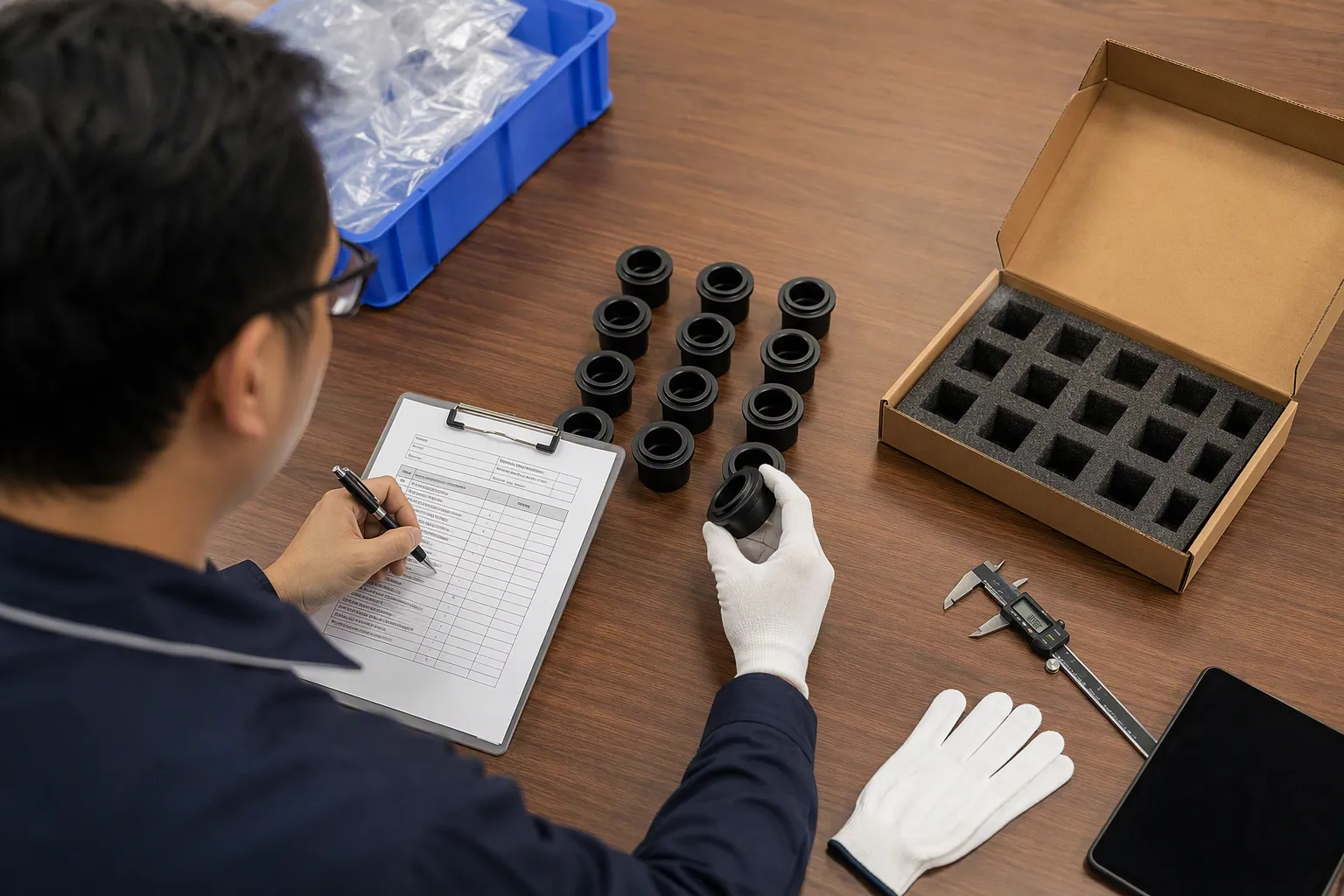
The need for inspection depends on the product, order value, risk level, and buyer requirements. For many importers, pre-shipment inspection provides an additional check against approved specifications, packaging requirements, and visible defects. The inspection scope should reflect the buyer’s own acceptance criteria.
Conclusion
OEM makes sense for importers when they are ready to manage a defined, repeatable product version rather than simply add a logo. The strongest starting point is a clear product brief, an approved sample, controlled packaging and labels, and realistic quality acceptance criteria. I recommend starting with the level of customization your team can actually document and manage. If you are planning an OEM or private-label project from China, KingSourcing can help you compare suppliers, coordinate samples, follow production, inspect goods, consolidate orders, and prepare shipments with greater visibility.
Sources
- Top Pain Relief Gel Manufacturer Guide: How To Find Reliable ...", Private-label arrangements commonly apply branding and packaging to an existing supplier product, whereas OEM arrangements may involve buyer-defined specifications; greater customization can add coordination, minimum-order, and inventory commitments
- [7.5.3 Control of Documented Information Explained ISO ...", Quality-management guidance treats documented and controlled production requirements as a basis for consistently producing outputs that conform to specified requirements
- Children's Product Certificate | CPSC.gov", Regulatory authorities impose category-specific safety and conformity requirements on products such as electrical goods, children's products, and food-contact materials, creating additional specification and documentation considerations
- Analyzing Impact of package design on supply chain costs for ...", Packaging design and sourcing affect material and production costs and can influence lead times, while protective package performance is a material determinant of product damage during distribution
- End-to-End Supply Chain Planning - Haslam College of Business", Packaging-development workflows commonly require artwork, labeling, printing, and approval activities that introduce schedule dependencies before products can be packed and released
- Q7A Good Manufacturing Practice Guidance for Active ...", Quality assurance relies on defined, verifiable requirements and objective evidence; approved samples and controlled artwork provide clearer inspection references than subjective descriptions of quality
- List of CPSC-Accepted Testing Laboratories", ISO/IEC 17025 sets competence requirements for testing and calibration laboratories, supporting the use of qualified laboratories when product performance or conformity testing is required
- [PDF] Process Validation: General Principles and Practices | FDA", Process-validation principles distinguish initial product or sample evaluation from evidence that a manufacturing process can consistently produce output meeting predetermined specifications