A China sourcing agent can help importers reduce risks that often appear long before goods reach the destination country. A low quotation may hide unclear materials, weak supplier capability, delayed production, or incomplete shipping arrangements.[^1] We help buyers identify, document, and manage these issues earlier, when they are usually easier and less costly to address.
A China sourcing agent helps reduce import risks by verifying suppliers, comparing quotations on consistent terms, coordinating samples, following production progress, arranging quality inspections, and preparing shipments. An agent cannot remove every commercial, compliance, or logistics risk, but local coordination can reveal problems before goods leave China rather than after the buyer has already paid, shipped, or received unusable stock.[^2]
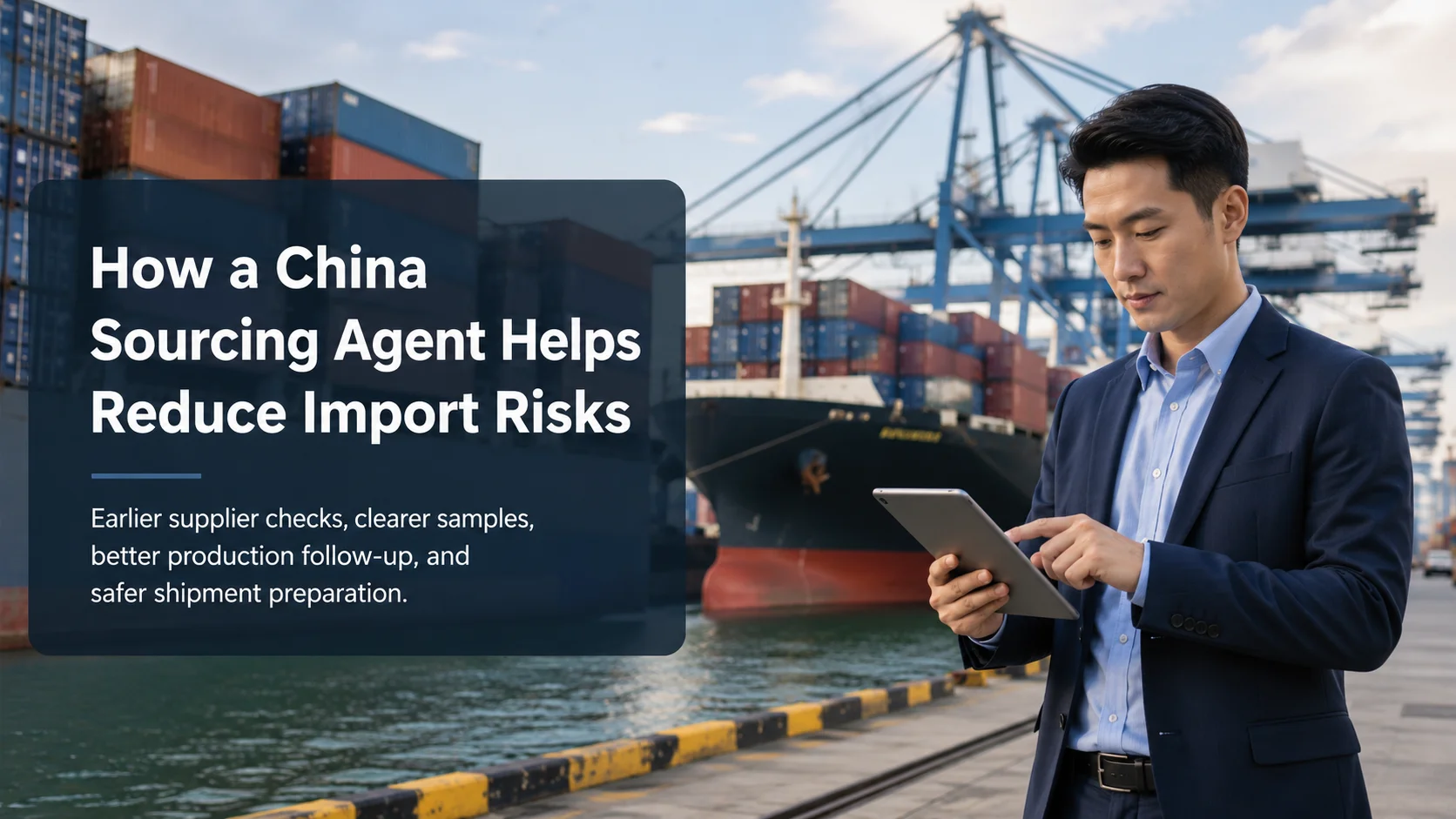
Importing from China can be profitable, but it involves more than finding a product and placing an order. We see that the real challenge is making each supplier, sample, specification, and shipment comparable and accountable. The sections below explain where import risks come from and what buyers should expect from a practical risk-control process.
What Are the Main Import Risks a China Sourcing Agent Can Help Identify?
Importers often focus on unit price first, then discover that the quote did not include the same packaging, material grade, accessories, or trade terms as another supplier’s offer. These differences can create expensive surprises. A China sourcing agent helps turn vague concerns into a structured sourcing risk review.
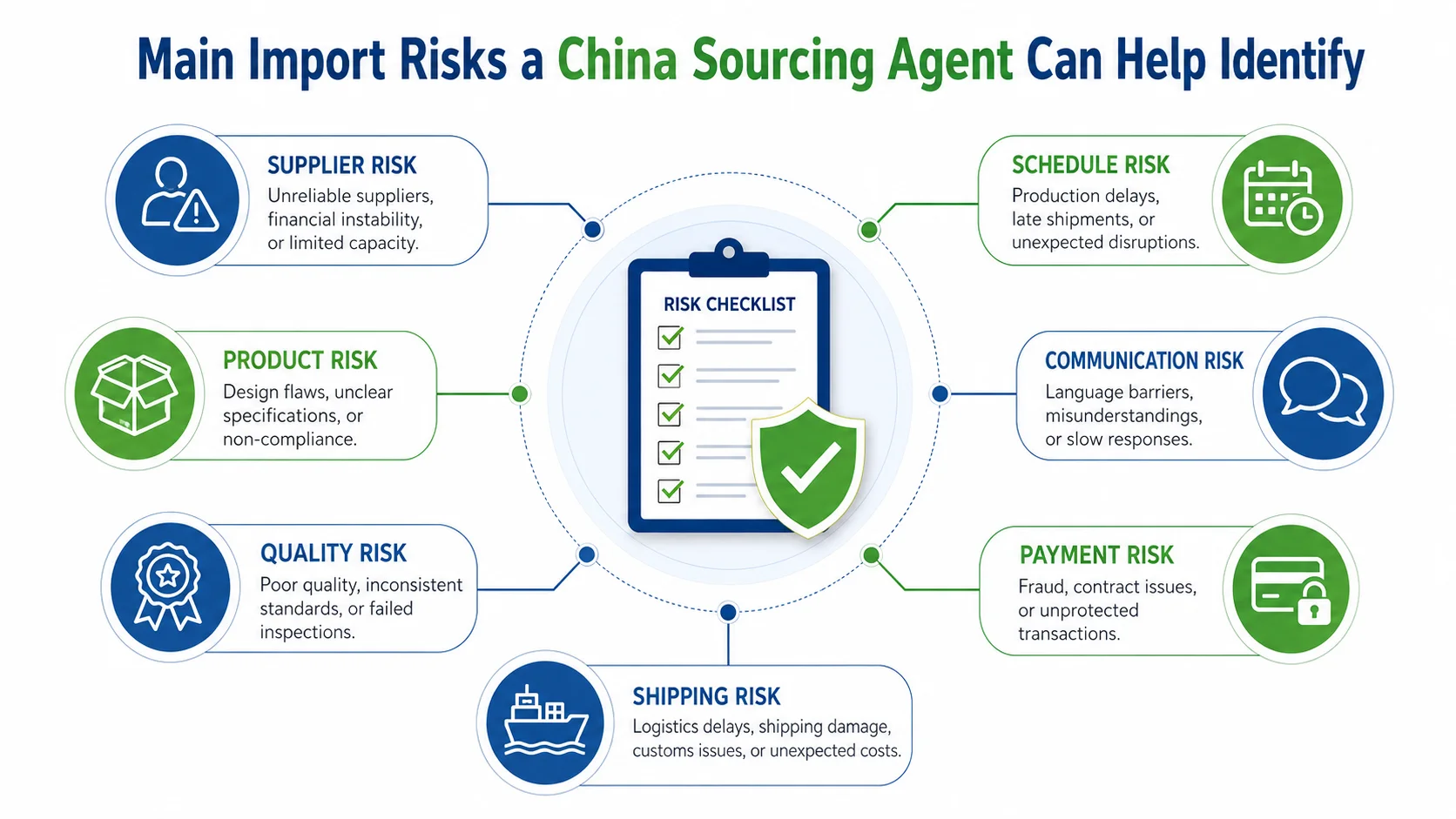
A China sourcing agent can help identify supplier, product, quality, schedule, communication, payment, and shipping risks before an order moves too far forward. The goal is not to promise a risk-free import process. The goal is to make key requirements visible, documented, and easier for the buyer to evaluate before committing funds.
A practical framework for China sourcing risks
Most risks of importing from China fall into several connected areas:
| Risk Area | How It Commonly Happens | What Buyers Should Clarify |
|---|---|---|
| Supplier risk | A trading company is presented as a factory, or capacity is overstated[^3] | Business identity, product experience, production capability |
| Specification risk | The request is broad and the supplier makes assumptions | Materials, dimensions, colors, functions, tolerances |
| Quote risk | Suppliers quote different conditions under similar product names | MOQ, tooling, packaging, Incoterms, included accessories |
| Quality risk | No approved sample or inspection standard exists | Defect criteria, approved sample, testing requirements |
| Production delay | Materials are not ready or schedules are not actively tracked | Milestones, delivery date, escalation process |
| Shipping risk | Cartons, labels, documents, or booking details are incomplete | Packing marks, shipping terms, export documents |
| Compliance risk | Product rules are checked too late | Destination-market standards and labeling obligations |
In our day-to-day work, we often find that a “cheap” supplier quote is not truly cheaper. One factory may quote a thinner material, basic polybag packaging, and EXW terms. Another may quote retail-ready packaging, a different color process, and FOB terms. Neither quote is automatically wrong. However, they should not be compared as if they represent the same purchase.
That is why China sourcing risk management should start before the purchase order. We help buyers ask questions such as:
- Is this supplier suitable for this product category and order volume?
- Does the quotation include the same product configuration as competing quotes?
- Has the supplier confirmed the required packaging and labeling?
- Which points are assumptions, and which points are documented commitments?
- What evidence will be available before production and before shipment?
A buyer does not always need a sourcing agent. Experienced importers with qualified local teams may manage these tasks directly. But businesses without a China-based procurement function should make sure someone owns this coordination work.
How Does a China Sourcing Agent Reduce Supplier Risk?
Choosing the wrong supplier can create problems that no later inspection can fully solve. Buyers may lose time with a supplier that cannot achieve the required quality, cannot meet the MOQ, or does not understand the product. A China sourcing agent helps reduce supplier risk through structured verification and product-fit evaluation.
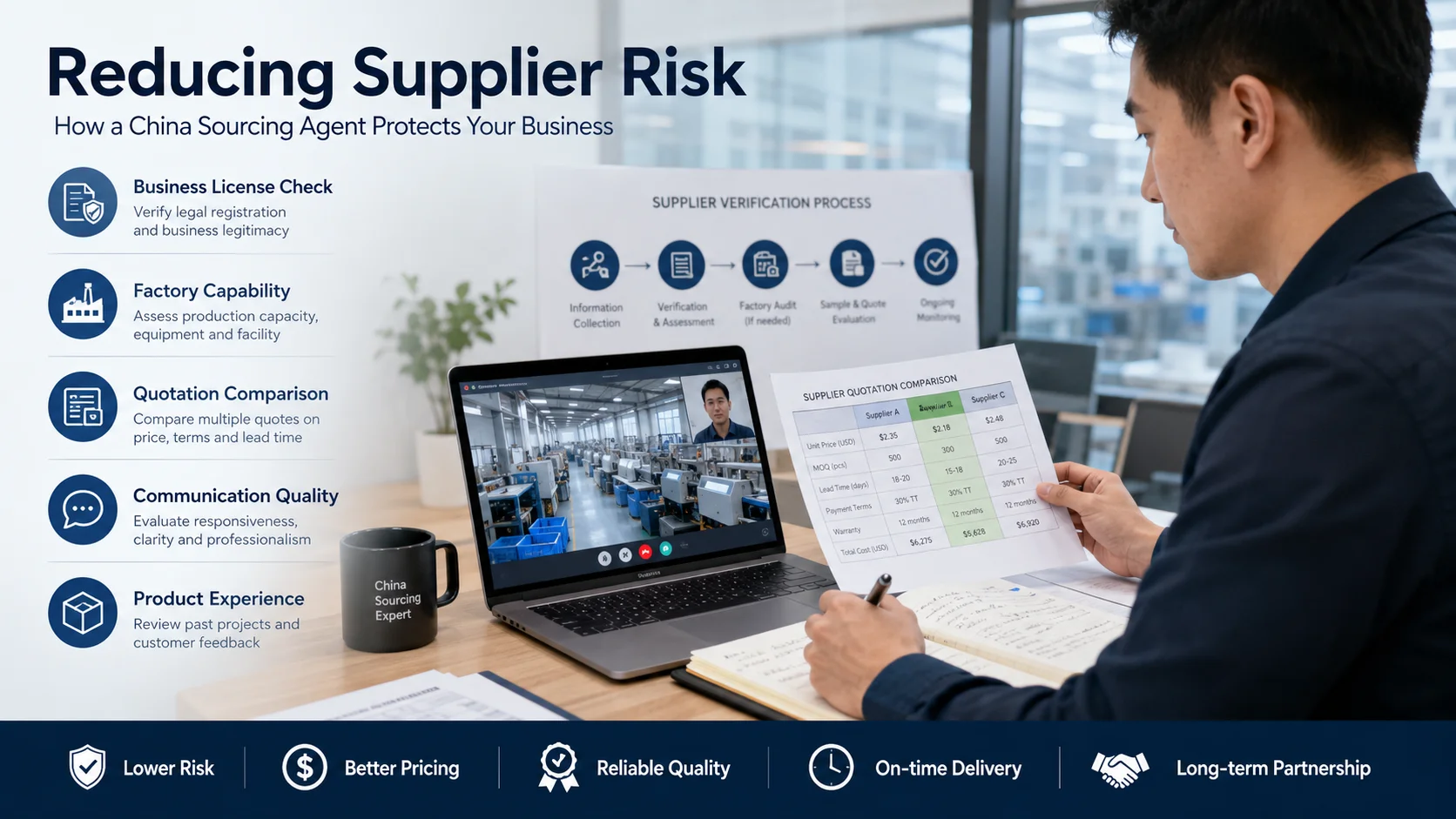
A China sourcing agent reduces supplier risk by checking whether a supplier’s business information, product experience, quotation, factory capability, and communication match the buyer’s actual requirements. Supplier verification should assess suitability, not simply confirm that a supplier exists or has an attractive online profile.
Verification is more than checking a business license
A business registration document can be useful, but it is only one part of supplier verification in China.[^4] Buyers should understand whether the supplier is a manufacturer, a trading company, or a hybrid business. Each model can work, depending on the product and service needs. What matters is transparency and capability.
When we review potential suppliers, we focus on practical questions:
-
Does the supplier make or regularly source this product type?
Product familiarity matters because different factories use different machines, materials, and production controls. -
Can the supplier handle the required order size?
A factory may accept a small trial order but prioritize larger customers during peak periods. Another supplier may have a minimum order quantity that does not suit a new brand. -
Is the quotation internally consistent?
We look for unclear tooling charges, missing packaging costs, ambiguous lead times, and pricing that changes when specifications become more detailed. -
Does the supplier respond clearly to technical and commercial questions?
Slow or vague answers during quotation can indicate future communication risk. This is not proof of poor performance, but it is a signal that deserves follow-up. -
Can the supplier provide relevant samples or production evidence?
A sample, factory video, product documentation, or audit information can help buyers assess claims. Buyers should verify documents rather than rely on labels alone.
A supplier should not be selected only because it has the lowest headline price. The better question is whether its offer is complete, comparable, and realistic for the intended order.
We also recommend that buyers avoid treating a factory visit or audit as a lifetime guarantee. Conditions can change due to staffing, material availability, order volume, or subcontracting. Supplier risk management in China works best as an ongoing process: verify before ordering, document expectations, and monitor execution after the order is placed.
How Can a China Sourcing Agent Reduce Sample and Specification Risks?
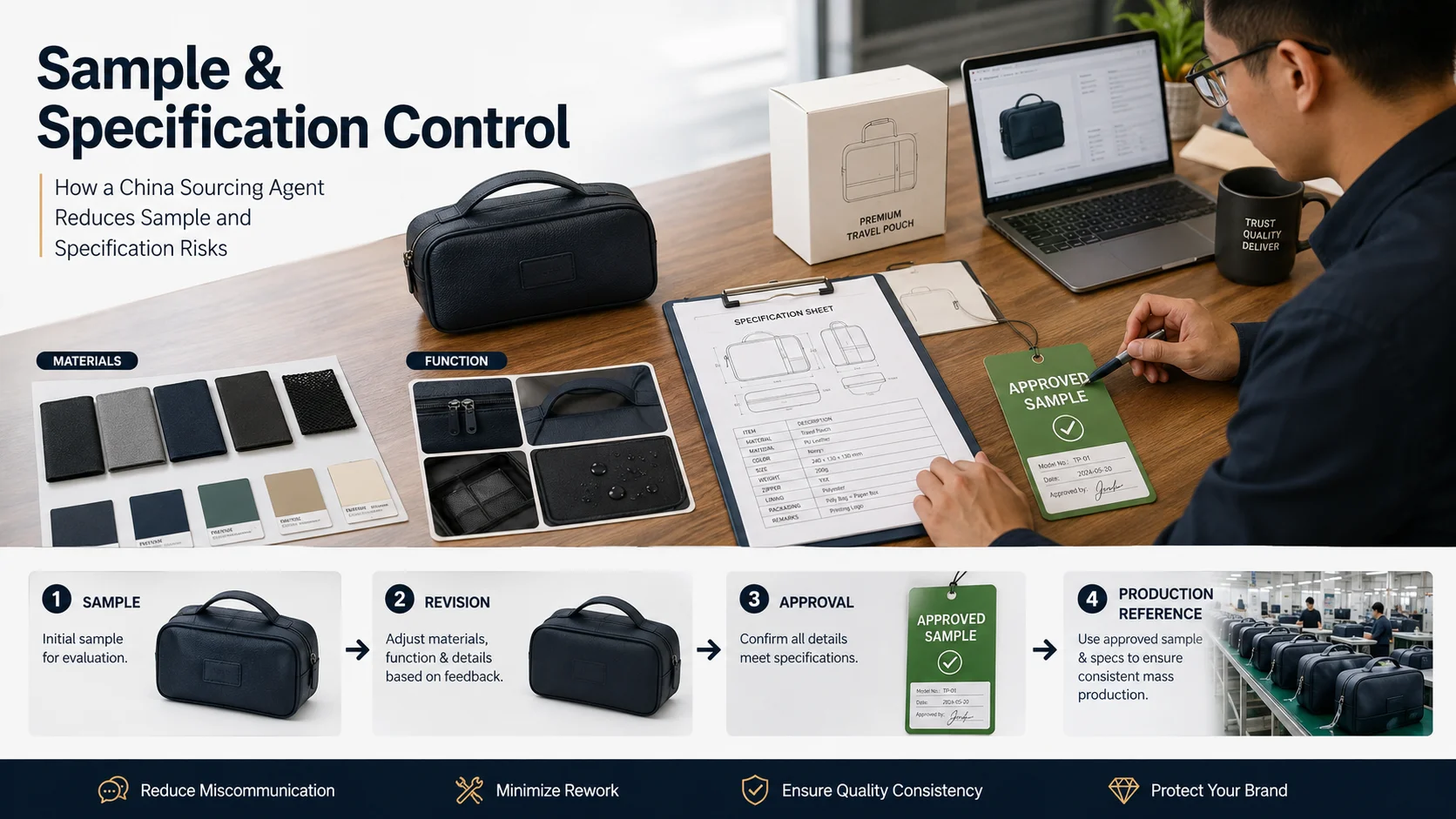
A product sample can look acceptable while still failing to represent final production.[^5] The color may vary, the material may be substituted, or the packaging may not match the approved version. A China sourcing agent can help make sample approval a control point rather than a casual step.
A China sourcing agent reduces product and specification risks by coordinating sample development, confirming materials and functions, documenting revisions, and checking that production follows the approved reference. Buyers should approve samples against clear requirements, not just a general impression that the item “looks good.”
What should a buyer confirm before mass production?
The exact checklist depends on the product. Still, most importers should confirm the following before authorizing bulk production:
- Product dimensions and acceptable tolerances
- Material type, finish, thickness, and color reference
- Logo placement, print method, and artwork version
- Functional requirements and accessories
- Packaging components, carton dimensions, and labels
- Barcode, warning label, and country-of-origin requirements
- Approved sample date and version reference
- Known acceptable variations or defect limits
In our experience, unclear terminology causes many avoidable disputes. For example, “premium packaging” means different things to different people. One supplier may assume a printed box. Another may assume a plain kraft box with a sticker. The buyer should define the requirement with drawings, photos, dielines, material references, or a written packaging specification.
Use samples as evidence, not just inspiration
A development sample is often used to test whether the supplier understands the concept. A pre-production sample is more useful for confirming the version that should guide mass production. For customized products, buyers should ask which items were made using final materials, final logo files, and intended production methods.
We help coordinate sample follow-up by keeping feedback organized. Instead of sending scattered messages across email and chat apps, we encourage buyers to consolidate changes into a revision list. This creates a clearer record of what must be corrected before the next sample or production stage.
For products with safety, electrical, food-contact, medical, children’s, or regulated-market implications, sample approval is not a substitute for qualified compliance evaluation.[^6] Buyers remain responsible for confirming destination-market rules, product testing, certification validity, labeling, and product liability requirements with appropriate professionals.
How Does a China Sourcing Agent Compare With Buying Directly?
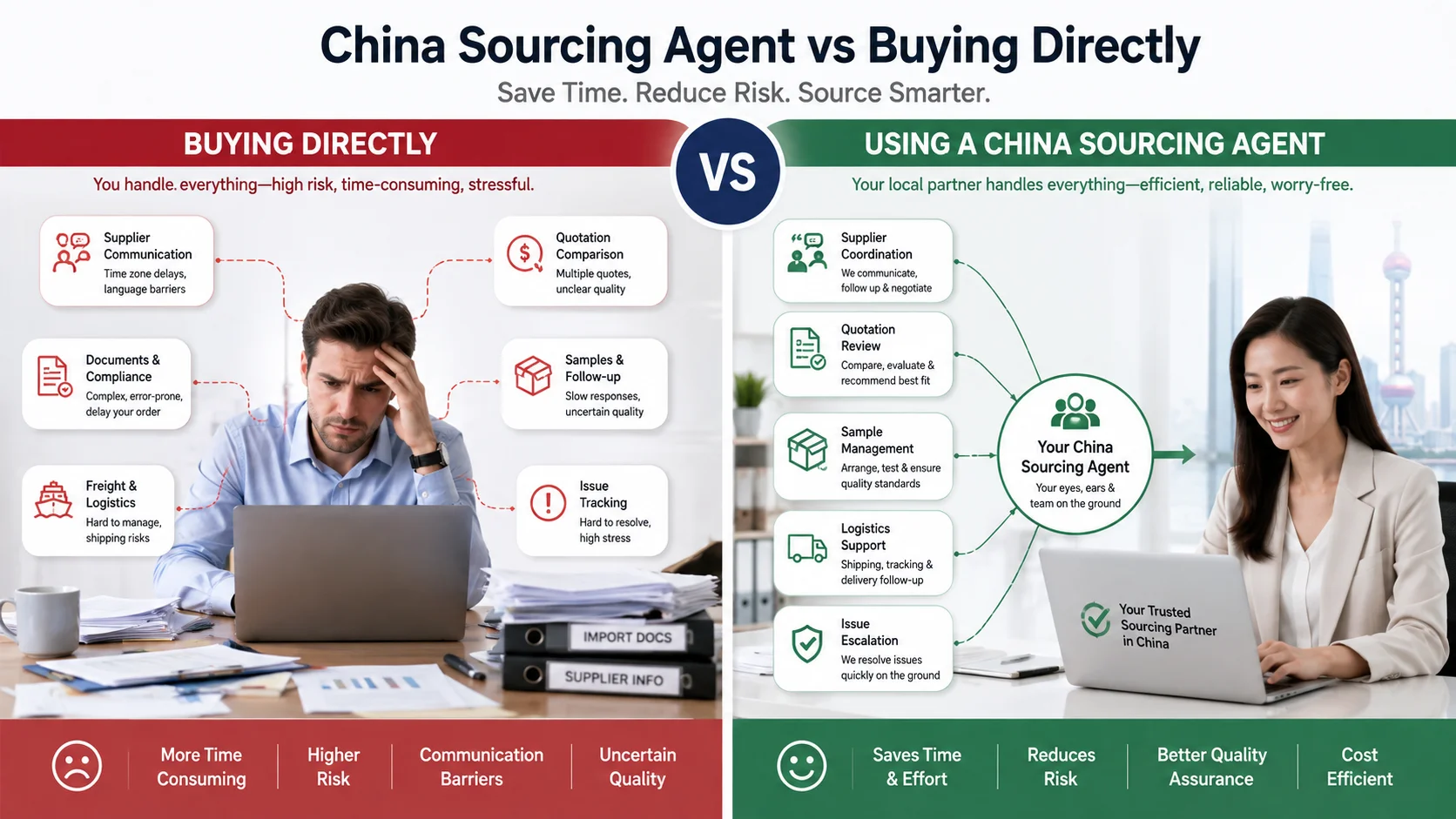
Buying directly from a Chinese supplier can work well when a buyer has time, experience, and reliable internal processes. However, direct buying places all supplier coordination, documentation, follow-up, and issue escalation on the buyer. A China sourcing agent can add a local management layer when that capacity is missing.
A China sourcing agent does not replace the buyer’s commercial judgment, but it can centralize sourcing activities that are difficult to manage remotely. This support is especially relevant when a buyer has multiple suppliers, customized products, limited China-market experience, or no local team to check progress and resolve routine issues.
| Risk Area | Buying Directly | With a China Sourcing Agent |
|---|---|---|
| Supplier verification | Buyer managed | Local support and information review |
| Sample follow-up | Buyer manages revisions remotely | Coordinated with supplier and buyer |
| Production monitoring | Limited unless buyer has local resources | Ongoing milestone follow-up |
| Quality issues | Often discovered later | Earlier inspection and escalation opportunities |
| Multiple suppliers | Higher coordination complexity | Centralized supplier management |
| Communication | Direct but time-consuming | Local coordination and clarification |
| Shipment preparation | Buyer coordinates suppliers and forwarders | Consolidation and packing support may be available |
| Quote comparison | Buyer normalizes terms independently | Support to compare specifications and commercial conditions |
The table does not mean that every agent provides the same service level. Buyers should ask for the actual process, scope, fees, reporting method, and responsibility boundaries.
What buyers should ask before choosing an agent
A useful sourcing partner should be able to explain how it handles practical details, including:
- How supplier quotations are compared
- Which supplier information is verified
- How samples and revisions are documented
- Whether quality control is available and what it covers
- How production delays are reported
- Who approves changes in price, materials, or shipping plans
- How multiple orders are consolidated
- Which services are included and which involve separate charges
At KingSourcing, we see our role as a coordination layer between buyers, suppliers, inspection activities, warehouses, and logistics providers. We do not present this as control over every external event. Instead, we focus on giving buyers earlier visibility and a clearer path to make decisions.
How Does a China Sourcing Agent Reduce Production Delays and Order Risks?
Many buyers assume that the hard work ends when they pay a deposit. In reality, the period between order confirmation and shipment is where material shortages, artwork delays, capacity conflicts, and misunderstanding can appear. A China sourcing agent helps keep production issues visible before the promised delivery date has already passed.
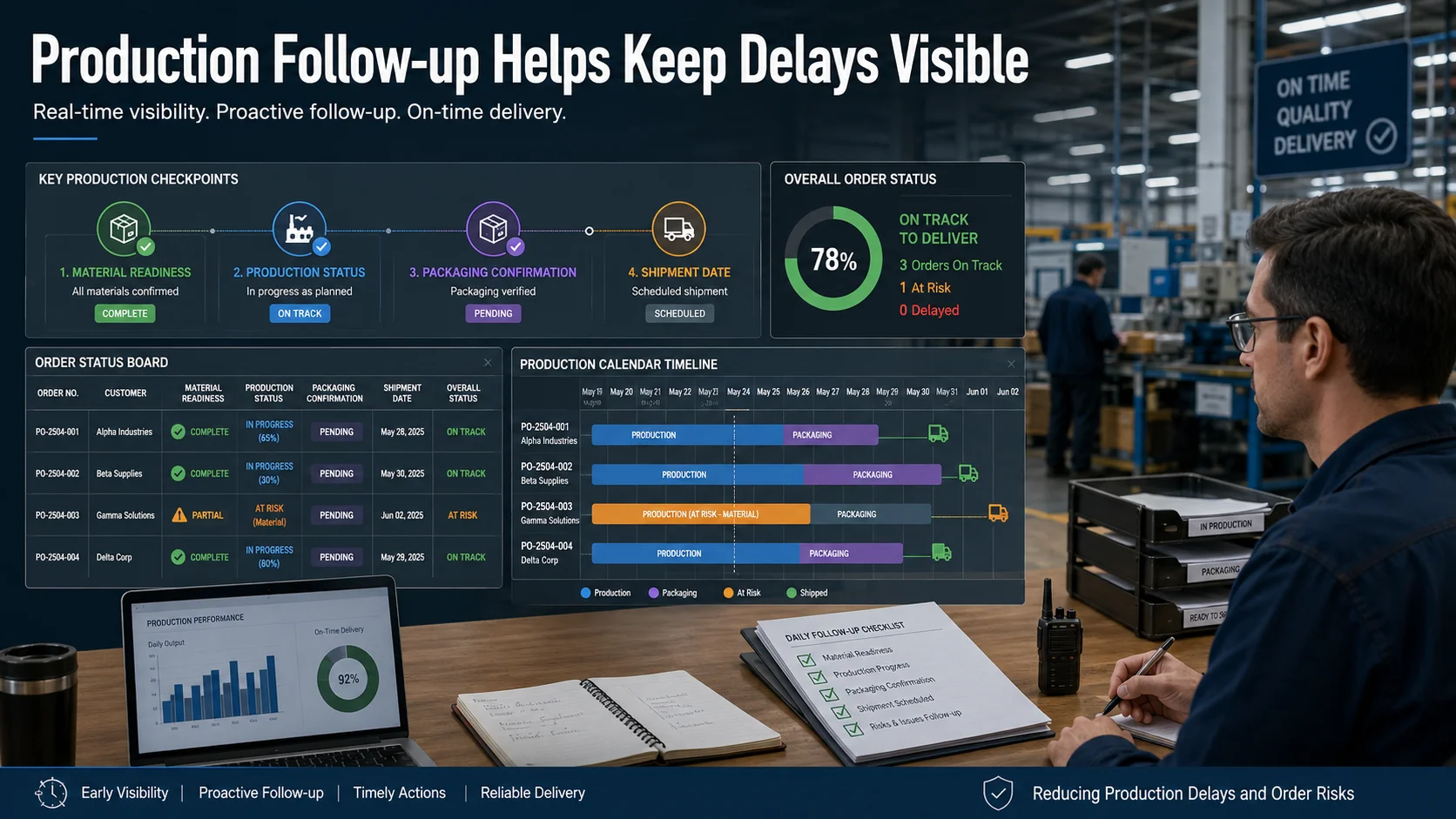
A China sourcing agent reduces production and order risks by following key milestones, confirming material readiness, checking production status, and escalating issues when a schedule changes. Follow-up cannot guarantee an on-time shipment, but it can give the buyer more time to respond when delays or specification concerns emerge.
Production follow-up should focus on milestones
“Please update us” is not a production-control system. A more useful approach identifies the steps that affect delivery. Depending on the product, these may include:
- Purchase order confirmation
- Deposit receipt and material purchasing
- Artwork or packaging approval
- Pre-production sample approval
- Production start
- Mid-production status
- Inspection readiness
- Final packing and shipment release
Each milestone creates a chance to identify a gap. For example, if printed packaging is still unapproved one week before planned production, the supplier may not be able to meet the original schedule. If a key material is unavailable, the buyer may need to approve an alternative, adjust delivery expectations, or reconsider the order plan.
In one anonymized type of situation we see regularly, a buyer receives a supplier update saying that production is “almost finished.” After follow-up, the real issue may be that the product is complete but custom cartons have not been printed. The goods are not actually shipment-ready. Early clarification does not erase the delay, but it helps the buyer plan inventory, marketing, warehouse receiving, and customer communication based on a more accurate status.
Clear responsibility matters here. The supplier manages production. The buyer makes final commercial decisions. The sourcing agent can coordinate, clarify, document, and raise concerns. Buyers should be cautious of any provider that implies it can guarantee supplier behavior or eliminate all disruption.
How Do Quality Inspections Help Prevent Costly Import Problems?
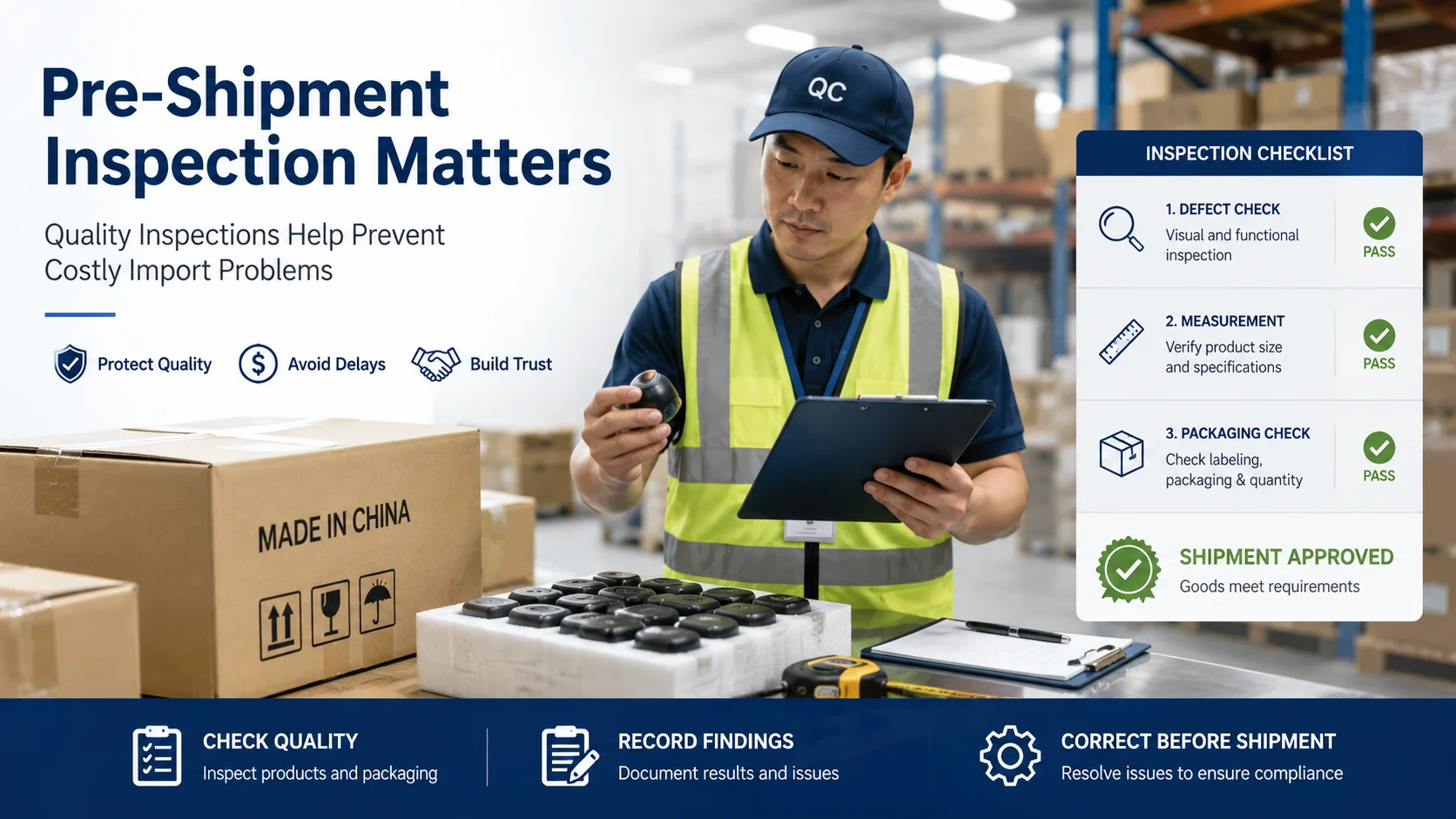
Quality issues become much harder to resolve after goods are loaded, exported, and delivered overseas.[^7] At that point, rework, returns, replacement shipments, and customer complaints can increase the total cost of an order. A China sourcing agent can arrange quality control checks before the goods leave China.
A China sourcing agent helps prevent costly import problems by organizing inspections at appropriate production stages and reporting findings before shipment. Inspection is not a guarantee of zero defects, but it provides evidence about the inspected goods[^8] and gives the buyer an opportunity to request corrective action before final shipment approval.
Common inspection stages
| Inspection Stage | Main Purpose | Typical Questions |
|---|---|---|
| Pre-production inspection | Check materials and initial setup | Are materials, colors, and components consistent with approval? |
| During-production inspection | Identify recurring issues early | Is the factory following the approved sample and process? |
| Pre-shipment inspection | Review finished goods before release | Are quantity, workmanship, packaging, and labels acceptable? |
| Loading supervision | Observe loading and carton handling | Are the inspected goods loaded as planned? |
The right inspection stage depends on product complexity, order value, supplier history, and the cost of failure. A simple repeat order may only need a pre-shipment inspection. A highly customized product may justify checks during production because correcting an issue early can be easier than reworking finished stock.
Make inspection criteria specific
Inspection is more useful when the buyer has clear standards. “Good quality” is too broad. A buyer should define what matters, such as:
- Correct product model and color
- Required quantity by SKU
- Measurement tolerances
- Print alignment and logo accuracy
- Functional test requirements
- Packaging and carton markings
- Acceptable versus unacceptable cosmetic defects
At KingSourcing, our quality control support can include 1-by-1 product checks where appropriate, along with coordination of inspection requirements and reporting. The exact method should match the order. Buyers should ask what is inspected, how samples are selected, what evidence is provided, and what happens if defects are found.
A failed inspection also requires a decision process. The supplier may rework goods, replace defective units, offer a commercial adjustment, or provide a corrective-action plan. The buyer should approve the final resolution and should not release a shipment based only on verbal assurances.
How Can a China Sourcing Agent Manage Multiple Suppliers and Shipments?
Multiple suppliers can give buyers more product options, but they also create more moving parts. Different lead times, carton sizes, packaging standards, and delivery dates can complicate even a small product launch. A China sourcing agent can help centralize these activities before goods move internationally.
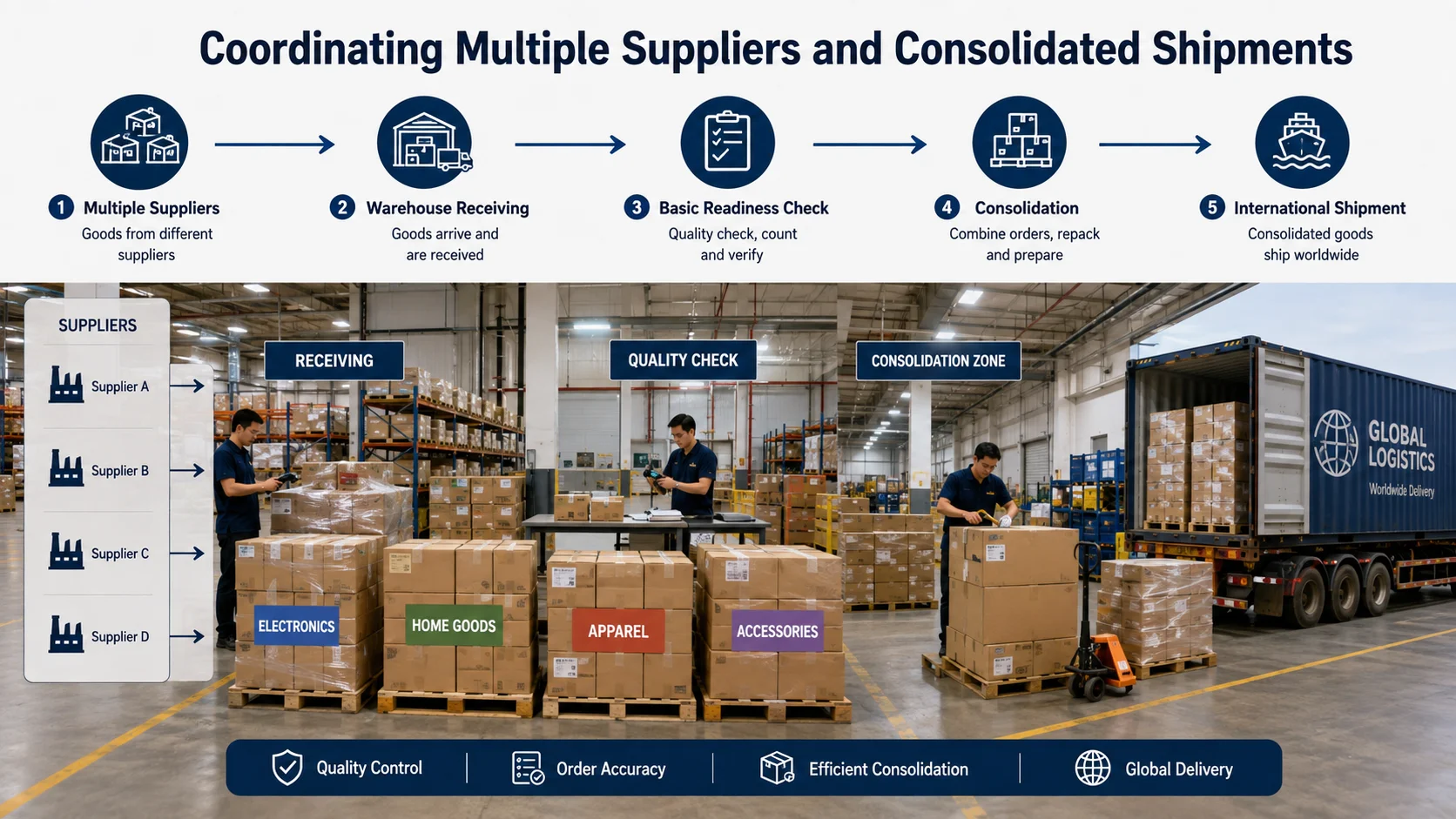
A China sourcing agent can reduce coordination risks by tracking multiple supplier orders, receiving goods into a warehouse, checking basic shipment readiness, coordinating packaging requirements, and arranging consolidation when suitable. This can reduce administrative burden, but buyers should still confirm costs, timelines, and shipping responsibilities in writing.
Why consolidation requires planning
A buyer importing five SKUs from five suppliers may not want five separate international shipments. However, consolidation is not simply collecting cartons in one location. The process may involve:
- Confirming each supplier’s delivery schedule
- Checking carton counts and visible carton condition
- Confirming product labels and carton marks
- Repacking or adding inserts when approved
- Combining accessories from separate suppliers
- Taking product or lifestyle photos before dispatch
- Preparing shipping documents and booking details
- Coordinating final delivery terms with the freight provider
We support warehouse consolidation, customized packaging, accessory kitting, product photography, and shipment preparation for buyers who need those services. This is especially useful for e-commerce sellers, DTC brands, wholesalers, and importers with seasonal launches.
Still, buyers should understand the trade-off. Consolidation may reduce shipping complexity, but it can also mean waiting for the slowest supplier.[^9] The right approach depends on stock urgency, order value, freight method, and whether partial shipments are commercially sensible.
Which Import Risks Can a China Sourcing Agent Reduce—and Which Still Belong to the Buyer?
Some buyers expect a sourcing agent to solve every issue connected with importing from China. That expectation can create confusion when market demand changes, customs rules shift, or a product fails local compliance requirements. A China sourcing agent is most valuable when responsibilities are clear from the beginning.
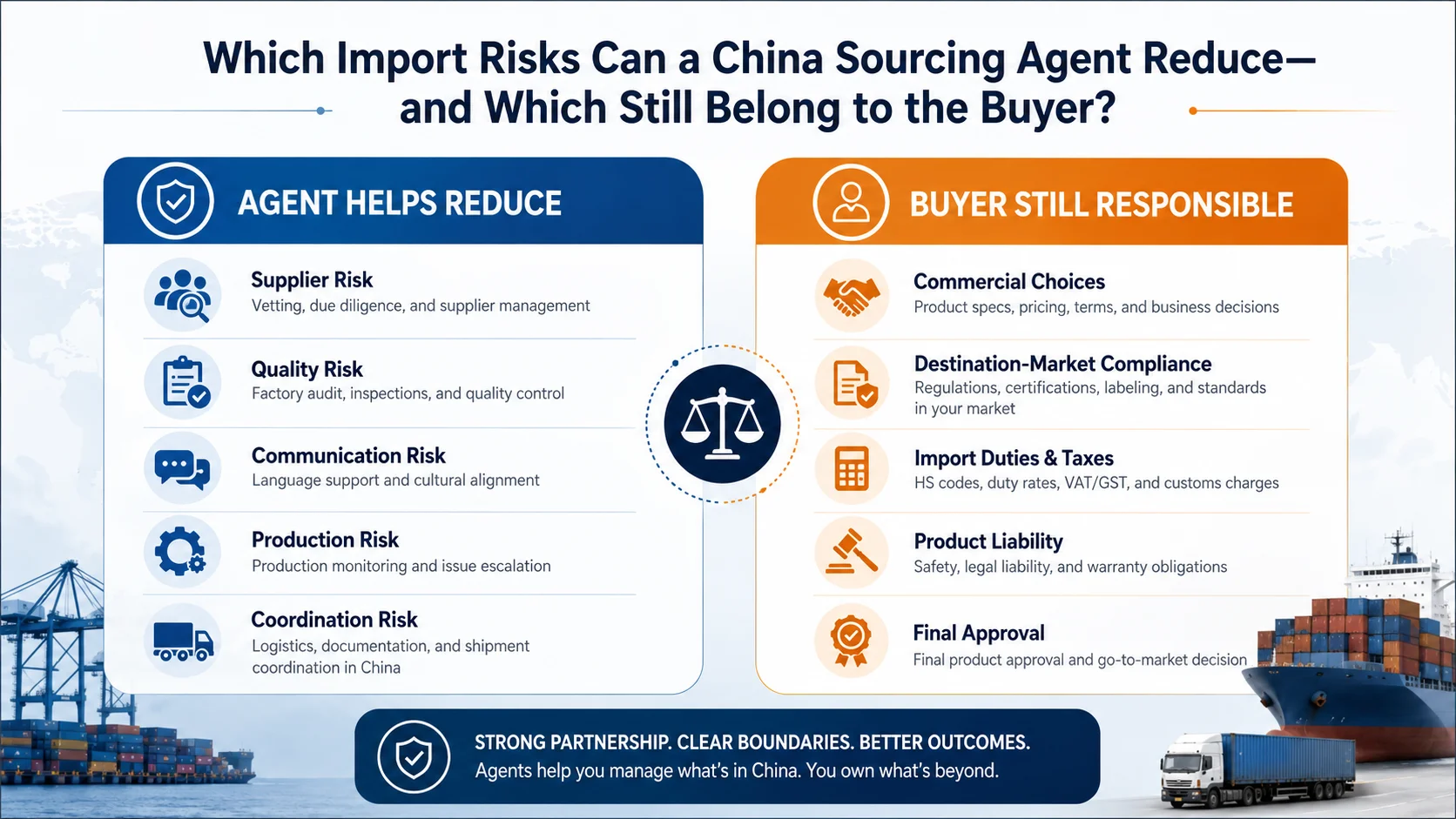
A China sourcing agent can help reduce supplier, quality, communication, production, and coordination risks. However, buyers remain responsible for commercial choices, destination-market compliance, import duties, product liability, and final approval of products, suppliers, payments, and shipments.[^10]
A realistic responsibility split
| Usually Supported by an Agent | Usually Retained by the Buyer |
|---|---|
| Supplier search and comparison | Product-market fit and demand forecasting |
| Supplier verification support | Final supplier appointment |
| Sample coordination | Final sample approval |
| Production status follow-up | Budget and inventory decisions |
| Quality inspection coordination | Acceptance of quality risk and shipment release |
| Warehouse consolidation | Importer-of-record obligations |
| Logistics coordination | Customs duties, taxes, and local compliance |
| Communication with suppliers | Product liability and legal obligations |
A reliable agent should make this boundary clearer, not blur it. We believe that trust comes from transparent processes: what has been confirmed, what remains uncertain, who needs to approve a change, and what evidence is available.
For example, we can help a buyer ask a supplier whether a product has test reports or certification documents. However, the buyer should verify whether those documents are authentic, current, relevant to the exact product, and accepted in the destination market.[^11] Qualified compliance, legal, customs, and technical professionals should review application-specific requirements.
The same principle applies to freight. We can coordinate shipment preparation and logistics support, but weather events, carrier schedule changes, customs holds, and destination-side requirements may still affect transit.[^12] Good China sourcing risk management does not pretend these risks disappear. It builds visibility, documentation, and contingency planning into the process.
Frequently Asked Questions
Is it safe to import from China with a sourcing agent?
Importing from China can be managed more safely when buyers use clear specifications, supplier verification, approved samples, quality checks, and documented shipping arrangements. A sourcing agent can support these controls, but no agent can guarantee product quality, supplier behavior, customs clearance, or market success.
How does a China sourcing agent verify suppliers?
A China sourcing agent may review business information, product experience, quotation consistency, communication quality, factory capability, samples, and available documentation. Buyers should ask what verification steps are included and request clear reporting rather than relying only on general claims that a supplier is “verified.”
Can a sourcing agent inspect every product?
Some sourcing agents offer 1-by-1 inspection services, while others use statistical sampling or third-party inspection arrangements. The right method depends on product type, order quantity, budget, and defect risk. Buyers should confirm the inspection scope, criteria, fees, and reporting format before production ends.
Does using a sourcing agent reduce the cost of importing from China?
An agent may help buyers avoid hidden costs caused by unclear quotations, poor quality, delayed production, or fragmented shipments. However, service fees, warehouse costs, inspection charges, and logistics costs should be reviewed transparently. The lowest upfront price is not always the lowest total import cost.
What should I send a sourcing agent before placing an order?
Send a product brief, reference photos, target quantity, specifications, packaging requirements, destination country, preferred Incoterm, target timeline, supplier quotations, and any existing samples. The more clearly you describe the product, the easier it is to compare suppliers and identify sourcing risks.
Conclusion
A China sourcing agent helps reduce import risks by making supplier selection, sample approval, production follow-up, quality control, and shipment preparation more visible and organized. The value is not a promise of zero defects or zero delays. It is earlier risk detection, clearer documentation, and practical local coordination. If you are comparing suppliers or preparing an order from China, send KingSourcing your product brief, supplier quotation, or current sourcing problem for a practical sourcing and risk review before placing your order.
[^1]: "[PDF] Chapter 8 Describing the Need: Specifications and Requirements", https://www.vita.virginia.gov/media/vitavirginiagov/supply-chain/pdf/Chapter-8.pdf. Procurement guidance commonly advises evaluating bids against defined specifications and full cost conditions, because the lowest quoted price may not represent the lowest overall purchasing cost. Evidence role: general_support; source type: institution. Supports: Procurement guidance explaining that supplier offers must be evaluated against consistent specifications and total-cost considerations rather than headline price alone.. Scope note: Such guidance is generally written for procurement practice and does not establish the circumstances of any individual China sourcing transaction. [^2]: "Trade Guide: WTO PSI", https://www.trade.gov/trade-guide-wto-psi. Pre-shipment verification can identify observable nonconformities before export, allowing purchasers to consider corrective action or shipment-release decisions before goods enter international transit. Evidence role: mechanism; source type: research. Supports: Evidence that inspections and verification conducted before shipment can identify nonconformities while corrective action or shipment decisions are still possible.. Scope note: Pre-shipment checks assess only the goods, documents, and conditions examined and cannot detect every latent defect or later logistics problem. [^3]: "Perform Due Diligence - International Trade Administration", https://www.trade.gov/perform-due-diligence. Trade due-diligence guidance recommends independently verifying a prospective supplier's business identity, operating status, and capacity rather than relying solely on supplier representations. Evidence role: general_support; source type: government. Supports: Government trade guidance recommending due diligence to verify prospective suppliers' identities, operations, and capabilities.. Scope note: Due diligence reduces information asymmetry but cannot by itself prove future production performance or prevent later subcontracting. [^4]: "Perform Due Diligence - International Trade Administration", https://www.trade.gov/perform-due-diligence. Supplier due diligence ordinarily extends beyond confirmation of legal registration to assessment of operational capability, relevant experience, and other indicators of reliability. Evidence role: general_support; source type: government. Supports: Due-diligence guidance showing that corporate registration checks should be supplemented by operational, financial, and capability assessment.. Scope note: The appropriate depth of verification depends on the product, transaction value, jurisdiction, and buyer's risk tolerance. [^5]: "[PDF] Automated Quality Control in Manufacturing Production Lines", https://scholarworks.utrgv.edu/cgi/viewcontent.cgi?article=1947&context=etd. Manufacturing quality systems recognize that prototype or approval samples may not fully represent serial production, as materials, processes, equipment settings, and production variation can affect final output. Evidence role: mechanism; source type: research. Supports: Quality-management evidence explaining that production output can vary from prototypes or samples because of materials, processes, equipment, and operator variation.. Scope note: The extent of variation depends on the product and process controls; a sample-production difference is possible, not inevitable. [^6]: "General Use Products: Certification and Testing | CPSC.gov", https://www.cpsc.gov/Business--Manufacturing/Testing-Certification/General-Use-Products-Certification-and-Testing. Product-safety regulators require applicable conformity assessment, testing, technical documentation, and labeling for regulated products; commercial approval of a sample does not itself demonstrate regulatory compliance. Evidence role: expert_consensus; source type: government. Supports: Regulatory authorities' position that product conformity and safety obligations require applicable testing, documentation, and assessment beyond commercial sample approval.. Scope note: Specific obligations vary by destination market, product category, intended use, and applicable legal regime. [^7]: "Import Reinspection of Meat, Poultry, and Egg Products - Revision 2", http://www.fsis.usda.gov/policy/fsis-directives/9900.2. Quality-management research generally finds that defects detected at later stages create greater rework, replacement, and downstream failure costs than defects identified earlier in the process. Evidence role: mechanism; source type: paper. Supports: Quality-management research on the principle that defects detected later in a process generally require more costly correction and can create downstream consequences.. Scope note: The magnitude of added cost varies with product value, contractual remedies, shipping arrangements, and the nature of the nonconformity. [^8]: "6.2.2.2. Choosing a Sampling Plan with a given OC Curve", https://www.itl.nist.gov/div898/handbook/pmc/section2/pmc222.htm. Acceptance-sampling inspection provides evidence about a lot based on the units examined and the sampling plan used; it does not guarantee that all units are free of defects. Evidence role: definition; source type: institution. Supports: Acceptance-sampling principles showing that inspection results are based on examined units and specified sampling plans rather than a guarantee that every unit is defect-free.. Scope note: The evidentiary strength of an inspection depends on the sampling method, inspection scope, defect definitions, and conditions at the time of inspection. [^9]: "[PDF] Optimal Global Supply Chain and Warehouse ... - Clemson OPEN", https://open.clemson.edu/context/all_dissertations/article/4134/viewcontent/Dissertation_Avnish.pdf. Supply-chain research describes freight consolidation as a trade-off: combining shipments can improve transportation efficiency, while synchronization requirements can add waiting time and delay dispatch. Evidence role: mechanism; source type: paper. Supports: Supply-chain research describing consolidation as a trade-off between transportation efficiency and additional waiting or lead time.. Scope note: The actual effect depends on supplier schedules, freight mode, consolidation location, order volumes, and whether partial shipments are available. [^10]: "Basic Importing and Exporting - U.S. Customs and Border Protection", https://www.cbp.gov/trade/basic-import-export. Customs and product-safety authorities generally place import-related declaration, duty, and applicable product-compliance obligations on the importer or other legally defined responsible economic operator. Evidence role: expert_consensus; source type: government. Supports: Customs and product-safety authorities' guidance that importers have obligations relating to declarations, duties, and applicable product compliance.. Scope note: The legal allocation of responsibility varies by jurisdiction, import structure, contractual terms, and product category. [^11]: "Children's Product Certificate | CPSC.gov", https://www.cpsc.gov/Business--Manufacturing/Testing-Certification/Childrens-Product-Certificate. Regulatory conformity documentation and test reports should be assessed for their connection to the relevant product, applicable standard or rule, testing scope, and current regulatory requirements. Evidence role: general_support; source type: government. Supports: Regulatory guidance that conformity documents and test reports must correspond to the relevant product and applicable requirements.. Scope note: A document review may not establish authenticity or ongoing conformity without verification from the issuer, laboratory, or competent authority. [^12]: "Vulnerability of supply chains exposed as global maritime ...", https://unctad.org/news/vulnerability-supply-chains-exposed-global-maritime-chokepoints-come-under-pressure. International transport and trade-facilitation sources recognize that weather, carrier and port disruptions, and border-clearance procedures can affect shipment timing. Evidence role: general_support; source type: institution. Supports: International trade and maritime sources documenting that transport schedules and border clearance can be affected by operational disruptions and regulatory processes.. Scope note: These factors describe general sources of transit variability and do not predict delay for a particular shipment or route.