Quick Answer
Sample and bulk production can look similar at first glance, yet small differences can create expensive problems after shipping. I have seen buyers approve a sample, pay the balance, and only notice changes when customers report missing accessories, weaker packaging, incorrect labels, or product features that do not match the listing. **To compare sample and bulk production before shipping, use the approved sample as a documented reference and check the bulk goods for functional, material, dimensional, specification, accessory, packaging, and labeling differences. Release shipment only when differences are acceptable, corrected, or explicitly approved by the buyer based on their commerci
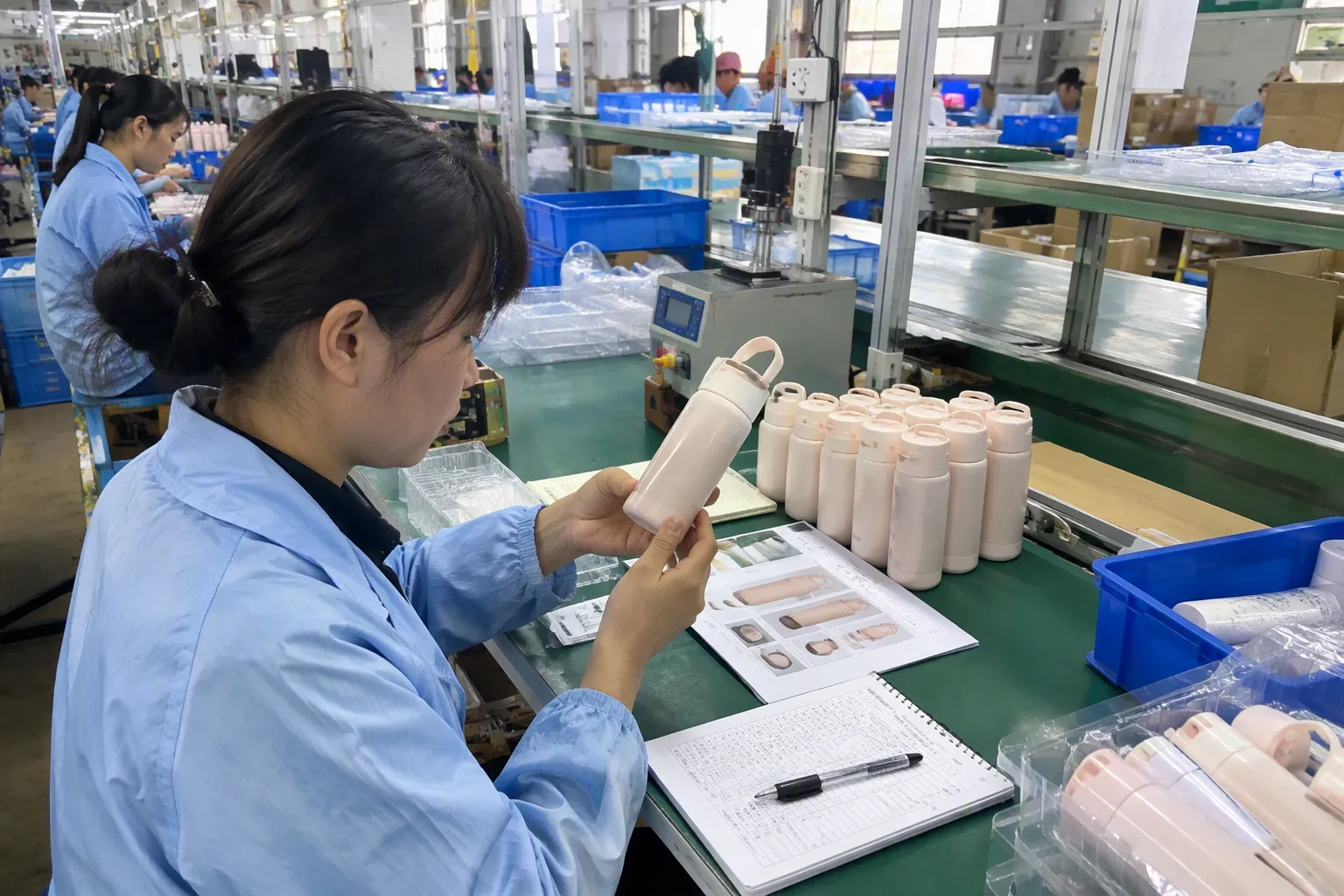
The goal is not to expect perfect unit-to-unit consistency. Manufacturing always involves some normal variation.[1] The practical question is whether a difference could affect how the product works, what customers receive, what your listing promises, or whether your goods can be sold in the intended market.
Comparing a Sample With Bulk Production Is Not a Cosmetic “Looks the Same” Check
When buyers compare sample and bulk production only by appearance, they can miss the details that matter after delivery. A product may have the same color and shape as the approved sample but still arrive with a different material, a missing component, weaker assembly, or retail packaging that does not meet the agreed presentation.
Comparing a sample with bulk production should be a release decision, not a simple visual check. Buyers should assess whether bulk goods match the approved reference in the areas that affect function, product claims, customer expectations, packaging, labeling, and applicable market requirements. Any material deviation should be corrected or approved before cargo pickup.
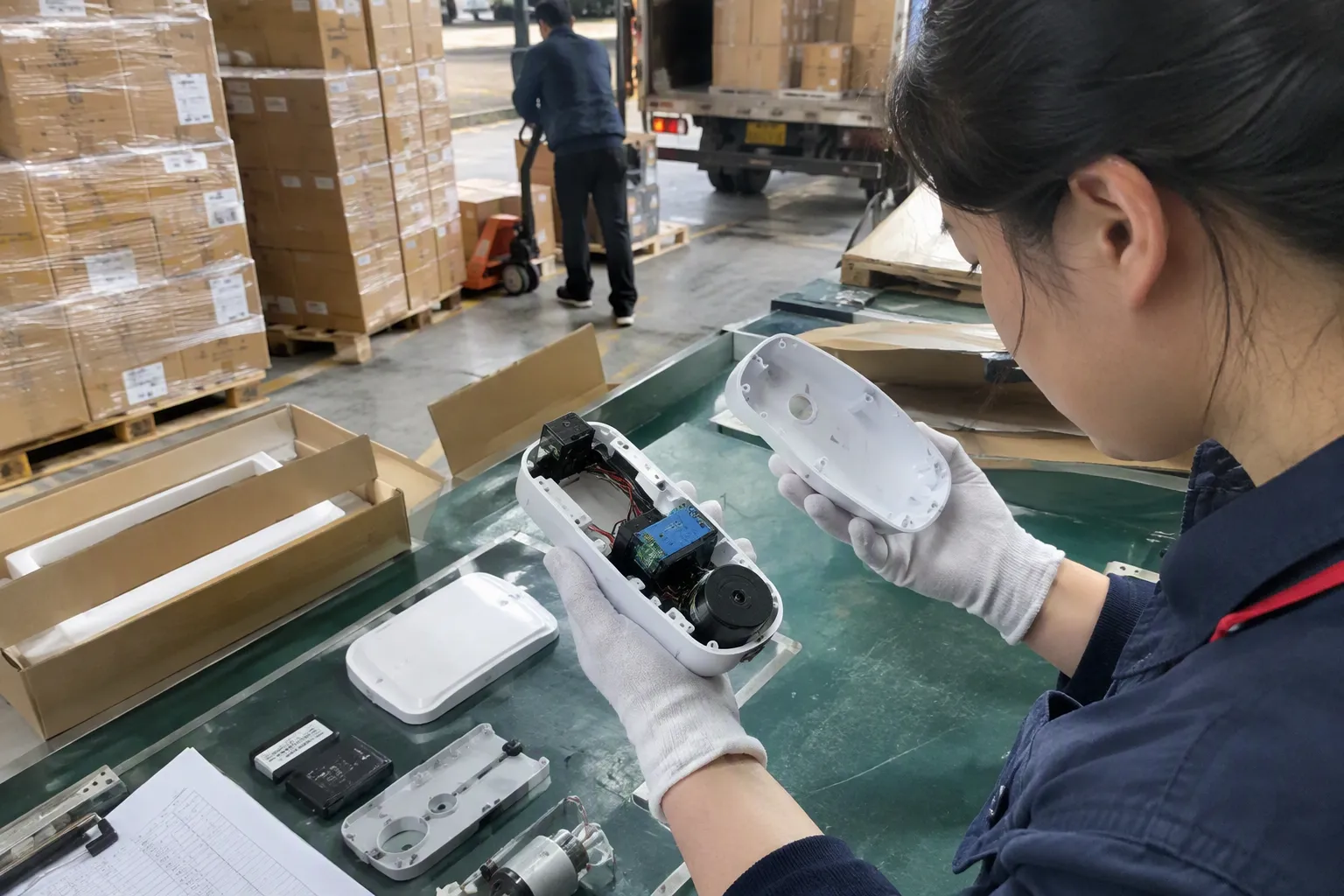
In my experience coordinating China sourcing projects, the biggest risk often appears at the handoff between sample approval and mass production. The supplier may have made the original sample with more attention, a different batch of materials, a different production method, or manually selected components. Bulk production then introduces ordinary factory realities: more workers, more production stations, more material batches, more packaging activity, and more opportunities for a detail to change.
That does not automatically mean a supplier acted dishonestly. Some differences come from misunderstandings, unavailable materials, production practicality, incomplete specifications, or a buyer approving a sample without documenting what was important. Still, buyers need a clear way to decide whether goods are ready to ship.
Why an approved sample is only the starting point
An approved sample is valuable because it gives everyone a physical reference.[2] However, a sample alone is not always a complete production standard.
For example, a buyer may approve a Bluetooth accessory sample because the surface finish looks right and the basic function works. The approved sample may not clearly state:
- The exact material grade or finish requirement
- Acceptable color tolerance
- Required charging cable type and length
- Button responsiveness expectations
- Logo placement measurements
- Retail box dimensions
- Barcode location
- Warning label wording
- Carton marks
- Required test reports or documentation for the destination market
If those details are not written down, different people can interpret “same as sample” differently.[3]
I recommend turning the approved sample into a sample approval record before mass production is released. It does not need to be overly technical for every product. It does need to identify the product characteristics that affect your sales, customer experience, and import requirements.
A practical approval record can include:
| Comparison area | What to record | Why it matters |
|---|---|---|
| Product identity | Model, SKU, color, size, version | Prevents mixed versions or incorrect variants |
| Visual standard | Photos of front, back, sides, logo, finish | Helps identify visible deviations |
| Dimensions | Key measurements and acceptable tolerance where relevant | Supports fit, compatibility, and packaging planning |
| Materials | Material description, finish, color reference | Avoids unexpected substitutions |
| Function | Main functions that must work | Supports product claims and usability |
| Accessories | Included items, quantity, color, length, packaging | Prevents incomplete retail sets |
| Branding | Logo artwork, placement, print color, label files | Protects brand consistency |
| Packaging | Box style, inserts, polybags, outer carton requirements | Reduces retail and fulfillment issues |
| Labeling | SKU labels, barcodes, country-of-origin marks, warnings | Supports warehouse, marketplace, and market needs |
| Documents | Reports, declarations, or certifications requested | Lets buyers verify market-specific obligations |
For a simple product, this may be one page plus photos. For a customized or regulated product category, the record may need more detail and professional input. I always suggest that buyers confirm market-specific requirements with a qualified compliance professional, testing provider, customs adviser, or legal adviser where appropriate.
Start with the sales promise, not the factory’s definition of “acceptable”
A useful comparison starts by asking: What did we promise the customer?
Your product listing, packaging, instruction manual, wholesale specification sheet, retailer agreement, or sales sample may all create expectations[4]. If bulk production no longer supports those expectations, the issue is commercial even when the product still appears usable.
For example, a small change may be low risk if it does not affect product use or presentation. A slightly different inner carton shade may be acceptable for some wholesale orders. However, a change in the following areas may be much more serious:
- A phone case no longer fits the stated phone model correctly.
- A promotional product has a logo shifted from the approved placement.
- A rechargeable item has a different charging port than the approved sample.
- A beauty accessory includes fewer pieces than the listing says.
- A storage product has lower usable capacity because the internal dimensions changed.
- A retail box lacks the barcode required by a fulfillment warehouse.
- An electronic product has markings or documentation that do not match the buyer’s confirmed requirements.
The factory may view some of these as minor production changes. The buyer must view them through the customer’s experience and the intended sales channel.
I treat the approved sample as a commercial reference. I do not ask only, “Does this product look close enough?” I ask, “Can the buyer sell this exact bulk version without changing their offer, creating complaints, or accepting avoidable risk?”
Compare the right areas before you approve shipment
A reliable sample-to-bulk comparison covers more than one opened carton or one attractive unit from the production line. The exact scope depends on product complexity, order value, customer requirements, and the consequences of an error. Still, most buyers should review the following categories.
1. Product identity and variant control
First, confirm that the bulk goods are actually the correct products.
This sounds basic, but errors often happen in orders with multiple colors, sizes, plug types, bundle options, or customized versions. A supplier may produce the correct total quantity while mixing a wrong color ratio or including an older version of a component.
Check:
- Product model and SKU
- Color names and actual colors
- Size range or dimension options
- Plug, connector, or regional version
- Bundle configuration
- Quantity by SKU
- Logo or artwork version
- Production date or batch information, if required
For multi-SKU sourcing, I find that a simple count sheet is useful. It should show the ordered quantity, inspected quantity, quantity found per variant, and any discrepancy. This is especially important when buyers consolidate products from several factories before shipment.
2. Appearance, materials, and assembly
Appearance still matters. It is just not the whole comparison.
Buyers should compare the general look of bulk units with the approved sample, including color, surface finish, print quality, logo placement, seams, joints, edges, and visible assembly. However, the observation should lead to a risk decision.
A visible mark on an inner component may have little commercial effect. A scratch on a premium retail product, inconsistent logo printing, a rough edge, or a visibly different finish may affect customer perception immediately.
Look for patterns rather than isolated observations:
- Is the same issue appearing across multiple inspected units?
- Is it limited to one carton, shift, color, or production batch?
- Does the issue become noticeable under normal lighting?
- Would an online customer believe the item differs from product photos?
- Would a retailer reject the presentation?
- Does the issue suggest a broader material or process change?
A buyer should not rely on a factory photo alone. Photos can be useful during production follow-up, but lighting, angle, and image selection can hide practical differences.[5] Physical inspection, live video review, or a structured third-party inspection process can offer more useful evidence before final release.
3. Functional checks against the approved version
A product that looks correct but does not perform as expected can cause the most costly returns. Functional checks should focus on the product’s key user actions and the claims made in your sales material.
For a non-electronic product, that may mean checking fit, opening and closing, load-bearing use, alignment, smooth movement, or assembly. For consumer electronics and 3C accessories, it may include basic charging, connection, buttons, lights, ports, pairing, or included cable compatibility.
I do not present a simple functional check as laboratory testing. It is not. It is a practical comparison of bulk units against the functions demonstrated by the approved sample and agreed product requirements.
A basic functional comparison may ask:
- Does the bulk unit perform the same primary action as the approved sample?
- Are controls, ports, moving parts, or attachments working consistently?
- Does the user receive the same accessory set?
- Does the actual operation support the product description?
- Are there obvious issues that would prevent normal customer use?
- Does the product need application-specific professional testing before market release?
For higher-risk, electrical, children’s, food-contact, medical-adjacent, or otherwise regulated products, buyers should not assume a pre-shipment comparison alone proves compliance or safety.[6] Requirements vary by product and destination. Relevant documentation, testing, labeling, and regulatory obligations should be verified for the specific product and market.
4. Dimensions, weight, and compatibility
Small dimension changes can have large consequences. A product may no longer fit a retail insert, work with an accessory, meet a marketplace shipping tier, or match the dimensions shown in a listing.
Where dimensions matter, compare key measurements rather than measuring every possible point. The approved sample record should identify the important dimensions.
Examples include:
| Product type | Key points to compare |
|---|---|
| Phone accessories | Device fit, port alignment, camera opening, thickness |
| Storage products | Internal dimensions, lid closure, usable capacity |
| Apparel accessories | Length, width, strap adjustment range, logo position |
| Retail bundles | Insert size, item fit in box, total package dimensions |
| Small electronics | Port position, cable length, charger dimensions |
| Promotional products | Print area, overall size, placement of customized artwork |
Weight can also matter for customer expectations and shipping cost. I recommend checking it when the product specification, marketplace fee structure, or retail packaging requirement makes it commercially important.
The goal is not to create unnecessary measurement work. The goal is to check the dimensions that could make the product unsellable, misleading, difficult to fulfill, or incompatible with another item.
5. Accessories, instructions, and bundled components
Missing or incorrect accessories are common sources of post-delivery complaints. A buyer may focus on the main item and overlook the cable, screws, manual, insert, adapter, pouch, battery, protective film, or spare part that completes the customer experience.
For every SKU, list what the customer should receive in one saleable unit. Then compare bulk packaging with that list.
A bundle check should cover:
- Main product quantity
- Accessory quantity
- Accessory version or color
- Instruction manual language and revision
- Warranty card or insert, if used
- Protective packaging
- Spare parts or tools
- Correct placement inside the retail package
If the product is packed in sealed retail boxes, it is often sensible to open a defined number of units during inspection. The number should be agreed based on order size, product risk, and acceptable quality limits where those are part of the buyer’s process. No sampling plan can guarantee that every unit is defect-free, but structured sampling can provide better evidence than checking only one box.[7]
Packaging and labeling deserve their own comparison

Many first-time importers underestimate packaging until the goods reach a warehouse, marketplace, retailer, or end customer. By then, correcting labels or repacking thousands of units can be slow and expensive.
Packaging is not just a shipping container. It can affect:
- Product protection during transit
- Retail shelf appearance
- Unboxing experience
- Marketplace fulfillment acceptance
- Barcode scanning
- Customer instructions
- Brand presentation
- Country-specific labels or warnings
- Carton handling and warehouse receiving
I recommend comparing packaging at three levels:
Product-level packaging
Check polybags, protective foam, trays, sleeves, film, inserts, and the way the item sits inside the box. A product may survive a factory desk check but become scratched or damaged during container loading and international transit if the protective method changed from the sample.[8]
Retail packaging
Compare artwork, print colors, text, barcode placement, SKU labels, inserts, logos, and box construction. Buyers should proofread the final printed version, not only the original artwork file. A small text error, wrong website address, or missing variant label can become a full repacking issue.
Master cartons and shipping marks
Check carton quantity, carton dimensions, gross and net weight markings if used, shipping marks, carton labels, and carton condition. These details matter for warehouse receiving, freight quotation accuracy, and consolidation planning.
At KingSourcing, we often see that multi-supplier orders need particular attention at this stage. One factory may label cartons in one format while another uses incomplete marks. Before consolidation, it helps to confirm that each supplier’s carton information supports receiving, counting, and final shipment planning.
Use a risk-based decision, not a pass-or-fail instinct
Not every difference between a sample and bulk production requires stopping shipment. If buyers reject every small variation, they may delay orders without improving customer outcomes. If buyers ignore every variation, they may ship products that create returns or brand damage.
I find it more useful to classify discrepancies by risk.
| Risk level | Typical example | Recommended buyer action |
|---|---|---|
| Low | Minor shade variation on inner packaging with no impact on sales or use | Record it and approve if commercially acceptable |
| Moderate | Slight logo placement change or packaging detail that affects presentation | Request photos, quantify scope, and approve or correct in writing |
| High | Missing accessory, incorrect product version, functional issue, wrong barcode, visible damage pattern | Hold release until corrected, reworked, replaced, or formally accepted |
| Critical | Difference affecting product safety, regulatory obligations, key product claims, or legal market access | Stop shipment and seek qualified product, compliance, or legal evaluation |
A written decision matters. If the buyer accepts a deviation, the acceptance should be documented. The record should state what changed, how many units are affected if known, why the change is accepted, and whether any price adjustment, rework, replacement, or future-order correction is agreed.
This protects both sides from confusion later. It also helps create a stronger standard for the next order.
A practical pre-shipment release framework

Before final payment and cargo pickup, I recommend that buyers use a short release framework. This avoids making a rushed decision based only on messages, factory assurances, or a few photographs.
Step 1: Gather the approved references
Collect the approved sample, sample photos, purchase order, quotation, artwork files, packaging files, specification sheet, and any agreed change confirmations. If the physical sample is with the buyer, clear photos and measurements can still help the inspection team compare the bulk goods.
Step 2: Identify the non-negotiable points
Mark the items that cannot change without approval. These usually include product model, main function, required dimensions, material or finish where relevant, branding, accessories, packaging, labels, and market-specific requirements identified by the buyer.
Step 3: Inspect bulk goods using the reference list
Review products from different cartons or batches where possible. Check quantity, workmanship, function, packaging, and labels. Record findings with photos, videos, measurements, and clear descriptions.
Step 4: Quantify meaningful discrepancies
Do not rely on vague statements such as “some boxes are different.” Ask how many units, cartons, colors, or batches are affected. The scale of the issue changes the commercial decision.
Step 5: Decide the corrective path
The supplier may be able to rework, relabel, replace, sort, add missing accessories, repack, or offer a commercial solution. The right option depends on timing, order value, and the seriousness of the deviation.
Step 6: Give written shipment release
Release goods only after the decision-maker has reviewed the findings and documented the outcome. A buyer may approve shipment, approve shipment with an agreed exception, or hold shipment pending corrective action.
This process does not guarantee zero defects. No practical inspection process can promise perfect consistency across every unit. However, it gives buyers better information before they make the irreversible step of releasing cargo into international transit.
Why timing matters more than most buyers expect
The easiest time to solve a mismatch is usually while the goods remain at the factory or in local warehousing. Once cargo has been collected, consolidated, loaded, exported, or delivered to an overseas fulfillment center, the available options narrow quickly.
After shipment, a buyer may face:
- International return freight costs
- Repacking or relabeling costs
- Missed sales windows
- Storage charges
- Marketplace receiving problems
- Customer complaints and refunds
- Delays to product launches
- Disputes over responsibility
I have found that buyers gain more control when they schedule the comparison before pickup rather than treating inspection as a last-minute formality. This means allowing enough lead time for corrective action. If an order must ship immediately after inspection, the supplier may have little practical ability to sort, rework, or replace affected goods.
For new suppliers, new products, customized products, and first bulk orders, this timing is especially important. Once the supplier has demonstrated consistent performance across repeat orders, buyers may refine the inspection depth based on the product’s actual risk and the supplier’s documented history.
Frequently Asked Questions
What is the difference between a pre-production sample and bulk production?
A pre-production sample is an approved reference made before full manufacturing, while bulk production is the larger order produced for shipment. The sample helps set expectations, but buyers should still compare bulk goods against documented requirements because materials, assembly, accessories, packaging, or labels can differ during mass production.
Should bulk production match the approved sample exactly?
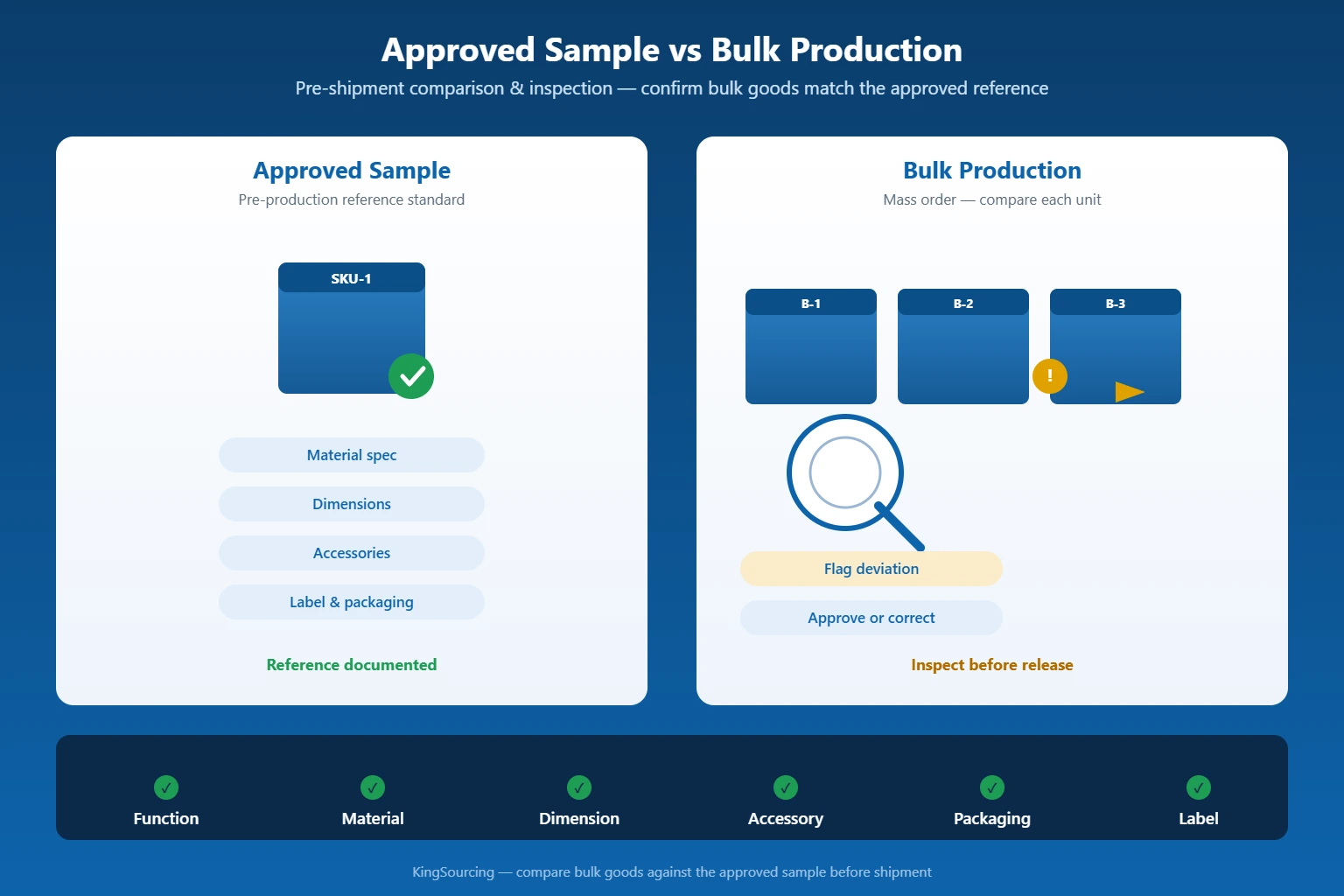
Bulk production should match the approved sample in the characteristics that matter to product use, customer expectations, product claims, packaging, and applicable requirements. Some minor variation may be normal. Buyers should document acceptable tolerances and treat material deviations as issues requiring correction or written approval.
What should I check before paying the final balance to a China supplier?
Before paying the final balance, I recommend checking product identity, quantity, visible workmanship, core function, dimensions where relevant, materials, included accessories, retail packaging, labels, outer cartons, and agreed documents. The exact checklist should reflect your product, sales channel, and destination market.
Can a pre-shipment inspection guarantee that there are no defects?
No. A pre-shipment inspection is a sampling and risk-control activity, not a guarantee that every unit is perfect. However, it can identify visible discrepancies, recurring defects, incorrect packaging, missing accessories, and other issues before goods leave the factory or enter international transit.
What should I do if bulk goods differ from the approved sample?
First, document the difference with photos, measurements, quantities, and references to the approved standard. Then assess whether it affects function, sales promises, customer experience, packaging, or market requirements. Ask the supplier about rework, replacement, sorting, relabeling, or another agreed solution before releasing shipment.
Conclusion
To compare sample and bulk production effectively, buyers need more than a quick visual check. I recommend using the approved sample as a documented reference, checking the product and packaging against the points that matter commercially, and classifying any differences by risk. The best time to resolve a mismatch is before cargo pickup, when correction is still practical. If you are sourcing from multiple China suppliers or preparing a first bulk order, KingSourcing can help coordinate sample confirmation, production follow-up, quality checks, consolidation, and shipment release decisions.
Sources
- 1 Distinguishing between Common Cause Variation and ...", Statistical process-control guidance explains that even a stable process has common-cause variation; the presence of variation alone does not necessarily indicate a special manufacturing failure
- 46 CFR § 164.019-13 - Production quality control requirements.", Quality-management and inspection practice commonly use approved reference samples together with documented acceptance criteria to make product-conformity assessments more consistent
- Quality Assurance Handbook", Requirements-engineering literature identifies ambiguity and incompleteness in specifications as sources of divergent interpretation and difficulties in verifying whether a delivered product conforms
- Advertising and Marketing", Consumer-protection guidance generally requires product representations to be truthful and recognizes that descriptions and information supplied with goods are relevant to whether consumers receive what was represented
- Color rendering of light sources", Color-science research shows that an object's apparent color and visible surface characteristics depend on illumination and viewing or imaging conditions, so photographs may not fully represent physical appearance
- Children's Product Certificate", Product-safety authorities describe conformity assessment as potentially requiring testing, technical documentation, declarations, labeling, and other product-specific measures; a routine pre-shipment comparison is not, by itself, evidence of compliance or safety
- What kinds of Lot Acceptance Sampling Plans (LASPs) are ...", Acceptance-sampling methods evaluate a lot from inspected units and explicitly recognize risks of incorrect acceptance or rejection; therefore, sampling supplies evidence about lot quality rather than a guarantee that every unit is defect-free
- June 2005 Proper Packaging Required to Maintain ...", Transport-packaging standards and testing protocols are designed around handling and distribution hazards, reflecting that protective packaging affects the likelihood of product damage in transit