Quick Answer
When I help buyers consolidate orders from multiple suppliers in China, I often see the same problem: each factory may be ready at a different time, goods may arrive with different carton details, and shipping plans can change quickly. Without coordination, a “simple” consolidation can create extra handling costs, delayed launches, or stockouts[1]. I use a controlled handoff process to make the decision clearer.
I believe the best way to consolidate orders from multiple suppliers in China is to compare the full logistics and inventory impact—not just international freight. Buyers should confirm each supplier’s actual readiness, carton and quantity details, delivery timing, warehouse handling costs, storage exposure, and shipment deadline. In many cases, the practical answer is to consolidate selected SKUs while shipping urgent products separately.

I do not treat consolidation as simply putting cartons from several factories into one warehouse. I treat it as a purchasing coordination task that starts before goods leave each supplier. The real savings, risks, and delays usually appear during the handoff between factory completion, domestic delivery, warehouse receiving, and final shipment booking.
Why Is Consolidating Orders from Multiple China Suppliers Not Automatically Cheaper?
When buyers try to consolidate orders from multiple suppliers in China, they may expect one shipment to automatically mean lower costs. I understand that expectation. One shipment can reduce administrative work and may create freight efficiencies[2], but domestic transfers, warehouse fees, delayed stock, and cargo differences can quickly change the calculation.
Consolidating orders from multiple China suppliers is only cost-effective when suppliers can deliver within a compatible window[3], the warehouse can receive and handle the cargo efficiently, and waiting for slower products does not damage sales or replenishment plans. I recommend comparing total landed logistics cost and inventory impact before deciding whether to ship everything together, split the shipment, or move urgent SKUs independently.

I Start With the Controlled Handoff, Not the Freight Quote
I have learned that a consolidation plan can look good on a spreadsheet before the physical goods start moving. The real work begins when several suppliers provide different completion dates, different carton information, and different delivery arrangements.
A supplier saying, “Your order is ready,” does not always mean the cargo is ready to consolidate. I normally need to clarify what “ready” means in practical terms:
- Has production actually finished?
- Has the supplier completed its own internal packing?
- Are final quantities confirmed?
- Are carton counts, carton dimensions, and gross weights available?
- Have labels, barcodes, warning labels, or outer-carton marks been applied?
- Has any agreed inspection or product checking been completed?
- Can the supplier deliver to the consolidation warehouse on the required date?
- Does the supplier need a warehouse appointment, unloading instruction, or delivery reference number?
These details matter because warehouse receiving is not just a formality[4]. If cartons arrive without clear references, if quantities differ from the packing list, or if cartons are visibly damaged, I need a process for identifying the issue before the final shipment moves.
I view consolidation as a controlled handoff between factories, a warehouse, and a shipment plan—not as a last-minute storage activity.
For multi-SKU sellers, one missing carton can create a larger issue than expected[5]. A product bundle may be incomplete. An Amazon replenishment plan may need adjustment. A product launch may be delayed because one small accessory did not arrive with the main item.
I Separate “Production Ready” From “Shipment Ready”
When I coordinate multiple China suppliers, I use two different readiness stages.
| Readiness stage | What I confirm | Why I consider it important |
|---|---|---|
| Production ready | The factory reports that manufacturing and packing are complete. | This gives an initial indication of timing, but it does not confirm warehouse delivery. |
| Delivery ready | The supplier can provide final carton details and deliver within the required window. | This supports transport booking and warehouse planning. |
| Inbound confirmed | The warehouse has physically received and counted the cargo against documents. | This confirms what is actually available for consolidation. |
| Shipment ready | Required cargo is received, handling is complete, and the shipment can proceed. | This is the practical point for final shipping coordination. |
I recommend that buyers avoid making shipping decisions based only on a factory’s estimated completion date. A factory may finish production on Friday but not arrange domestic delivery until the following week. A local pickup may also depend on truck availability, warehouse receiving hours, and the supplier’s location.
This is especially important for suppliers located in different manufacturing regions. For example, a buyer may source electronics accessories from Shenzhen, packaging from Dongguan, household products from Yiwu, and furniture-related items from Foshan[6]. I would not assume that these suppliers can all deliver to one warehouse at the same speed or cost.
I Compare Total Cost, Not Just the International Freight Rate
When buyers ask me how to consolidate orders from multiple suppliers in China, freight is usually the first topic. Freight matters, but I do not use the international shipping quote as the only decision point.
A more realistic comparison includes the costs and consequences before the shipment departs China.
| Cost or risk area | Questions I ask | Possible effect |
|---|---|---|
| Domestic transfer | How far is each factory from the receiving warehouse? Who pays for delivery? | Separate domestic trucking or courier costs may reduce savings. |
| Warehouse receiving | Is there an inbound fee per carton, pallet, SKU, or shipment? | Multi-SKU orders can require more receiving work. |
| Counting and checking | Does the buyer need carton counts, label checks, or 1-by-1 product checking? | Extra handling may be necessary for risk control. |
| Storage | Will early goods wait for late goods? Is storage included for a limited period? | Long waits can add cost and operational exposure. |
| Repacking or palletization | Does the shipment require new cartons, pallets, export packing, or label work? | Handling requirements can change the total cost. |
| Shipment mode | Is the combined cargo suitable for air, express, rail, sea, or another route? | The best mode depends on cargo, route, timing, and volume. |
| Inventory delay | Will a best-selling item wait for a slow SKU? | Lost sales or stockouts may cost more than separate shipping. |
I also encourage buyers to think about “cost” in a broader procurement sense. If combining three suppliers saves a modest amount on freight but holds back a fast-selling item for two weeks[7], the freight saving may not be the right business outcome.
Freight rates, fuel surcharges, destination charges, import requirements, and transit estimates vary by route, cargo type, carrier, season, and destination. I recommend confirming these items with qualified freight and customs professionals for the specific shipment. I do not present a general rate or transit-time figure as universally applicable.
I Use Shipment Windows Instead of Chasing Perfect Alignment
In practice, I rarely expect every supplier to finish on the same day. I find it more useful to establish a shipment window.
For example, a buyer may decide that all non-urgent goods can arrive at the warehouse within a defined period, provided that the final shipment leaves before an agreed replenishment deadline. This approach gives suppliers some flexibility while protecting the buyer’s inventory plan.
I normally encourage buyers to group products into categories such as:
-
Urgent replenishment SKUs
I would consider shipping these separately if they protect sales continuity or prevent a stockout. -
Launch-critical products
I would check whether every component, insert, accessory, and packaging element must arrive together before shipment. -
Flexible or evergreen products
I may hold these for a shared shipment if storage and timing remain reasonable. -
Low-value or bulky products
I would review these carefully because domestic transfer and warehouse handling can have a larger effect on the total logistics cost. -
Products with special handling needs
I would verify whether batteries, liquids, magnets, fragile goods, oversized cartons, or regulated items affect the shipment plan[8]. Requirements depend on the route and carrier, so I recommend case-by-case confirmation.
This method helps buyers avoid an all-or-nothing decision. The question is not always, “Should I consolidate everything?” I find that the better question is often, “Which products can wait safely, and which products should move now?”
I Do Not Let Consolidation Replace Supplier Management
A consolidation warehouse can help organize goods after suppliers deliver them. However, I do not consider it a replacement for supplier verification, sample approval, production follow-up, or quality control.
If a supplier ships the wrong color, uses incorrect packaging, misses required labels, or delivers incomplete quantities, consolidation does not solve the root problem. It may only reveal the problem later, when options are more limited.
For that reason, I prefer to connect consolidation planning with upstream purchasing control:
- I confirm specifications and approved samples before mass production.
- I request clear packaging and labeling requirements.
- I follow up on production timing where the buyer needs visibility.
- I arrange or coordinate appropriate inspection steps when required.
- I ask suppliers for final packing information before warehouse delivery.
- I confirm warehouse receipt against available documents.
- I flag discrepancies before final shipping arrangements proceed.
For certain products, I may recommend qualified third-party inspection, testing, regulatory, customs, or freight advice. The correct level of checking depends on the product category, destination market, customer requirements, and commercial risk.
I Build a Simple Consolidation Decision Sheet
I recommend that multi-SKU buyers use a simple worksheet before they commit to a combined shipment. It does not need to be complex, but it should make waiting costs visible.
| Supplier / SKU group | Estimated completion | Warehouse delivery date | Urgency | Can wait for shared shipment? | Notes |
|---|---|---|---|---|---|
| Supplier A / fast-selling SKU | Confirm with supplier | Confirm with carrier | High | Possibly no | Review stock cover first |
| Supplier B / new launch item | Confirm with supplier | Confirm with warehouse | High | Depends on complete bundle | Check all components |
| Supplier C / evergreen products | Confirm with supplier | Confirm with carrier | Medium | Often yes | Check storage period |
| Supplier D / bulky slow-moving goods | Confirm with supplier | Confirm with carrier | Low | Depends on handling cost | Compare domestic transfer cost |
I would then compare at least three practical options:
- Ship each supplier’s order separately
- Consolidate all suppliers into one shipment
- Use a hybrid plan, where urgent goods ship independently and flexible goods consolidate
The hybrid option is often overlooked. Yet, I find it can reduce complexity without forcing high-priority inventory to wait for every supplier.
Frequently Asked Questions
Is it cheaper to consolidate orders from multiple suppliers in China?
I do not assume it is always cheaper. Consolidation may reduce some international shipping and administration costs, but domestic transfers, warehouse receiving, storage, repacking, and delayed inventory can offset those savings. I recommend comparing total logistics cost and the value of maintaining stock availability.
How long should I wait for suppliers before shipping a consolidated order?

I recommend setting a shipment window based on your inventory deadline, launch date, and supplier reliability. The right waiting period depends on your products and destination. I would avoid waiting indefinitely for a late supplier if essential SKUs face a stockout or missed sales opportunity.
What should a warehouse check when receiving goods from China suppliers?
I normally ask the warehouse to confirm the supplier reference, carton count, visible carton condition, and available packing-list details. Buyers may also need label checks, SKU sorting, photo records, weight checks, or 1-by-1 product inspection, depending on the agreed service scope.
Can I consolidate products from Shenzhen, Yiwu, Guangzhou, and other China cities?

Yes, I can coordinate goods from different manufacturing regions, but I would first compare domestic delivery timing and transfer costs. The most suitable warehouse location depends on supplier locations, cargo characteristics, shipment mode, handling requirements, and final export route.
Does order consolidation include quality inspection?
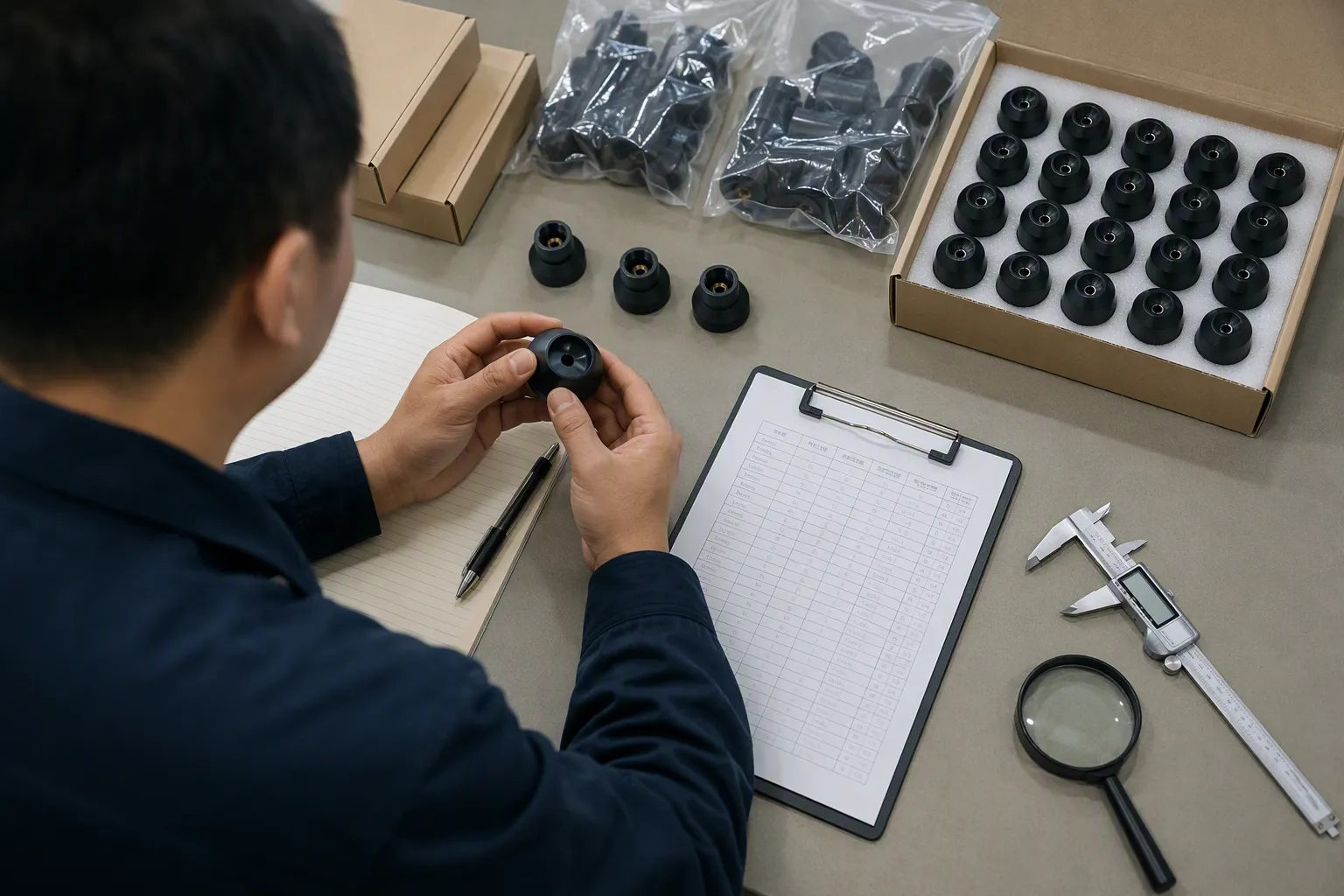
I treat consolidation and quality control as separate but connected activities. A warehouse inbound check can confirm what arrived, but it does not automatically replace pre-shipment inspection, production monitoring, or product testing. I recommend defining the required quality-control scope before suppliers ship to the warehouse.
Conclusion
I see consolidating orders from multiple suppliers in China as a procurement decision rather than a simple freight arrangement. The best plan depends on supplier readiness, domestic delivery, inbound accuracy, handling costs, storage exposure, cargo compatibility, and the cost of delaying important inventory. I recommend evaluating separate, combined, and hybrid shipment options before committing. If you source from several China factories, I can help you coordinate supplier follow-up, warehouse receiving, quality checks, consolidation, and shipping support around your specific purchasing timeline.
Sources
- Just-in-time approach in healthcare inventory management - PMC", Supply-chain research identifies coordination failures and delivery uncertainty as contributors to stockouts and downstream service disruptions; the magnitude of any effect depends on the product, inventory policy, and supply network
- [PDF] Impacts of Freight Consolidation and Truck Sharing on Freight Mobility", Transportation-consolidation studies describe how aggregating compatible consignments can improve load utilization and reduce per-unit transport costs, although benefits may be offset by added handling and waiting time
- [PDF] Integrated Inventory Routing and Freight Consolidation for ...", Shipment-consolidation models generally balance transport economies of scale against the cost of delaying orders until a consolidation threshold or time window is met
- Receiving Procedures | Logistics - Texas A&M University", Standard warehousing practice treats receiving as a control process involving verification of shipment identity, quantity, condition, and documentation before inventory is accepted
- [PDF] The Impact of Supplier Inventory Service Level on Retailer Demand", Inventory research on complementary components finds that the absence of a single required item can constrain assembly, fulfillment, or sale of a multi-item product offering
- Looking to source products from China? Start with Guangdong. ...", Regional economic references describe specialized manufacturing and trading clusters in these Chinese cities, including electronics in the Shenzhen area, commodity trade in Yiwu, and furniture production in Foshan
- Bayesian Inventory Management with Unobserved Lost Sales", Inventory-management research treats lost sales and service-level deterioration from delayed replenishment as costs that may outweigh a lower transportation charge
- [PDF] Lithium Battery Guide for Shippers", International dangerous-goods transport frameworks require specified classification, packaging, marking, documentation, and handling controls for regulated cargo such as lithium batteries and other hazardous materials