Quick Answer
A real manufacturer can be difficult to identify when you are sourcing from another country. Supplier websites, marketplace badges, factory photos, and business licenses can all look convincing, yet they may not show who actually controls your product.[1] We recommend checking evidence in layers before you commit to samples, deposits, or production. **To verify whether a supplier is a real manufacturer, check its company registration, business address, facility evidence, product knowledge, and control over your specific order.
No single document or video proves manufacturing capability.[2] The practical goal is to understand what the supplier produces directly, what it outsources, and how it will manage quality, timing, customization, and delivery risks.**
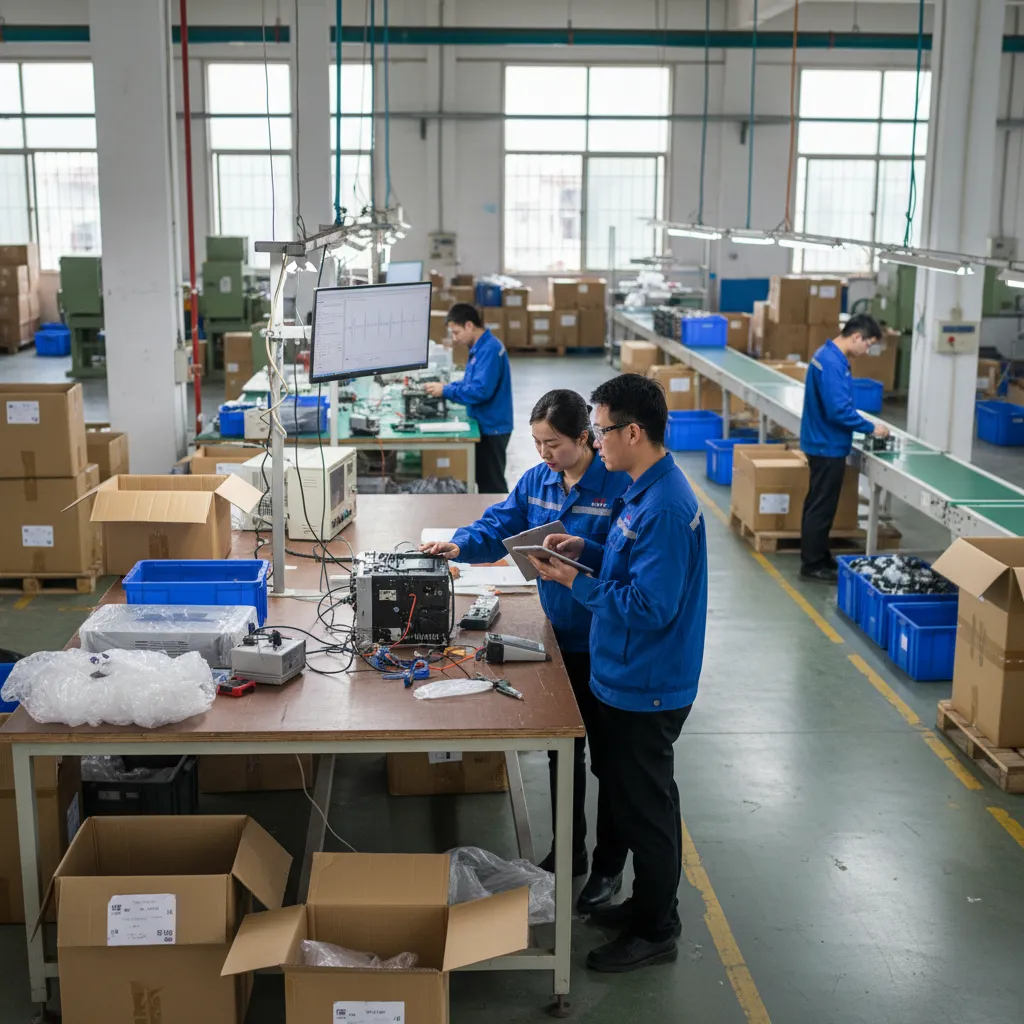
The question is not simply whether a supplier calls itself a factory. In our sourcing work, we focus on whether the supplier can clearly explain and demonstrate control over the product you plan to buy. That approach helps buyers compare factories, trading companies, and hybrid suppliers on the risks that actually affect an order.
How Does Verifying a Real Manufacturer Go Beyond a Label-Checking Exercise?
A supplier may have a factory-looking website but limited involvement in the actual production process. This creates uncertainty around pricing, sample accuracy, production schedules, and quality control. A better verification process looks past labels and asks who controls each important stage of your order.
Verifying a real manufacturer means confirming a supplier’s transparency and operational control, not just checking whether it has a factory registration or claims to be a manufacturer. Buyers should identify which processes the supplier performs in-house, which work is outsourced, who approves quality, and who is responsible when production problems occur.
Why “Factory” and “Trading Company” Are Not Complete Risk Categories
Many overseas buyers begin with a simple assumption: factories are good, and trading companies are risky. We understand why that assumption is common. Buyers want lower prices, direct communication, better customization support, and fewer layers between themselves and production.
However, the supplier’s formal label does not answer all of those concerns.
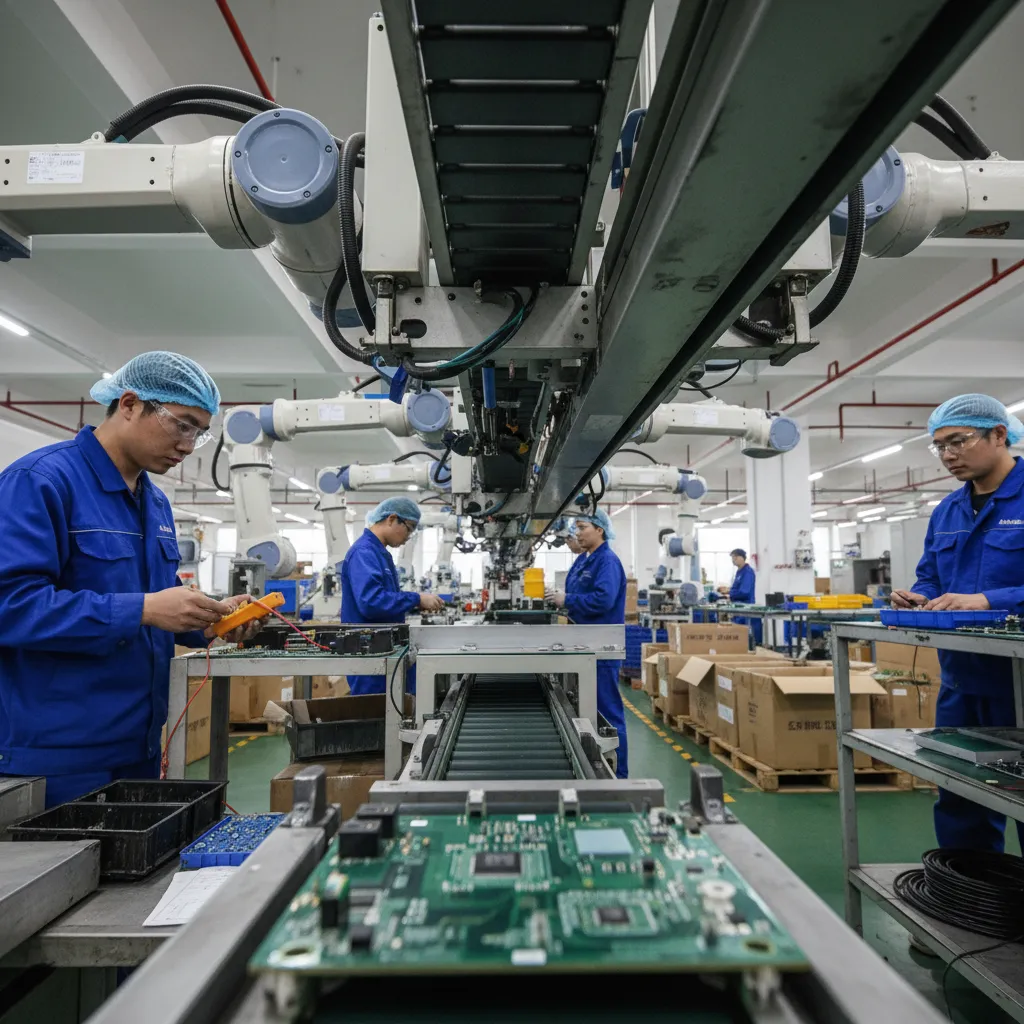
A factory may make only one component of a finished product. It may outsource coating, packaging, printing, electronics assembly, testing, or export documentation.[3] Another factory may be highly capable in one product category but have little experience with your required material, safety standard, or customized packaging.
At the same time, a transparent trading company may provide useful coordination for buyers who need:
- Multiple products from different factories
- Small quantities across many SKUs
- Supplier communication support
- Packaging and label coordination
- Consolidation and warehousing
- Production follow-up across several suppliers
- Export and shipping coordination
For example, a buyer sourcing a single standard metal part may prefer to work directly with a specialized factory. A buyer sourcing 30 private-label e-commerce items may benefit from an intermediary that can organize samples, compare quotations, inspect goods, and consolidate shipments.
The important issue is transparency. A supplier should be able to explain its role without becoming vague or defensive.
We encourage buyers to ask: “What parts of this exact order do you directly control, and what parts will be outsourced?”
That question is usually more useful than asking, “Are you a factory?”
Start With Company Registration and Basic Business Information
Company registration is a useful first layer of supplier verification. It can help you confirm that a business exists, identify its legal name, and compare the information provided by the sales representative with publicly available records.
For China suppliers, buyers may ask for a copy of the business license. The document commonly includes information such as:[4]
- Chinese legal company name
- Unified Social Credit Code
- Registered address
- Legal representative
- Registration date
- Registered capital
- Business scope
- Company status
A business license does not prove that a supplier is a real manufacturer for your product. Still, it gives you a starting point for cross-checking claims.
For example, if a supplier says it owns a factory in Dongguan but its registration address points to a commercial office in another city, you should ask for clarification. The explanation may be reasonable. Some companies register an office separately from their production site. Others operate through affiliated factories or subcontractors.
The key is whether the supplier gives a clear, consistent answer.
| Checkpoint | What You Can Learn | What It Does Not Prove |
|---|---|---|
| Business license | Legal entity, registration details, business scope | Actual current production capacity |
| Registered address | Whether the company information is consistent | Ownership of every facility used |
| Company age | How long the legal entity has existed | Product experience or reliability |
| Business scope | Whether manufacturing-related activities are listed | Capability for your exact product |
| Export information | Whether the supplier may handle export directly | Quality control or product compliance |
We recommend comparing the license with the supplier’s quotation, bank details, invoice information, website, and email signature. Material differences should be clarified before payment.
Country-specific registration rules and public-record availability can vary. Buyers should verify the appropriate source and should not treat a registration record as a legal, financial, or audit conclusion.
Review the Factory Address, Photos, and Video Evidence Carefully
Factory photos are easy to request and easy to misunderstand. A photo of machines, workers, cartons, or a production line may show a real site, but it may not confirm that the site belongs to the supplier or makes your product.
The same applies to video tours. A video call is more valuable than a polished promotional video because it allows you to ask spontaneous questions.[5] Still, a remote walkthrough cannot fully replace an on-site audit when the order is high value, technically demanding, or quality-sensitive.[6]
When we help buyers review factory evidence, we look for consistency rather than one impressive image.
Questions to Ask During a Factory Video Call
Ask the supplier to show areas related to your actual order, not only a reception area or a general workshop.
Useful requests include:
-
Show the exterior sign and entrance.
The company name on the sign may help you compare the site with the legal entity or disclosed production partner. -
Show the production line for a similar product.
Ask what stage of production is taking place and what the machine or workstation does. -
Show raw materials or incoming components.
This can open a practical conversation about material grades, suppliers, lead times, and incoming inspection. -
Show quality-control points.
Ask who checks the product, what they check, when they record results, and how defective goods are handled. -
Show packaging and storage areas.
This can reveal whether the supplier has experience with export cartons, barcode labels, custom inserts, or pallet requirements. -
Ask to see sample-making capability.
For OEM or ODM orders, ask whether the supplier develops samples in-house or sends them to another workshop.
A genuine answer can still include outsourcing. There is nothing automatically wrong with outsourcing specialized work. The concern begins when the supplier cannot explain what is outsourced, who performs it, or how quality is controlled.
Test Product Knowledge, Not Just Sales Confidence
A sales representative may communicate very well in English without being close to production.[7] Strong communication is valuable, but it should not be confused with manufacturing control.
Product-specific questions often reveal more than broad questions about factory size or annual sales. We recommend asking questions that require the supplier to describe processes, risks, and practical trade-offs.
For a customized consumer electronics accessory, you might ask:
- Which components are made in-house?
- Which components are sourced from external suppliers?
- What are the main failure points during assembly?
- What sample changes affect the tooling or production schedule?
- How do you inspect appearance, function, and packaging?
- What is the normal production lead time after sample approval?
- What happens if a key component is delayed?
- Which customization requests require a new mold, fixture, or tooling change?
For a textile, bag, or promotional product, you may ask:
- Which fabric or material options are available?
- How is color matched and approved?
- Is logo printing completed in-house or by a subcontractor?
- What is the standard tolerance for size and placement?
- How are stitching, trimming, and packaging checked?
- What is the minimum order quantity for each material and color?
- Can the supplier provide a pre-production sample before bulk production?
A real manufacturer should not be expected to disclose every commercial detail. However, the supplier should be able to explain core production steps, key material choices, common quality risks, and realistic production limits.
Vague answers are not automatic proof of dishonesty. They are a signal to investigate further. Sometimes the sales contact simply needs to involve an engineer, production manager, or factory owner. In fact, a supplier that brings the right person into the discussion may be more credible than one that gives instant but generic answers.
Identify What Is In-House and What Is Outsourced
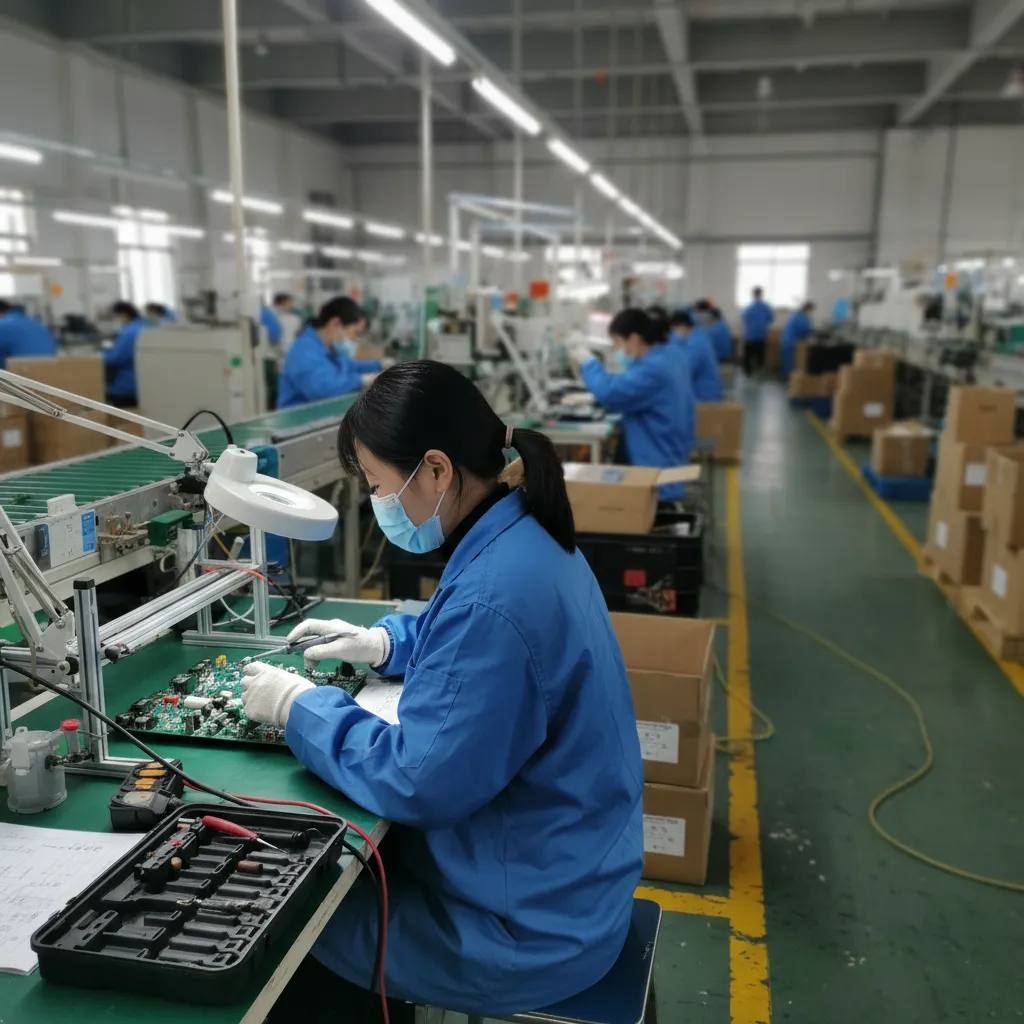
Most supply chains involve some level of outsourcing.[8] Even established factories commonly buy materials, electronic components, packaging, coatings, molds, or specialist testing services from outside partners.
That is why buyers should not treat outsourcing as a failure. Instead, buyers should map the supply chain and understand who manages each point.
| Order Element | Questions to Ask | Risk if It Is Unclear |
|---|---|---|
| Product design | Who creates drawings, files, or technical specifications? | Misunderstood customization requirements |
| Tooling or molds | Who owns the mold and where is it stored? | Delays, ownership disputes, repeated setup costs |
| Materials | Who purchases and approves the material? | Inconsistent quality or substitution risk |
| Core production | Which workshop performs the main manufacturing process? | Unknown capacity and weak schedule control |
| Assembly | Is assembly completed on the supplier’s site? | Inconsistent workmanship across subcontractors |
| Testing | Who conducts functional or quality tests? | Unclear acceptance criteria |
| Packaging | Who applies labels, inserts, cartons, and barcodes? | Marketplace or retail compliance errors |
| Shipping | Who consolidates, declares, and hands over cargo? | Miscommunication and shipment delays |
For an OEM order, we suggest requesting a simple written process map. The supplier does not need to provide confidential supplier names. However, it should identify the main steps, responsible party, estimated lead time, and quality checkpoint.
This document can become useful later when you compare quotations. A lower price may reflect a different material, fewer inspections, outsourced assembly, less protective packaging, or a different production route. Without a clear process breakdown, price comparisons can be misleading.
Compare Quotations Based on Scope, Not Only Unit Price
A supplier that identifies as a real manufacturer may offer a lower unit price for a standard product. Yet the total procurement cost can rise if the factory cannot manage packaging, inspection, multi-SKU coordination, or export preparation effectively.
We recommend comparing quotations line by line.
Look beyond the headline unit price and confirm:
- Product material and specification
- Dimensions, colors, and finishing
- Tooling, setup, and sample charges
- MOQ by color, model, or design
- Packaging specification
- Labeling and barcode requirements
- Quality-control standard
- Included testing or inspection steps
- Production lead time
- Payment terms
- Incoterms and shipping scope
- Responsibility for defects or rework
A transparent trading company may quote a higher unit price but provide coordination that reduces your internal workload. A specialized factory may quote lower but require you to manage separate packaging, inspection, shipping, and accessory suppliers.
Neither option is automatically better. The right choice depends on the order structure, your internal resources, risk tolerance, and product complexity.
Use Samples and Production Controls to Validate Claims
Remote verification helps you decide whether a supplier deserves further consideration. It does not conclusively prove that the supplier will produce every future order correctly.
For custom, high-value, regulated, or quality-sensitive products, we recommend adding deeper controls after the initial verification stage.
A practical sequence may look like this:
- Review the supplier’s basic documents and company information.
- Request product-specific quotations and technical answers.
- Conduct a live video call or arrange a site visit where appropriate.
- Develop and approve a sample against written requirements.
- Confirm materials, packaging, labeling, and quality criteria.
- Arrange a factory audit or product-specific assessment if the order justifies it.
- Follow production milestones for larger or repeat orders.
- Conduct pre-shipment inspection or 1-by-1 checking when needed.
- Consolidate and ship goods only after confirming the agreed requirements.
At KingSourcing, we use this layered approach when supporting overseas buyers. We can review supplier information, request clarifications, coordinate samples, observe factory conditions, follow production, and arrange inspection according to the needs of the order. These steps help buyers assess credibility and control, but they should not be viewed as a substitute for qualified professional evaluation where an application has specialized technical, safety, regulatory, or legal requirements.
Frequently Asked Questions
Can a business license prove that a supplier is a real manufacturer?
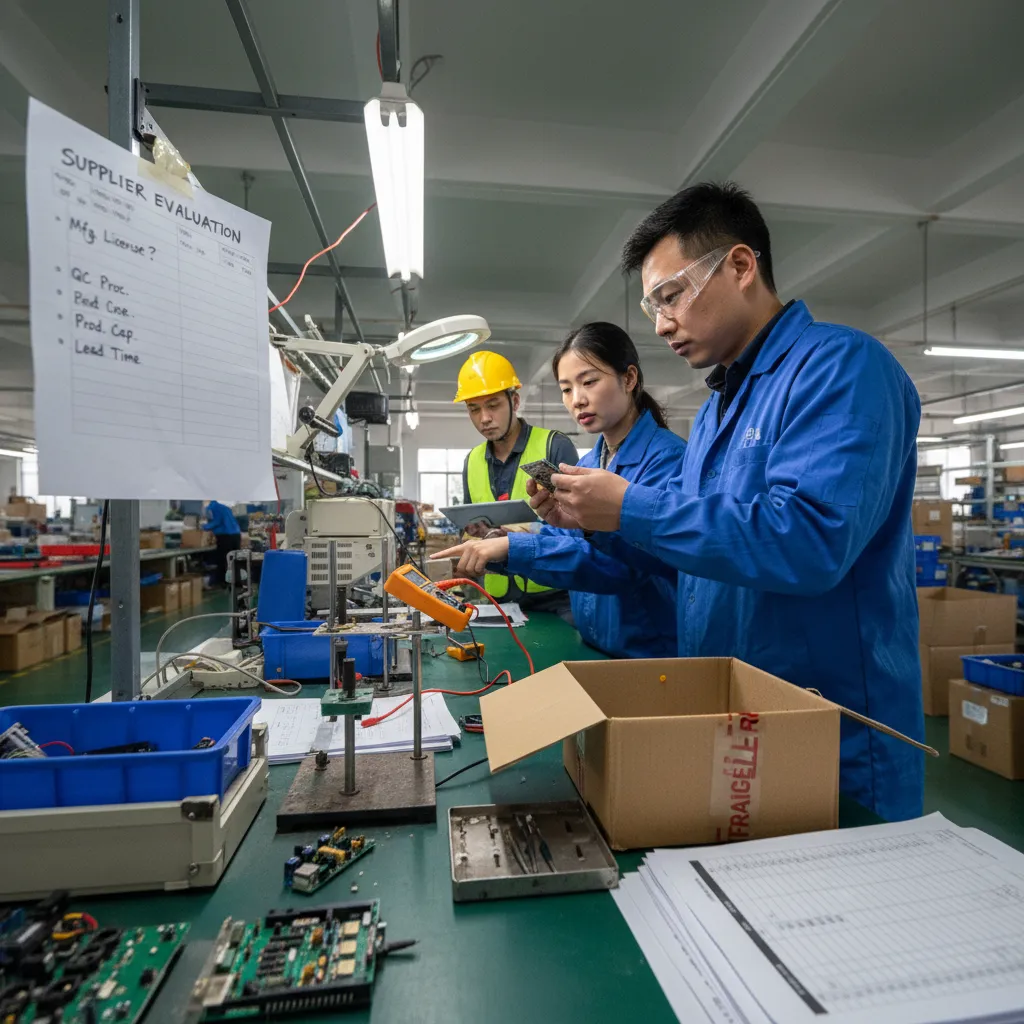
No. A business license can help confirm a legal company’s registration details, address, and stated business scope. It does not prove that the supplier manufactures your specific product, owns a factory, has current capacity, or controls the quality of outsourced production.
Is it always better to buy directly from a factory?
No. Direct factory purchasing can suit focused, higher-volume orders, but it is not always the best option. A transparent trading company or sourcing partner may be more suitable for multi-SKU orders, small test orders, supplier coordination, packaging support, consolidation, and shipping management.
What should I ask during a factory video call?
Ask the supplier to show the entrance, relevant production areas, materials, quality-control stations, sample process, packaging area, and warehouse. You should also ask product-specific questions about production steps, capacity, outsourcing, lead times, common defects, and quality responsibility.
How can I tell if a supplier is hiding outsourcing?
Look for vague answers about where key production steps happen, who manages materials, who performs assembly, and who checks quality. A supplier may outsource legitimately, but it should clearly explain the process, the responsible party, and how it controls quality and delivery.
Do I still need an inspection after verifying a real manufacturer?
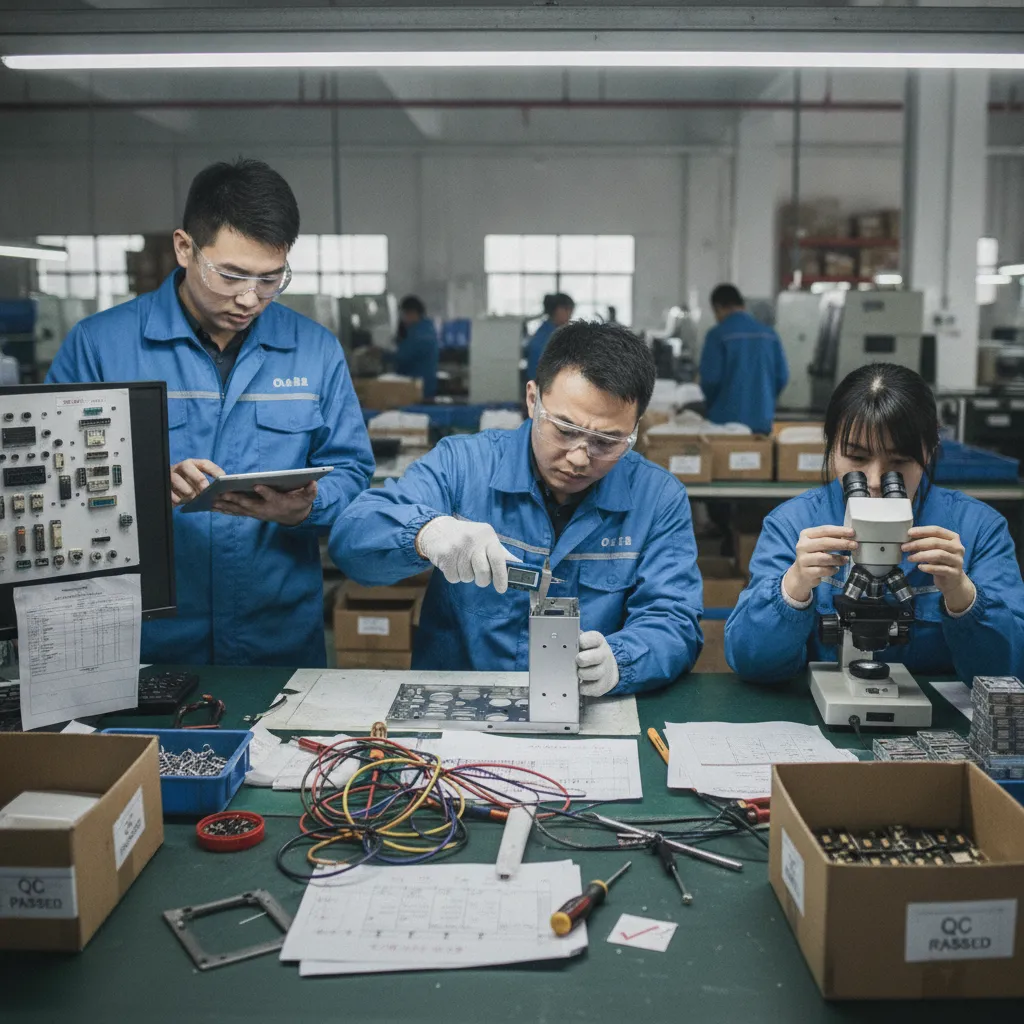
For many orders, yes. Verifying a real manufacturer helps you assess the supplier before production. Inspection checks whether the actual finished goods meet the approved specifications. Samples, production follow-up, and pre-shipment inspection remain important, especially for customized or quality-sensitive products.
Conclusion
A real manufacturer is not defined by a website claim, a marketplace badge, or one factory video. Buyers should verify suppliers in layers by checking company information, reviewing facility evidence, testing product knowledge, and identifying what the supplier controls or outsources. The strongest supplier is often the one that communicates clearly about its role and manages your order responsibly. If you need help screening China suppliers, coordinating samples, checking production, or consolidating shipments, we at KingSourcing can support your procurement process from supplier selection to final delivery.
Sources
- Due diligence for responsible business conduct", OECD due-diligence guidance supports assessing suppliers through risk-based examination of operations and business relationships, rather than treating self-reported information alone as conclusive evidence of operational control
- Supplier Audits in the FDA-Regulated Industries", Supplier-assessment guidance describes capability evaluation as a multi-source process involving records, interviews, and direct observation, supporting the view that a single document or remote video is not conclusive
- Global value and supply chains - OECD", OECD analysis of global value chains documents that production is commonly divided among specialized firms and suppliers, so a manufacturer may control only selected stages of a finished product's production
- Chinese Business License Verification: How to Check If It's ...", Chinese market-regulation materials describe enterprise registration records as identifying the enterprise and recording fields such as its unified social credit code, domicile, legal representative, registered capital, and business scope
- Interviewing Guide – Video Interviews - CAS360 Advising Online", Remote-audit guidance recognizes live video interaction as a means to conduct interviews, request follow-up evidence, and observe activities in real time, capabilities not provided by a pre-recorded promotional video
- Costs, Benefits and Effectiveness of Remote Audits for ...", Audit guidance on remote methods states that the feasibility of remote auditing depends on risk, audit objectives, and the ability to obtain sufficient evidence, supporting the need for on-site assessment when remote evidence is inadequate
- Collaborative Cost Reduction and Component ...", Research on supplier relationships and organizational information asymmetry indicates that customer-facing commercial staff may not possess the same operational knowledge or authority as production personnel
- Global value and supply chains", International analyses of global value chains show that firms commonly rely on external suppliers for inputs and specialized production or service stages, making outsourcing a routine feature of many supply chains